DropWedge — Sofa Gap Caddy
Created 3 months ago
Description
An all-in-one drop-in organizer designed to slip cleanly into the gap between sofa cushions. Unlike two-piece anchored designs, this relies on a deep, wedge-shaped body that bottoms out softly in the crevice, while a flared top lip rests lightly on the cushion edges to prevent it from vanishing into the void.
The inline layout fits four remotes edge-to-edge without forcing the cushions awkwardly wide.
Dimensions
- Overall Footprint: 236mm wide x 85mm deep at the lip.
- Insertion Depth: 110mm deep wedge.
- Compartments: 4 independent slots (49mm wide each), tapering from top to bottom to lightly grip remotes.
Print notes
Can be printed directly on its base with standard settings. The walls are flared outward, meaning it prints entirely support-free.
Images
More like this
Explore more in Storage & Organization →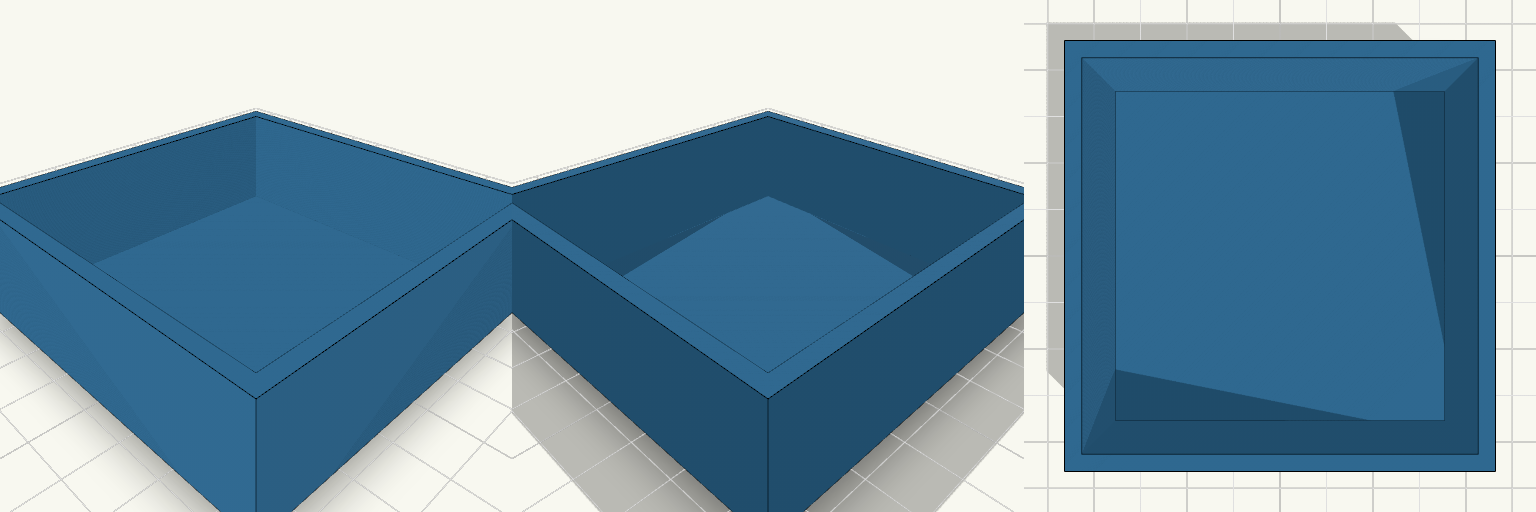
Open-Top Square Box 75 × 75 × 25 mm
What it's for A plain open-topped square box with a closed floor, sized to hold small parts, tools, or loose odds and ends on a desk or workbench. The straight sides and flat base keep it stable on the print plate and easy to drop things into from above. Dimensions Outer footprint: 75 × 75 mm Height: 25 mm Wall thickness: 3 mm Floor thickness: 3 mm Top: fully open, no lid Print notes Prints upright as it sits, with no supports needed for the vertical walls. A 3 mm wall and floor hold up well in PLA or PETG at a standard layer height; thicker walls take a slightly wider nozzle or more perimeters comfortably. Remix ideas Add a lid or a stacking lip so several boxes can sit on top of one another. Round the outer corners for a softer look and less sharp handling. Divide the interior with a grid to sort small hardware.
Clicker Keycap__Panda
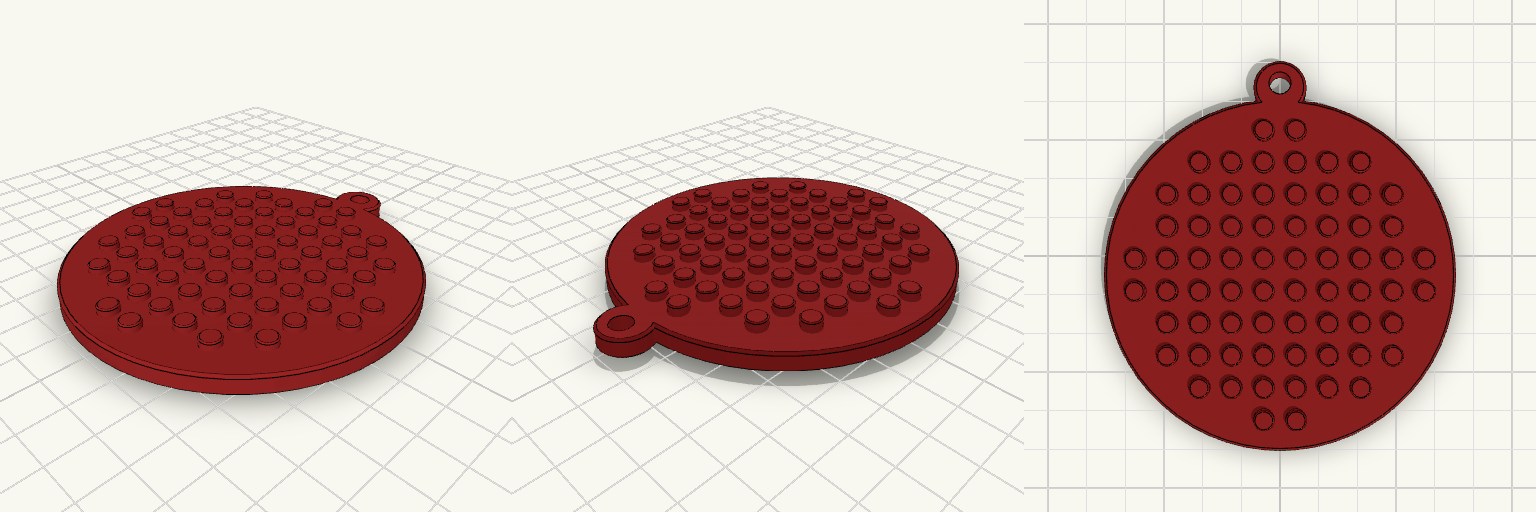
A round 88 mm ornament disc, 4.8 mm thick, with a grid of LEGO-compatible studs on the face and a hanging loop at the top. Printed in red, flat, with no supports. Remix hooks Stud diameter: 5.0 mm now (standard is 4.8 mm). Raise it to 5.05 for a firmer grip, or drop it to 4.9 if bricks sit too tight on your printer. Stud height: 1.8 mm. Taller studs give a deeper grip but need more bridging care. Disc thickness: 4.8 mm, or 1.5 LEGO plates. Use 3.2 mm for one plate or 9.6 mm for a full brick height. Disc diameter: 88 mm on an 8 mm stud pitch. The stud grid is cut to a 37 mm radius, which leaves a plain rim. Loop: 13 mm outer, 5.5 mm hole. Widen it for ribbon. Pairs with: 1x1 and 2x2 bricks, tiles, and small minifigure scenes.
Hexagonal Box with Lid
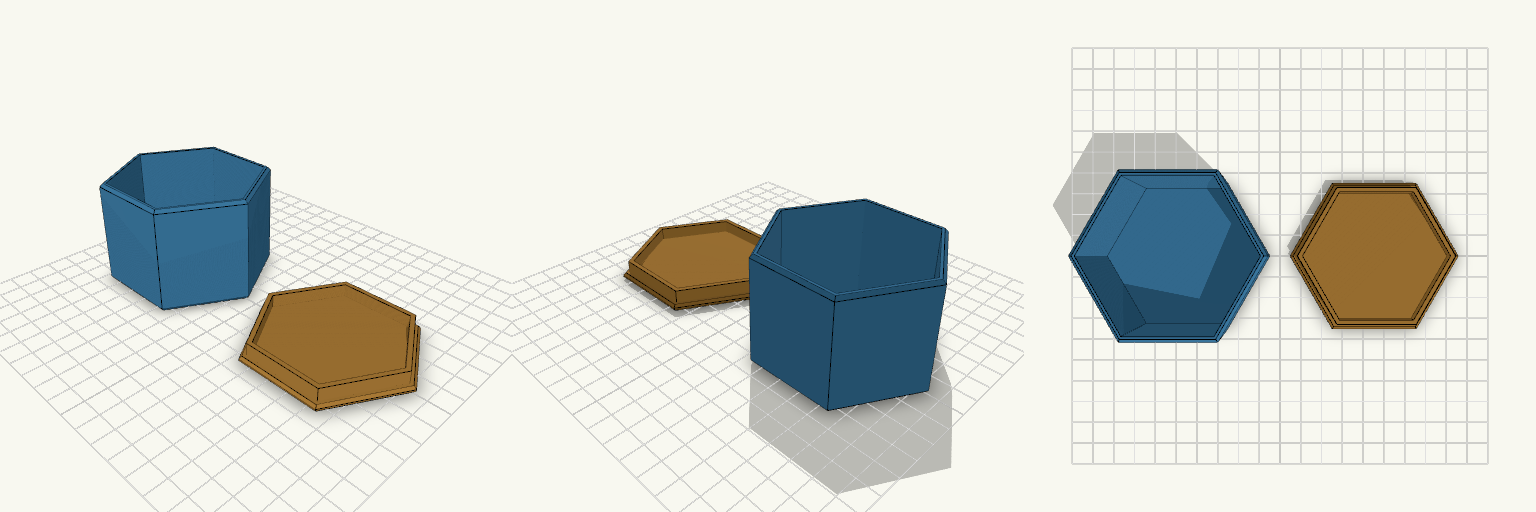
A hexagonal box with a matching lid, printed as two separate pieces. The box is 50 mm tall and 80 mm across the corners, with 2.4 mm walls and a 3 mm floor. The lid is a 3 mm hexagonal plate with a 6 mm hollow lip underneath. The lip sits inside the box opening with about 0.4 mm of clearance per side, so the lid stays put without a tight press fit. Box: 80 mm across corners, 50 mm tall, chamfered base edge Lid: 80 mm across corners, 3 mm plate, 6 mm inner lip Print the lid flat with the lip facing up No supports needed for either piece
Mini 19-Cone Henna Carousel Stand
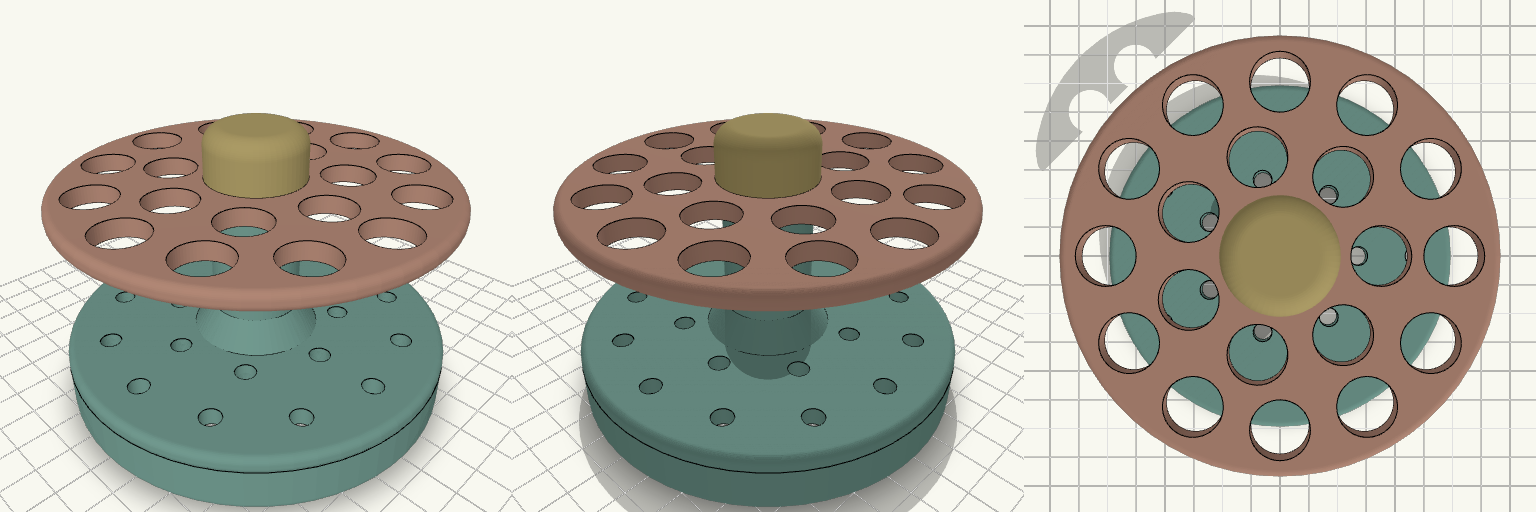
A compact two-tier henna cone stand: 110 mm trays, 60 mm apart, holding 19 cones tip-down, joined by a 25 mm central column and a screw cap. The top tray's 15 mm holes sit directly over 6 mm tip holes in the lower tray. A foot ring under the lower tray keeps cone tips off the table. Remix hooks Tray spacing: 60 mm now. Raise it for longer cones. Ring layout: 12 holes at 43 mm radius plus 7 at 25 mm radius. Wall between rings is about 3 mm, so adding holes means growing the tray. Tray diameter: 110 mm. Scale it up and add a third ring for more capacity. Hole size: 15 mm top, 6 mm bottom. Adjust to your cone brand. Pairs with: a turntable disc or non-slip mat under the foot ring.
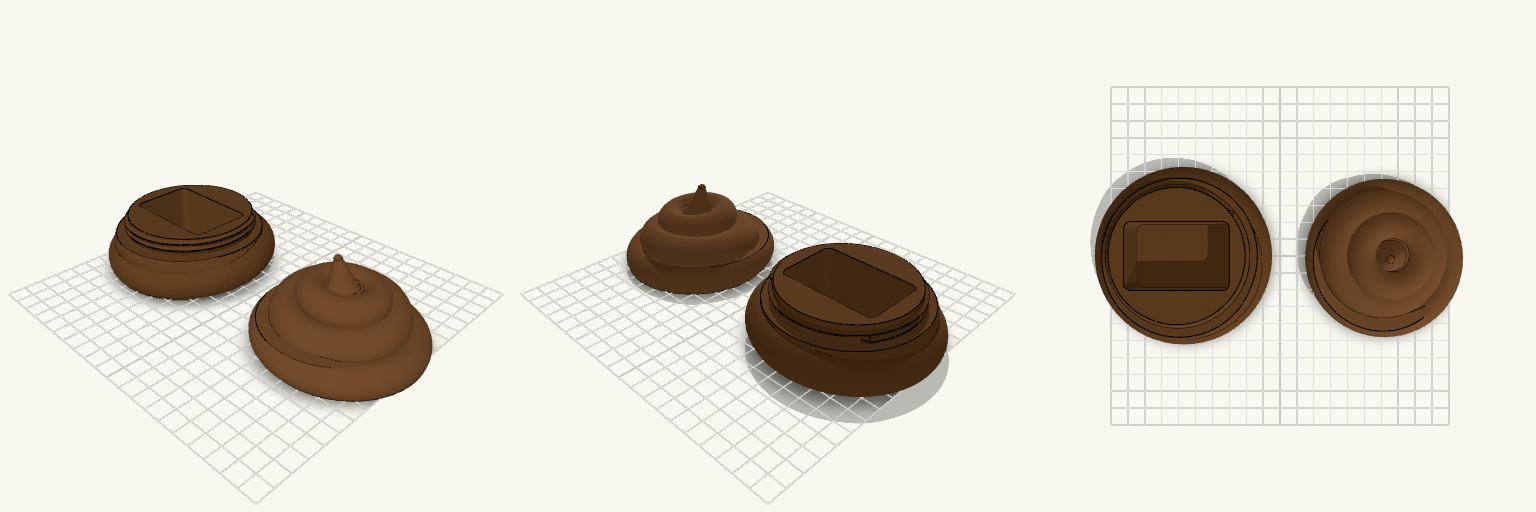
Screw-On Dog Poop Remote Hider
A two-piece container disguised as a lumpy dog poop, made to hide a garage remote in a front garden bed. The base holds the remote in a 57 × 37 mm cavity and has a wide threaded neck; the cap screws onto it to close the container. The coils are stacked slightly off-centre and tilted, and the cap narrows to a curled tip, so the shape reads as a real pile rather than a machined one. The cavity takes a 55 × 35 × 15 mm remote with about 1 mm of play per side, and it is deeper than 15 mm, so the remote's thickness doesn't set the fit. The remote drops in from above through the neck. The underside of the base is closed off with a solid disc up to the thread shoulder, so there is no open path in from below. A flat 86 mm shoulder sits under the thread, and the cap's rim seats against it when screwed down, which keeps most of the weather out. A threaded joint printed this way can still seep in heavy rain, so a bead of silicone on the shoulder or a thin rubber gasket will close it properly. Print both parts side by side on the plate — no supports or assembly hardware needed, just screw the cap on once the remote is inside. Print it in a single brown so it passes as what it pretends to be outdoors. Cavity: 57 × 37 mm, sized for a 55 × 35 × 15 mm garage remote Base: 102 × 102 mm, 34 mm tall; screw-on cap: 92 × 92 mm, 50 mm tall Thread: 78 mm across, wider than the cavity so the remote passes through the neck Closed base: solid disc under the coils, so water has no path in from underneath Sealing shoulder: 86 mm flat rim under the thread; add silicone or a gasket for full rain protection Two printed pieces: base and screw-on cap Check your remote's measurements before printing if it is larger than the cavity
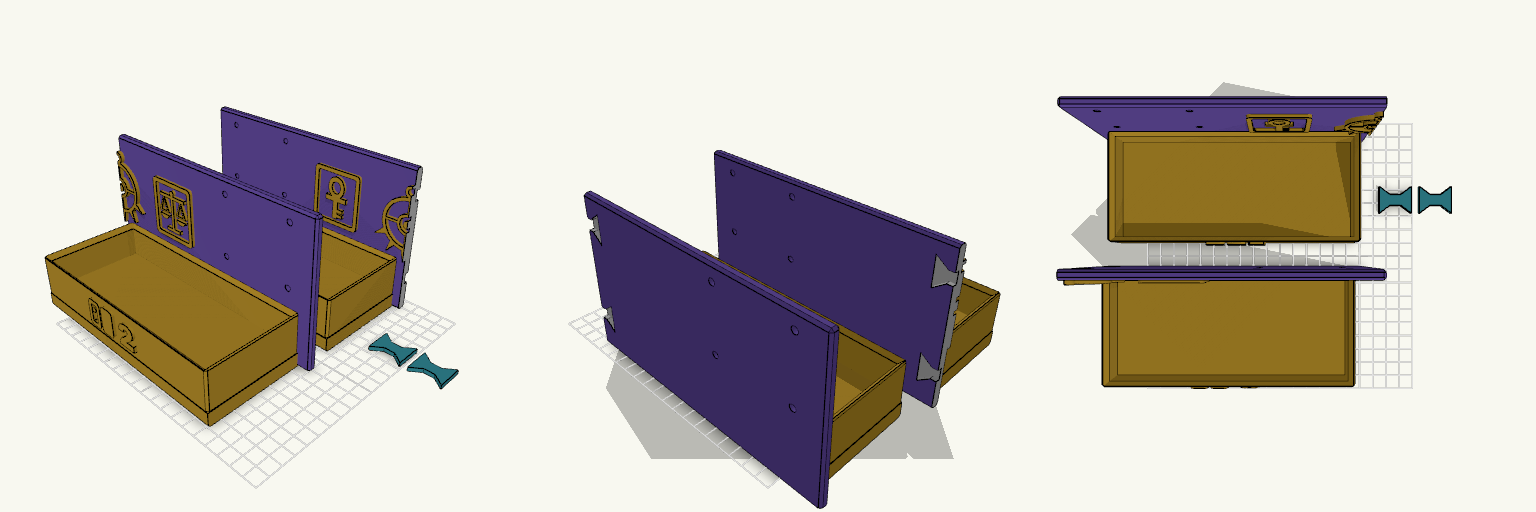
Two-Piece Pro Controller Wall Holder
A 380 mm wall holder for a PS5 and a Switch Pro controller is too wide for most print beds, and a single plate can crack along its length. This version prints as two 190 mm halves that lock together with two butterfly keys. Fit and print Split line: centre of the plate, through the Yu-Gi-Oh! ring emblem Keys: two butterfly-shaped keys, 24 mm wide and 20 mm tall, 2.9 mm thick, printed flat Key pockets: cut 3.3 mm deep into the back face, 0.3 mm clearance all round Assembly: press the keys into the back pockets across the seam, then screw the halves to the wall. The wall holds the keys in Mounting: eight countersunk screw holes in total, four per half Printing: halves lie on their backs or stand on the shelf base. No supports are needed for the hollow blocks Pocket sizes are 166 mm wide and 70 mm deep, from typical controller sizes and not from measurements of a specific controller.