Wide Friction Slip Box
Created 1 months ago
Description
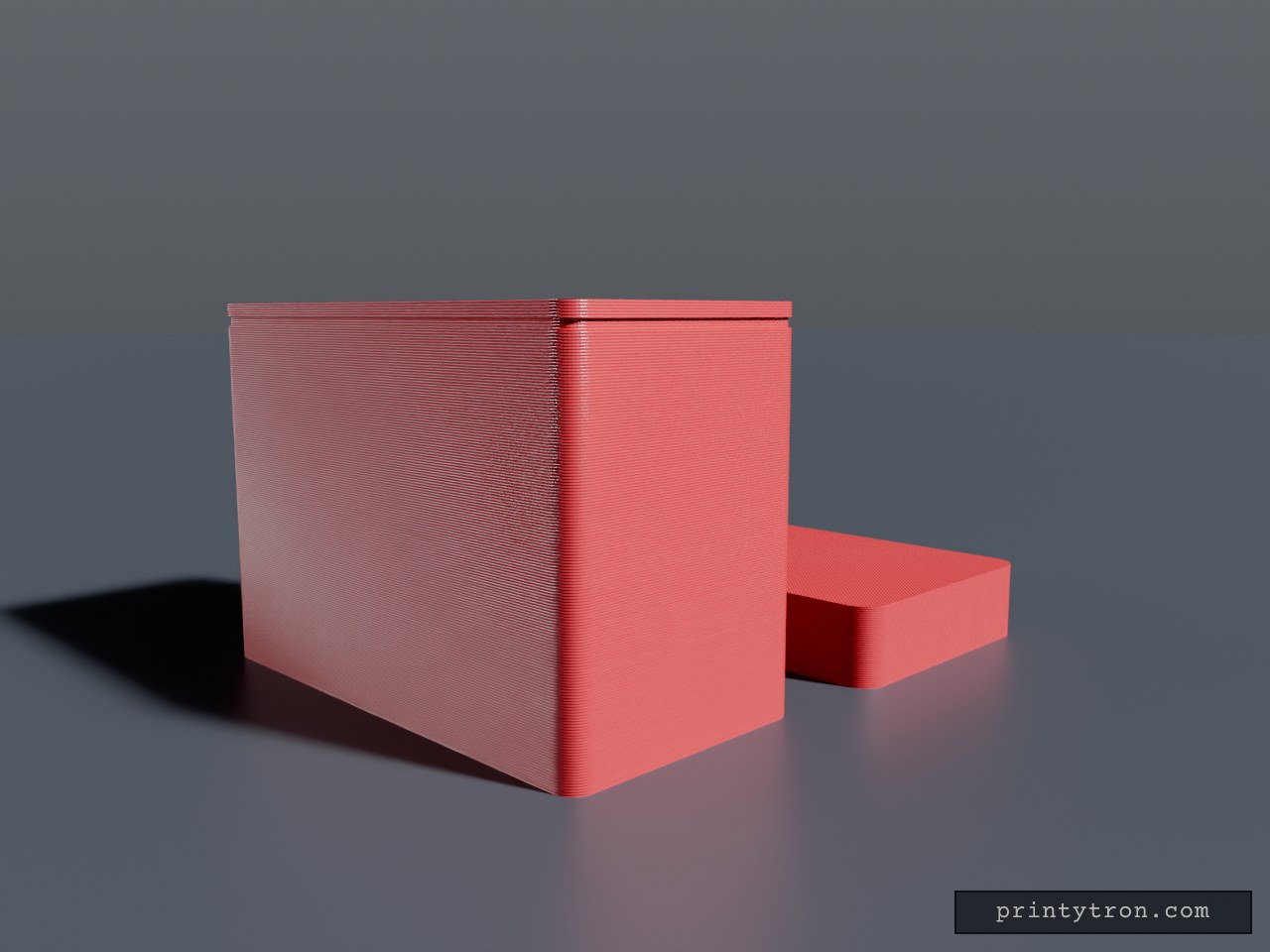
A 3-inch box is useless when the board you need to house is exactly three and a half inches wide, and a standard slip-joint rattles loose the second it goes into a bag. This version stretches the outer footprint to 3.5 inches to clear the hardware, and packs an extra millimeter of width onto the male tongue to bite into the female half and hold.
- Width: 3.5" (88.9mm) outer footprint.
- Fit: The male lip is offset an extra +1mm in width for a tighter friction lock.
- Print: Prints vertically on the flat bases, no supports needed.
Images
More like this
Explore more in Storage & Organization →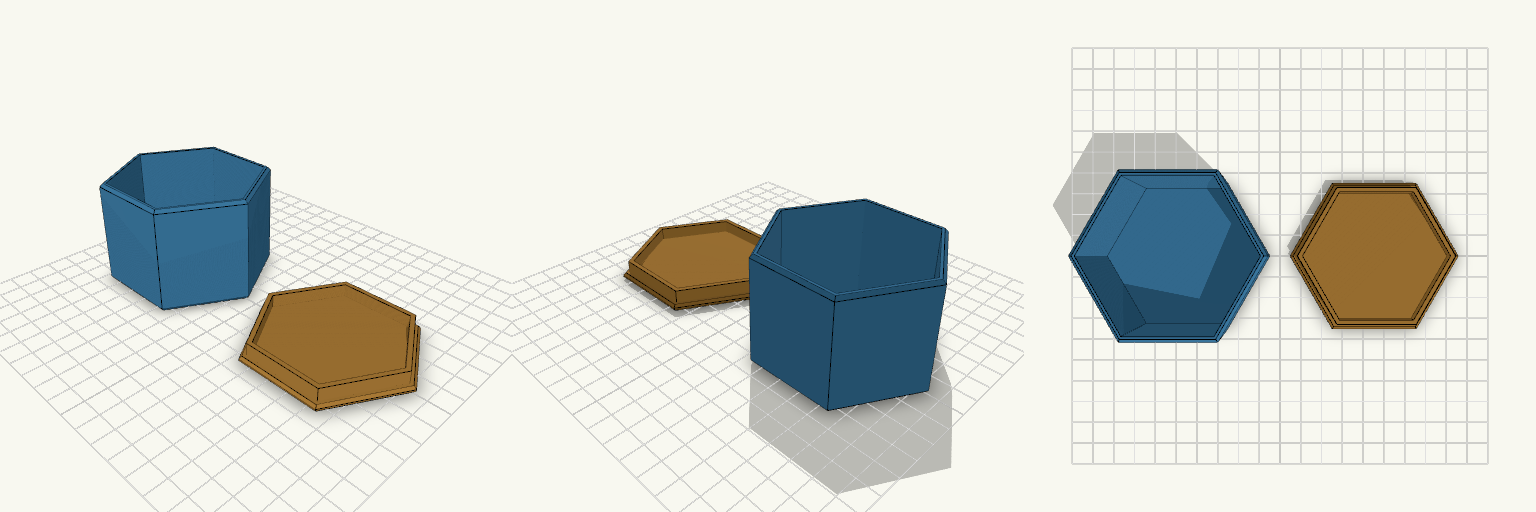
Hexagonal Box with Lid
A hexagonal box with a matching lid, printed as two separate pieces. The box is 50 mm tall and 80 mm across the corners, with 2.4 mm walls and a 3 mm floor. The lid is a 3 mm hexagonal plate with a 6 mm hollow lip underneath. The lip sits inside the box opening with about 0.4 mm of clearance per side, so the lid stays put without a tight press fit. Box: 80 mm across corners, 50 mm tall, chamfered base edge Lid: 80 mm across corners, 3 mm plate, 6 mm inner lip Print the lid flat with the lip facing up No supports needed for either piece
Open-Top Square Box 75 × 75 × 25 mm
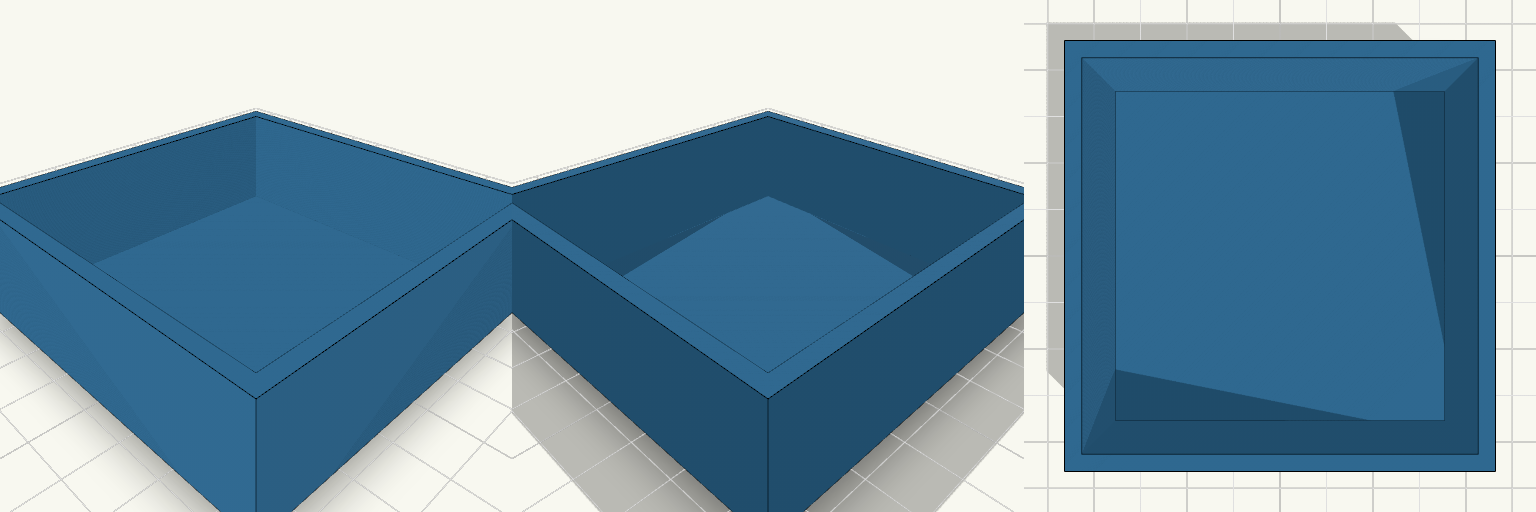
What it's for A plain open-topped square box with a closed floor, sized to hold small parts, tools, or loose odds and ends on a desk or workbench. The straight sides and flat base keep it stable on the print plate and easy to drop things into from above. Dimensions Outer footprint: 75 × 75 mm Height: 25 mm Wall thickness: 3 mm Floor thickness: 3 mm Top: fully open, no lid Print notes Prints upright as it sits, with no supports needed for the vertical walls. A 3 mm wall and floor hold up well in PLA or PETG at a standard layer height; thicker walls take a slightly wider nozzle or more perimeters comfortably. Remix ideas Add a lid or a stacking lip so several boxes can sit on top of one another. Round the outer corners for a softer look and less sharp handling. Divide the interior with a grid to sort small hardware.
Clicker Keycap__Panda
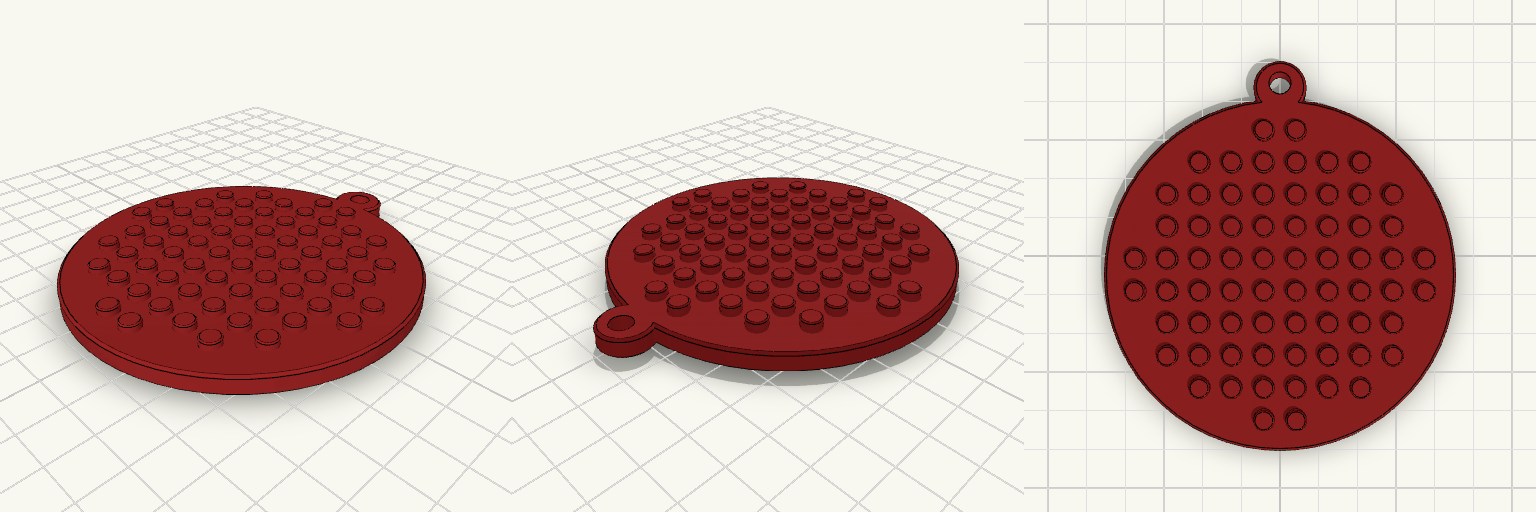
A round 88 mm ornament disc, 4.8 mm thick, with a grid of LEGO-compatible studs on the face and a hanging loop at the top. Printed in red, flat, with no supports. Remix hooks Stud diameter: 5.0 mm now (standard is 4.8 mm). Raise it to 5.05 for a firmer grip, or drop it to 4.9 if bricks sit too tight on your printer. Stud height: 1.8 mm. Taller studs give a deeper grip but need more bridging care. Disc thickness: 4.8 mm, or 1.5 LEGO plates. Use 3.2 mm for one plate or 9.6 mm for a full brick height. Disc diameter: 88 mm on an 8 mm stud pitch. The stud grid is cut to a 37 mm radius, which leaves a plain rim. Loop: 13 mm outer, 5.5 mm hole. Widen it for ribbon. Pairs with: 1x1 and 2x2 bricks, tiles, and small minifigure scenes.
Two-Vial Storage Case with Snap Lid
A storage case for two 31 mm round, 71 mm tall vials, with a separate snap-on lid. Body and lid are two separate pieces, laid out side by side so each can be exported as its own STL. Each vial sits in its own round pocket, with a 4 mm solid wall between the pockets so the vials never touch at the base. The pockets have 0.6 mm of clearance and a 3 mm floor. A finger slot on the front of each pocket makes lifting a vial out easier. The lid fits over the top of the body and clicks onto a shallow groove around the rim. It leaves room for the vial tops that stick out above the body. Vial size: 31 mm diameter, 71 mm tall Body height: 60 mm, 2.5 mm walls Lid: 5 mm overlap onto the body, with an inward snap bead Made with resin printers such as the Elegoo Mars in mind
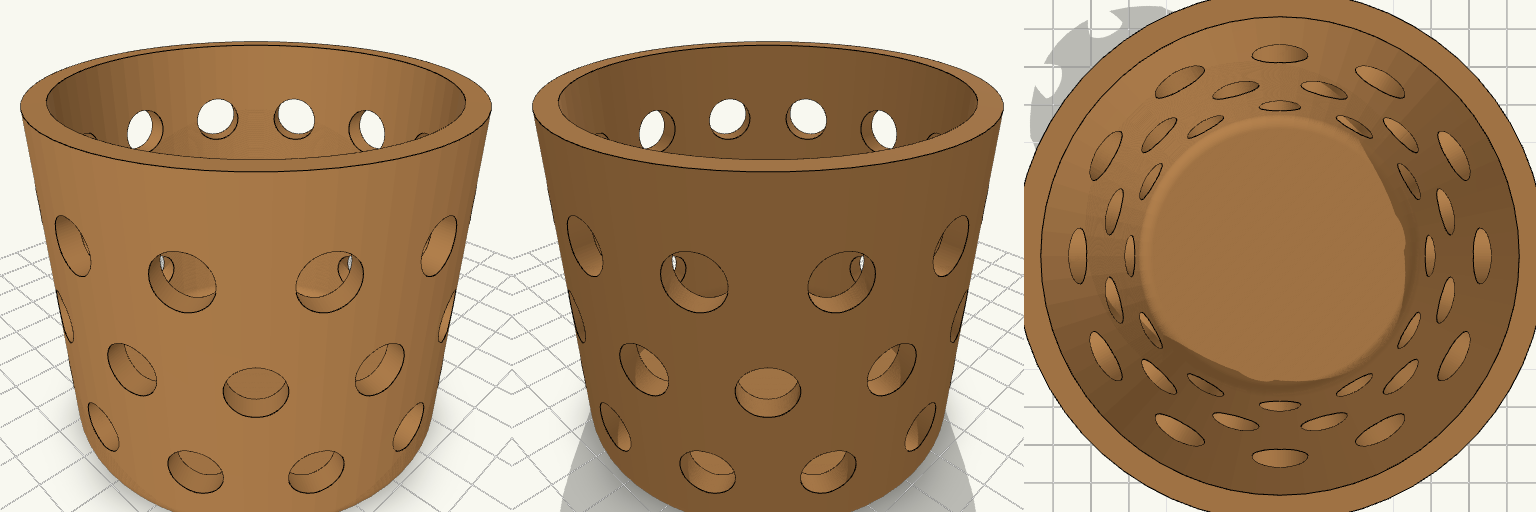
Nook — Round Pencil Cup
Nook is a round pencil cup sized to hold pens, pencils, markers and short rulers upright on a desk. The design keeps a clean, fully circular profile — no flat back, no corners — so it reads as a plain cylinder from every side. What sets this version apart is a wall of openings cut all the way around and up the side: three staggered rows of small round holes that let you see at a glance what's inside, let the cup breathe, and keep the barrel light. At 80 mm across and 70 mm tall it takes a full handful of writing tools while staying low enough to reach into from a seated position. Dimensions Diameter: 80 mm, fully round Height: 70 mm Walls: 4 mm Footprint: 80 × 80 mm Side openings: 36 round holes, 10 mm across, in three staggered rows of 12, spread around and up the cup wall Features Full circle profile with no flat back — the same silhouette from any angle A staggered grid of 10 mm holes around the side wall, small enough to leave solid wall between them Base and top rim stay solid, so the cup holds its shape and stands straight Wide 80 mm mouth for pencils, pens, markers and short rulers 4 mm walls give it enough weight at the base to stay put while you pull a pen out Freestanding: it sits directly on a desk, shelf or tray with nothing to fix or hang Print notes Prints as a single piece with no supports. Print it upright as it sits on the plate so the walls and the round holes stay clean, or lay it on its side if you prefer a smoother inner surface and can accept a light support under the outer curve. A slightly wider brim helps on taller, narrow prints.
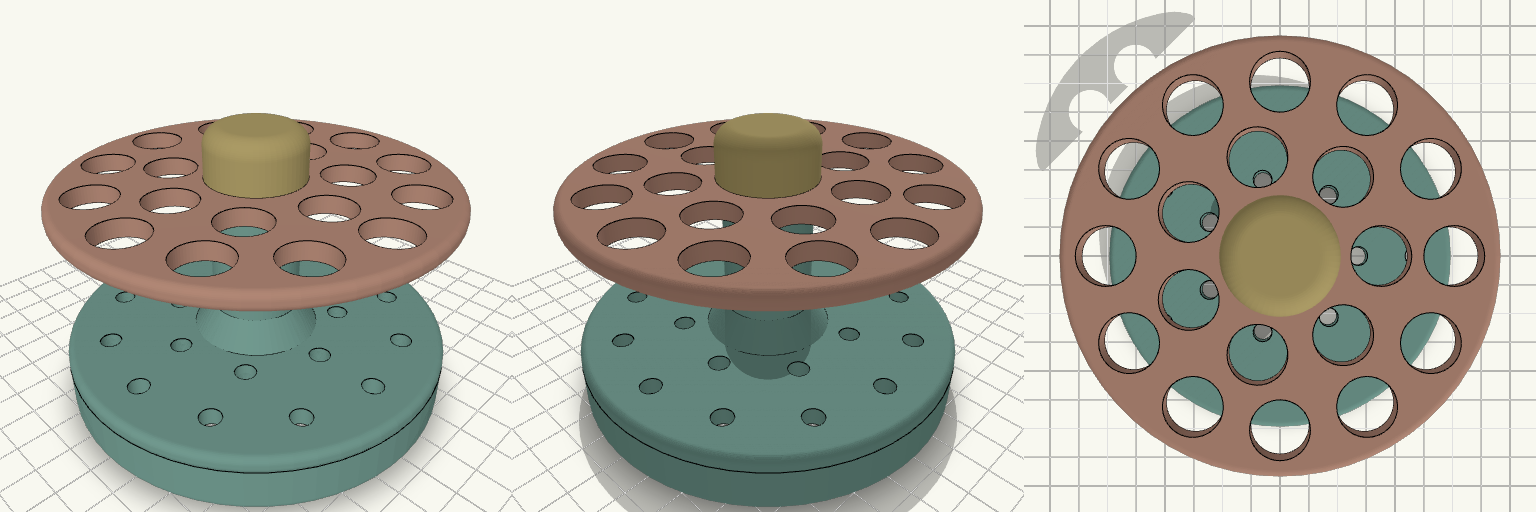
Mini 19-Cone Henna Carousel Stand
A compact two-tier henna cone stand: 110 mm trays, 60 mm apart, holding 19 cones tip-down, joined by a 25 mm central column and a screw cap. The top tray's 15 mm holes sit directly over 6 mm tip holes in the lower tray. A foot ring under the lower tray keeps cone tips off the table. Remix hooks Tray spacing: 60 mm now. Raise it for longer cones. Ring layout: 12 holes at 43 mm radius plus 7 at 25 mm radius. Wall between rings is about 3 mm, so adding holes means growing the tray. Tray diameter: 110 mm. Scale it up and add a third ring for more capacity. Hole size: 15 mm top, 6 mm bottom. Adjust to your cone brand. Pairs with: a turntable disc or non-slip mat under the foot ring.