V2_Aşkım Love Letter Photo Frame
Created 22 days ago
Description
Ein winziger Bilderrahmen im Stil einer Liebeskarte: Der Name „Aşkım" thront als erhabene Schrift über dem Rahmen, auf der Rückseite wartet eine versteckte Botschaft samt großem Herz.
- Außenmaß 52 × 52 × 1,5 mm, Fach für ein 50 × 50 mm Foto
- Rückwand 0,6 mm, geschlossen
- Name 4 mm hoch in Arial-ähnlicher Schrift (Liberation Sans)
- Unterseite: Widmungstext und Herz, 0,25 mm tief graviert (lesbar von hinten)
Images
More like this
Explore more in Gifts, Seasonal & Personalized →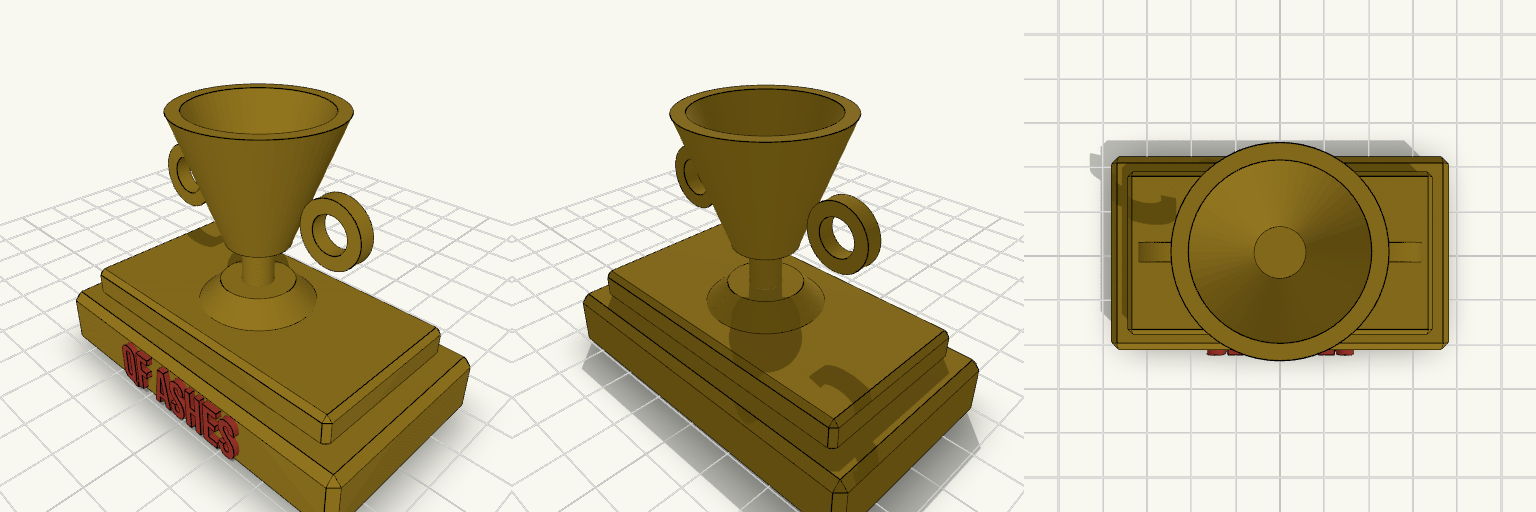
Ashes — QF Go-Kart Trophy Urn
Ashes is an urn-style trophy on a stepped block base, made for the Quick Finishers go-karting group. The front carries a single bold line of raised lettering, "QF ASHES", sized to read from across a room. Features Urn with twin ring handles on a two-step base Raised "QF ASHES" lettering on the front face Flat underside for easy printing Dimensions Base: 70 × 40 mm Overall height: 54 mm
Árbol navideño lowpoly
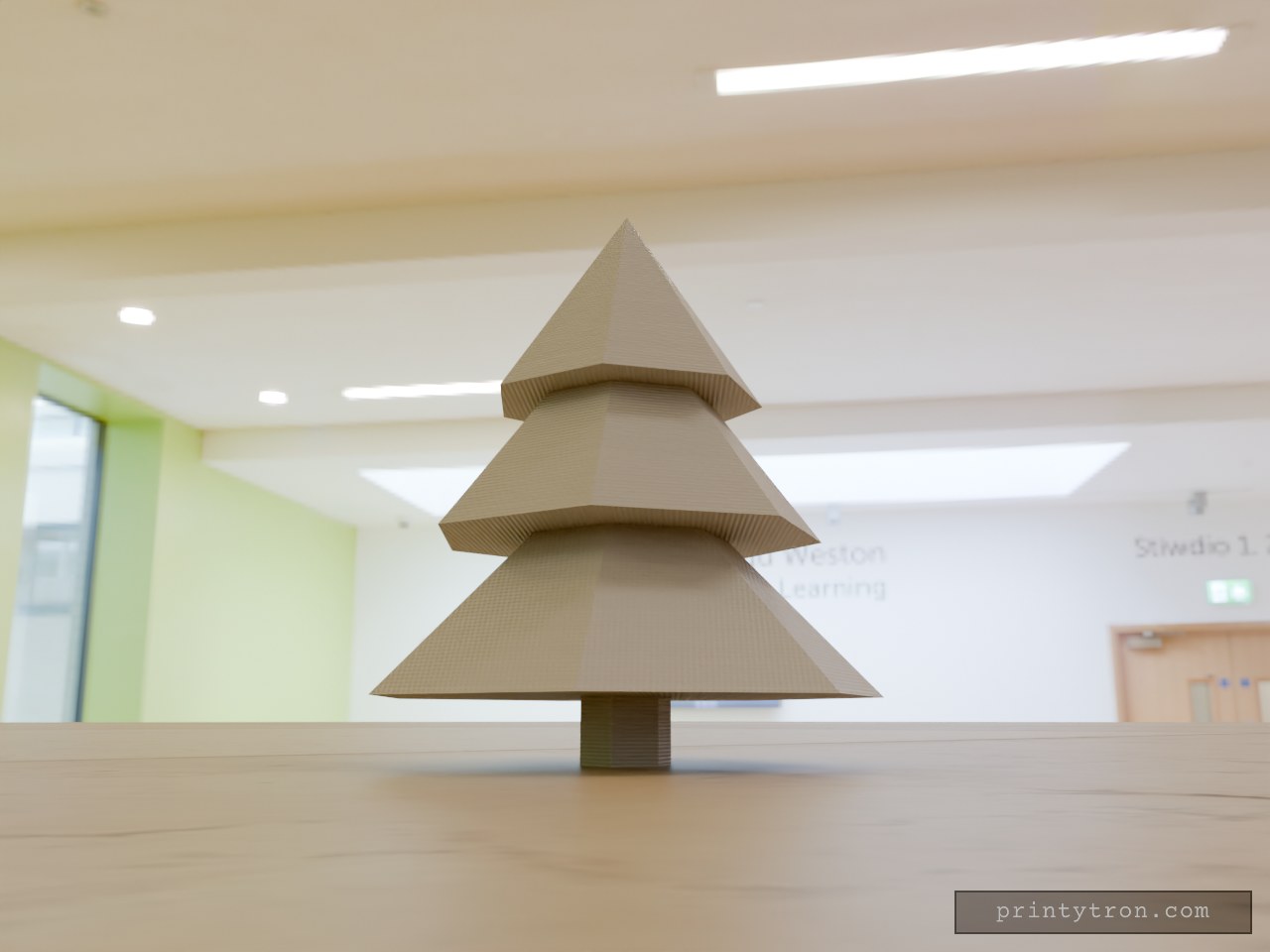
Árbol de Navidad lowpoly formado por tres pisos facetados de siete lados sobre un tronco hexagonal, que termina en punta cónica. Sin brazos, sin manos y sin estrella: es solo el arbolito, con caras planas y aristas marcadas. Su tamaño reducido, de unos 48 mm de alto, lo hace apto para repisas, escritorios, vitrinas o para esconderlo en rincones donde no se espera encontrar decoración navideña. Composición: tres pisos facetados de siete lados sobre tronco hexagonal; punta en cono, sin estrella. Medidas: unos 48 mm de alto en total; cuerpo del árbol de aproximadamente 42 × 43 mm; tronco de unos 8 mm de ancho. Estilo: lowpoly, con caras planas y aristas marcadas. Uso: decoración navideña de escritorio, repisa o vitrina; también como pieza pequeña para colocar en lugares inesperados. Impresión: una sola pieza, sin partes móviles ni ensamblaje; el tamaño reducido permite imprimir varias a la vez.
Lantern Support Frame Stops Cardboard Sides Bowing
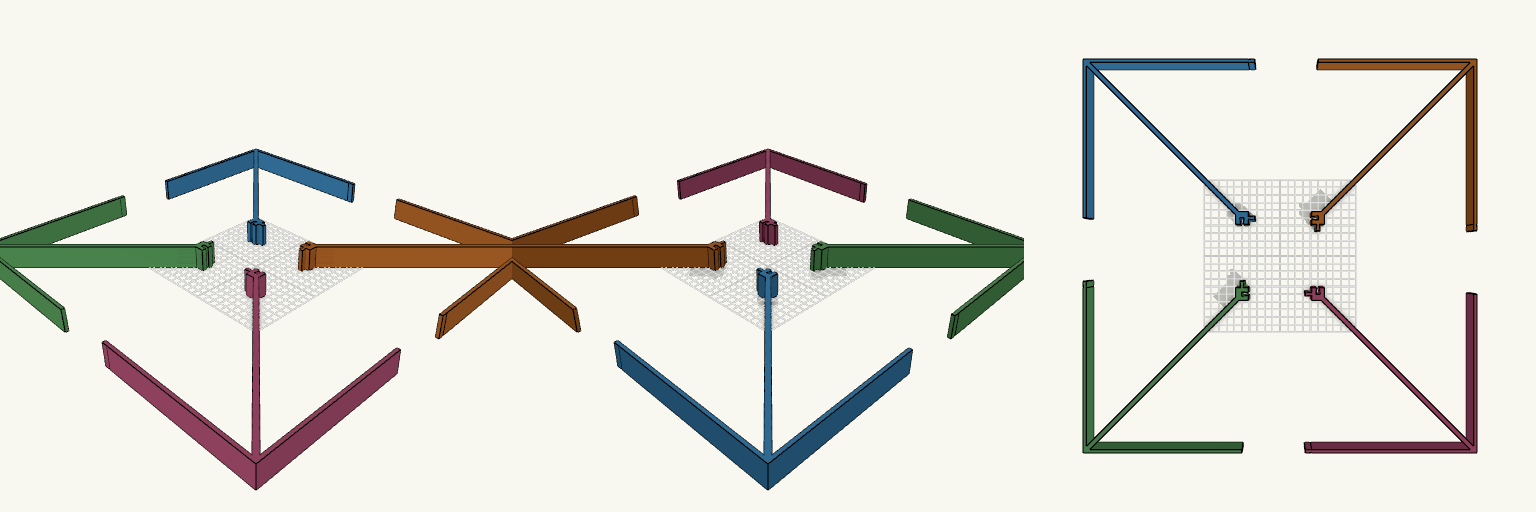
A cardboard Diwali lantern bows at the panels and loses square at the corners. This insert frame sits inside the lantern and holds all four walls out at full width, so the sides stay flat instead of sagging inward. Assembled, it measures 417 mm square, with a 4 mm thin outer border and two 6 mm diagonal braces crossing at the centre in an X, all 30 mm tall. Fit Assembled outer size: 417 × 417 mm (41.7 cm) Inside opening: 409 × 409 mm, set by the 4 mm border Height: 30 mm — depth is what keeps the cardboard from flexing, so go taller before wider if it still bows Two 6 mm diagonal braces meet in the middle of the opening Hidden inside the lantern once it is closed up Printing and assembly Prints as four separate corner pieces, labelled Corner Piece A–D. They are the same shape rotated, so print the same piece four times. Each piece is about 209 × 217 × 30 mm, so the bed needs roughly 217 mm square plus printer margin. Inner joints use dovetail tabs and matching sockets at the centre where the X arms meet. Slide each tab straight down into its socket; these joints lock mechanically. Outer wall joints use a plain full-thickness slot, open at the outer face and 0.3 mm wider than the tab. The neighbouring tab slides in flush with both wall faces; a 4 mm wall is too thin for a dovetail lock there, so add a drop of glue. Tabs sit inside the sockets and do not add to the outer size. Each tab extends 8 mm past its cut edge — without that it cannot lock — and it is hidden once the frame is assembled. The outer-wall tab sits at the centre of the 4 mm wall, 2 mm in from the outer edge, with its tip trimmed flush so nothing sticks out past the wall faces. The border is only 4 mm wide, so the joints are the weak point: print with extra perimeters and handle the assembled frame by the border rather than the tabs.
Platte mit Schrift
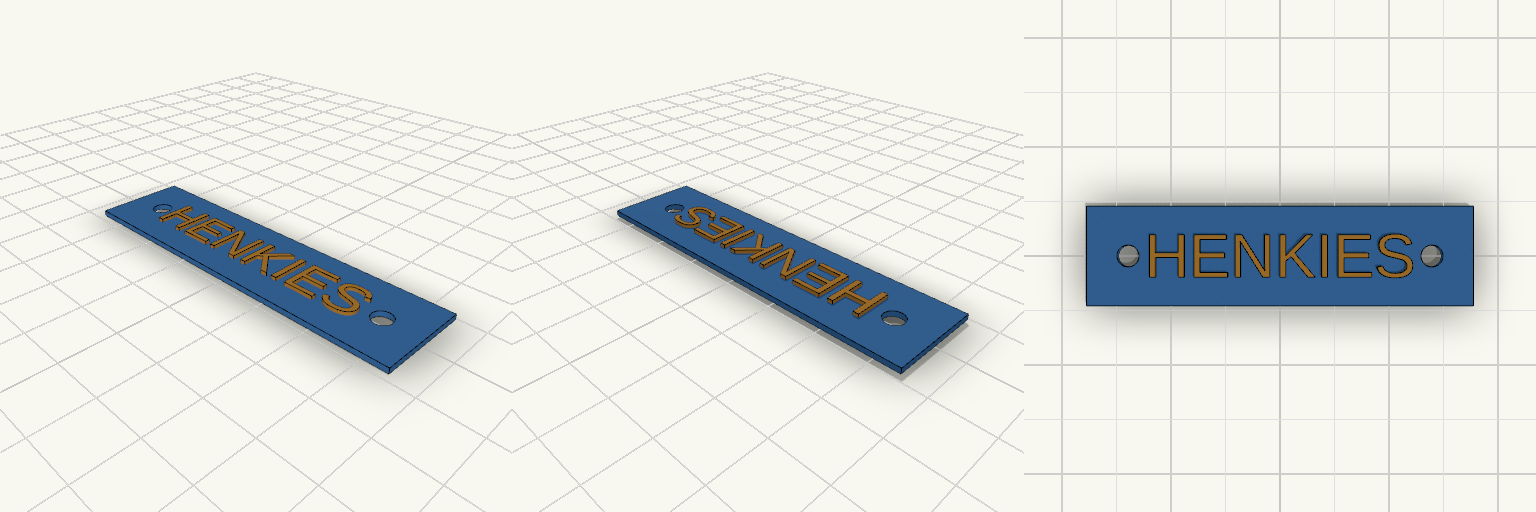
What it's for Kleine Beschriftungsplatte mit erhabenem Schriftzug HENKIES und zwei Befestigungslöchern, z. B. als Namensschild oder Anhänger. Dimensions Platte: 70 × 18 × 1 mm Löcher: 2 × Ø 4 mm, 55 mm Abstand (Mitte zu Mitte), mittig auf der langen Achse Schrift: HENKIES, 0,7 mm erhaben, mittig, Gesamthöhe 1,7 mm Schriftart: Liberation Sans (Arial-kompatibel) Remix ideas Ecken abrunden Größere Schrift oder andere Schriftart Zusätzliche Fase an den Plattenkanten
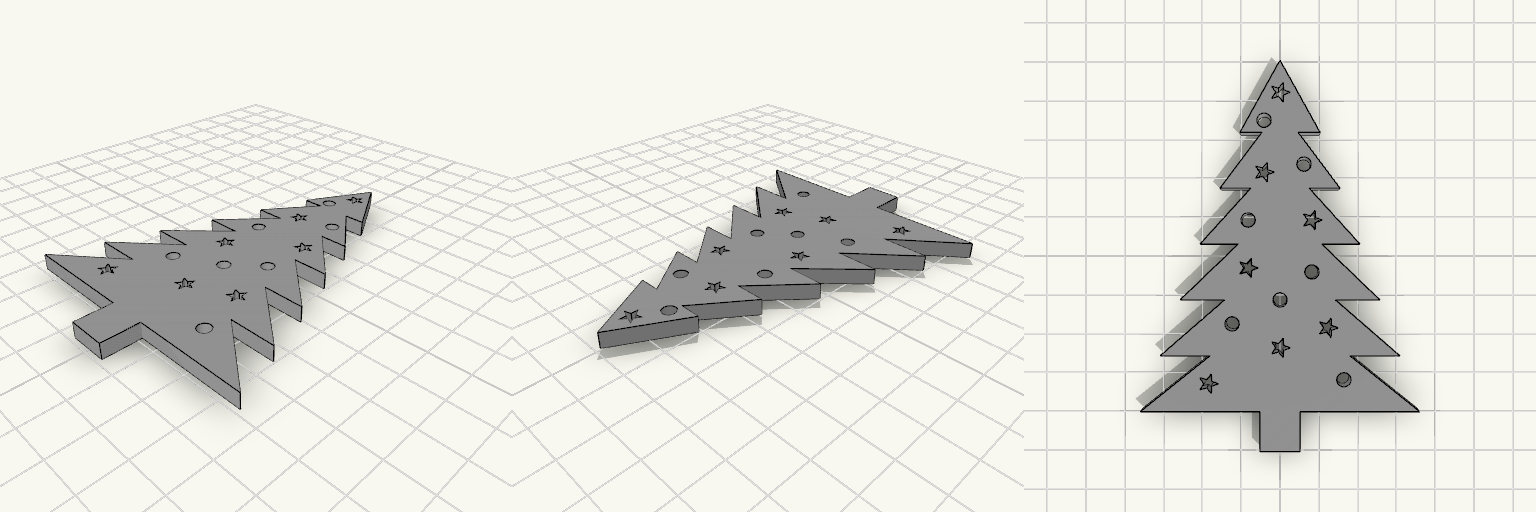
Flat Six-Tier Christmas Tree Cutout
What it's for A flat, two-dimensional Christmas tree cutout with six stacked, tapering tiers over a short trunk. The tip is a plain point — no star, no topper — and the silhouette stays clean and unbroken. Seven small stars and seven small circles are scattered across the tiers as through-holes in those same shapes, punching light through the flat body and adding detail without any surface relief. It prints as one flat piece and comes off the plate ready to use, with no assembly and no supports. Dimensions Overall footprint: 70 mm wide × 98 mm tall Thickness: a constant 4 mm Tiers: six stacked branches Star holes: 7 through-holes, roughly 2.6 mm across the points Circle holes: 7 through-holes, 3.6 mm across Top: plain pointed tip, no star All of the star and circle holes sit inside the tree's outline, including the ones near the tip, so nothing breaks the outer silhouette. Print notes Print flat on the plate. The constant 4 mm body means there are no overhangs and no supports are needed. The holes are small, so a 0.4 mm nozzle prints them cleanly; the star points are sharp and may round off slightly. The flat faces are a good place for a colour change or a two-tone filament swap. Remix ideas Scale the outline up or down for a larger wall piece or a small tag. Thin the body to 2–3 mm for a lighter decoration, or thicken it for a freestanding table piece. Enlarge the star and circle holes for a stronger see-through effect, or change their count for a denser or sparser look. Add a name across the trunk, or add a hanging hole if you want to suspend it.
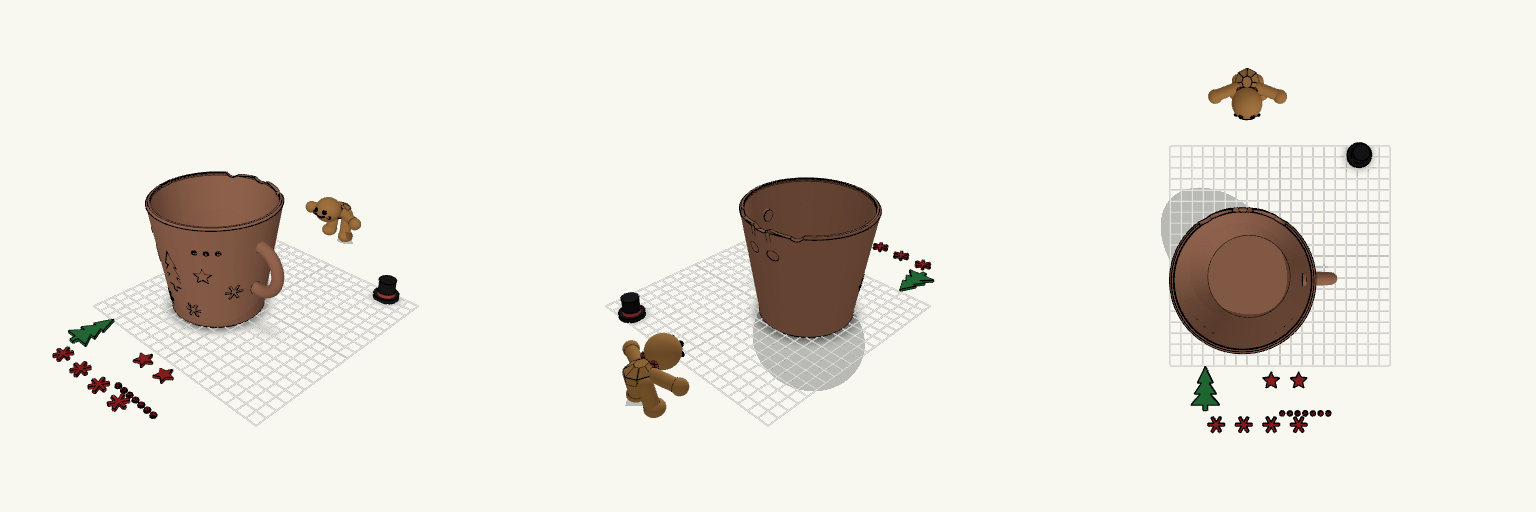
110 mm pot à bonbons pain d'épice
Pot à bonbons en forme de tasse de chocolat chaud, avec un bonhomme en pain d'épice couché sur le rebord arrière. Il n'y a pas de couvercle : le dessus reste ouvert et les bonbons se prennent par le haut. La pièce se présente en volumes séparés, posés à plat sur le plateau, à réunir à la colle après impression. La cote qui commande tout, c'est le diamètre au sommet de la tasse : 110 mm. C'est lui qui définit l'ouverture et l'encombrement du pot une fois monté. La tasse fait 100 mm de haut, son diamètre passe de 80 mm au pied à 110 mm au sommet, avec des parois de 3 mm, un fond de 5 mm et une base parfaitement plate. L'anse, sur un côté, porte l'emprise à 130 mm de large pour environ 110 mm de profondeur. Les pièces du plateau Tasse : 130 × 110 × 100 mm environ, avec les creux des motifs sur la face avant et l'emplacement du bonhomme sur le rebord arrière. Bonhomme pain d'épice : debout sur ses pieds, 68 × 44 × 51 mm ; le corps ne touche pas le plateau. Sapin de Noël : à plat, 26 × 40 × 2 mm — trois étages, un petit tronc et une étoile au sommet. Décors rouges : à plat, 2 mm d'épaisseur — deux étoiles, quatre flocons et sept demi-perles. Visage (yeux et sourire), Nœud et joues, Chapeau haut de forme (22 mm de large, ruban rouge à part) : chacun traité comme une pièce distincte. Une fois collé, le bonhomme repose sur le rebord par le torse, les bras et les jambes, la tête relevée vers l'avant, coiffé du haut de forme noir incliné vers l'arrière. Le sapin vert occupe le centre de la face avant, entouré des décors rouges en relief de 2 mm, sur une paroi de 3 mm qui s'évase. À vérifier avant de lancer Ouverture : 110 mm de diamètre au sommet, la référence pour la tasse. Plateau : la tasse seule occupe déjà environ 130 × 110 mm ; les autres pièces se répartissent à côté, sans se toucher. Bonhomme : il est modélisé debout et son corps ne porte pas sur le plateau — il faut le coucher sur le dos dans le trancheur, sinon il s'imprime dans le vide. Chapeau : le bord large reste en porte-à-faux ; prévoyez un support dessous. Couleurs : chaque pièce séparée reçoit son filament dans le trancheur (tasse chocolat, sapin vert, décors rouges, chapeau noir). Un STL ne contient aucune couleur. Ce à quoi ce modèle ne convient pas Aucun couvercle n'est prévu, ni à visser ni à poser : ce n'est pas un pot fermé. Les pièces n'ont pas d'ergots d'emboîtement. Elles se posent bord à bord et demandent de la colle ; sans collage, l'ensemble ne tient pas. Le bonhomme n'est pas une figurine libre : sa découpe suit le rebord arrière de cette tasse précise. Le chapeau et le visage sont des pièces rapportées, pas des éléments venus de matière avec la tête.