Backgammon Piece with Hidden Hexagon Cavity
Created today
Description
What it's for
A backgammon checker with a sealed hexagonal cavity hidden inside, suited to holding a small weight or token, or simply to being a hidden-feature piece.
Dimensions
- Outer cylinder: 21.5 mm diameter, 8 mm tall, 0.5 mm edge chamfer
- Hidden hexagon: 13 mm across flats, 6.4 mm tall
- Cavity centred vertically, leaving 0.8 mm of material above and below
Remix ideas
- Add a small weight (coin or steel washer) before sealing the cavity by pausing the print
- Change the cavity to a different shape, such as a star or circle
- Engrave a number or logo on the top face
Images
More like this
Explore more in Decor & Display →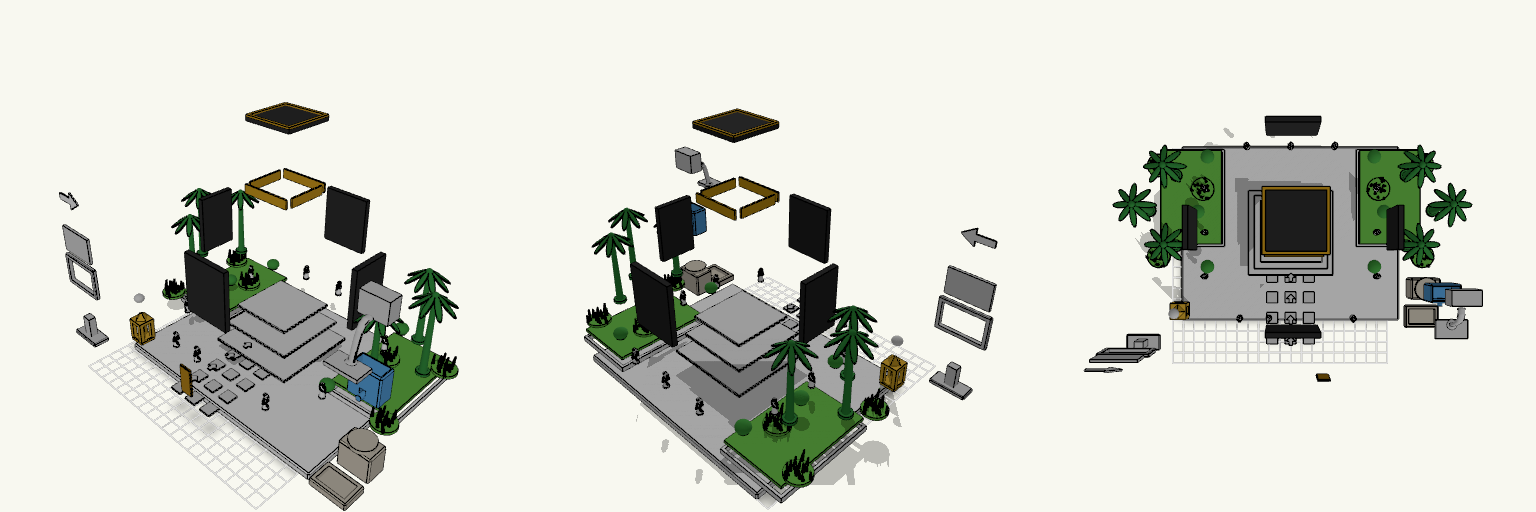
55كعبة مجزءة
Exploded miniature of a masjid scene with every component spread apart with visible gaps. Parts: white base, platform tiers, four black Kaaba walls, roof, door, gold bands, walkway tiles, arrows, palms, bushes, grass, pilgrims, Zamzam station, Maqam Ibrahim and blue sign parts. Layout: exploded only, no assembled copy. Export: the download is one file; separating individual parts happens outside this model.
Moldura quadrada para botão com ímã
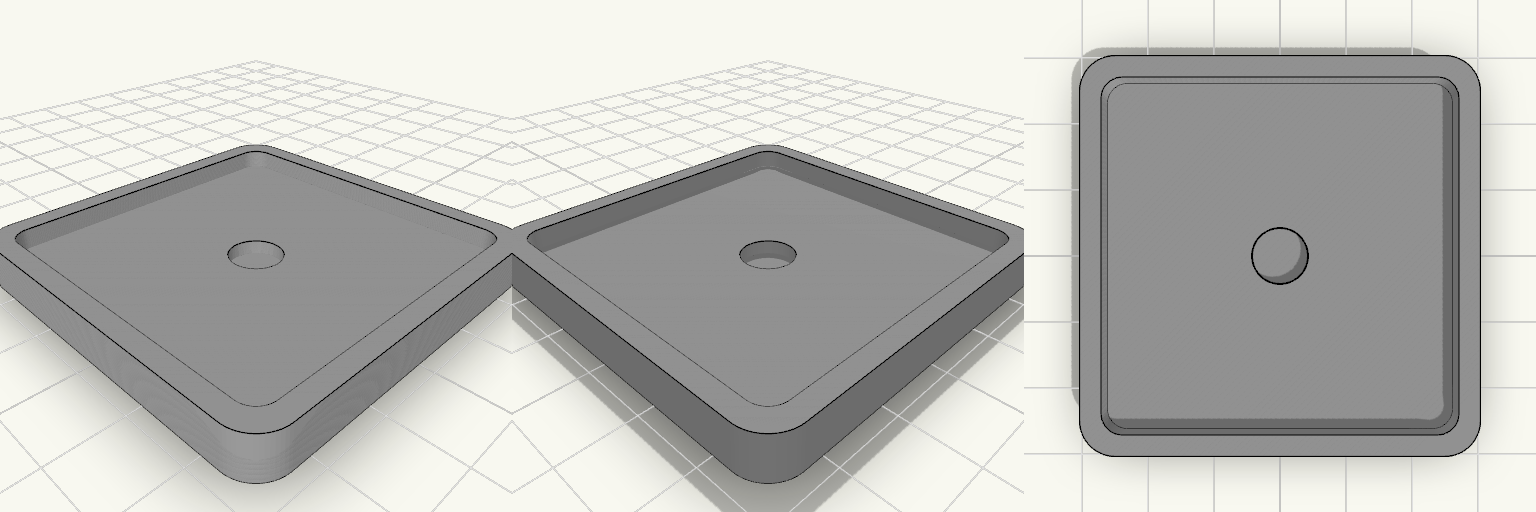
Moldura quadrada para um botão de 50,1 mm de lado, com encaixe de 3 mm de profundidade e cantos arredondados. A parede ao redor do encaixe tem 3 mm, resultando em 56,1 mm de lado externo e 6,5 mm de altura total. Um furo para ímã de 8×2 mm fica centralizado na face superior; na face inferior há quatro furos para ímãs de 5×2 mm, próximos aos cantos, posicionados a 21 mm do centro em X e em Y. A peça imprime em uma única parte. Encaixe: 50,1 × 50,1 mm, cantos arredondados, 3 mm de profundidade Dimensão externa: 56,1 × 56,1 mm; altura total: 6,5 mm Parede ao redor do encaixe: 3 mm Ímã central: furo de 8,2 mm de diâmetro × 2,1 mm de profundidade na face superior (ímã de 8×2 mm) Quatro furos na face inferior para ímãs de 5×2 mm: 5,2 mm de diâmetro × 2,1 mm de profundidade, a 21 mm do centro em X e em Y Folga dos furos: 0,2 mm no diâmetro e 0,1 mm na profundidade Impressão: uma peça única, sem suportes nos furos
Marco para fotos Instax Mini con imanes
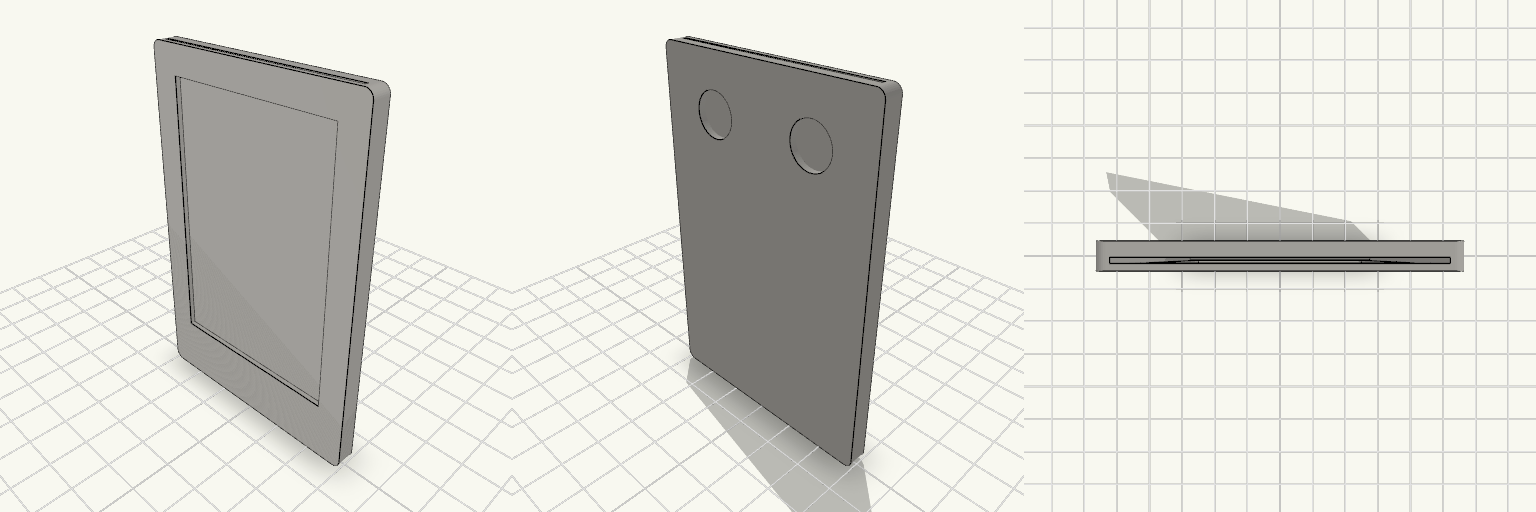
El marco para fotos Instax Mini evita que la foto se caiga de la nevera, se doble por una esquina o acabe pegada con cinta que deja residuo. La foto entra deslizándola por la abertura superior y queda en un bolsillo cerrado por abajo y por los lados; la trasera es una placa sólida, así que la ventana no la atraviesa y no se ve la foto por detrás. Dos imanes de neodimio en la cara trasera, en la parte superior, lo sujetan sin chinchetas ni cinta. El marco va en vertical y mide 60 × 90 mm en total, con 4,8 mm de grosor. La ventana deja un borde frontal inferior de 15 mm y uno superior de 7 mm: el inferior sigue siendo el ancho de una polaroid, pero el de arriba queda corto y la ventana se pasa 6 mm de la zona de imagen de la Instax (62 mm). Por ahí se verá algo más de la foto o de su borde blanco. Medidas que deciden el montaje Marco: 60 × 90 mm, 4,8 mm de grosor. Ventana frontal: 46 × 68 mm, centrada a lo ancho, a 15 mm del borde inferior y a 7 mm del superior. Bolsillo para la foto: cerrado, abierto solo por el borde superior; la foto de 53 × 86 mm entra deslizándola desde arriba. El bolsillo mide 54,6 mm de ancho. Paredes laterales: unos 2,7 mm. Trasera: placa sólida de 2,6 mm; la ventana no la atraviesa. Alojamientos de imán: 11 mm de diámetro y 1,8 mm de profundidad, separados 28 mm entre centros, con el centro a 14 mm del borde superior, en la cara trasera detrás de la zona de la ventana. Dejan 0,8 mm de plástico entre el imán y la foto. Para imprimir Necesitas dos imanes de neodimio de 8 × 1,5 mm y una gota de cianoacrilato para fijarlos. Con alojamientos de 11 mm, cada imán de 8 mm queda con 1,5 mm de holgura por lado; hay que pegarlo para que no se mueva. La holgura del bolsillo está calculada para que la foto entre deslizando; si la impresora aprieta las paredes, puede que entre justa. El marco se imprime como una sola pieza; los imanes se pegan después.
Pebbl — Aquarium Plant Weight
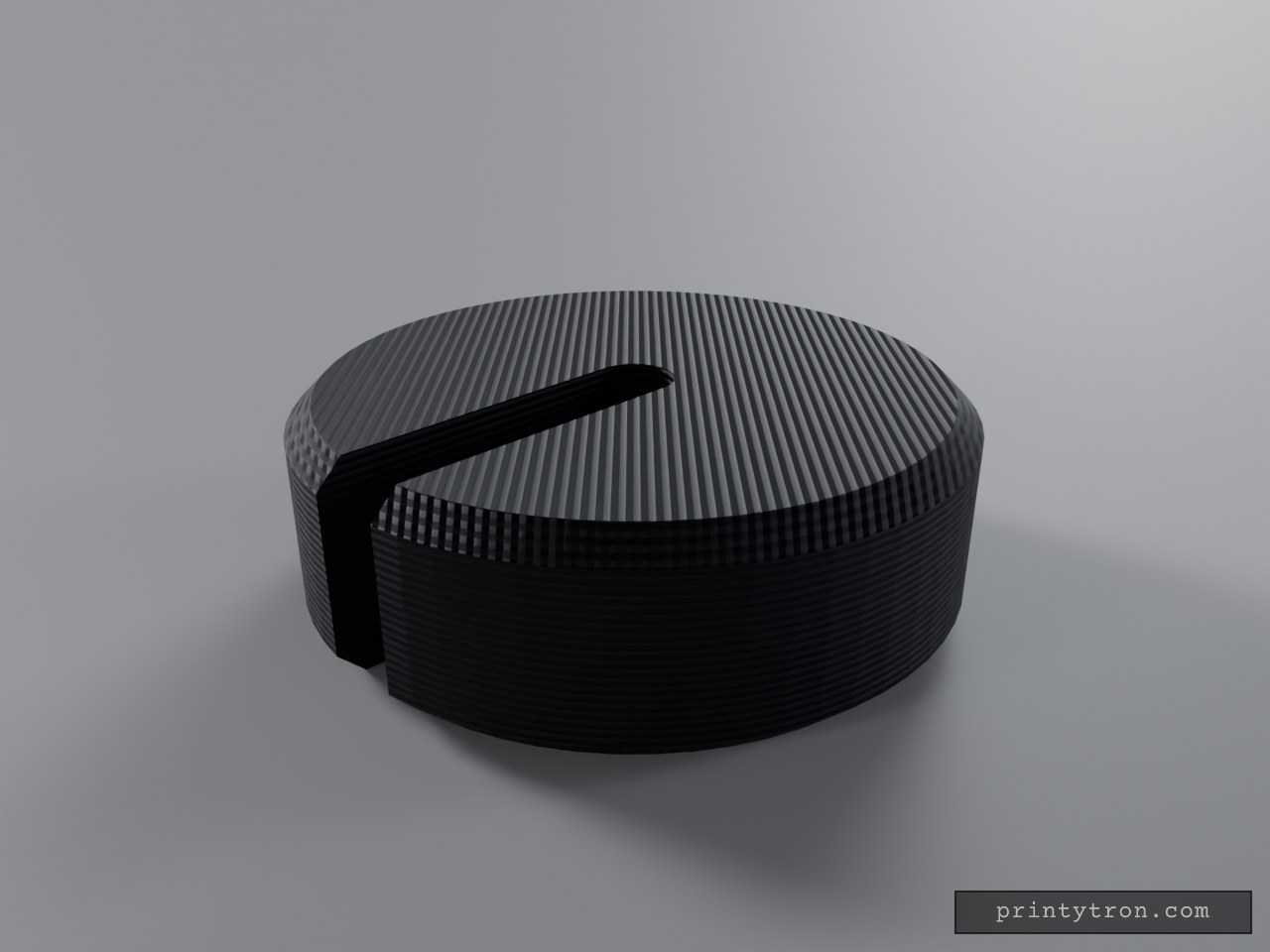
Pebbl is a small slotted disc that holds aquarium plant stems down in the substrate. The stem slides in through the open slot and seats in a rounded pocket at the centre, so the plant stays put without wire, glue or clips. The flat, compact profile sits low and is easy to bury under gravel or sand. Dimensions Diameter: 25 mm Thickness: 8 mm Slot width: 3 mm, running from one edge to the centre Edges: 1 mm chamfer on the top and bottom rims Slot end: rounded at the centre so a stem seats cleanly Print notes Prints flat on the build plate with no supports. PETG at high infill is a good choice for sinking weight. Plastic is light, so larger plants may need a thicker or wider disc. Use an aquarium-safe filament.
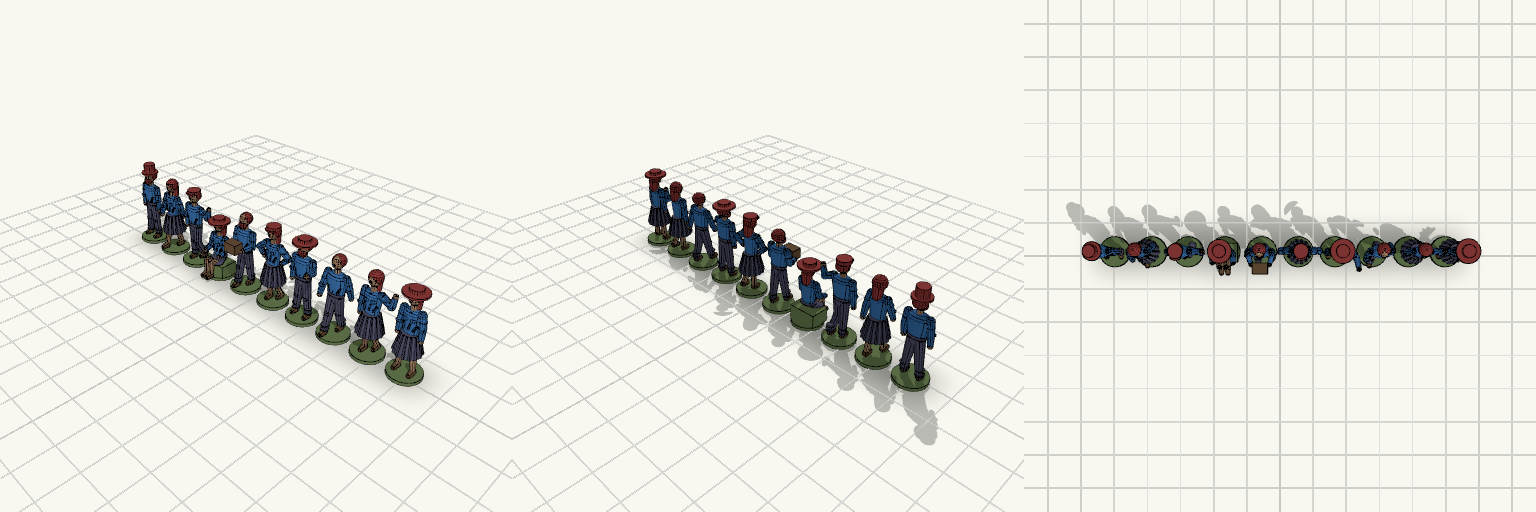
OO Scale Figures, 10 Poses with Folded Clothing
Ten standing, walking, waving, seated, carrying, hands-on-hips and pointing figures at OO scale (about 22 mm tall), each on a round 9 mm base. Clothing carries molded detail, and leg stances differ between figures. Clothing detail: pleated skirts, knee creases and ankle cuffs on trousers, belts, shirt wrinkles and sleeve folds. Stances: feet apart, one foot forward, or weight on one leg, plus walking and seated poses. Headwear and hair: flat cap, top hat, wide brim or bare head; long hair on women; beards on some men. Print notes: features under 1 mm suit resin or very fine FDM; print upright with a 0.1 mm layer height or finer.
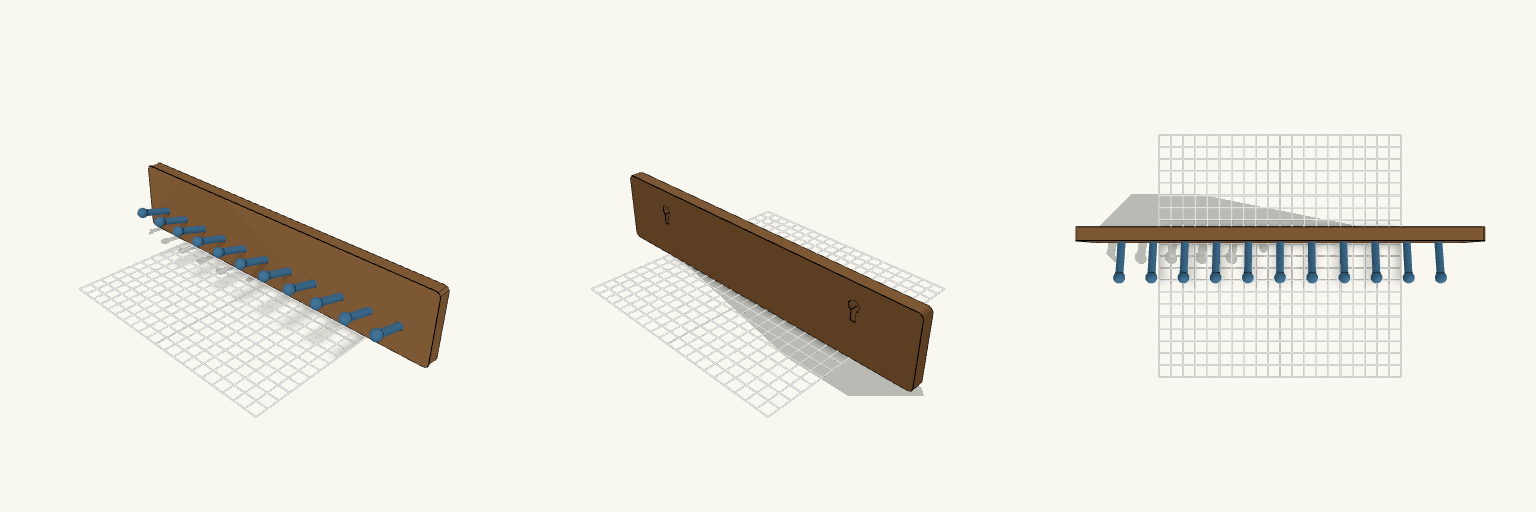
Wall-Mounted Running Medal Holder
What it's for A wall-mounted rack for displaying running medals. Each ribbon slides onto one of eleven angled prongs that project from a flat backboard, so medals hang in a neat row and stay visible instead of ending up in a drawer. The prongs tilt up and finish in a ball tip, which holds the strap in place once it is looped on. The backboard is left plain above the prongs, giving the row of medals a clean edge to hang against and keeping the silhouette simple to print. The front face is completely smooth — the hanging slots are cut only into the back, so no holes or screw heads show through the display side. Dimensions Backboard: 300 mm wide × 60 mm tall × 10 mm deep Medal prongs: 11 prongs at 25 mm spacing, each reaching 30 mm out from the backboard at a 15° upward tilt, with ball tips Hanging slots: two keyhole pockets cut 6 mm into the back, 200 mm apart, leaving 4 mm of solid material at the front Prong spacing is the number worth checking against your own medals — wide straps need more room between prongs, and the spacing can be opened up if yours run thick. Roughly 10 to 15 medals fit across the 300 mm board. Print notes Prints as one piece; no assembly required. Lay the backboard flat on the plate so the prongs build up in front of it. The tilt keeps them self-supporting, so no supports are needed. Because the slots are stopped short of the front, the screw heads sit recessed in the back rather than passing through the board. Two wall screws 200 mm apart carry the holder. Remix ideas Widen the backboard to 400 or 500 mm and add prongs for a larger collection. Add a second row of prongs below the first to stagger medals in two tiers. Add a raised name plate or a finish-line banner along the plain top edge using the same prong layout. Materials Rigid filament is the better choice here; the prongs carry real weight and a soft or flexible material will let them droop.