Classic Low-Top Sneaker Model
Created 1 months ago
Description
What it's for
A 100mm desktop model of a classic low-top sneaker, featuring a prominent T-toe, classic side stripes, and a contrasting gum sole. The lace panel has been updated with crossed physical laces and a tied bow.
Dimensions
- Length: 102 mm
- Width: 37.5 mm
- Height: 37.5 mm
Print notes
- Designed to print best oriented upright on its sole.
- Support may be necessary under the heel collar and toe-box overhangs, depending on cooling setup.
Images
More like this
Explore more in Decor & Display →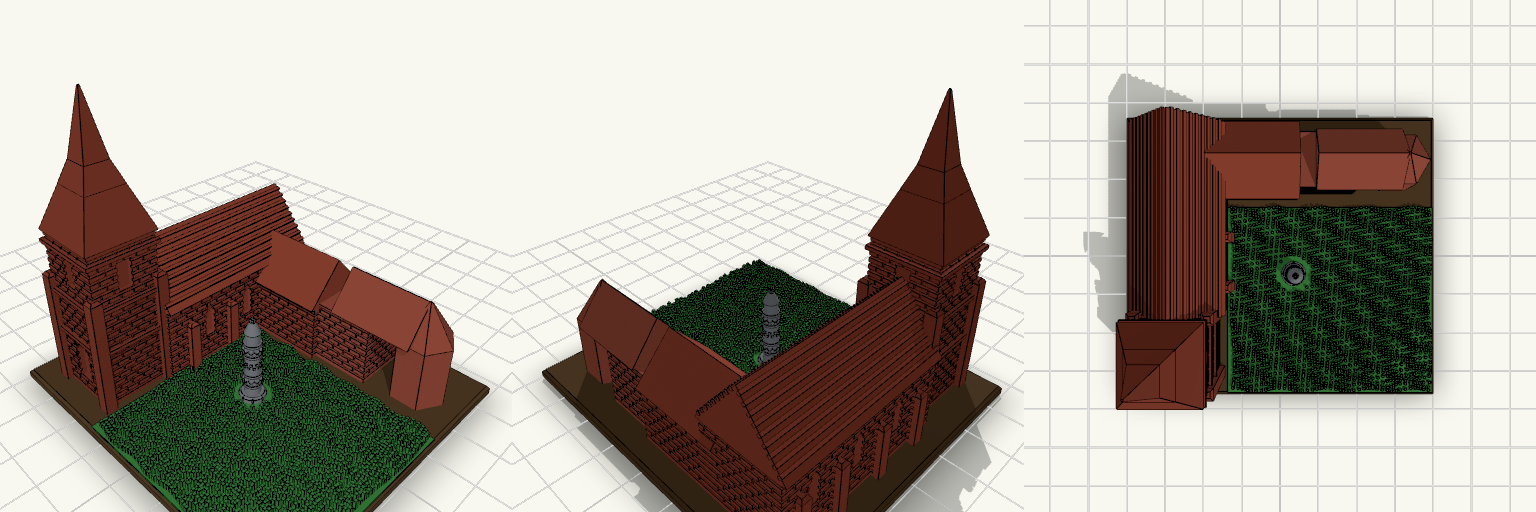
Fara — Uproszczony Model Kościoła
Fara to miniaturowa świątynia w duchu gotyku ceglanego, rozplanowana na literę L. Nawa biegnie wzdłuż jednej osi, a od jej tylnego końca odchodzi w bok skrzydło z dachem dwuspadowym; na jego końcu zamyka całość wieloboczne prezbiterium. Przy froncie wznosi się smukła wieża z ostrym hełmem. W środku wewnętrznego narożnika litery L, odsunięty od ściany nawy i od frontu skrzydła, stoi Słup Koniński — walcowaty trzon na szerszej podstawie ze stożkowym zwieńczeniem i kulką na szczycie. Ściany nawy, wieży i prezbiterium mają ceglaną czerwień oraz relief prawdziwego muru: poziome fugi i przesunięte w co drugiej warstwie pionowe spoiny. Słup zachowuje własny, kamienny charakter i odrębny zestaw ornamentów. Całość stoi na wspólnej, brązowej płycie o lekko ściętej krawędzi. Plac wokół słupa ma zieloną nawierzchnię i porasta go gęsta trawa — źdźbła o różnej wysokości, rozsiane w rozstawie około 1 mm, z wolnym miejscem tuż przy podstawie słupa. Model dobrze czyta się jako dekoracyjna miniatura na półkę, element makiety miasteczka albo pamiątka związana z Koninem. Proporcje są przybliżone — oparte na ogólnym układzie świątyni, a nie na planach budynku — więc detale wieży czy liczba okien mogą odbiegać od oryginału. Słup jest wyraźnie wyższy względem kościoła, niż byłby w skali: prawdziwy jest dużo niższy i przy tej skali wyszedłby zbyt cienki do druku. Wymiary Szerokość × głębokość × wysokość poszczególnych części: Płyta: 79 × 71 × 2 mm, z lekko ściętą krawędzią Trawa (zielony plac ze słupem): 52,6 × 47,8 × 2,3 mm Nawa (ze skrzydłem): 39,8 × 45,2 × 32 mm Wieża: 18,6 × 18,6 × 67 mm Prezbiterium: 30,9 × 14 × 24 mm Słup koniński: 6,1 × 6,1 × 21 mm Wieża jest najwyższym elementem całości — o tym warto pamiętać przy planowaniu wysokości druku. Cechy Plan litery L: nawa i odchodzące od jej tylnego końca skrzydło z dachem dwuspadowym, a na jego końcu wieloboczne prezbiterium Stromy dach nawy, przypory i ostrołukowe okna — czytelny gotycki charakter bryły Mur z cegieł na nawie, wieży i prezbiterium: poziome fugi co około 1,6 mm oraz pionowe spoiny co około 3 mm, przesunięte o pół cegły w co drugiej warstwie Żebra imitujące dachówki na obu połaciach dachu nawy Trzy poziome gzymsy i rząd drobnych rombów pod hełmem wieży Słup ustawiony w środku placu przy wewnętrznym narożniku litery L, odsunięty od kościoła, z podstawą i stożkowym zwieńczeniem z kulką, ozdobiony pierścieniami, dwoma rzędami rombów, zygzakiem i bruzdami na cokole Wspólna płyta pod całością, z zieloną nawierzchnią i trawą na placu wokół słupa — model stoi stabilnie i zaczyna się od płaskiego spodu Uwagi o druku Model nie ma delikatnych, ażurowych detali — okna i przypory są płaskorzeźbione w bryle — więc dobrze znosi typowe ustawienia druku. Fugi mają około 0,4 mm głębokości, a pionowe spoiny rozstawione co 3 mm mogą przy standardowej dyszy 0,4 mm wyjść ledwo widoczne; jeśli drukarka je zaleje, warto zmniejszyć warstwę lub nieco pogłębić rowki w slicerze. Źdźbła trawy mają 0,6 mm szerokości i rozstaw około 1 mm — gęściej nie ma sensu przy dyszy 0,4 mm, bo źdźbła zleją się w jedną plamę. Największą uwagę warto poświęcić wieży z hełmem, która sięga 67 mm, oraz cienkiemu trzonowi słupa o średnicy 6,1 mm. Cały model jest jednym elementem na wspólnej płycie — nie wymaga sklejania.
Antikythera Mechanism Desk Model
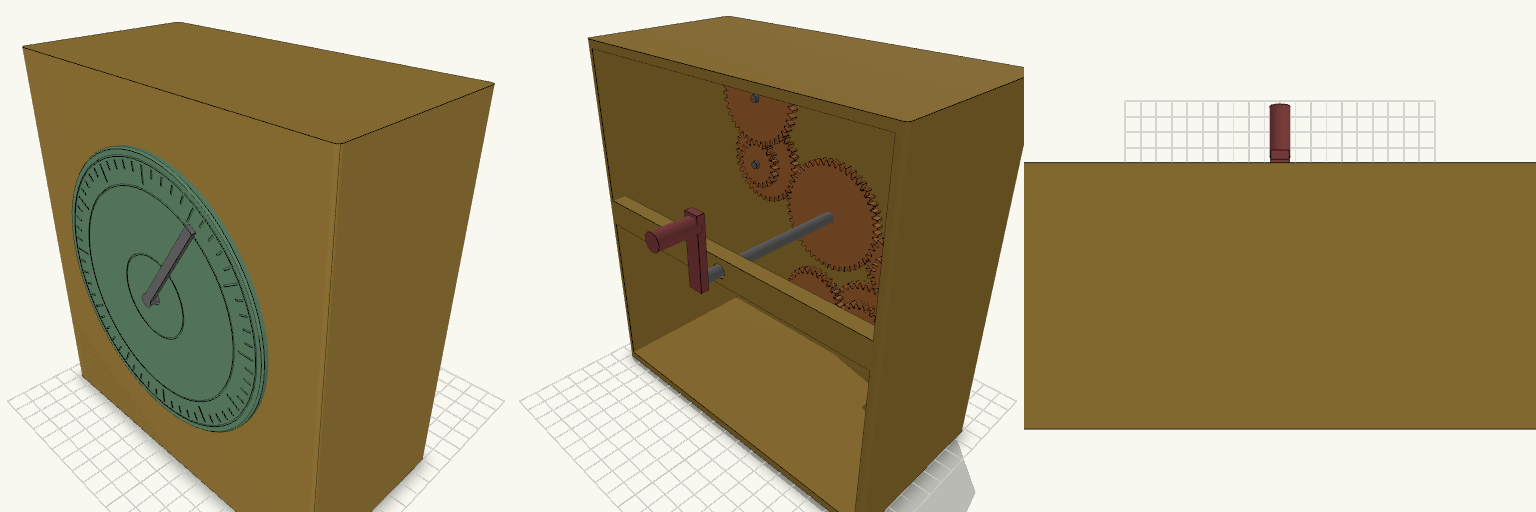
A simplified, life-size-style display model of the Antikythera mechanism: an upright case with a round front dial, a pointer, an open-backed gear train and a rear hand crank. Case 180 x 90 x 190 mm, open at the back to show the gears 130 mm front dial with ring grooves and 60 tick marks Nine spur gears (20 to 48 teeth, module 1.25) arranged in three layers, with phase-matched teeth so they mesh Fixed 4 mm pegs on the front wall carry the compound gears; the main 48-tooth gear is fused to a 6 mm axle that drives the front pointer Rear bearing bar supports the axle, with a crank handle on the back The gear train is a stylised interpretation, not a tooth-accurate copy of the original 30-plus gear mechanism. Print the case, dial, gears, axle and crank separately; the compound gears sit loose on their pegs with 0.3 mm clearance.
OO Gauge Gable, Dutch barn roof, Wide Low Slat Doors
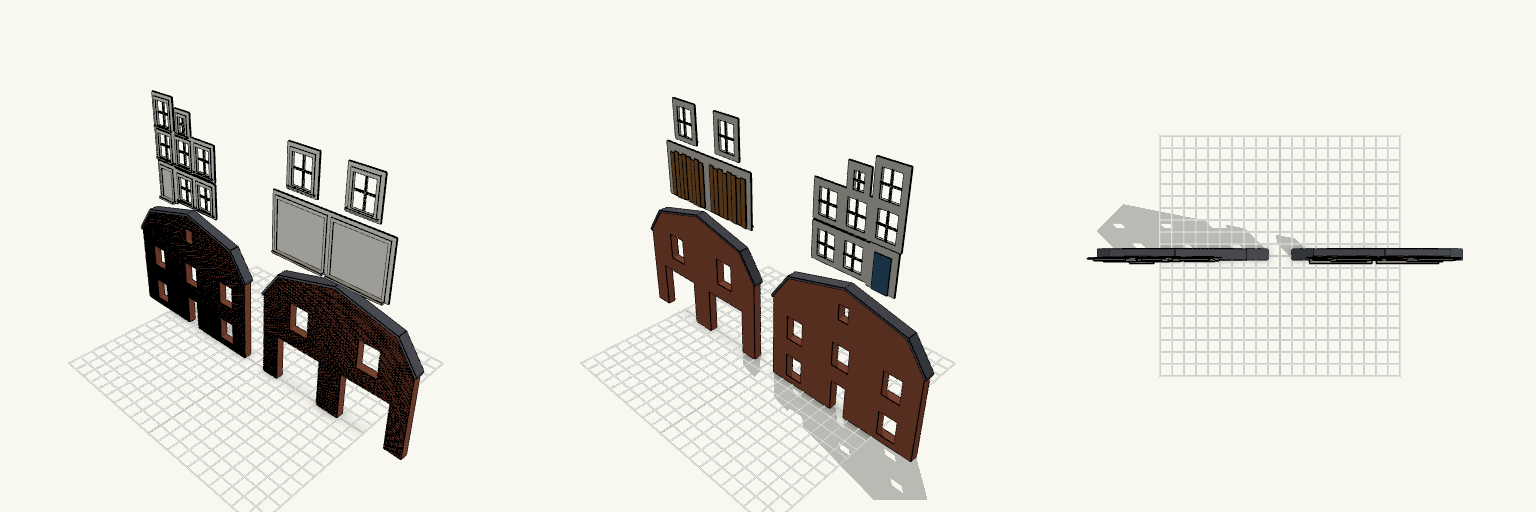
Two half-relief gable-end frontages for 1:76.2 (OO gauge) buildings, each 120 mm wide and 6 mm deep, with a 68 mm eaves height and a two-pitch roofline rising to a 100 mm apex. Fitment Scale: OO, 1:76.2. Not intended for HO or N scenery without rescaling. Front face: Flemish bond mortar joints, 0.2 mm wide and 0.25 mm deep, over the full height. Frontage one: door and five windows plus a loft frame. Frontage two: two 38 × 38 mm wooden slat doors and two high windows. Frames and doors are printed as a separate sheet above each apex. Check before printing Joint detail needs a 0.4 mm nozzle or finer. The wall openings are through-holes, so the frame sets must be glued in from the front. Does not fit No back wall, floors or side walls are included.
Apollo-Style Lunar Lander Model, 82 mm Footprint
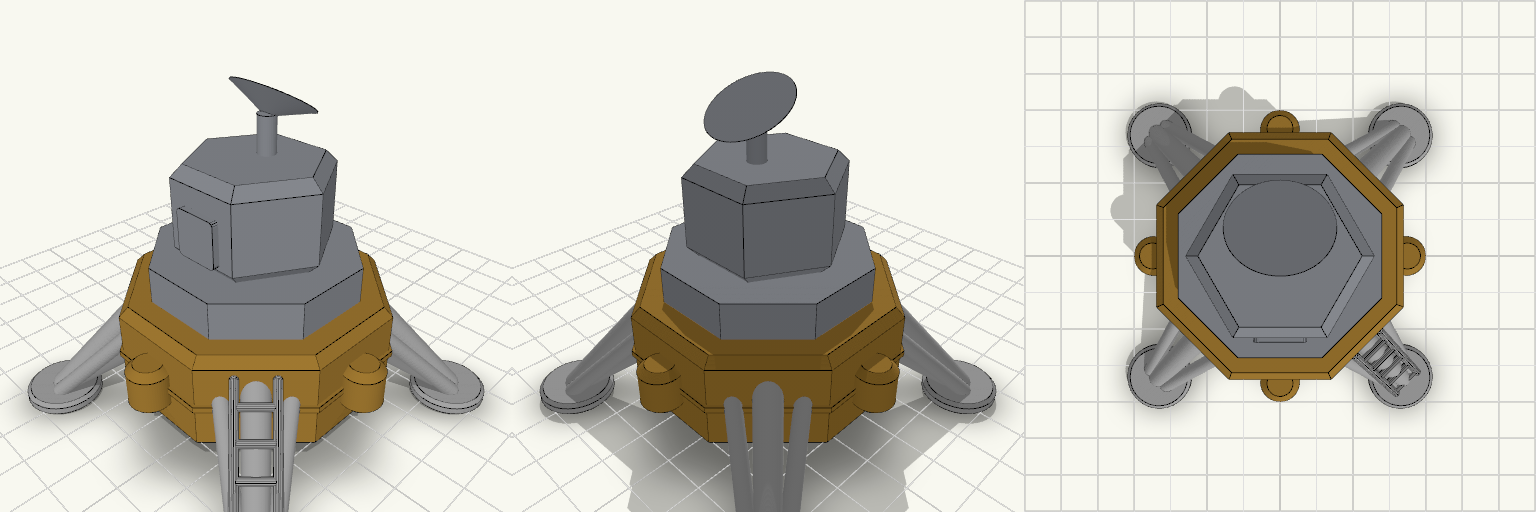
This is a stylized Apollo-style lunar lander display model. It has an octagonal descent stage with four shallow fuel-tank bulges and a panel band around the middle, a faceted hexagonal ascent cabin with a raised front hatch, an engine bell underneath, and four splayed A-frame legs with chamfered footpads. One leg — the front-right — carries a ladder with two rails and rungs, and a tilted dish on an 8 mm mast sits toward the rear of the cabin roof. At roughly 82 mm across the footpads, it is sized as a compact desk or shelf piece. The cabin front is clean apart from the hatch, so the model reads as a lander rather than anything else. The legs are the widest part of the print; the body sits well inside that spread. Specs Footprint: approx. 82 mm across the footpads Descent stage: octagonal, approx. 68 mm across × 22 mm tall, with four shallow fuel-tank bulges and a mid panel band Ascent stage: faceted hexagonal cabin, approx. 42.5 mm across × 43.5 mm tall, with a raised front hatch and a tilted dish on an 8 mm mast Engine bell: approx. 18 mm across × 9 mm tall, mounted low under the central body about 1 mm above the plate, so it reads best from a low viewing angle Legs: four A-frame legs, each with a thick main strut anchored into the descent stage, a lower angled strut and two side struts; chamfered footpads approx. 17 mm Ladder: two rails and rungs on the front-right leg Use: display model for a desk, shelf, or space-themed collection Printing notes The splayed legs and footpads set the build plate footprint; check the 82 mm spread against your plate before scaling up The dish mast, ladder rungs and hatch are the finest features — a smaller layer height keeps them crisp
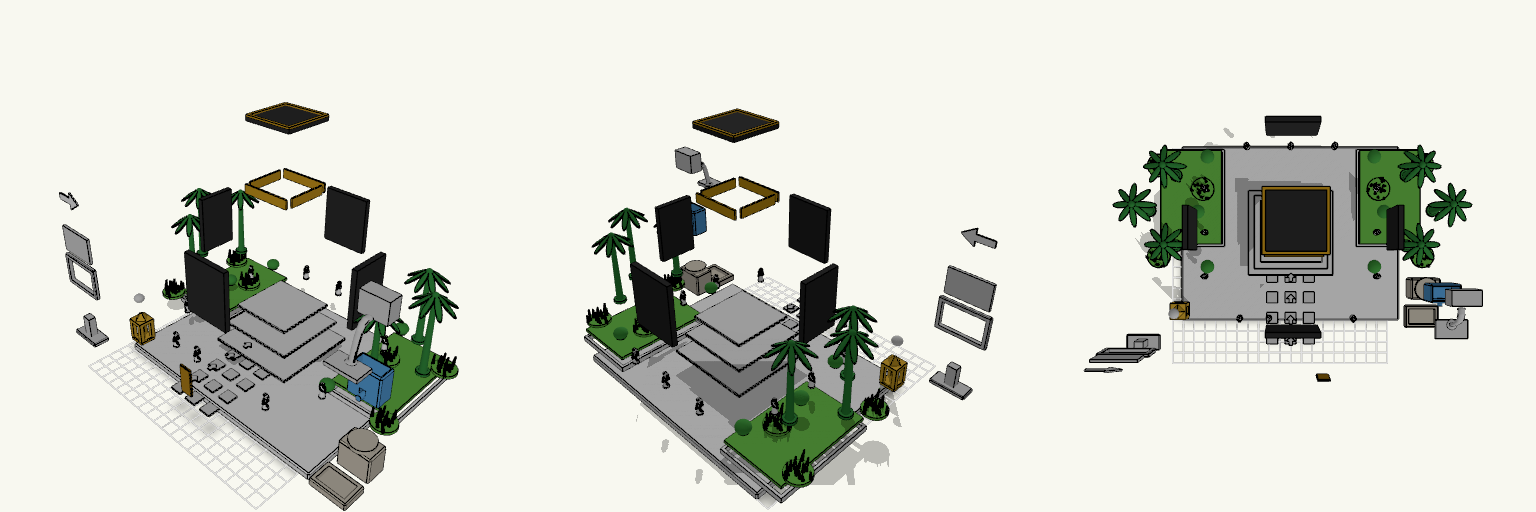
55كعبة مجزءة
Exploded miniature of a masjid scene with every component spread apart with visible gaps. Parts: white base, platform tiers, four black Kaaba walls, roof, door, gold bands, walkway tiles, arrows, palms, bushes, grass, pilgrims, Zamzam station, Maqam Ibrahim and blue sign parts. Layout: exploded only, no assembled copy. Export: the download is one file; separating individual parts happens outside this model.
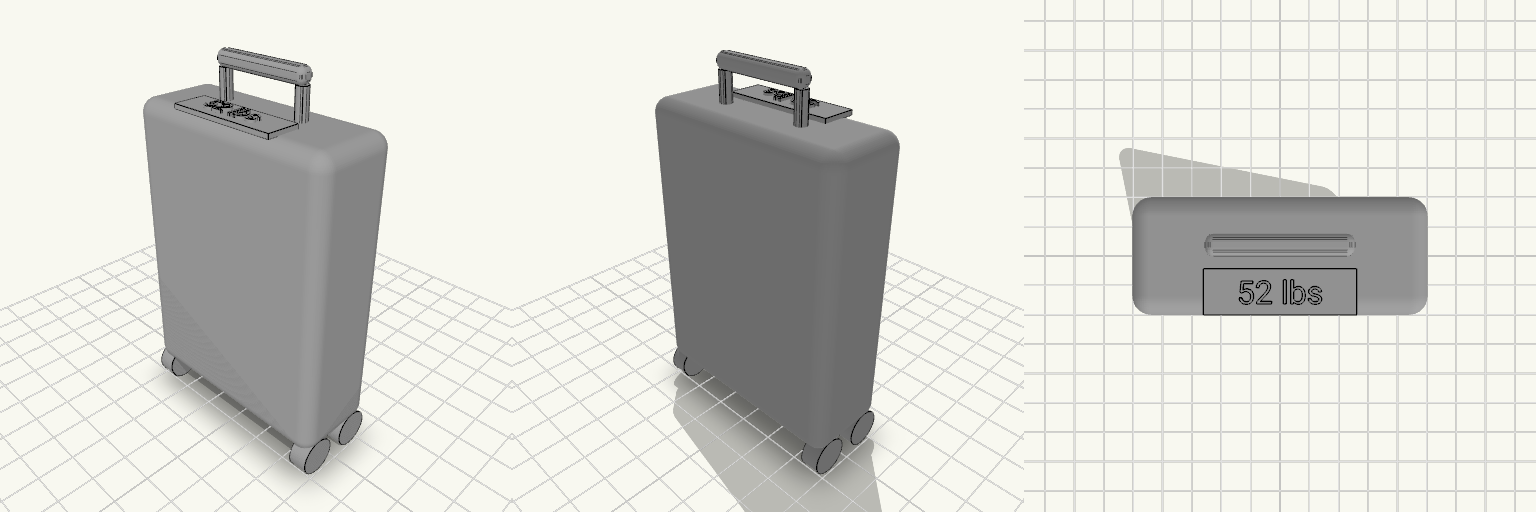
Miniature Suitcase with Handle, Wheels and Weight Display
What it's for A miniature suitcase standing upright on four sideways-mounted wheels, with a pull handle on top and a small thin scale plate set into the top face just in front of the handle. The plate carries a raised readout of 52 lbs, so the piece reads as a luggage scale at a glance. It works as a small desk ornament, a travel-themed display piece, or a scale prop for a dollhouse or diorama. The whole thing is one plain neutral finish, with no colour coding or recessed front screen. Dimensions Overall footprint: 60 × 24 × 100 mm (width × depth × height, as it sits on the print plate) Wheels: mounted sideways, axles running across the width of the case, so the body rests on them Weight plate: a small thin panel on the top face, in front of the handle Readout: raised 52 lbs lettering, picked as a believable airline-limit weight — say if you want a different figure Print notes The model prints as a single piece lying on its wheels, so no supports are needed under the body. The raised readout is small — a 0.4 mm nozzle with fine layer heights keeps the digits and the "lbs" legible, and a 0.25 mm nozzle gives crisper text. The thin top plate is shallow, so check that your bridging over that area is clean. Remix ideas Change the readout to a different weight, or leave the plate blank for a custom label. Swap the handle for a telescoping version, or add corner guards to the body. Scale the case up to hold small items, or down to keyring size. Finish A single neutral colour suits the plain, serious look — the design relies on shape and the raised text rather than colour contrast, so any filament works.