Cylinder Weight With Post
Created 1 months ago
Description
What it's for
A heavy cylindrical base with an extended center post, designed to act as a tether point, weight, or hanging anchor in the workshop.
Dimensions
- Base: 4 inches (101.6 mm) diameter, 2 inches (50.8 mm) tall.
- Post: 1 inch (25.4 mm) diameter, extending 3 inches (76.2 mm) above the base.
- Hole: 0.4 inches (10 mm) diameter, positioned near the top of the post for rigging lines or carabiners.
Materials
Print with dense infill (at least 60%) if being used as a counterweight. PETG or ABS is recommended for impact resistance.
Images
More like this
Explore more in Workshop & Tools →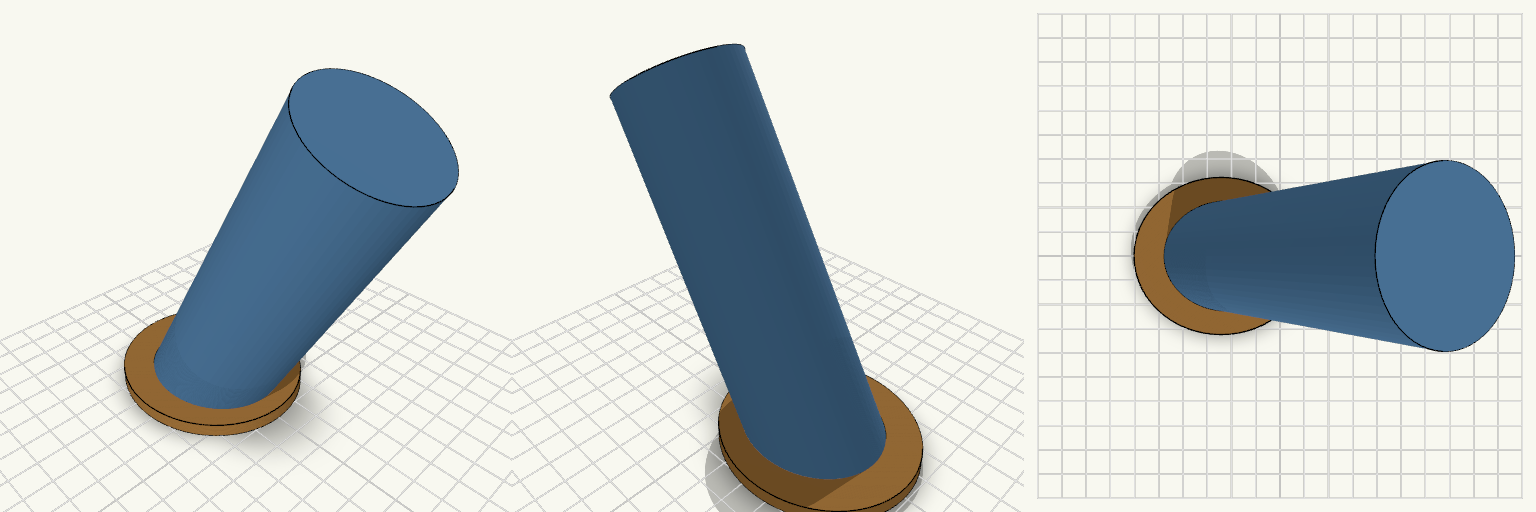
30° Tilted 1.75 in Cylinder With Base
A 1.75 in diameter cylinder leaning 30° from vertical, mounted on a flat base plate. The upper side of the cylinder measures 4.5 in from the base to the top end. Cylinder: 1.75 in (44.45 mm) diameter, 30° from vertical, 4.5 in along the top side Base: 0.18 in (4.57 mm) thick, extends 0.375 in beyond the cylinder footprint on all sides Flat underside, prints without supports on the base; the lean is unsupported on the underside of the cylinder, so a brim or supports may help One continuous solid
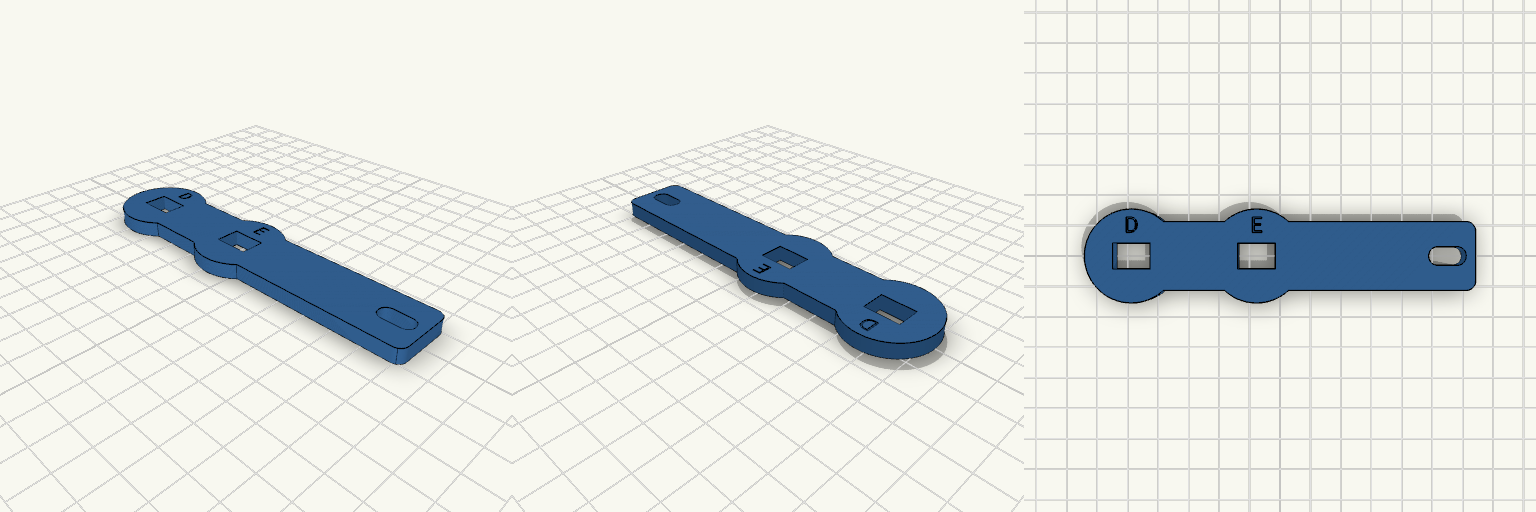
Industrial Flat-Plate Oxygen Cylinder Wrench
A flat, plate-style take on the Allied 66080 oxygen wrench, pared down to an industrial silhouette: twin round socket heads at one end, each stamped with its letter, and a chain slot at the tail. The D socket sits in the end head and the E socket in a second head beside it — both rectangular now, 12 mm along the wrench by 8.4 mm across, sized around the standard 5/16" spindle that D and E post valves share. The letters engraved on the top face above each socket are the only thing telling the two apart, which is exactly the point. The whole tool lives in a single 5 mm plate, 125 × 30 mm, so it lies flat in a pocket or a kit bag and prints as one piece with nothing to assemble. Design notes D socket: end head, 12 × 8.4 mm rectangle, letter engraved on the top face above it. E socket: second round head alongside, same 12 × 8.4 mm rectangle, its own engraved letter. Chain slot: oblong, 12 × 6 mm with rounded ends at the tail, sized for a chain or lanyard. Flat plate body: 125 × 30 × 5 mm overall, no supports needed through the flat sections. Open-end jaw: removed to make room for the second head, leaving a clean two-socket profile. Thread a chain or lanyard through the tail slot and the wrench stays with the cylinder instead of wandering off between refills — the optional chain is the small detail that keeps the tool where it's needed. Both sockets are built to the standard 5/16" spindle rather than a specific drawing, and the 12 mm socket length is an approximation, so measure a valve flat-to-flat before leaning on the fit.
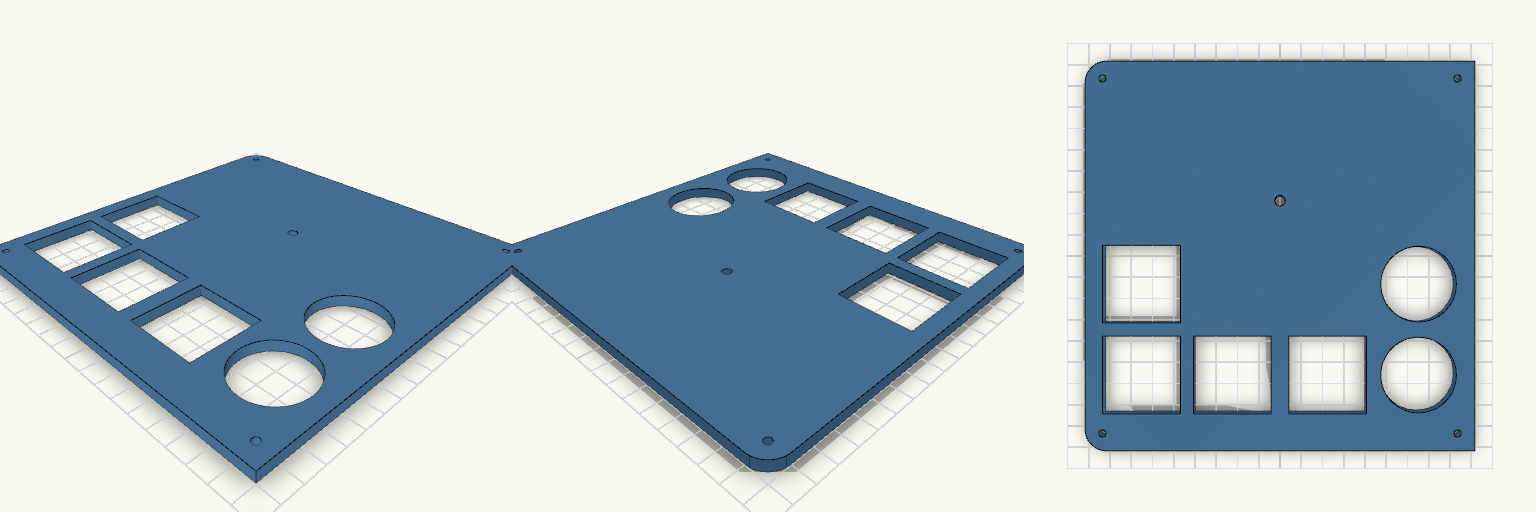
Tapa cuadrada con agujeros mixtos
Tapa de 180×180×5 mm con dos lados redondeados a la izquierda (radio 10 mm), cuatro agujeros M3 en las esquinas y un agujero de 5 mm. Dos agujeros redondos de 35 mm a la derecha y cuatro cuadrados de 36 mm a la izquierda, en la zona inferior. Ideas para remezclar Diámetro de los redondos (35 mm): súbelo o bájalo según la pieza que deba pasar; la pared entre ellos es de 7 mm. Lado cuadrado (36 mm): ajústalo por separado; los centros están a 42 mm. Radio de las esquinas (10 mm): 5 mm para una curva más suave. Agujero de 5 mm: está a 25,5 mm sobre el centro; muévelo para un pasacables o un pulsador. Combina con: una base o caja de 180 mm usando los M3 de las esquinas (3,4 mm, a 8 mm del borde).
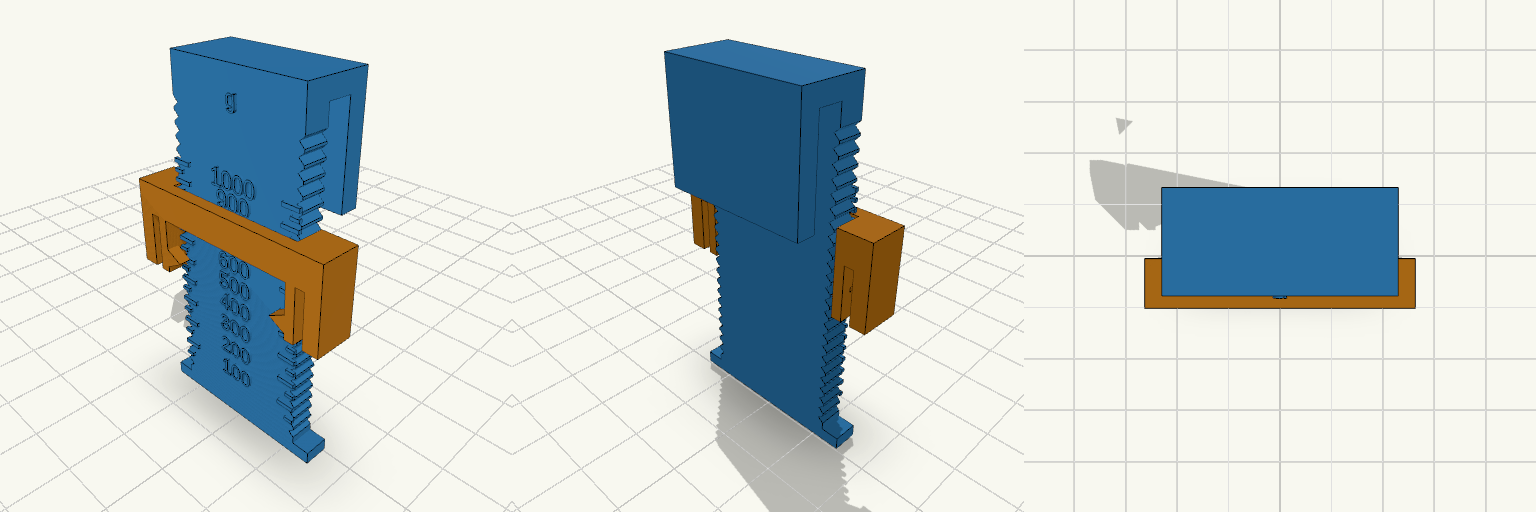
SpoolScope — Filament Remaining Gauge
SpoolScope is a two-part gauge for estimating how much filament remains on a standard spool, made for spools that sit out of easy view in an AMS or on a shelf. The rail hooks over the flange rim; the sliding block rides on it with light detents, so you can push it down until it touches the filament, lift the gauge away and read the result. Raised ticks and numbers plus an unambiguous arrow on the block make the measurement clear without needing line-of-sight while the gauge is in place. Features Two printed parts: a rail with a rim hook, and a detented sliding block. Gram scale from 0 to 1000 g, with ticks every 50 g and numbers every 100 g. Ticks follow filament geometry rather than an even spacing: closer together near full, wider apart near empty. Arrows on the block tip directly toward the scale, and the detents hold the reading after the gauge is lifted off. Hook gap of 4 mm, sized to clear flanges from 2.8 mm to 3.6 mm thick. Dimensions Flange diameter: 200 mm. Hub outer diameter: 95 mm (from a measured Polymaker spool). Full-roll diameter: 170 mm (estimated from a 1 kg PLA roll on a 95 mm hub and a 65.6 mm spool width). Hook gap: 4 mm. Fitting and calibration Sized around Polymaker and Inland 1 kg spools; other brands are worth checking against the hub and flange figures above. The scale can be shifted by a single fixed offset if a first print reads consistently high or low, so a weight check against a known spool is worth doing before trusting the numbers. If the error differs between a full and an empty spool, the hub and full-roll values are the ones to correct. Print notes Both parts are laid out flat on the print plate. The block contacts the filament at its outer edges rather than at the centre, so a reading can sit slightly high; a weight check against a known spool is the best way to confirm the scale.
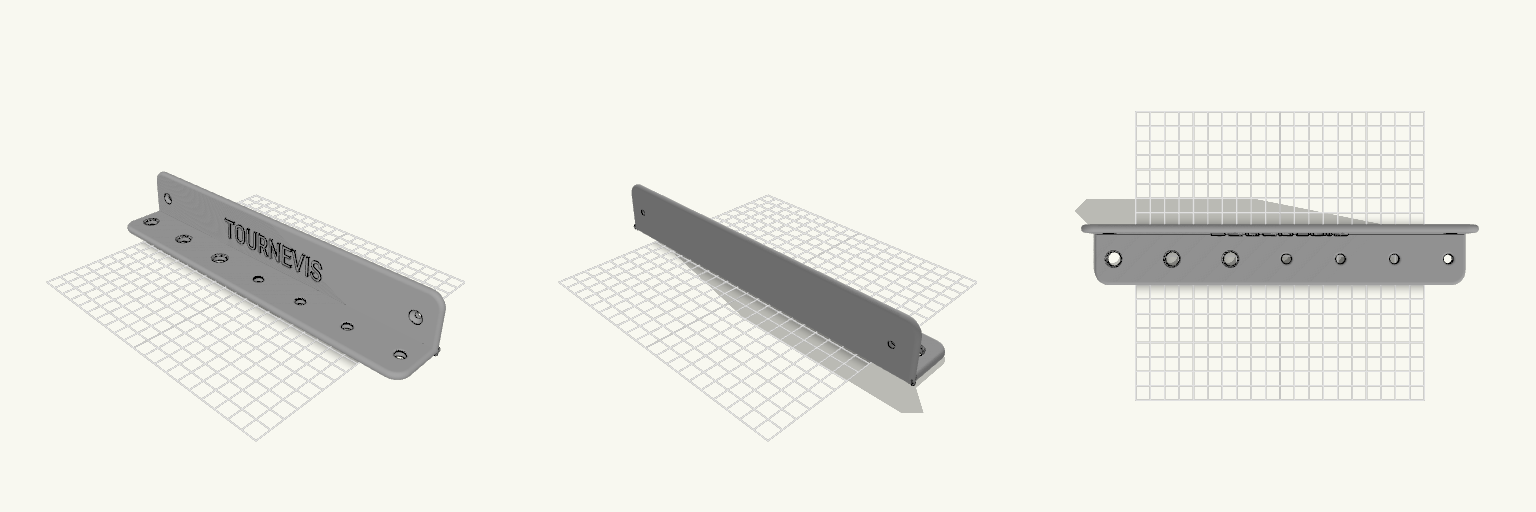
Support mural tournevis 255 × 40 × 40 mm
Support mural pour tournevis : plaque verticale de 255 × 40 mm et tablette horizontale de 255 × 40 mm, épaisseur 5 mm. Trous de la tablette, de gauche à droite : 10, 10, 10, 7, 7, 7, 7 mm, bords arrondis. Deux trous de vis fraisés dans la plaque. Texte « TOURNEVIS » en relief de 1,5 mm. Coins extérieurs arrondis à 10 mm ; les deux coins à la jonction plaque/tablette sont droits. À vérifier avant impression : la longueur de 255 mm doit tenir sur votre plateau. Ne convient pas aux tournevis dont la tige dépasse 10 mm.
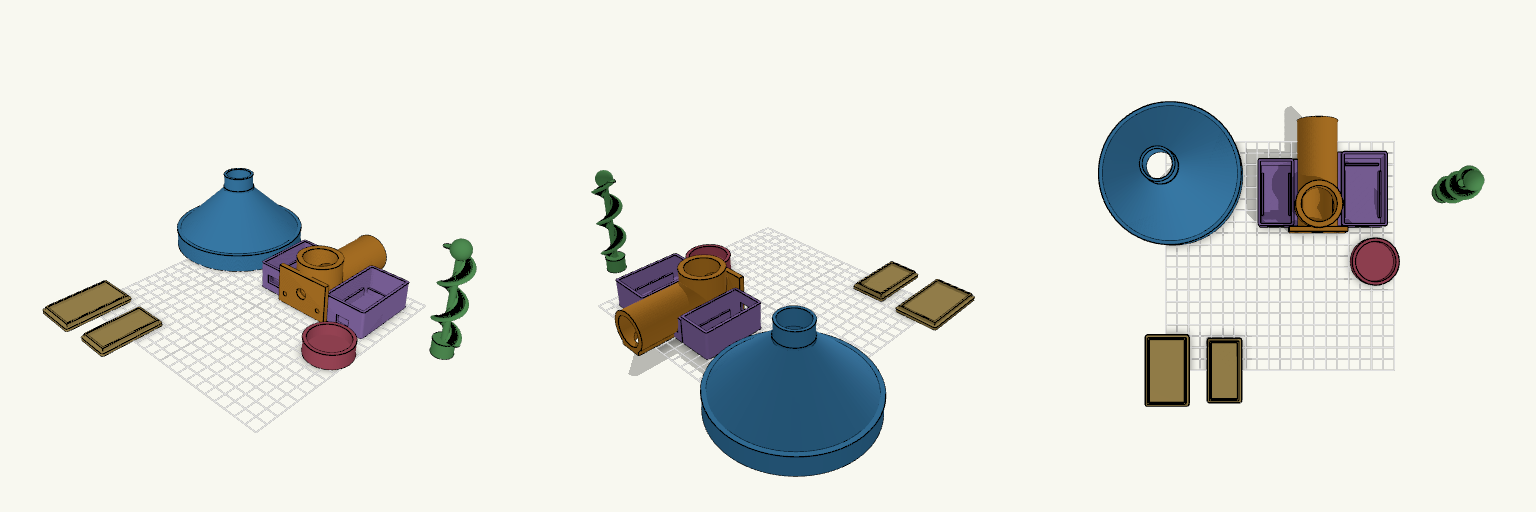
28BYJ-48 Solid One-Piece Kibble Auger
Solid one-piece helical auger for a 28BYJ-48 geared stepper, running in a 26 mm housing bore, with the funnel and electronics cases printed alongside. Fit Motor: 28BYJ-48 only (5 mm shaft with 3 mm flats). Bore: 26 mm; flight tip 24.4 mm. Kibble: sized for about 11.5 mm pieces. Check before printing Thread pitch on the 109 mm funnel is assumed at 6 mm. Measure the host opening. The auger prints in one piece, so the flight overhangs may need supports. Does not fit Motors with a different shaft profile or hole spacing. Housing bores other than 26 mm.