Edifier Skadis Monitor Stand
Created today
Description
A heavy-duty wall stand tailored for Edifier R1280DB monitors on an IKEA Skadis pegboard. I built the footprint wide and deep enough to give the requested clearances all around, using a generous array of integrated T-clip hooks so you don't need any extra hardware to hang it. The sides are braced with closed triangular panels to resist shearing, and I've tucked a thick secondary gusset into the back right corner as requested.
Remix Parameters
- Tray Clearance: Inner footprint sits at 176 mm wide by 232 mm deep, comfortably clearing the Edifiers with 15 mm wiggle room on the sides/front and 21 mm at the back.
- Front Stop: Raised 15 mm above the base plate.
- Mounting Pattern: Standard Skadis 40 mm pitch (4 columns, 3 rows). If you prefer metal T-nuts to print-in-place hooks, the backplate is an easy candidate to punch 4.5 mm holes through instead.
Images
More like this
Explore more in Storage & Organization →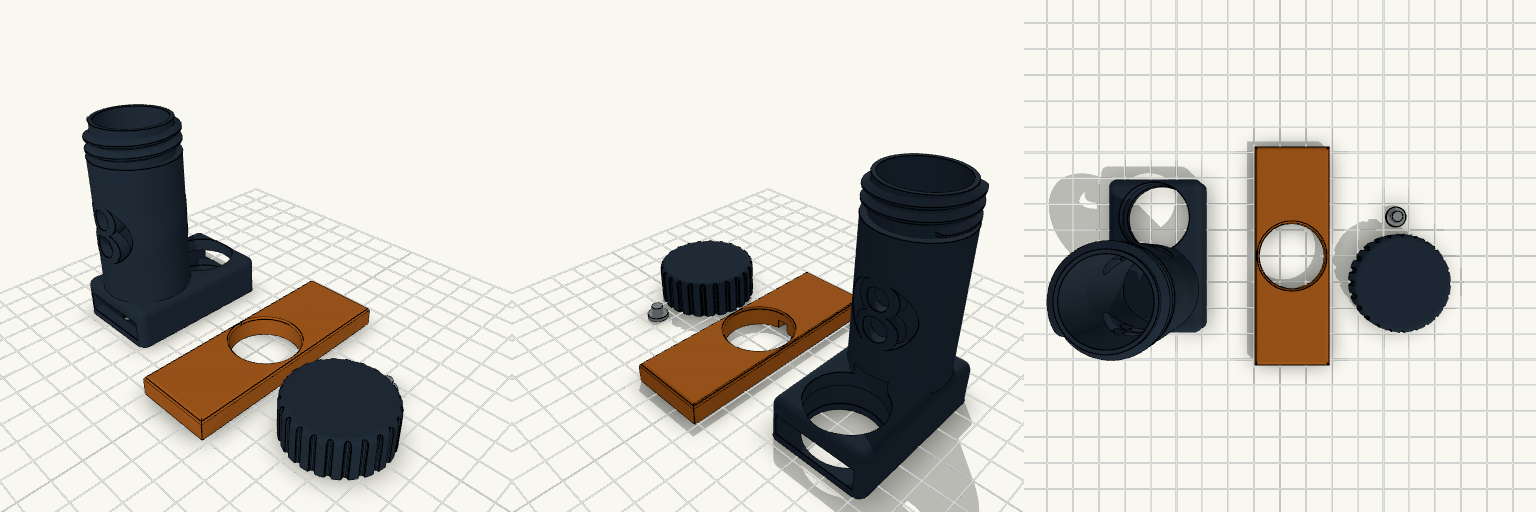
Mechanical 40-Quarter Dispenser
A fully mechanical, gravity-fed coin magazine tailored for standard U.S. quarters. Designed to slip into a pool cue bag, it stores a full $10 roll vertically and cleanly dispenses exactly $1 (four quarters) per cycle into the palm of the hand. The mechanism relies on a two-stage sliding escapement. In the resting position, the bottom four coins sit perfectly flush inside the 7.2mm-thick slider pocket. When the thumb tab is pulled outward, a chamfered ramp on the top trailing edge of the pocket catches the fifth quarter and guides it smoothly onto the solid tail of the slider, suspending the rest of the stack. Once the pocket aligns with the drop chute at full extension, the isolated four quarters fall through. A captive printed pin mounted from the base runs in an internal track on the slider, acting as a hard travel limit for both the pull and return strokes. Remix & Tuning Hooks Threaded Cap: The top of the magazine tube now features a coarse 4mm-pitch thread, securing the cap firmly for travel. Magazine Height: The tube is dimensioned at 75mm to easily clear forty 1.75mm-thick quarters. Snip the cylinder height in the code to make a shorter 20-coin version. Coin Bore: Currently 25.2mm to allow 0.47mm radial clearance for a 24.26mm quarter. Tweak this offset for other currencies or tokens. Slider Thickness: The exact 7.2mm thickness dictates the dispense count (four coins). Scaling this Z-dimension alters how many coins drop per pull. Tolerances: The slider track relies on a 28.5mm bridge in the main body. If your printer sags on bridges, the slider can be sanded lightly, or the track height (7.6mm) can be nudged up.
DropCyl — Rotary Quarter Dispenser
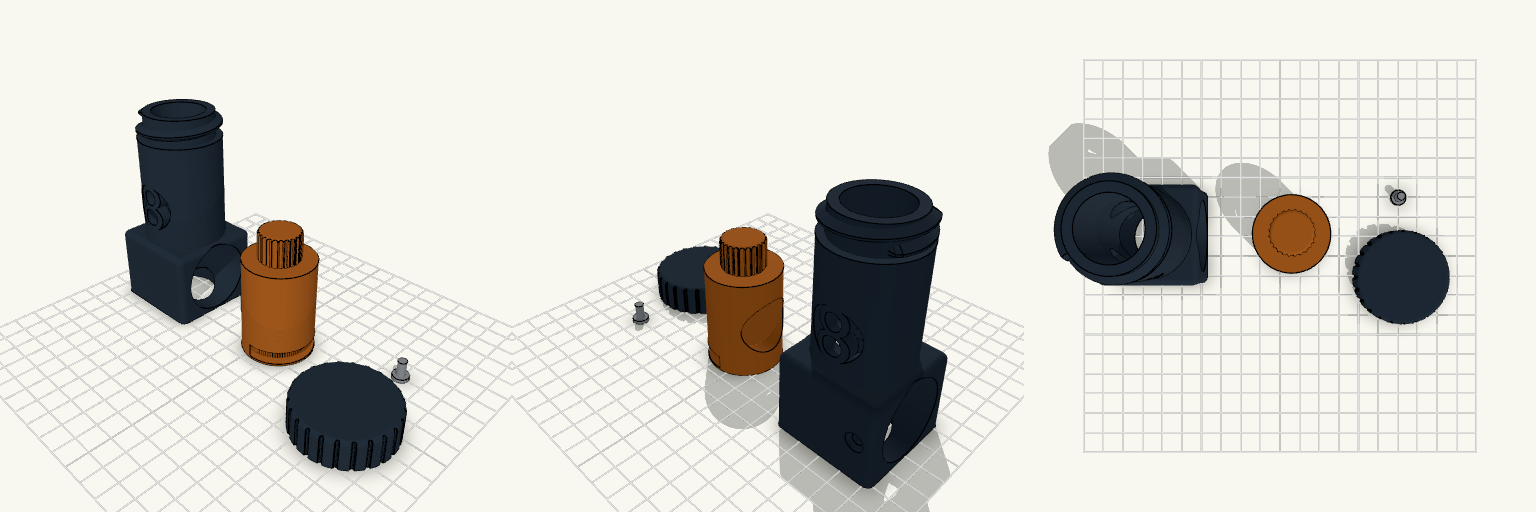
DropCyl is a fully mechanical, gravity-fed coin magazine tailored for standard U.S. quarters. Designed to store a full $10 roll vertically, it now dispenses exactly $1 (four quarters) per cycle with a quick twist of the ribbed rotary drum. The iconic 8-ball viewing window punches cleanly through both sides, letting you check your count at a glance while keeping the footprint extremely compact. Features Rotary Drum Action: A reliable half-turn escapement that isolates and drops exactly four coins at a time. Ergonomic Shell: Aggressive edge rounding on the base block and cap makes it comfortable to grip and slip into a bag. Dual Windows: The signature 8-ball cutout is fully symmetrical, meaning you can check the magazine from any angle. Travel Cap: A robust coarse-thread cap locks the stack down so it won't spill in transit. Print Notes Print the main body and cap standing upright. The rotary drum should be printed flat on its base. The captive limit pin drops into the bottom of the track during final assembly.
Side-Pinned 40-Quarter Dispenser
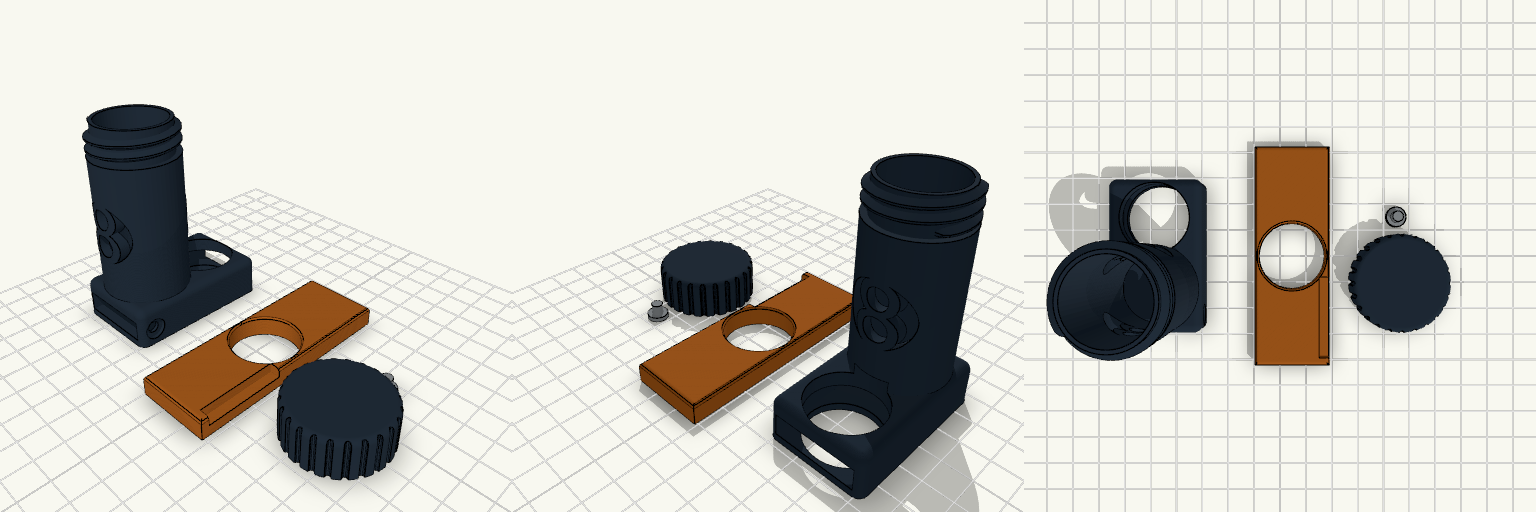
What it's for A fully mechanical, gravity-fed coin magazine tailored for standard U.S. quarters. It stores a full $10 roll vertically and dispenses exactly $1 (four quarters) per cycle into the palm of the hand. The mechanism relies on a two-stage sliding escapement, now utilizing a side-mounted limit pin to ensure the coin path remains entirely unobstructed during travel. Dimensions Overall Envelope (Dispenser): 34 × 56 × 75 mm (when closed) Slider Thickness: 7.2 mm Coin Bore: 25.2 mm (optimized for 24.26 mm quarters) Assembly The main body, slider, cap, and limit pin print separately without supports. Insert the slider into the main body track, align the side slot with the right-hand hole on the body, and push the limit pin flush into the side countersink to capture the mechanism. Remix ideas Threaded Cap: The top of the magazine tube features a coarse 4mm-pitch thread. Alter the tube height to make a shorter 20-coin version. Coin Bore: Tweak the internal offset diameter for other currencies or custom arcade tokens. Slider Thickness: Scaling the Z-dimension alters how many coins drop per pull (currently dialed for exactly four 1.75 mm thick quarters).
BunkMate — Magnetic Rail Tray
A sturdy tray that hangs over a bunk bed rail, keeping bedtime essentials close at hand. Features Magnetic Base: Features eight fully-enclosed pockets sized for 0.7" x 0.12" magnets. Pause your print to drop them in, and they'll be sealed inside the floor forever. Wide Hook: Designed with a 34mm gap to easily clear thicker bed frames. Print-in-Place: No supports required; prints upright with the hook flat on the build plate.
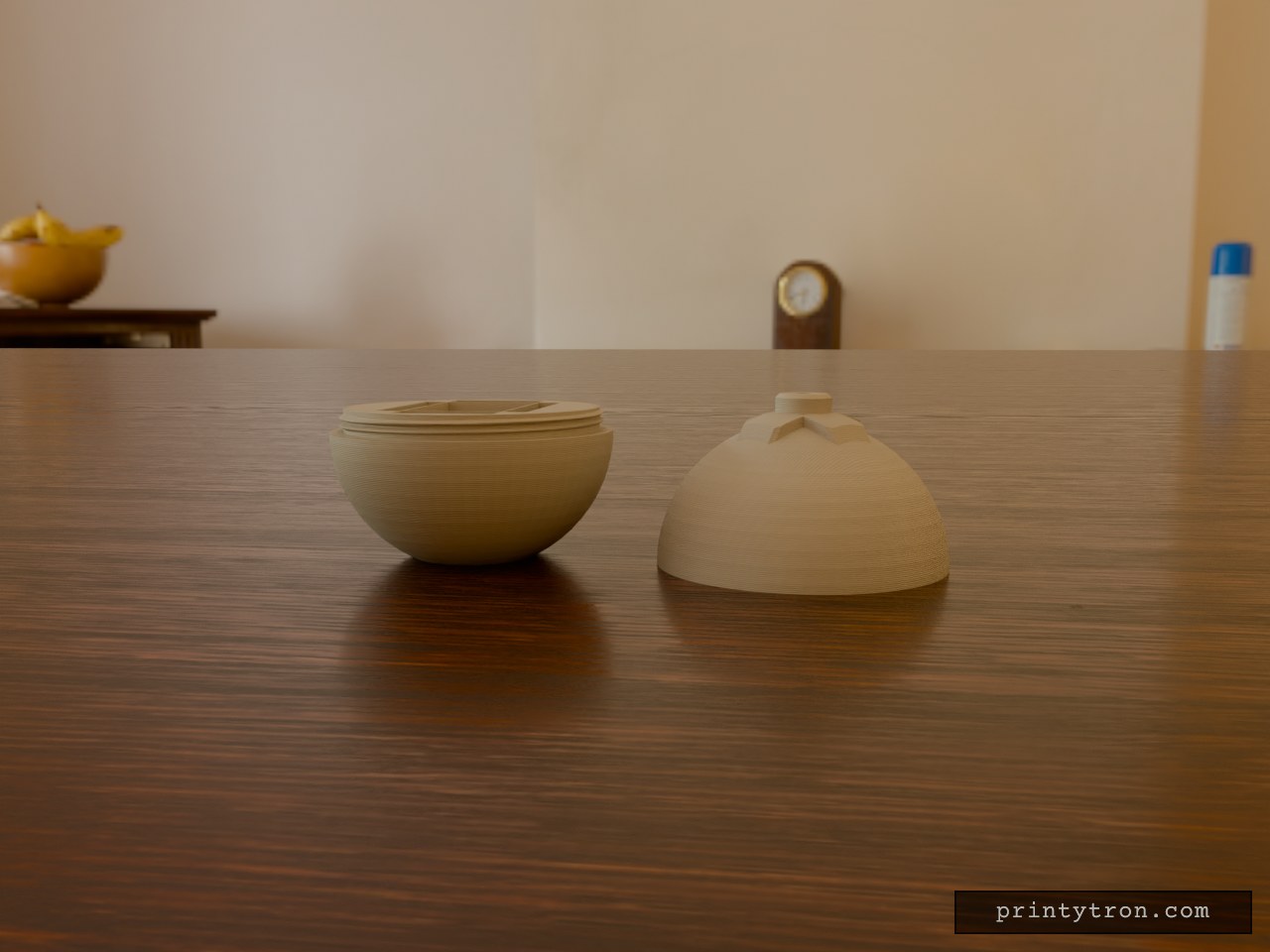
Ziggs deckbox
A spherical threaded deck box styled after a cartoonish bomb. Designed to sit securely on a table and transport a Commander deck without shifting. What it holds The internal block is partitioned for a specific loadout: Center slot for an 80-card sleeved deck Two wide slots (front and back) for hard cases Two side pockets for dice and counters Dimensions Overall footprint: 146 mm diameter shell Print configuration: Prints in two halves. The lower half features a flattened base (no supports needed). The upper half prints inverted. Hardware: Top shell includes a 9 mm hole designed to accept a real cord or rope fuse (glued from the inside).
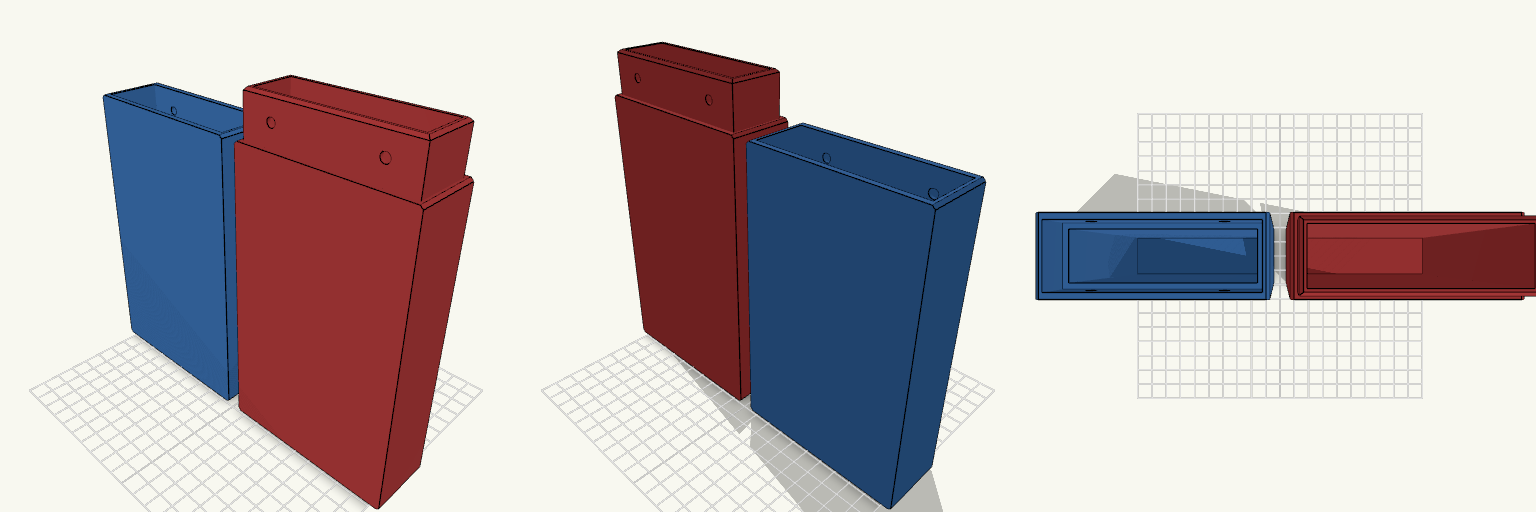
13-Inch Magnetic Sliding Box
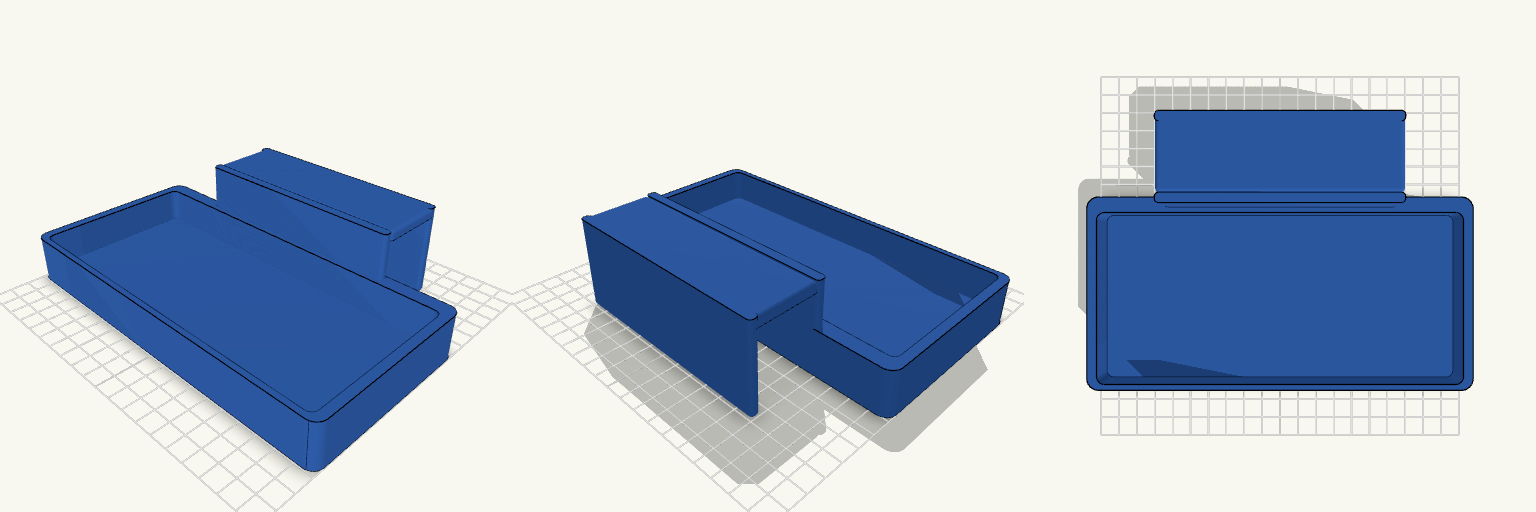
What it's for A minimalist 13-inch sliding box with an ultra-flush interior (3.5" wide by 1" deep) and heavily magnetized slip joints. Designed for vertical printing without supports, this two-part closure uses eight 5x2 mm magnets hidden inside the 6 mm thick walls of the step-joint, creating a completely smooth interior cavity once assembled. Dimensions Interior: 88.9 × 25.4 × 330.2 mm (3.5 × 1 × 13 inches) Exterior Shell Walls: 6 mm thick Base Ends: 3 mm thick Magnet Sockets: Sized for 5x2 mm disc magnets (5.2 mm diameter x 2.3 mm deep) Print notes No supports needed. The halves print upright on their closed ends. 0.2 mm clearance is built into the male slip joint for a smooth glide up until the magnets catch. Add a small dab of superglue to the magnet pockets before pressing them in.