Fidget Spinner Planetario Ø70 mm
Created 22 days ago
Remixed 2 times
Description
Fidget spinner a ingranaggi planetari stampabile in un solo pezzo (print-in-place), diametro esterno 70 mm, con ingranaggio solare centrale, 5 satelliti e anello esterno dentato internamente. L'anello è alleggerito da 10 fori passanti e non ha coperchi, così gli ingranaggi restano visibili.
- Diametro esterno: 70 mm, spessore 8 mm
- Modulo 1,5; solare 15 denti, satelliti 10 denti, corona 35 denti
- Denti elicoidali a spina di pesce (25°) che trattengono i satelliti senza assi
- Gioco sui denti: 0,25 mm
- Fori centrali Ø7 mm (solare) e Ø5 mm (satelliti) per alleggerire
- Stampa piatta, senza supporti; PLA o PETG
Images
More like this
Explore more in Desk & Tech →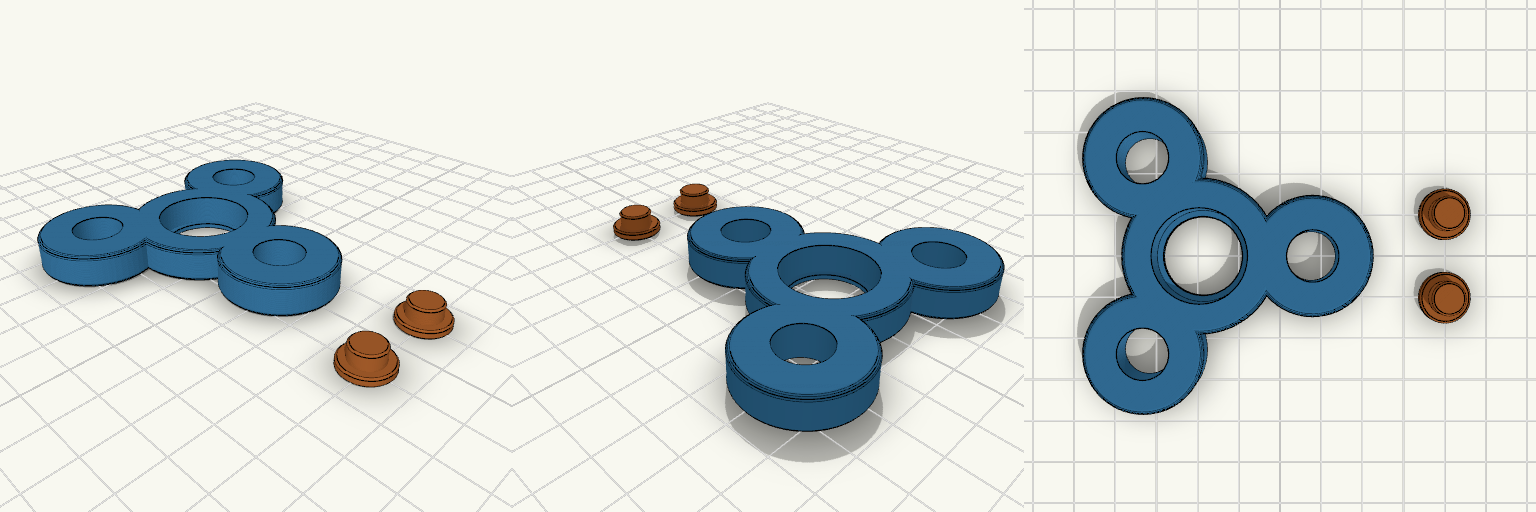
Bearing-Driven Tri-Lobe Fidget Spinner
A classic three-lobe hand spinner, the shape every desk drawer has seen, rebuilt around a real 608 skate bearing so it spins freely for a long time. The body has a bearing pocket in the centre, a lip underneath to hold it, and weight-saving holes in each lobe. Two small caps press into the bearing's inner ring from either side to make the finger pads. Notes You need: one 608 bearing (8 × 22 × 7 mm). Print: body flat; the two caps print flat-side down beside it. No supports. Assembly: press the bearing into the pocket from the top, then push one cap in from each side until they meet. Tuning: if the bearing is loose or tight in the pocket, adjust the pocket diameter slightly. Remix: the lobe holes can be enlarged to take 608 bearings as extra weights.
Fidget Slider Toy, Captive Print-in-Place
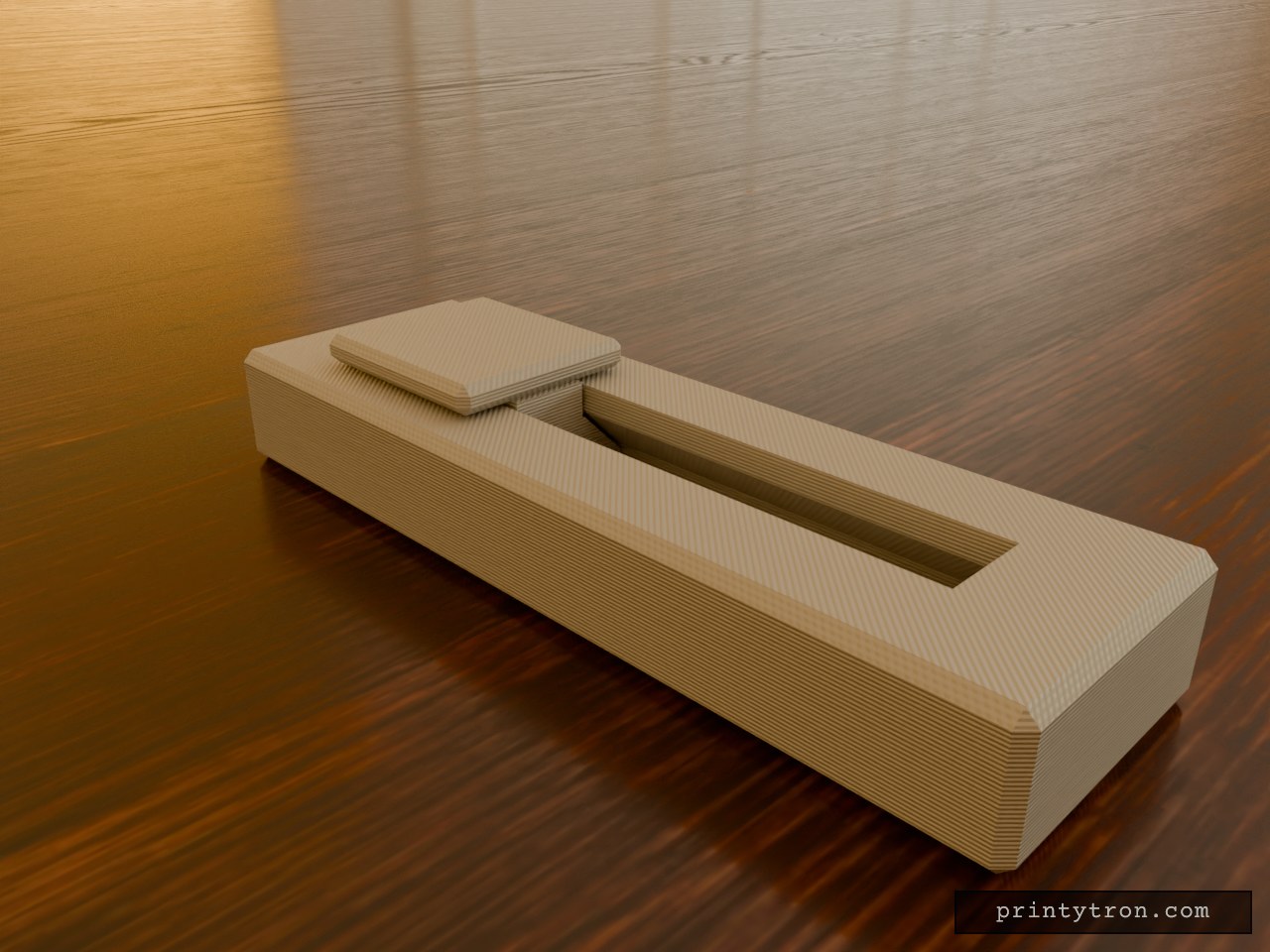
A fidget slider that prints already assembled, so there is no loose weight to lose and nothing to glue. The slider is captured in an enclosed dovetail track and cannot fall out. It runs 40 mm end to end and clicks at each stop instead of rolling freely. What it does Slides back and forth along a closed track in an 80 x 25 mm body. A small bump on the track floor at each end of travel drops into a dimple under the slider and gives the click. The dovetail profile holds the slider down, so it cannot lift out of the rails. Numbers that matter Body: 80 x 25 x 11 mm, with the slider top reaching 14 mm. Slider: 20 mm long, 18 mm wide cap. Travel: 40 mm. Clearance between slider and track: 0.4 mm per side. This is what lets it move after printing. Click bump: about 0.6 mm of interference against the 0.4 mm gap. Reduce the bump height if it feels too stiff. Printing Print flat, body base down, with no supports needed inside the track. Use a well-tuned printer. A 0.4 mm gap fuses easily if the flow is too high. After printing, work the slider back and forth a few times to break any thin bridging between the slider and the rails. Two colours show as separate parts in the preview, but the print is one job.
Pizza Spinner Fidget Print Set
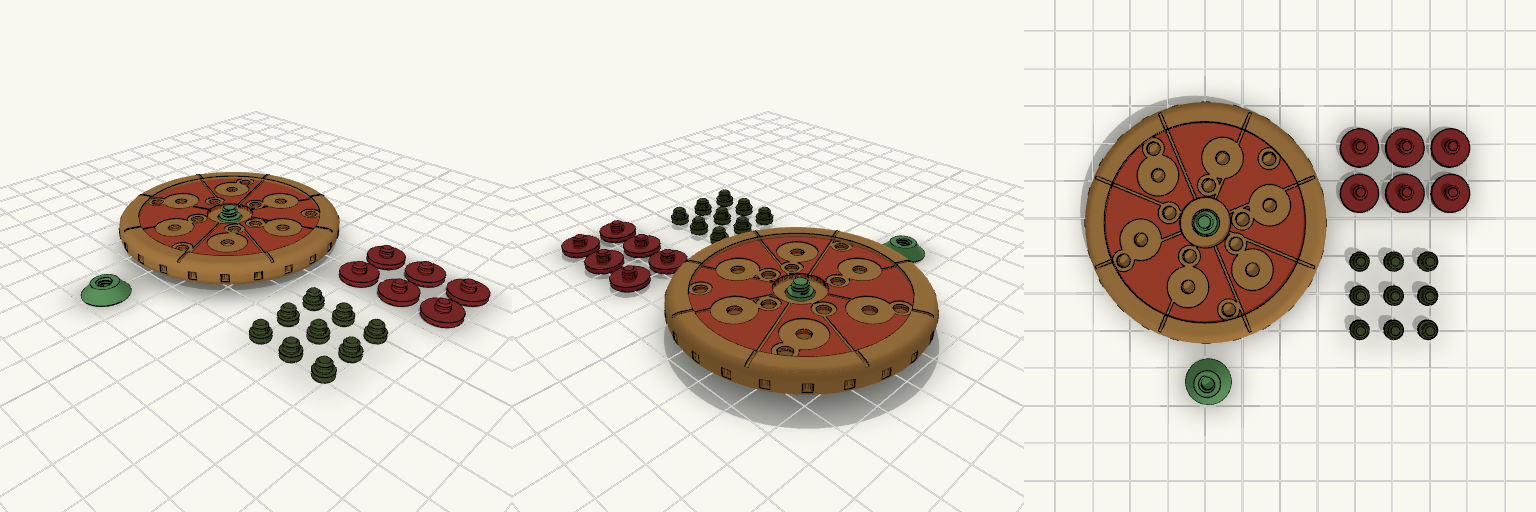
What it's for A pizza-shaped fidget spinner that turns freely on a central hub. The pepperoni and olives are separate snap-on toppings, each with a split pin that clicks into a socket. Each topping also has a marked seat in the sauce, so the right position is easy to find. Dimensions Pizza: 62 mm diameter, bumpy crust, sauce with slice grooves Hub: protrudes on both sides, 0.5 mm clearance to the pizza 6 pepperoni: 10 mm, seat 10.6 mm 9 olives: 5 mm, seat 5.6 mm Pins: 3.4 mm split pins into 3.5 mm sockets Print notes Toppings print upside down, pin facing up, no supports needed. Olives are small; a standard 0.4 mm nozzle will soften the details. Pieces print in separate colours and can be mixed freely. Remix ideas Add mushrooms or peppers using the same pin and seat. Change the topping layout by moving the seat positions. Make the hub longer for a better grip.
Perch — Clamp-On Headphone Holder
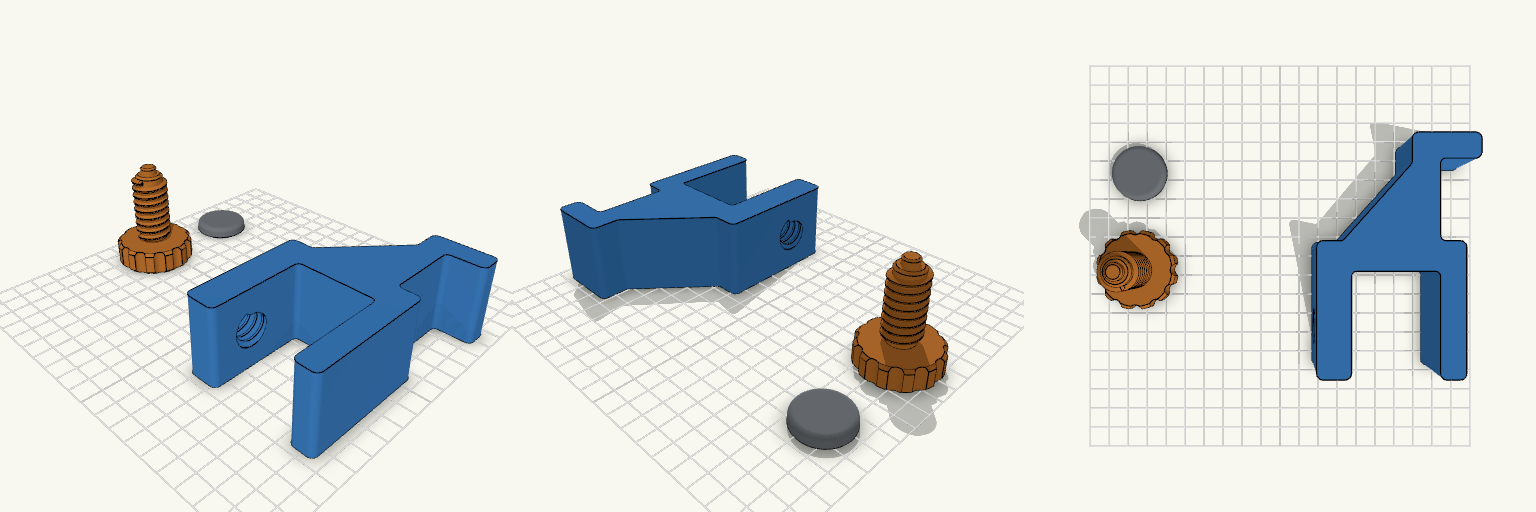
Perch is a three-piece desk-edge headphone holder: a main body with hook and clamp jaws, a separate threaded adjustment screw with a large scalloped knob, and a loose pressure pad. Nothing is joined or printed in place, so the parts are laid out separately and assembled by hand after printing. Features Clamp range of 15–35 mm, suited to a 20 mm desk Internal thread in the lower jaw with 0.4 mm radial clearance for the 18 mm, 4 mm-pitch screw 40 mm knob with scalloped grip Pad snaps onto an 8 mm peg at the screw tip and spins freely Reinforced hook with gusset and rounded lip Print notes Body on its side, screw knob-down, pad flat PLA, 0.4 mm nozzle, 0.20 mm layers, 4 walls No supports expected Assembly Thread the screw up through the lower jaw from below, then press the pad onto the peg. Set the source's mode value to 1, 2 or 3 to export each part individually.
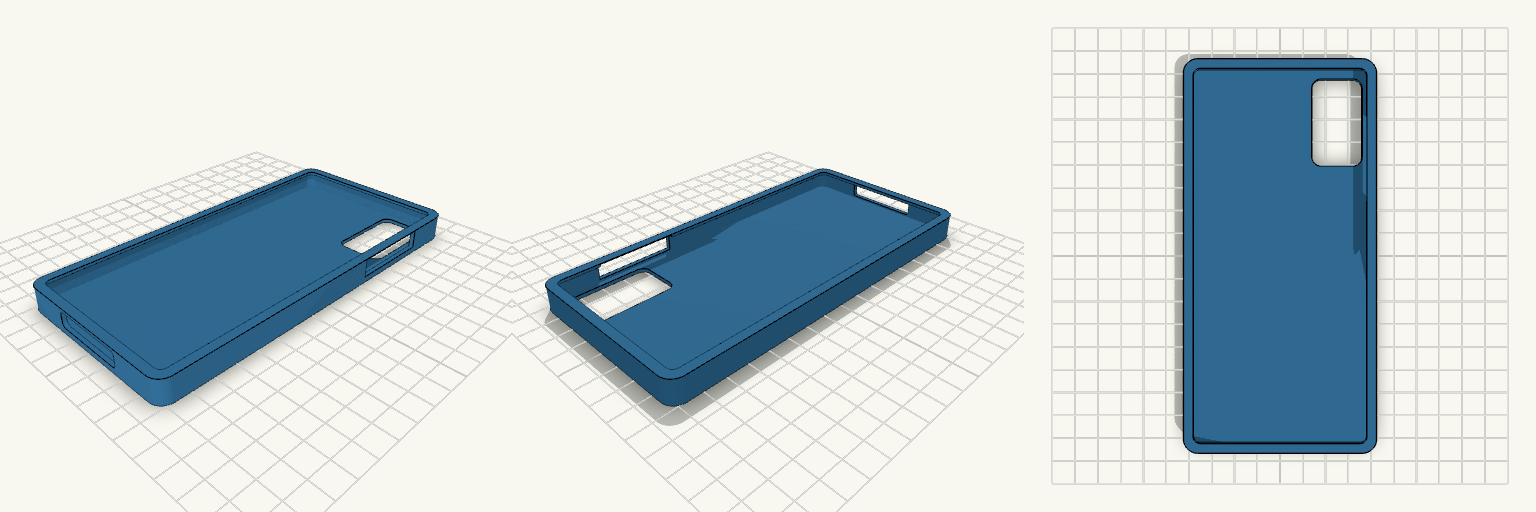
Samsung S24 FE Snap-In Bumper Case
A one-piece snap-in bumper case for the Samsung S24 FE, sized from the 162.0 × 77.3 × 8.0 mm phone spec with 0.2 mm clearance. The open front leaves the screen clear, and the walls are 1.8 mm with a 1.5 mm back and a 1.2 mm lip that catches the screen edge. Camera cutout on the back Button slot along one side Bottom slot for USB-C and the speaker Prints back-down with no supports One piece, no assembly The case is rigid, so the phone presses in from one corner. PLA works, but a flexible filament such as TPU is easier on the phone and less likely to crack the lip. The camera and button positions are estimates, so check them against your phone before printing the whole case.
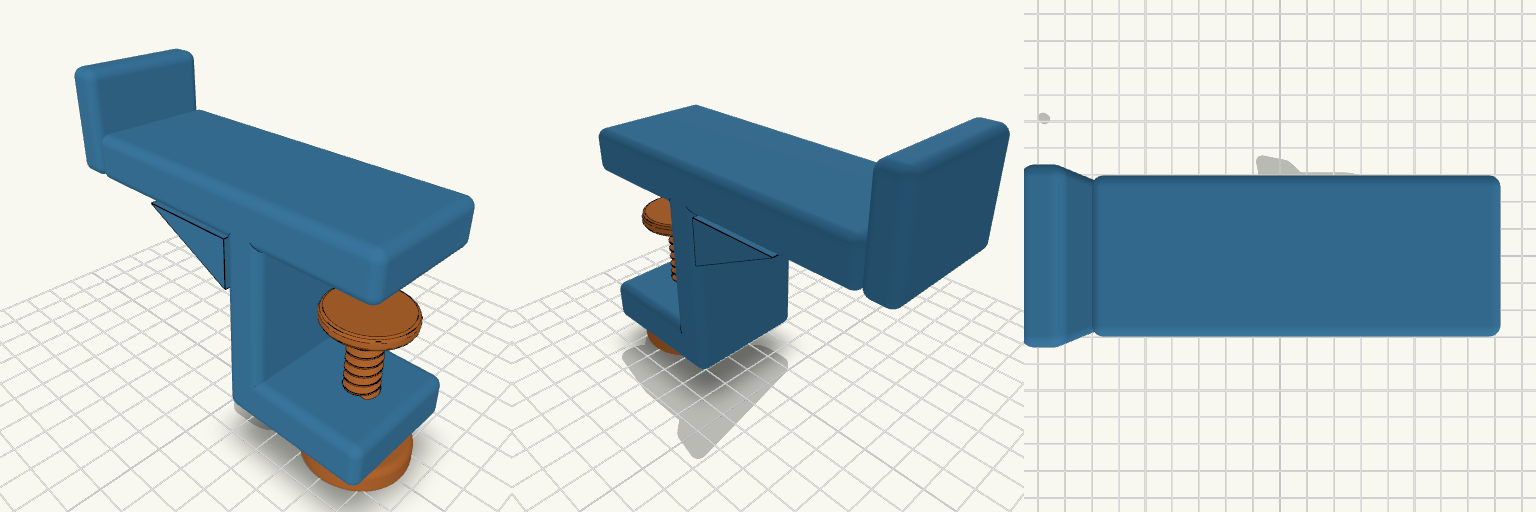
Desk Clamp Headphone Holder, 15–35 mm
What it's for A two-piece headphone holder that clamps to a desk edge and holds headphones on an upper hook arm. A threaded screw with a large knob under the lower jaw tightens it. Dimensions Desk thickness range: 15–35 mm Width: 40 mm Body height: about 69 mm Hook reach: 55 mm past the spine, with a raised lip Screw: 10 mm diameter, 3 mm pitch, 26 mm pad, 32 mm knob Print notes Two parts: clamp body and screw Print the body on its side (40 mm face down) and the screw upright, both without supports PLA, 4 or more perimeters Remix ideas Add a rubber or felt pad to the screw head Lengthen the hook arm for larger headphones Add a cable notch on the lip