3 de noviembre mango fav
Created 12 days ago
Description
Mango de 9,4 cm con un soporte giratorio y una ranura frontal para meter y pegar una cuchara. La ranura mide 0,9 cm de ancho, 0,3 cm de alto y 1 cm de fondo. Se imprime en cuatro piezas separadas —mango, soporte, tornillo y tuerca—; el tornillo y la tuerca roscados M6 unen las dos piezas principales y fijan el soporte en la posición elegida. El soporte barre unos 180°: izquierda total, recto hacia delante y derecha total; no da la vuelta completa porque el tope trasero choca con el mango. Los bordes del soporte van redondeados y el hueco con el mango es de 2 mm, pensado para una niña de 5 años.
Ganchos para remezclar
- Ranura frontal: 0,9 cm de ancho, 0,3 cm de alto y 1 cm de fondo, centrada. Es el primer ajuste si cambias de cuchara: un mango de más de 3 mm de grosor no entra.
- Rosca: M6 de paso 1 mm, tornillo de 1,4 cm. Con capas de 0,12–0,16 mm sale más limpia. La holgura de la tuerca (0,15 mm) es lo primero que se ajusta si queda dura o floja.
- Orificios: 6,6 mm en el disco y en el soporte. Rebaje de la cabeza de 12,4 mm. Hueco hexagonal de la tuerca de 11,9 mm y 5,2 mm de profundidad.
- Hueco con el mango: 2 mm. Más pequeño limpia peor y deja menos margen de dedos; más grande se nota.
- Soporte: parte redonda de 2,8 cm de diámetro, brazo de 2 cm de ancho que llega a 3,6 cm del tornillo y 1,06 cm de grosor. La ranura frontal es la zona a cambiar para otro tipo de cuchara.
- Material: PETG por el calor de la cuchara, 4 perímetros.
Combina con un tornillo y una tuerca M6 comerciales de acero inoxidable si se prefiere más resistencia que la rosca impresa. Para imprimir, coloca el mango plano, el soporte boca abajo con la cara de pegado contra la cama, el tornillo con la cabeza hacia abajo y la tuerca plana.
Images
More like this
Explore more in Gifts, Seasonal & Personalized →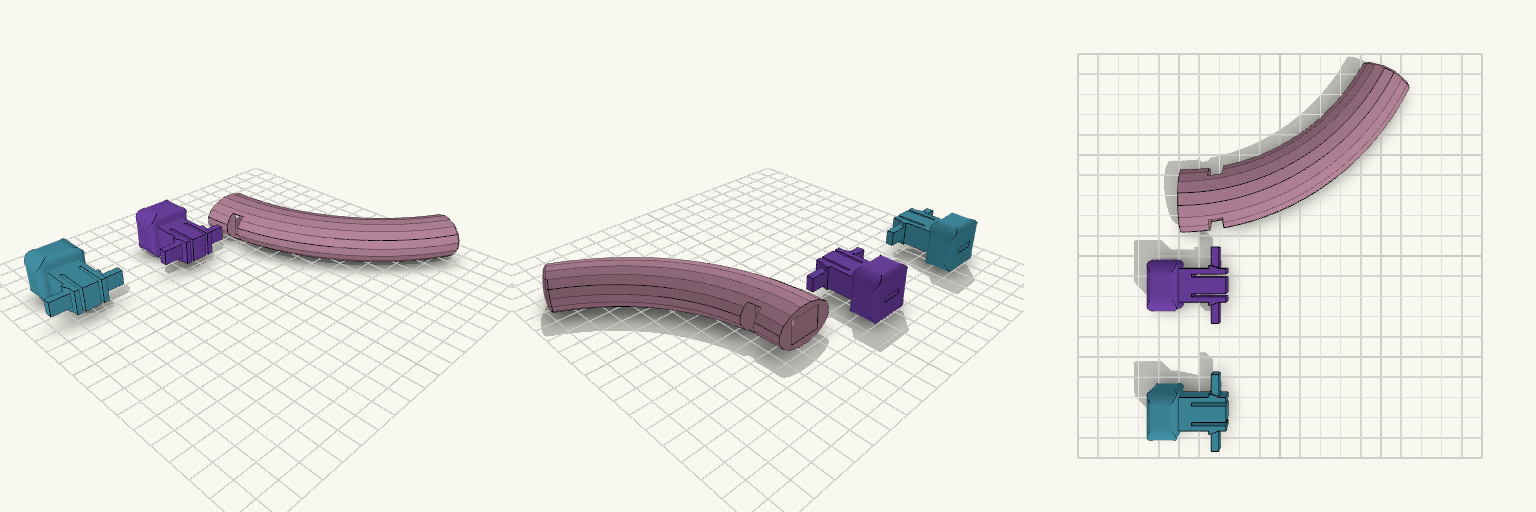
Pieza 3 de noviembre act
Mango banana de cucharilla adaptada con conector de clic de dos aletas. Sustituye al mango original de la cucharilla: la pieza de la cuchara se aloja en la ranura frontal del conector y el conector se encaja en el alojamiento del mango rosa. La unión es por clic; no usa rosca, bayoneta ni pasador. El conjunto está pensado para una niña con discapacidad que no puede mover la muñeca: el mango se curva hacia dentro, con radio de 110 mm y la punta desplazada unos 65 mm, para acomodar la mano sin girar la muñeca. El modelo incluye el mango rosa y dos conectores idénticos, morado y azul. El mango y los conectores se imprimen por separado y se unen por clic. Los dos conectores van separados 60 mm en el eje Y, con unos 24 mm libres entre sus tapas, para poder imprimirlos juntos sin que se toquen. La tapa visible del conector es redondeada, con esquinas de 7 mm y bordes de 3 mm; el cuerpo y el encaje siguen siendo cuadrados. Qué encaja Cuerpo del conector de 15,6 mm de ancho, 11,6 mm de grosor y 22 mm de largo, con tapa de 24 × 24 mm. Dos aletas de 2,4 mm, separadas del núcleo por ranuras de 1,6 mm; cada una lleva un resalte de 1,5 mm con rampa de entrada. Botones de pellizco de 3,5 mm de ancho: llegan a 18 mm del centro y sobresalen unos 3,3 mm por fuera de la pared del mango, que queda a unos 14,7 mm. Se pellizcan los dos a la vez sin meter los dedos en las ventanas, los resaltes se sueltan y el conector sale tirando recto. Ranura para la pieza de la cuchara: 10 mm de profundidad, 10 mm de largo y 3 mm de alto, centrada en la tapa. Medida a comprobar antes de imprimir La lengüeta de la cuchara debe quedar unos 0,2 mm por lado por debajo de la ranura de 10 × 3 mm; en la práctica, alrededor de 9,6 × 2,6 mm, con 1 cm de inserción. El alojamiento y las ventanas del mango están dimensionados solo para estos conectores. El saliente de los botones es una medida del modelo, no una prueba de agarre: si el pellizco queda justo, imprime primero un conector y compruébalo antes que el mango. Impresión y límites Imprime los conectores tumbados de lado, con las capas a lo largo de las aletas; el mango, tumbado con el alojamiento horizontal. PETG es preferible: en PLA las aletas aguantan pocas repeticiones. Con 3 perímetros en los conectores el clic cede algo más; con 4 o más queda más firme. Los dos conectores caben juntos en la cama con la separación actual; si la cama es pequeña, imprímelos por separado. No sirve para otros mangos ni para alojamientos distintos de este mango rosa. El TPU es demasiado elástico para dar un clic firme. La versión actual no se ha probado imprimiendo: la dureza del clic y el agarre de los botones se confirman con una impresión real.
Village de Noël en pain d'épice
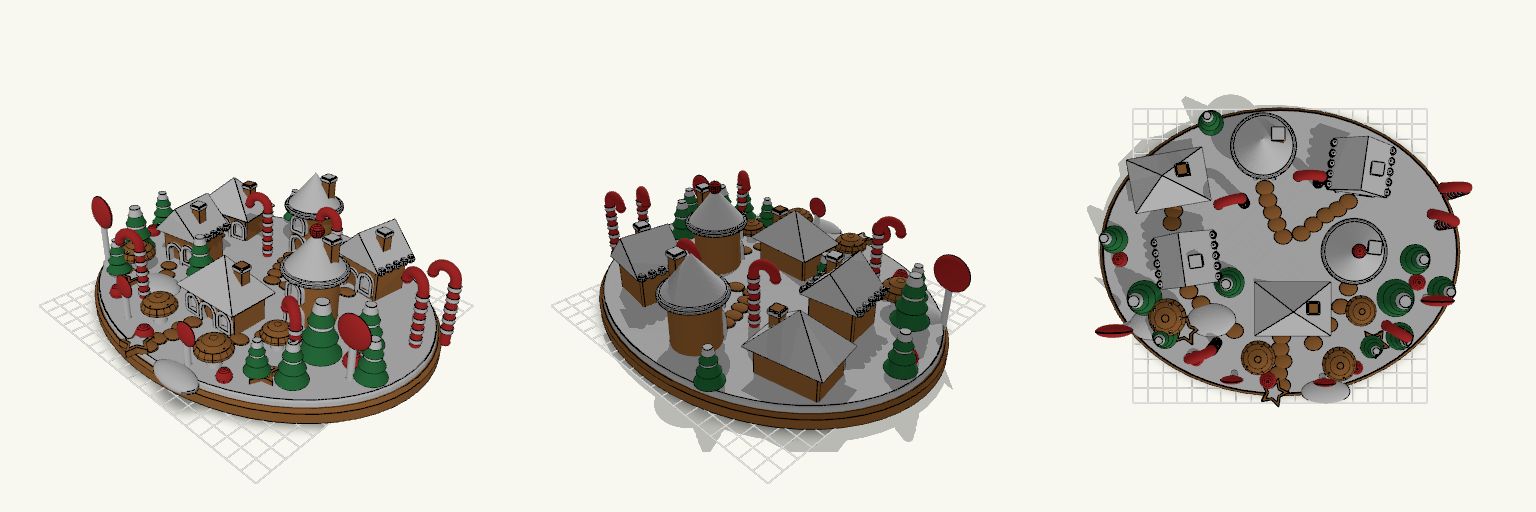
À quoi ça sert Un village de Noël miniature en pain d'épice, posé sur un socle ovale enneigé. Six maisons occupent la scène : une maison à pignon, une tour ronde à toit conique et une chaumière pyramidale, chacune répétée deux fois et enfoncée dans la neige. Des chemins en pas de biscuit relient les portes au reste du village. Six sucres d'orge se dressent entre les maisons et sur les côtés, accompagnés de sucettes à disque rouge uni sur bâton blanc, de bonbons ronds, de champignons, de biscuits étoilés et de dix sapins. Tous les éléments sont intégrés à la composition plutôt que posés au hasard. Dimensions Encombrement au sol : environ 240 × 197,5 mm, pour une hauteur d'environ 66 mm. Le village est bas et large : le socle laisse de la neige libre autour des maisons, ce qui rend la scène aérée. Emprise au sol des groupes : pain d'épice environ 240 × 197,5 mm ; glaçage et neige environ 234 × 193,6 mm ; bonbons rouges environ 226 × 137,3 mm ; sapins environ 230,6 × 161,2 mm. Notes d'impression Le modèle est réparti en quatre groupes de couleur — pain d'épice, glaçage et neige, bonbons rouges, sapins — disposés séparément : comptez plusieurs pièces à imprimer puis à réunir. Prévoyez le temps de changement de filament ou une impression par couleur. Les fenêtres et les pointes de sapins sont les détails les plus fins : avec une buse de 0,4 mm, des fenêtres un peu plus grandes faciliteraient le rendu. Les maisons ajoutées à l'arrière et les sucres d'orge supplémentaires rapprochent certains éléments : vérifiez qu'aucune pièce ne se touche avant de lancer l'impression. Aucun test d'impression n'a été réalisé, et la solidité des plus petits reliefs (rebords de glaçage, pointes) n'a pas été vérifiée. Idées de remix Rapprocher les maisons et réduire le socle pour un village plus compact. Ajouter des collines basses en pain d'épice pour donner du relief sans revenir à des montagnes. Varier les six maisons : taille ou forme de toit différente d'un exemplaire à l'autre. Agrandir les fenêtres ou épaissir les bords de glaçage pour une impression plus tolérante. Changer les couleurs des quatre groupes pour varier l'ambiance : pain d'épice plus clair, glaçage coloré, bonbons assortis au sapin.
Bold Block-Letter FLOYD Name Sign
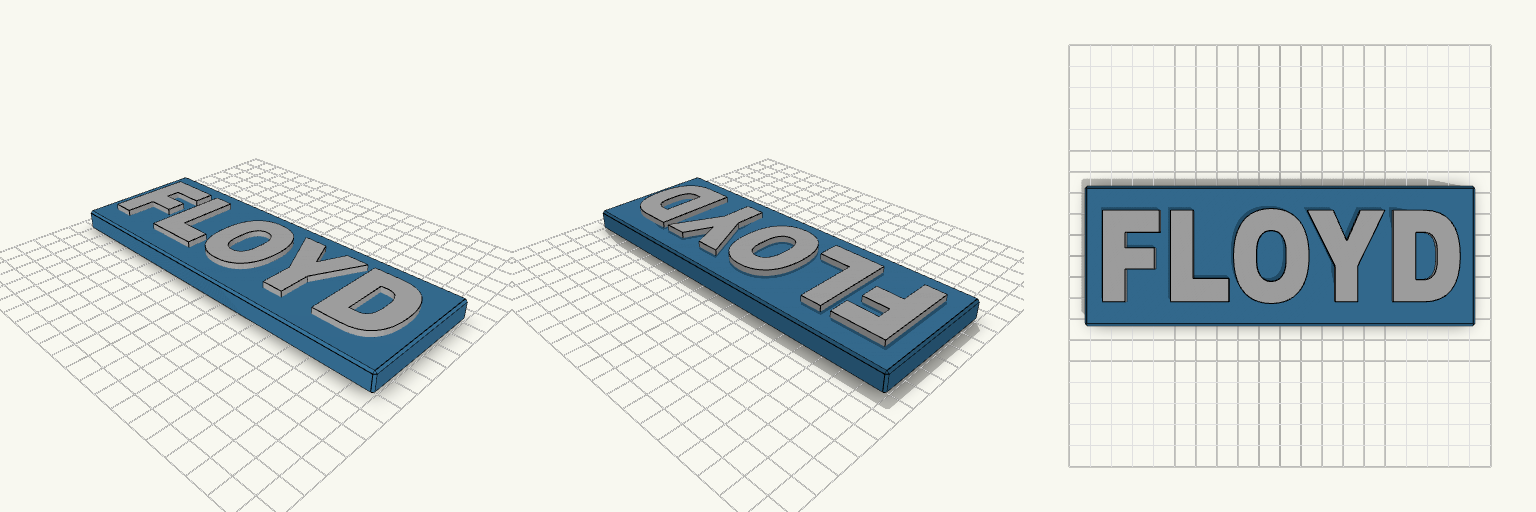
A confident single-word nameplate: a 179 × 64 mm slab, 10 mm thick, with FLOYD rising 3 mm off the face in heavy block capitals for a total height of 13 mm. The letters stretch to roughly 162 × 43 mm, running almost the full length of the top face and leaving only a slim border around them. It reads as signage first and decoration second — the kind of bold lettering that belongs over a door, on a wall, or fixed to a workshop board, and with 10 mm of depth behind it, it also stands on its own as a chunky desk or shelf piece. Sized for a Bambu Lab A1 mini, the sign uses the bed's full width in one direction only, so it prints as one piece with no scaling needed. That width fit is tight: only about 0.5 mm of margin remains on the long side, so a skirt, brim, or calibration offset could push it past the bed edge — a slightly smaller scale is safer if the slicer complains. The 10 mm body uses noticeably more filament than a thin plate, so keep that in mind if material use or weight matters. Design notes Raised lettering sits proud of the plate, catching light and shadow and allowing a contrasting colour with a filament swap at the right layer. The top face, the lettering and the sides are all square-edged; the plate has a flat back and prints from a single flat base without supports. Wide, thick strokes keep the text legible from across a room and sturdy enough to handle. The lettering is proportioned to the plate, so shrinking it uniformly in the slicer keeps the composition intact. Pairs well with a wall bracket, a small stand, or adhesive pads on the back — or just set it down as it is. A plain blue plate with white letters is only one finish — a dark plate with bright lettering, a painted recess, or a single-colour print all work with the same geometry.
Festive Headstand: Upside-Down Pineapple with Ball Gag
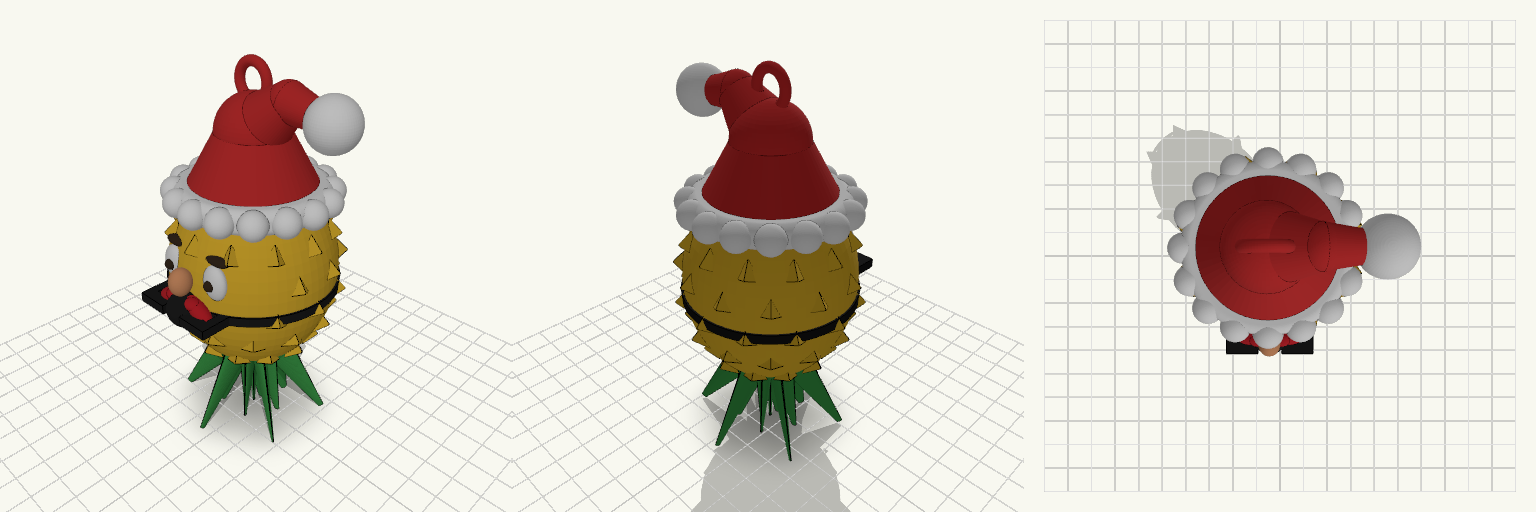
A cartoon pineapple does a festive headstand: it balances on an oversized leafy crown, the fruit body rising above, and a big fluffy red Christmas hat droops off to one side, ending in a single large rounded bobble. Two wide-open eyes with dark pupils and brows sit on the fruit, a small skin-toned nose between them, and a black ball gag framed by small red puckered kissing lips takes the place of a mouth. The lips form a compact ring with cupid's-bow lobes on top and a fuller lower lip, set back into the fruit's surface around the ball so the black shows through the middle. The strap runs around the head and across the front, outside the lips, lying against them as it passes over their corners and into the ball, so the lips sit behind it. The leaves are the star of the stand: a dozen broad blades plus a ring of shorter ones fan out beneath the fruit and lift it clear of the surface, giving the upside-down pose its height and silhouette. The body is scaled in staggered rows of triangular scales, kept clear of the face, so the fruit reads as a pineapple from any angle. And yes — the inverted pineapple is the classic swinger sign, worn here in full holiday dress. Use it as intended, or simply as a seasonal oddity. Made to hang A loop sits upright on the hat's peak, ready for a hook, ribbon or tree branch. With no base disc under the crown, the pineapple rests on its leaf tips — perfect for hanging, less so for standing on a shelf. The hat's tip droops to one side and ends in one large rounded bobble, so check clearance around the hook. Design notes Tall, wide leaf crown with 12 broad leaves and a ring of shorter ones; it doubles as the stand. Face: two open eyes with pupils and brows, a small nose, a black ball gag, and small red puckered kissing lips with a cupid's bow. The lips are sunk back into the face around the ball rather than standing proud of it, so the strap sits in front and the red shows as a ring. Strap wraps the back of the head and bands across the front outside the lips, resting against the face and covering their corners. Staggered triangular scales wrap the body in rows, with the face left smooth. Oversized hat with a thick trim of rounded puffs and a smooth bobble, finished with the hanging loop. The fluffy hat trim is the widest point, so check your bed size before printing.
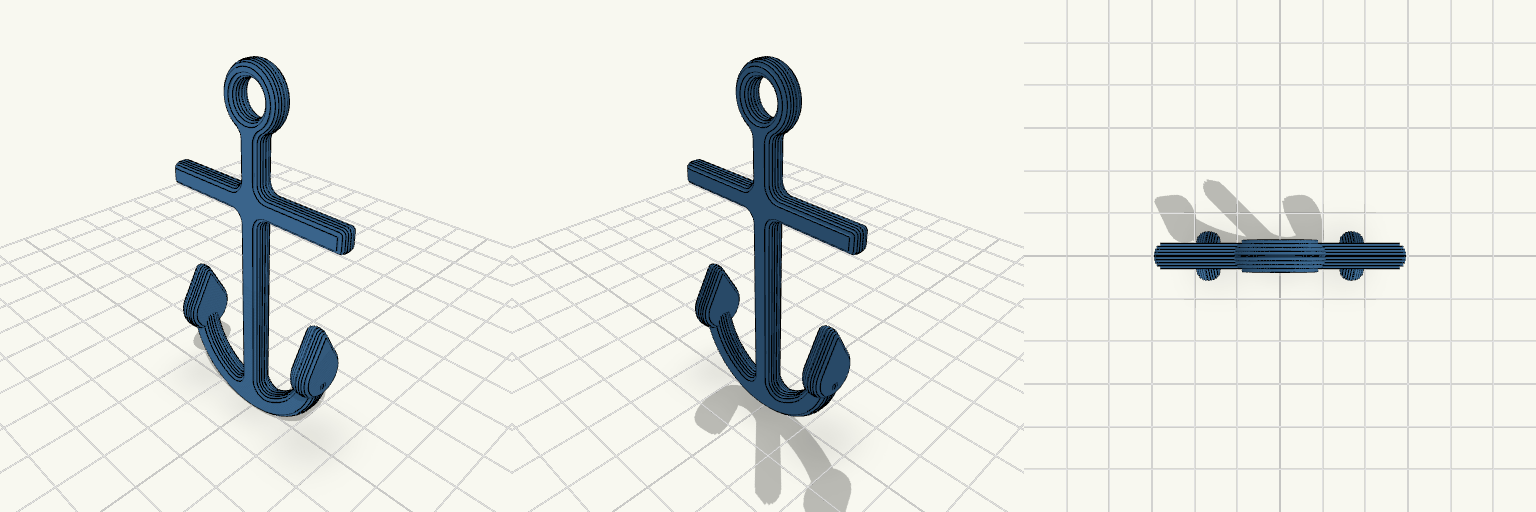
Stockless Anchor Cross Pendant
A pendant that combines a cross and a stockless anchor. A plain shaft and crossbar form the cross, a shallow U-shaped crown sits below it, and spade-shaped flukes rise from the crown ends. A bail ring at the top takes a chain. Upright orientation, front face toward -Y Fully rounded edges and filleted inside corners Spades kept whole, with no trimmed faces 40 mm crossbar The crown's lowest point is a narrow contact line, so use a brim or supports if printing it upright.
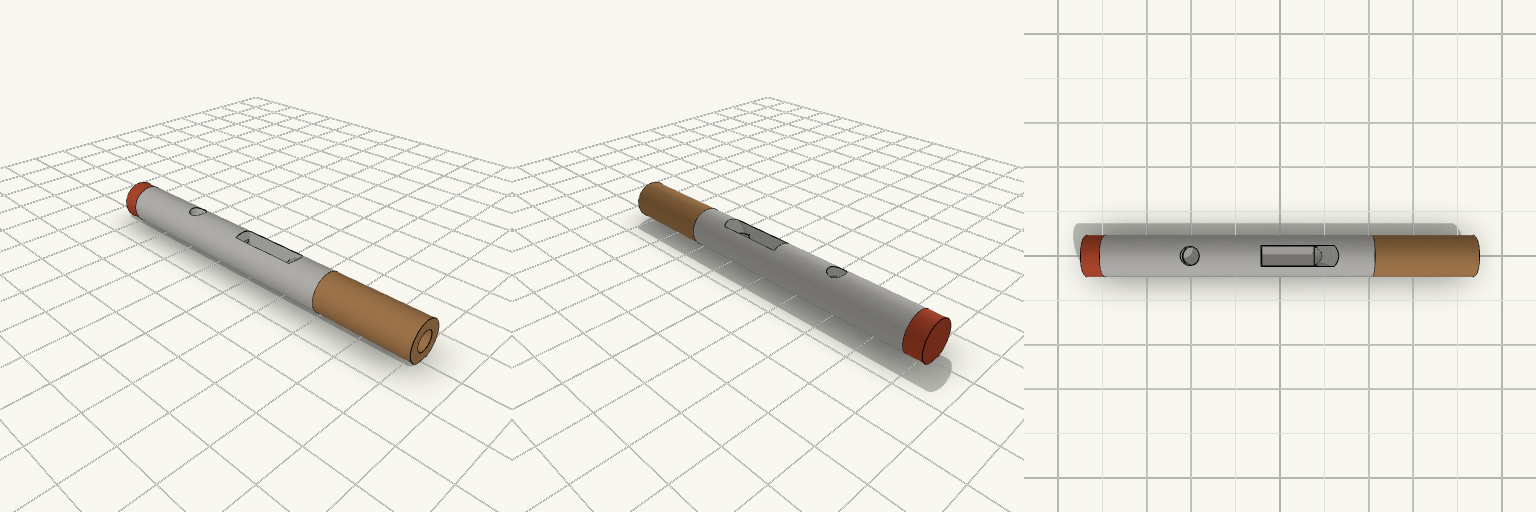
Film-Noir Cigarette Fipple Whistle
A cigarette you can't smoke but can play: an 84 mm-long fipple whistle disguised as a filter-tipped stick, complete with an orange ember tip, a white paper body and a tan filter. Inhale through the filter end and air slips through the intake hole near the ember, runs a thin flat duct across a window and breaks over a sharpened edge — the classic whistle mechanism, wearing a noir prop's silhouette. It is an inhale-only instrument; blowing back out through it will sound weak or not at all. This version is tuned for a softer, lower note: the duct is narrow and shallow, the window is long with a gentle ramp, and the intake is widened a touch to keep the hiss down. A gentle, steady inhale gives the smoothest sound; a hard pull turns breathy. Design notes Three colour-coded sections in the viewer: Ember Tip, Paper Body and Filter, printed as a single piece. The underside is flattened, so it sits stable on the plate and needs no supports. Keep your lips clear of the intake hole while you inhale — that hole is the voice. Tone stays tunable: a longer window takes it darker, a slightly more open duct brings back volume if it comes out too faint. Pairs well with a trench coat, a rainy window, and anyone who appreciates a joke that also functions.