Modular Hexagon Phone Stand
Created 1 months ago
Description
A modern, modular phone stand built around a pure hexagonal base. The design allows multiple units to link together sideways via a built-in tab and slot system, perfect for keeping a row of devices organized on a desk or creating an expanding charging station.
Design Highlights:
- 70-Degree Rest: The back support leans back comfortably for viewing notifications or media.
- Cable Management: A central pass-through routes your charging cable securely out the bottom via hidden channels.
- Print-in-Place Linkage: Built-in puzzle-piece connections require no extra hardware to link modules.
- Split Front Lip: Keeps the device firmly seated while leaving the center clear for downward cable runs.
Images
More like this
Explore more in Desk & Tech →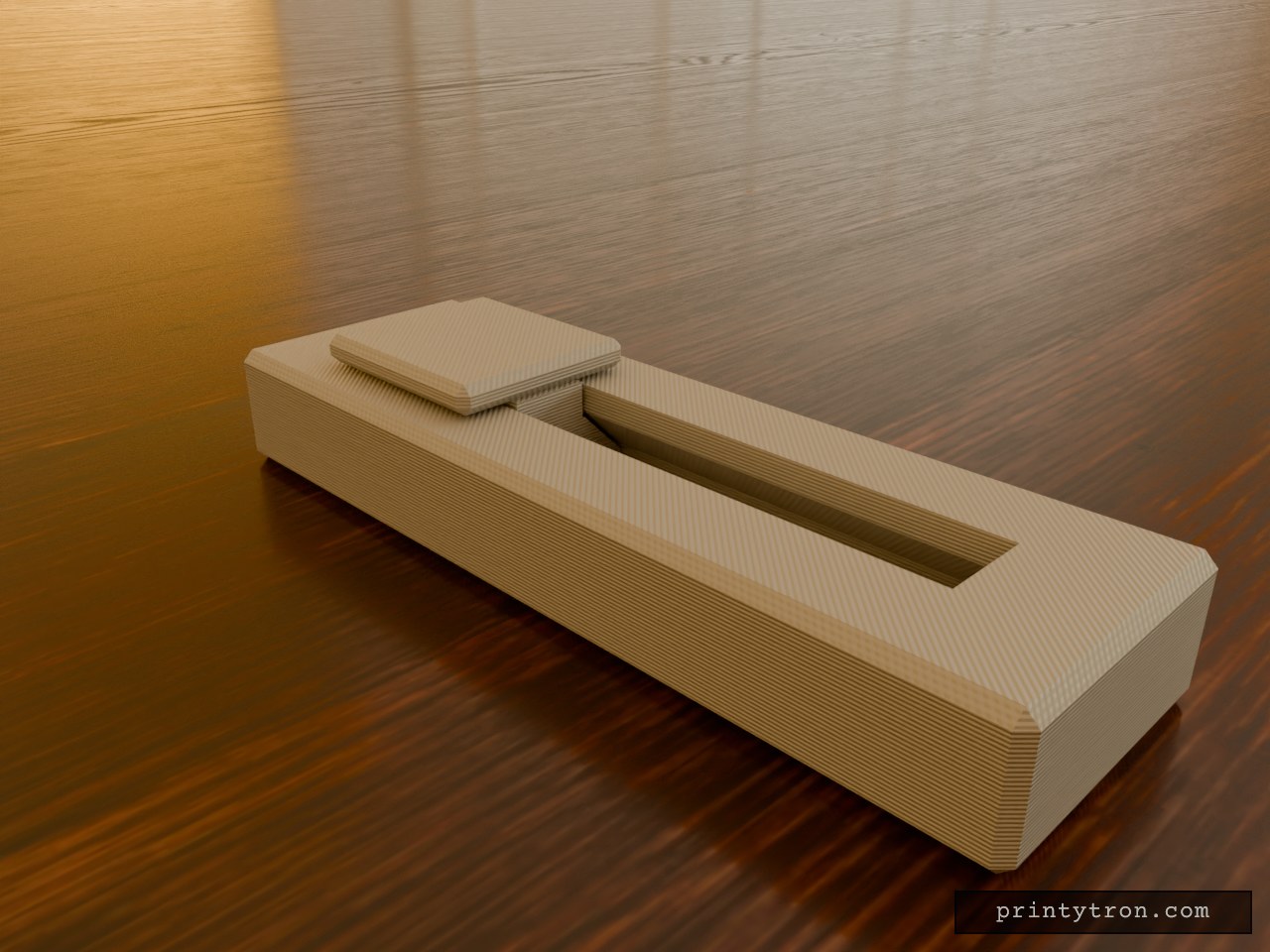
Fidget Slider Toy, Captive Print-in-Place
A fidget slider that prints already assembled, so there is no loose weight to lose and nothing to glue. The slider is captured in an enclosed dovetail track and cannot fall out. It runs 40 mm end to end and clicks at each stop instead of rolling freely. What it does Slides back and forth along a closed track in an 80 x 25 mm body. A small bump on the track floor at each end of travel drops into a dimple under the slider and gives the click. The dovetail profile holds the slider down, so it cannot lift out of the rails. Numbers that matter Body: 80 x 25 x 11 mm, with the slider top reaching 14 mm. Slider: 20 mm long, 18 mm wide cap. Travel: 40 mm. Clearance between slider and track: 0.4 mm per side. This is what lets it move after printing. Click bump: about 0.6 mm of interference against the 0.4 mm gap. Reduce the bump height if it feels too stiff. Printing Print flat, body base down, with no supports needed inside the track. Use a well-tuned printer. A 0.4 mm gap fuses easily if the flow is too high. After printing, work the slider back and forth a few times to break any thin bridging between the slider and the rails. Two colours show as separate parts in the preview, but the print is one job.
Modular Voice Assistant Enclosure with Rotating Desk Dock
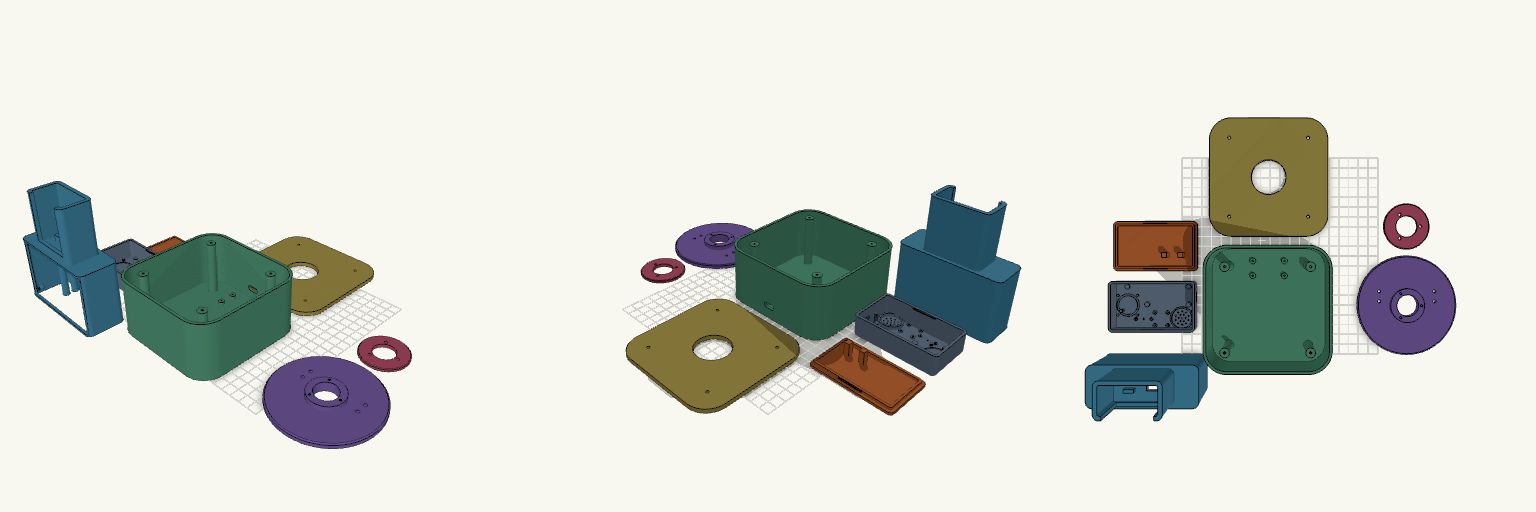
A two-part enclosure system for a modular AI voice assistant: a pocket-sized "Brain" that works on its own, and a desktop station that docks it, swivels a full 360° and carries a 3.5-inch touchscreen behind a removable bezel. Both halves share the same matte-black design language — rounded corners, smooth surfaces and 2–2.5 mm walls — and print as eight separate pieces. What it's for Brain — houses an ESP32-S3 N16R8 board, an INMP441 I2S microphone, a MAX98357A amplifier and a 20 mm speaker behind a grille. A circular LED ring glows through a 0.8 mm front skin for listening, thinking and speaking states; there is no display of its own. A USB-C port sits on the short end, and the unit runs standalone once lifted off the dock. Desk station — a weighted base with a bolted lid carries a swivel plate and the dock tower. The Brain drops into the tower pocket from above with its face still visible, and a USB-C plug cradle in the pocket floor lines up with the port. Display — the tower front takes a standard 98 × 56 mm touchscreen module in landscape, held on four M2 bosses and framed by a bezel that drops into a recess in the front face. Removing four screws frees the display for replacement, and a flat-cable slot below the opening routes the ribbon into the cavity. Rotation — the swivel plate's hollow stem passes through the lid, a retaining ring screws on underneath, and the cable runs down the centre of the stem, so the tower turns 360° without twisting the lead. Dimensions Brain: 85 × 50 × 25 mm overall, with a snap-fit rear cover. Desk base: 120 × 120 mm with 22 mm corner radii; base, lid and swivel plate stack to 65 mm. Dock tower: 104 × 40 × 119 mm, docking the Brain vertically above the display section. It overhangs the 100 mm swivel plate slightly at the front and rear corners. Display opening: 84 × 54 mm, with mounting bosses behind the wall at ±46 × ±25 mm and M2 pilot holes; bezel 100 × 60 × 2.5 mm. Walls: 2–2.5 mm throughout hollow cavities. Print notes Print the Brain shell face-down for a smooth front skin; the LED ring, microphone port and speaker grille all sit in that face. The rear cover snaps on with two bump-and-groove pairs along the long sides; pads on its inside hold the ESP32 down. The tower's internal floor and the display window bridge wide spans, so expect a little support in the dock tower only. Everything else is oriented to print without it. Print the bezel flat; it is a thin frame and needs no supports. PLA or PETG both work; four rubber-foot recesses under the base are worth filling. All eight pieces — Brain shell, rear cover, desk base, base lid, swivel plate, retaining ring, dock tower and display bezel — are separate. The lid bolts on at four corners and the display bezel screws in from the front. Compatibility The display bosses use M2 pilot holes; check your module's hole spacing before driving screws, since pinouts vary between boards. The dock pocket is sized for the Brain as drawn — if you change the Brain's shell, adjust the pocket in step. Remix ideas Lean the dock back a few degrees for a more natural viewing angle if you can accept the extra support. Swap the removable bezel for a blank panel or a vent if your build has no screen. Scale the docking pocket to fit a different companion device while keeping the same swivel mechanism.
Pokéball Keyboard Wall Shelf
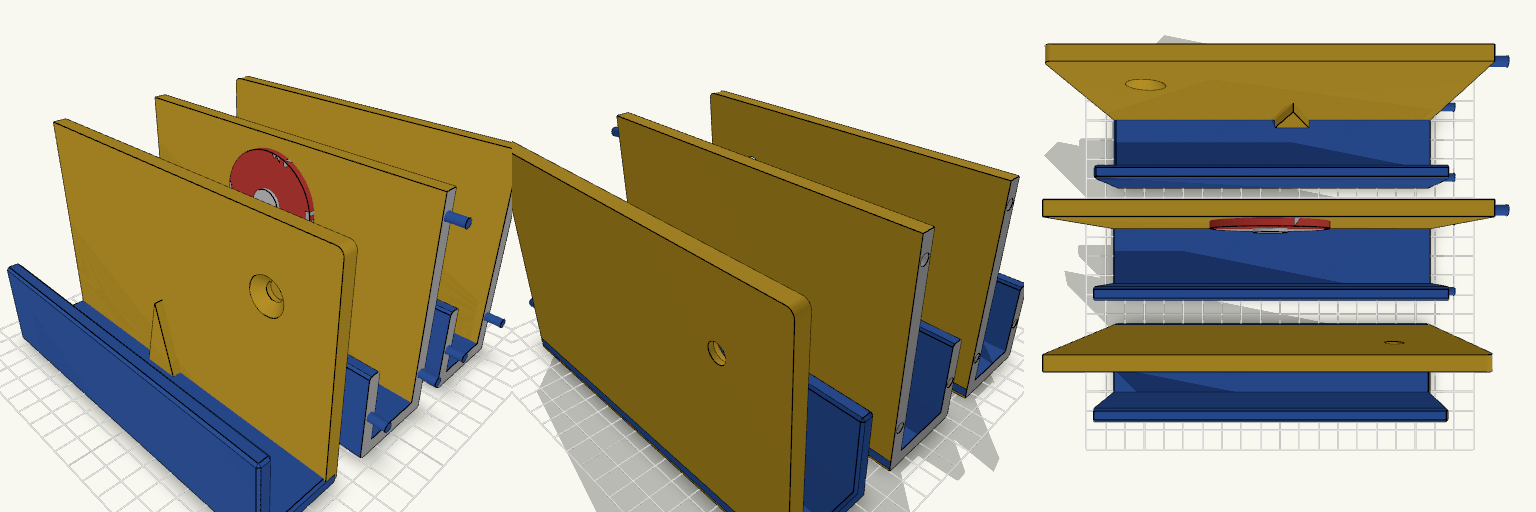
A Pokéball-badged wall shelf that cradles a full-size keyboard behind a tall front lip. Red-and-white emblem, yellow back panel, blue ledge: the Kanto starter-kit palette on a desk wall. The shelf prints as three 160 mm sections laid out together on the plate, ready to glue into one 480 mm piece. Three sections joined with 4 mm alignment pegs and sockets 40 mm front lip keeps the keyboard in place Two 8 mm countersunk screw holes at the ends for wall mounting Sections footprint about 168 x 40 mm each
Phone Clamp 60-85mm with 1/4-20 Socket
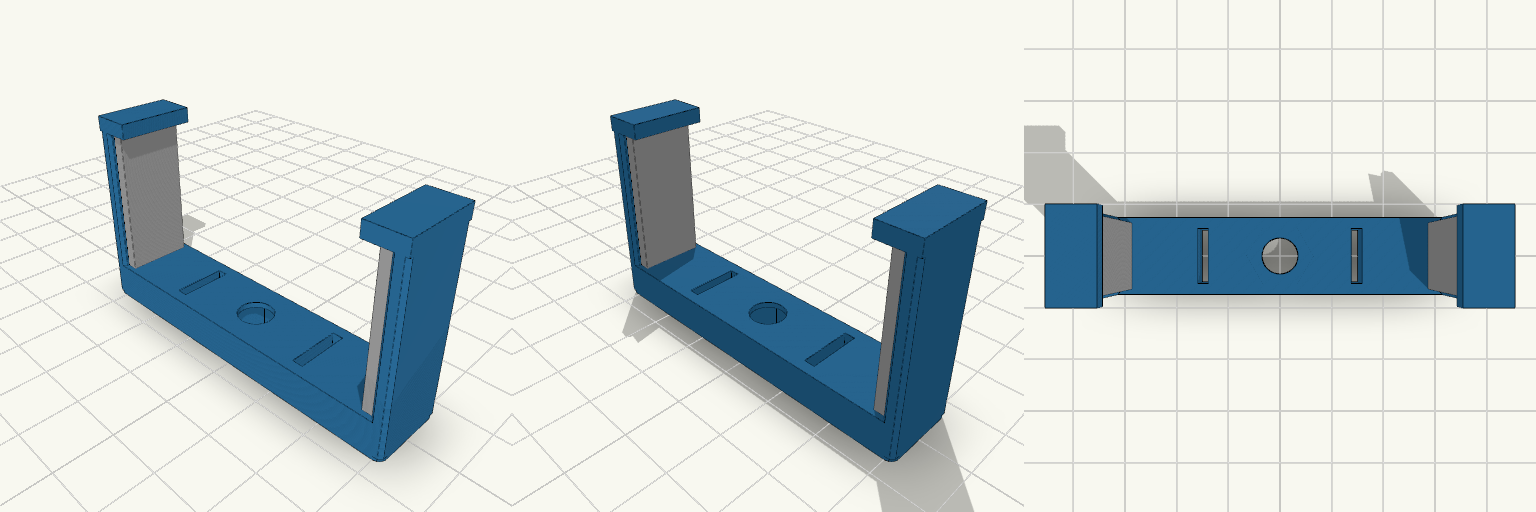
U-shaped spring clamp that holds a phone across its back and bolts to the centre screw of a ring light. The two jaws grip the phone's long edges. The rest opening is 58 mm and the jaws flex to about 85 mm. Separate soft pads sit on the inner faces to protect the phone's edges. The base has a 1/4-20 through hole with a hex nut pocket on the underside. Two slots cut into the base give the jaws room to spring. Each jaw ends in a retaining lip that stops the phone from lifting out. Specs Opening: 60-85 mm, 58 mm at rest Mount: 1/4-20 through hole (6.6 mm) with a 12.2 mm hex nut pocket Jaw thickness: 2.6 mm Jaw width: 22 mm Overall size: about 63 x 14 x 36 mm Clamp body material: PETG suggested, for spring flex Pad material: TPU suggested, printed as separate pieces Spring travel: not tested, so check the flex before loading a phone Use cases: ring light phone mount, filming, content creation setups
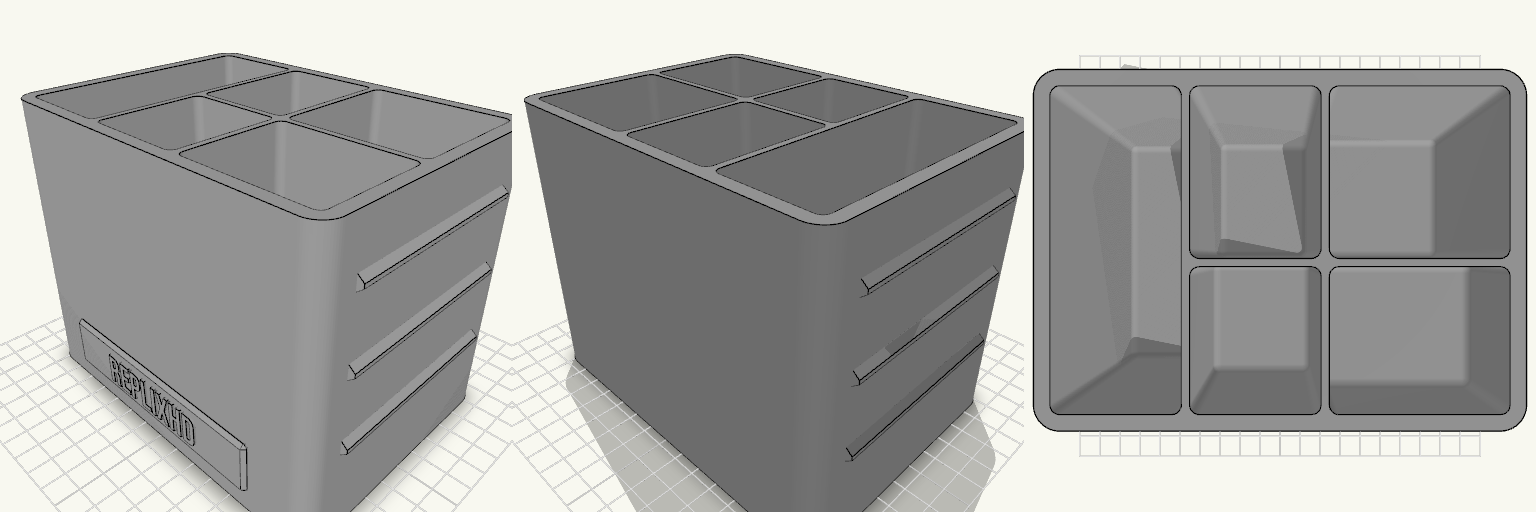
ReplixHD Gaming Desk Organizer
A five-pocket desk organizer for a 150 × 110 × 120 mm footprint, with "ReplixHD" embossed on a raised front plate. Fit Scissors slot: 40 × 100 mm, 105 mm deep. Pen slot: 40 × 52 mm, 100 mm deep. Pencil slot: 55 × 52 mm, 90 mm deep. Marker slot: 40 × 45 mm, 70 mm deep. Small slot for clips and erasers: 55 × 45 mm, 40 mm deep. Walls are 2.5 mm and dividers are 2.5 mm. The pockets' floors sit above the 3 mm base, which is thicker where the pockets are shallower. Check before printing Pen and pencil slots are about 40–55 mm across, so measure any oversized markers against that. Scissors need a handle under 40 mm wide. Print notes One solid body, with no supports needed. The side ridges are sloped at about 60° so they print cleanly. It does not fit anything that needs a closed lid or a drawer.
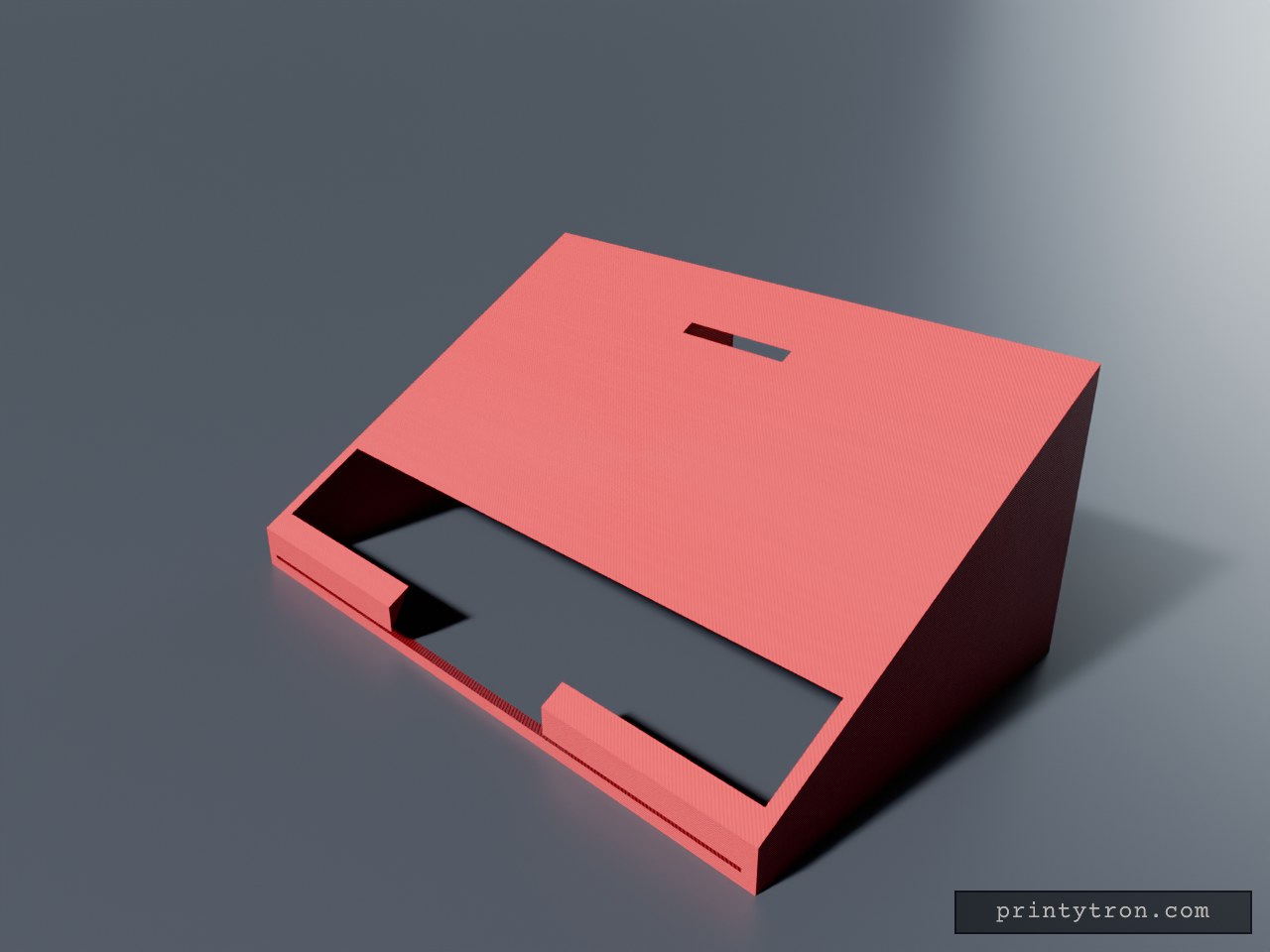
30° Tilted Stand for 118x84mm Keypad
Wedge-style desk stand that holds a 118x84mm macro keypad at a 30° tilt, so the keys face the user instead of lying flat. The pad sits in a recessed pocket that grips its base on all four sides to stop it creeping during use. A finger notch at the front edge lets the pad be lifted out. A cable slot at the back edge routes the cord away from the desk surface. Specs Pad size: 118 x 84 mm Pocket clearance: 0.3 mm per side (0.6 mm total on each axis) Tilt angle: 30° Overall footprint: about 124 x 80 mm, roughly 53 mm tall at the rear Wall thickness: 2.5 mm Front notch: 40 mm wide finger cut-out for lifting the pad Cable slot: 24 mm wide, centered on the back edge Underside: flat; add rubber feet or tape for grip on smooth desks Print orientation: flat side down, no supports needed Notes Check the pocket depth and cable slot position against the actual pad before printing. If the cable exits somewhere other than the center of the back edge, the slot position needs to be moved.