Olivia Rodrigo boahg
Made by a Guest
Created 3 months ago
Description
A multi-part decorative circular sign featuring a humorous four-line poem.
The base is a chamfered 200mm disk with an integrated mounting hole for easy wall hanging. The text is embossed by 2mm in a bold, highly legible sans-serif font (Archivo Black), properly scaled to clear the curvature of the sign.
Specifications
- Dimensions: 200mm diameter, 5mm total thickness.
- Mounting: 6mm hanger hole positioned at the top dead center.
- Print instructions: Designed for a filament swap at 3mm to transition from the background color to the text color.
Photos
Technical views
More like this
Explore more in Decor & Display →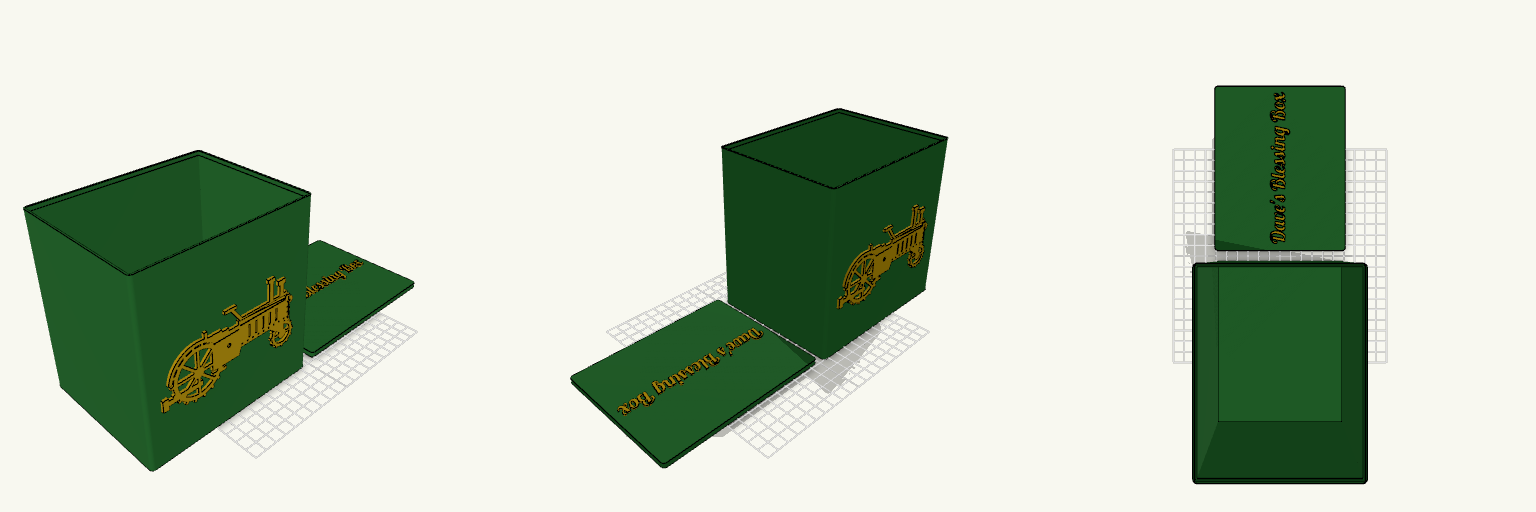
Dave's Blessing Box With Tractors
A lidded box for Dave's blessings, with a John Deere H tractor raised on each long side. The lid sits on the box with a lip, so it won't slide off when you carry it. Size: 120.65 mm wide (X), 152.4 mm long (Y), 152.4 mm deep (Z) Colours: green box and lid, yellow tractors and lid lettering Print: box and lid print separately, upright. The tractors are raised 1.5 mm from the side walls. Fine rivets and bolts may print faintly at a 0.4 mm nozzle.
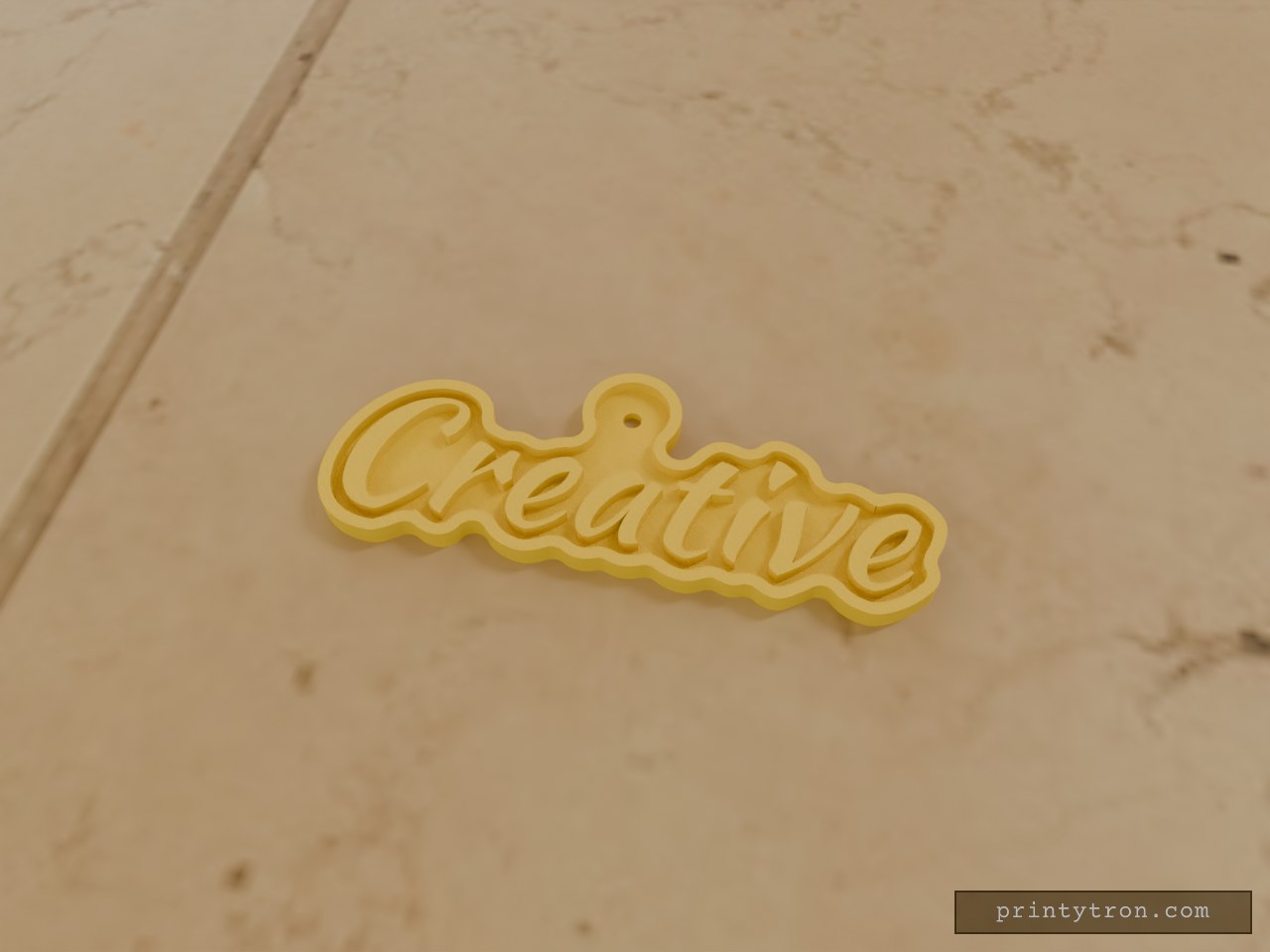
Creative with Raised Border
A wall sign that reads Creative in a brushed script — the fix for a sign that ends up a plain rectangle of plastic with the lettering lost inside it. The backing follows the outline of the letters instead of being a plate, and a raised border traces that same shape, so the sign keeps the word's silhouette on the wall rather than a slab around it. Because the border, backing and lettering are separate colour areas, you can swap filament at the layer changes and get a two- or three-tone sign off a single-colour printer. Sizes Overall footprint: 126 × 49 mm Lettering: 116 × 29.5 mm, 3 mm proud of the backing Backing: 2 mm thick, cut to the lettering outline Border: 5 mm tall, rounded, tracing the same outline Hanging: one round tab above the lettering with a 4 mm hole Hang it from the single tab — check the tab clears your hook or screw head before you commit to a wall position. Print flat on the backing, no supports needed.
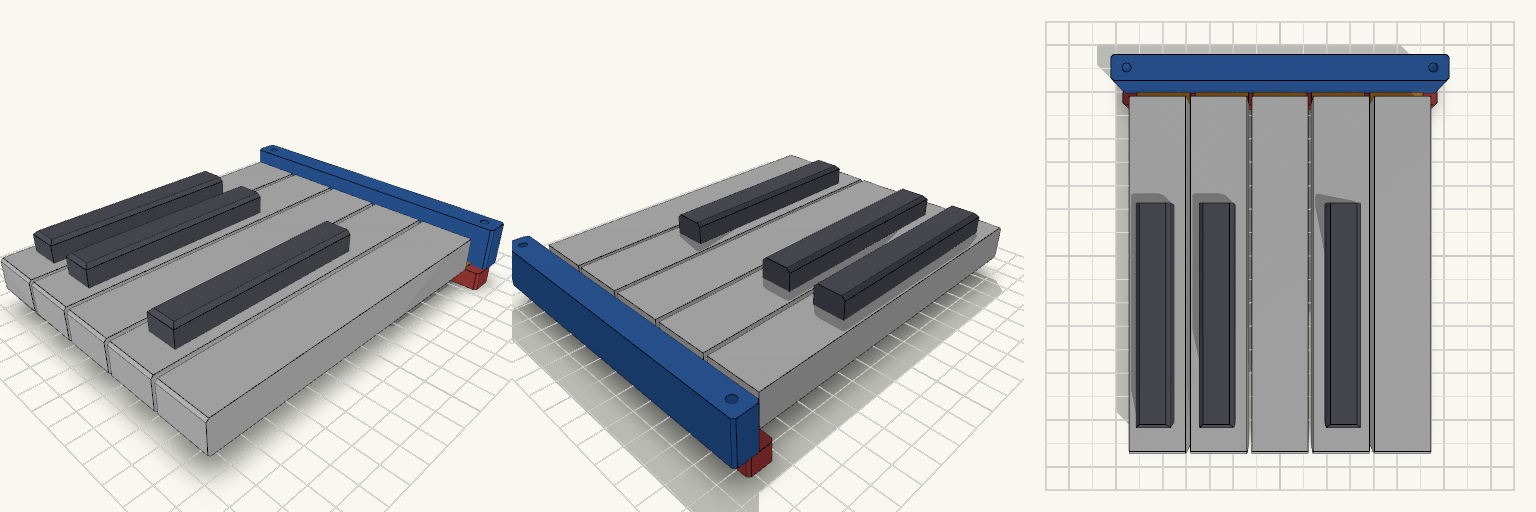
Five-Key Flexure Piano Keyboard Strip
Piano key mockups that stick, stay down or feel dead usually have no return force. This five-key strip gives every key its own 0.8 mm flexure hinge and its own leaf spring, all on one shared back rail. Key numbers Keys: 5 white keys, 22 × 140 mm, 14 mm thick, 24 mm pitch (2 mm gap between keys) Hinge: 0.8 mm flexure on the underside of each key Return spring: 12 mm wide, 1.2 mm thick leaf under each key Black keys: on keys 1, 2 and 4 Rail: shared, 118 mm wide, two 3.5 mm mounting holes at the ends Printing Use PETG or a ductile PLA so the thin hinges do not crack. Print on the flat plate with the base down. Print a spare, since 0.8 mm hinges are the first thing to wear out.
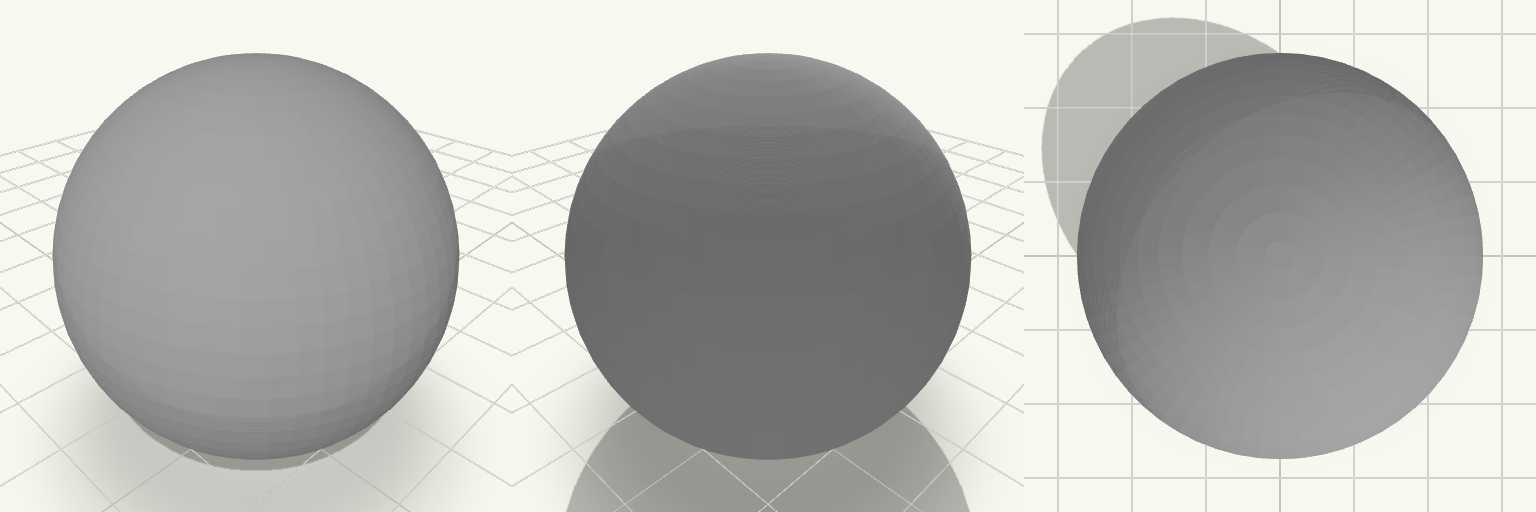
Hul kugle på pind
Let, hul kugle med 39,6 mm ydre diameter, formet som en klassisk pynte- eller lollipop-kugle. I bunden sidder en lille indvendig sokkel, der hæver sig 2 mm ind i kuglen og har et hul til en 2,9 mm pind, så den kan limes fast. Skaltykkelse: 1,2 mm (tre perimeter med 0,4 mm dyse) Sokkel: Ø8 mm, 2 mm ind i kuglen Pindhul: Ø3,2 mm (lidt luft til lim) Bunden er fladtrykt ca. 0,5 mm, så den kan printes uden support i bunden
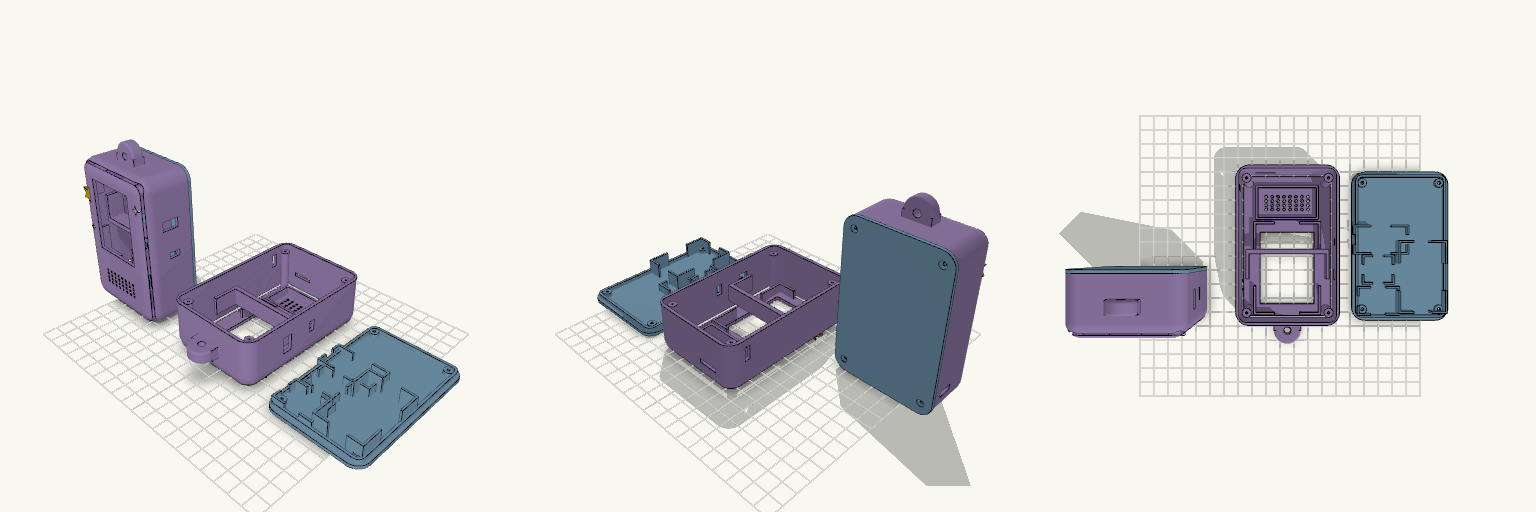
Robot MP3 Player Case, Vertical Screen
A bare enclosure for a 2.4-inch screen, ESP32 and LiPo usually ends up with a loose display, a snapped key-ring tab or a battery pinched by screws. This case is a two-piece print with the screen, speaker and battery each given their own pocket. Key numbers (all provisional) Body: 105 × 68 × 38 mm, 2 mm walls, 9 mm corner radius; about 119 mm tall with the loop. Key-ring loop: 18 mm wide, 8 mm thick, 5 mm hole, part of the body. Screen window: 38.5 × 51 mm, centred at 68 mm height; display PCB cradle about 44 × 62 mm. Speaker: 40 × 20 mm holder; 34 × 12 mm grille of 2.2 mm round holes. Battery: 47 × 30 × 10 mm cradle in the back cover, with slack. Back cover: four M2 screws, 3 mm locating lip, 0.3 mm clearance. Side openings: ESP32 USB and power switch on the +X side, charger on the -X side, microSD in the bottom wall. All are placeholder sizes held in adjustable values. Display mounting posts are left empty until the real hole positions are measured. Printing PETG, 0.2 mm layer height, 25-30% infill. Body prints front-face down; cover prints outside-face down. Yellow star and white sparkles are 0.6 mm raised; switch them off with one setting.
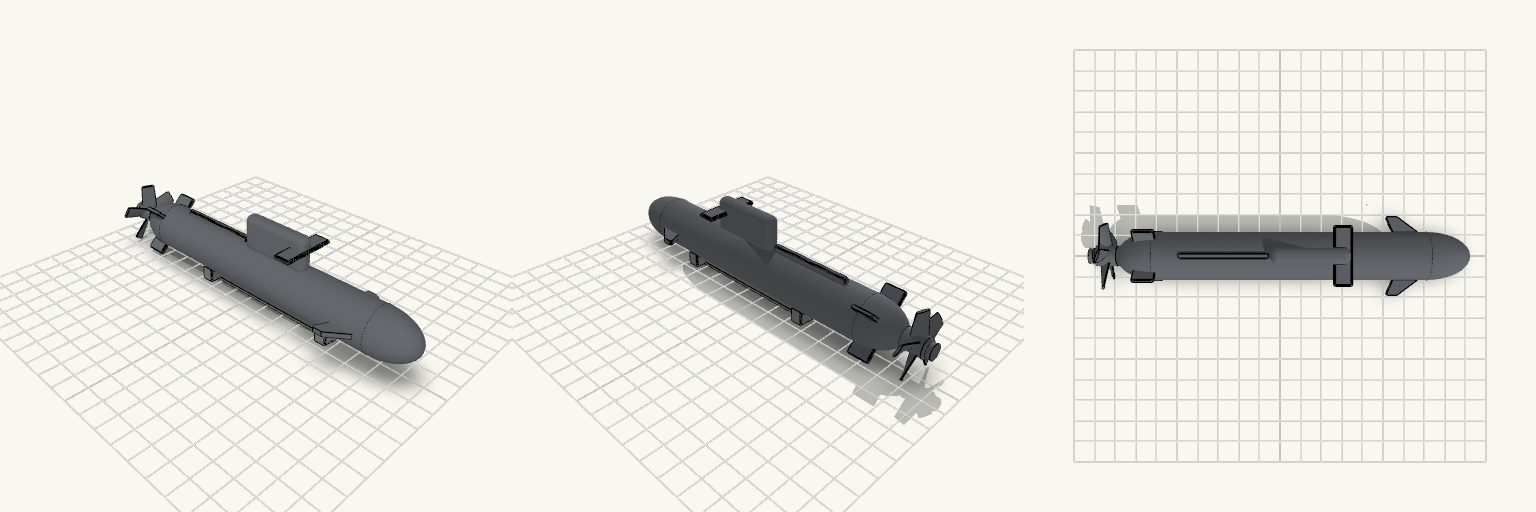
Cold War Titan: K-162 Submarine Model
A long cigar hull, a tall sail with planes of its own, and swept bow fins forward — this is a simplified take on the K-162, the Soviet boat that still holds the record as the fastest submarine ever built. The bow planes are now modest swept, tapered fins: wide where they meet the hull and narrowing toward the tip, tuned down from an earlier wingspan so they read as fins rather than aircraft wings. The stern carries an enlarged five-blade twisted propeller on a short shaft, free to spin, with small angled stabiliser blades set forward of it so the blades have room to turn. A dorsal ridge runs the length of the back, a keel strake sits underneath, and a sonar dome swells beneath the bow — enough hydrodynamic furniture to make the silhouette read as a fast boat rather than a plain tube. The hull runs roughly 174 mm from nose to stern, and the bow fins spread about 36 mm across, so it sits comfortably on a normal plate. It wears a plain grey finish from bow to stern, propeller included, so the whole shape reads as one quiet, uniform mass. The sail, sail planes and bow fins are all rounded off, so nothing on the outline has a sharp corner. The display stand is a pair of cradle blocks shaped to the hull and joined by a thin rail, so the boat rests level on a shelf instead of rolling away. Design notes Uniform grey hull and propeller — a single, understated finish Enlarged five-blade propeller, roughly 14% wider than the original, turning on a 3 mm stern shaft with a retaining head The propeller is a separate piece: print it on its own and slide it onto the shaft, since printing it in place would fuse it solid Loose 4 mm bore on the 3 mm shaft — expect it to spin freely, and add a drop of glue to the retaining head if it works loose Swept, tapered bow fins reaching about 18 mm out from the centreline on each side Dorsal ridge, keel strake, under-bow sonar dome, and small angled tail stabilisers kept clear of the propeller Cradle display stand with a connecting rail, printed as its own piece Generic proportions rather than a museum-accurate Project 661 Anchar — an echo of the shape, not a scale replica Good company for other cold-war-era desk models, or leave it grey and let the silhouette do the talking.