Podium 1/64 Porsche 911, 2 pièces
Made by Dudur
Created today
Description
Podium à trois marches pour voitures à l'échelle 1/64, en deux pièces : marches et mur de fond, assemblés par trois tenons.
Cotes à vérifier avant impression
- Profondeur totale : 90 mm (marches 83 mm).
- Largeur totale : environ 190 mm, marches de 63,3 mm.
- Hauteurs des marches : 40, 30 et 20 mm.
- Jeu des tenons : 0,3 mm.
Contenu
- Chiffres 1 à 3 en façade, « PODIUM DRIFT », une coupe et une silhouette de Porsche 911 en blanc sur le fond.
- Rainures diagonales à 45° sur les marches.
Limites
Convient aux voitures 1/64 posées en diagonale. La silhouette de 911 est approximative, sans génération précise.
Images
More like this
Explore more in Decor & Display →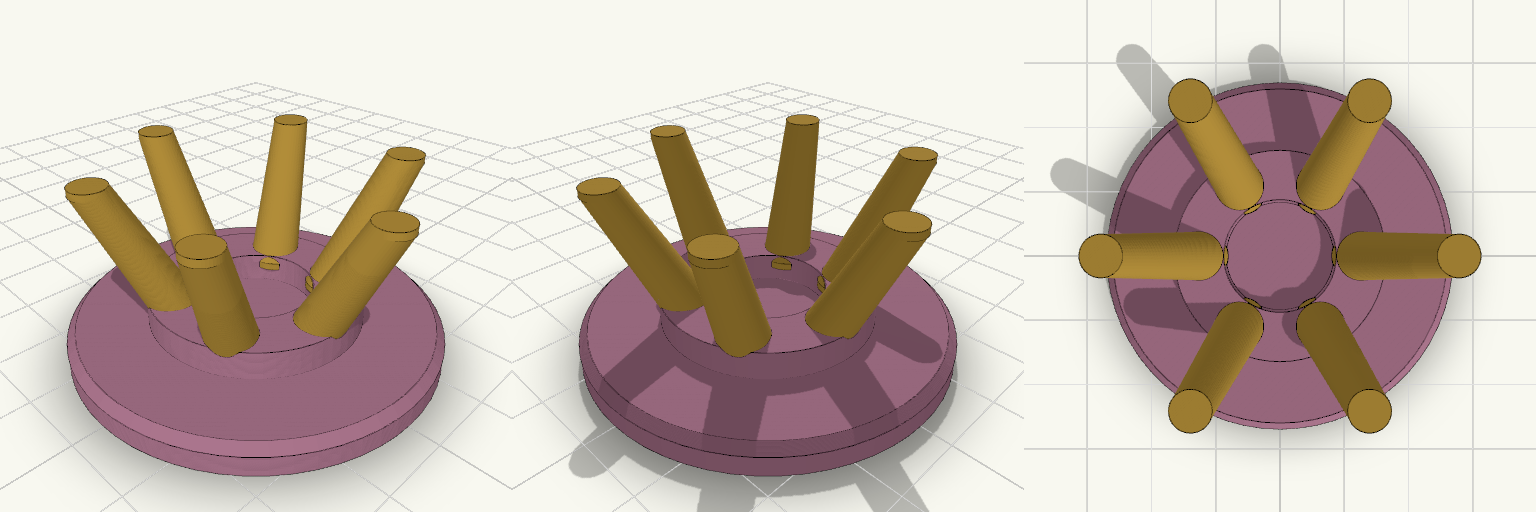
Blossom — Six-Petal Egg Cradle
Blossom is a small display stand that holds a decorated egg upright for an Easter table. Six slim petals rise from a round base and lean outward, forming a ring that cradles the egg while the open gaps between petals leave most of the painted or decorated surface in view. Features Six evenly spaced, tapered petals that flare outward toward the top Round 52 mm base with a chamfered top edge and a raised central ring under the petals Open gaps between petals so the decoration stays visible from every side Flat underside for easy printing, with no supports needed for the base Dimensions Overall height: about 25 mm Base diameter: 52 mm Ring opening at the petal tips: roughly 36 mm inside, sized for a chicken egg about 35 mm across its short axis Petal span: about 46 mm outer tip to tip Print notes Print base-down. The petals lean outward, so a light support or slow, cool printing helps the upper tips. Two-tone preview: base and petals are separate colour regions of one welded piece. Pulling the petal tips in by about half a millimetre brings the ring opening to exactly 35 mm.
Five-Key Flexure Piano Keyboard Strip
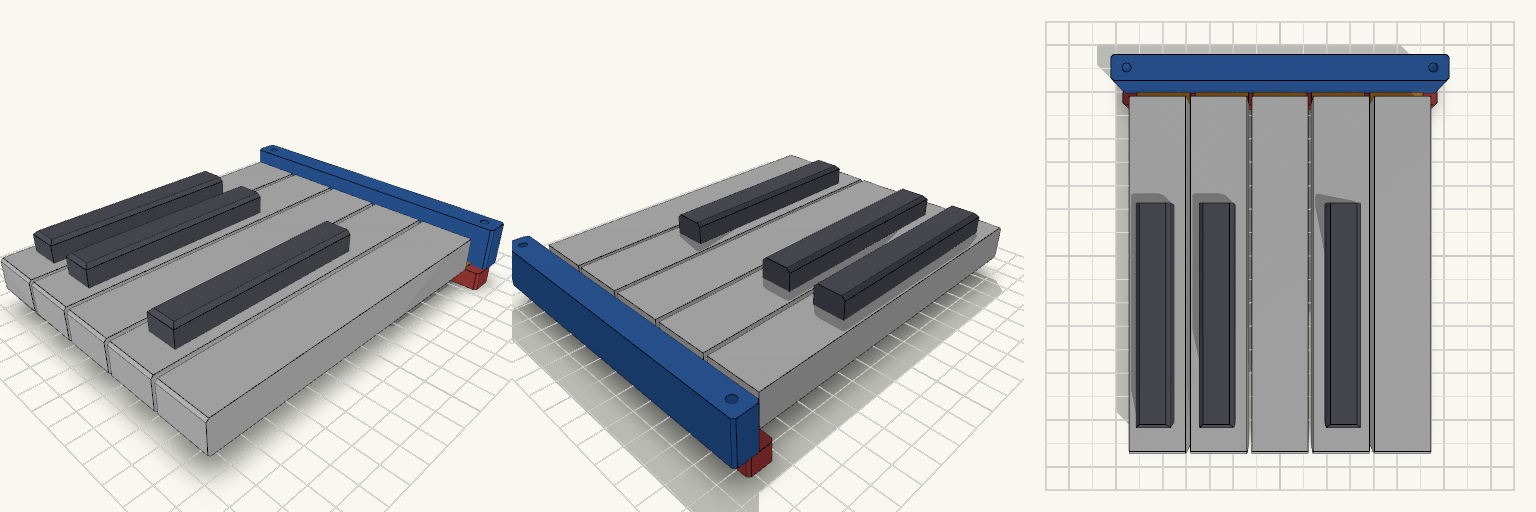
Piano key mockups that stick, stay down or feel dead usually have no return force. This five-key strip gives every key its own 0.8 mm flexure hinge and its own leaf spring, all on one shared back rail. Key numbers Keys: 5 white keys, 22 × 140 mm, 14 mm thick, 24 mm pitch (2 mm gap between keys) Hinge: 0.8 mm flexure on the underside of each key Return spring: 12 mm wide, 1.2 mm thick leaf under each key Black keys: on keys 1, 2 and 4 Rail: shared, 118 mm wide, two 3.5 mm mounting holes at the ends Printing Use PETG or a ductile PLA so the thin hinges do not crack. Print on the flat plate with the base down. Print a spare, since 0.8 mm hinges are the first thing to wear out.
SPIRAL V01 — ваза со спиральными рёбрами
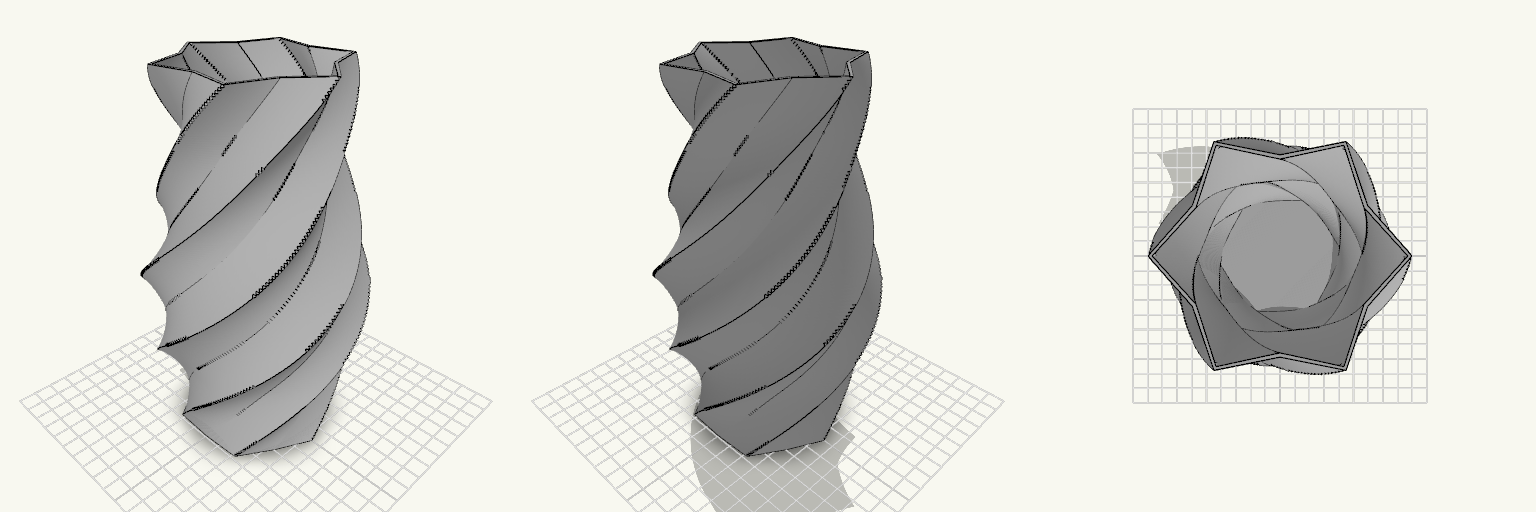
SPIRAL V01 — цельная декоративная ваза в духе современного минимализма: устойчивое круглое основание, выпуклый округлый объём в средней части, выраженная талия и короткое горло, слегка раскрывающееся наружу. Главный элемент дизайна — шесть широких спиральных граней, которые непрерывно идут от основания до горлышка и закручиваются вокруг вертикальной оси примерно на 240° по всей высоте. Каждая грань имеет плоскую поверхность и чёткие угловатые боковые переходы, поэтому силуэт читается как геометрически скрученные плоские ленты, а не как мягкая волна: между лопастями проходят глубокие каналы, гребни острые, горизонтальной ребристости нет. На матовом однотонном пластике грани ловят свет широкими полосами и особенно выразительно смотрятся в чёрном и белом исполнении. Форма самодостаточна — ваза работает как акцент на полке, подоконнике или столе без дополнительного декора. Размеры Высота: 200 мм Габариты по столу: около 118 × 119 мм Диаметр основания: около 88 мм Стенка: 1,5 мм, сплошное дно 2,8 мм Внутренняя полость открыта сверху, горло широкое; крышки нет Особенности 6 широких непрерывных спиральных граней с плоскими поверхностями и угловатыми переходами Спираль делает около 240° оборота от основания до горлышка Глубина каналов до 11 мм у широкой части, без горизонтальных колец и мелкой ребристости Выпуклый корпус с выраженной талией и раскрытым горлом Цельная деталь: рельеф — часть самой стенки, ничего не склеивается и не собирается Сплошное дно; для воды печатайте с достаточной плотностью стенок Печать Модель рассчитана на сопло 0,4 мм и печать PLA слоем 0,16–0,20 мм; по габаритам она помещается на стол Bambu A1 (256 мм) с запасом. Поддержки не требуются, но изгиб талии и верхнее раскрытие горла стоит проверить в слайсере. Для плотного матового варианта стенку 1,5 мм можно печатать в несколько периметров; для лёгкой полупрозрачной вазы подойдёт вазный режим, но тогда для воды добавьте периметры и плотность. Цвет не зашит в модель: чёрная и белая версии печатаются из одного файла со сменой филамента. Для интерьера Ваза задумана как современный дизайнерский предмет для интерьера и подходит для небольших серий в чёрном и белом исполнении.
Hul kugle på pind
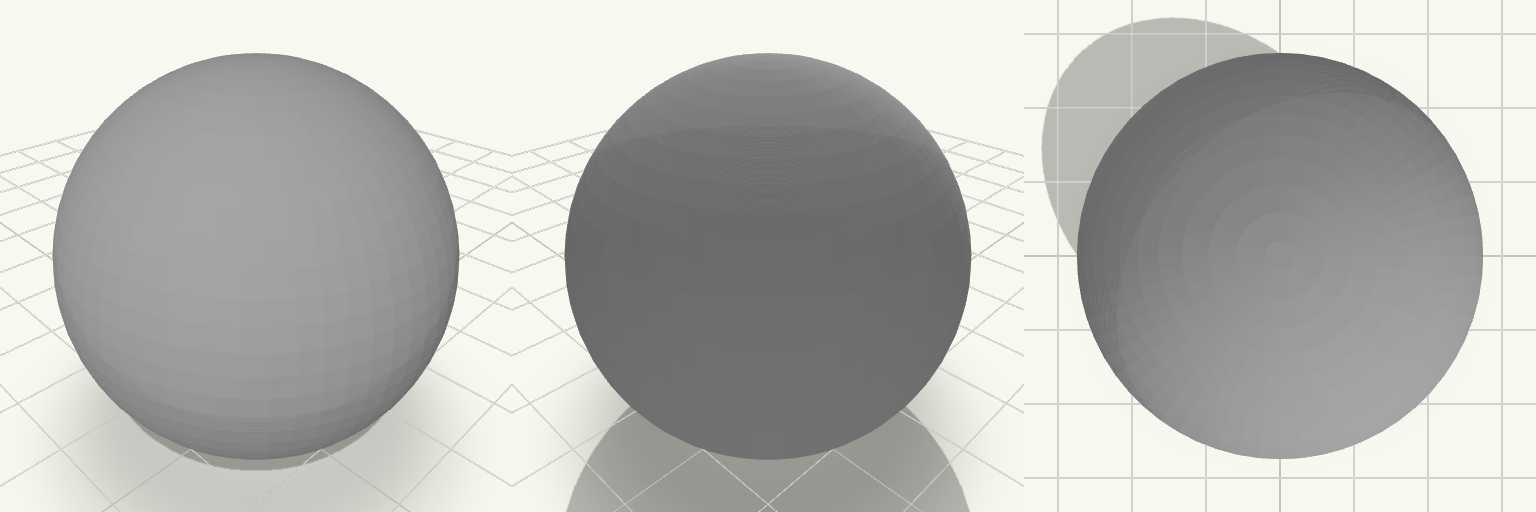
Let, hul kugle med 39,6 mm ydre diameter, formet som en klassisk pynte- eller lollipop-kugle. I bunden sidder en lille indvendig sokkel, der hæver sig 2 mm ind i kuglen og har et hul til en 2,9 mm pind, så den kan limes fast. Skaltykkelse: 1,2 mm (tre perimeter med 0,4 mm dyse) Sokkel: Ø8 mm, 2 mm ind i kuglen Pindhul: Ø3,2 mm (lidt luft til lim) Bunden er fladtrykt ca. 0,5 mm, så den kan printes uden support i bunden
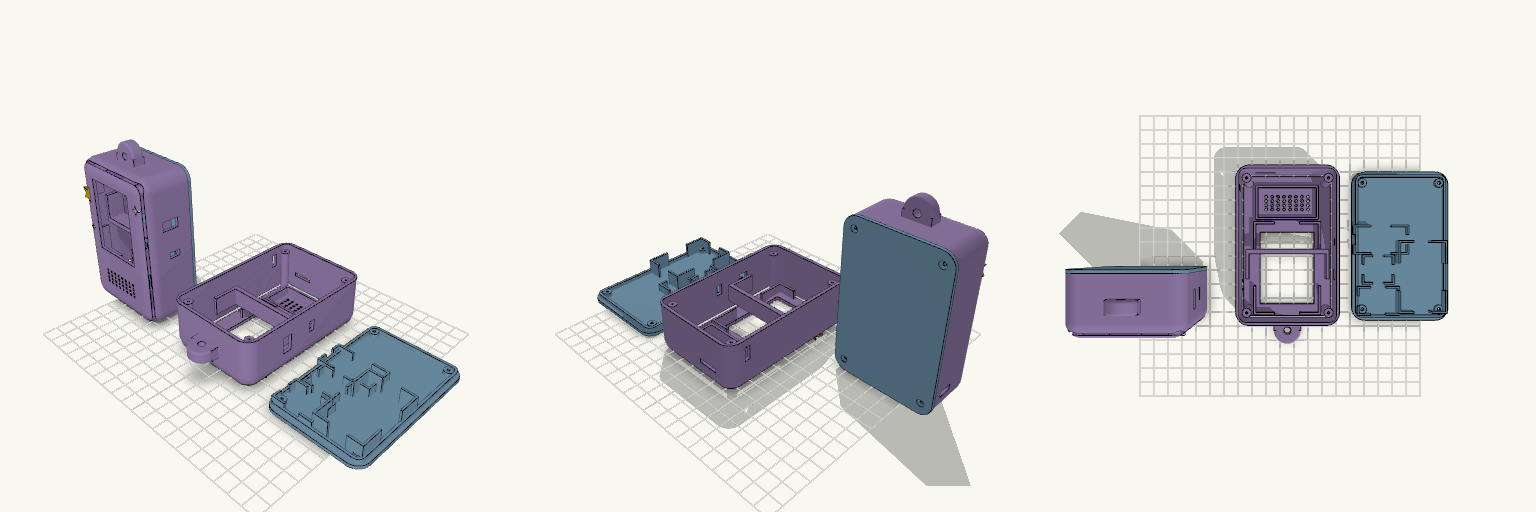
Robot MP3 Player Case, Vertical Screen
A bare enclosure for a 2.4-inch screen, ESP32 and LiPo usually ends up with a loose display, a snapped key-ring tab or a battery pinched by screws. This case is a two-piece print with the screen, speaker and battery each given their own pocket. Key numbers (all provisional) Body: 105 × 68 × 38 mm, 2 mm walls, 9 mm corner radius; about 119 mm tall with the loop. Key-ring loop: 18 mm wide, 8 mm thick, 5 mm hole, part of the body. Screen window: 38.5 × 51 mm, centred at 68 mm height; display PCB cradle about 44 × 62 mm. Speaker: 40 × 20 mm holder; 34 × 12 mm grille of 2.2 mm round holes. Battery: 47 × 30 × 10 mm cradle in the back cover, with slack. Back cover: four M2 screws, 3 mm locating lip, 0.3 mm clearance. Side openings: ESP32 USB and power switch on the +X side, charger on the -X side, microSD in the bottom wall. All are placeholder sizes held in adjustable values. Display mounting posts are left empty until the real hole positions are measured. Printing PETG, 0.2 mm layer height, 25-30% infill. Body prints front-face down; cover prints outside-face down. Yellow star and white sparkles are 0.6 mm raised; switch them off with one setting.
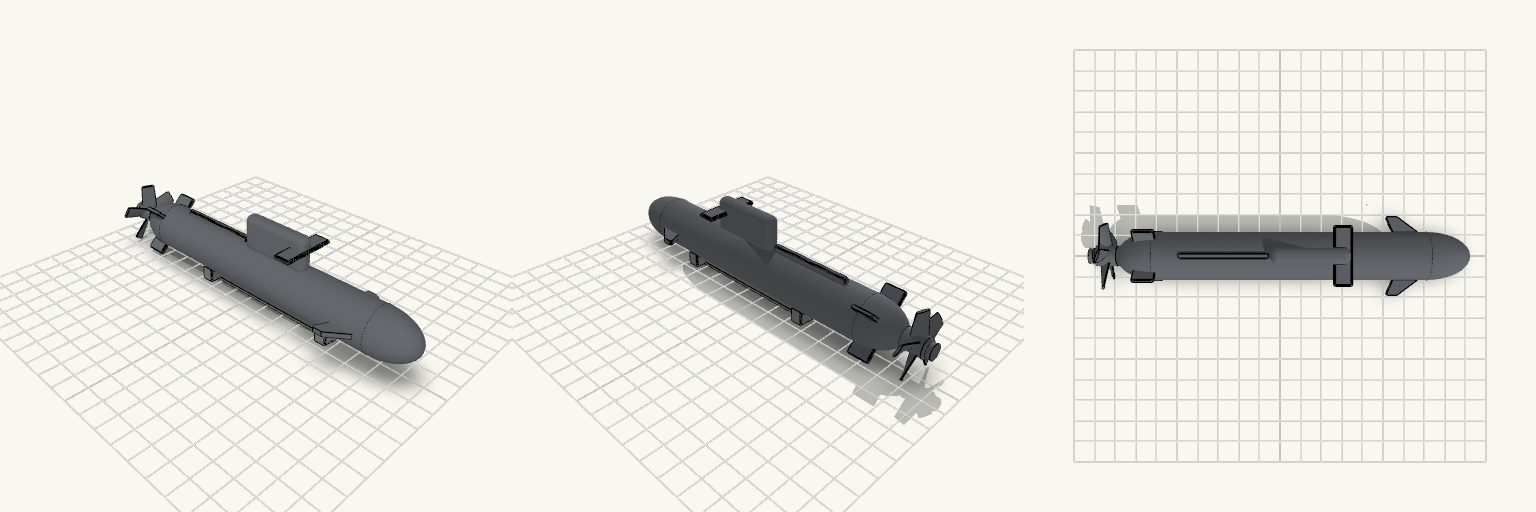
Cold War Titan: K-162 Submarine Model
A long cigar hull, a tall sail with planes of its own, and swept bow fins forward — this is a simplified take on the K-162, the Soviet boat that still holds the record as the fastest submarine ever built. The bow planes are now modest swept, tapered fins: wide where they meet the hull and narrowing toward the tip, tuned down from an earlier wingspan so they read as fins rather than aircraft wings. The stern carries an enlarged five-blade twisted propeller on a short shaft, free to spin, with small angled stabiliser blades set forward of it so the blades have room to turn. A dorsal ridge runs the length of the back, a keel strake sits underneath, and a sonar dome swells beneath the bow — enough hydrodynamic furniture to make the silhouette read as a fast boat rather than a plain tube. The hull runs roughly 174 mm from nose to stern, and the bow fins spread about 36 mm across, so it sits comfortably on a normal plate. It wears a plain grey finish from bow to stern, propeller included, so the whole shape reads as one quiet, uniform mass. The sail, sail planes and bow fins are all rounded off, so nothing on the outline has a sharp corner. The display stand is a pair of cradle blocks shaped to the hull and joined by a thin rail, so the boat rests level on a shelf instead of rolling away. Design notes Uniform grey hull and propeller — a single, understated finish Enlarged five-blade propeller, roughly 14% wider than the original, turning on a 3 mm stern shaft with a retaining head The propeller is a separate piece: print it on its own and slide it onto the shaft, since printing it in place would fuse it solid Loose 4 mm bore on the 3 mm shaft — expect it to spin freely, and add a drop of glue to the retaining head if it works loose Swept, tapered bow fins reaching about 18 mm out from the centreline on each side Dorsal ridge, keel strake, under-bow sonar dome, and small angled tail stabilisers kept clear of the propeller Cradle display stand with a connecting rail, printed as its own piece Generic proportions rather than a museum-accurate Project 661 Anchar — an echo of the shape, not a scale replica Good company for other cold-war-era desk models, or leave it grey and let the silhouette do the talking.