Posable Dragon With Friction Joints
Created 23 days ago
Description
A posable toy dragon that holds its pose, with detailing so it doesn't look like a plain chain of balls. The old version looked like a bare stick of linked beads. This one adds belly plates, scale studs and a trimmed base.
What's on it
- Cream belly plates under each body link
- Dark-red scale studs along both flanks, plus the back spike row
- Raised gold trim around the edge of the base
- Same 12 ball-jointed body links and ball-jointed head
Print notes
- 0.2 mm joint clearance: raise it if the joints fuse, lower it if they sag
- Print in PETG for repeated bending
- Multi-colour print or paint the belly plates, trim and spikes
Images
More like this
Explore more in Decor & Display →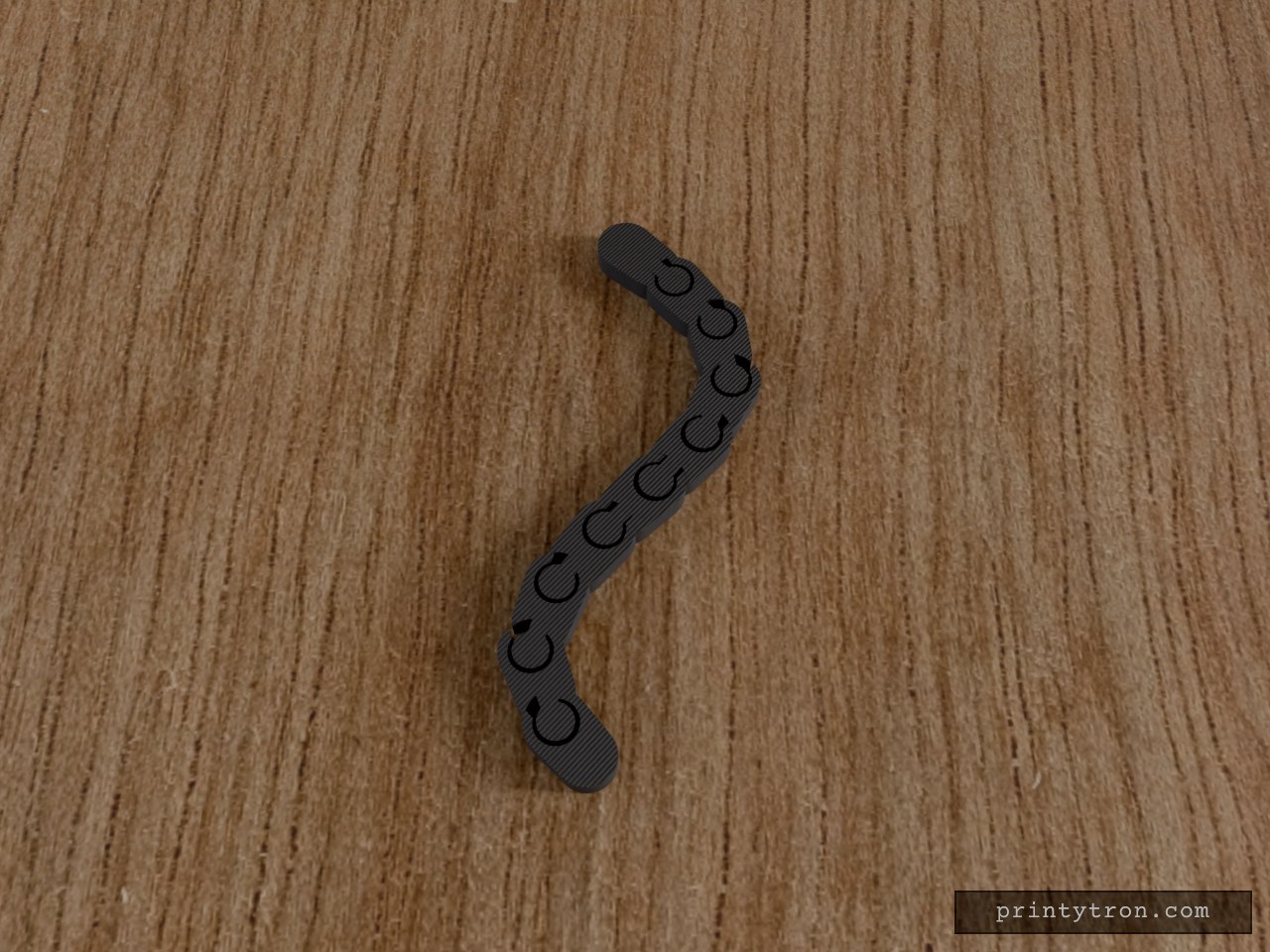
Articulated Flat S-Shaped Snake
A flat snake made of separate links joined by knob-and-socket joints, laid out in an S shape. Each link is 3 mm thick with smooth rounded outlines and no extra detail. Links print already connected, with clearance in each joint Flat on the bed, no supports needed Links pivot in the plane, so the snake can be bent into other curves Plain solid links, no surface detail Use a small layer height and check that the joints move freely after printing.
Flat Snake Assembly Kit
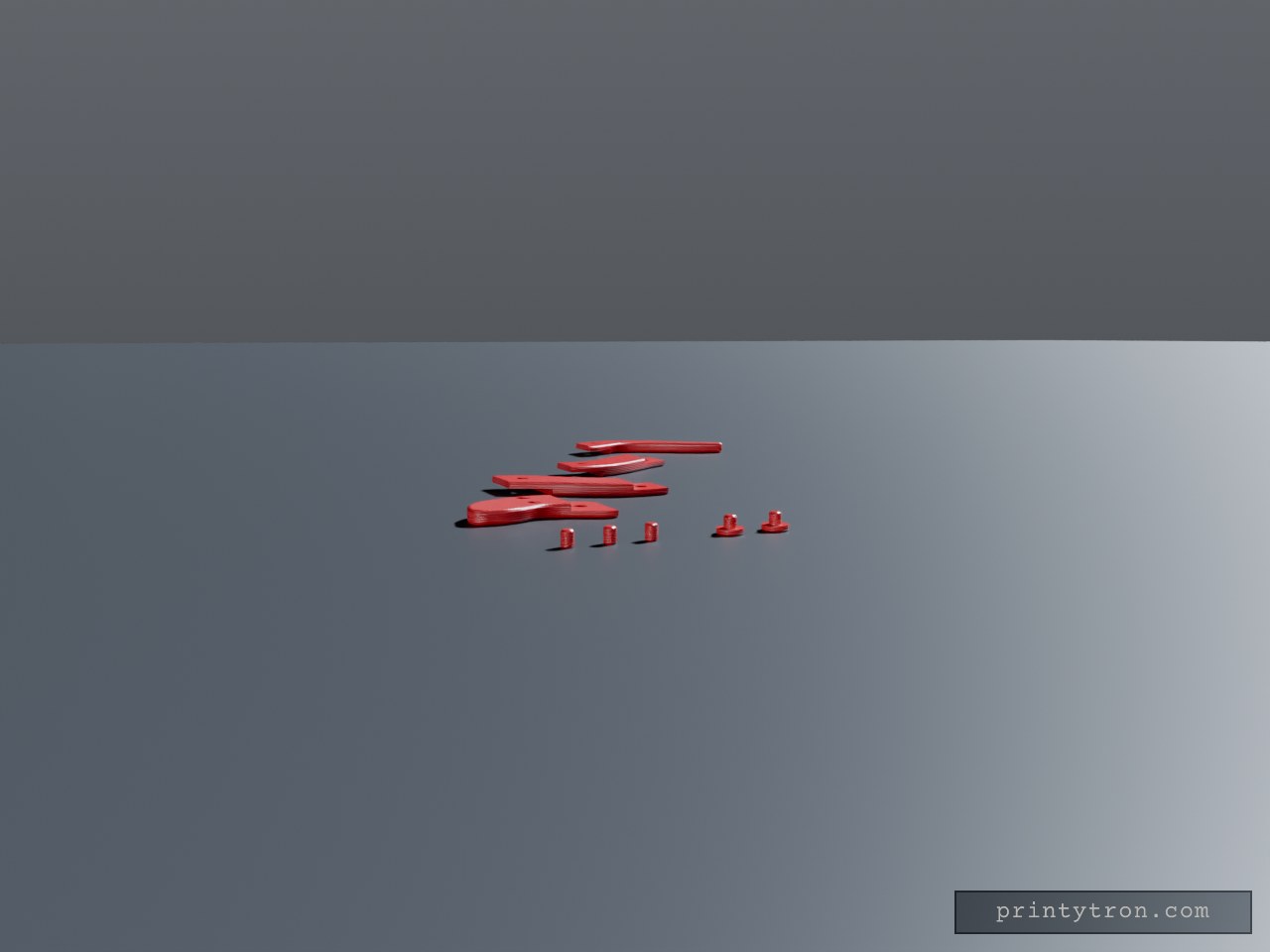
What it's for A flat, solid snake that prints as separate pieces and snaps together by hand: head, two body segments, tail, two eyes and three connector pins. Edges are rounded, there is no surface detail, and nothing needs supports. Dimensions Thickness: 4 mm Pin holes: 3.5 mm diameter Pins: 3 mm diameter, 4 mm long Joints: half-thickness lap joints, so the pin passes vertically through both overlapping ends Eyes: 6.5 mm domed discs with a 3 mm peg that fits holes in the head Remix ideas Lengthen the snake with more body segments. Change the wave amplitude for a tighter or straighter snake. Add a keyring hole in the tail.
Dragonguard Crossed Sword Coaster
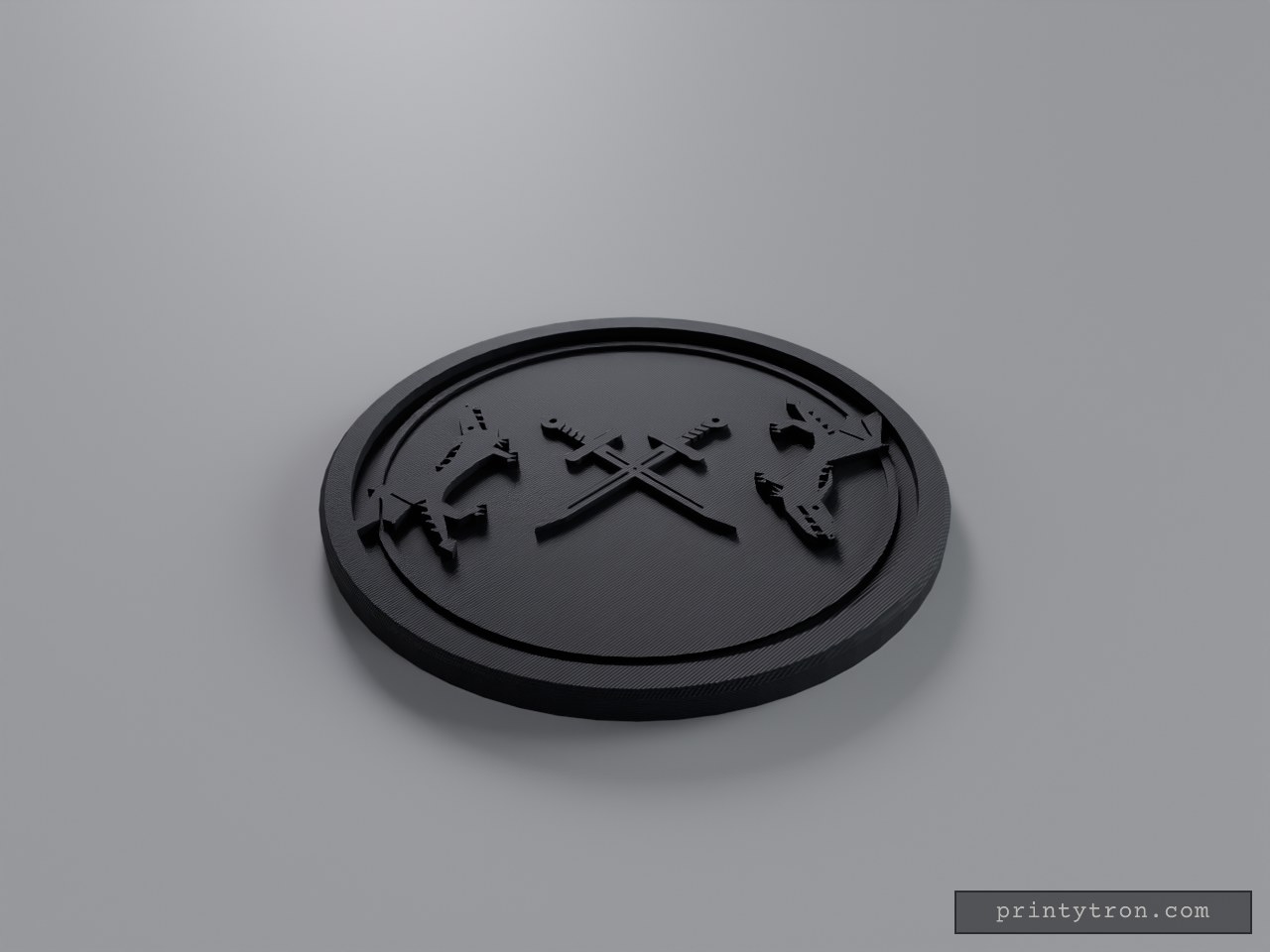
A coaster out of a dragon-hoard fantasy: two winged wyverns circle a pair of crossed longswords, all raised from a recessed floor inside a thin rim. The dragons carry spined backs, scaled flanks, ribbed bat wings, clawed legs and horned, toothed heads. The swords have fullers, curled quillons, wrapped grips and gem-socket pommels. Single-colour print, flat base, no supports needed 100 mm diameter, 5 mm tall, with a raised rim to hold a glass steady Relief is 1.1–1.7 mm above the floor, so the detail stays readable at 0.4 mm nozzle width Pairs well with a dark filament and a felt or cork pad underneath
OO Mill Front and part-tapered Chimney Set
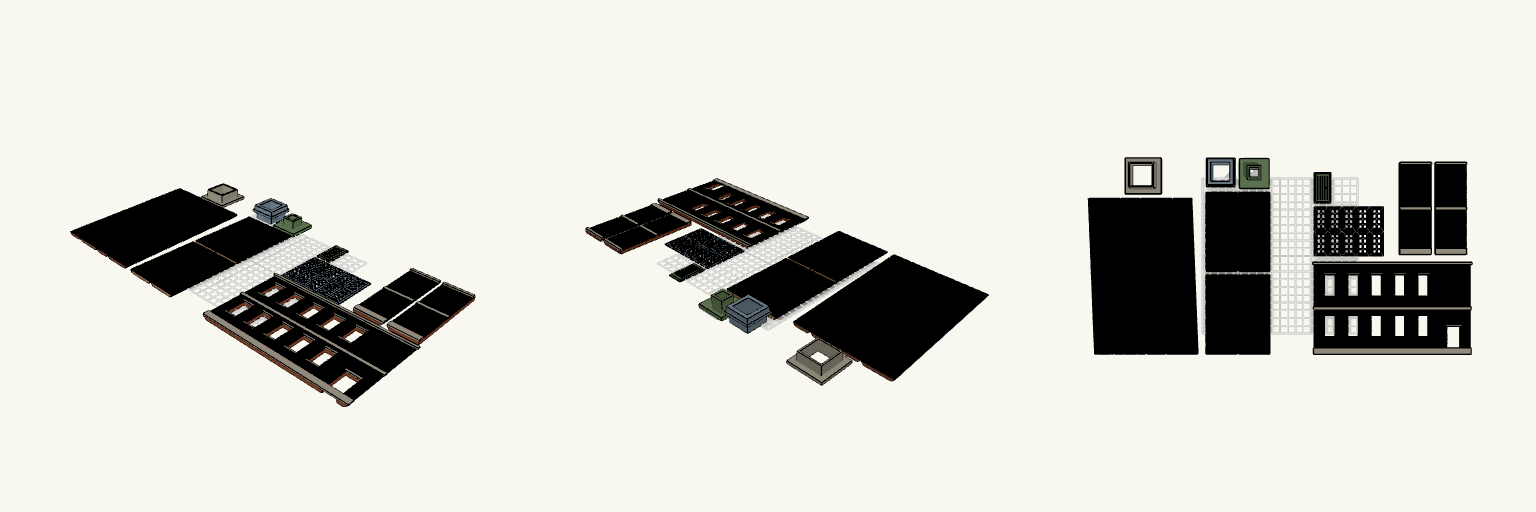
A four-panel tapered chimney with a straight brick base, paired with a half-relief two-storey mill front in OO scale. The wall, ten window frames and plank door all print flat. Each window frame and the door now carries a thin web around its outside edge to hold it down during printing. Remix hooks Web width (webw, 1.8 mm): wider grips better; keep it under half the 4 mm spacing so neighbouring webs stay separate. Web thickness (webt, 0.3 mm): roughly one or two layers. Thinner peels off easier, thicker holds harder. Window grid (14 x 28 mm frames, 4 mm spacing): change the spacing if the web is widened. Pairs with: the chimney set on the same plate layout, and a clear or painted glazing insert behind the frames. Print notes Trim the web with a hobby knife after printing, before fitting frames into the wall openings. Wall is 200 mm long and needs its own print separate from the chimney set.
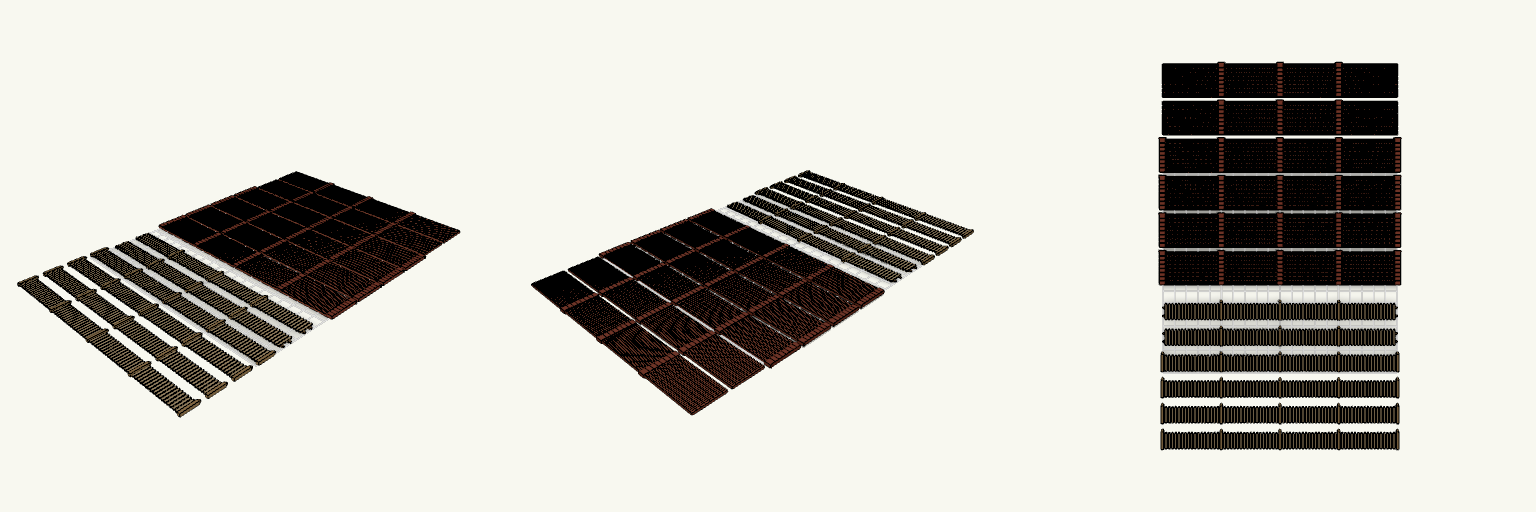
OO Scale Picket Fences and Brick Walls
Flat-pack OO scale (1:76) boundary set: six 200 mm wooden picket fence panels and six 200 mm brick wall panels, all printing on one bed in separate rows. Fences: four with five posts, two with only the three centre posts (50, 100, 150 mm). Posts are 17 mm tall with pyramid tips; slats are 1.6 mm wide, 14 mm tall and pointed. Brick walls: 28 mm tall (7 ft), 1.6 mm thick, soldier bond: upright bricks, with 0.4 mm mortar grooves every 1.4 mm and a course line every 3.5 mm. Pillars are 5 mm wide, 2.4 mm thick, with a small cap, spaced 50 mm apart. Two walls have only the three centre pillars. Remix hooks wh (28) sets wall height; crs (3.5) sets course spacing. pitch (1.4) and gw (0.4) set brick width and mortar line; keep gw at or above one nozzle width. pwid (5) widens the pillars; wall wt (1.6) sets thickness. Swap the pillar count or spacing to match the fence posts. Pairs with the fences as a mixed boundary run; glue panels to a base strip for display.
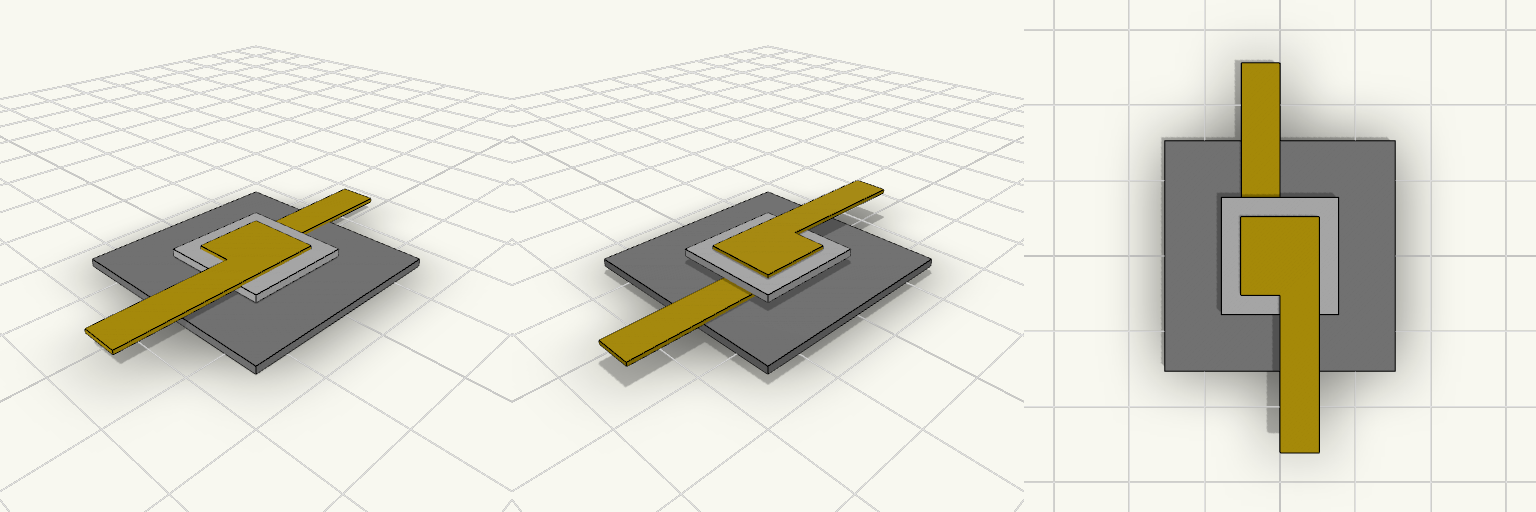
Placa con figura en L y cuadrado blanco
Una placa cuadrada de 30 × 30 mm y 1 mm de espesor sirve de base a tres capas superpuestas: una figura en L amarilla de 0.5 mm de espesor, un cuadrado blanco de 15 × 15 mm y 1 mm centrado sobre ella, y una segunda L amarilla idéntica a la primera, girada 180° sobre el mismo eje central. El conjunto alcanza 3 mm de altura total. Las dos L son iguales: un cuadrado central de 10 × 10 mm centrado en la placa, del que sale un brazo de 5 mm de ancho y 30 mm de largo. El brazo de la L inferior apunta hacia un lado y el de la superior hacia el opuesto, de modo que cada uno sobresale 10 mm del borde de la placa. La pieza ocupa 30 × 50 mm sobre la cama y los dos tramos volados quedan sin apoyo debajo. Placa: 30 × 30 mm, 1 mm de espesor, en gris. Figura en L: dos capas amarillas de 0.5 mm, con el cuadrado de 10 × 10 mm centrado en la placa y brazos de 5 mm de ancho que salen en sentidos opuestos. Cuadrado blanco: 15 × 15 mm, 1 mm de espesor, centrado entre las dos L. Tamaño total: 30 × 50 × 3 mm. Impresión: una sola pieza; los dos extremos de 10 mm que sobresalen necesitan soportes, o bien gira la pieza para evitarlo. Primera capa: al ser la base de 1 mm, cuida la adherencia a la cama para que no se combe en las esquinas.