Hex-Embossed Storage Tub
Created 23 days ago
Description
This storage pot brings an industrial, sci-fi crate aesthetic to the workshop or pantry desk. The model measures exactly 145mm wide, 200mm long, and 100mm deep on the inside, leaving plenty of room to slot in boxed goods or bulk packaging.
Design Notes
- Textured Shell: The outer walls feature a debossed hex-grid pattern that improves grip without compromising wall strength.
- Grip Handles: Both ends feature pill-shaped cutouts scaled for easy lifting, whether it's on a high shelf or tucked under a bench.
- Rounded Profile: Corners are filleted inside and out, making the tub easy to wipe down.
Images
More like this
Explore more in Storage & Organization →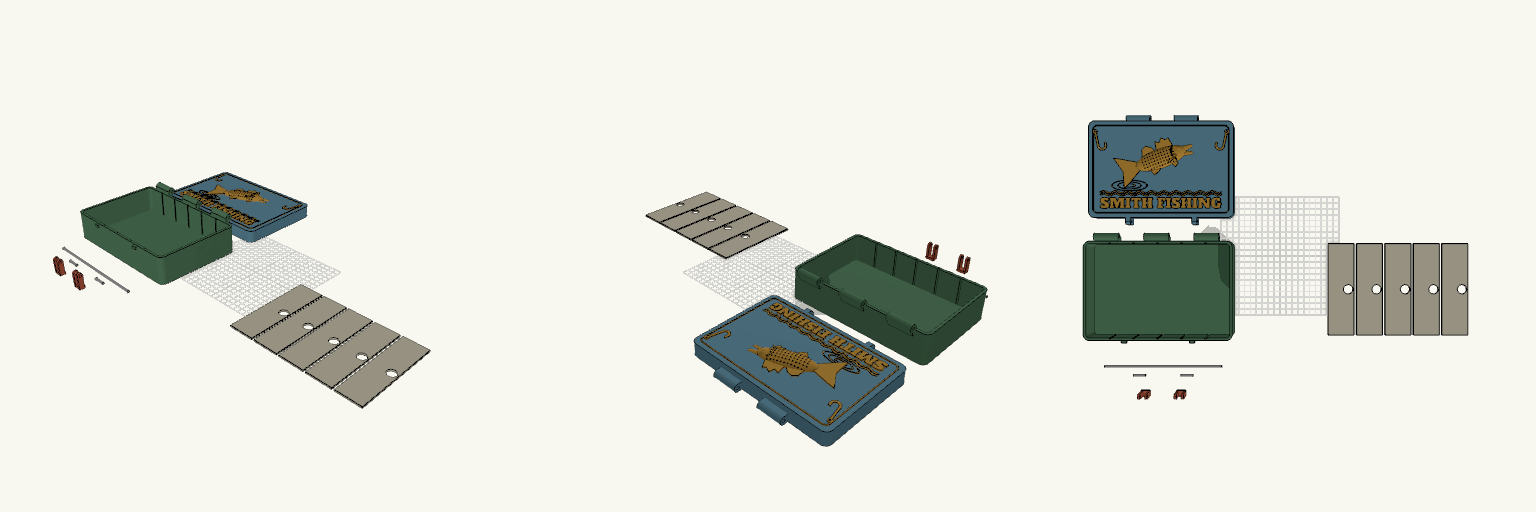
Hinged Bass Tackle Box with Dividers
What it's for A hinged tackle box for bass fishing gear, with a locking front latch, removable thick dividers and a leaping bass on the lid with SMITH FISHING lettering. Dimensions Base: 240 × 160 × 50 mm, 4 mm walls, 3 mm floor Lid: 240 × 160 × 22 mm with raised artwork Dividers: 5 pieces, 2.6 mm thick, sliding in 3.2 mm grooves Hinge: 5 knuckles with a separate 4.2 mm pin Latches: 2 front latches with pivot pins Remix ideas Change the lettering to a different name Add more divider grooves for smaller compartments Swap the lid artwork for another species
4x4 Gridfinity Baseplate with Bowtie Clips
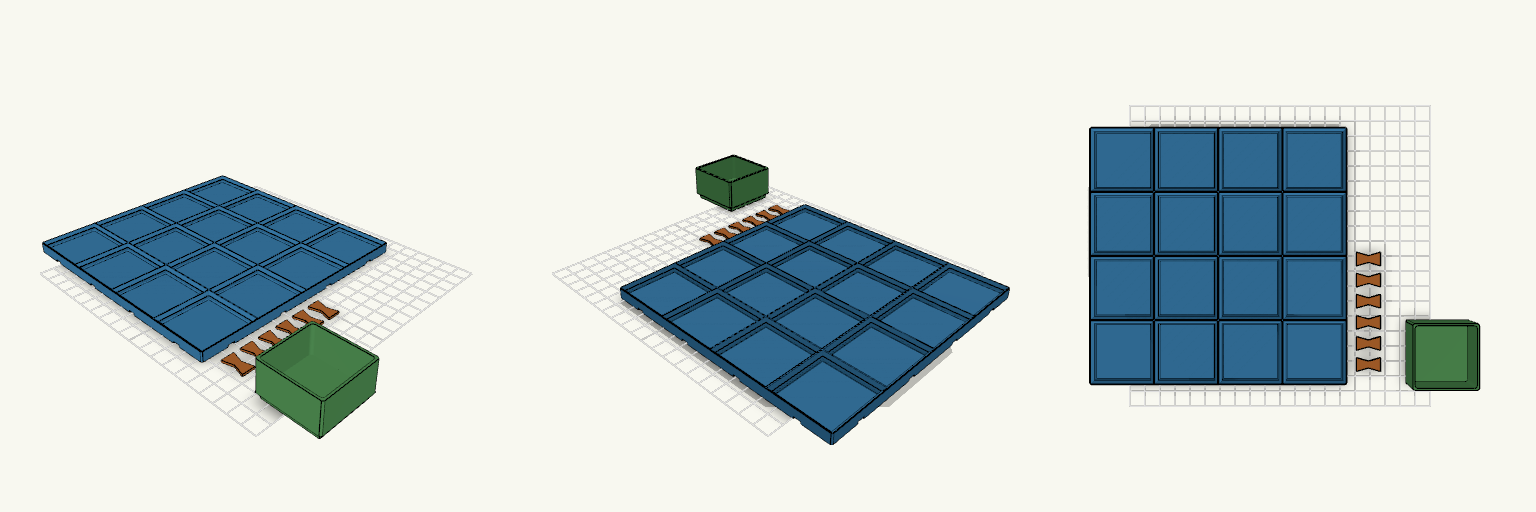
What it's for A 4x4 Gridfinity baseplate that joins to neighbouring plates without interrupting the grid. Each outer edge carries four bowtie-shaped recesses on the underside, one centred on every cell edge. Butt two plates together and press a clip into the matching recesses from below; the clip sits flush so the top surface stays seamless and the 42 mm pitch carries across the join. The set prints as separate parts: the baseplate, the bowtie clips and a 1x1 bin. The bin has a foot profile that matches the baseplate pockets but no stacking lip. Dimensions Baseplate: 168 × 168 × 6.8 mm (4 × 4 cells on the 42 mm grid) 1x1 bin: 41.5 × 41.5 × 25.7 mm Bowtie clips: 16 × 79 × 1.2 mm, sitting in 1.4 mm deep recesses with 0.2 mm clearance Print notes Six clips are included, which is enough for one seam only — print four per cell edge you want to join. Print the clips flat in PETG or a tougher filament rather than PLA; at 1.2 mm thick they are the weak point of the set. Remix ideas Scale the plate to other grid sizes, or mix a 4x4 with smaller plates along the same seams. Add more 1x1 bins, or extend the bin family with deeper sizes. Add a stacking lip to the bin for stacked storage.
Screw-Top Storage Jar With Lid
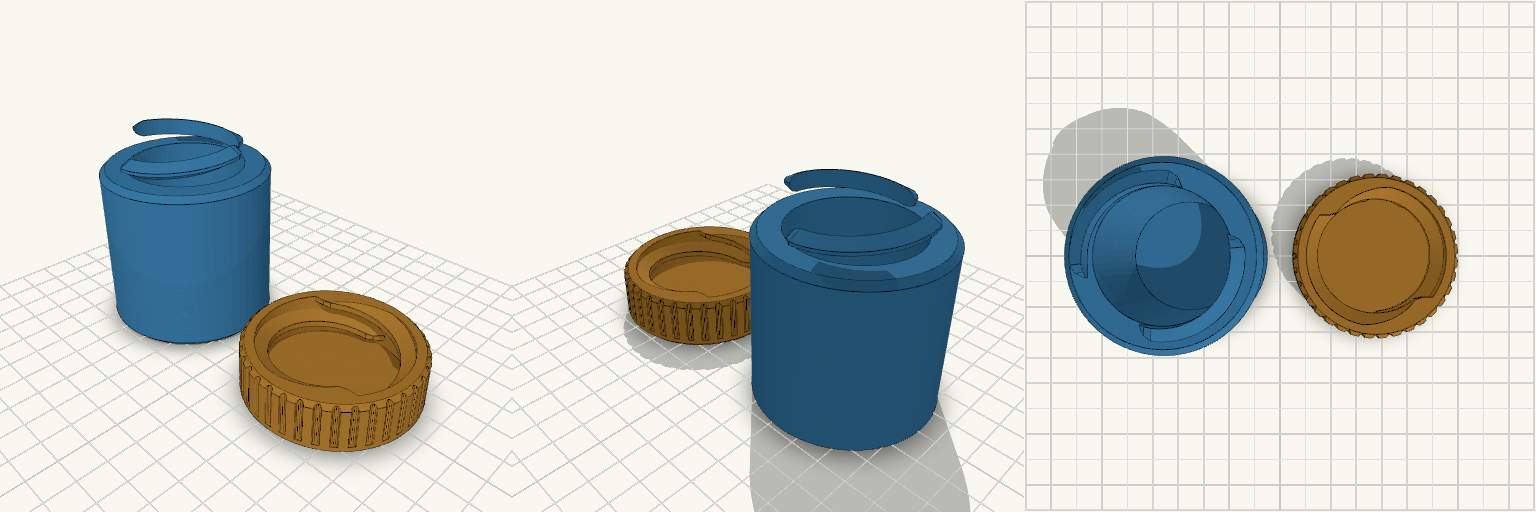
A 60 mm wide, 70 mm tall storage jar with a 50 mm threaded mouth and a matching screw-on lid. It suits spare screws, washers, small hardware or dry spices, and replaces a makeshift jam jar with something sized for the job. The thread is a coarse two-start design with an 8 mm pitch, so the lid goes on in about one turn and comes off just as quickly. The lid has a knurled grip band around its edge for a firm hold, and 0.4 mm of thread clearance to keep the two parts from fusing when printed. The thread fit has not been test-printed, so a small adjustment to clearance may be needed for your printer. Jar: 60 mm diameter, 70 mm tall including the neck Mouth: 50 mm threaded neck Lid: 60 mm diameter, 18 mm tall, knurled grip band Thread: coarse, two-start, 8 mm pitch Walls: 2.5 mm, with a 3 mm floor Printed as two separate pieces, jar and lid
Bass Tackle Box With Hinged Lid
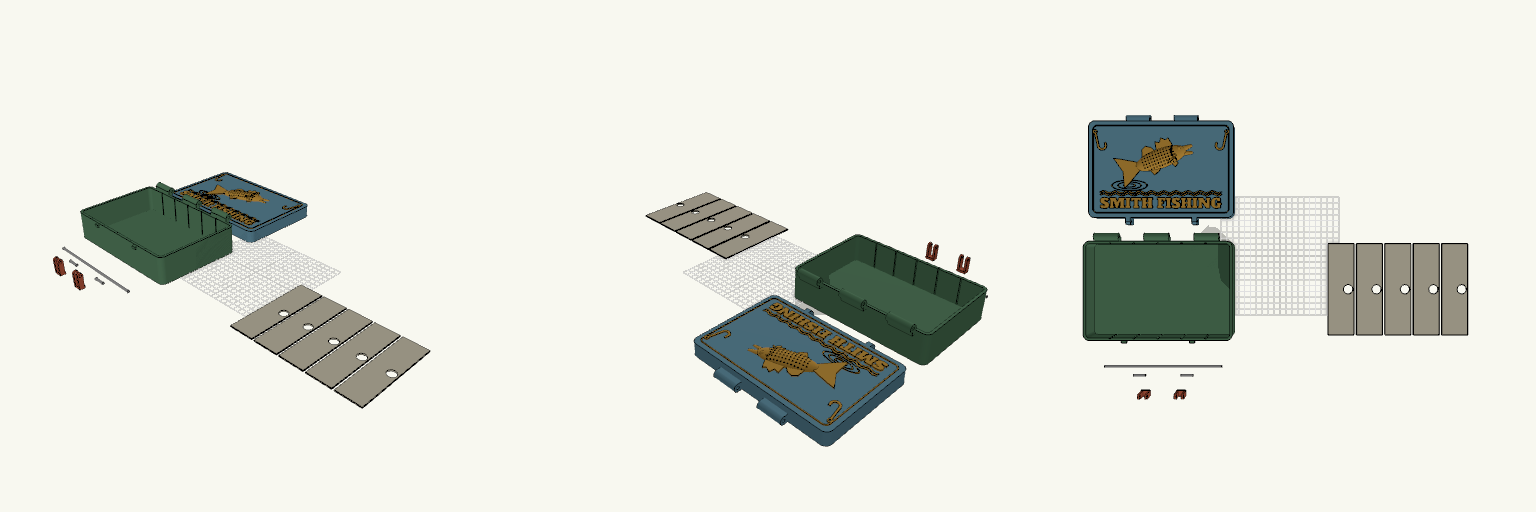
Tackle boxes that pop open in the boat, rattle hooks into the soft plastics, or lose a lid hinge get replaced. This one is a hinged bass tackle box with a locking front latch, adjustable dividers and a leaping largemouth bass on the lid, with SMITH FISHING raised underneath. Load-bearing numbers Base: 240 × 160 × 50 mm, 4 mm walls, 3 mm floor, rounded vertical corners. Lid: 240 × 160 × 22 mm, with a raised bass, ripples, waves, hooks and a border on top. Dividers: 5 removable cross dividers, 1.8 mm thick, sliding in 2.4 mm grooves at 38.5 mm spacing. Hinge: 5 interleaved knuckles across the back, joined by a 4.2 mm pin (197 mm long, printed separately). Latches: 2 front latches with 4.2 mm pivot pins. Each hooks under a ledge on the base. Printing Print every piece in the layout shown: base, lid, dividers, latches and pins are all separate. Lid: print upright. The underside of the top plate bridges across the cavity, so use supports or good bridging settings. Layer height 0.2 mm, PETG or ASA, 3+ perimeters. Hinge and latch pins can be glued or capped at the ends to keep them in.
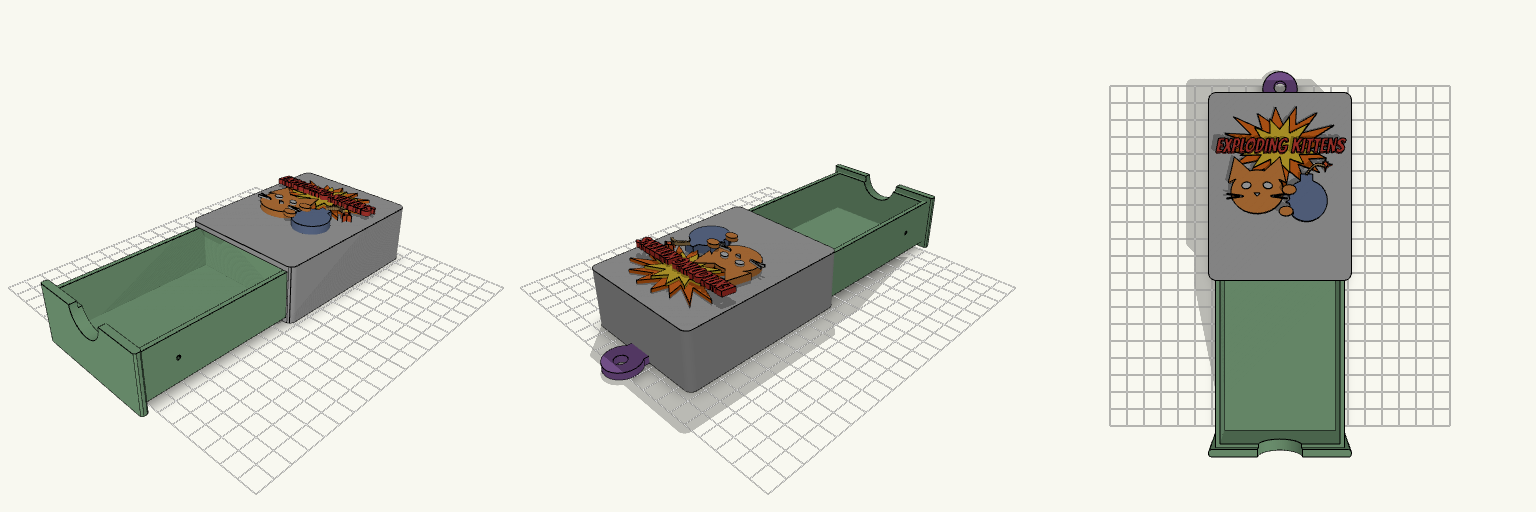
Exploding Kittens Drawer Card Case
What it's for A two-part slide-out card case sized for a single poker-size deck, with the Exploding Kittens artwork carried on the top of the sleeve. The relief shows an angry cat beside a round bomb, bite marks cut into the bomb's edge, a dotted fuse and a spark. A large jagged orange explosion with an uneven outline and a smaller yellow core sits flat on the lid, centred on the title. Because the blast is fused to the surface rather than floating above it, the cat and bomb rise through it, so the explosion reads as a backdrop behind them and both stay clearly visible. The red "EXPLODING KITTENS" lettering stands on the core, kept low so it rises only about 3 mm above the blast. The drawer has a front pull panel with a thumb notch and slides out of the sleeve; a small snap detent on each side wall clicks it shut and lets go with a firm pull. A fused keychain loop on the back of the sleeve lets the case clip to a bag with a carabiner or split ring. Dimensions Sleeve: 76 × 100 × 34 mm, open at the front Drawer: 76 × 99 × 34 mm, with a front pull panel and thumb notch Card well: one compartment, about 64.6 × 91.5 mm, sized for a 63.5 × 89 mm deck Explosion: 57.8 × 44.8 mm blast, 2 mm thick, fused to the lid; core 42.2 × 29.2 × 1.5 mm on top of it Title lettering: 68 × 8 mm, standing on the core about 3 mm above the blast Bomb relief: 5 mm tall, with the paws and fuse lowered to sit level on top of it Keychain loop: 20 mm round lug, 4 mm thick, with a 7 mm hole, fused to the back of the sleeve and reaching about 70 mm out on Y Detents: one small bump per sleeve wall, with matching dimples on the drawer sides Print notes Print the sleeve upside down or with supports under the top, since the ceiling spans the full width. Print the drawer flat on its floor. The keychain lug sits flat on the build plate and needs no supports, but at 4 mm thick it is the lightest part of the case — thicken it if the case will hang from a heavy bag. The enlarged loop pushes the footprint out to roughly 70 mm on Y beyond the sleeve; check it against your plate before starting a full-bed print. Drawer clearance is 0.3 mm per side; adjust if the drawer binds. Sleeved cards need roughly 2 mm more in both the width and length of the well. The lowered red lettering sits directly on the orange and yellow blast, so contrast is low at small scales; check a render before printing the lid art very small. Detent tension has not been test-printed; sand or adjust the bumps if the drawer is too stiff or too loose. Remix ideas Widen the card well for a sleeved or double-sleeved deck. Burst the explosion over the top of the cat and bomb instead of behind them, accepting that it would hide most of the cat. Swap the round bomb for a C4 brick. Add a divider for tokens or a rules card. Thicken the keychain lug to 6 mm and widen the hole further for heavier bags. Trade the detents for a magnetic catch if you prefer a quieter close.
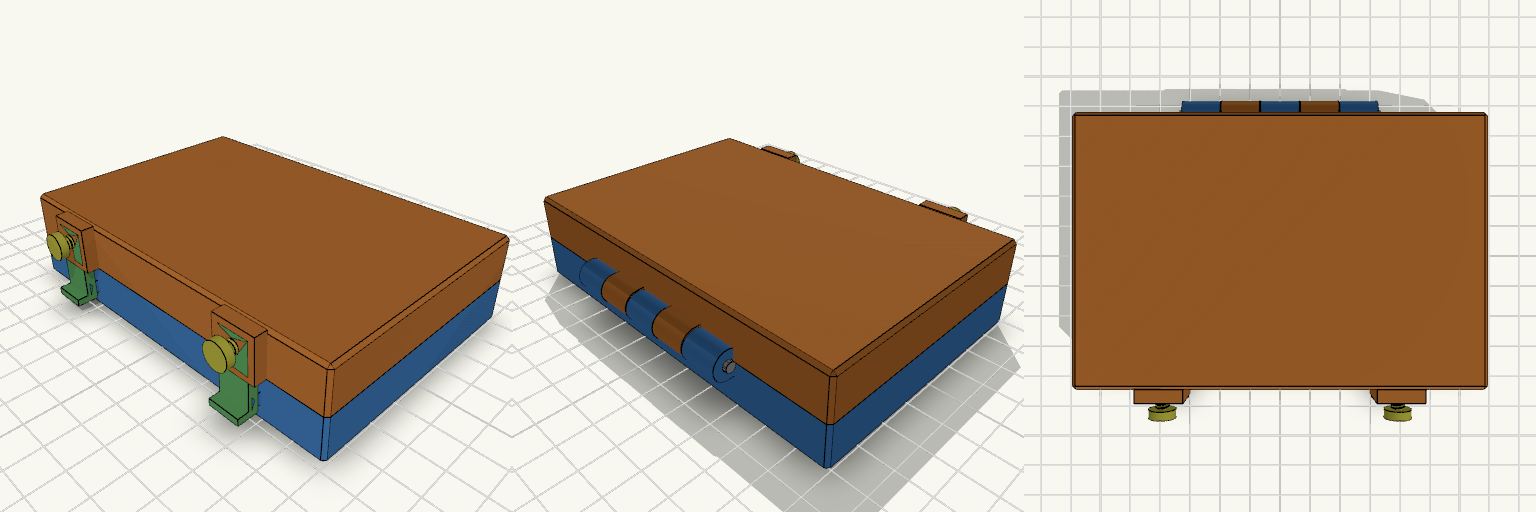
Retró vadászdoboz 16-os sörétes töltényekhez
Csuklós fedelű, ötrekeszes doboz, amely úgy néz ki, mint egy régi vadászfelszerelés darabja: lapos, szögletes test, hátul csuklópánttal nyíló fedél, elöl két zárral, amelyeket kis fogóorr fog meg. Belül öt párhuzamos fészek várja a töltényeket — 21,8 mm széles vájat, 22,6 mm-es osztás, 74 mm hosszú hüvelyekhez. Csukva a doboz 120 × 90 mm-es alapterületű, kényelmesen elfér egy lőszertáskában vagy a szekrény polcán. Ami a nyomtatáshoz tartozik: Öt darab kerül a tálcára: a doboz alsó része, a fedél, a két zár, a négy zárhoz való csavar és a csuklótüske. A csukló egy külön 3 mm-es pálcából áll össze, a zárakat 4 mm-es menetes csavarok rögzítik a fedélhez — a doboz tehát összeszerelést igényel, nem egy darabban készül el. Nyomtatásnál a dobozt és a fedelet a lapos oldalukra érdemes fektetni, a zárakat, csavarokat és a tüskét külön. Illesztés: a fészek mérete becslésen alapul, ezért érdemes egy tölténnyel próbát tenni: peremes hüvelyeknél vagy a 74 mm-nél hosszabb daraboknál a vájatok szűkebbek vagy rövidebbek lehetnek a kelleténél. Egy kis reszelés a fészek falán sokat segít, és a zár csavarját se húzd túl szorosra, hogy a fedél ne feszüljön.