Simple Layered 2.5D Fish
Made by SprucePlotter
Created 1 months ago
Description
A flat, layered fish: oval body, forked tail, two fins and one big eye with a black pupil. Stripped down to a few clean shapes so it prints fast and reads clearly.
Remix hooks
- Eye size: white is 13 mm, pupil 7 mm. Push the pupil off-centre for a different expression.
- Body: a 50 × 30 mm oval, 6 mm thick. Change the 0.6 scale for a fatter or slimmer fish.
- Tail and fins: 4 mm thick, one shared colour. Reshape the polygons for a different species.
- Pairs with: a magnet or keyring hole on the back, or a row of them as wall decor.
- Colour swaps: body, fins and eye are separate layers, so a filament change at 4 mm and 6 mm handles it.
Images
More like this
Explore more in Decor & Display →
Dual xvideos plate print 180 mm
A two-up XVIDEOS nameplate set intended as a gift sign for a friend, for desk or shelf display. The model contains two identical horizontal plates, each with a solid black base, a red uppercase “X” at the left, and white “VIDEOS” lettering across the rest of the width. Each plate has a flat back and three underside pockets for 4×2 mm disc magnets. The plates are laid out with a gap and print as two separate pieces. Layout: two identical plates, each 180 × 44.3 mm at about 4.06:1; overall footprint 180 × 99.3 mm with roughly a 10 mm gap; prints as two separate plates. Base: black, 6.5 mm thick, flat back, no supports required. Lettering: single word XVIDEOS, all uppercase; cap height 29.7 mm, about 67% of plate height; text spans about 164 mm with even side margins; heavy geometric sans; letters set tight. Colors: red “X” (#E02A00), white “VIDEOS”, black base; aligned color regions for clean multi-color boundaries. Relief: letters stand about 1.8 mm above the base; raised faces are left square. Magnets: three round pockets per plate, 4.2 mm across × 2.1 mm deep, for 4×2 mm disc magnets; on the long centerline at X = -60, 0 and +60 mm; 120 mm end to end, with the outer pockets 30 mm in from the short ends. Magnet fit: 0.2 mm of play in diameter and depth for a snug fit; about 4.4 mm of base remains above each pocket. Printing: FDM-friendly, flat backside, no supports required.
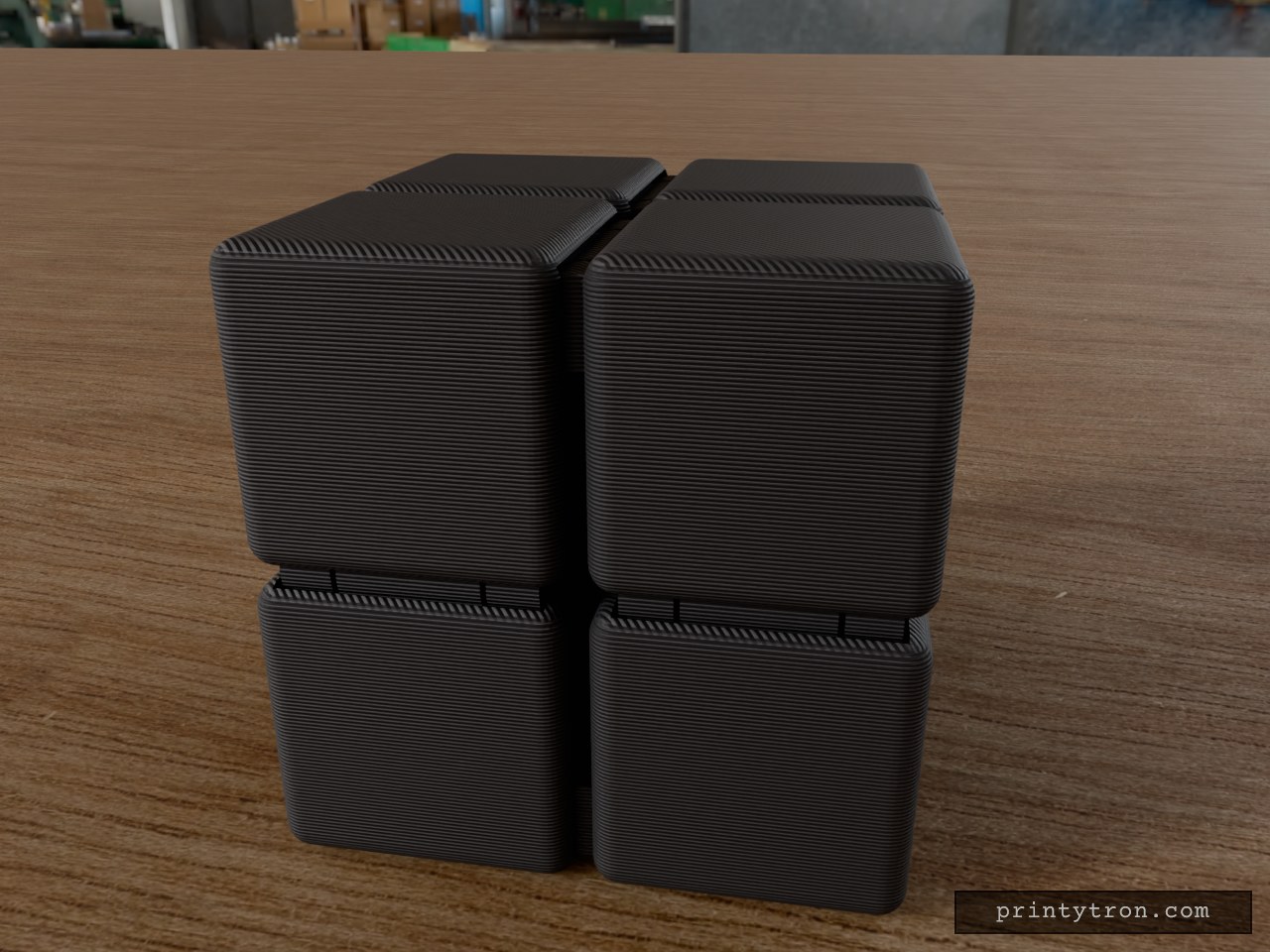
Print-in-Place Hinged Infinity Cube Fidget
Eight rounded 22 mm blocks in a 2×2×2 grid, each a different colour, joined by twelve print-in-place pin hinges instead of solid bridges — so the cube actually folds in the hand. The hinge assemblies measure 42.2 × 42.2 × 42.2 mm laid out on the plate, and each hinge runs about 0.4 mm clearance around its pin and 0.4 mm between knuckle and lugs. Print it with no supports at a 0.2 mm layer height, and expect to snap each hinge free by hand once before the first fold. It is a fidget piece first and a desk object second; it has not been test-flexed, so treat the 0.4 mm clearances as a starting value rather than a proven one. Remix hooks Hinge clearance (about 0.4 mm): the one number worth tuning first. Loosen it if your printer runs tight or you print in a stringy filament; tighten it toward 0.3 mm if the joints feel sloppy after breaking them in. Block size (22 mm): the whole cube scales with it — the 42.2 mm hinge envelope follows the block edge, so resize the blocks and let the joints follow. Corner radius (2 mm): the easiest restyle that doesn't touch the mechanism. A larger radius sits softer in the hand and reads cleaner at the seams. Gap between blocks: widen it for visible, colour-separated seams; close it up if you want the folded cube to read as one mass. Pin and knuckle section: thicker knuckles hold tighter but need more break-in force; thinner ones free up faster and wear looser. Pairs well with two-tone or colour-swapped filament by block, and with other small desk fidgets. The eight-block grid is the constraint; everything hung on it is a choice.
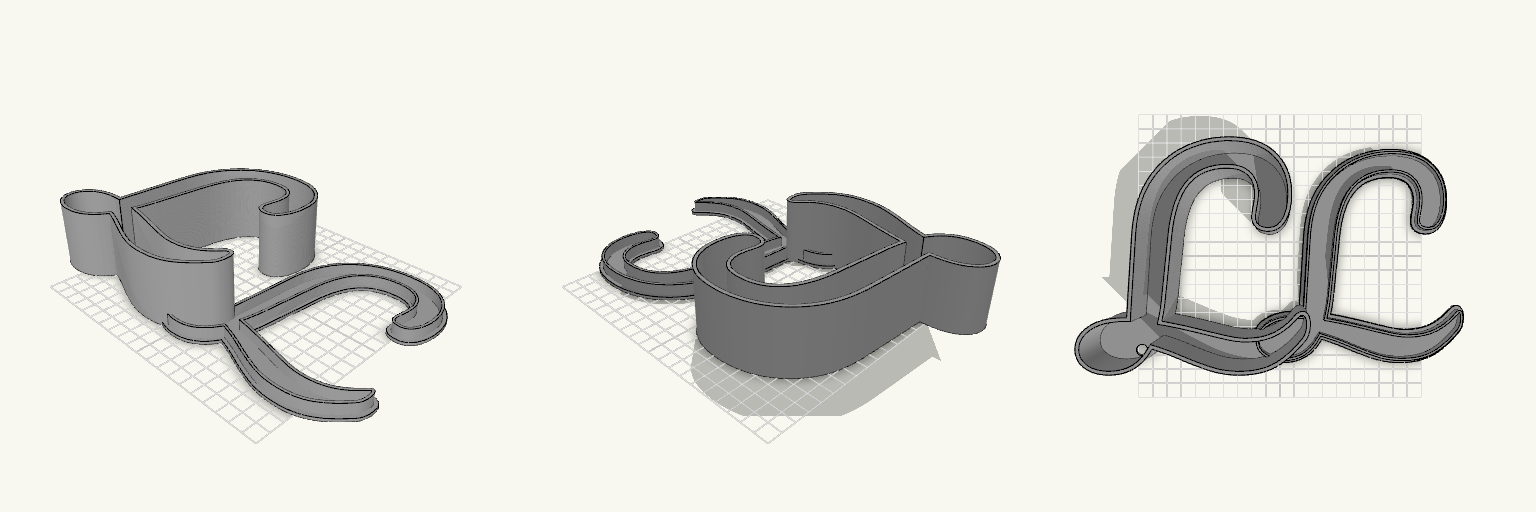
Letra L luminosa de 15 cm con tapa difusora
Letra L en fuente Pacifico, pensada como letrero luminoso: una base trasera hueca donde se pega una tira de LEDs y una tapa delantera que difumina la luz. Las dos piezas encajan entre sí y el cable sale por un orificio en la parte trasera, de modo que el conjunto queda cerrado y la luz solo se ve a través del difusor. Especificaciones Altura: 15 cm. Anchura aproximada: 25 cm, según la cola del trazo de la Pacifico. Fondo de la pieza trasera: 5 cm, con paredes de 2,4 mm para poder pegar la tira de LEDs por dentro, en los laterales. Orificio para el cable: 8 mm, situado en el fondo de la trasera, cerca de la base del trazo vertical. Tapa difusora: lámina de 2 mm con reborde de 8 mm que entra en la trasera con 0,3 mm de holgura. Impresión: dos piezas separadas, sin soportes. La trasera se imprime con el hueco hacia arriba y la tapa con la lámina plana sobre la cama. Huella en la cama: aproximadamente 258 × 150 mm con las dos piezas colocadas una al lado de la otra. Consejos de montaje Imprime la tapa en blanco natural o translúcido para que la luz se difumine de forma uniforme. Pega la tira de LEDs en las paredes interiores de la trasera, no en la cara del difusor, para evitar puntos de luz concentrados. Pasa el cable por el orificio antes de cerrar la tapa; el encaje de 0,3 mm permite abrir y cerrar la pieza sin pegamento.
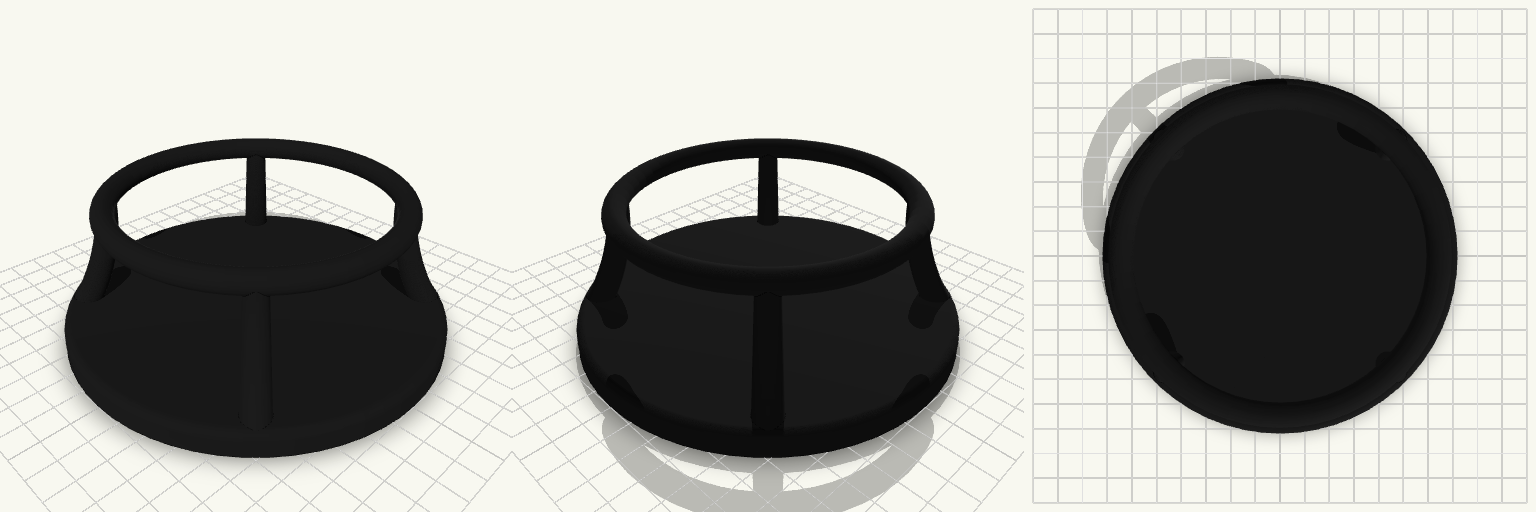
Stabile Bodenhalterung für 150-mm-Dekokugel
Die Bodenhalterung präsentiert eine dekorative Kugel mit 150 mm Durchmesser sicher auf einem Tisch oder Boden. Auf einer runden Standfläche sitzen vier geschwungene Stützen, die sich nach innen neigen und oben einen ringförmigen Auflagering tragen. Die Kugel liegt satt in diesem Ring, kann nicht wegrollen und lässt sich trotzdem einfach nach oben abnehmen. Die Halterung ist einteilig, schwarz und hat weiche Übergänge sowie abgerundete Kanten. Technische Daten Kugelaufnahme: Auflagering für Kugeln mit ca. 150 mm Durchmesser (Mittelkreisradius 52 mm) Abmessungen: 140 × 140 × 52 mm (B × T × H) Standfläche: runder Teller mit 140 mm Durchmesser, flache Unterseite Bauweise: einteilig, ohne Kleben oder Schrauben, alle Bereiche fest verbunden Form: vier geschwungene, nach innen geneigte Stützen mit Auflagering Druck: ohne Stützmaterial konstruierbar, flache Unterseite für sicheren Halt auf dem Druckbett Material/Farbe: PLA, schwarz Gerät: ausgelegt für Anycubic Kobra S1 mit 0,4-mm-Düse Einsatz: Tisch- oder Bodenpräsentation einer Dekokugel
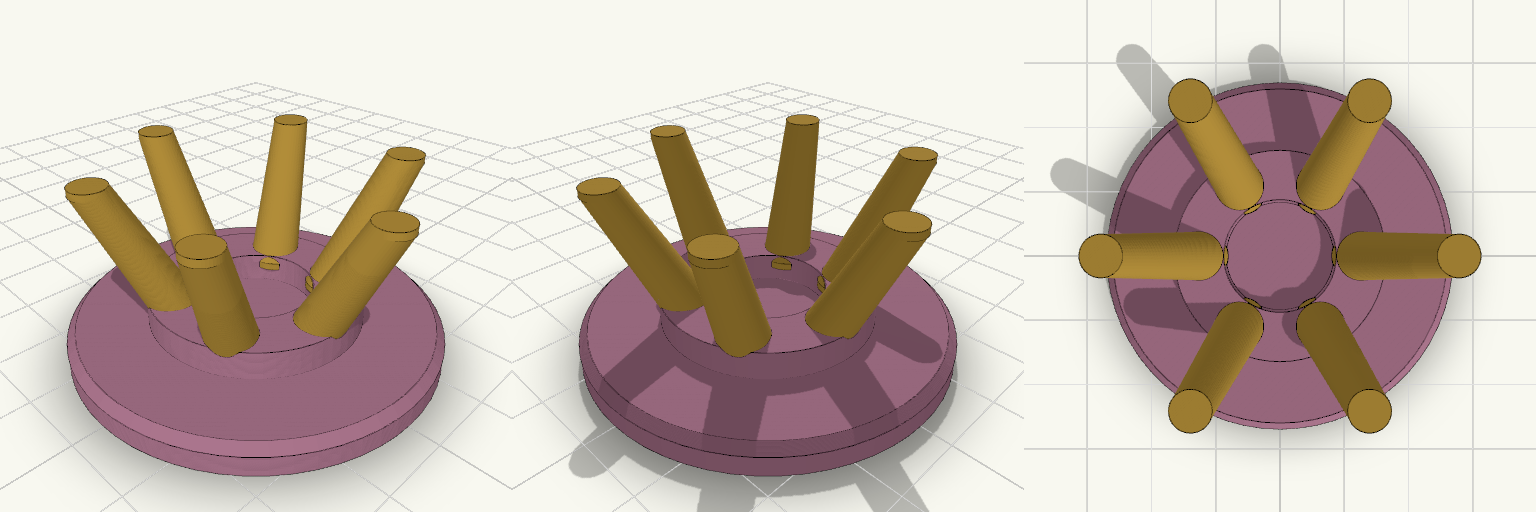
Blossom — Six-Petal Egg Cradle
Blossom is a small display stand that holds a decorated egg upright for an Easter table. Six slim petals rise from a round base and lean outward, forming a ring that cradles the egg while the open gaps between petals leave most of the painted or decorated surface in view. Features Six evenly spaced, tapered petals that flare outward toward the top Round 52 mm base with a chamfered top edge and a raised central ring under the petals Open gaps between petals so the decoration stays visible from every side Flat underside for easy printing, with no supports needed for the base Dimensions Overall height: about 25 mm Base diameter: 52 mm Ring opening at the petal tips: roughly 36 mm inside, sized for a chicken egg about 35 mm across its short axis Petal span: about 46 mm outer tip to tip Print notes Print base-down. The petals lean outward, so a light support or slow, cool printing helps the upper tips. Two-tone preview: base and petals are separate colour regions of one welded piece. Pulling the petal tips in by about half a millimetre brings the ring opening to exactly 35 mm.
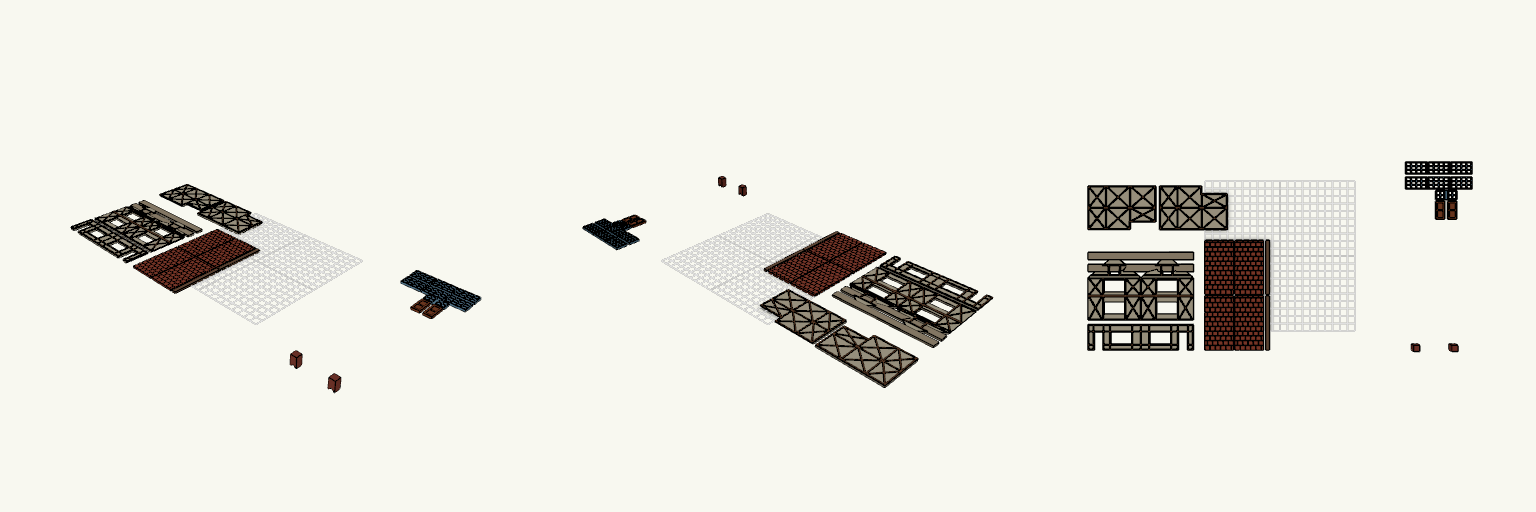
OO Scale Tudor Semi-Detached Flat Pack
A flat-pack kit for an OO scale semi-detached three-storey Tudor house, with jettied upper floors, front gables and half-relief timber framing. The first plate holds the wall panels, end walls, roof panels, ridge pieces and both floor strips, laid out to fit a 256 mm bed. The second plate holds the windows, doors and chimneys. Ground-floor front and joined upper front with gable windows End walls with perimeter beams and X bracing Slate-textured roof panels with ridge pieces Two 140 × 10 mm floor strips: one tie, one jetty filler Separate multi-pane windows and doors