Snake Tail Phone Stand
Created 22 days ago
Description
A one-piece orange phone stand with a low front lip, a short flat seat and a backrest leaning up to about 60 mm. A zig-zag snake of humps runs along the back.
Remix hooks
- Lip height: the front stopper is about 5 mm of strip plus the strip's rounded end, roughly 7.5 mm in total. Raise it for a more secure hold, or lower it further to keep captions clear.
- Seat depth: 12 mm. Deepen it for thick cases, though a steeper backrest helps more.
- Backrest angle and height: it rises about 18 mm in Y over 55 mm in Z, so it is steep. Both are easy to change.
- Snake humps: 4 peaks, each about 14 mm high. Add more humps, or raise or lower the peaks.
- Width: 70 mm, with a 5 mm strip thickness.
Pairs well with a non-slip pad on the seat.
Images
More like this
Explore more in Desk & Tech →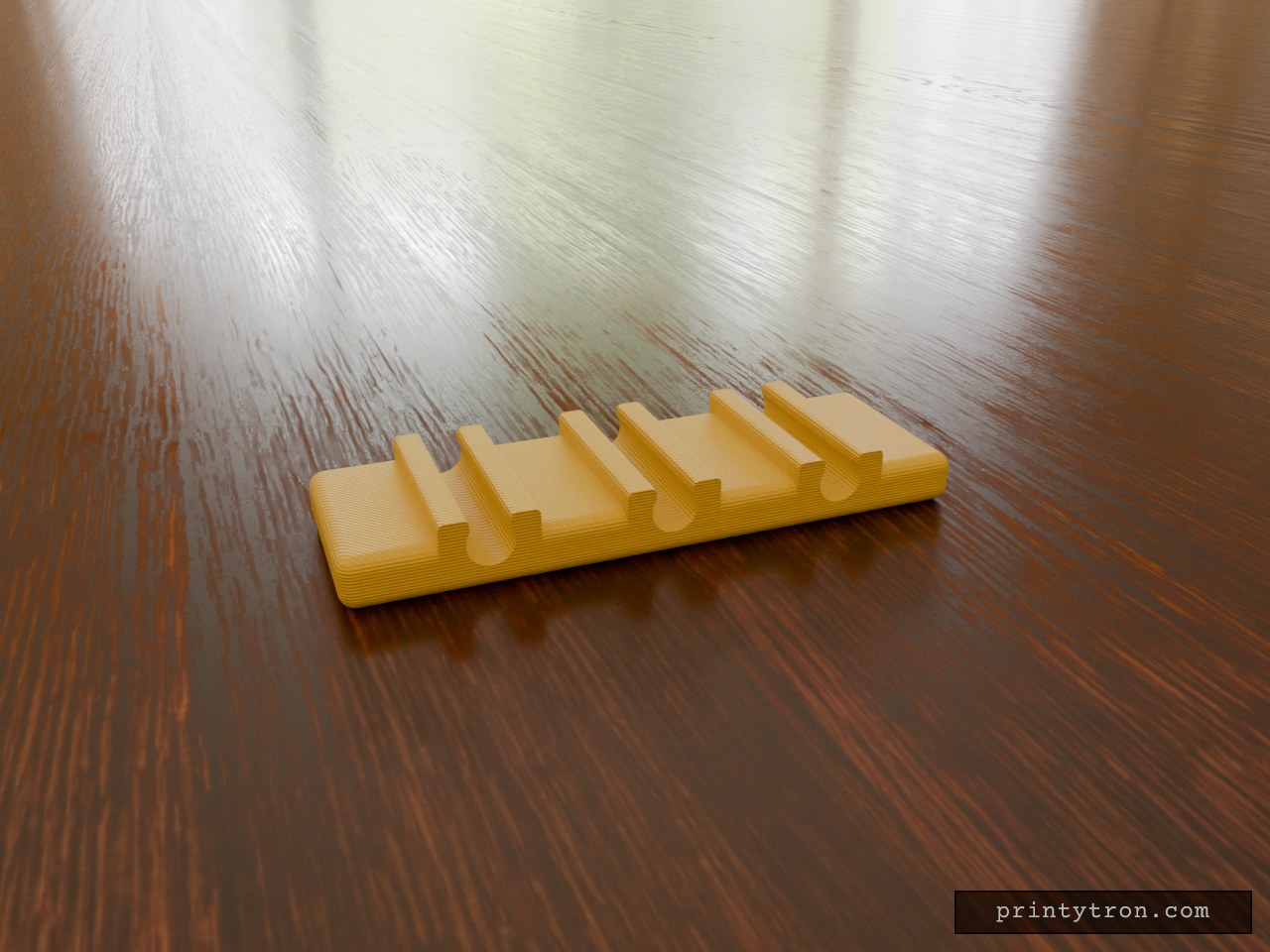
ReplixHD Gaming Cable Holder.
A low, slate-like desk plate in the spirit of a game-console accessory, with three rounded C-shaped clips standing in a symmetrical row. Cables press in from above, sit in a 4.4 mm round channel, and are held by smooth lips. Size: 60 × 20 mm, 5 mm base, 7 mm total height. Clips: three, 17 mm apart, 3.6 mm entry opening, lips about 1.2 mm thick at the opening. Floor: about 1.8 mm of material under each channel, measured from the tape recess. Underside: 48 × 12 mm tape recess, 0.5 mm deep. Printing: one solid piece, flat bottom, no supports needed.
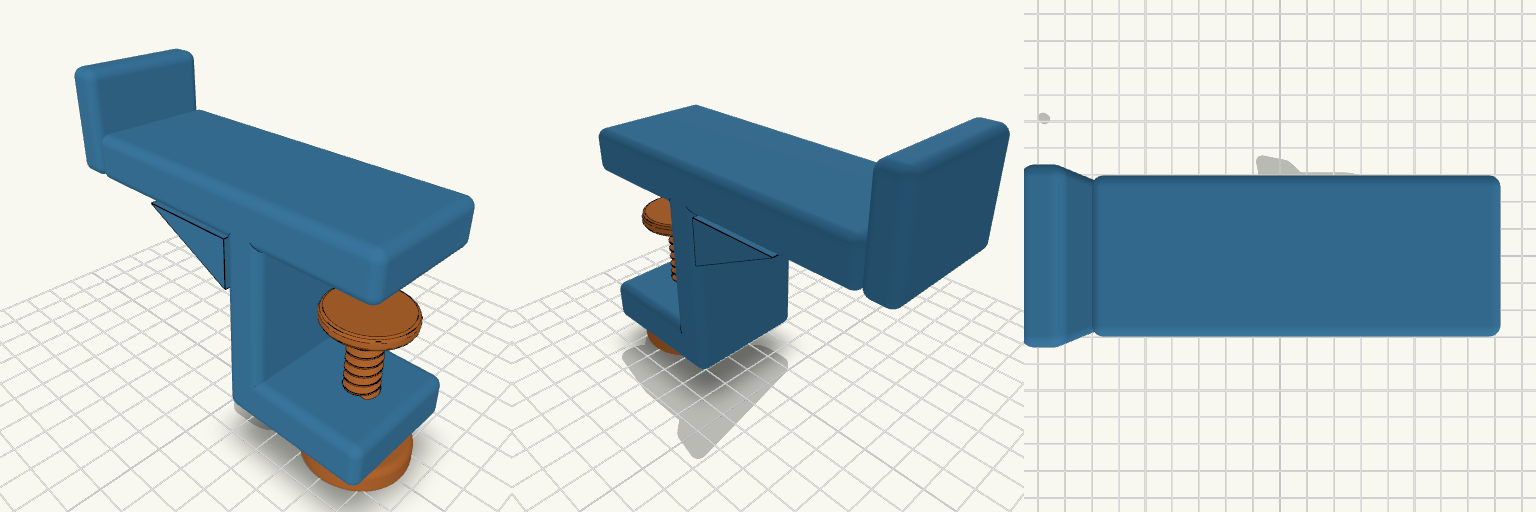
Desk Clamp Headphone Holder, 15–35 mm
What it's for A two-piece headphone holder that clamps to a desk edge and holds headphones on an upper hook arm. A threaded screw with a large knob under the lower jaw tightens it. Dimensions Desk thickness range: 15–35 mm Width: 40 mm Body height: about 69 mm Hook reach: 55 mm past the spine, with a raised lip Screw: 10 mm diameter, 3 mm pitch, 26 mm pad, 32 mm knob Print notes Two parts: clamp body and screw Print the body on its side (40 mm face down) and the screw upright, both without supports PLA, 4 or more perimeters Remix ideas Add a rubber or felt pad to the screw head Lengthen the hook arm for larger headphones Add a cable notch on the lip
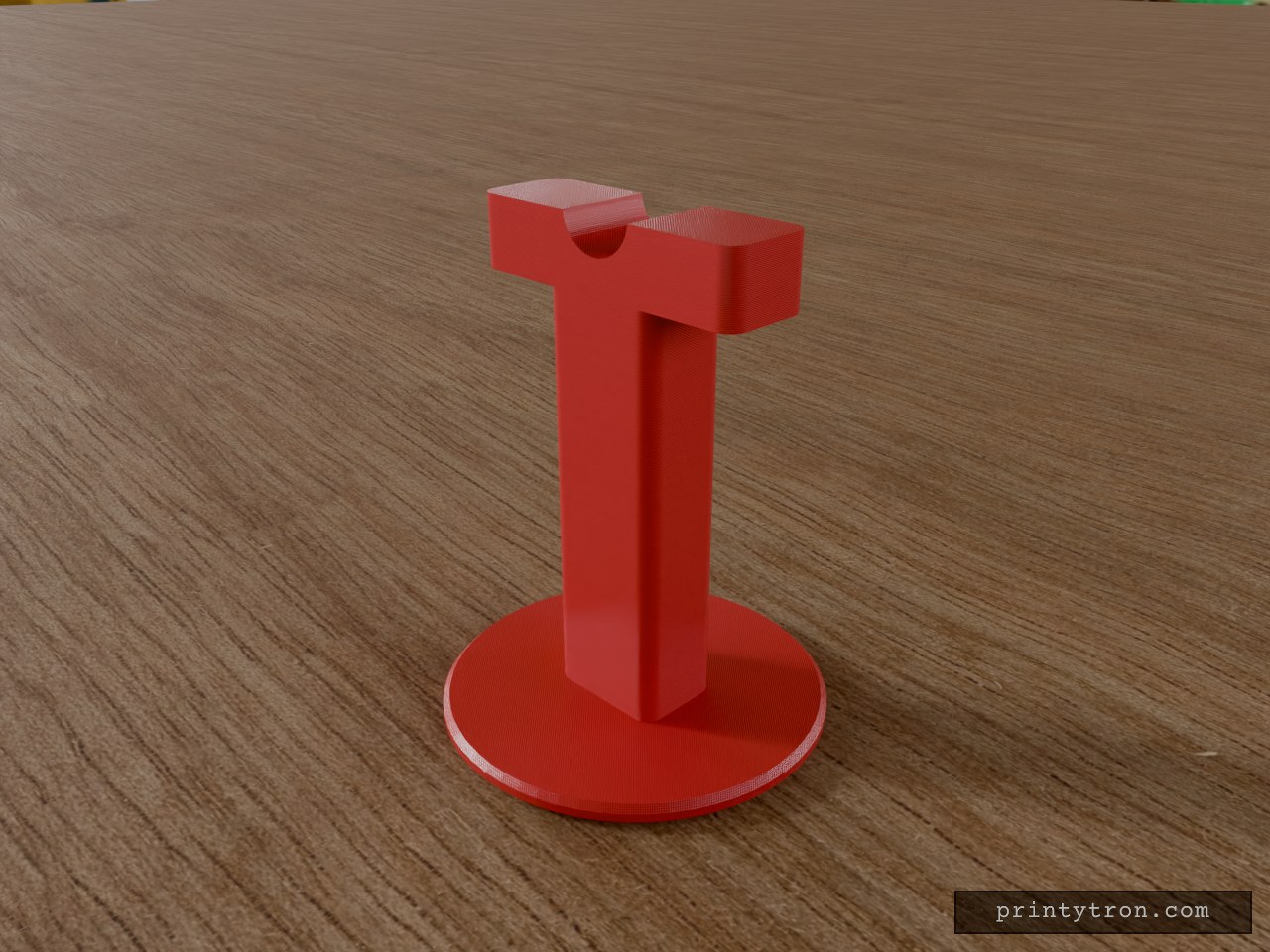
Bedside Reading Glasses Stand, 18mm Bridge
A freestanding bedside stand that holds a pair of reading glasses by the bridge, so they rest off the nightstand and out of the bedding. The top of the column is shaped into a rounded nose-bridge saddle, 18 mm wide at the rim, matching the typical lens-to-lens distance on standard reading glasses. A 90 mm round base keeps the stand upright. Specs Overall size: 90 mm diameter x 116 mm tall Base: 90 mm diameter, 5 mm thick, chamfered edge Column: 30 x 22 mm cross-section, rounded vertical corners Top block: 70 x 22 mm, 16 mm tall Saddle: round dip, 18 mm wide at the rim, 8 mm deep Single-piece body, prints base-down with no supports needed Suggested material: PLA or PETG; 3 or more perimeters for a stiff column Use Place on a nightstand and hang the glasses by the bridge across the saddle. The wide top block and 90 mm base keep the stand stable under light glasses.
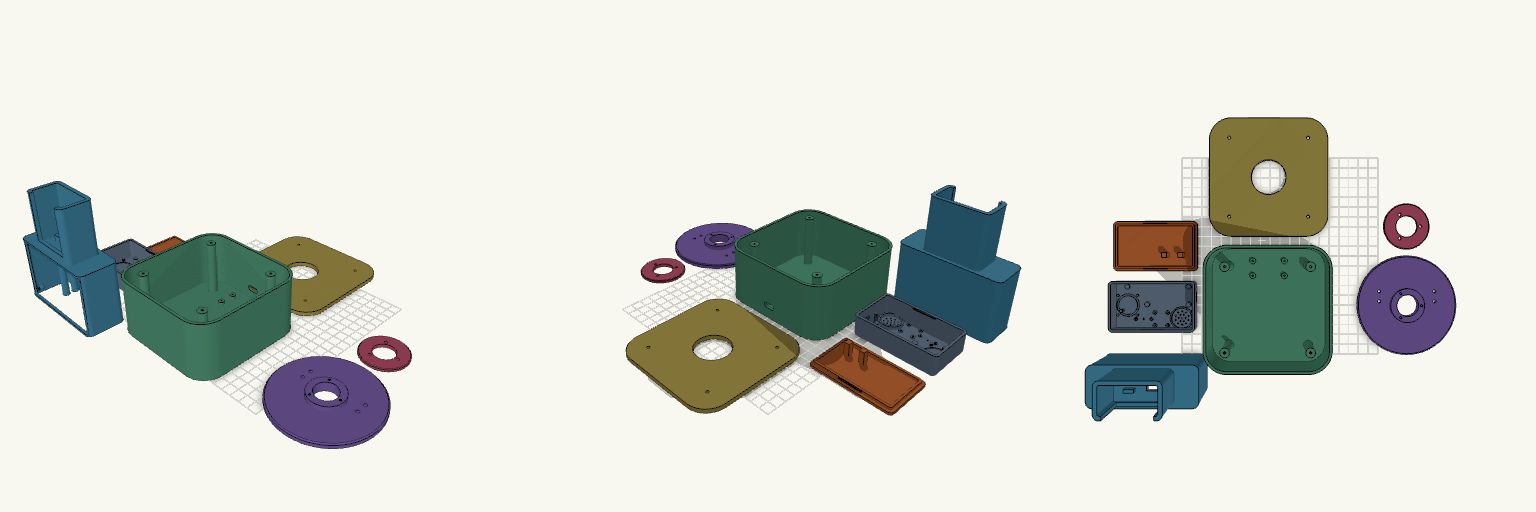
Modular Voice Assistant Enclosure with Rotating Desk Dock
A two-part enclosure system for a modular AI voice assistant: a pocket-sized "Brain" that works on its own, and a desktop station that docks it, swivels a full 360° and carries a 3.5-inch touchscreen behind a removable bezel. Both halves share the same matte-black design language — rounded corners, smooth surfaces and 2–2.5 mm walls — and print as eight separate pieces. What it's for Brain — houses an ESP32-S3 N16R8 board, an INMP441 I2S microphone, a MAX98357A amplifier and a 20 mm speaker behind a grille. A circular LED ring glows through a 0.8 mm front skin for listening, thinking and speaking states; there is no display of its own. A USB-C port sits on the short end, and the unit runs standalone once lifted off the dock. Desk station — a weighted base with a bolted lid carries a swivel plate and the dock tower. The Brain drops into the tower pocket from above with its face still visible, and a USB-C plug cradle in the pocket floor lines up with the port. Display — the tower front takes a standard 98 × 56 mm touchscreen module in landscape, held on four M2 bosses and framed by a bezel that drops into a recess in the front face. Removing four screws frees the display for replacement, and a flat-cable slot below the opening routes the ribbon into the cavity. Rotation — the swivel plate's hollow stem passes through the lid, a retaining ring screws on underneath, and the cable runs down the centre of the stem, so the tower turns 360° without twisting the lead. Dimensions Brain: 85 × 50 × 25 mm overall, with a snap-fit rear cover. Desk base: 120 × 120 mm with 22 mm corner radii; base, lid and swivel plate stack to 65 mm. Dock tower: 104 × 40 × 119 mm, docking the Brain vertically above the display section. It overhangs the 100 mm swivel plate slightly at the front and rear corners. Display opening: 84 × 54 mm, with mounting bosses behind the wall at ±46 × ±25 mm and M2 pilot holes; bezel 100 × 60 × 2.5 mm. Walls: 2–2.5 mm throughout hollow cavities. Print notes Print the Brain shell face-down for a smooth front skin; the LED ring, microphone port and speaker grille all sit in that face. The rear cover snaps on with two bump-and-groove pairs along the long sides; pads on its inside hold the ESP32 down. The tower's internal floor and the display window bridge wide spans, so expect a little support in the dock tower only. Everything else is oriented to print without it. Print the bezel flat; it is a thin frame and needs no supports. PLA or PETG both work; four rubber-foot recesses under the base are worth filling. All eight pieces — Brain shell, rear cover, desk base, base lid, swivel plate, retaining ring, dock tower and display bezel — are separate. The lid bolts on at four corners and the display bezel screws in from the front. Compatibility The display bosses use M2 pilot holes; check your module's hole spacing before driving screws, since pinouts vary between boards. The dock pocket is sized for the Brain as drawn — if you change the Brain's shell, adjust the pocket in step. Remix ideas Lean the dock back a few degrees for a more natural viewing angle if you can accept the extra support. Swap the removable bezel for a blank panel or a vent if your build has no screen. Scale the docking pocket to fit a different companion device while keeping the same swivel mechanism.
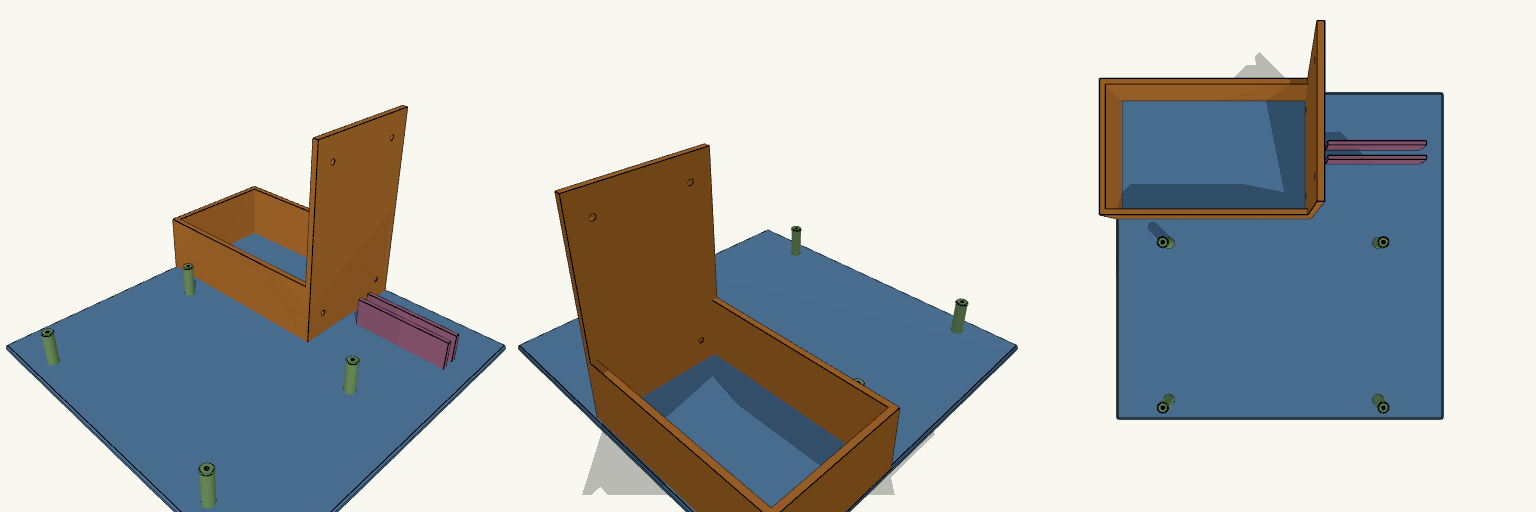
Open-Frame PC Test Bench for 250 mm Beds
An open-frame PC test bench should stop the PSU, motherboard and SSD from shifting while you build; this one does it on a single 250 × 250 mm plate that fits a 256 × 256 mm printer bed. The base is 4 mm thick, and the whole bench prints as one piece in PLA. Fit and print numbers Base plate: 250 × 250 × 4 mm; one-piece print. PSU socket: 140.4 × 86.4 mm pocket with 4 mm walls on three sides; rear bracket 150 mm tall with four ATX screw holes at 64 × 114 mm spacing, 4.2 mm diameter. Motherboard: four 25 mm-high standoffs with 2.8 mm pilot holes for M3, spaced 160 × 120 mm. This is not the standard mATX hole pattern, so check it against your board first; a full mATX board will overhang the plate. SSD: 72 mm-long slot with two 3 mm walls, 22 mm high, holds a 7 mm-thick 2.5-inch drive on its edge. The layout is a compromise for a 250 mm bed: the PSU and board both need room, so the standoff spacing is fixed at 160 × 120 mm rather than a true mATX pattern. Print it in PLA if you want the base stiff without extra parts.
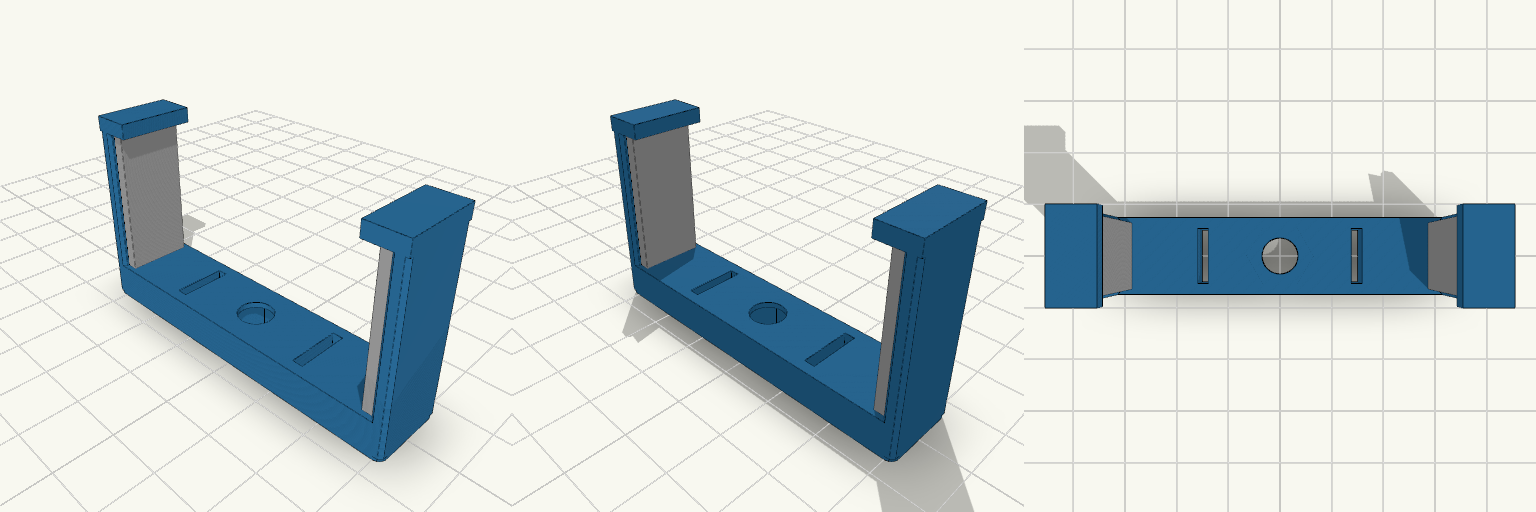
Phone Clamp 60-85mm with 1/4-20 Socket
U-shaped spring clamp that holds a phone across its back and bolts to the centre screw of a ring light. The two jaws grip the phone's long edges. The rest opening is 58 mm and the jaws flex to about 85 mm. Separate soft pads sit on the inner faces to protect the phone's edges. The base has a 1/4-20 through hole with a hex nut pocket on the underside. Two slots cut into the base give the jaws room to spring. Each jaw ends in a retaining lip that stops the phone from lifting out. Specs Opening: 60-85 mm, 58 mm at rest Mount: 1/4-20 through hole (6.6 mm) with a 12.2 mm hex nut pocket Jaw thickness: 2.6 mm Jaw width: 22 mm Overall size: about 63 x 14 x 36 mm Clamp body material: PETG suggested, for spring flex Pad material: TPU suggested, printed as separate pieces Spring travel: not tested, so check the flex before loading a phone Use cases: ring light phone mount, filming, content creation setups