Supervisor Electronics Shell
Created today
Description
Generic hobby boxes crack at the screw posts the second time you open them, and their exposed hardware snags on everything in a bag. This is a clean, rugged shell that closes tight without external fasteners and keeps the wiring where it belongs.
The front panel traps the alert button from the inside, so it can't be ripped out or jammed sideways.
Internal Specs
- Dimensions: 120 × 75 × 35 mm external.
- Walls: 3 mm solid shell.
- Standoffs: Four integrated posts (2.5 mm bore) spaced for a standard ESP32 footprint.
- Clearance: 0.25 mm tolerance on the friction-fit lid lip. Print flat, no supports required.
Images
More like this
Explore more in Workshop & Tools →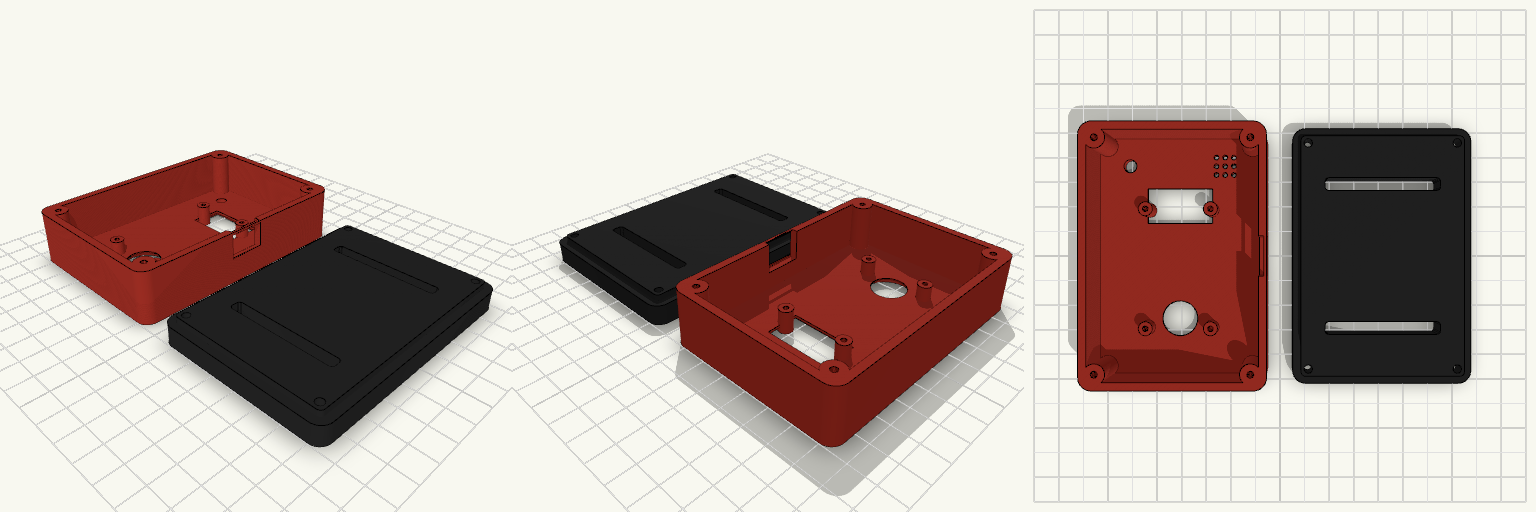
ESP32 SafeCore Controller Enclosure
A dedicated heavy-duty housing for the SafeCore monitor, built entirely around the 30-pin ESP32 dev board footprint and a standard 0.96-inch OLED screen. The two-piece shell is engineered for exact fitment, using a registration lip to keep the halves aligned and transferring shear stress away from the fasteners. Mating Specifications Controller: standard 30-pin ESP32 dev board (25.5 × 47 mm mounting footprint). M2.5 thread-forming posts. Display: 0.96-inch OLED (I2C), sits behind a 26 × 14 mm sloped FDM-safe bezel. Hardware: Four M3 countersunk screws for the rear panel. Indicators: Top-left 5 mm warning LED port and top-right buzzer grille. Mounting: Twin 45 × 5 mm rear slots for standard nylon or Velcro belt straps.
Industrial Wearable Electronics Enclosure
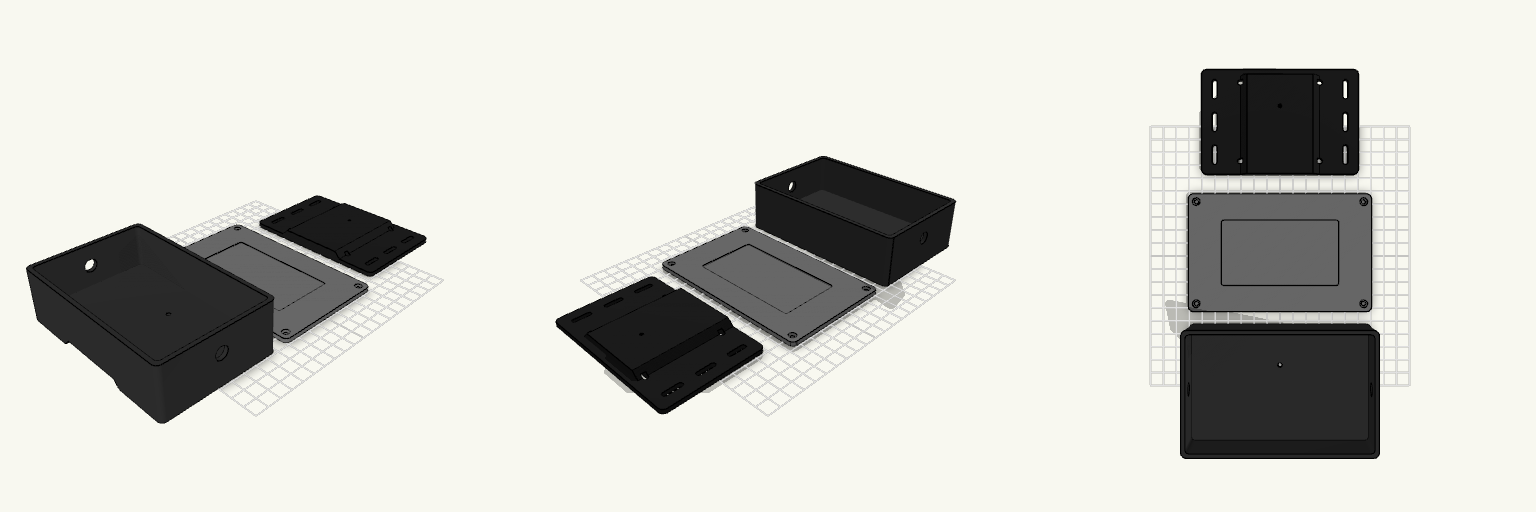
A heavy-duty three-part electronics enclosure designed for wearable prototype suits. Features a slide-and-lock fabric mounting plate that allows the main box to be removed without unthreading straps. Main Box: 140 × 90 × 40 mm with 3 mm walls and 10 mm side ports for external sensors. Mounting Plate: Slotted for fabric straps, featuring a male dovetail rail that slides into the main box and locks with a single pilot screw. Lid: Secures with four M3 screws into tapped corner bosses, featuring a 90 × 50 mm blank recess for a separate logo plate.
Console — Custom Electronics Enclosure
This is a comprehensive, dimensionally accurate parametric enclosure designed for DIY electronics. Laid out to securely house a 16×2 character LCD and four tactile push buttons, it uses standard M3 machine screws with captive nut traps for secure and repeatable assembly. The design separates the tactile switch bodies from the actual visible button caps, ensuring a clean and professional appearance. Features Locating Lip: Recessed rabbet ensures the top cover nests tightly and squarely onto the bottom shell. Component-Specific Pockets: 12×12 mm push-button switches are secured from the underside, operated by independent retained caps. Hidden Mounting: The 16×2 LCD is held flush against the top window from the inside via a custom bezel, keeping the surrounding PCB hidden. Directed Ventilation: Cooling slots are restricted to the lower front face, allowing flush wall mounting at the rear. Hardware Needed 4 × M3 × 12 mm machine screws 4 × M3 hex nuts (5.5 mm across flats) 4 × 12×12×7.3 mm tactile switches 1 × 16×2 Character LCD (JHD162A style)
Biofloc Monitor Station Enclosure
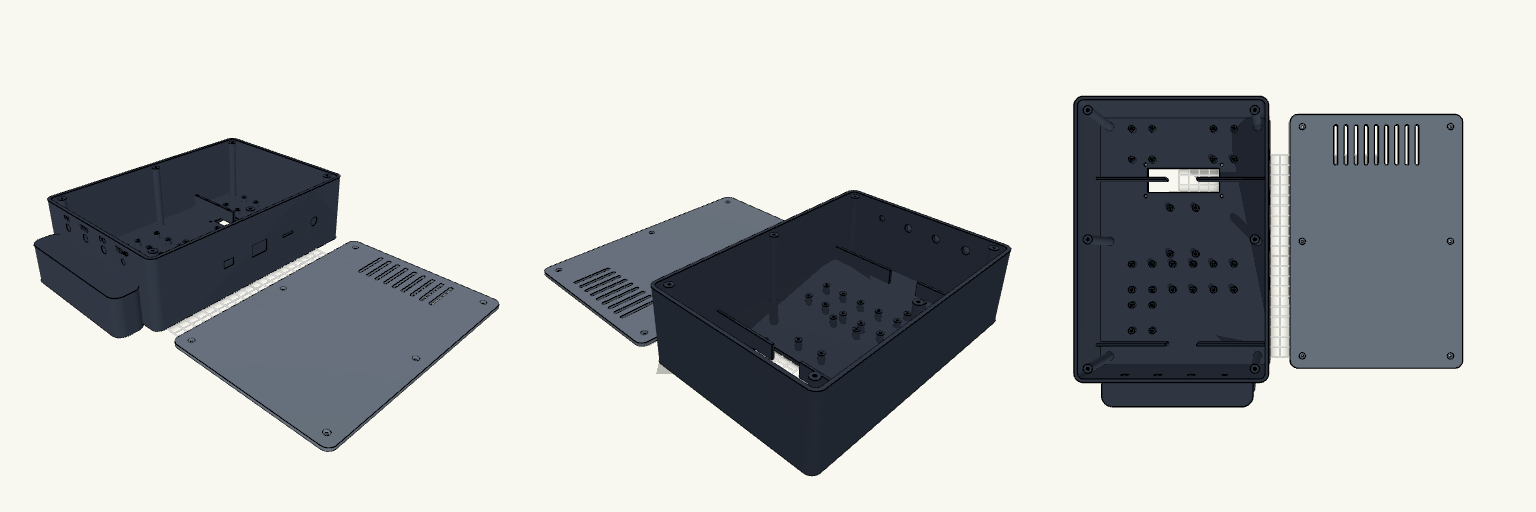
An enclosure is only as good as the snarl of wires it prevents. This is a heavy-duty two-part monitor housing built specifically for FDM printing, designed to group, separate, and anchor a complete suite of biofloc water-quality electronics without turning into a bird's nest inside. The layout isolates the battery compartment at the bottom and keeps the DC buck converters and relay in a ventilated top section, leaving the central deck clear for the ESP32 and an array of sensor interfaces. Internal divider walls double as cable routing channels, forcing the wiring to stay orderly. Core Features Printability: Both halves print completely flat on the build plate (Z=0). The integrated bottom handle is flush with the front face to avoid overhangs. Dimensions: 170 mm width × 250 mm height × 75 mm depth. Hardware Required: 6× M3 screws for the rear cover; additional M3 hardware for the internal standoffs and the 16x2 LCD faceplate mount. Ports: Bottom panel holds 4× sensor ports (3× 8mm, 1× 6mm) with engraved labels. Right panel holds cutouts for 12V DC, an SD card slot, a rocker switch, and USB programming access.
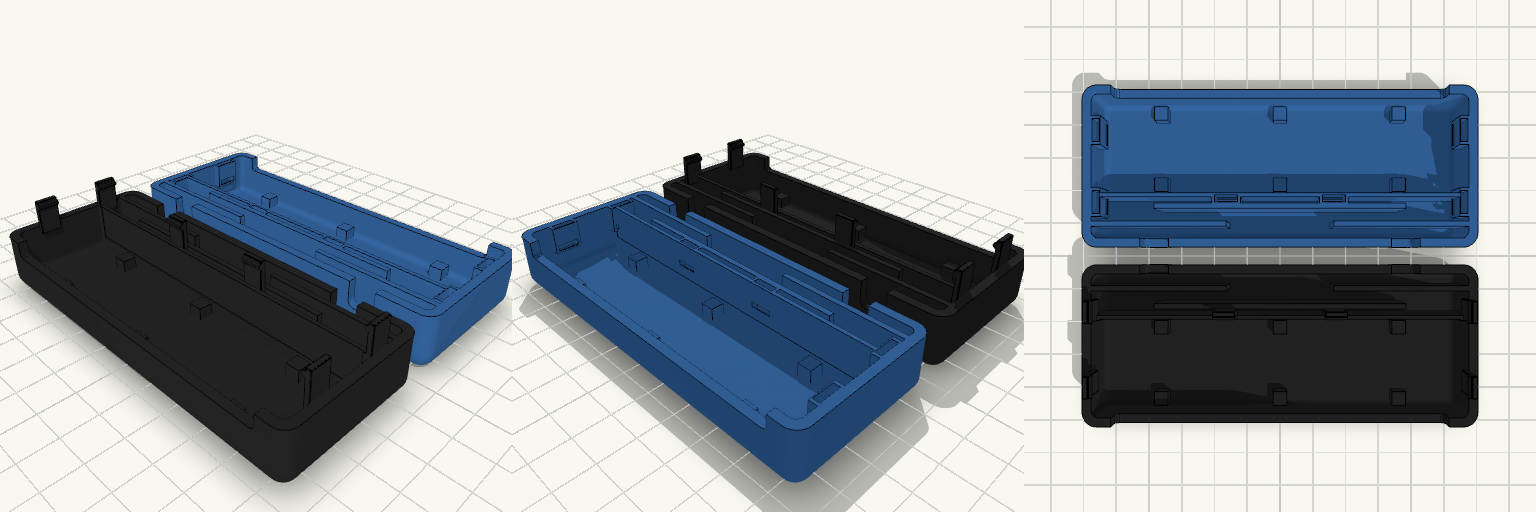
Acoustic Labyrinth Harmonica Silencer
A custom-engineered, fully playable acoustic enclosure designed for the Fender Blues Deluxe 10-hole diatonic harmonica. This silencer creates a miniature acoustic labyrinth directly behind the harmonica while leaving the entire metal mouthpiece exposed through a smooth, continuous lip opening. You can play normally—including bends and fast sweeps—without any rigid plastic interfering with your embouchure. Acoustic Architecture Direct Lip Access: A 94x9mm heavily rounded opening lets you play directly on the harmonica's surface. Three-Chamber Labyrinth: Sound exiting the back of the harmonica is forced through a tortuous path (Chamber 1 → 90° split → Chamber 2 → Chamber 3) before reaching the external exhaust vents. Foam-Ready: Generous internal tolerances (up to 4mm) on the back wall and first baffle allow for the manual installation of standard acoustic foam. Vibration Isolation: The harmonica is held precisely in place by six tiny internal ribs with a calibrated 0.4mm clearance, eliminating rattle without clamping the instrument. Tool-Free Assembly: Six internal cantilever snap-fits lock the top and bottom shells securely together and can be separated by hand.
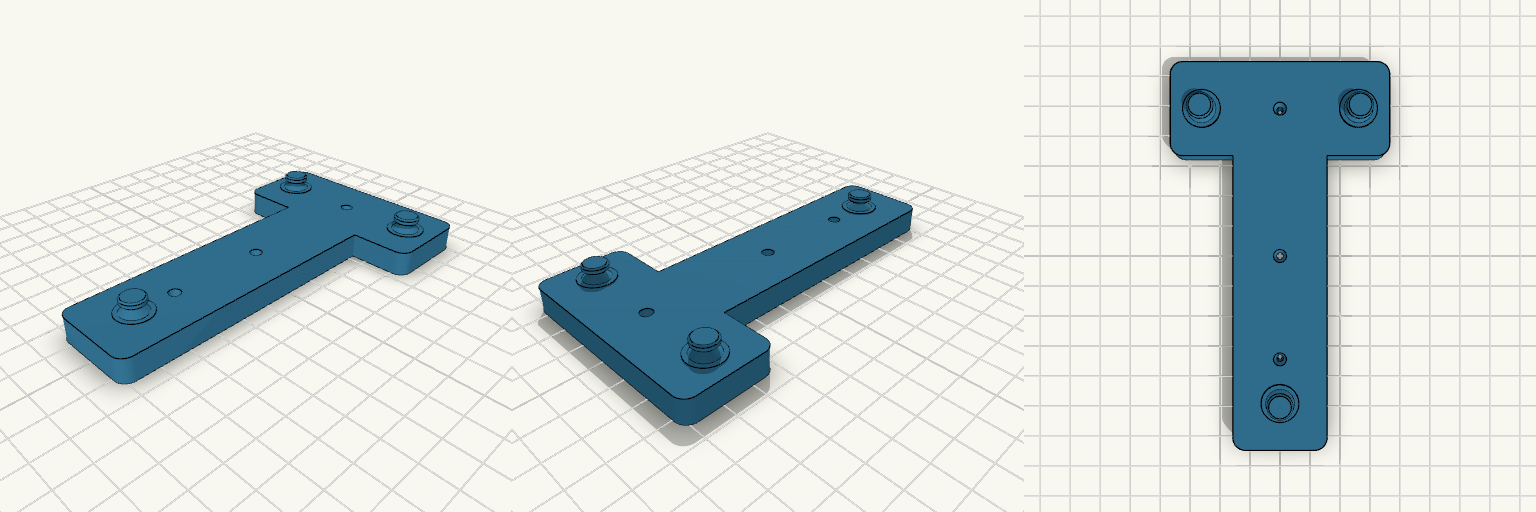
Einhell Charger Wall Mount definitivo
Piastra da parete dedicata ai caricabatterie Einhell Power X-Change. L'interasse standard tra i fori superiori è di 50 mm, con il foro inferiore centrato a 94 mm verso il basso, tipico del modello da 3.0A. I pioli sono rinforzati con una base conica per sopportare lo scorrimento laterale senza spezzarsi lungo i layer della stampa. Fori viti: Calibrati per viti a testa conica stretta. Fissaggio: Tre punti d'ancoraggio centrali. Pioli: Testa svasata per facilitare l'inserimento.