Urgent Document Clip
Created 29 days ago
Description
A slim, low-profile clip meant to bind a few urgent sheets.
- Clearance: 0.5 mm pinch gap.
- Size: 40 mm wide for a firm hold.
- Print: Prints flat, face up, no supports.
Images
More like this
Explore more in Desk & Tech →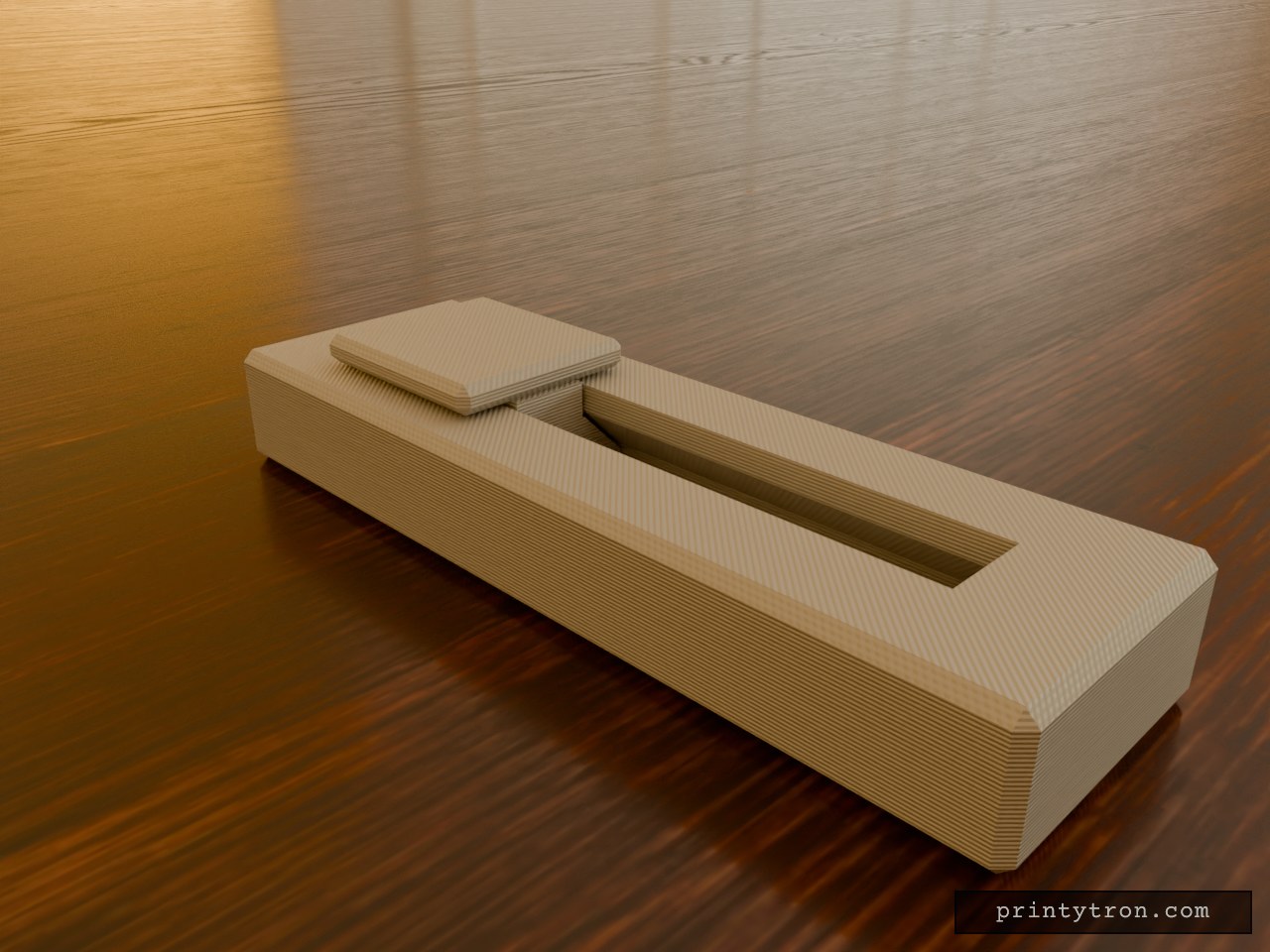
Fidget Slider Toy, Captive Print-in-Place
A fidget slider that prints already assembled, so there is no loose weight to lose and nothing to glue. The slider is captured in an enclosed dovetail track and cannot fall out. It runs 40 mm end to end and clicks at each stop instead of rolling freely. What it does Slides back and forth along a closed track in an 80 x 25 mm body. A small bump on the track floor at each end of travel drops into a dimple under the slider and gives the click. The dovetail profile holds the slider down, so it cannot lift out of the rails. Numbers that matter Body: 80 x 25 x 11 mm, with the slider top reaching 14 mm. Slider: 20 mm long, 18 mm wide cap. Travel: 40 mm. Clearance between slider and track: 0.4 mm per side. This is what lets it move after printing. Click bump: about 0.6 mm of interference against the 0.4 mm gap. Reduce the bump height if it feels too stiff. Printing Print flat, body base down, with no supports needed inside the track. Use a well-tuned printer. A 0.4 mm gap fuses easily if the flow is too high. After printing, work the slider back and forth a few times to break any thin bridging between the slider and the rails. Two colours show as separate parts in the preview, but the print is one job.
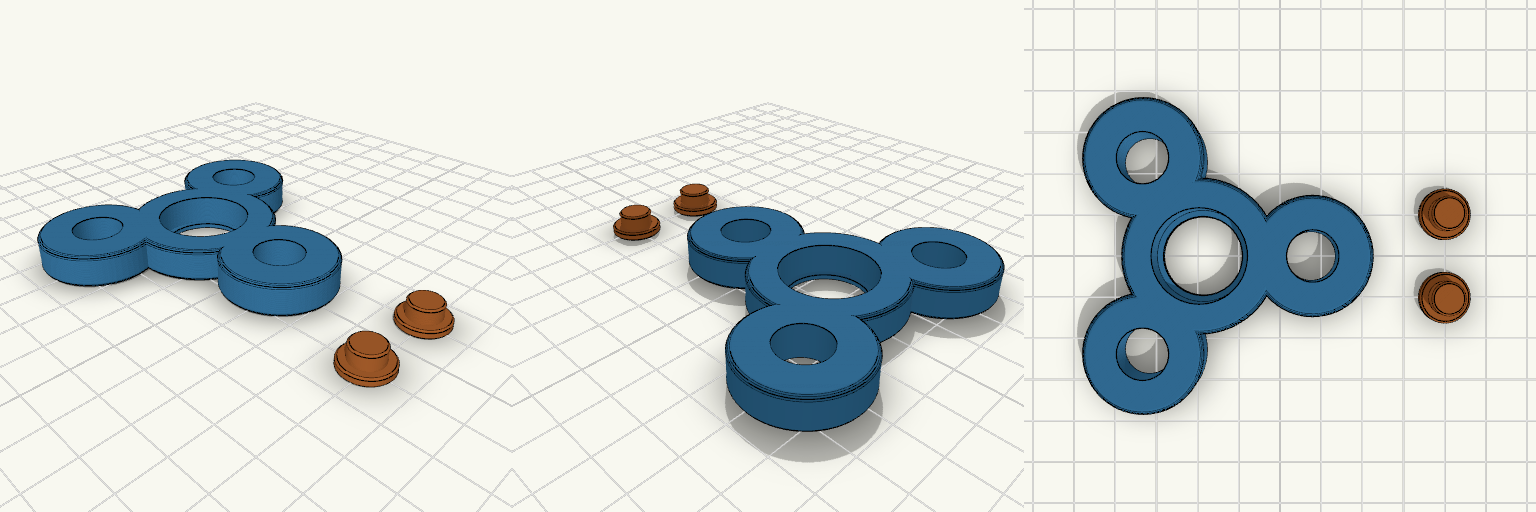
Bearing-Driven Tri-Lobe Fidget Spinner
A classic three-lobe hand spinner, the shape every desk drawer has seen, rebuilt around a real 608 skate bearing so it spins freely for a long time. The body has a bearing pocket in the centre, a lip underneath to hold it, and weight-saving holes in each lobe. Two small caps press into the bearing's inner ring from either side to make the finger pads. Notes You need: one 608 bearing (8 × 22 × 7 mm). Print: body flat; the two caps print flat-side down beside it. No supports. Assembly: press the bearing into the pocket from the top, then push one cap in from each side until they meet. Tuning: if the bearing is loose or tight in the pocket, adjust the pocket diameter slightly. Remix: the lobe holes can be enlarged to take 608 bearings as extra weights.
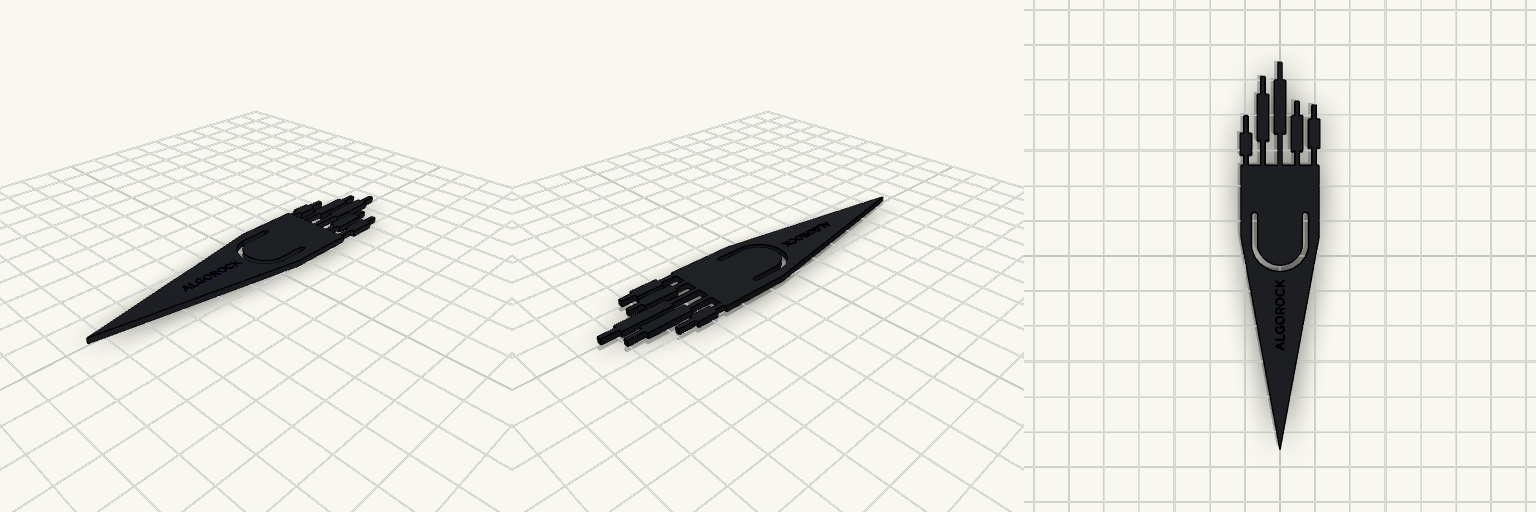
Candlestick Crown Blade Pocket Bookmark
A tapered graphite blade crowned by five candlesticks whose uneven heights still read as a single mountain, with a clear central peak and a natural descent to each side. It sits in the same family as a market-chart skyline, turned into a slim physical object. The lower taper holds an internal page pocket with a flexible inner layer. The page edge enters from the opening near the top of the taper, and the crown stays above the book. Five candles with wicks, two of them hollow ALGOROCK as a fine 0.3 mm raised purple wordmark along the blade Prints flat in one piece, with no supports PETG is recommended for the thin inner layer
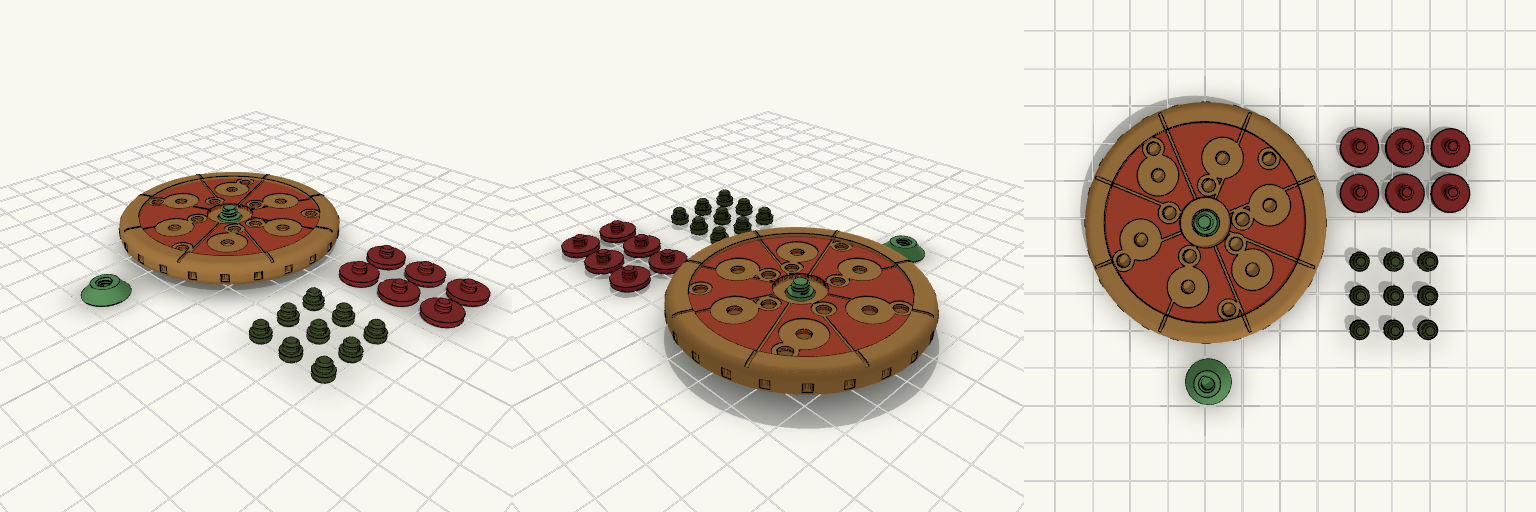
Pizza Spinner Fidget Print Set
What it's for A pizza-shaped fidget spinner that turns freely on a central hub. The pepperoni and olives are separate snap-on toppings, each with a split pin that clicks into a socket. Each topping also has a marked seat in the sauce, so the right position is easy to find. Dimensions Pizza: 62 mm diameter, bumpy crust, sauce with slice grooves Hub: protrudes on both sides, 0.5 mm clearance to the pizza 6 pepperoni: 10 mm, seat 10.6 mm 9 olives: 5 mm, seat 5.6 mm Pins: 3.4 mm split pins into 3.5 mm sockets Print notes Toppings print upside down, pin facing up, no supports needed. Olives are small; a standard 0.4 mm nozzle will soften the details. Pieces print in separate colours and can be mixed freely. Remix ideas Add mushrooms or peppers using the same pin and seat. Change the topping layout by moving the seat positions. Make the hub longer for a better grip.
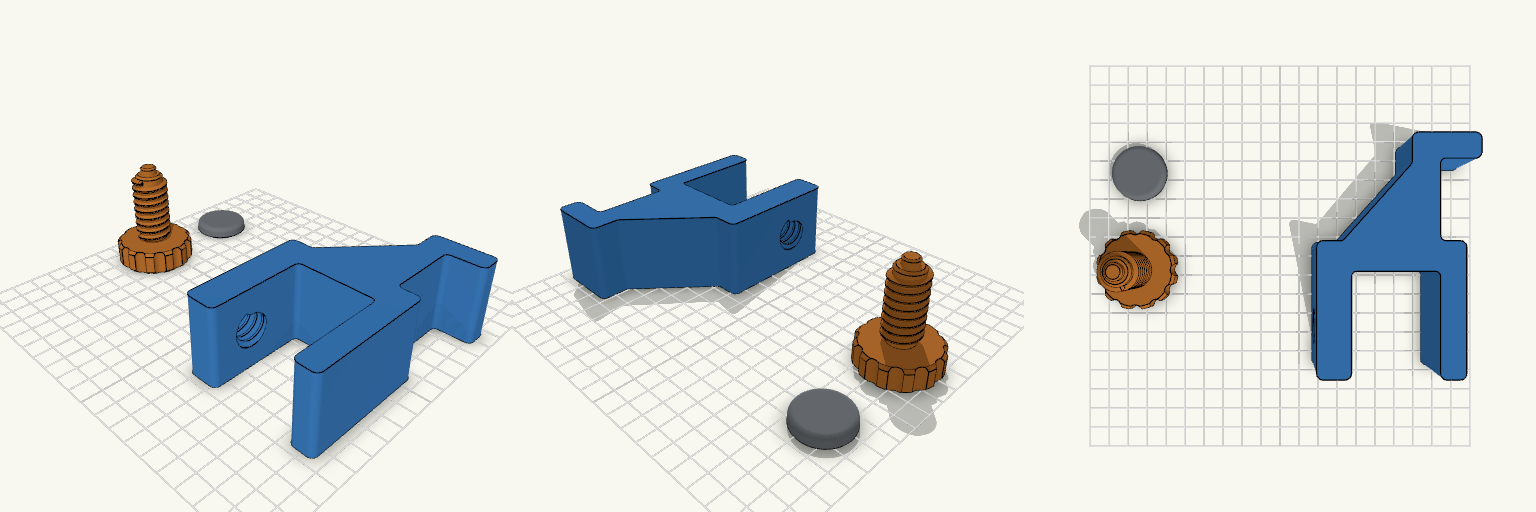
Perch — Clamp-On Headphone Holder
Perch is a three-piece desk-edge headphone holder: a main body with hook and clamp jaws, a separate threaded adjustment screw with a large scalloped knob, and a loose pressure pad. Nothing is joined or printed in place, so the parts are laid out separately and assembled by hand after printing. Features Clamp range of 15–35 mm, suited to a 20 mm desk Internal thread in the lower jaw with 0.4 mm radial clearance for the 18 mm, 4 mm-pitch screw 40 mm knob with scalloped grip Pad snaps onto an 8 mm peg at the screw tip and spins freely Reinforced hook with gusset and rounded lip Print notes Body on its side, screw knob-down, pad flat PLA, 0.4 mm nozzle, 0.20 mm layers, 4 walls No supports expected Assembly Thread the screw up through the lower jaw from below, then press the pad onto the peg. Set the source's mode value to 1, 2 or 3 to export each part individually.
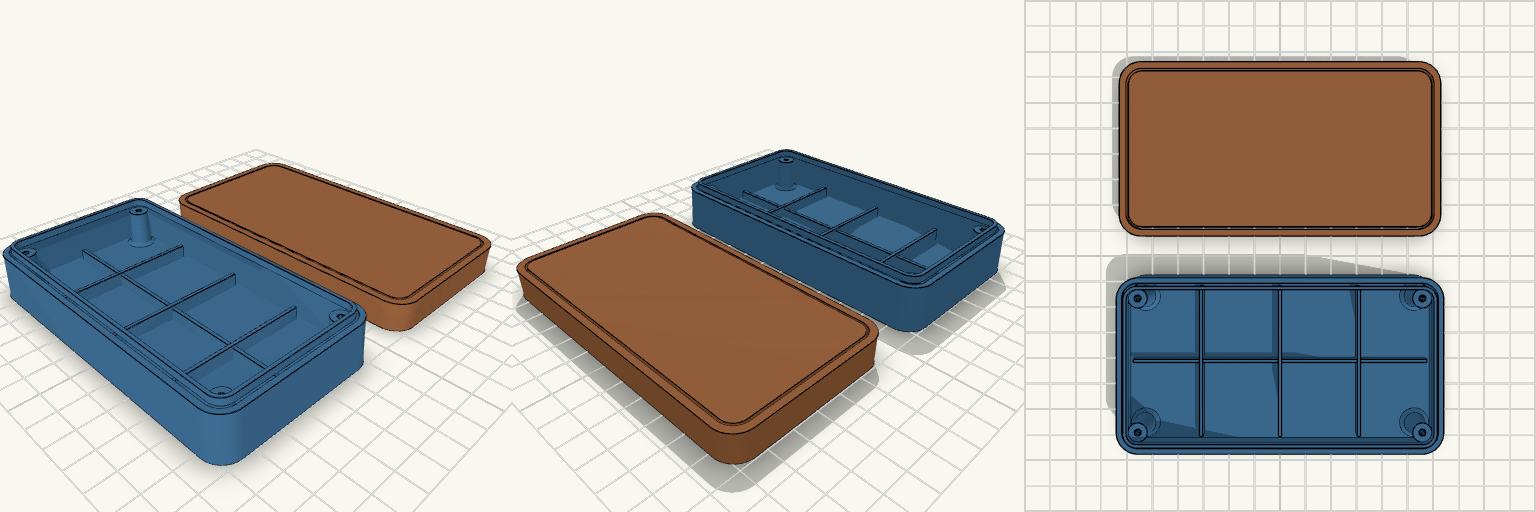
Bakelite-Era Two-Piece Electronics Enclosure
A compact two-piece case with a vintage Bakelite silhouette: rounded corners, softly drafted walls, and a clean split line between the lower housing and the upper cover. At 120 × 65 × 28 mm, it gives a small board or module a protected home, with a hollow internal cavity, four corner screw bosses, reinforcement ribs, and a tongue-and-groove closing lip. The enclosure prints as two separate pieces, with the cover laid beside the housing so both print without supports. Design notes Lower Housing: the deeper shell, with corner bosses, internal ribs, and a raised closing tongue. Upper Cover: the lid, with a matching groove and clearance holes for the screws. Walls and corners: 2 mm walls, 8 mm outer corner radius, and a 1.5° draft on the outer shell and lip. Screw bosses: four corner bosses with 2.6 mm pilot holes in the housing and 3.2 mm clearance holes in the cover. Printing: separate upper and lower parts, oriented to avoid supports.