Wireless Earbud Case Charging Dock
Made by a Guest
Created 2 days ago
Description
An upright charging dock for a wireless earbud case, sized for a desk. The case sits in a 50 × 30 mm pocket, 12 mm deep, on a 60 × 45 × 28 mm base with rounded corners and a flat bottom. A 10 mm notch at the back of the pocket routes a charging cable to the case, and a 4 mm front lip above the pocket floor keeps the case from sliding forward. It replaces a loose case sliding around the desk with a fixed upright position.
Fit check
- Fits: wireless earbud cases with a footprint no larger than 50 × 30 mm and a charging port that faces the rear notch.
- Does not fit: cases wider than 50 mm or deeper than 30 mm; cases with a bottom-only charging port, because the pocket floor is solid and the notch opens only at the back.
- Check before printing: measure your earbud case footprint and confirm the 10 mm rear notch lines up with the charging port and plug.
- Print: one connected piece with a flat bottom and rounded edges, designed for reliable FDM printing on an older printer. No separate pieces or assembly.
Photos
Technical views
More like this
Explore more in Desk & Tech →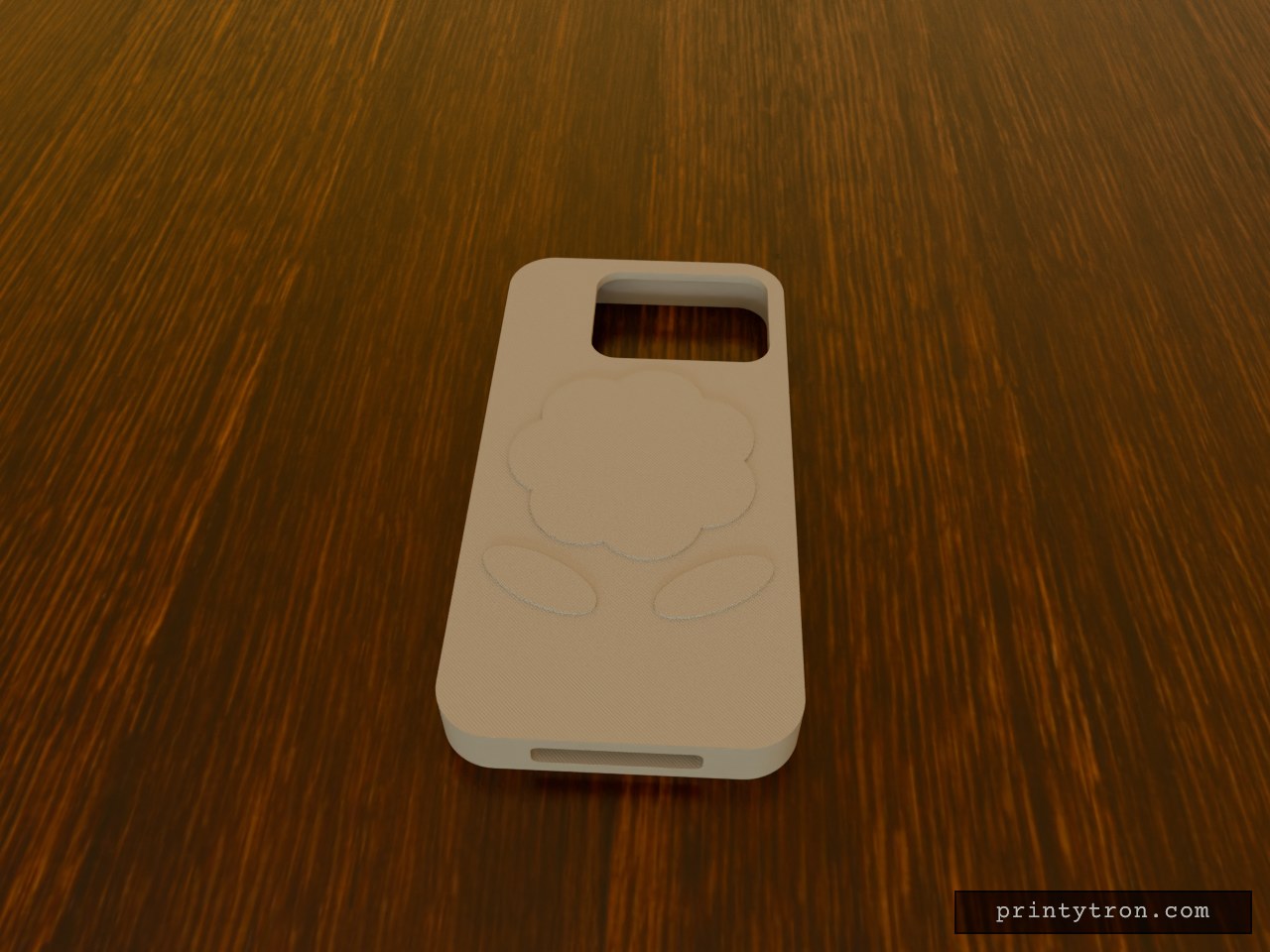
iPhone 17 Pro Max Case, Blue with Rose
What it's for A protective case for the iPhone 17 Pro Max in light blue, with a raised rose on the back below the camera cutout. Dimensions Phone body: 163.4 × 78 × 8.75 mm, with 0.3 mm of play per side Walls 4 mm, back 3 mm Rose relief: 1 mm, flat-topped layers Remix ideas Recolour the rose in blue tones to blend with the case Make the rose taller or soften its edges Swap the rose for another motif
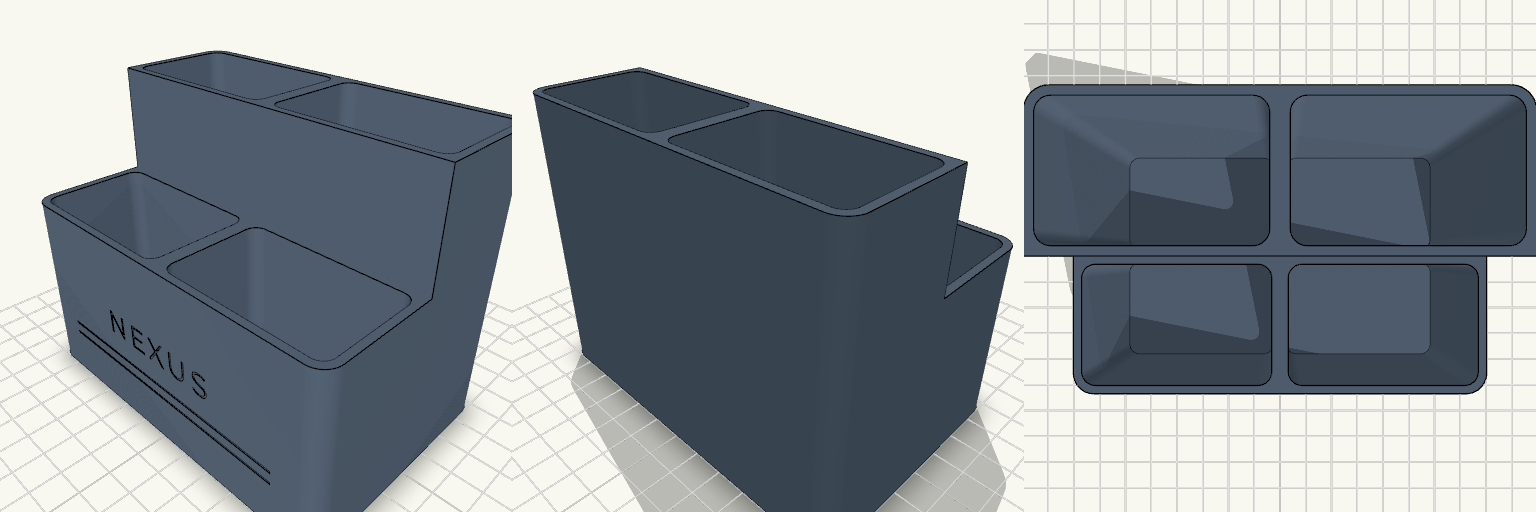
NEXUS Desk Pen Holder
What it's for A minimalist desk organizer with four open-top compartments for pens, pencils, markers and small stationery. A stepped front lowers the front pair for easy reach to small items, and a small NEXUS logo is engraved on the front face. Dimensions Footprint: 120 × 80 mm Height: 95 mm rear, 60 mm front Wall thickness: about 2.4 mm Flat base, rounded vertical corners, chamfered base edge Remix ideas Change the logo text to a name or initials. Make the front compartments deeper for scissors or rulers. Add a non-slip pad under the base.
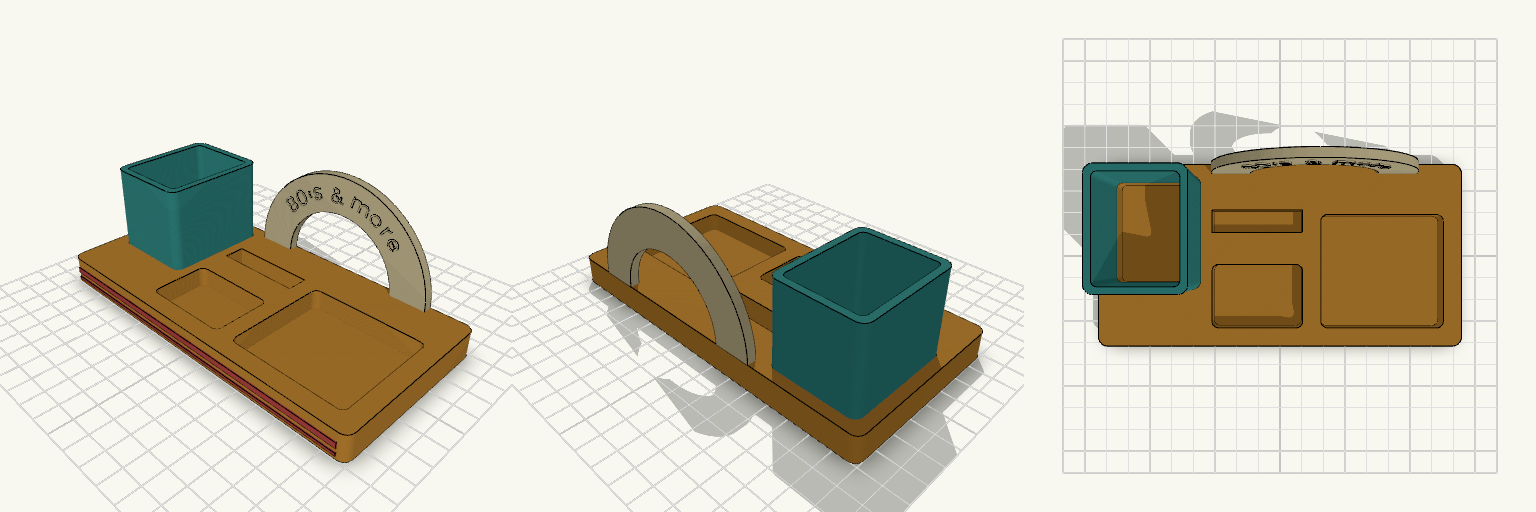
Retro Desk Organizer with Pen Tower
What it's for A retro-styled desk organizer that keeps pens, cards and small items in one place. A teal pen tower, a card or phone slot and two open trays sit on an amber base. A red racing stripe runs along the front. A cream arched backrest has a round window and embossed "80's & more" lettering following the curve. Dimensions Base tray: 160 × 80 × 12 mm Pen tower: 40 × 50 mm footprint, rising to 50 mm overall height Card / phone slot: 40 × 10 mm opening Front tray: 40 × 28 mm Large right tray: 54 × 50 mm Arched backrest: about 90 mm wide, top at 57 mm Lettering: embossed 1 mm, 7 mm tall Remix ideas Change the lettering to a name or a different slogan. Resize the trays for coins, clips or sticky notes. Recolour the stripe and backrest to match a different retro palette. Widen the card slot for a tablet.
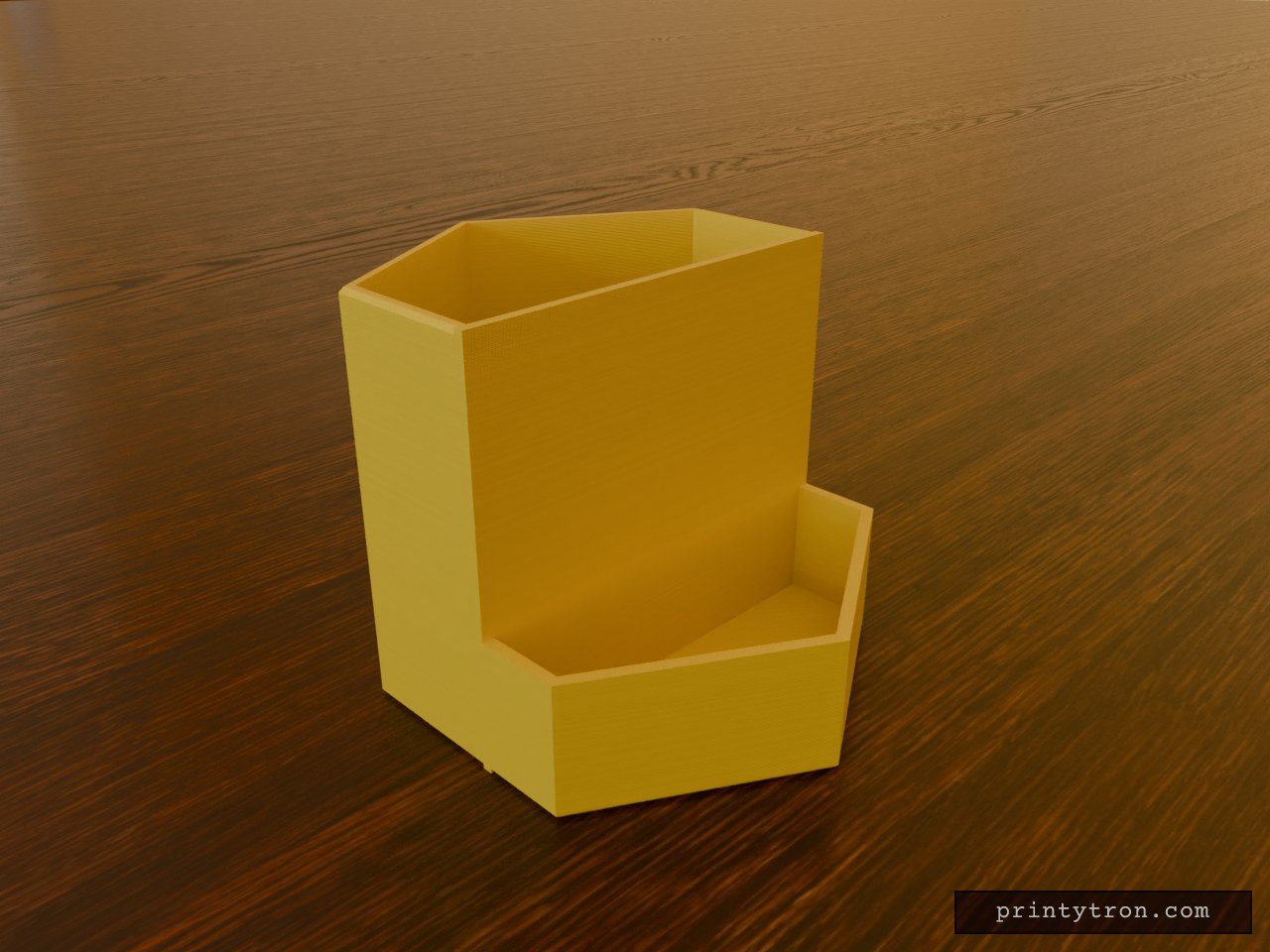
Hexagonal Pen Cup with Divider
A hexagonal desk cup, 80 mm tall and 100 mm point to point, split into two sections by an internal divider wall. The larger section runs full height and holds pens and pencils. The smaller section is cut down to one third of that height, about 27 mm, and works as a tray for paper clips, erasers and other small items. The divider sits slightly off-centre so the short tray takes up roughly 40% of the floor area. The walls are 2.4 mm thick and the base is 3 mm thick. The top and bottom outer edges have a small chamfer. Overall size: 100 mm across corners, 80 mm tall Tall pen section: full height, about 60% of the floor Short tray section: one third height, about 40% of the floor Wall thickness: 2.4 mm, floor thickness: 3 mm Prints upright as one piece with no supports needed
Vertical Switch Dock Stand with Strap Slots
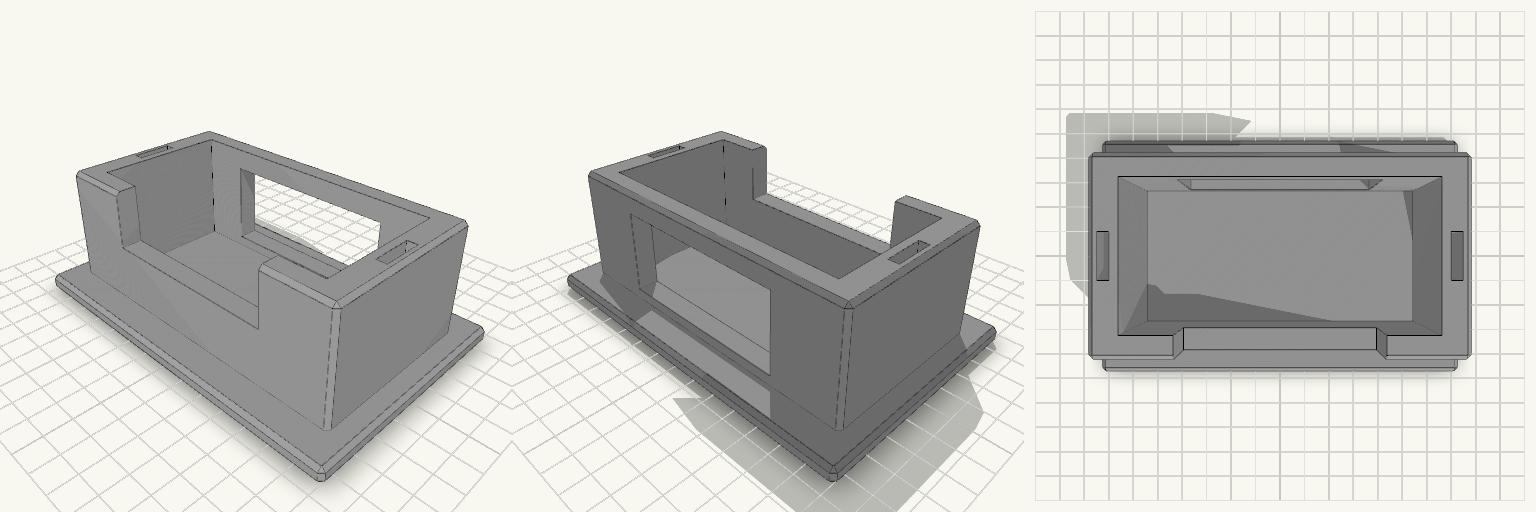
A Switch dock lying flat eats shelf space, and a dock stood on its end tips over the first time someone pulls a cable. This stand holds the dock upright in a snug pocket on a wide flat base, and keeps two spare Joy-Con straps in slots in the side walls. What it does Holds the dock on its end so it takes up a footprint of about 142 × 92 mm instead of its full 175 mm length lying down. Front wall is cut down in the middle, so you can grip the dock to lift it out. A 70 mm opening in the back wall lets the power, HDMI and USB cables leave without bending against the stand. Two 4 × 16 mm slots, one in each side wall, hold spare Joy-Con straps. Numbers that decide fit Pocket: 106 mm wide × 52 mm deep, for a dock of roughly 104 × 49 mm. That leaves about 1 mm of play on width and 3 mm on depth. Pocket depth: 44 mm, above a 6 mm base. Overall: 142 × 92 mm base, 50 mm tall. Side walls: 10 mm thick. Front and back walls: 8 mm. Printing Print flat on the base, with no supports needed. Chamfered edges, 1.5 mm. Any common filament works. PETG or PLA is fine for the load. If your dock is a tight fit or loose, adjust the pocket width and depth to match.
Mini-Server-Box with Feet, Lid and Fan
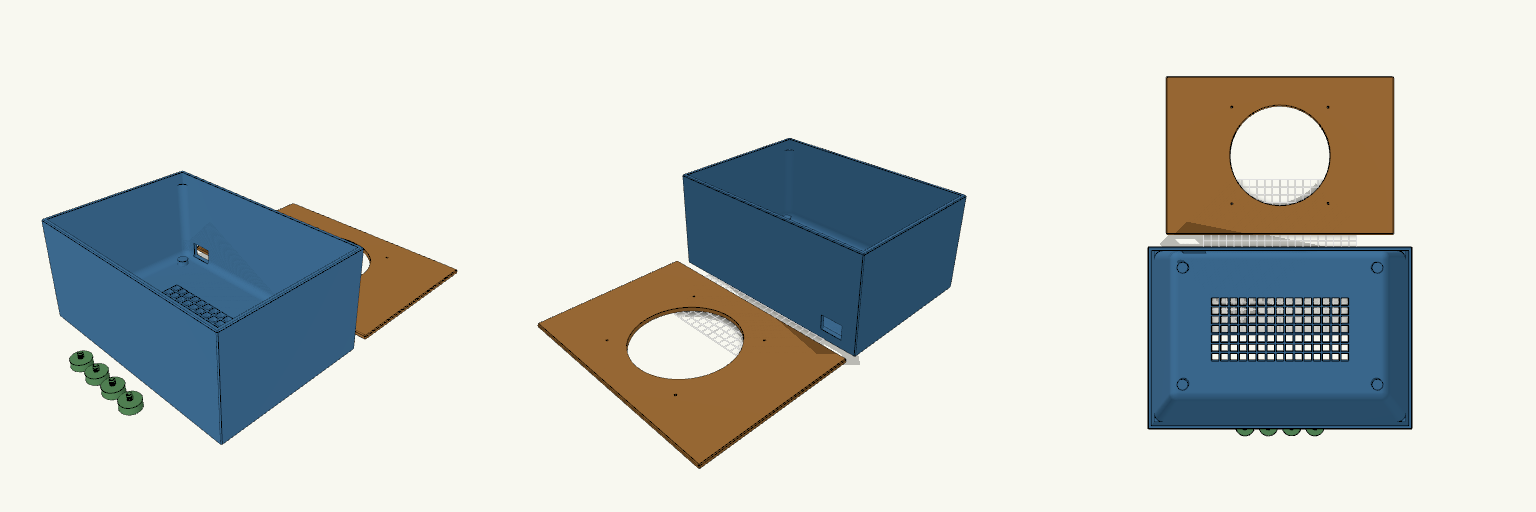
What it's for A solid-walled enclosure for hiding and cooling equipment. Every side wall is closed, and the only airflow path is a sturdy grid cut into the floor, so the box stays dark and quiet from the sides. A 30 × 20 mm cable hole in the lower rear corner lets wiring in and out, and the flat lid lifts off for access. The model prints as separate pieces: the box, the lid and four feet. The lid is a flat plate with a locating lip underneath, slightly larger than the box on every side so it overhangs and can never drop inside. Each foot carries its own coarse threaded stud, so the feet screw directly into matching threaded holes in the floor bosses with no separate fasteners. Dimensions Box: 290 × 200 × 130 mm, with 4 mm walls, solid on all four sides, an 8 mm floor, and a 50 mm solid border around the floor grid. The floor grid is centred on the narrower floor. The thicker floor makes the mesh bars deeper, so airflow per opening drops slightly. Inside fillets: 10 mm radius on the vertical corners and the floor-to-wall edges, stopping 15 mm below the rim. The top 15 mm stays square so the lid and its lip fit without changes. Lid: 294 × 204 mm, 9 mm overall with a 5 mm plate and underside lip; overhangs the box by 2 mm on all sides; 140 mm fan opening and four 3 mm fan screw holes at 124.5 mm center-to-center. Cable hole: 30 × 20 mm in the rear wall, set 20 mm from the left edge and 12 mm above the bottom, inside the solid section so it doesn't weaken the corners. Feet: four solid 24 mm discs, 10 mm tall, each with a 6 mm thick, 8 mm long threaded stud on top; 18 mm overall. The studs use a 1.5 mm pitch. Foot sockets: four corner bosses widened to 14 mm, with threaded holes 6.6 mm across and 11 mm deep at the same 1.5 mm pitch, giving about 0.6 mm clearance on diameter. Print notes Print the box, lid and feet separately. Print the lid lip-side up so its flat face sits on the bed and the lip rises clear of the plate. The floor grid benefits from enough perimeters to keep the bars sturdy. The threads have not been test-fitted; if the feet bind, raise the socket diameter slightly, and if they wobble, lower it. Test-fit the fan and check its screw-hole spacing before committing to a full print. Remix ideas Add a removable filter frame behind the fan opening. Add internal standoffs or a shallow tray for mounting equipment inside. Resize or duplicate the rear cable port for thicker cable bundles. Swap the floor grid for a denser or more open pattern to change the airflow.