100mm Pomeranian Display Figurine
Made by a Guest
Created 3 months ago
Remixed once
Description
A 100mm geometric representation of a Pomeranian dog.
No thread standard or host bracket for this one. The critical measurement to check before printing is the 100mm overall length from the nose to the back of the tail. Built from simple intersecting volumes to approximate the heavy coat and compact frame of the breed, rather than a detailed scan.
- Base: Flattened at Z=0 for reliable build plate adhesion.
- Fitment: Stands independently. Fits standard desk shelves and displays.
- Clearances: Check your cooling settings for the overhangs under the snout and tail.
Images
More like this
Explore more in Decor & Display →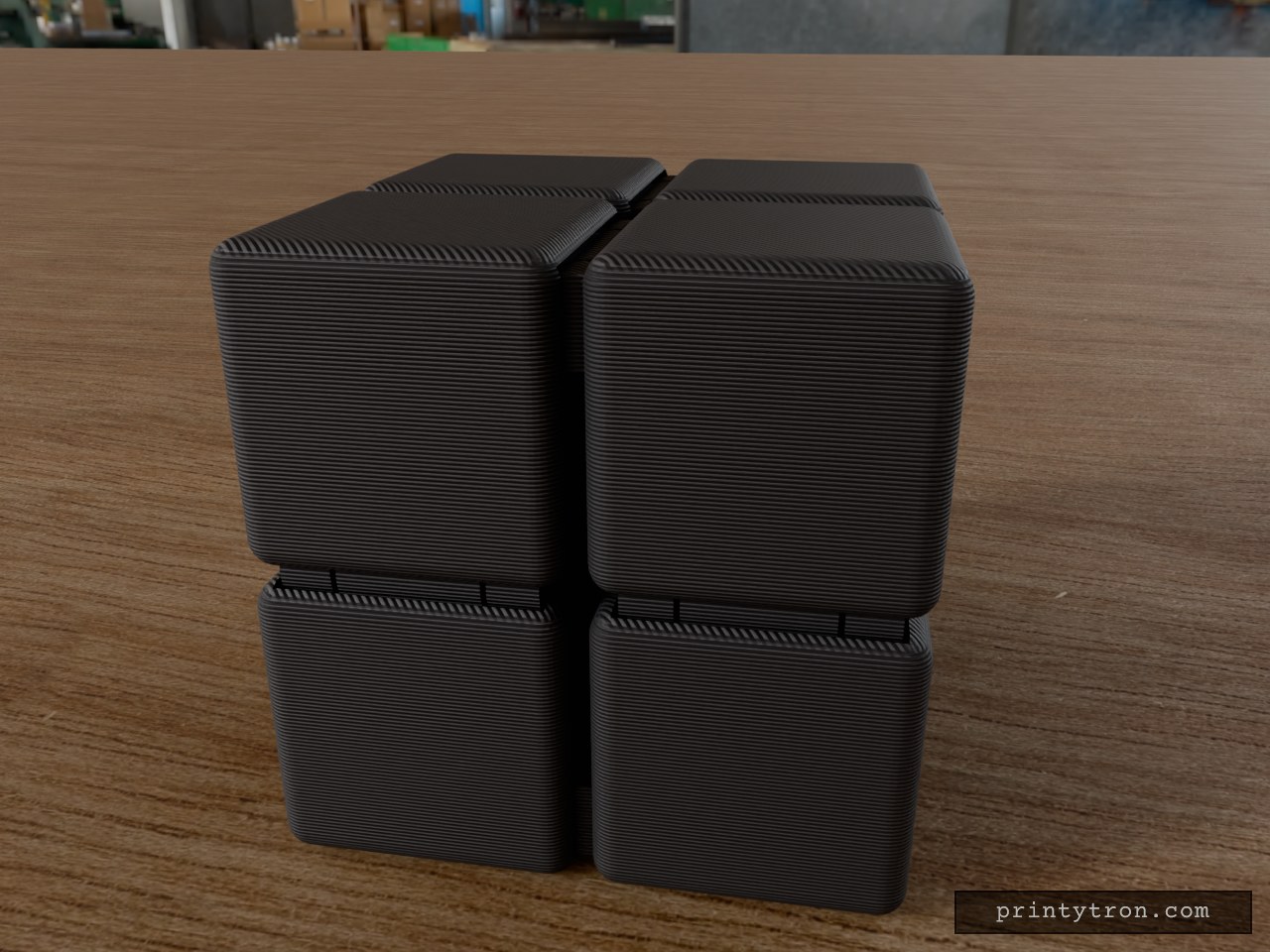
Print-in-Place Hinged Infinity Cube Fidget
Eight rounded 22 mm blocks in a 2×2×2 grid, each a different colour, joined by twelve print-in-place pin hinges instead of solid bridges — so the cube actually folds in the hand. The hinge assemblies measure 42.2 × 42.2 × 42.2 mm laid out on the plate, and each hinge runs about 0.4 mm clearance around its pin and 0.4 mm between knuckle and lugs. Print it with no supports at a 0.2 mm layer height, and expect to snap each hinge free by hand once before the first fold. It is a fidget piece first and a desk object second; it has not been test-flexed, so treat the 0.4 mm clearances as a starting value rather than a proven one. Remix hooks Hinge clearance (about 0.4 mm): the one number worth tuning first. Loosen it if your printer runs tight or you print in a stringy filament; tighten it toward 0.3 mm if the joints feel sloppy after breaking them in. Block size (22 mm): the whole cube scales with it — the 42.2 mm hinge envelope follows the block edge, so resize the blocks and let the joints follow. Corner radius (2 mm): the easiest restyle that doesn't touch the mechanism. A larger radius sits softer in the hand and reads cleaner at the seams. Gap between blocks: widen it for visible, colour-separated seams; close it up if you want the folded cube to read as one mass. Pin and knuckle section: thicker knuckles hold tighter but need more break-in force; thinner ones free up faster and wear looser. Pairs well with two-tone or colour-swapped filament by block, and with other small desk fidgets. The eight-block grid is the constraint; everything hung on it is a choice.
Blossom — Six-Petal Egg Cradle
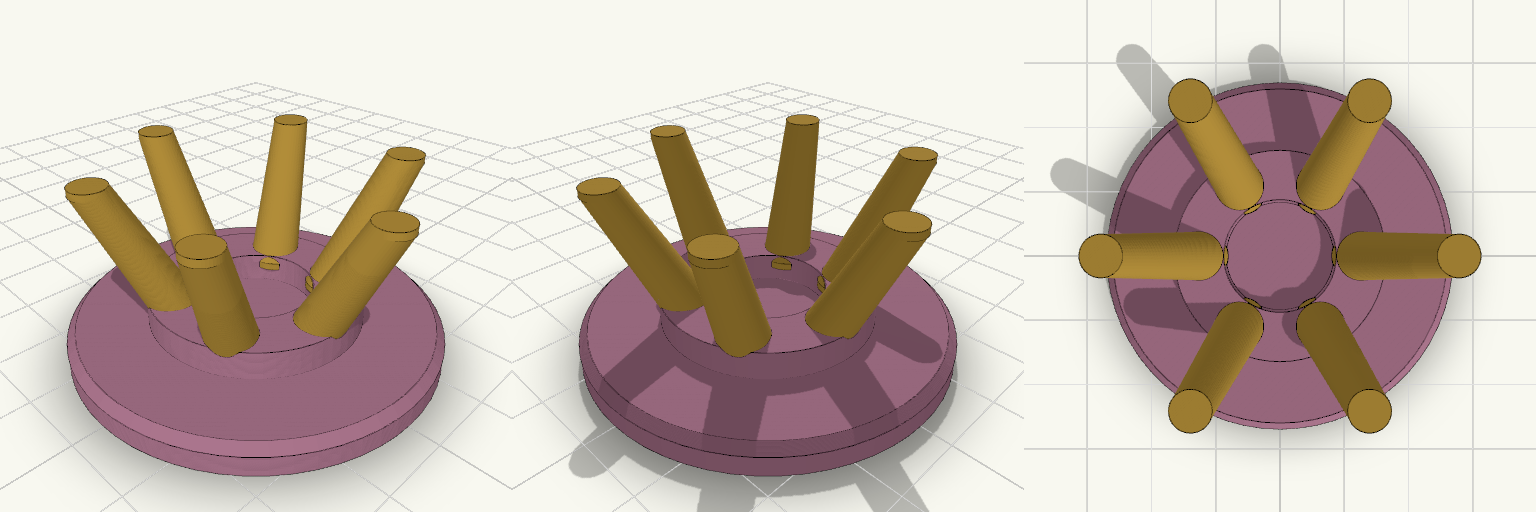
Blossom is a small display stand that holds a decorated egg upright for an Easter table. Six slim petals rise from a round base and lean outward, forming a ring that cradles the egg while the open gaps between petals leave most of the painted or decorated surface in view. Features Six evenly spaced, tapered petals that flare outward toward the top Round 52 mm base with a chamfered top edge and a raised central ring under the petals Open gaps between petals so the decoration stays visible from every side Flat underside for easy printing, with no supports needed for the base Dimensions Overall height: about 25 mm Base diameter: 52 mm Ring opening at the petal tips: roughly 36 mm inside, sized for a chicken egg about 35 mm across its short axis Petal span: about 46 mm outer tip to tip Print notes Print base-down. The petals lean outward, so a light support or slow, cool printing helps the upper tips. Two-tone preview: base and petals are separate colour regions of one welded piece. Pulling the petal tips in by about half a millimetre brings the ring opening to exactly 35 mm.
Five-Key Flexure Piano Keyboard Strip
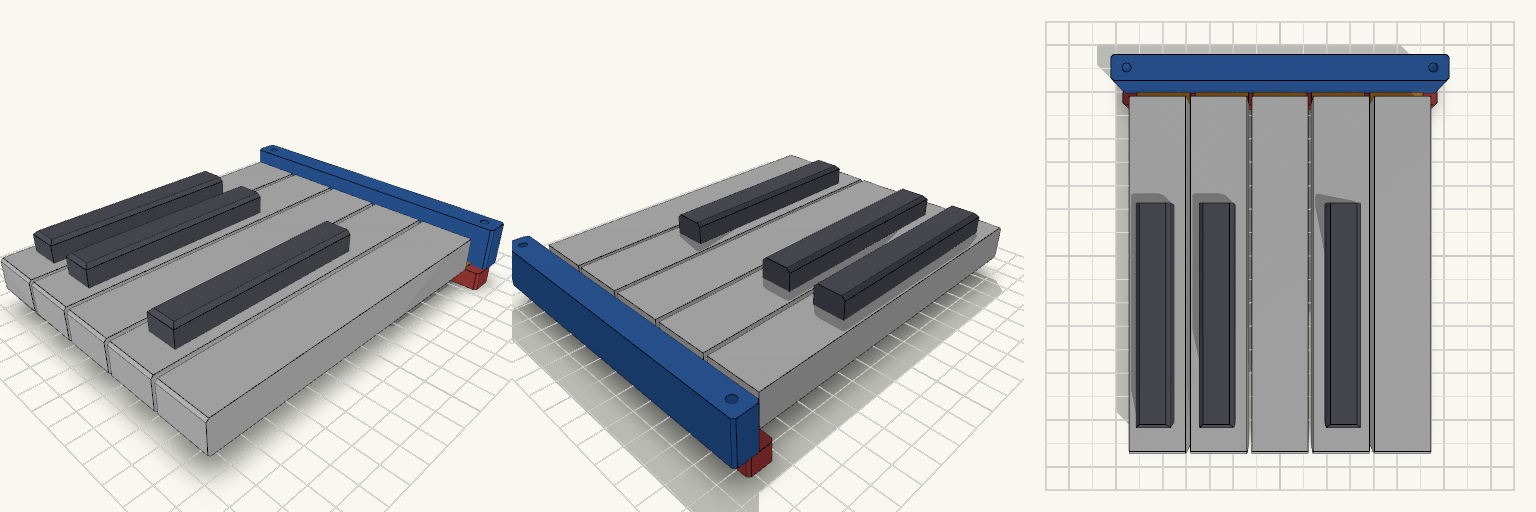
Piano key mockups that stick, stay down or feel dead usually have no return force. This five-key strip gives every key its own 0.8 mm flexure hinge and its own leaf spring, all on one shared back rail. Key numbers Keys: 5 white keys, 22 × 140 mm, 14 mm thick, 24 mm pitch (2 mm gap between keys) Hinge: 0.8 mm flexure on the underside of each key Return spring: 12 mm wide, 1.2 mm thick leaf under each key Black keys: on keys 1, 2 and 4 Rail: shared, 118 mm wide, two 3.5 mm mounting holes at the ends Printing Use PETG or a ductile PLA so the thin hinges do not crack. Print on the flat plate with the base down. Print a spare, since 0.8 mm hinges are the first thing to wear out.
Cursive Sally Sign for 5 mm LED Strip
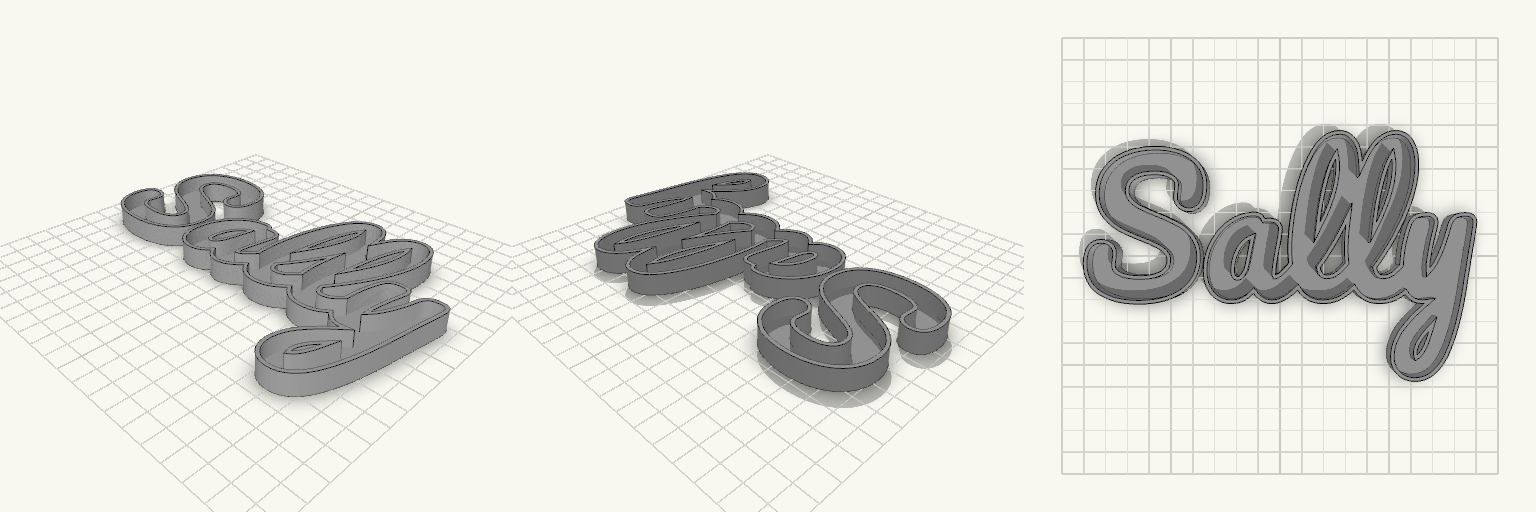
Cursive "Sally" name sign with a continuous recessed groove sized for 5 mm wide flexible LED neon strip. The groove follows the full lettering and is bordered by retaining walls, with wire exits through the floor at both ends of the word. Specs Pacifico script lettering, mixed case Groove width about 5.2 mm (5 mm strip plus clearance) 1.6 mm retaining walls 2 mm floor, 10 mm overall height Wire exit holes through the floor at both ends Prints flat, no supports Brush-style stroke width varies slightly, so test-fit the strip before committing to a full print
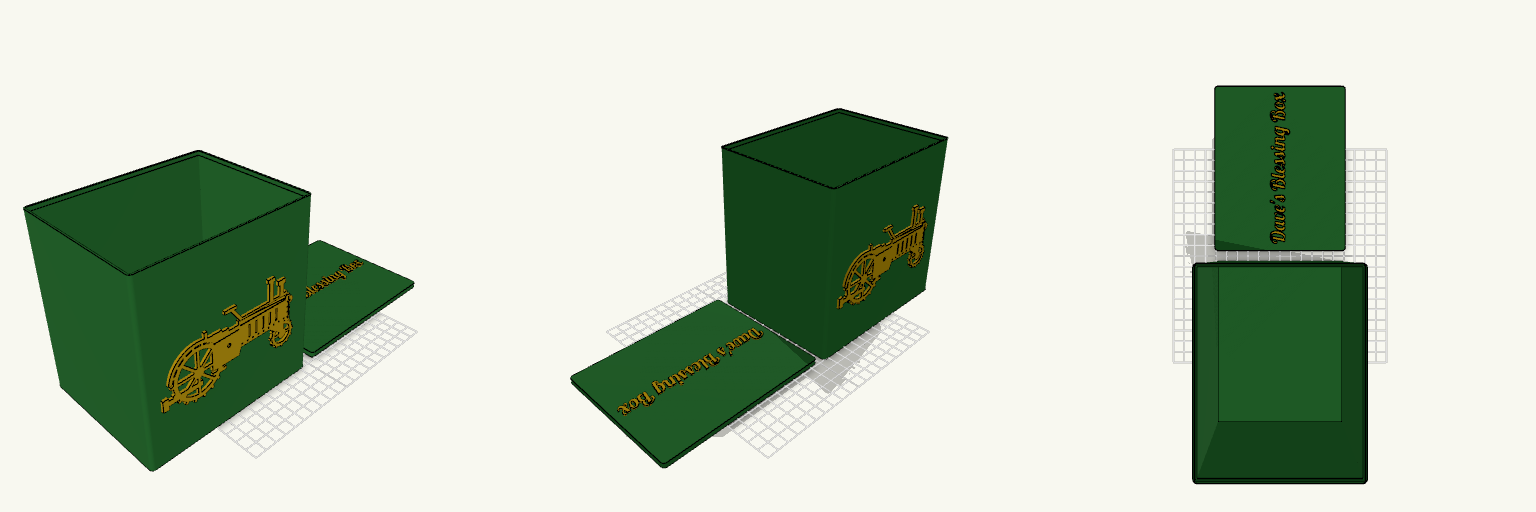
Dave's Blessing Box With Tractors
A lidded box for Dave's blessings, with a John Deere H tractor raised on each long side. The lid sits on the box with a lip, so it won't slide off when you carry it. Size: 120.65 mm wide (X), 152.4 mm long (Y), 152.4 mm deep (Z) Colours: green box and lid, yellow tractors and lid lettering Print: box and lid print separately, upright. The tractors are raised 1.5 mm from the side walls. Fine rivets and bolts may print faintly at a 0.4 mm nozzle.
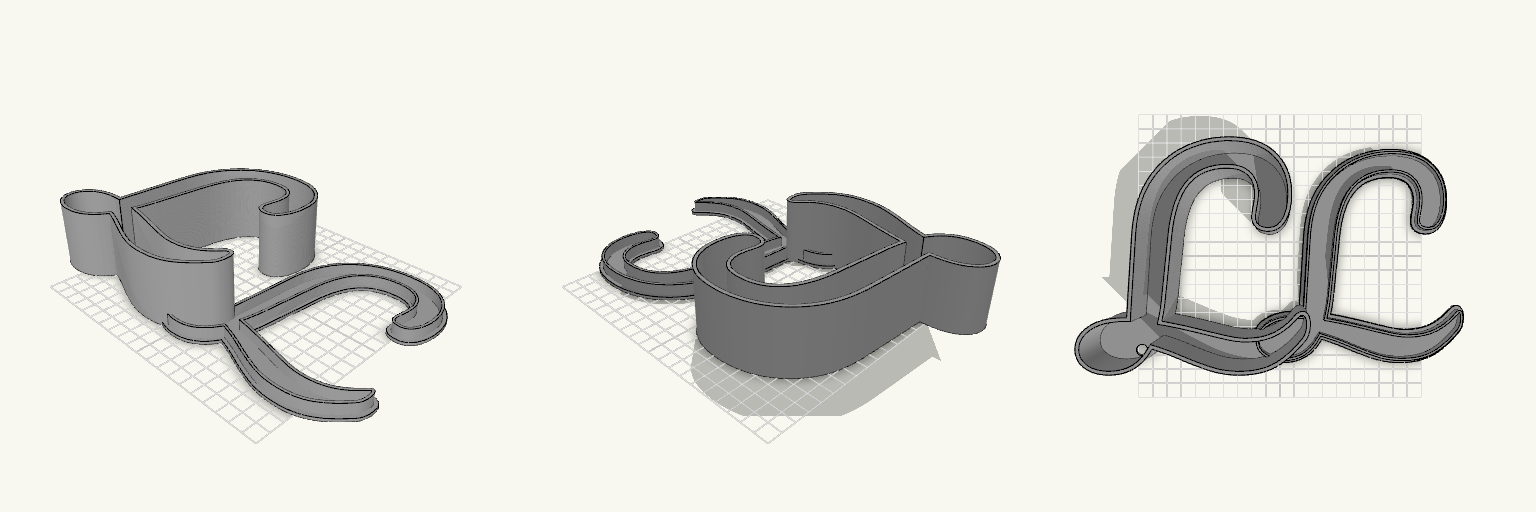
Letra L luminosa de 15 cm con tapa difusora
Letra L en fuente Pacifico, pensada como letrero luminoso: una base trasera hueca donde se pega una tira de LEDs y una tapa delantera que difumina la luz. Las dos piezas encajan entre sí y el cable sale por un orificio en la parte trasera, de modo que el conjunto queda cerrado y la luz solo se ve a través del difusor. Especificaciones Altura: 15 cm. Anchura aproximada: 25 cm, según la cola del trazo de la Pacifico. Fondo de la pieza trasera: 5 cm, con paredes de 2,4 mm para poder pegar la tira de LEDs por dentro, en los laterales. Orificio para el cable: 8 mm, situado en el fondo de la trasera, cerca de la base del trazo vertical. Tapa difusora: lámina de 2 mm con reborde de 8 mm que entra en la trasera con 0,3 mm de holgura. Impresión: dos piezas separadas, sin soportes. La trasera se imprime con el hueco hacia arriba y la tapa con la lámina plana sobre la cama. Huella en la cama: aproximadamente 258 × 150 mm con las dos piezas colocadas una al lado de la otra. Consejos de montaje Imprime la tapa en blanco natural o translúcido para que la luz se difumine de forma uniforme. Pega la tira de LEDs en las paredes interiores de la trasera, no en la cara del difusor, para evitar puntos de luz concentrados. Pasa el cable por el orificio antes de cerrar la tapa; el encaje de 0,3 mm permite abrir y cerrar la pieza sin pegamento.