63×88mm Magical Deck Tray
Created 1 months ago
Description
A compact, single-piece card tray built around standard 63×88mm card stock and their protective sleeves.
The front block holds five cards fanned out at a backward angle, letting you read a full hand while leaving them hands-free. A fused deck pocket directly behind it keeps the draw stack squared up. I’ve debossed a familiar three-circle mouse silhouette into the outer walls and dropped a wizard’s wand across the top rim.
Fitment
- Deck pocket inside dimensions: 65×92mm — accommodating up to a standard 63×90mm sleeve with 1mm of clearance.
- Front slot: Single continuous 160mm trench pitched back 15 degrees. Captures the bottom quarter of standard cards to stop them tipping out.
- Print specs: Solid unibody design. All cutouts and debossing are kept shallow (1.5–2mm) so they print cleanly on an FDM bed with zero supports required.
Photos
Technical views
More like this
Explore more in Workshop & Tools →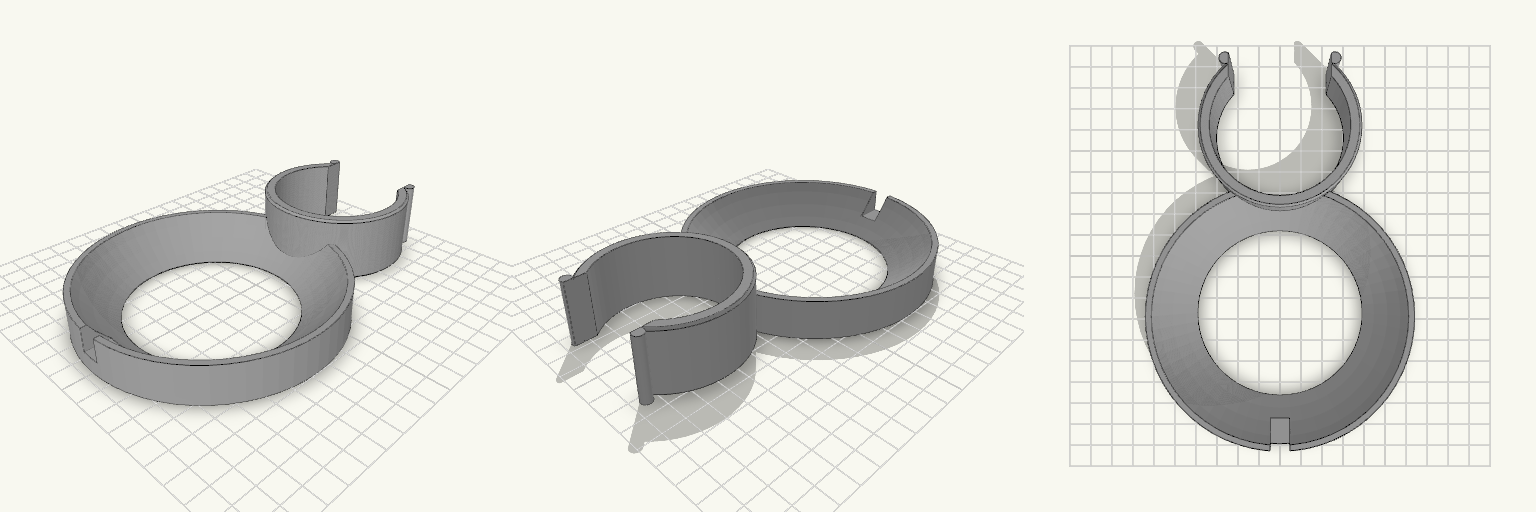
Drill Press Column Tray with Key Slot
A C-shaped clip that snaps around a 60 mm drill press column, with a 120 mm round dished tray attached at the front. The tray holds drill bits, chuck keys and small parts within reach while you work. The clip opening is narrower than the column, so it snaps on and grips by spring tension. Lead-in lips on both sides of the opening guide it onto the column. A slot on the front rim of the tray holds the chuck key, so it stays off the floor. Clip: fits a 60 mm column, 30 mm tall, 5 mm wall Tray: 120 mm diameter, 18 mm tall, with a 3 mm floor and a dished cavity Key slot: on the front rim, 9 mm wide, sized for a chuck key shaft Print the clip upright with the tray on the plate. PETG or ABS gives the clip better flex and durability than PLA.
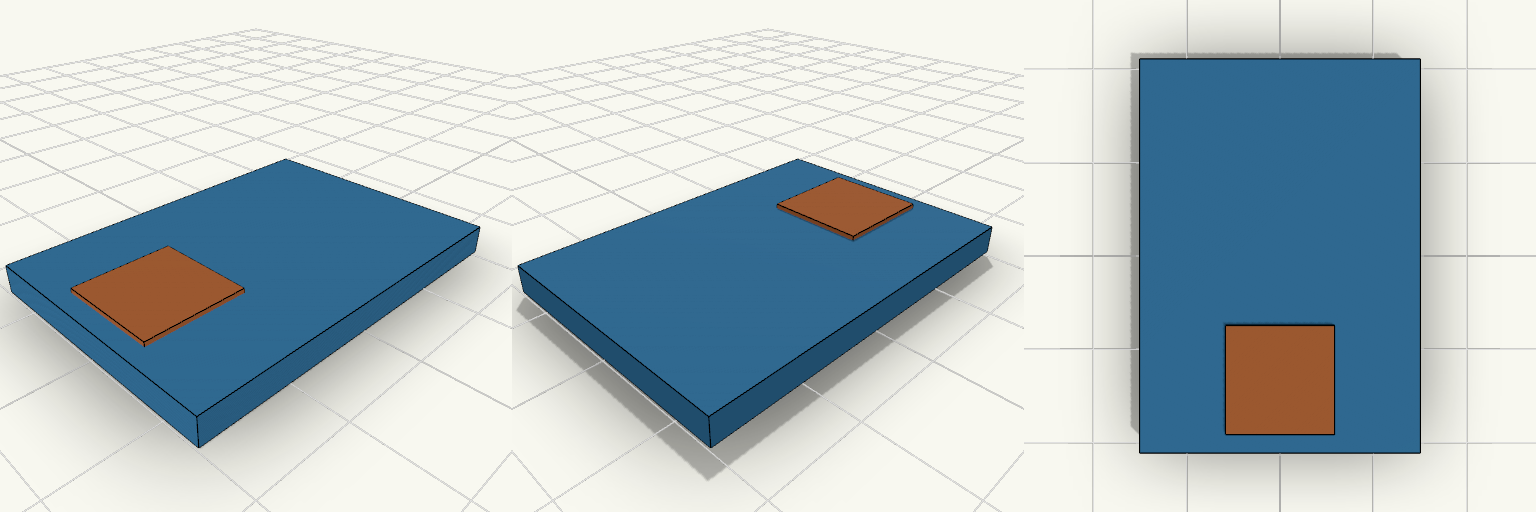
Plate With Offset Square Pad
A flat 28.5 × 40 × 3 mm plate with an 11 × 11 mm raised square pad, 0.5 mm thick, centered in X and set 2 mm from the Y- edge. Remix hooks Pad thickness (0.5 mm): a multiple of your layer height keeps the pad clean. 0.5 mm is about 2 or 3 layers. Pad offset (2 mm from the Y- edge): move it along Y to centre it or push it to the other edge. Plate length (40 mm): the pad is 11 mm, so any length above roughly 15 mm still holds it. Pairs with: a label, a sticker, or a second pad in a different colour for a multi-colour swap.
Flat Ground Plate 45x42x2 mm with Tabs
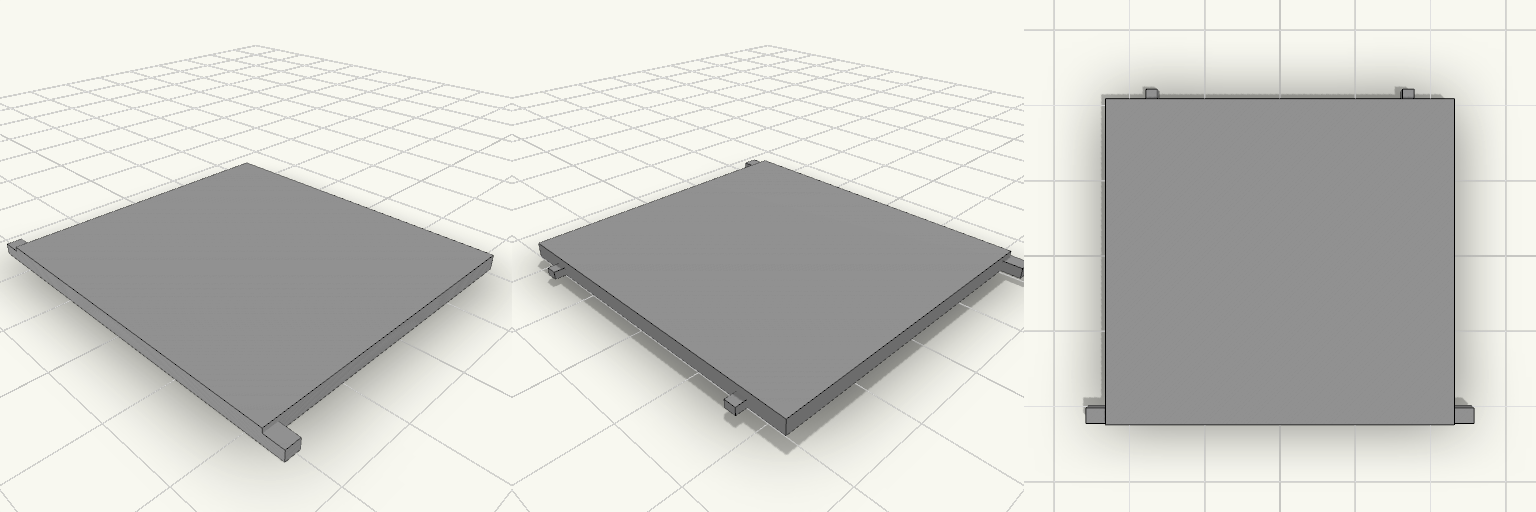
Flat 45 × 42 × 2 mm ground plate with two side tabs on the front 45 mm edge and two small blocks on the back edge. Overall width across the tabs is 50.4 mm. Plate: 45 × 42 × 2 mm, sharp edges Side tabs: 1.4 mm thick, flush with the underside, 50.4 mm overall span Back blocks: 1.5 mm wide, 1 mm thick, 1.5 mm protrusion, 5 mm from each side edge Print flat, no supports needed
サーボソケット
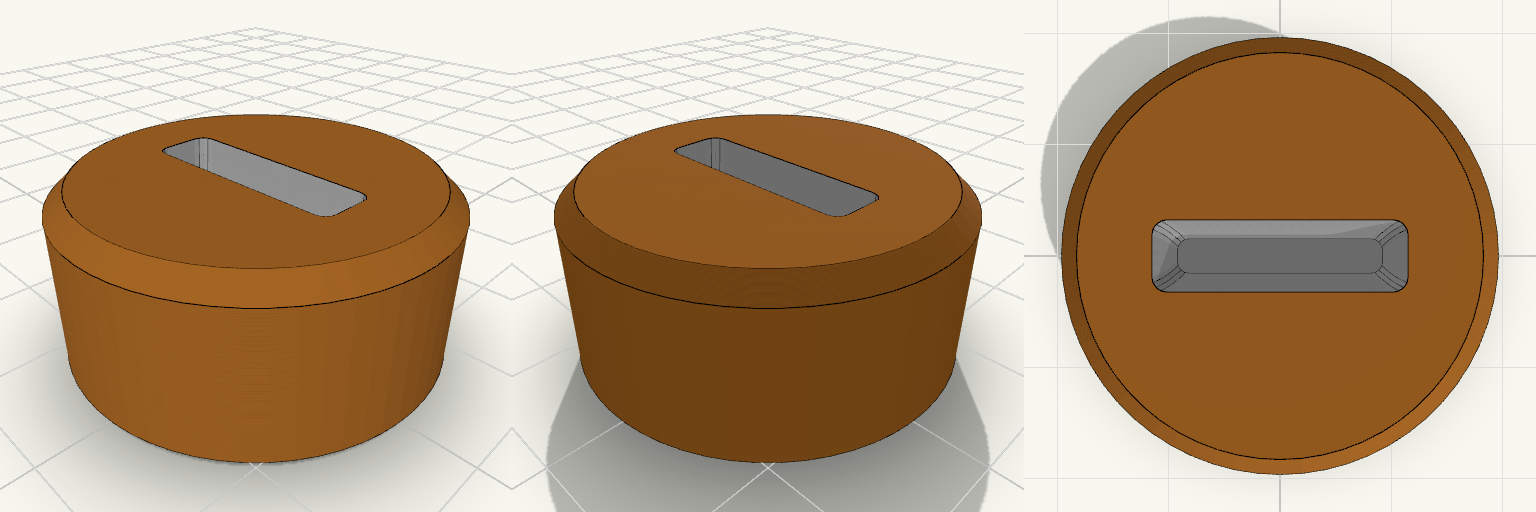
A servo can't turn a valve knob without a socket that grips it, and a loose fit slips under torque. This cylindrical socket slides onto the knob from the bottom and keeps the top face flat and closed for a future servo horn. Key numbers Body: 30 mm diameter, 14 mm tall, chamfered edges Cavity depth: 10 mm, opening only on the bottom face Opening at the bottom: 2.6 mm × 16.7 mm, widening to 4.5 mm × 16.7 mm at the inner end Clearance: 0.15 mm per side, with rounded corners and slightly bowed long walls Top wall: 4 mm solid, with no screw or mounting holes Printing: open face down on the bed, no supports needed; the wall slope is about 5° from vertical Cavity size, taper, corner radius and clearance are all adjustable parameters
5 x 5 x 1 mm Square Block
A plain square block measuring 5 mm by 5 mm by 1 mm, flat on the bed and ready to print. Remix hooks Footprint: 5 x 5 mm is the starting value. Change it to make a tile, spacer or shim. Thickness: 1 mm is about five layers at 0.2 mm. Raise it for a sturdier piece. Edges: Add a small chamfer or rounding for a softer look. Keep it under 0.5 mm at this size. Pairs with: Use it as a test cube for tolerance checks, or as a base for a hole, text or a peg.
Flat L Bracket 15mm Strap
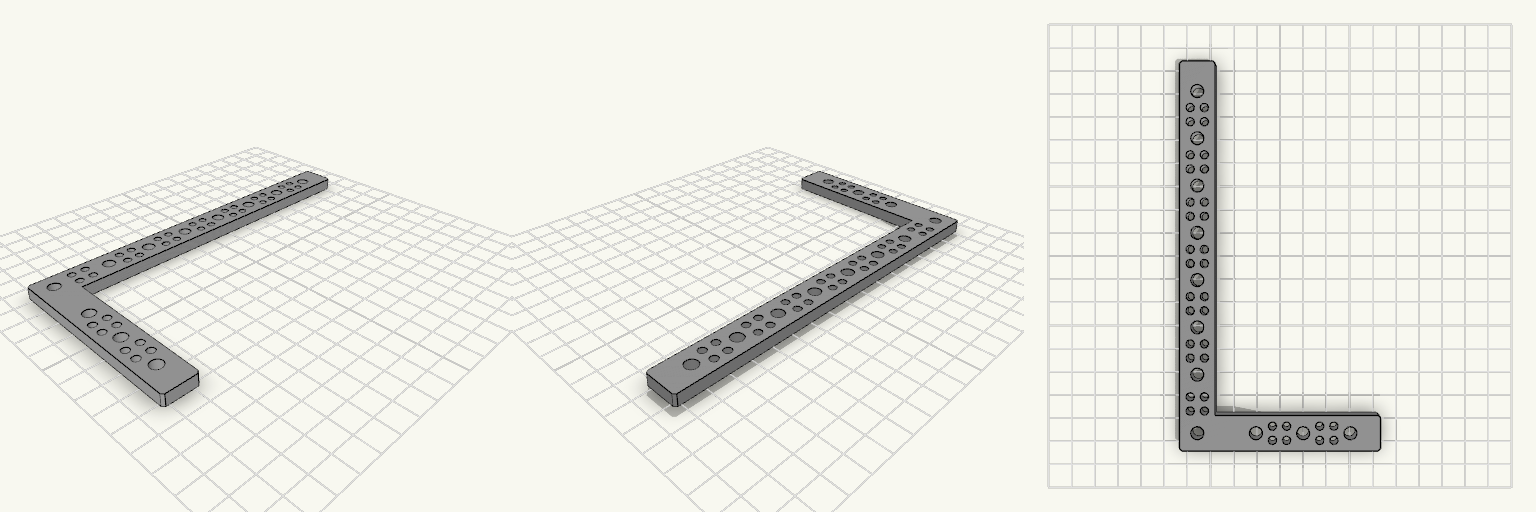
A flat L-shaped strap bracket with a 15 mm wide, 5 mm thick strap. Inside edges measure 70 mm along X and 65 mm along Y, giving an overall footprint of 85 × 80 mm. Five 5.5 mm holes suit M5 screws in 2020 extrusion slots. Remix hooks Arm lengths: the inside lengths (70 mm X, 65 mm Y) are the main parameters to change. Strap width: 15 mm now. Widening it allows holes offset from the centreline. Hole pitch: pairs are 20 mm apart, with the first hole 12.7 mm from the free end. Change the pitch for other slot spacings. Hole size: 5.5 mm clearance. Go up for counterbores or down for M4. Pairs with: 2020 extrusion, M5 T-nuts and button-head screws.