Flat Ground Plate 45x42x2 mm with Tabs
Created today
Description
Flat 45 × 42 × 2 mm ground plate with two side tabs on the front 45 mm edge and two small blocks on the back edge. Overall width across the tabs is 50.4 mm.
- Plate: 45 × 42 × 2 mm, sharp edges
- Side tabs: 1.4 mm thick, flush with the underside, 50.4 mm overall span
- Back blocks: 1.5 mm wide, 1 mm thick, 1.5 mm protrusion, 5 mm from each side edge
- Print flat, no supports needed
Images
More like this
Explore more in Workshop & Tools →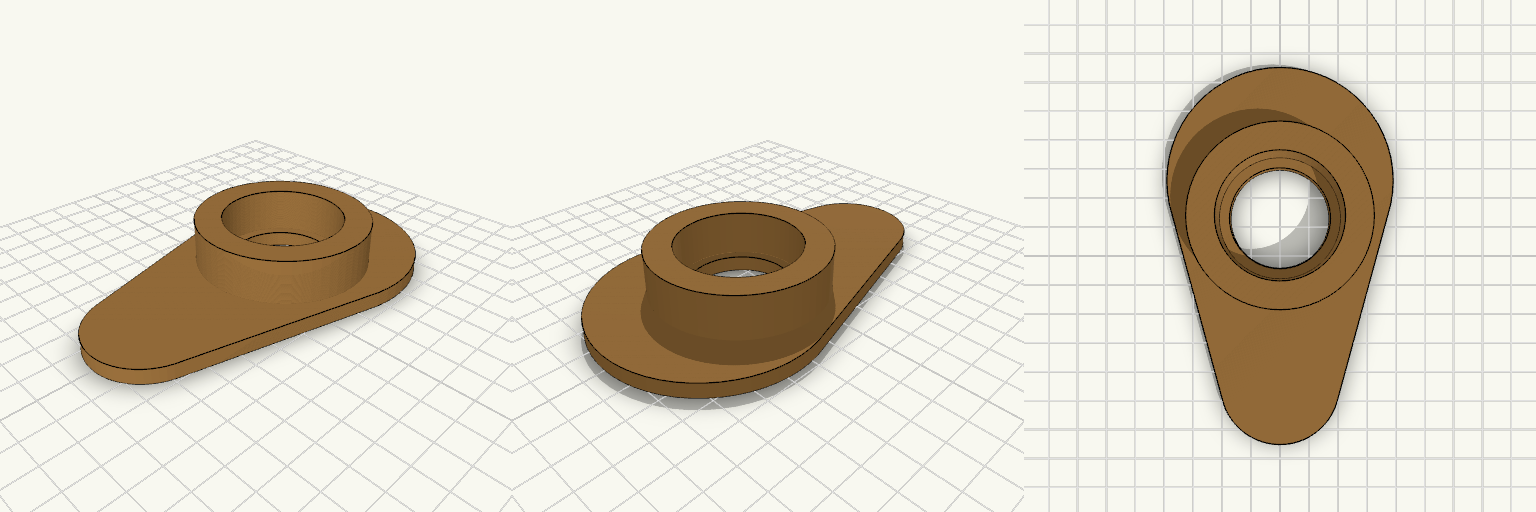
outside hat
A plain flat disc in the spirit of an oversized washer or a vinyl-record blank: 3 inches across, 1/8 inch thick, with a clean 1 cm hole through the centre. Prints flat with no supports. Diameter: 76.2 mm (3 in) Thickness: 3.175 mm (1/8 in) Centre hole: 10 mm Good for spacers, coasters, templates, or as a base for other builds
69 mm Round Spacer, 5 Holes
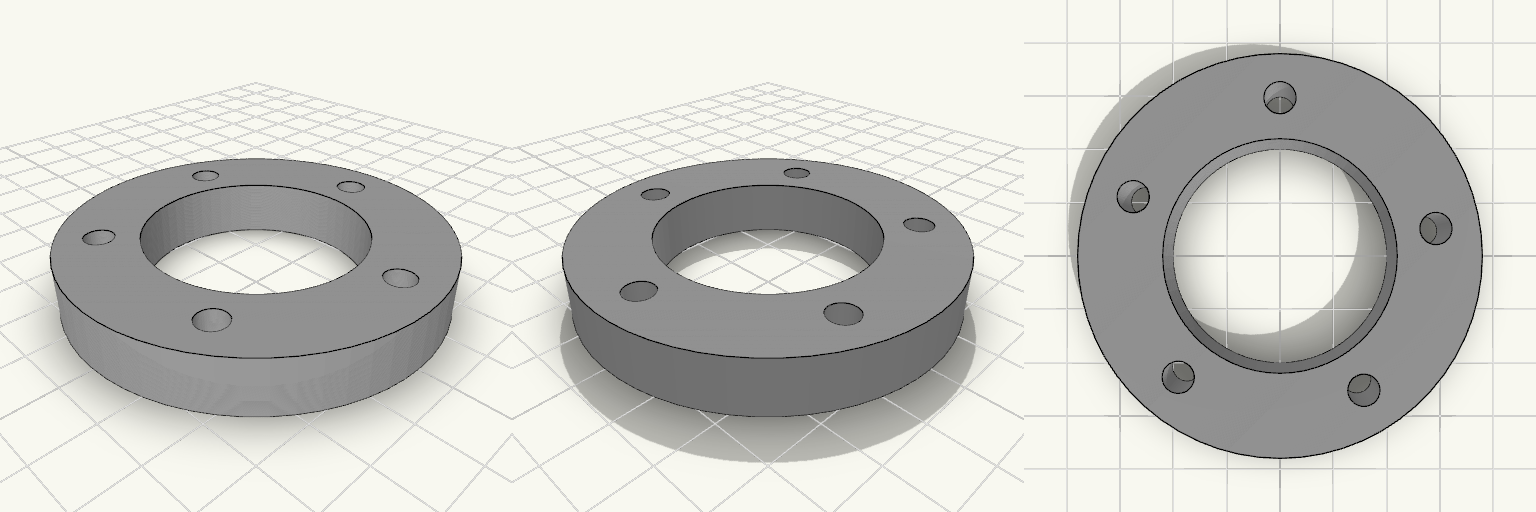
A round spacer 69 mm in diameter and 10 mm tall with a 40 mm center bore and five 5.5 mm through-holes on a 54 mm bolt circle. Outer diameter: 69 mm Height: 10 mm Center hole: 40 mm Bolt holes: 5 × 5.5 mm on a 54 mm circle Hole spacing: 68°, 72°, 72°, 68°, 80° (the 80° gap is between the last and first hole) Prints flat with no supports
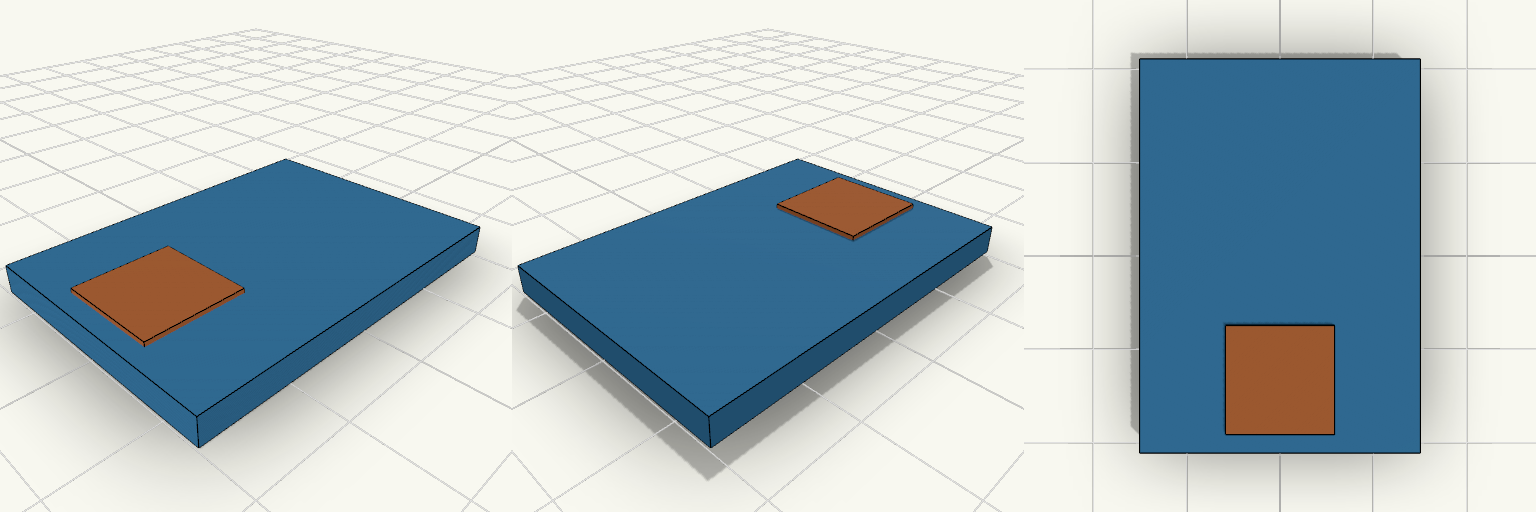
Plate With Offset Square Pad
A flat 28.5 × 40 × 3 mm plate with an 11 × 11 mm raised square pad, 0.5 mm thick, centered in X and set 2 mm from the Y- edge. Remix hooks Pad thickness (0.5 mm): a multiple of your layer height keeps the pad clean. 0.5 mm is about 2 or 3 layers. Pad offset (2 mm from the Y- edge): move it along Y to centre it or push it to the other edge. Plate length (40 mm): the pad is 11 mm, so any length above roughly 15 mm still holds it. Pairs with: a label, a sticker, or a second pad in a different colour for a multi-colour swap.
サーボソケット
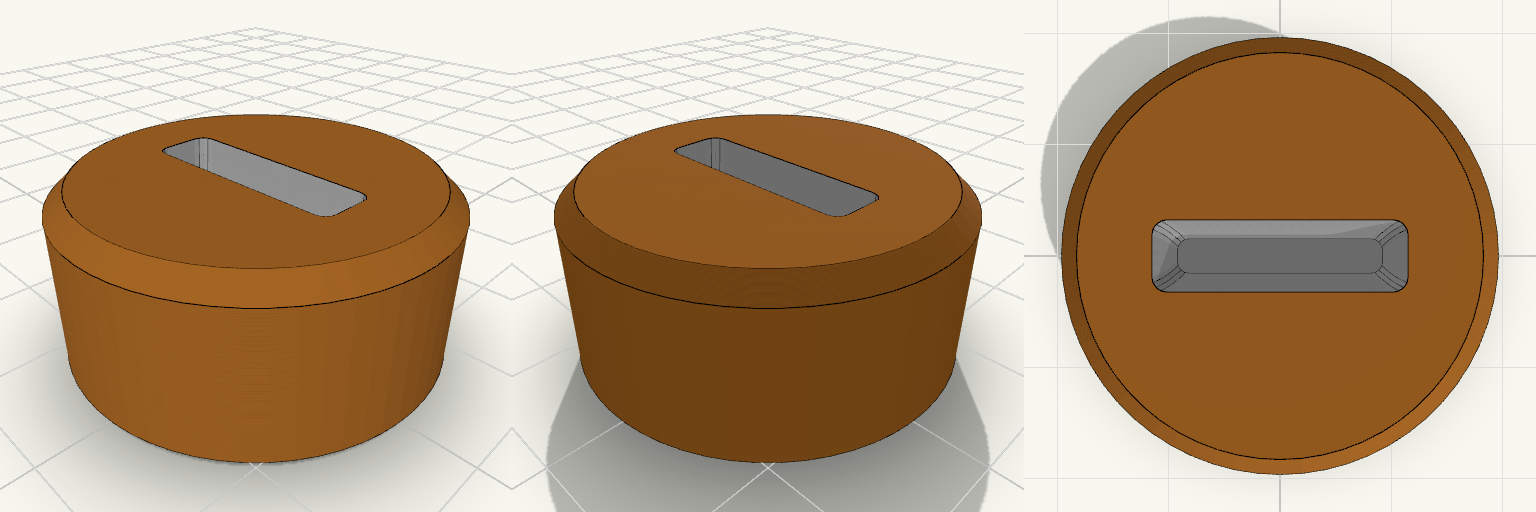
A servo can't turn a valve knob without a socket that grips it, and a loose fit slips under torque. This cylindrical socket slides onto the knob from the bottom and keeps the top face flat and closed for a future servo horn. Key numbers Body: 30 mm diameter, 14 mm tall, chamfered edges Cavity depth: 10 mm, opening only on the bottom face Opening at the bottom: 2.6 mm × 16.7 mm, widening to 4.5 mm × 16.7 mm at the inner end Clearance: 0.15 mm per side, with rounded corners and slightly bowed long walls Top wall: 4 mm solid, with no screw or mounting holes Printing: open face down on the bed, no supports needed; the wall slope is about 5° from vertical Cavity size, taper, corner radius and clearance are all adjustable parameters
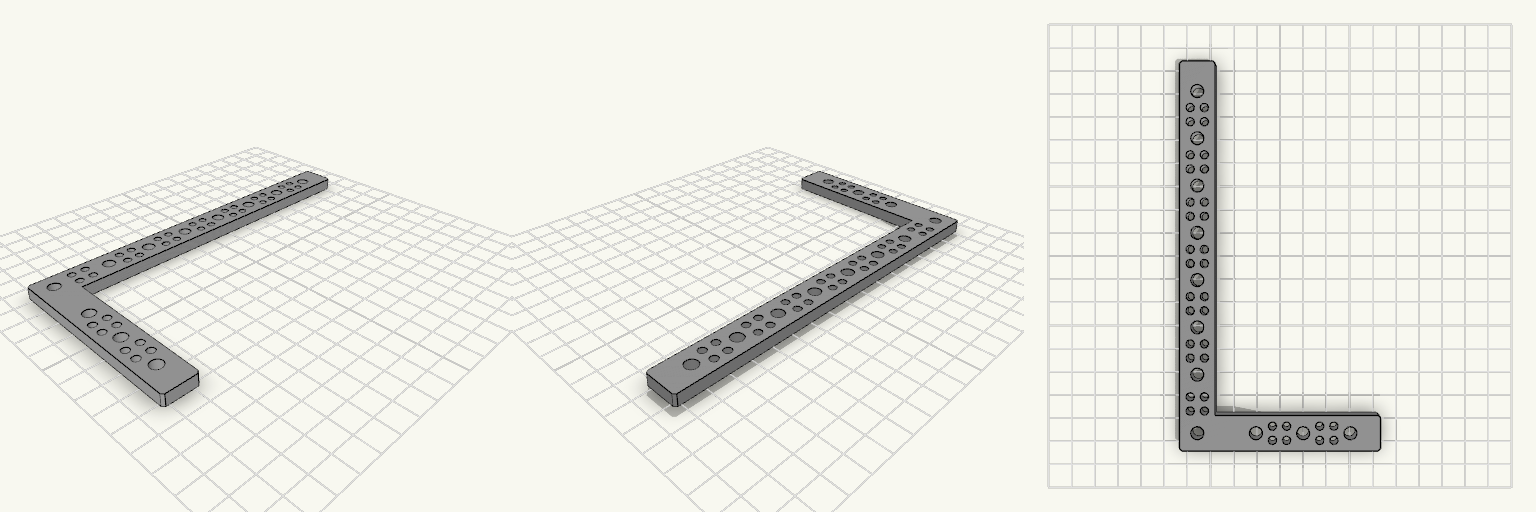
Flat L Bracket 15mm Strap
A flat L-shaped strap bracket with a 15 mm wide, 5 mm thick strap. Inside edges measure 70 mm along X and 65 mm along Y, giving an overall footprint of 85 × 80 mm. Five 5.5 mm holes suit M5 screws in 2020 extrusion slots. Remix hooks Arm lengths: the inside lengths (70 mm X, 65 mm Y) are the main parameters to change. Strap width: 15 mm now. Widening it allows holes offset from the centreline. Hole pitch: pairs are 20 mm apart, with the first hole 12.7 mm from the free end. Change the pitch for other slot spacings. Hole size: 5.5 mm clearance. Go up for counterbores or down for M4. Pairs with: 2020 extrusion, M5 T-nuts and button-head screws.
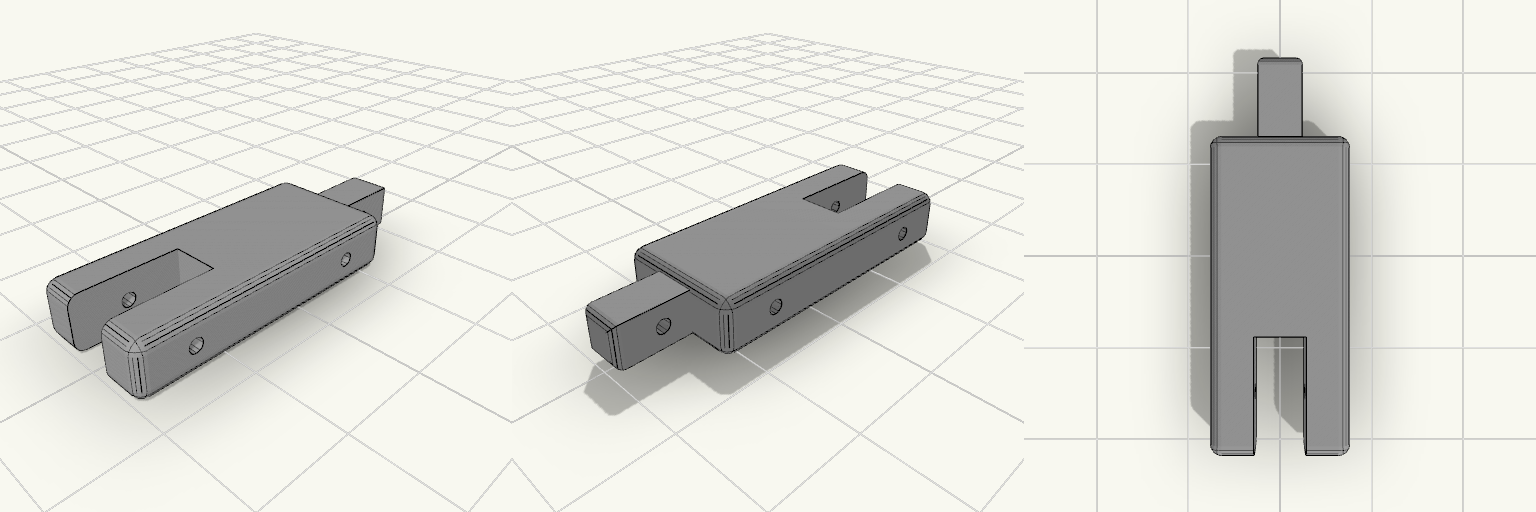
Bracelet Link Fit Gauge Block
A bracelet repair print that turns out too tight or too loose wastes hours. This fit gauge block is a 15-minute test piece that checks the fork slot and pin bores before the real part gets printed. Key numbers Block: 14 x 32 x 6 mm, origin at center, 1.2 mm edge fillets Fork slot: 5.2 mm wide, 12 mm deep, open at the -Y end, flat end wall at Y = -4 Prongs: 4.4 mm wide each Bores: Ø1.6 along X at Y = -10 (through both prongs) and Y = +10 (solid section) Tongue sample: 4.4 x 4.6 mm, 8 mm long on the +Y end, 0.9 mm end fillets, Ø1.6 bore at Y = +19 (40 mm overall) Printing Flat on the bed, PLA or PETG, 0.4 mm nozzle, 0.2 mm layers 4+ walls, 100% infill, 3 mm brim, no supports, 40 mm/s or slower Ream both bores once by hand with a 1.5 mm drill bit Checks A bracelet tongue link should enter the slot with slight friction. An original pin should slide through the -Y bore.