BindHold — VP Notebook Clip
Made by VernierBobcat
Created 3 months ago
Description
A purpose-built side-mounted clip that marries a Pilot Vanishing Point fountain pen to the hard cover of a Leuchtturm1917 notebook.
The Pilot VP is significantly thicker and heavier than standard pens, so universal clips often fail to hold it securely. This design uses a thick-walled C-clamp styled barrel holder sized explicitly for the VP's diameter, allowing the pen to snap in firmly without scratching the finish. The notebook side slides over the rigid back cover with a flared entry throat to prevent tearing the endpaper.
Features
- Tailored Fit: The 13.8mm inner diameter is specifically calibrated to grip the thick barrel of the Vanishing Point securely.
- Low Profile: The inner wall sits flush at 1.6mm thick, preventing an awkward bump under the pages when writing on the left side of the notebook.
- Snap Access: The C-ring opening is calibrated to flex just enough to admit the pen from the side, while wrapping far enough around to prevent accidental drops.
- Flared Entry: The notebook slot tapers open at the insertion point, guiding the hard cover in smoothly.
Photos
Technical views
More like this
Explore more in Desk & Tech →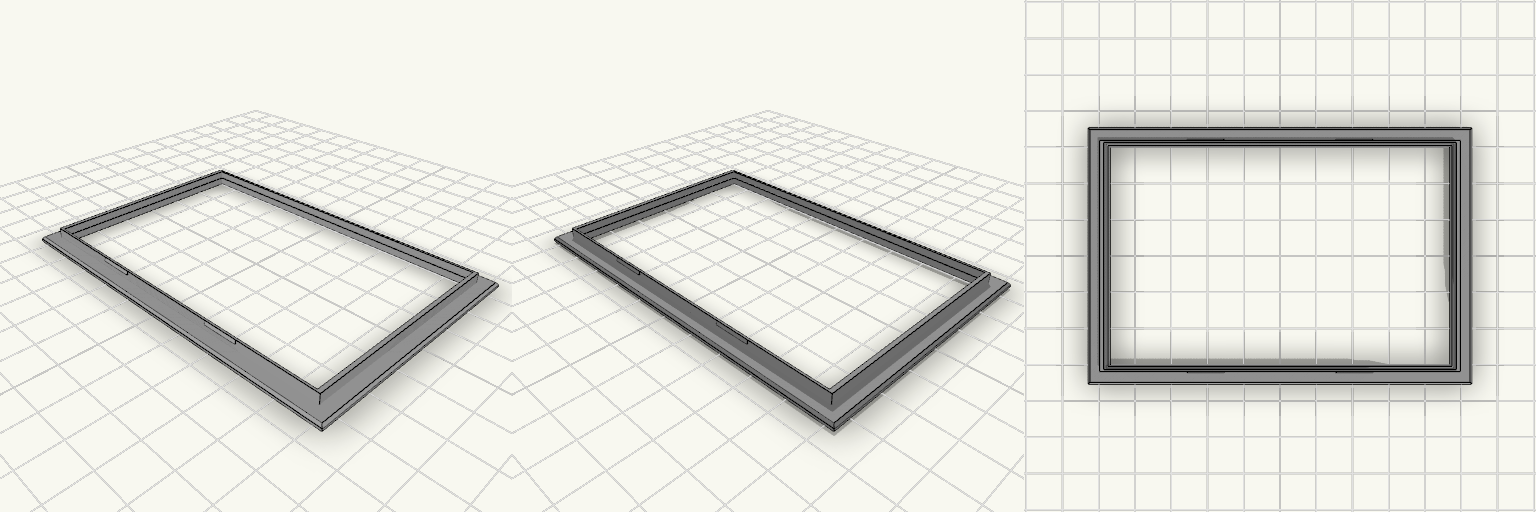
4" LCD Click-In Bezel, 4 mm Tall
A click-in bezel for a 4" LCD touch display mounted in a 97 x 62.2 mm panel window. The 4 mm overall height keeps it low, and a front flange hides the window edge while the screen sits in a pocket behind it. Remix hooks Screen overlap: the visible opening is 93.5 x 60 mm, so it covers 0.5 mm of the 94.5 x 61 mm screen per side. Change the overlap value to show more or less of the screen. Flange: 1.2 mm thick, 105 x 70.2 mm, with a 0.6 mm top chamfer. Widen it to hide a sloppier window cut. Body and clearance: 96.7 x 61.9 mm, 0.15 mm clearance per side. Raise to 0.2 to 0.3 mm for looser printers. Snap barbs: four, 10 mm wide and 0.4 mm proud, tuned for a 2 mm panel. Move them or change their height for other panel thicknesses. Pocket depth: about 2 mm. Deeper pockets need more overall height. Pairs well with a printed rear cover or a spacer plate if the panel is thicker.
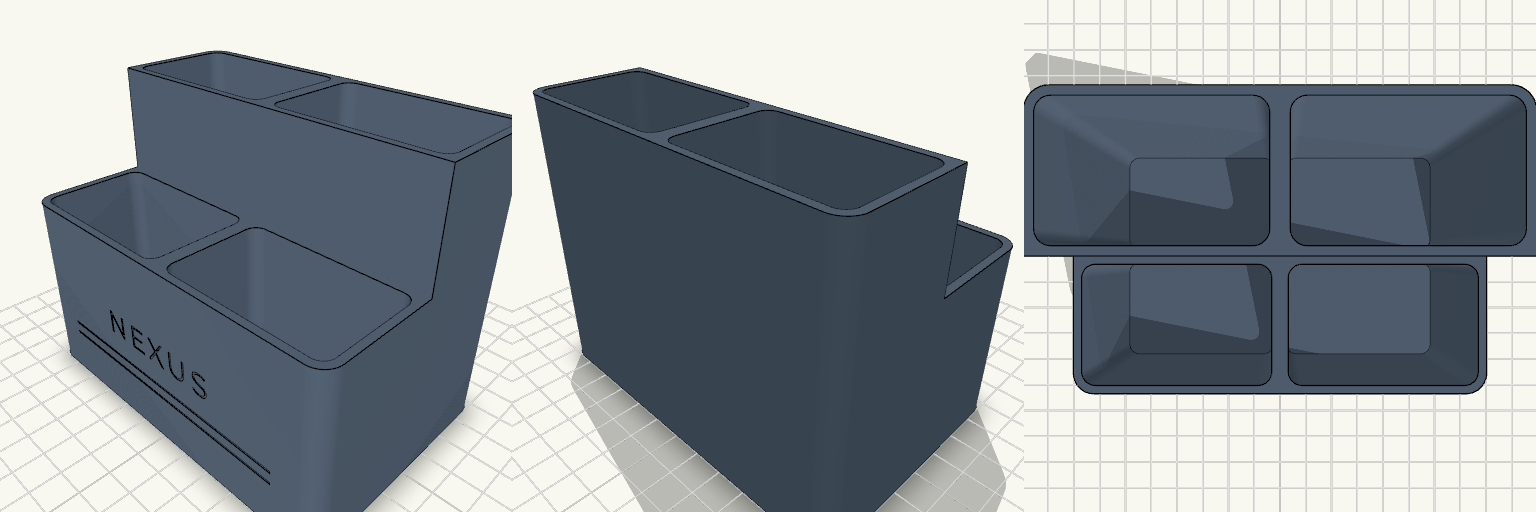
NEXUS Desk Pen Holder
What it's for A minimalist desk organizer with four open-top compartments for pens, pencils, markers and small stationery. A stepped front lowers the front pair for easy reach to small items, and a small NEXUS logo is engraved on the front face. Dimensions Footprint: 120 × 80 mm Height: 95 mm rear, 60 mm front Wall thickness: about 2.4 mm Flat base, rounded vertical corners, chamfered base edge Remix ideas Change the logo text to a name or initials. Make the front compartments deeper for scissors or rulers. Add a non-slip pad under the base.
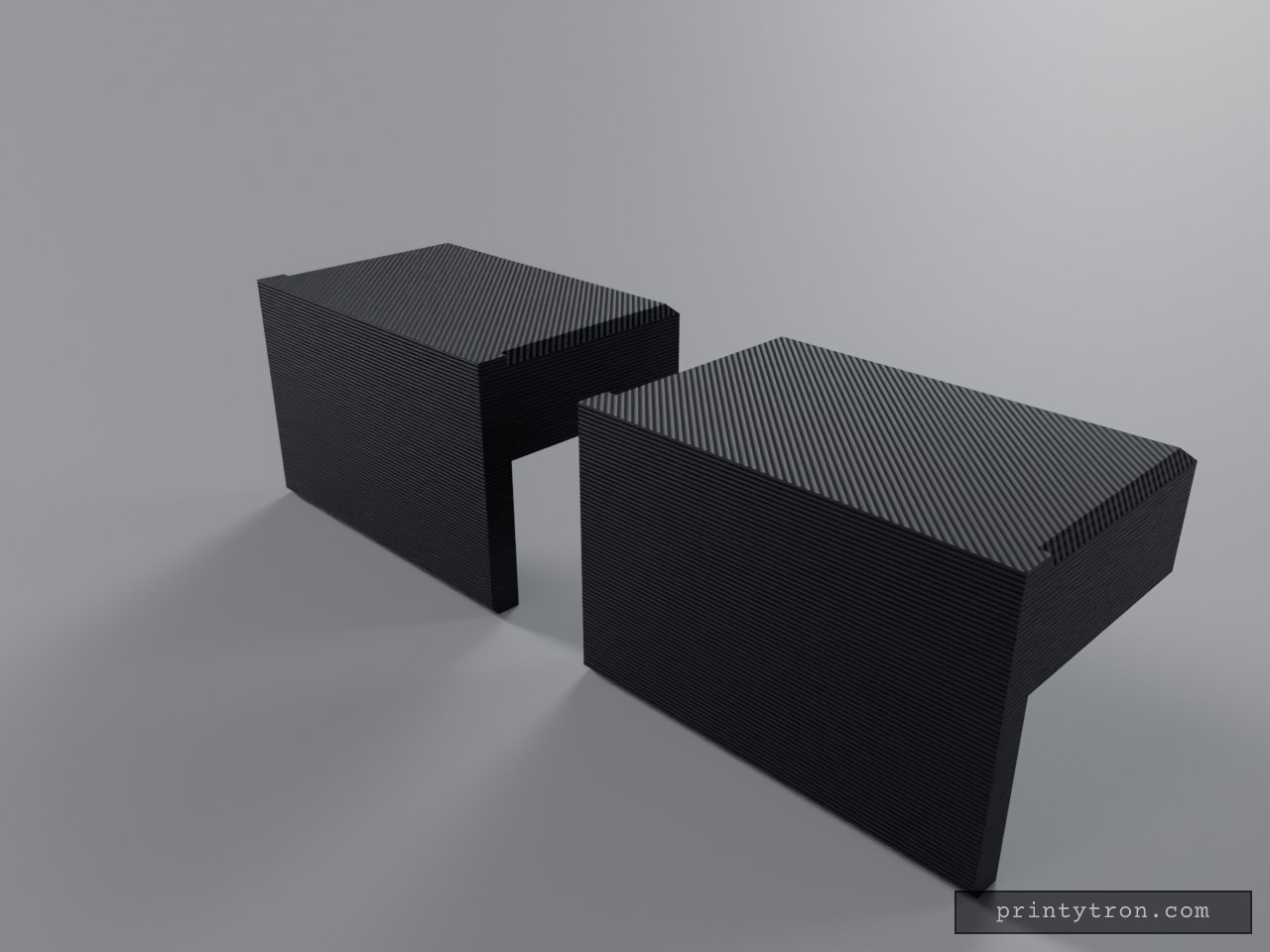
Liftoff — Light Bar Clip Risers
Liftoff is a pair of riser feet that shim the rear clip of a monitor light bar upward, so a bar that tilts down toward the user can sit level and aim at the desk instead of the eyes. Each foot is a flat 30 × 20 mm platform that lifts the clip 8 mm, with a short lip on the front edge that hooks over the top of a thick-bezel monitor and keeps the foot from sliding around. A flat top was chosen over a sloped wedge: it raises the whole clip evenly, and the lip handles the positioning. Dimensions Platform: 30 × 20 mm, 8 mm thick (clip lift) Hook lip: 2.5 mm thick, 12 mm drop below the platform Overall height per foot: 20 mm Quantity: 2 identical feet, spaced 10 mm apart in the layout Features Front lip locates the foot on the monitor's top edge Chamfered top edges on the sides and back for a cleaner clip seat Chamfered lower lip edge for easier hooking Print notes Print with the platform's flat back or side on the bed, or upright with the lip facing down, depending on the preferred strength direction The 12 mm lip drop is a starting value; adjust it to match the actual bezel thickness PETG or ABS is a good choice if the monitor top gets warm
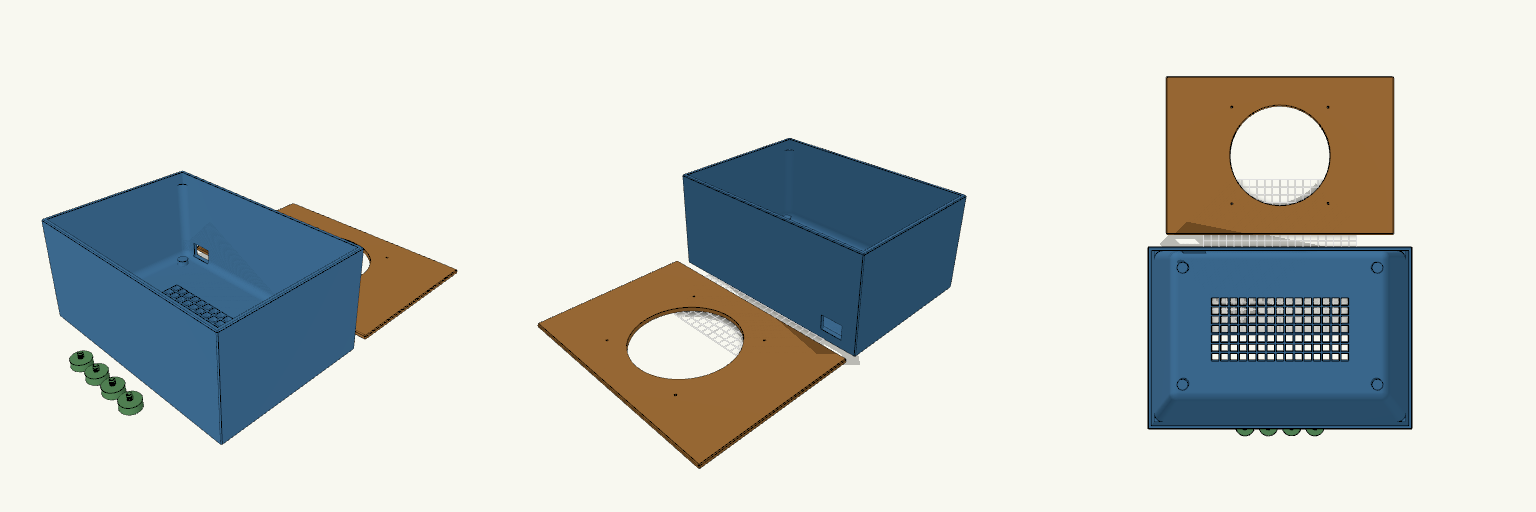
Mini-Server-Box with Feet, Lid and Fan
What it's for A solid-walled enclosure for hiding and cooling equipment. Every side wall is closed, and the only airflow path is a sturdy grid cut into the floor, so the box stays dark and quiet from the sides. A 30 × 20 mm cable hole in the lower rear corner lets wiring in and out, and the flat lid lifts off for access. The model prints as separate pieces: the box, the lid and four feet. The lid is a flat plate with a locating lip underneath, slightly larger than the box on every side so it overhangs and can never drop inside. Each foot carries its own coarse threaded stud, so the feet screw directly into matching threaded holes in the floor bosses with no separate fasteners. Dimensions Box: 290 × 200 × 130 mm, with 4 mm walls, solid on all four sides, an 8 mm floor, and a 50 mm solid border around the floor grid. The floor grid is centred on the narrower floor. The thicker floor makes the mesh bars deeper, so airflow per opening drops slightly. Inside fillets: 10 mm radius on the vertical corners and the floor-to-wall edges, stopping 15 mm below the rim. The top 15 mm stays square so the lid and its lip fit without changes. Lid: 294 × 204 mm, 9 mm overall with a 5 mm plate and underside lip; overhangs the box by 2 mm on all sides; 140 mm fan opening and four 3 mm fan screw holes at 124.5 mm center-to-center. Cable hole: 30 × 20 mm in the rear wall, set 20 mm from the left edge and 12 mm above the bottom, inside the solid section so it doesn't weaken the corners. Feet: four solid 24 mm discs, 10 mm tall, each with a 6 mm thick, 8 mm long threaded stud on top; 18 mm overall. The studs use a 1.5 mm pitch. Foot sockets: four corner bosses widened to 14 mm, with threaded holes 6.6 mm across and 11 mm deep at the same 1.5 mm pitch, giving about 0.6 mm clearance on diameter. Print notes Print the box, lid and feet separately. Print the lid lip-side up so its flat face sits on the bed and the lip rises clear of the plate. The floor grid benefits from enough perimeters to keep the bars sturdy. The threads have not been test-fitted; if the feet bind, raise the socket diameter slightly, and if they wobble, lower it. Test-fit the fan and check its screw-hole spacing before committing to a full print. Remix ideas Add a removable filter frame behind the fan opening. Add internal standoffs or a shallow tray for mounting equipment inside. Resize or duplicate the rear cable port for thicker cable bundles. Swap the floor grid for a denser or more open pattern to change the airflow.
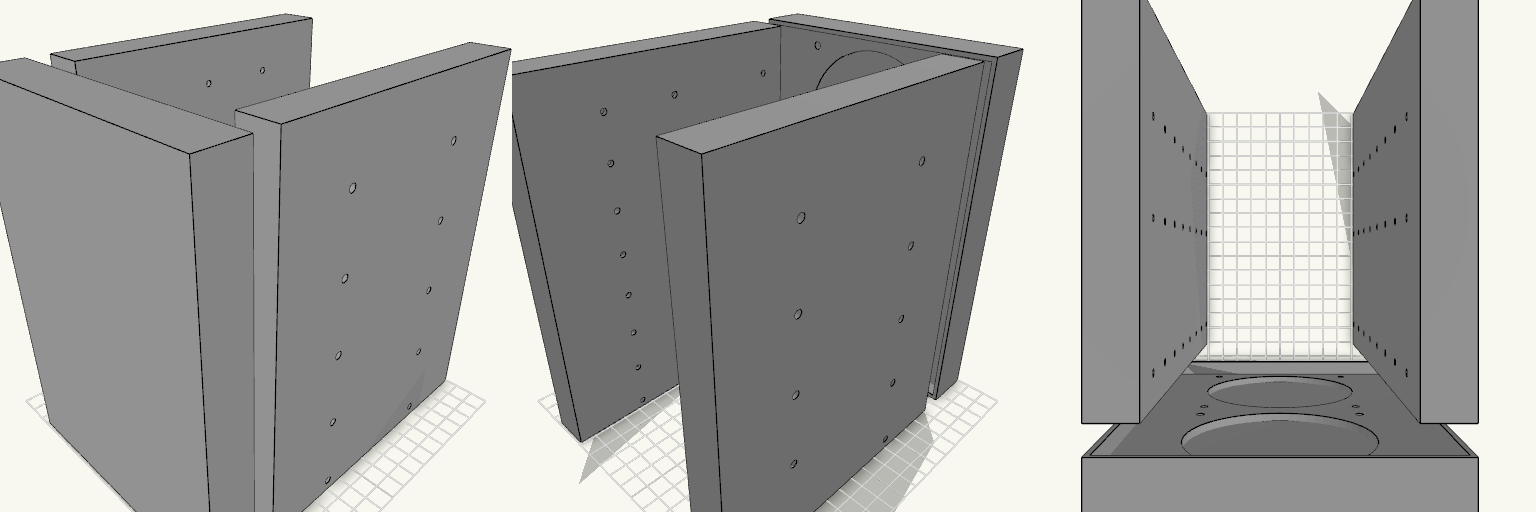
Octobay — 5.25" to 3.5" Drive Cage
Octobay turns a five-bay stack of half-height 5.25" slots into room for eight 3.5" drives, and adds a 25 mm front cage that carries two 92 mm fans. The outer side faces take M3 heat-set inserts, so the whole cage screws into the case's 5.25" rails instead of resting on them. Everything is one printed part: the drive stack, the side mounting blocks and the fan cage print as a single body. Because the fans close off the front, drives now load from the back. The fan cavity behind the grille is hollow, so air still passes through to the drive stack. Dimensions Overall: 145 mm wide × 197.5 mm deep × 205.5 mm tall Fits: five half-height 5.25" bays Holds: eight 3.5" drives, stacked vertically Drive channel: 102.6 mm wide — 1 mm of play around a 101.6 mm drive Mounting 20 insert holes, 10 per side, for M3 heat-set inserts — 4.2 mm across and 6 mm deep Two insert holes per bay, at 41.3 and 117.5 mm from the front, 6.35 mm above each bay floor Solid blocks sit behind each hole to give the inserts something to bite into Three M3 screw holes per side per drive, at 14, 76.6 and 117.6 mm from the front Cross ribs sit clear of the screw holes so a screwdriver can reach every fastener Fan cage Two 92 mm fans, stacked vertically on the 25 mm front section 88 mm fan openings with 4.4 mm screw holes on the standard 82.5 mm square pattern Hollow cavity behind the fans feeds air to the drive channels Print notes Drive channels are open at the back, top and bottom, and the gaps between the inner and outer side walls are open for cable routing. Screw and insert positions and the 205.5 mm height follow common 5.25" bay standards; they have not been checked against a specific case, so measure your bay rails and drives before printing.
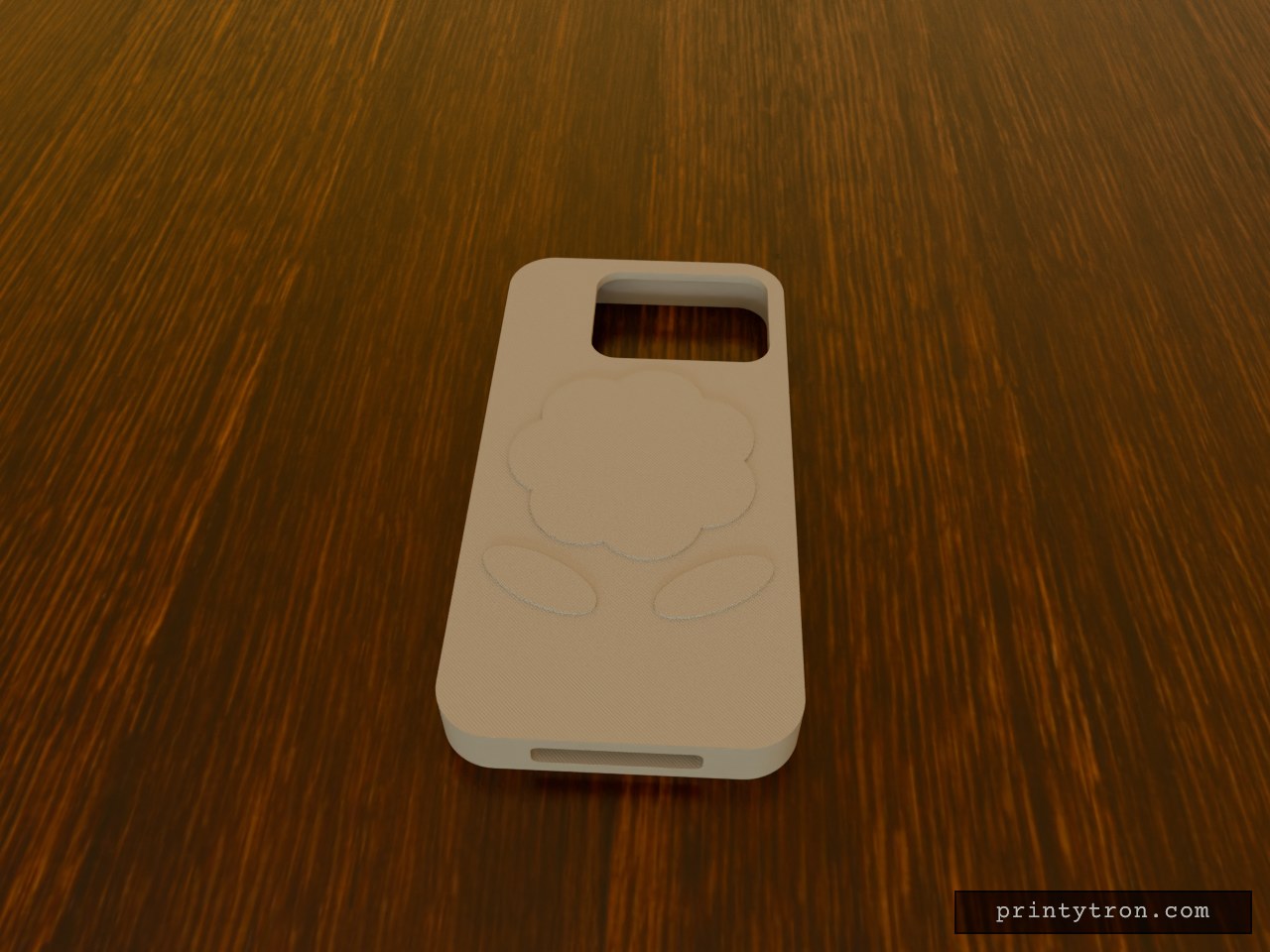
iPhone 17 Pro Max Case, Blue with Rose
What it's for A protective case for the iPhone 17 Pro Max in light blue, with a raised rose on the back below the camera cutout. Dimensions Phone body: 163.4 × 78 × 8.75 mm, with 0.3 mm of play per side Walls 4 mm, back 3 mm Rose relief: 1 mm, flat-topped layers Remix ideas Recolour the rose in blue tones to blend with the case Make the rose taller or soften its edges Swap the rose for another motif