Bowens S Male Bayonet Adapter
Made by CogInkwell
Created today
Description
Lumenlock ist ein männlicher Bowens-S-Bajonettadapter, mit dem sich Lichtformer und Zubehör mit Bowens-S-Aufnahme an einem passenden Licht montieren lassen. Drei gleichmäßig verteilte Bajonettlaschen greifen in die Gegenaufnahme und verriegeln beim Drehen; der offene Kern hält den Lichtweg frei. Auf der Flanschseite sitzt ein zylindrisches Rundprofil, das den Adapter zu einem röhrenförmigen Zwischenstück macht – der Adapter steht kopfüber, das Rundprofil wächst über den Flansch hinaus, ohne den freien Innendurchmesser zu verengen. Gedruckt wird das Teil einteilig und ohne Montage.
Maße
- Gesamtgröße auf dem Druckbett: 116 × 116 × 60,5 mm
- Rundprofil: 33 mm hoch ab Flansch, 75 mm Außendurchmesser, 5 mm Wandstärke
- Höhe ab Flanschoberkante inklusive Laschen: 23,5 mm (Gesamthöhe mit Flansch 27,5 mm)
- Flansch: 116 mm Durchmesser, 4 mm hoch
- Spigot: 90 mm Durchmesser
- Zentrale Öffnung: 74 mm Innendurchmesser, durchgehend durch Flansch, Spigot und Rundprofil
- Laschen: drei, je 11,9 mm breit und 14 mm tief, 120° versetzt, oben bündig mit der Oberkante des Rings
- Radialer Überstand der Laschen über den Spigot: 7,5 mm, Außenradius 52,5 mm und damit innerhalb des Flanschradius von 58 mm
Merkmale
- Männliches Bowens-S-Bajonett für Lichtformer und Leuchten
- Zylindrisches Rundprofil auf dem Flansch als röhrenförmige Verlängerung
- Rundprofil verändert den Innendurchmesser des Bajonetts nicht – 74 mm bleiben durchgehend frei
- Bündig abschließende Laschen für sauberes Einführen und Verdrehen
- Laschen bleiben trotz Überstand innerhalb des Flanschradius, sodass der Adapter flach aufliegt
- Einteilig und ohne Stützen druckbar
Druckhinweise
Die Bajonettabmessungen orientieren sich an gängigen Bowens-Werten und sind nicht an einem realen Bajonett geprüft. Teste Laschen und Spigot vor dem finalen Druck an deinem eigenen Licht oder Lichtformer. Das aufgesetzte Rundprofil steht weit über den Flansch hinaus – prüfe vor dem Druck, ob die Höhe zum gewünschten Aufbau passt.
Photos
Technical views
More like this
Explore more in Desk & Tech →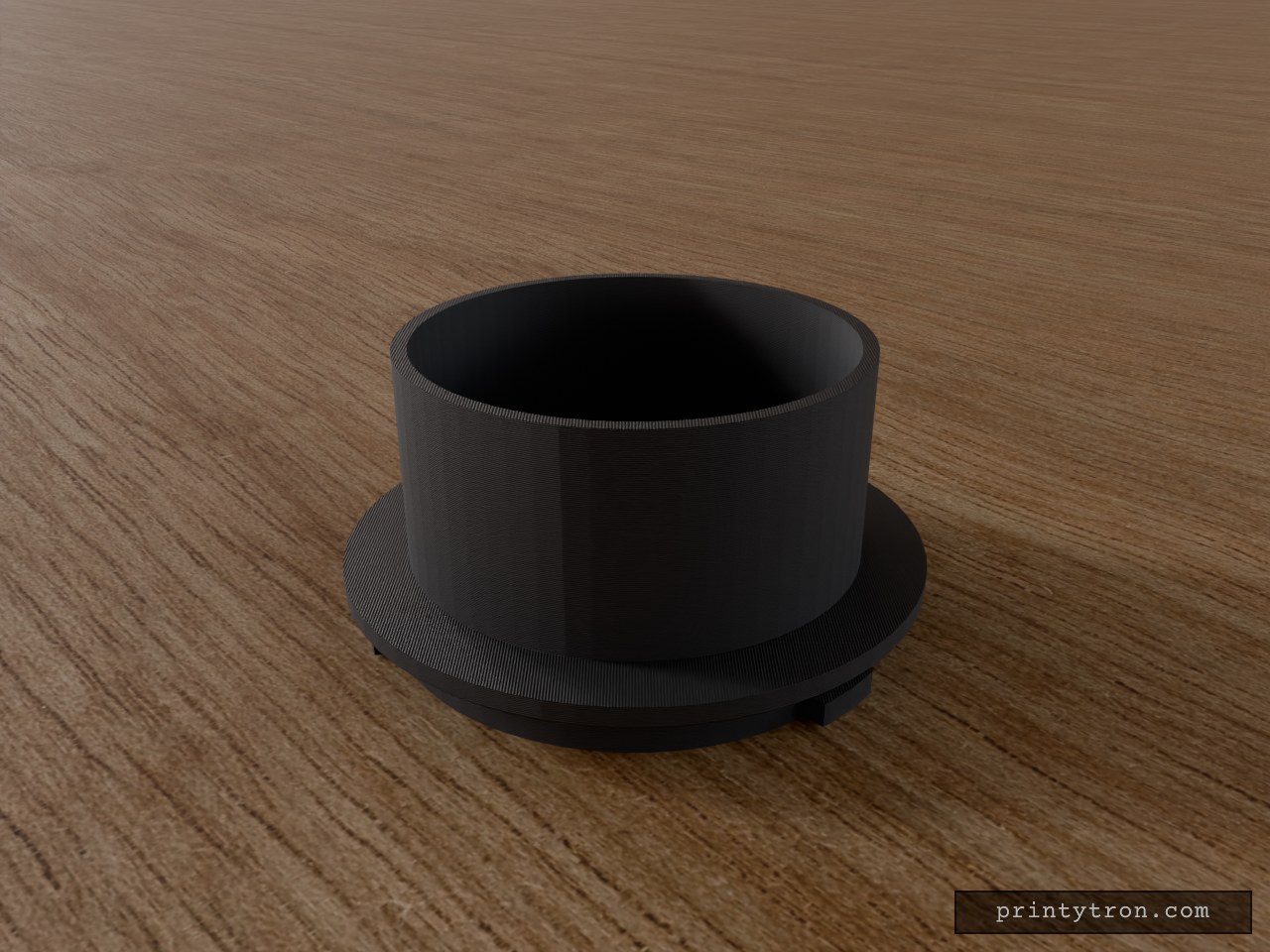
Bowens-Male-Mount mit 82-mm-Hals und drei Bajonettlaschen
Der Bowens-Male-Mount ist ein Bajonettanschluss für Studio-Blitzgeräte und Lichtformer mit Bowens-Aufnahme, ergänzt um ein aufgesetztes Rohr. Der Flansch liegt oben, der Hals mit den drei Bajonettlaschen zeigt nach unten. Auf dem Flansch sitzt ein Rohr mit 75 mm Außendurchmesser und 35 mm Höhe, dessen Innendurchmesser von 70 mm zur Mittelöffnung des Mounts passt. Das Modell wird als ein Teil gedruckt. Maße Grundfläche auf der Druckplatte: 96 × 96 mm, Gesamthöhe 48 mm Flansch: Ø 96 mm, 4 mm dick, oben liegend Hals: Ø 82 mm, 9 mm hoch, nach unten zeigend Bajonettlaschen: 3 Stück, 11,9 mm breit, 4 mm dick, im 120°-Abstand auf Ø 90 mm Mittelöffnung: Ø 70 mm Rohr: Ø 75 mm außen, 35 mm hoch, Wandstärke 2,5 mm, Innendurchmesser 70 mm Hinweise zur Passung Der Hals misst 82 mm im Durchmesser; ein Einsteckbereich mit 84 mm ist nicht umgesetzt. Die Laschen ragen über den Hals hinaus auf Ø 90 mm. Die Höhe des Halses von 9 mm ergibt die Einstecktiefe des Bajonetts. Der Flansch ist ohne Schraubenlöcher ausgeführt. Das Rohr sitzt auf dem Flansch auf; die durchgehende 70-mm-Bohrung verbindet Mount und Rohr.
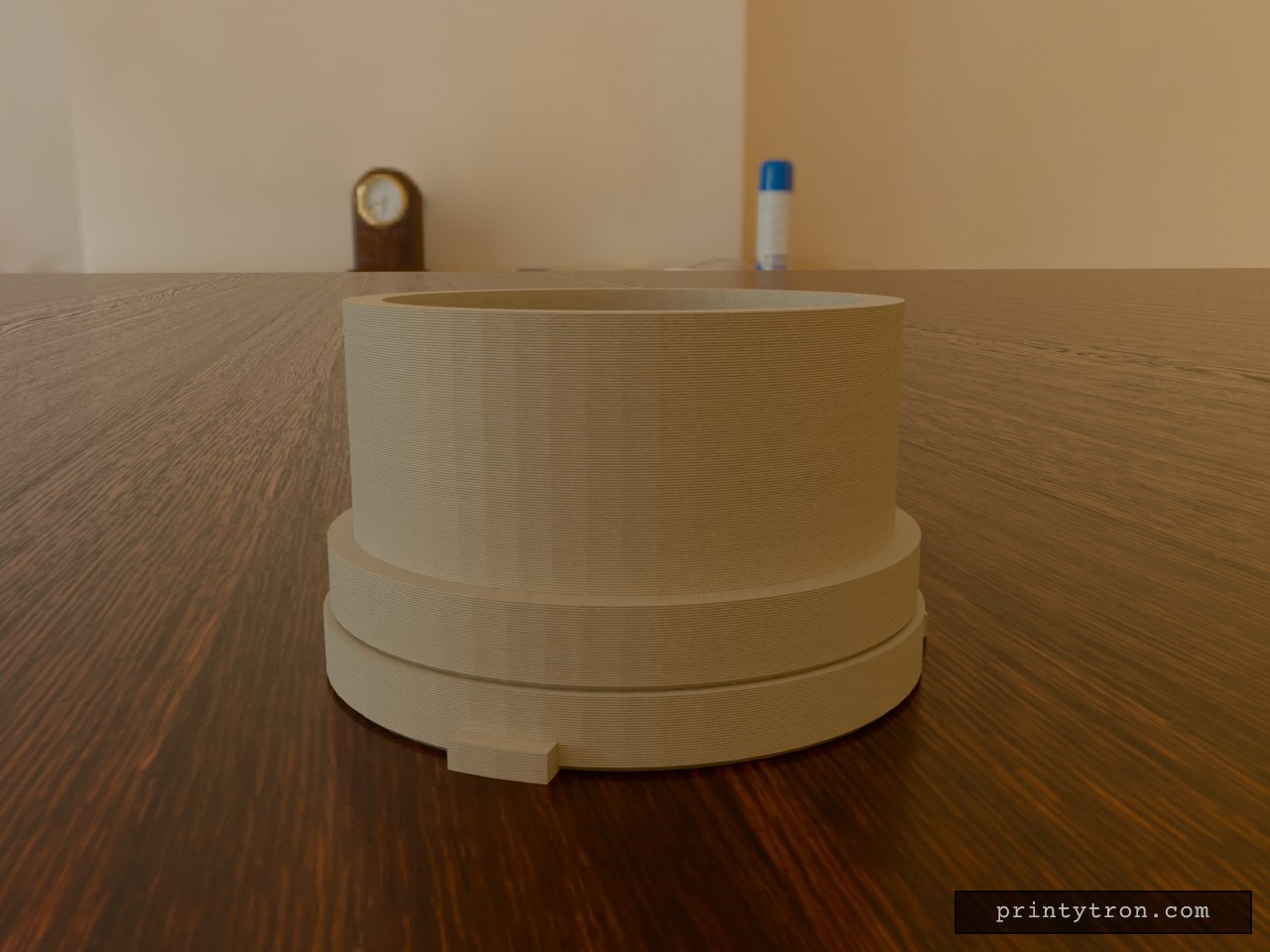
Bowens-Bajonettring als männlicher Anschluss
Wofür Dieser Bajonettring bildet die männliche Seite eines Bowens-Anschlusses: ein Grundkörper mit drei um 120° versetzten Laschen, über die sich ein Lichtformer oder Adapter aufsetzen und verriegeln lässt. In der 75-mm-Bohrung des Rings sitzt ein senkrechtes Rundprofil mit 75 mm Außendurchmesser und 5 mm Wandstärke. Es beginnt auf der Oberkante des Rings, ist 35 mm hoch und lässt innen eine 65-mm-Öffnung frei. So entsteht eine Aufnahme mit durchgehender Rohröffnung für einen Blitzkopf oder ein Übergangsteil. Maße Grundkörper: Ø 82 mm, 6 mm hoch Einsteckbereich: Ø 84 mm, 9 mm hoch Laschen: 3 Stück, 120° Abstand, je 11,9 mm breit, 3,5 mm dick, bis Ø 90 mm reichend Ringbohrung: Ø 75 mm; Wandstärke 3,5 mm am Grundkörper, 4,5 mm am Einsteckbereich Rundprofil: Ø 75 mm außen, 5 mm Wand, Ø 65 mm innen, 35 mm hoch Auflageflansch: Ø 82 mm, 4 mm hoch; das Rohr steht damit auf der Oberkante des Rings und endet bei 50 mm Gesamthöhe Ringhöhe: 15 mm; Grundfläche rund 84 × 84 mm Druckhinweise Der Ring steht mit seiner Grundfläche auf der Druckplatte; das Rundprofil wächst senkrecht daraus nach oben. Der Auflageflansch verbindet das Rohr flächig mit dem Ring und verschmilzt beim Druck mit ihm; das Modell wird einteilig gedruckt. Die Laschen sind mit 3,5 mm das dünnste Element; genug Wände und ein zäher Werkstoff halten sie unter Last formstabil. Die senkrechten Wände des Rundprofils brauchen keine Stützen; prüfe die frei auskragenden Laschen in deinem Slicer. Remix-Ideen Höhe des Rundprofils ändern, etwa für einen anderen Blitzkopf oder eine tiefere Rohrführung. Durchmesser oder Wandstärke des Rundprofils anpassen, solange es in die 75-mm-Ringbohrung passt. Laschen dicker ausführen für strafferen Sitz oder einen zweiten Satz Laschen für ein anderes Verriegelungsmaß. Mit einer Gegenplatte oder einem Gewindeaufsatz auf ein anderes System übergehen.
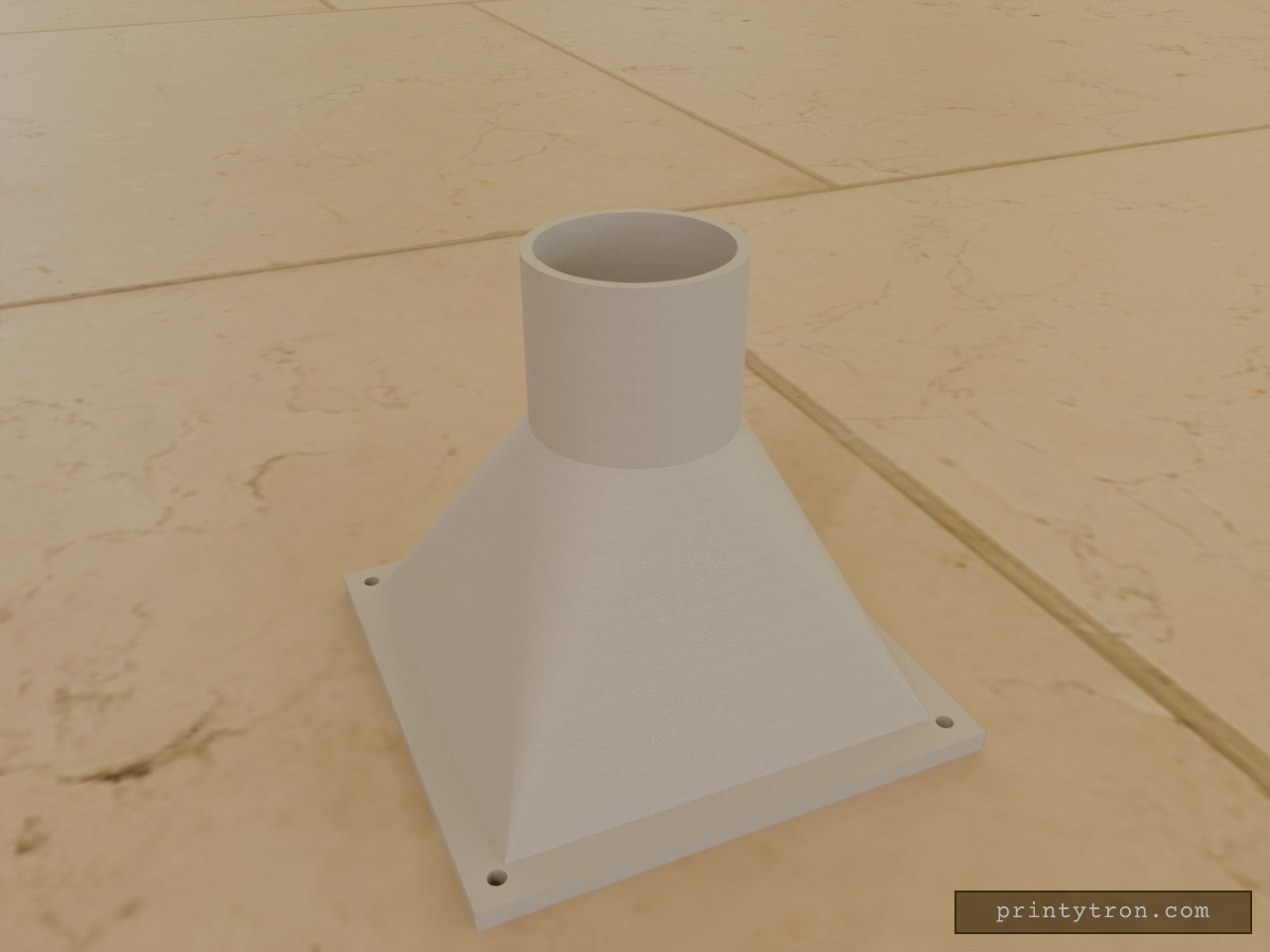
Square-to-Round Fan Duct With Spout
A fan-shroud adapter in the spirit of a classic blower nozzle: a flat square flange that funnels up into a round outlet, then runs straight like a spout. 92.5 mm square flange, 4 mm thick, with four M3 clearance holes on an 82.5 mm pitch (5 mm from each edge) 75 mm square inlet 50 mm square-to-round transition 30 mm straight round tube, 32 mm inner diameter, 36 mm outer 2 mm walls, no chamfers, prints flange-down in PLA without supports
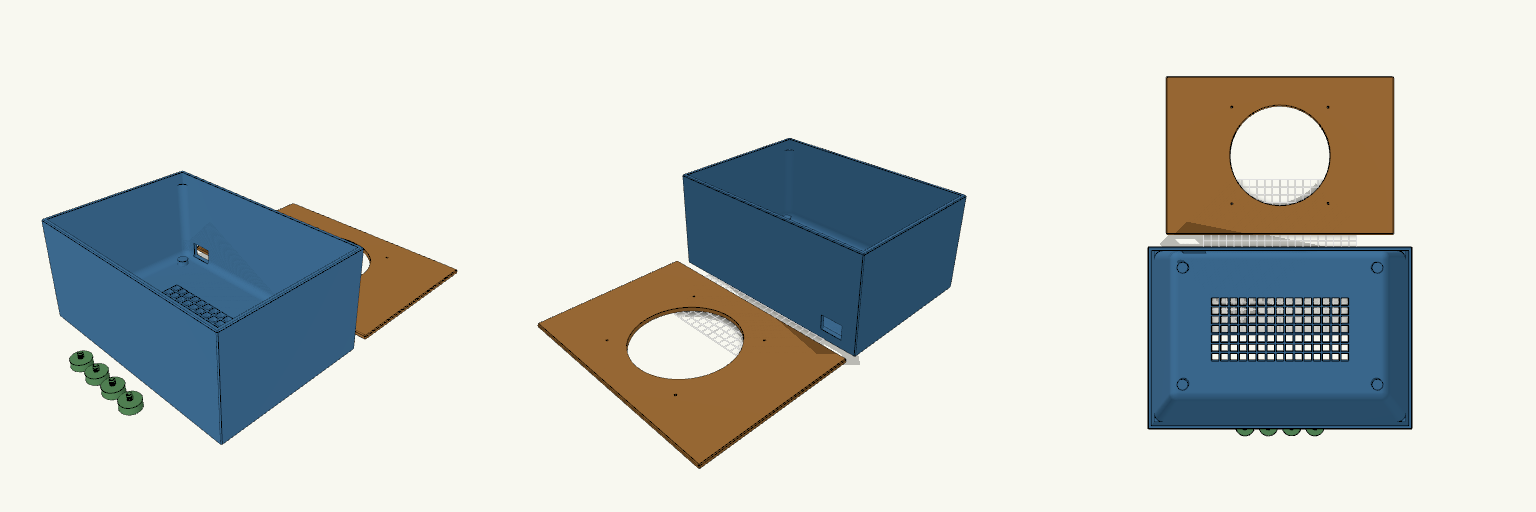
Mini-Server-Box with Feet, Lid and Fan
What it's for A solid-walled enclosure for hiding and cooling equipment. Every side wall is closed, and the only airflow path is a sturdy grid cut into the floor, so the box stays dark and quiet from the sides. A 30 × 20 mm cable hole in the lower rear corner lets wiring in and out, and the flat lid lifts off for access. The model prints as separate pieces: the box, the lid and four feet. The lid is a flat plate with a locating lip underneath, slightly larger than the box on every side so it overhangs and can never drop inside. Each foot carries its own coarse threaded stud, so the feet screw directly into matching threaded holes in the floor bosses with no separate fasteners. Dimensions Box: 290 × 200 × 130 mm, with 4 mm walls, solid on all four sides, an 8 mm floor, and a 50 mm solid border around the floor grid. The floor grid is centred on the narrower floor. The thicker floor makes the mesh bars deeper, so airflow per opening drops slightly. Inside fillets: 10 mm radius on the vertical corners and the floor-to-wall edges, stopping 15 mm below the rim. The top 15 mm stays square so the lid and its lip fit without changes. Lid: 294 × 204 mm, 9 mm overall with a 5 mm plate and underside lip; overhangs the box by 2 mm on all sides; 140 mm fan opening and four 3 mm fan screw holes at 124.5 mm center-to-center. Cable hole: 30 × 20 mm in the rear wall, set 20 mm from the left edge and 12 mm above the bottom, inside the solid section so it doesn't weaken the corners. Feet: four solid 24 mm discs, 10 mm tall, each with a 6 mm thick, 8 mm long threaded stud on top; 18 mm overall. The studs use a 1.5 mm pitch. Foot sockets: four corner bosses widened to 14 mm, with threaded holes 6.6 mm across and 11 mm deep at the same 1.5 mm pitch, giving about 0.6 mm clearance on diameter. Print notes Print the box, lid and feet separately. Print the lid lip-side up so its flat face sits on the bed and the lip rises clear of the plate. The floor grid benefits from enough perimeters to keep the bars sturdy. The threads have not been test-fitted; if the feet bind, raise the socket diameter slightly, and if they wobble, lower it. Test-fit the fan and check its screw-hole spacing before committing to a full print. Remix ideas Add a removable filter frame behind the fan opening. Add internal standoffs or a shallow tray for mounting equipment inside. Resize or duplicate the rear cable port for thicker cable bundles. Swap the floor grid for a denser or more open pattern to change the airflow.
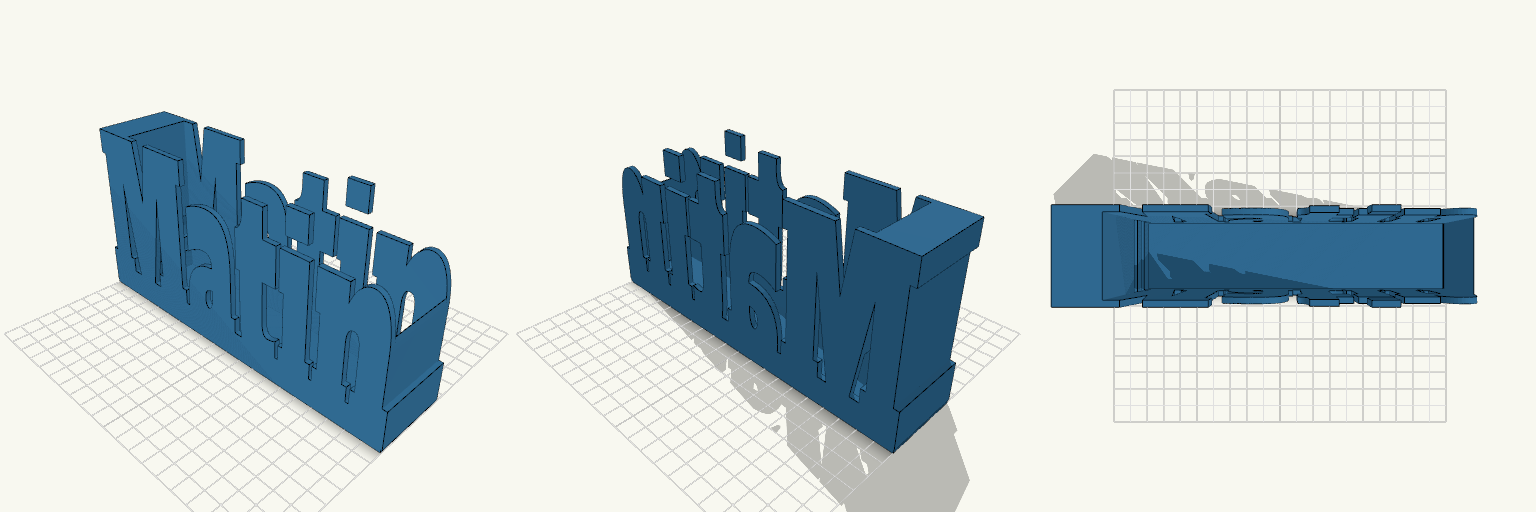
Portalápices Matin
What it's for Portalápices con el contorno de las letras "Matin" en Alfa Slab One, abierto por arriba y sin tapa. El lado izquierdo de la M queda macizo. Dimensions Alto: 100 mm Fondo: 45 mm Ancho: unos 200 mm Paredes de 3 mm y base de 4 mm Remix ideas Mover el límite del cierre de la M. Cambiar el nombre o la altura de las letras. Añadir una base antideslizante.
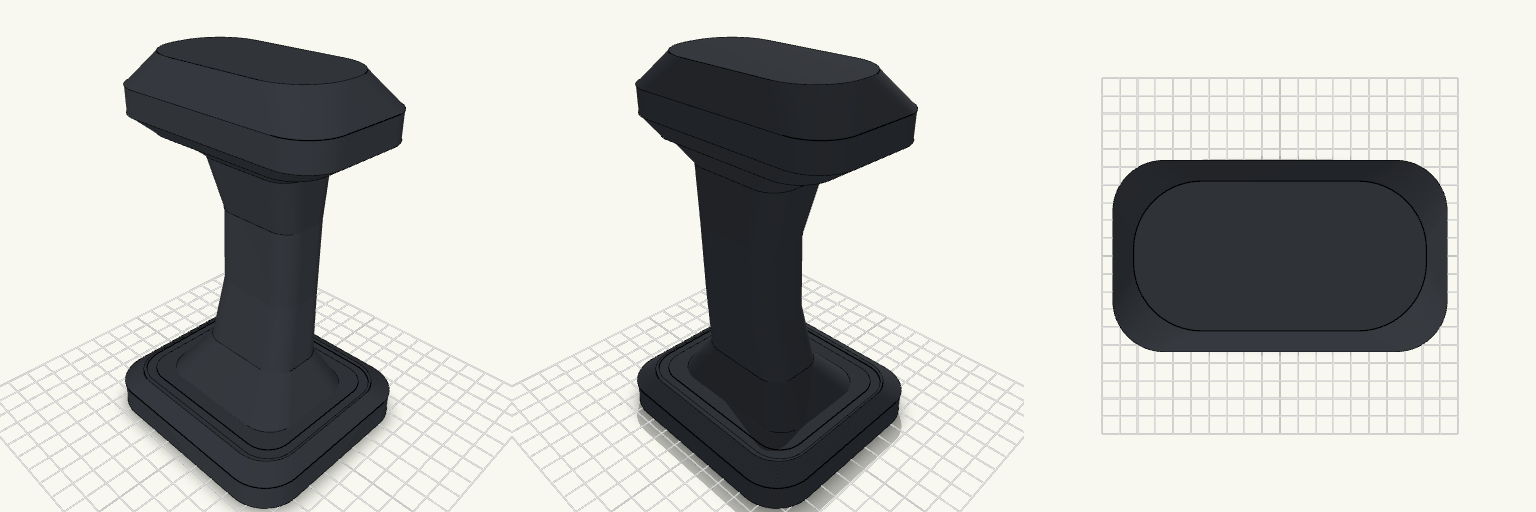
One-Piece Over-Ear Headphone Stand
A single-piece stand for large over-ear gaming headphones, built as a bold futuristic object rather than a plain pole. The base is an asymmetric hexagonal platform, the chamfered column leans back with a sloping front face and a narrow channel running down it, and the wide head grows out of the column through stepped transitions, so there is no thin neck. The whole stand prints as one continuous solid, with nothing to glue or assemble. Size as printed: 160 × 140 × 140 mm (width × depth × height) Base: 160 × 140 mm asymmetric hexagon with a chamfered edge, flat underside and five round recesses for rubber anti-slip pads; the top steps up toward the column and a recessed groove runs around it Column: flares out of the base, measures about 50 mm wide and 30 mm deep at its narrowest, and carries a shallow decorative channel on the front Head: 110 × 65 mm with 14 mm rounded corners, full width through a straight band before narrowing into a domed top — wide enough to spread the load of a large headband Printing: the base sits flat on the bed; the head overhangs the column on both sides, so expect some support or a slow bridge there — check it in your slicer The low, wide footprint keeps the centre of gravity down so the stand stays put with heavy headphones hung on it, while the modest height keeps the whole thing printable in one piece. Large smooth bevels, angular faces and the recessed groove give it a premium architectural look that suits matte black, graphite, dark grey or metallic-looking filament.