Canuck Cup — Commemorative Trophy Model
Created 4 months ago
Description
Introducing the Canuck Cup, a premium commemorative 3D-printable trophy designed to celebrate Canada's historic 1-0 World Cup Round of 32 knockout victory over South Africa in Los Angeles. This display piece embraces the precise 11-point geometry of the Canadian flag, preserving the nation's symbol atop a timeless tiered cylindrical base. Whether reflecting on Stephen Eustáquio's stoppage-time winner or Alphonso Davies' iconic debut, this trophy captures the energy of the moment as the squad presses on toward Houston for the Round of 16.
Features
- Accurate Geometry: The upper emblem relies on the exact 11-point maple leaf paths extracted straight from the national flag.
- Classic Architecture: The tiered, descending cylindrical base creates a traditional trophy silhouette engineered for easy printing.
- Stable Profile: The flat bottom and tiered plinth provide an ideal footing, requiring no additional hardware to balance perfectly on an office desk or mantel.
- Print-in-Place Ready: Features manageable overhang angles built right into the base design, making it straightforward to slice.
Images
More like this
Explore more in Decor & Display →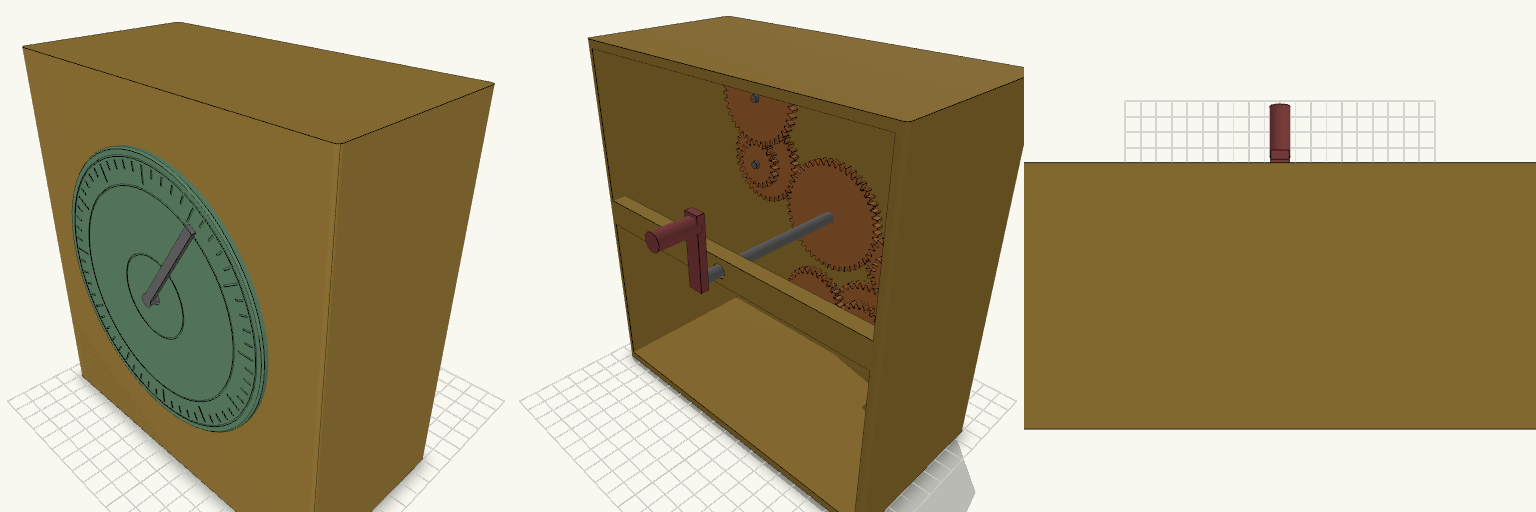
Antikythera Mechanism Desk Model
A simplified, life-size-style display model of the Antikythera mechanism: an upright case with a round front dial, a pointer, an open-backed gear train and a rear hand crank. Case 180 x 90 x 190 mm, open at the back to show the gears 130 mm front dial with ring grooves and 60 tick marks Nine spur gears (20 to 48 teeth, module 1.25) arranged in three layers, with phase-matched teeth so they mesh Fixed 4 mm pegs on the front wall carry the compound gears; the main 48-tooth gear is fused to a 6 mm axle that drives the front pointer Rear bearing bar supports the axle, with a crank handle on the back The gear train is a stylised interpretation, not a tooth-accurate copy of the original 30-plus gear mechanism. Print the case, dial, gears, axle and crank separately; the compound gears sit loose on their pegs with 0.3 mm clearance.
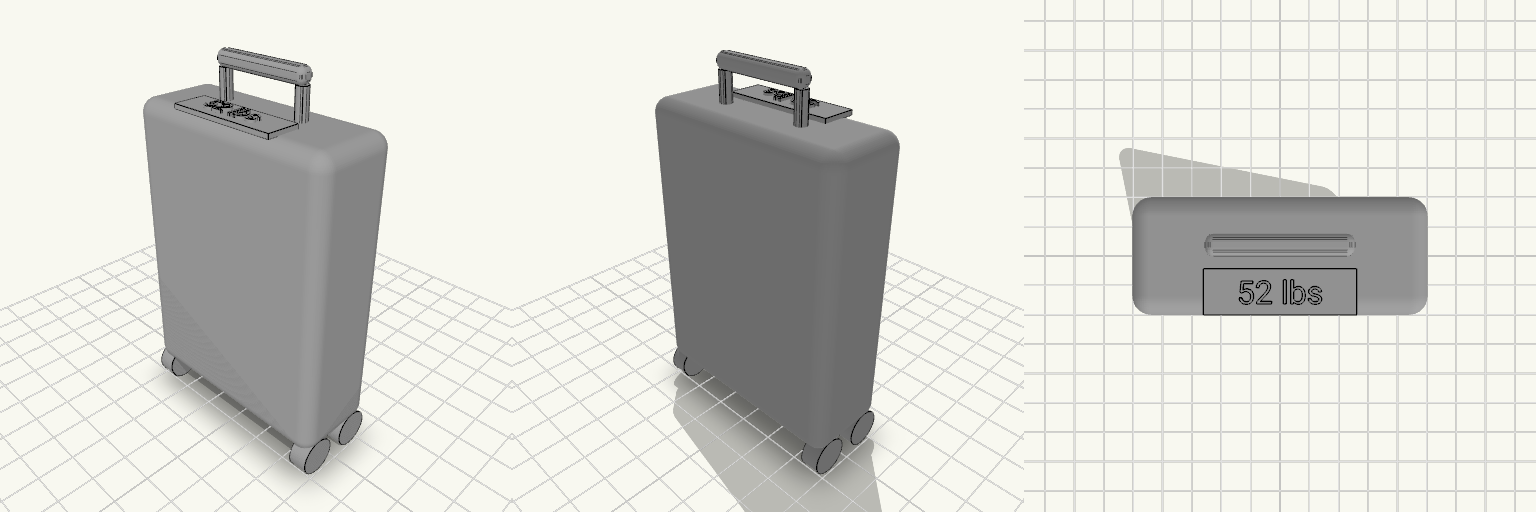
Miniature Suitcase with Handle, Wheels and Weight Display
What it's for A miniature suitcase standing upright on four sideways-mounted wheels, with a pull handle on top and a small thin scale plate set into the top face just in front of the handle. The plate carries a raised readout of 52 lbs, so the piece reads as a luggage scale at a glance. It works as a small desk ornament, a travel-themed display piece, or a scale prop for a dollhouse or diorama. The whole thing is one plain neutral finish, with no colour coding or recessed front screen. Dimensions Overall footprint: 60 × 24 × 100 mm (width × depth × height, as it sits on the print plate) Wheels: mounted sideways, axles running across the width of the case, so the body rests on them Weight plate: a small thin panel on the top face, in front of the handle Readout: raised 52 lbs lettering, picked as a believable airline-limit weight — say if you want a different figure Print notes The model prints as a single piece lying on its wheels, so no supports are needed under the body. The raised readout is small — a 0.4 mm nozzle with fine layer heights keeps the digits and the "lbs" legible, and a 0.25 mm nozzle gives crisper text. The thin top plate is shallow, so check that your bridging over that area is clean. Remix ideas Change the readout to a different weight, or leave the plate blank for a custom label. Swap the handle for a telescoping version, or add corner guards to the body. Scale the case up to hold small items, or down to keyring size. Finish A single neutral colour suits the plain, serious look — the design relies on shape and the raised text rather than colour contrast, so any filament works.
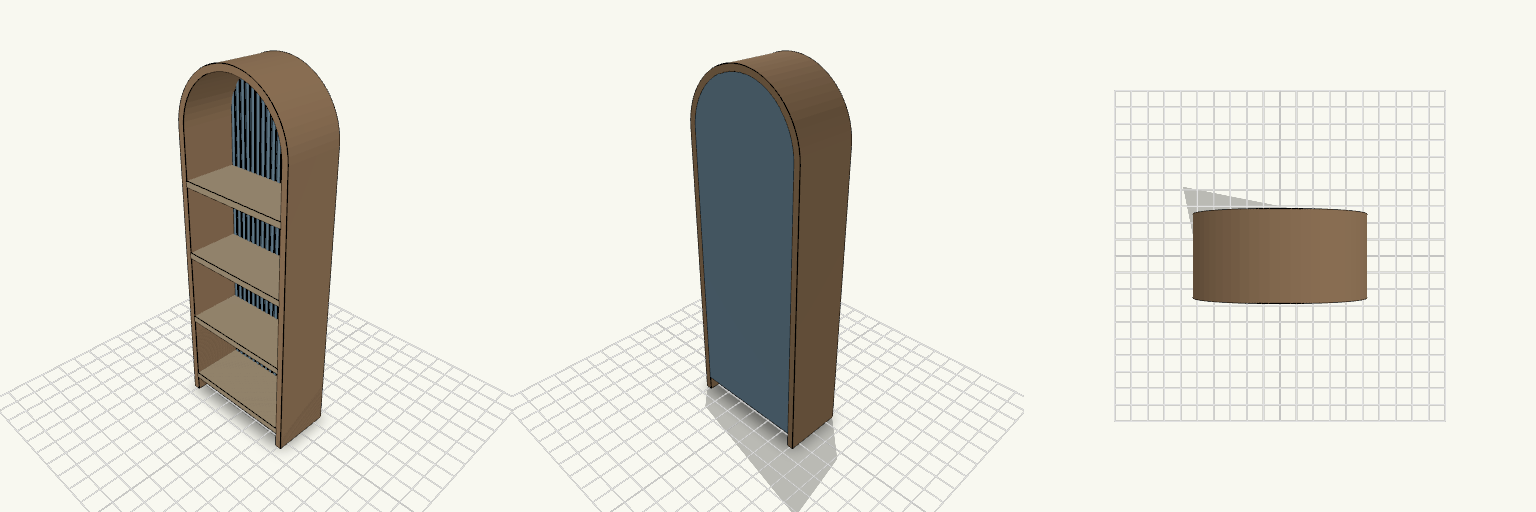
Arched Fluted Bookshelf, 63.5x177.8 mm
Miniature arched-top bookshelf, 7 in tall and 2.5 in wide, with four shelves and a vertically fluted back panel that mimics shiplap. The side walls extend below the bottom shelf to form feet, lifting it off the surface. Overall size: 63.5 mm wide x 30 mm deep x 177.8 mm tall Top: semicircular arch, 31.75 mm radius Back: 18 fine half-round vertical flutes Feet: 8 mm, formed by the side walls Wall and shelf thickness: 3 mm Prints upright as one piece; the arched top and shelf undersides may benefit from supports
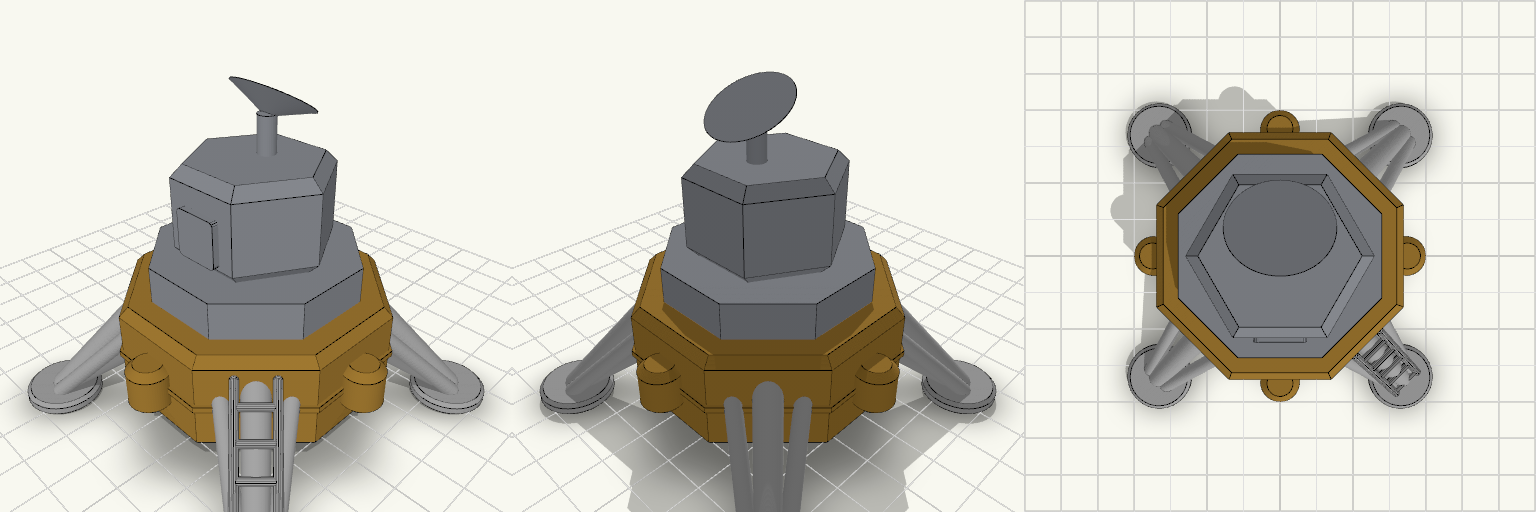
Apollo-Style Lunar Lander Model, 82 mm Footprint
This is a stylized Apollo-style lunar lander display model. It has an octagonal descent stage with four shallow fuel-tank bulges and a panel band around the middle, a faceted hexagonal ascent cabin with a raised front hatch, an engine bell underneath, and four splayed A-frame legs with chamfered footpads. One leg — the front-right — carries a ladder with two rails and rungs, and a tilted dish on an 8 mm mast sits toward the rear of the cabin roof. At roughly 82 mm across the footpads, it is sized as a compact desk or shelf piece. The cabin front is clean apart from the hatch, so the model reads as a lander rather than anything else. The legs are the widest part of the print; the body sits well inside that spread. Specs Footprint: approx. 82 mm across the footpads Descent stage: octagonal, approx. 68 mm across × 22 mm tall, with four shallow fuel-tank bulges and a mid panel band Ascent stage: faceted hexagonal cabin, approx. 42.5 mm across × 43.5 mm tall, with a raised front hatch and a tilted dish on an 8 mm mast Engine bell: approx. 18 mm across × 9 mm tall, mounted low under the central body about 1 mm above the plate, so it reads best from a low viewing angle Legs: four A-frame legs, each with a thick main strut anchored into the descent stage, a lower angled strut and two side struts; chamfered footpads approx. 17 mm Ladder: two rails and rungs on the front-right leg Use: display model for a desk, shelf, or space-themed collection Printing notes The splayed legs and footpads set the build plate footprint; check the 82 mm spread against your plate before scaling up The dish mast, ladder rungs and hatch are the finest features — a smaller layer height keeps them crisp
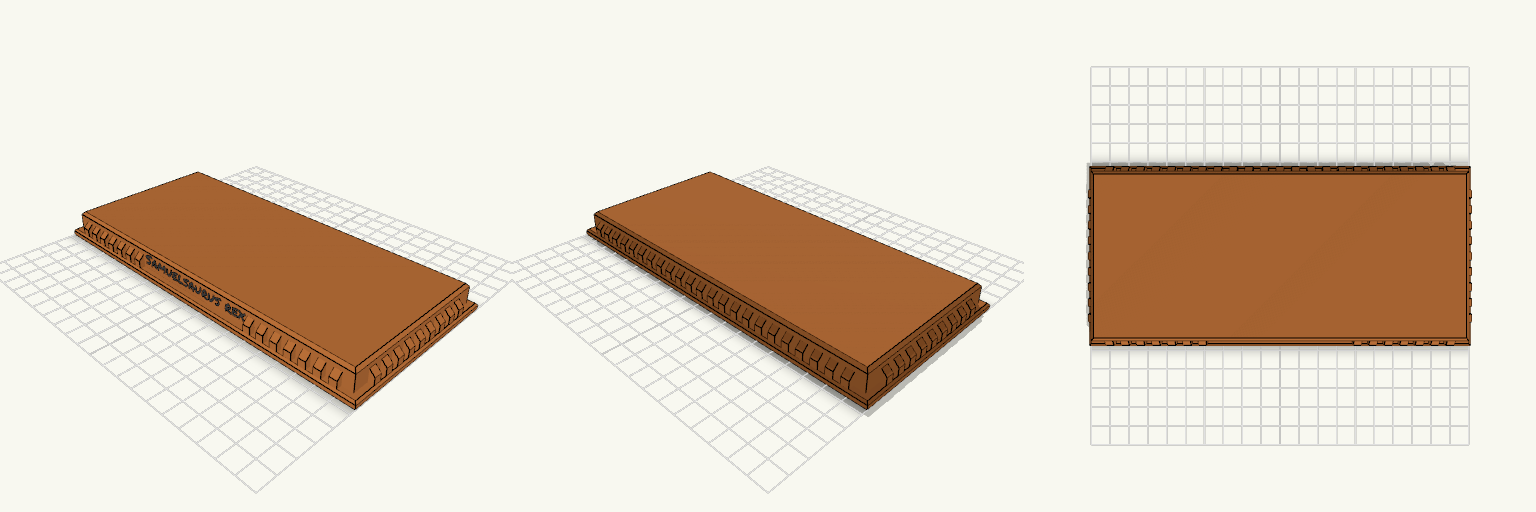
Saurbase — Flat-Top Dinosaur Display Plinth
Saurbase is a display plinth built to give a model dinosaur — or any figure that deserves a proper stage — a base with real presence. The top is deliberately left flat and uninterrupted, so placement stays entirely up to you: set the figure where it balances best, or glue it down once you're happy with the stance. Around the sides, a cornice-inspired profile does the decorative work: a stepped base, a band of dentil blocks and a flush cap give the silhouette the look of a museum pedestal rather than a plain slab — and because the cap sits flush with the recessed core, the whole profile steps inward as it climbs, with nothing hanging over empty space. The front long side carries the name “Samuelsaurus rex”, engraved into a plain stretch of wall and filled with a dark grey inlay so the lettering reads in a second colour without taking any space from the top. Dimensions Footprint: 200 × 94 mm Height: 14 mm Base: 3 mm step with a small top chamfer Dentil band: 4 mm square blocks on 8 mm spacing, running around all four sides, with 45° cuts across the block tops; cleared along a 72 mm stretch on the front long side for the nameplate Cap: flush with the recessed core, with a 1.5 mm chamfer on its top edge Top face: flat, no recesses; flat glue area about 189 × 83 mm Nameplate: text 6 mm high in Permanent Marker style, engraved 0.6 mm deep on the front long side with a matching inlay filling the cut Name text inlay: about 73 × 0.6 × 6.4 mm, sitting flush with the front wall Features Cornice-style edge detail that reads as classical trim without any fussy undercuts Dentil blocks on all four sides slope from their outer faces up into the band above, ending smoothly instead of with a flat shelf Every block sits inside the lower bevel, its outer face stopping where the bevel starts, about 1 mm in from the plinth edge Inward-stepping profile throughout, so no part of the trim overhangs open space Broad 200 mm length leaves room for a tail and head to overhang the body Flat top accepts glue or double-sided tape for a semi-permanent mount “Samuelsaurus rex” nameplate on the front wall, outside the figure area The plinth and the name text are separate coloured pieces in one model, ready for a multi-colour print Nameplate The lettering sits on the front long side, centred on a 72 mm stretch where the dentils are left off. It is cut 0.6 mm deep and filled by a matching inlay that sits flush with the wall, so the text shows as a dark grey band against the plinth body. Because it lives on the vertical side wall, it takes nothing from the glue area on top. Print notes The geometry needs no supports: the cap sits back over the dentil band rather than out past it, every step moves inward as it rises, and the 45° dentil tops remove the flat ledges. The corners between the long and short sides are tight at this scale, so check them in your slicer preview. The dentils are sized to print cleanly — going smaller will lose definition. The nameplate is a vertical wall cut, so it needs no supports either; at 0.6 mm deep the text spans only a few layers, so assign a black or dark grey filament on those colour-change layers. Permanent Marker lettering is loose and uneven, so check the text length against the 72 mm cleared stretch; if thin strokes print rough, a slightly larger letter size or deeper engraving will help. A slightly denser infill keeps some weight in the base so the plinth doesn't tip when a figure is set on it.
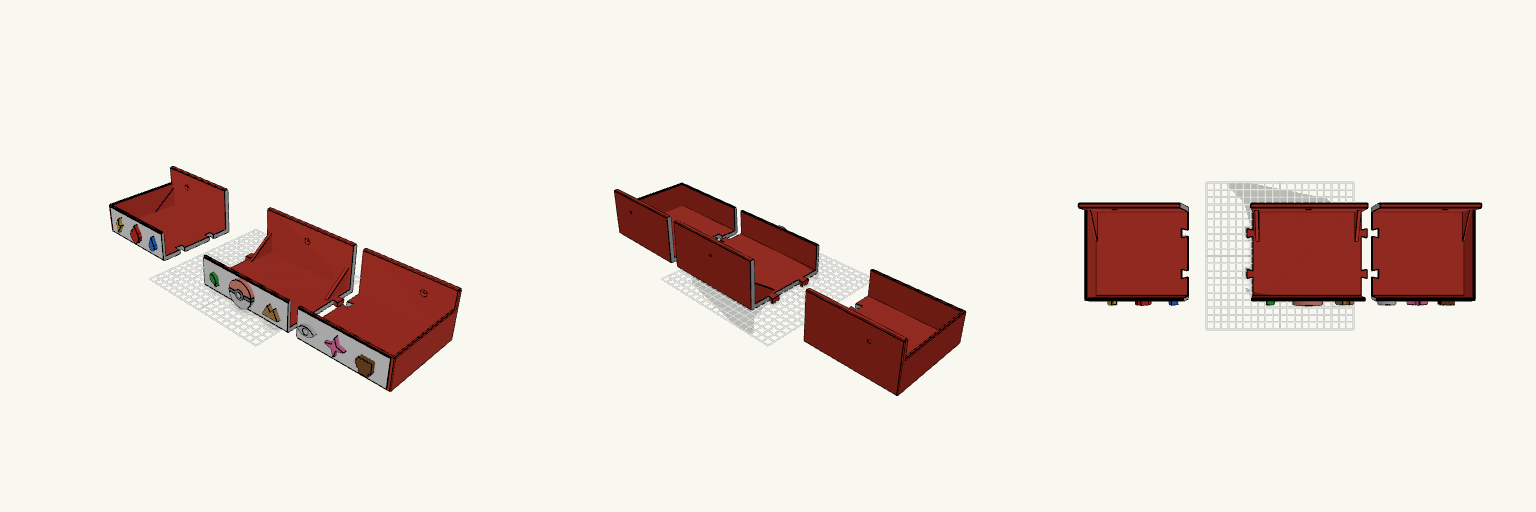
pokemon shelf in three peices
A 400 mm wall shelf that splits into three printable sections, joined with dovetail tongues and glued together. Each piece fits a typical build plate. The shelf has closed ends, a front lip with a white panel, a raised Poké Ball and raised type symbols (electric, fire, water, grass, ground, psychic, fairy, fighting). It hangs on three countersunk screw holes. Remix hooks Cut positions: the splits sit at x = ±73 mm, giving pieces about 127 / 146 / 127 mm wide. Move them to balance piece widths, but keep them clear of the symbols and gussets. Joint size: each dovetail is 8 mm long and tapers from 8 mm to 12 mm wide, with 0.3 mm of clearance. Increase the clearance for a loose printer and decrease it for a tight one. Joint count: two tongues per seam, at y = -35 and y = -90. Add a third for more glue area. Print spacing: the pieces are laid out with a 15 mm gap. Set it to 0 to see the assembled shelf. Pairs with: CA glue or two-part epoxy for the seams, and No. 8 / M4 screws for hanging.