Stretched Base Hot Air Balloon Cutter
Created 1 months ago
Description
A two-piece hot air balloon cookie cutter featuring a detailed balloon canopy with curved stripes and a separate basket with an imprinted weave. Built with a 15mm cutting depth and a robust top brim for comfortable pressing.
Remix Hooks
- Dough Thickness: The internal stamping details are inset by 2.5mm from the cutting edge — pull those up or drop them further depending on how thick you roll your dough.
- Proportions: The balloon features a tapered lightbulb base spanning 90mm tall. Scale the two pieces independently if you prefer a larger canopy or a squatter basket.
Images
More like this
Explore more in Kitchen & Bathroom →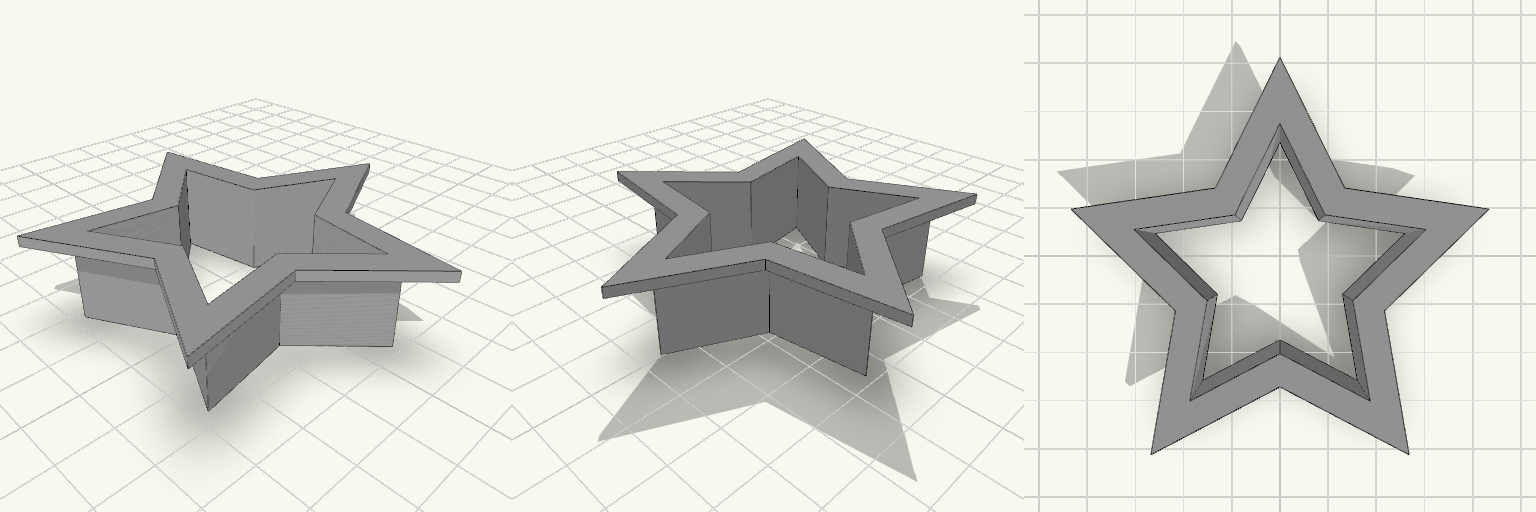
5-Point Star Cookie Cutter
A five-point star cookie cutter, 60 mm tip to tip, with 18 mm tall walls and a wide flat flange around the top edge. The flange gives a thumb a broad surface to press on, so pushing the cutter through dough doesn't put a thin edge against your skin. Remix hooks The values below are the ones worth changing. Everything else follows from them. Star size (R, 30 mm): This is the tip radius, so 60 mm across. Change it to scale the star. At about 40 mm across or less, check that the flange doesn't crowd the inner corners. Point sharpness (ratio, 0.5): This is the inner radius divided by the outer radius. Lower values like 0.4 give spikier points. Higher values like 0.6 give a chubbier, more rounded star. Very spiky points are harder to press out of dough. Flange (flangew 4 mm, flanget 2 mm): Widen it for a more comfortable press, or thicken it for more stiffness. Rounding the flange's outer corners is an easy variant if you want it softer on the thumb. Wall (wall, 1.2 mm): This is about three nozzle widths on a 0.4 mm nozzle. Thinner cuts more cleanly but is more fragile. Thicker is sturdier but pushes dough aside more. Height (H, 18 mm): Lower it for thin cookies, or raise it for thick dough or a deeper grip. Pairs well with A set of different sizes, made by changing R and nothing else. Other shapes that reuse the same wall and flange values, such as a heart or circle, so the whole set feels the same in the hand. A matching stamp or embossing plate that fits inside the cutter opening. Printing Print it flange-up or flange-down on the bed. Flange-down needs no supports, and the thin walls grow straight up from the flange. Use food-safe filament if you want to use it on dough.
90mm Can Ring Pull Lever Tool
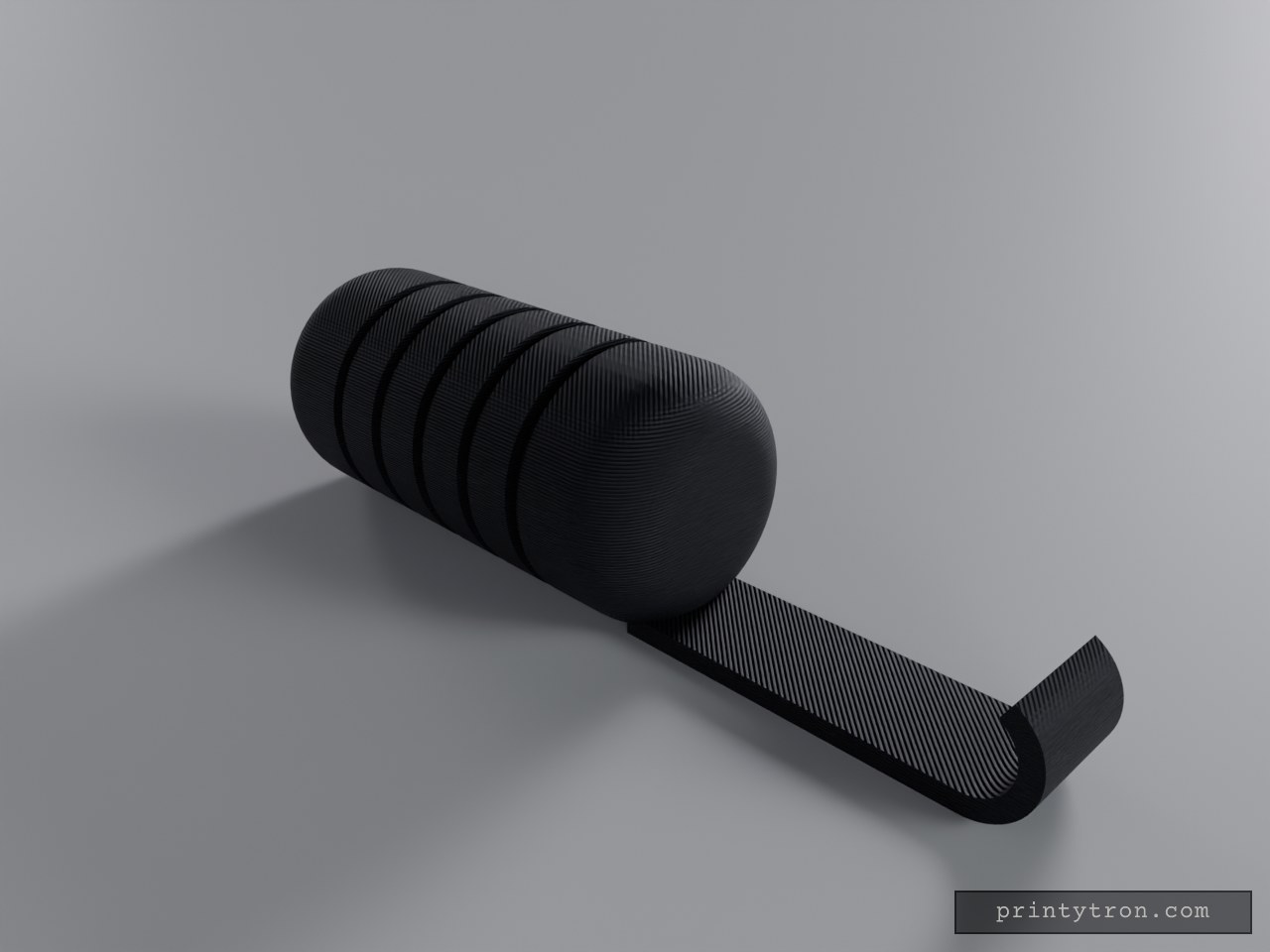
A hand-held lever for lifting can ring pulls without using fingernails. A thin curved hook slides under the ring, and a thick barrel handle gives the leverage to lift it. Suited to anyone with limited grip strength or short nails. Specifications Overall length: 90 mm Handle: 25 mm diameter barrel, about 55 mm long, with ring grooves for grip Hook blade: 2 mm thick, 12 mm wide, curved upward at the tip to slide under the ring Construction: single welded body, printed as one piece Orientation: print with the handle and blade lying flat on the bed. Supports may be needed under the barrel's curved underside. Material: PETG or PLA. PETG is preferred for the 2 mm blade because it flexes before it breaks. Use: ring-pull cans such as beans, soups and drinks Notes The 2 mm blade is the thinnest part. Print it with at least 3 perimeters for strength. The grip grooves are shallow, so the handle stays easy to wash.
Square-Base Bowl That Stays Put
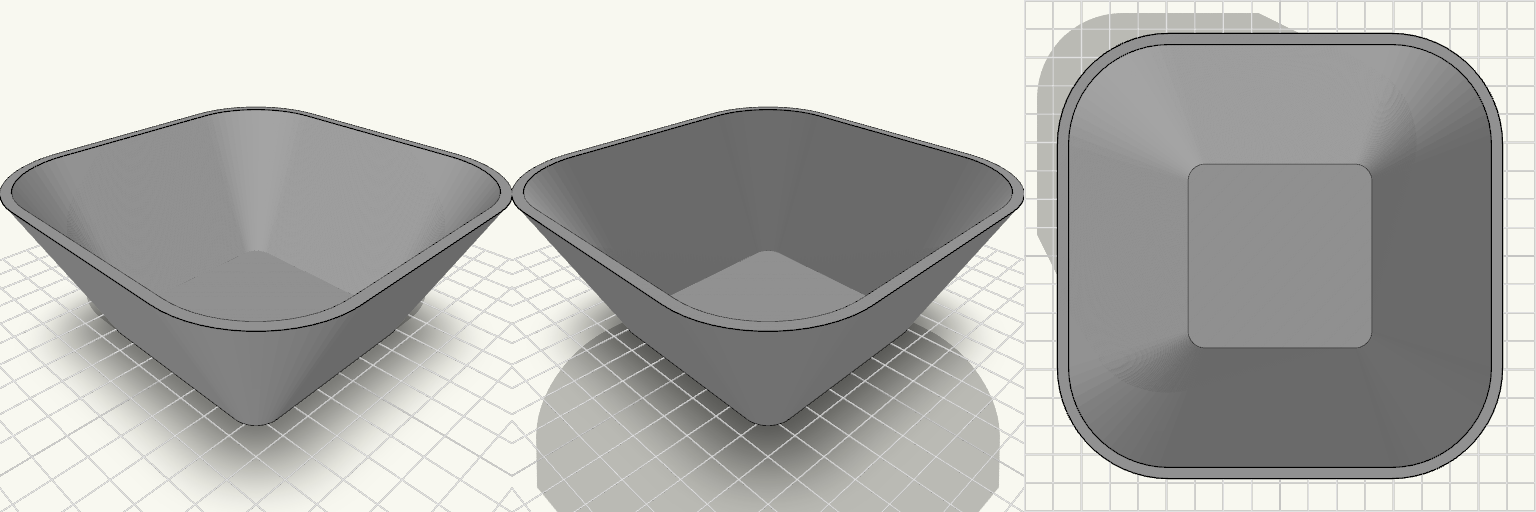
A bowl that skids across the counter or tips the moment you stir it is the annoyance; this one has an almost square base that keeps it planted. The base is a 70 mm square with rounded corners, so it sits flat instead of rocking, and the walls flare out to a 120 mm rim that is rounder and easier to eat from. What decides the fit Base footprint: 70 mm rounded square — the number to check against your shelf, tray or cupboard. Rim: 120 mm across at the widest point. Height: 50.8 mm (2 in). Walls and floor: 3 mm thick, so it holds its shape without being heavy. It prints as one piece, standing on its flat base, so no supports are needed and the inside comes out clean.
Bag Holder Stand with Spring Clamp Ring
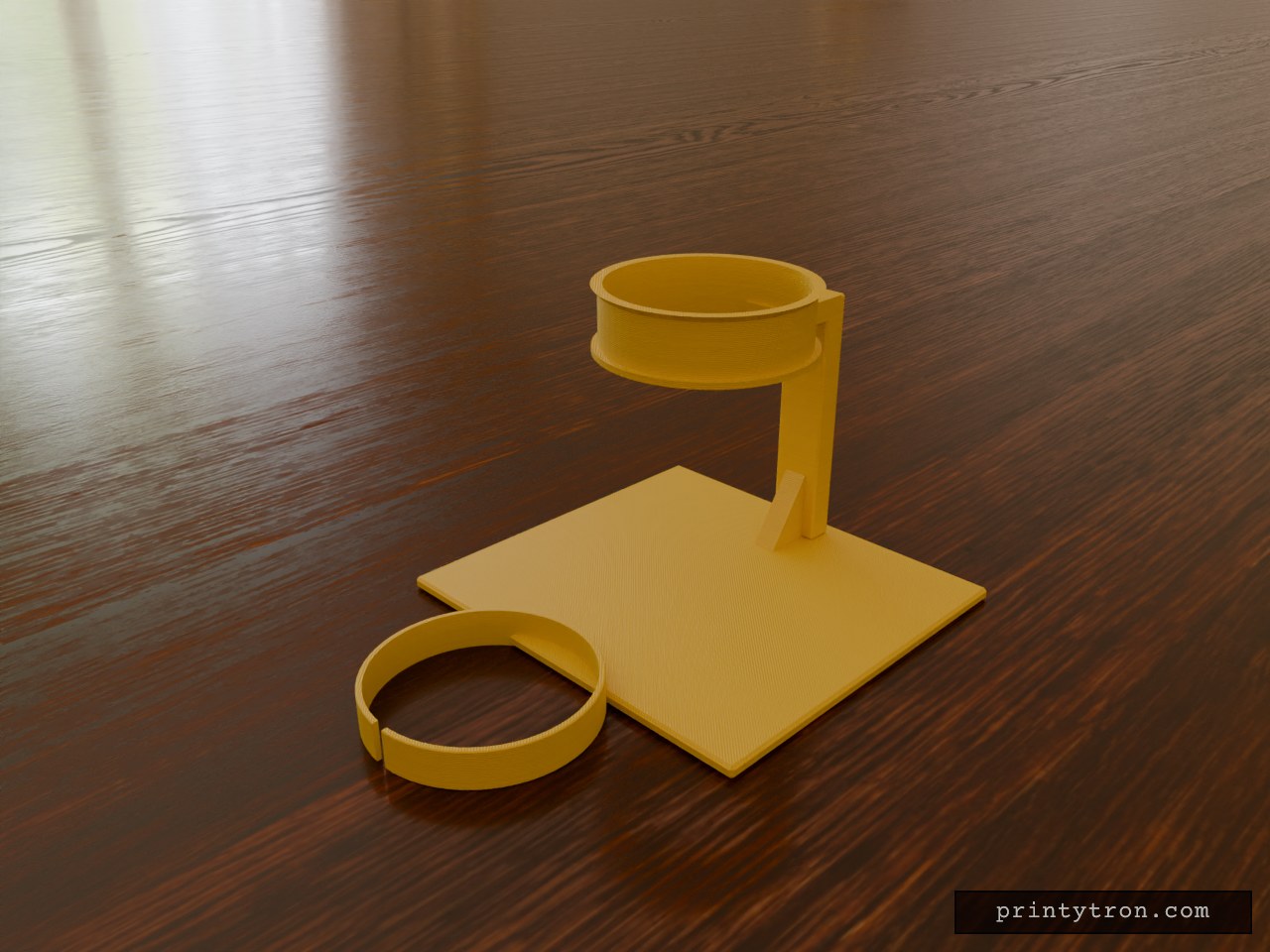
A freestanding stand that holds a freezer or piping bag open so both hands are free for filling. The bag mouth is pulled through a 120 mm inside-diameter ring, folded over the outside, and secured with a separate split clip that grips the folded rim all the way round. The base is a wide 270 × 250 mm plate with a rear post, so the stand resists tipping when a bag is loaded. The ring sits at the top of the post, 165 mm above the plate, with a flared lip to keep the fold from slipping off. Ring: 120 mm inside diameter, 40 mm tall, on a short arm off the post Base: 270 × 250 mm, 8 mm thick, chamfered edges, with a gusset on the post Clip: split spring ring, 24 mm tall, with finger tabs for opening Parts: base with post, ring, and clip are colour-labelled; the clip prints separately Material: PETG suggested for the clip so it keeps its spring To use, pull the bag mouth up through the ring, fold it down over the outside, then snap the clip over the fold. The ring height suits bags up to roughly 165 mm long; longer bags will rest on the base. The clip's grip has not been test-printed, so the gap may need adjusting for thicker or thinner bag film.
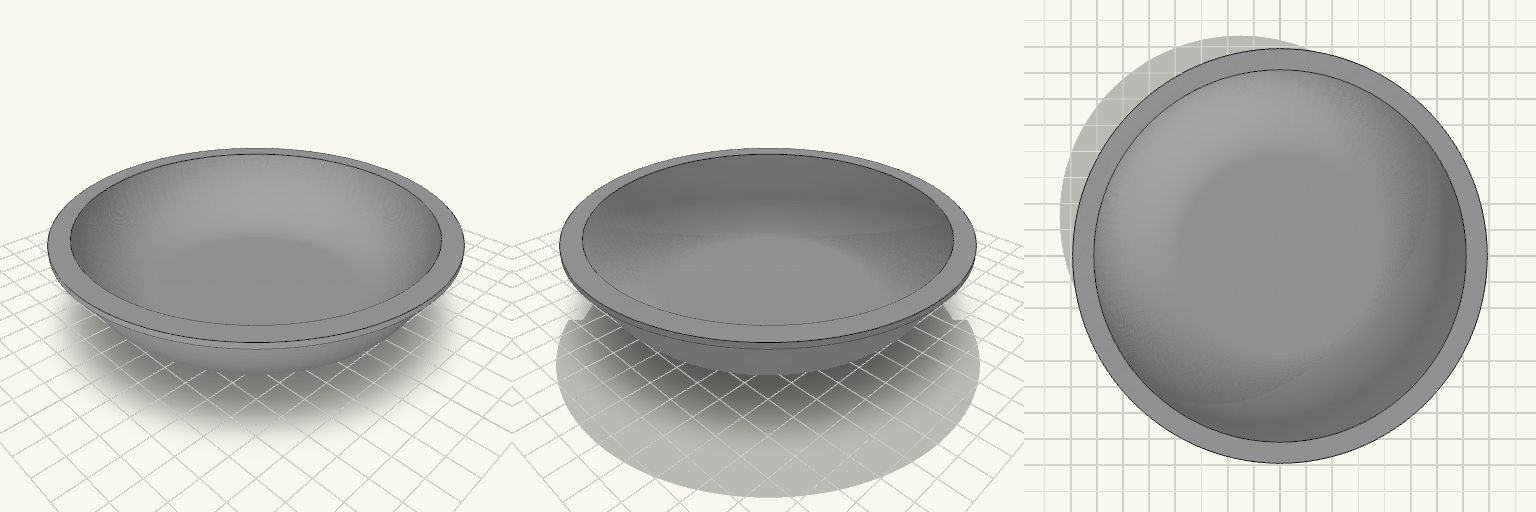
Brim — Flat-Bottom Rounded Bowl
Brim is a shallow serving bowl with a flat 75 mm base that sweeps up in a smooth curve to a wide, flat rim. The flat base keeps it stable on a table and easy to print without supports on the bottom face. Dimensions Outer rim diameter: 138 mm Rim width: 5 mm, flat and horizontal Opening inside the rim: 128 mm Depth: 30 mm Flat bottom diameter: 75 mm Wall thickness: 2 mm throughout Print notes Print rim-up or base-down; base-down is the natural orientation. The steepening curve near the rim may need supports or slow cooling.
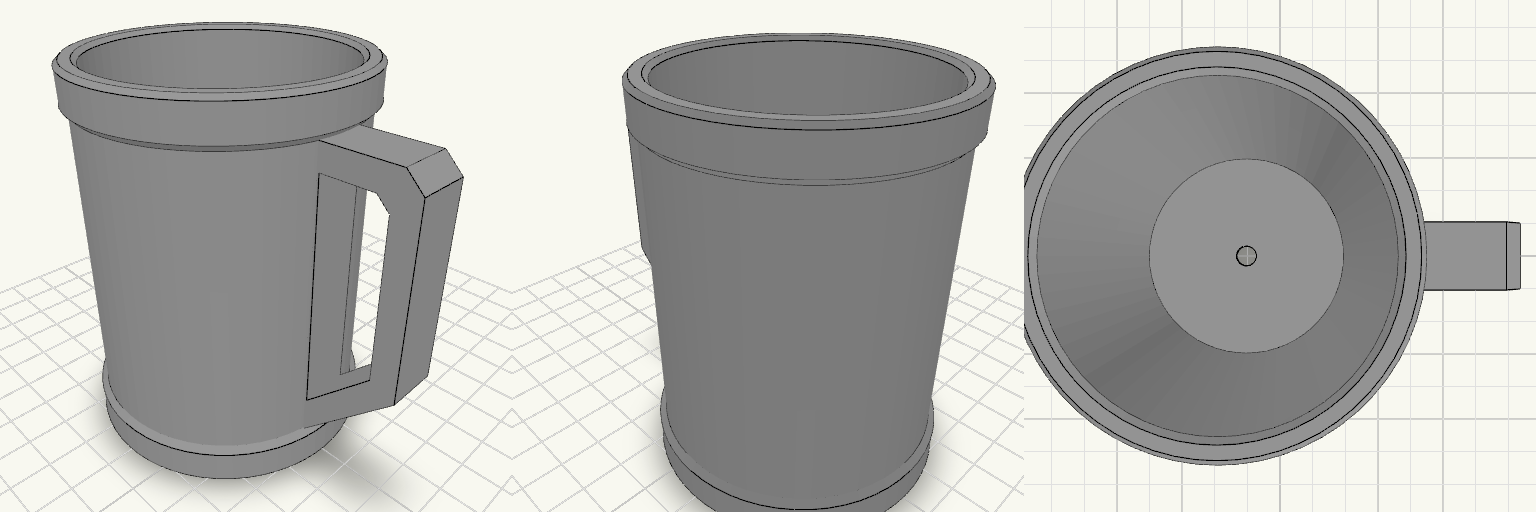
Caneca porta-latas com alça em peça única
Caneca porta-latas em peça única para latas de 269 ml. O corpo cilíndrico tem Ø externo de 64,6 mm e 90 mm de altura, com cavidade reta de Ø 58,6 mm e 87 mm de profundidade útil. A parede tem 3,0 mm e o fundo 3 mm; um furo de Ø 6 mm no centro do fundo alivia o ar, e um chanfro de 1 × 45° na borda interna do topo guia a entrada da lata. Duas faixas salientes de Ø 67,6 mm reforçam o desenho: uma na base, de Z=0 a 10, e outra no topo, de Z=80 a 90, ambas com chanfros de 45°. Entre Z=10 e Z=80 o corpo é liso, para receber adesivo. A alça fica em um dos lados, com 12 mm de largura e avanço até X=54. Ela sobe até Z=80, encostando no início da faixa superior, e mantém topo plano com barra vertical na ponta; a diagonal de 45° fica embaixo. As barras do perfil têm cerca de 6 mm, e as quinas externas e as do furo são chanfradas a 45°. O vão interno acompanha o perfil, com teto em Z=74; o chanfro na quina ajuda a impressão, mas o trecho ainda forma uma ponte e pode pedir suporte. Altura total: 90 mm Pegada na mesa de impressão: 87,8 × 67,6 mm Cavidade: Ø 58,6 mm por 87 mm de profundidade útil Parede de 3,0 mm e fundo de 3 mm Furo de alívio de ar: Ø 6 mm Faixas salientes: Ø 67,6 mm, base de Z=0 a 10 e topo de Z=80 a 90 Alça: 12 mm de largura, até X=54, topo em Z=80, barras de cerca de 6 mm e chanfros de 45° Vão da alça: teto em Z=74, com chanfro na quina; pode pedir suporte sob a ponte