Square-Base Bowl That Stays Put
Created today
Description
A bowl that skids across the counter or tips the moment you stir it is the annoyance; this one has an almost square base that keeps it planted. The base is a 70 mm square with rounded corners, so it sits flat instead of rocking, and the walls flare out to a 120 mm rim that is rounder and easier to eat from.
What decides the fit
- Base footprint: 70 mm rounded square — the number to check against your shelf, tray or cupboard.
- Rim: 120 mm across at the widest point.
- Height: 50.8 mm (2 in).
- Walls and floor: 3 mm thick, so it holds its shape without being heavy.
It prints as one piece, standing on its flat base, so no supports are needed and the inside comes out clean.
Images
More like this
Explore more in Kitchen & Bathroom →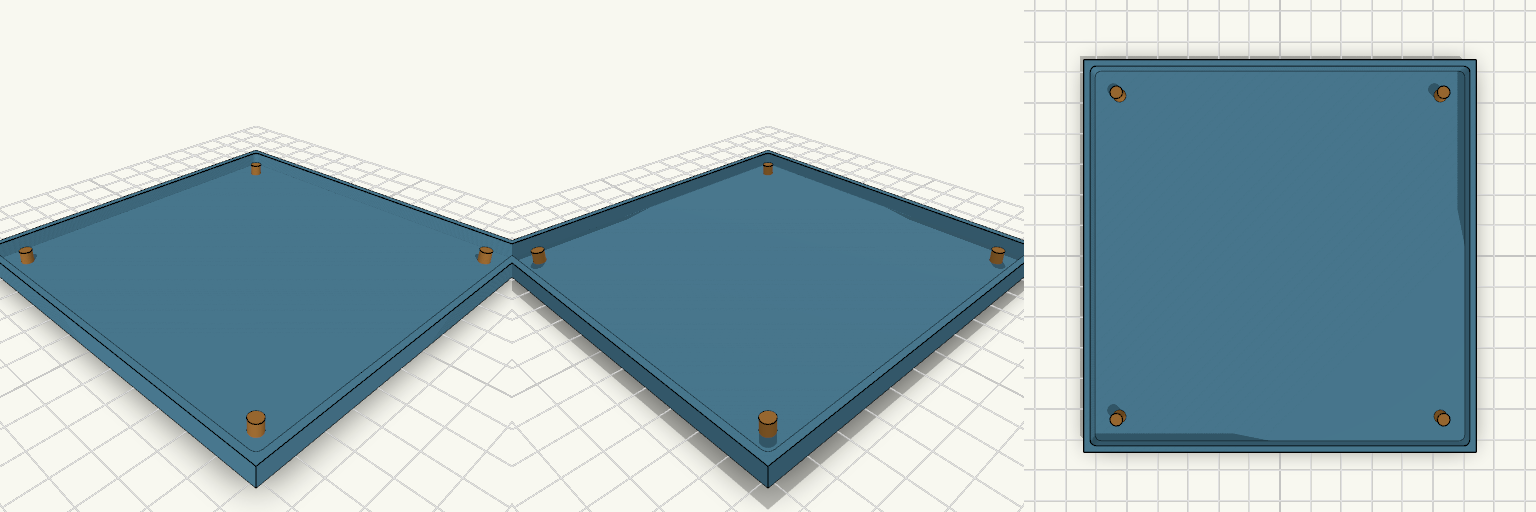
Square Bioplastic Tile Mold with Corner Pins
What it's for A square casting mold for thin, translucent starch-based bioplastic tiles. Four pins inside the cavity leave a hole in each corner of the cast tile, so neighbouring tiles can be tied together with fishing line into a stained-glass-style hanging grid. Dimensions Cavity: 120 × 120 mm, 2 mm radius inside corners Outer size: 124 × 124 mm, total height 6.2 mm Walls: 2 mm thick, 5 mm above the floor Floor: 1.2 mm, continuous and flat underneath Pins: 4 mm diameter, 4 mm tall above the floor, centred 8 mm from both adjacent inner walls, clear of the walls Print notes One solid piece, no supports, flat underside Pins are fused into the floor Low filament use thanks to the thin floor and walls Remix ideas Change the pin spacing for larger or smaller holes Add mid-edge pins for extra connection points Scale the cavity for rectangular or smaller tiles
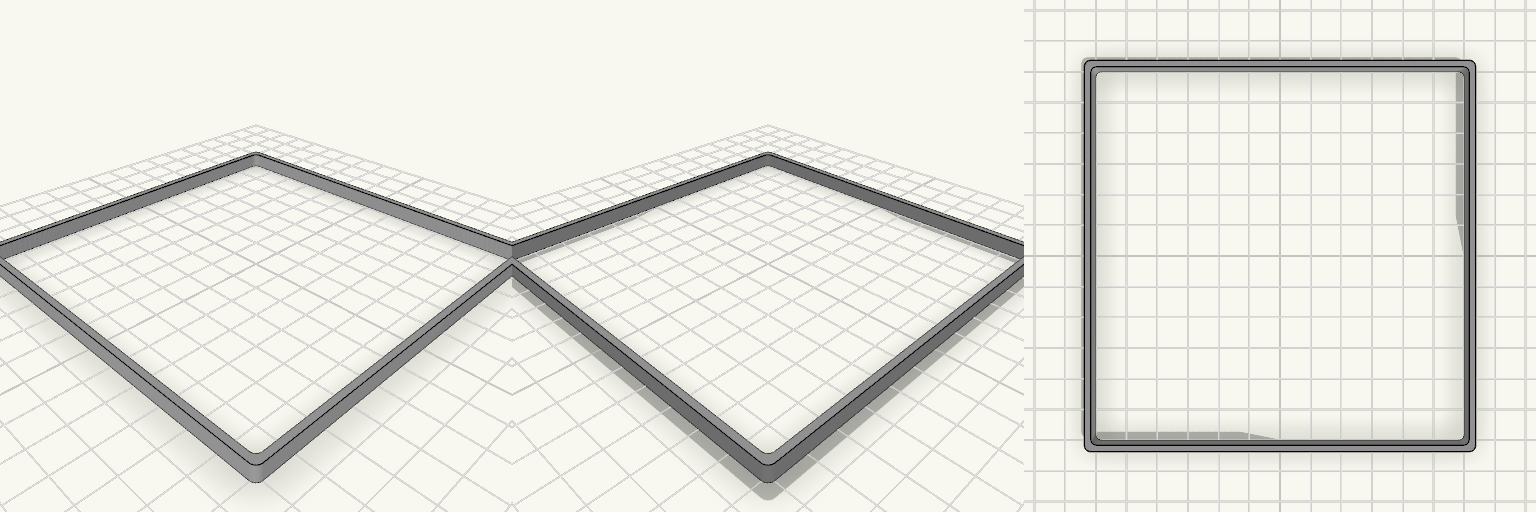
Open Square Casting Mold Frame
A flat, bottomless square frame for casting starch bioplastic sheets on a silicone baking mat. Outer size is 124 × 124 mm with a 120 × 120 mm opening, 5 mm tall, 2 mm walls and 2 mm corner radii. Remix hooks Opening size (120 mm): change it for other sheet sizes; the outer size is the opening plus twice the wall. Height (5 mm): sets the casting thickness. Raise it for thicker sheets. Wall (2 mm): 3–4 mm gives a stiffer frame that resists warping. Pairs with: a silicone mat, or a clip-on cross brace or divider to cast several smaller tiles. Lower edges are flat, so it prints with no supports.
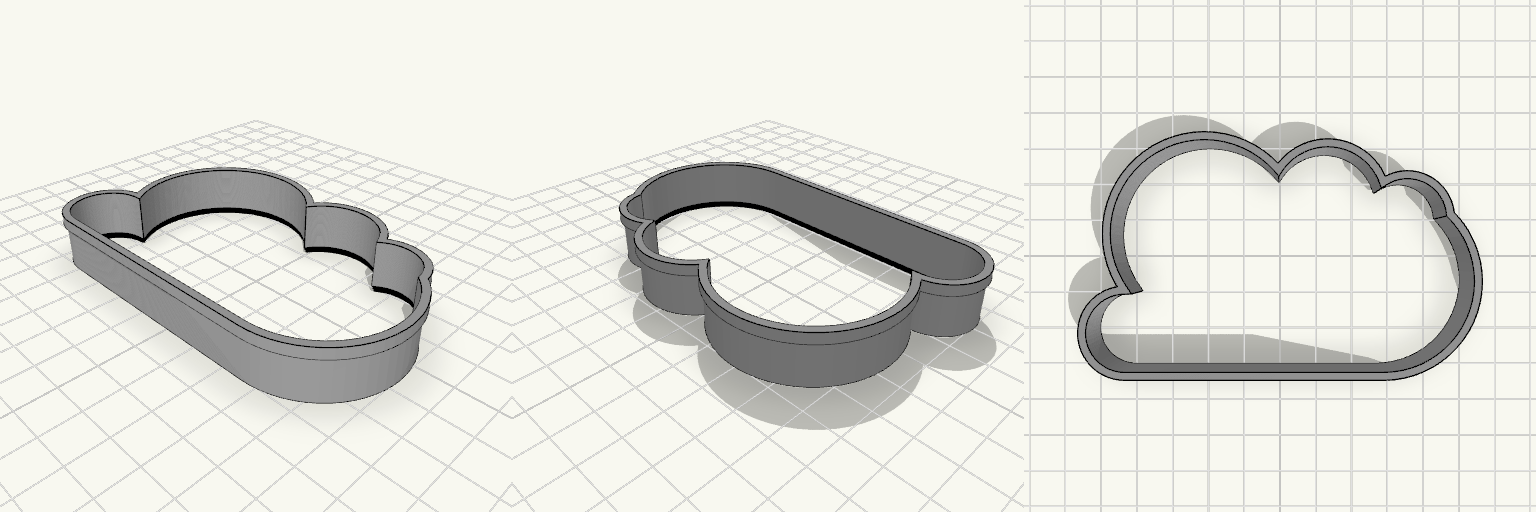
Toy Story Sky Cloud Cookie Cutter
A cookie cutter echoing the wallpaper clouds from Andy's room: a big bump on the upper left, smaller puffs along the top and a long flat base. The centre is open so dough passes straight through. 15 mm tall wall, about 1.2 mm thick, thin clean cutting edge on the flat bottom Widened rim at the top for pressing by hand About 100 mm wide, prints flat with no supports
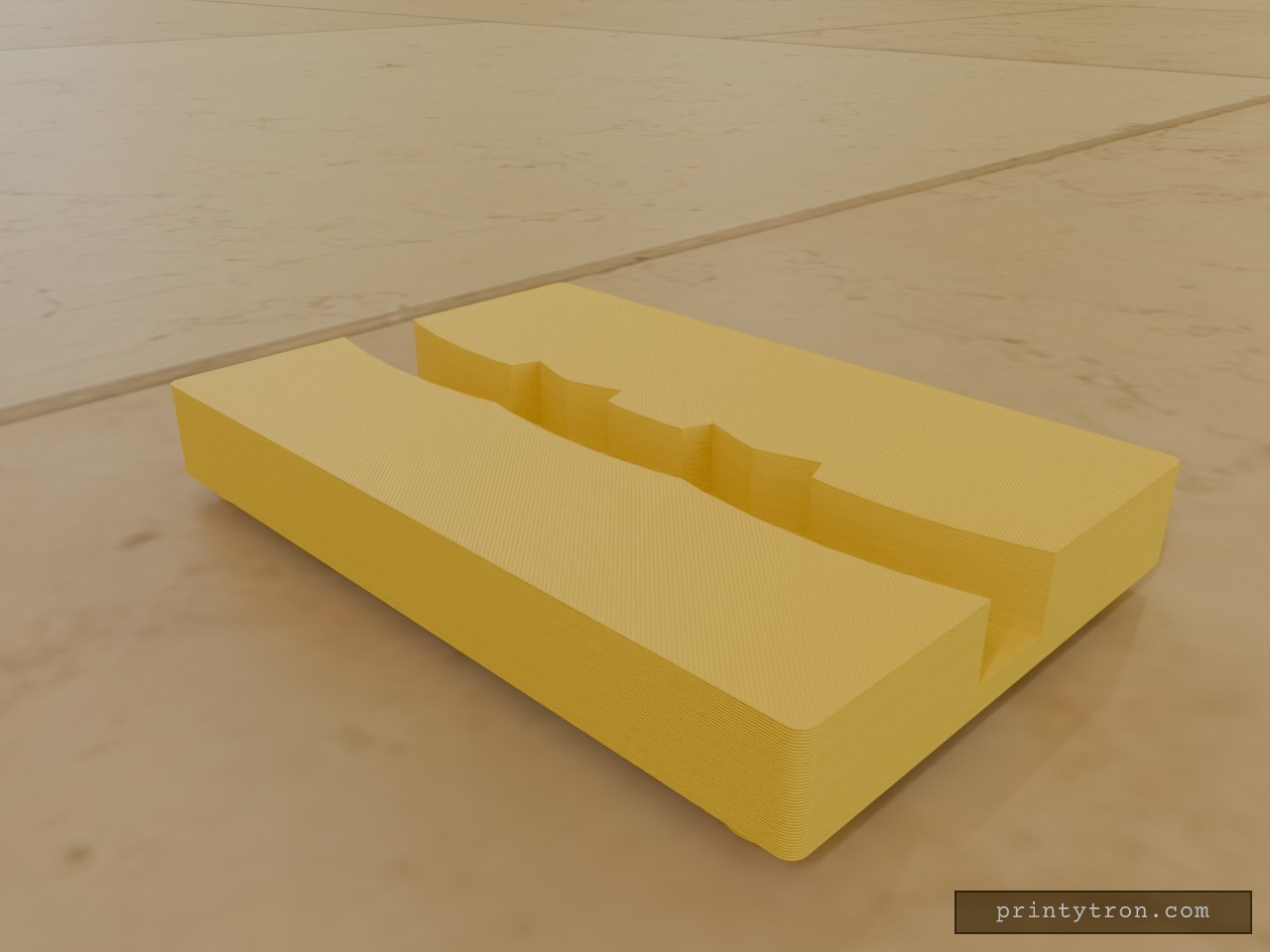
Three-Slot Curved Taco Stand
A taco stand that holds three shells upright and open-side up, so fillings stay in place while you load them. The base is a flat 180 × 120 mm block with rounded corners. Three curved slots are cut into it, each one cradling a single shell. Four round feet lift the base off the table. Each slot arcs along its length, which follows the curve of a folded shell. Three curved slots, each 90 mm long and 20 mm wide Slots spaced 55 mm apart across the 180 mm base Base 22 mm thick, with the slot floor 6 mm above the underside of the block Four round feet, 5 mm tall, with chamfered edges Rounded vertical corners on the base Prints flat on its feet, with no supports needed If your shells are wider than 20 mm, widen the slots before printing. Food-safe filament such as PETG is a sensible choice, and a wipe-down after use keeps it clean.
Sink Caddy With Drain Slots
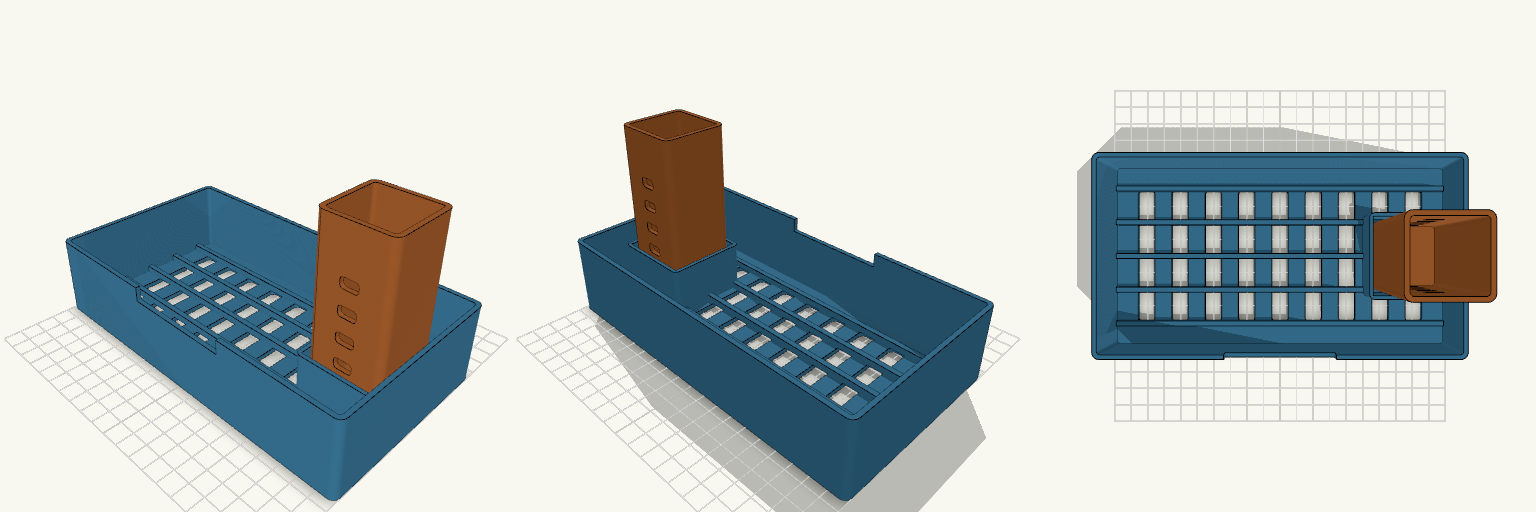
Sponges and brushes left in a flat tray sit in a puddle and go sour. This sink caddy lifts them on ribs over a slotted floor so water runs out, and a separate tall holder takes a brush upright. Key numbers Tray: 200 x 110 x 45 mm, 2.4 mm walls Floor: 2.5 mm with 9 drain slots, plus 4 mm ribs to keep items off the surface Front notch: 60 mm wide, lets water pour off the front edge Brush socket: 48 mm square, inner opening 44 mm Removable holder: 40 x 40 x 100 mm with side slots for drainage; 2 mm clearance in the socket Printing Print the tray flat, no supports Print the holder upright 0.2 mm layers, PETG suggested for wet use
Bag Holder Stand with Spring Clamp Ring
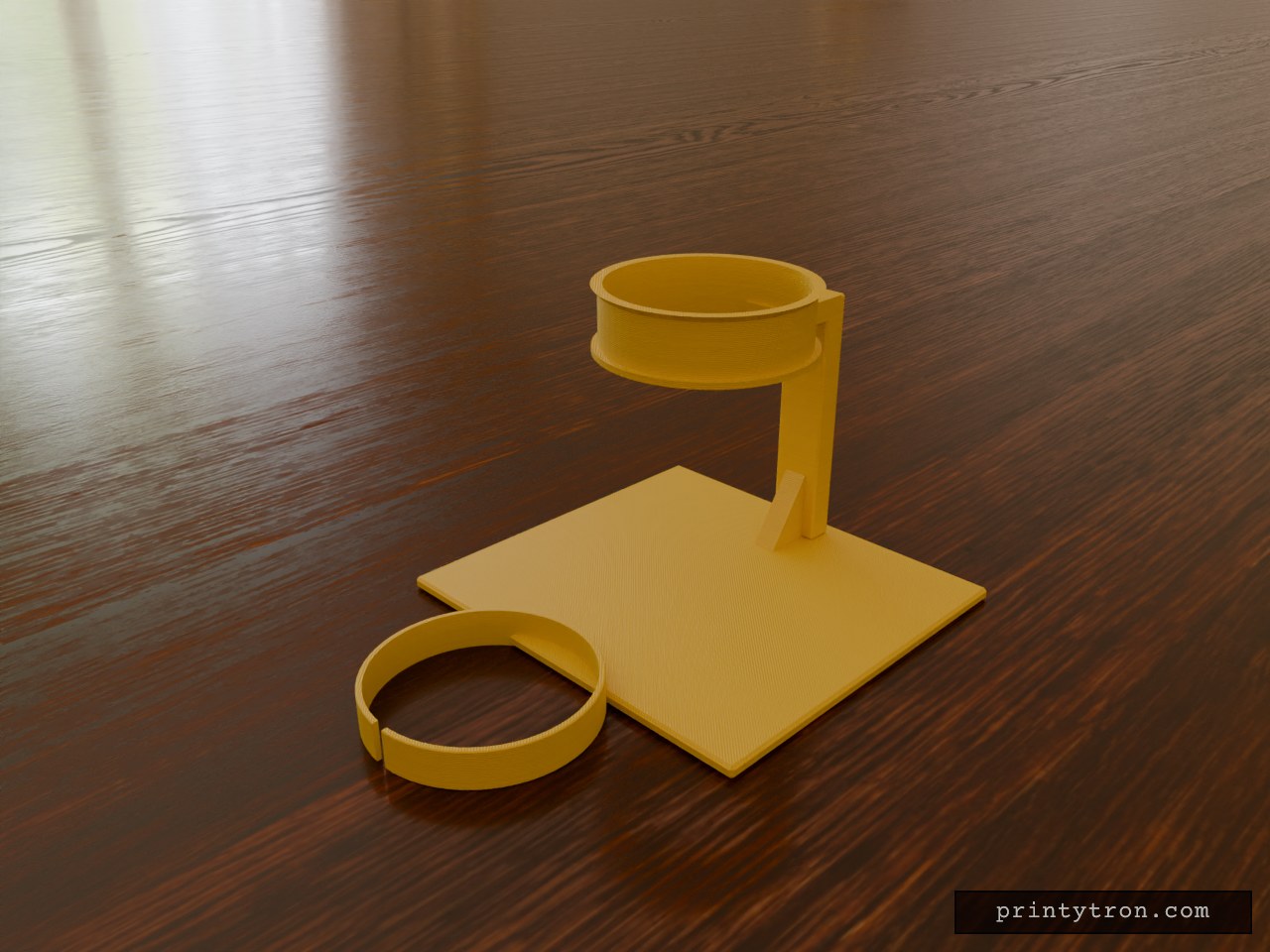
A freestanding stand that holds a freezer or piping bag open so both hands are free for filling. The bag mouth is pulled through a 120 mm inside-diameter ring, folded over the outside, and secured with a separate split clip that grips the folded rim all the way round. The base is a wide 270 × 250 mm plate with a rear post, so the stand resists tipping when a bag is loaded. The ring sits at the top of the post, 165 mm above the plate, with a flared lip to keep the fold from slipping off. Ring: 120 mm inside diameter, 40 mm tall, on a short arm off the post Base: 270 × 250 mm, 8 mm thick, chamfered edges, with a gusset on the post Clip: split spring ring, 24 mm tall, with finger tabs for opening Parts: base with post, ring, and clip are colour-labelled; the clip prints separately Material: PETG suggested for the clip so it keeps its spring To use, pull the bag mouth up through the ring, fold it down over the outside, then snap the clip over the fold. The ring height suits bags up to roughly 165 mm long; longer bags will rest on the base. The clip's grip has not been test-printed, so the gap may need adjusting for thicker or thinner bag film.