Drehscheibe
Created yesterday
Description
Zweiteiliger Aufbau: eine Klebeplatte mit Achse nahe am Rand und eine darüber drehbare Scheibe, beide Ø74 mm. Die Scheibe schwenkt um die außermittige Achse und hat am gegenüberliegenden Rand einen gebogenen Schlitz.
Remix-Ansatzpunkte
- Durchmesser: 74 mm, lässt sich für beide Teile gemeinsam ändern.
- Achsposition: 26 mm aus der Mitte. Weiter außen lässt weniger Wand um das Senkloch.
- Schlitz: 6 mm breit, etwa 60° Bogen, ca. 2,5 mm Wand zum Rand. Länge über den Winkel anpassbar (z. B. 90° oder 120°).
- Loch in der Klebeplatte: Ø8 mm, 27 mm vom linken Rand (Blick von unten), 2 mm über der Mitte. Passt für Schraube oder Senkung.
- Spiel: 0,4 mm zwischen Platte und Scheibe, für andere Drucker anpassbar.
Images
More like this
Explore more in Workshop & Tools →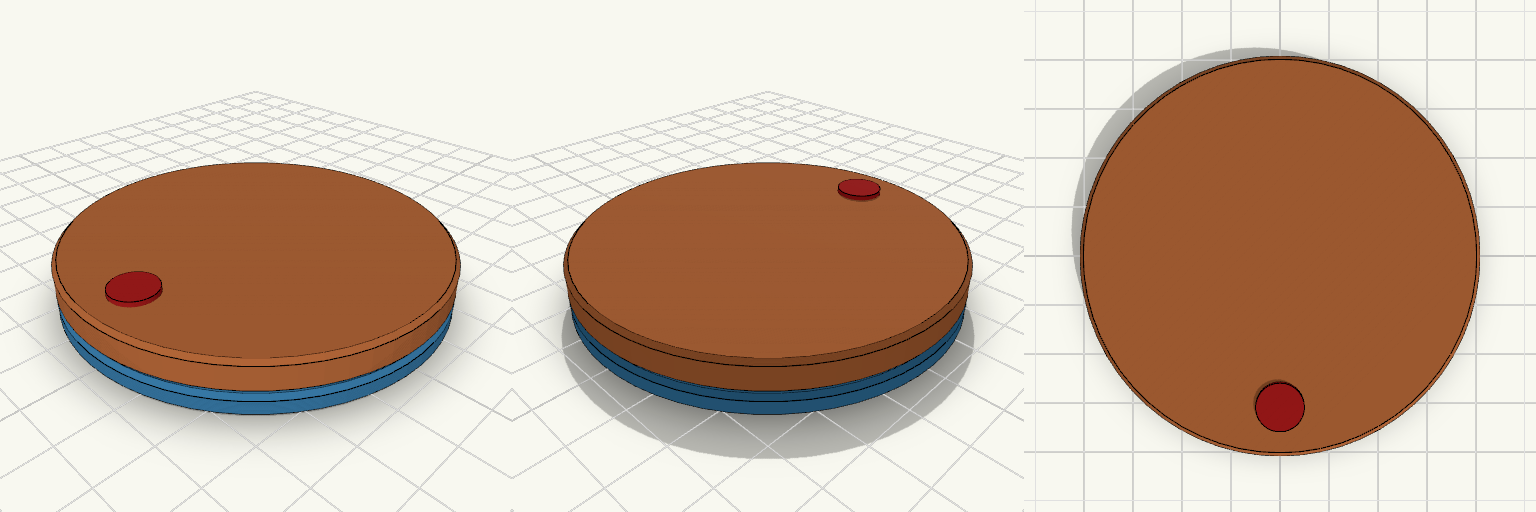
75 mm Drehscheibe, Randzapfen, Mittelloch 30 mm
Zwei übereinanderliegende Drehscheiben mit je 75 mm Durchmesser, verbunden über einen Zapfen am Rand (8 mm Schaft, 14 mm Kopf, 28 mm von der Mitte). Der Zapfen ist mit einem roten Punkt markiert. Maße, die vor dem Druck zu prüfen sind Lochdurchmesser in der unteren Scheibe: 30 mm, mittig, durchgehend durch 4 mm Material Spiel zwischen Zapfen (8 mm) und oberer Scheibe (9 mm Bohrung): 0,5 mm Abstand Lochrand zu Zapfenkopf: ca. 6 mm Hinweise Die obere Scheibe ist über dem Loch geschlossen. Die Scheiben liegen nur 0,5 mm überlappend aufeinander und können beim Druck verkleben, wenn das Spiel zu knapp ausfällt. Nicht für Zapfen-Verschiebung außerhalb des 28-mm-Radius ausgelegt.
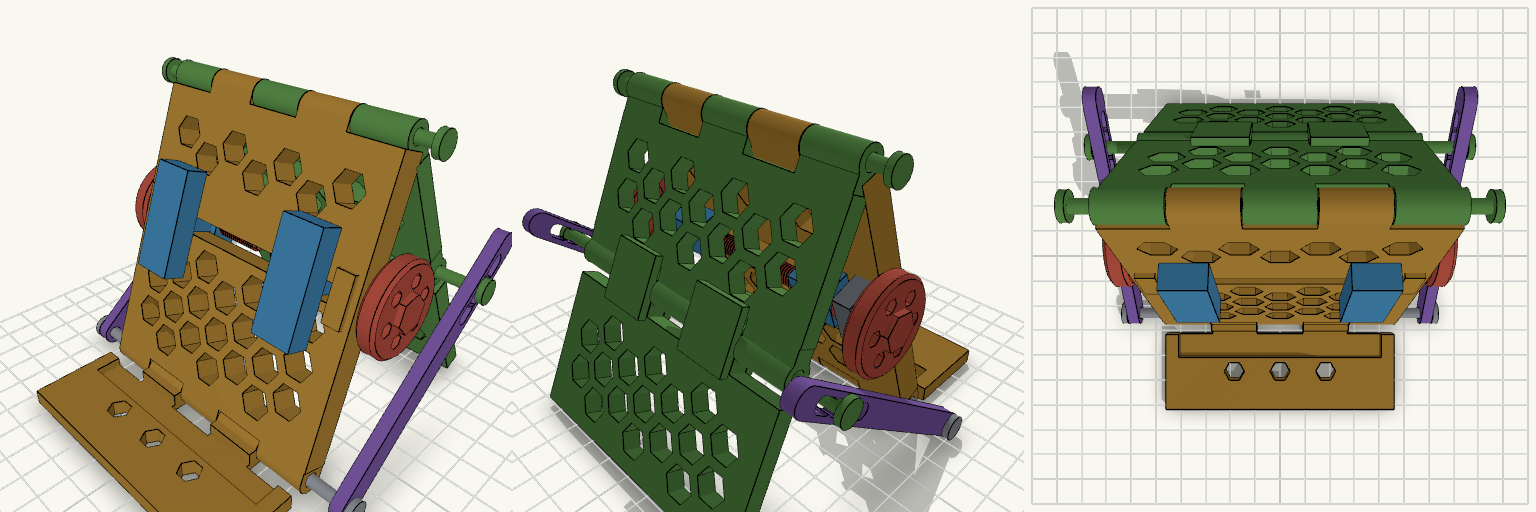
Folding Hex Easel Vise With Strut Links
A folding bench-vise and easel stand: a honeycomb-cut backrest on a hinged base ledge, two jaws driven by threaded crank rods, and a rear support leg held by a two-stick folding strut on each side. The strut is built from two flat sticks joined at an elbow pin. Push the leg in and the elbow bends, so the two sticks fold down alongside each other and act as one. The sticks sit outside the handwheels in X, so they pass beside the cranks and not through them. Remix hooks link_k (0.52): stick length as a fraction of the base-to-knee distance. It must stay above 0.5. Higher values give a bigger elbow bow and a longer reach. platelean (20°) and legang (25°): raise them together for a steeper recline. rodz (60 mm) and jawx (27 mm): crank height and jaw start position. hd and wall in the hex cutter (11 mm and 3 mm): change them for a denser or sparser honeycomb. phonew, phonet and phone_d (80, 10.5 and 3 mm): the phone slot. leg_lock: switches the knee stop tabs on or off. Pairs with Longer or thicker stick bars (4 mm wide now) for heavier loads. 4 mm filament offcuts as hinge and elbow pins.
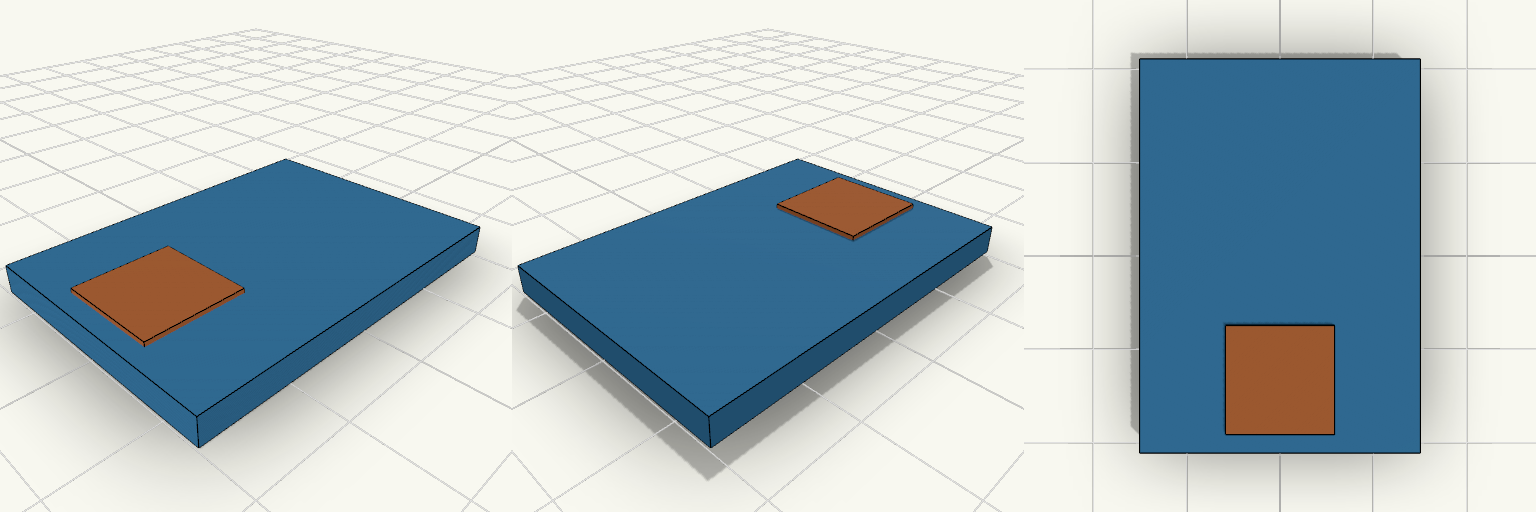
Plate With Offset Square Pad
A flat 28.5 × 40 × 3 mm plate with an 11 × 11 mm raised square pad, 0.5 mm thick, centered in X and set 2 mm from the Y- edge. Remix hooks Pad thickness (0.5 mm): a multiple of your layer height keeps the pad clean. 0.5 mm is about 2 or 3 layers. Pad offset (2 mm from the Y- edge): move it along Y to centre it or push it to the other edge. Plate length (40 mm): the pad is 11 mm, so any length above roughly 15 mm still holds it. Pairs with: a label, a sticker, or a second pad in a different colour for a multi-colour swap.
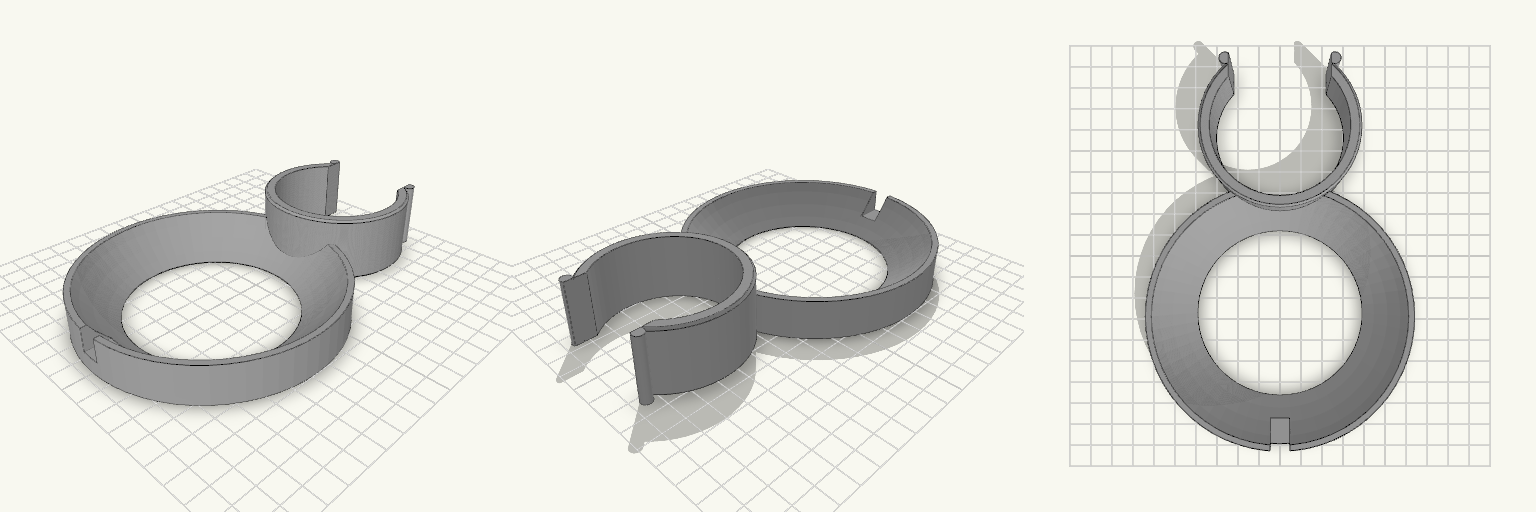
Drill Press Column Tray with Key Slot
A C-shaped clip that snaps around a 60 mm drill press column, with a 120 mm round dished tray attached at the front. The tray holds drill bits, chuck keys and small parts within reach while you work. The clip opening is narrower than the column, so it snaps on and grips by spring tension. Lead-in lips on both sides of the opening guide it onto the column. A slot on the front rim of the tray holds the chuck key, so it stays off the floor. Clip: fits a 60 mm column, 30 mm tall, 5 mm wall Tray: 120 mm diameter, 18 mm tall, with a 3 mm floor and a dished cavity Key slot: on the front rim, 9 mm wide, sized for a chuck key shaft Print the clip upright with the tray on the plate. PETG or ABS gives the clip better flex and durability than PLA.
Wargaming Reroll and Modifier Tokens
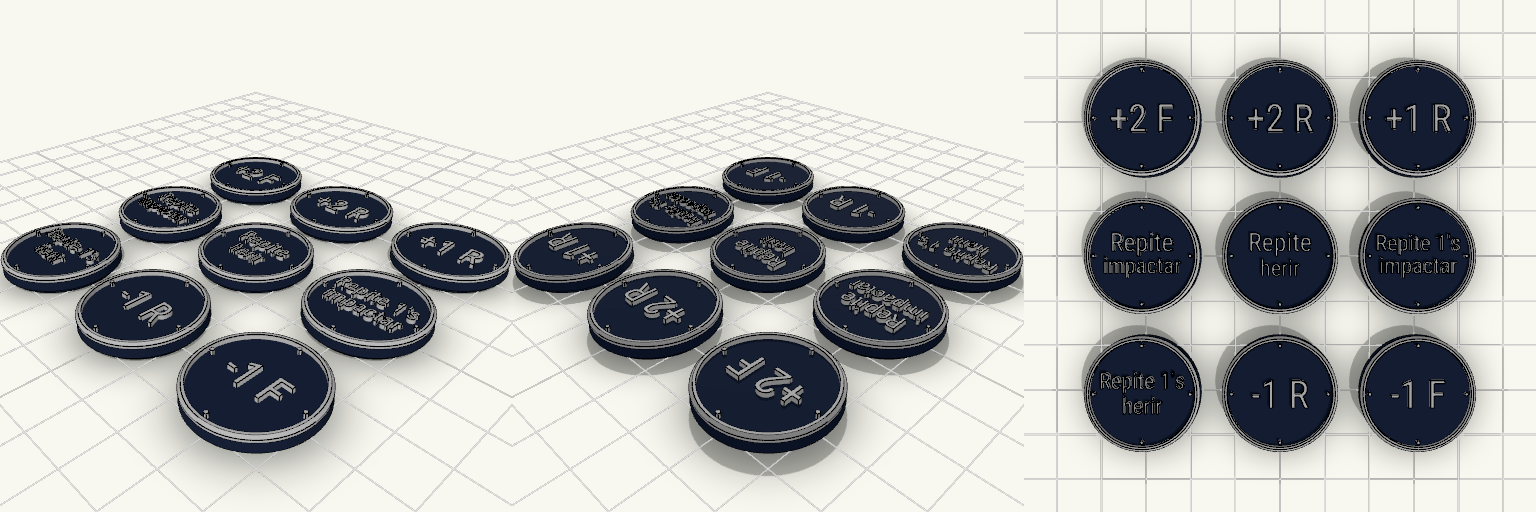
A set of nine one-sided 25 mm tabletop tokens for tracking modifiers and rerolls: +2 F, +2 R, +1 R, Reroll impactar, Reroll herir, Rerrol 1's impactar, Rerrol 1's herir, -1 R and -1 F. Each token has a 3 mm navy base with a 1 mm raised rim, text and four compass dots, sized for a filament swap at Z = 3 mm. Remix hooks Text size: short labels use 6 mm, two-line labels use 3.5–4 mm. Longer strings need a smaller size to stay clear of the dots at 10.5 mm radius. Line spacing: two-line labels sit at ±2.5 mm from centre; widen it for taller text. Colours: base and accents are separate bodies, so any two-colour pairing works. Spelling: "Rerrol 1's" is kept as supplied; change it to "Reroll 1's" if that was a typo. Pairs with: the earlier Invuln./No hay dolor set on the same 30 mm grid.
Bracelet Link Fit Gauge Block
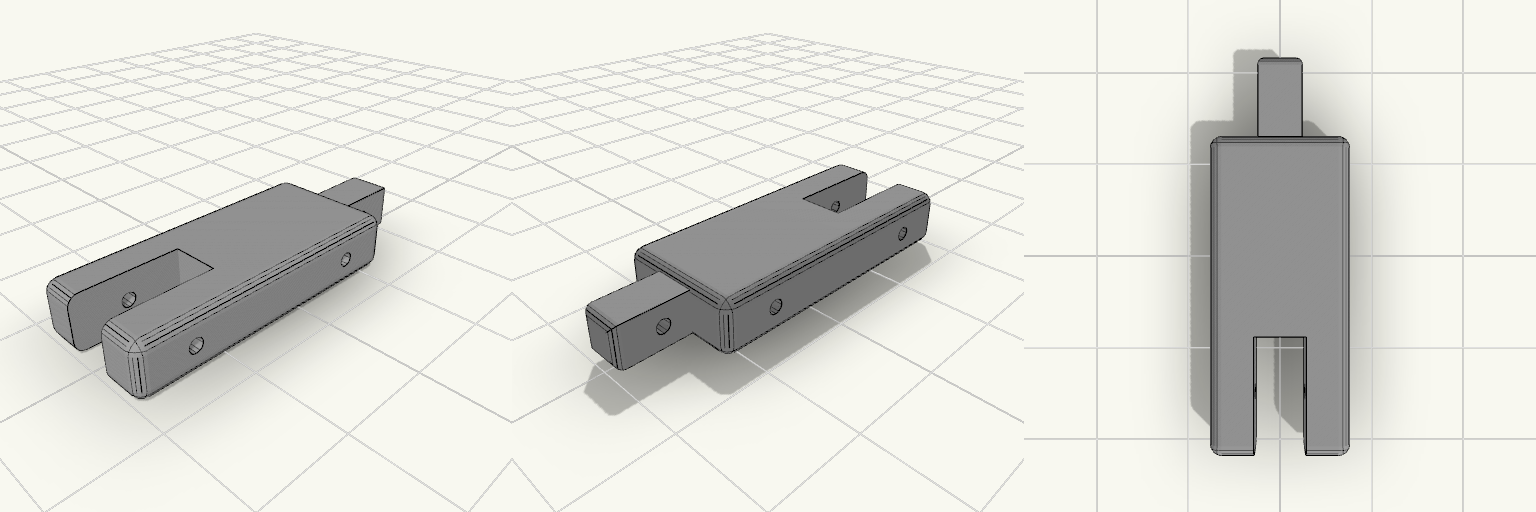
A bracelet repair print that turns out too tight or too loose wastes hours. This fit gauge block is a 15-minute test piece that checks the fork slot and pin bores before the real part gets printed. Key numbers Block: 14 x 32 x 6 mm, origin at center, 1.2 mm edge fillets Fork slot: 5.2 mm wide, 12 mm deep, open at the -Y end, flat end wall at Y = -4 Prongs: 4.4 mm wide each Bores: Ø1.6 along X at Y = -10 (through both prongs) and Y = +10 (solid section) Tongue sample: 4.4 x 4.6 mm, 8 mm long on the +Y end, 0.9 mm end fillets, Ø1.6 bore at Y = +19 (40 mm overall) Printing Flat on the bed, PLA or PETG, 0.4 mm nozzle, 0.2 mm layers 4+ walls, 100% infill, 3 mm brim, no supports, 40 mm/s or slower Ream both bores once by hand with a 1.5 mm drill bit Checks A bracelet tongue link should enter the slot with slight friction. An original pin should slide through the -Y bore.