Bracelet Link Fit Gauge Block
Created today
Description
A bracelet repair print that turns out too tight or too loose wastes hours. This fit gauge block is a 15-minute test piece that checks the fork slot and pin bores before the real part gets printed.
Key numbers
- Block: 14 x 32 x 6 mm, origin at center, 1.2 mm edge fillets
- Fork slot: 5.2 mm wide, 12 mm deep, open at the -Y end, flat end wall at Y = -4
- Prongs: 4.4 mm wide each
- Bores: Ø1.6 along X at Y = -10 (through both prongs) and Y = +10 (solid section)
- Tongue sample: 4.4 x 4.6 mm, 8 mm long on the +Y end, 0.9 mm end fillets, Ø1.6 bore at Y = +19 (40 mm overall)
Printing
- Flat on the bed, PLA or PETG, 0.4 mm nozzle, 0.2 mm layers
- 4+ walls, 100% infill, 3 mm brim, no supports, 40 mm/s or slower
- Ream both bores once by hand with a 1.5 mm drill bit
Checks
- A bracelet tongue link should enter the slot with slight friction.
- An original pin should slide through the -Y bore.
Images
More like this
Explore more in Workshop & Tools →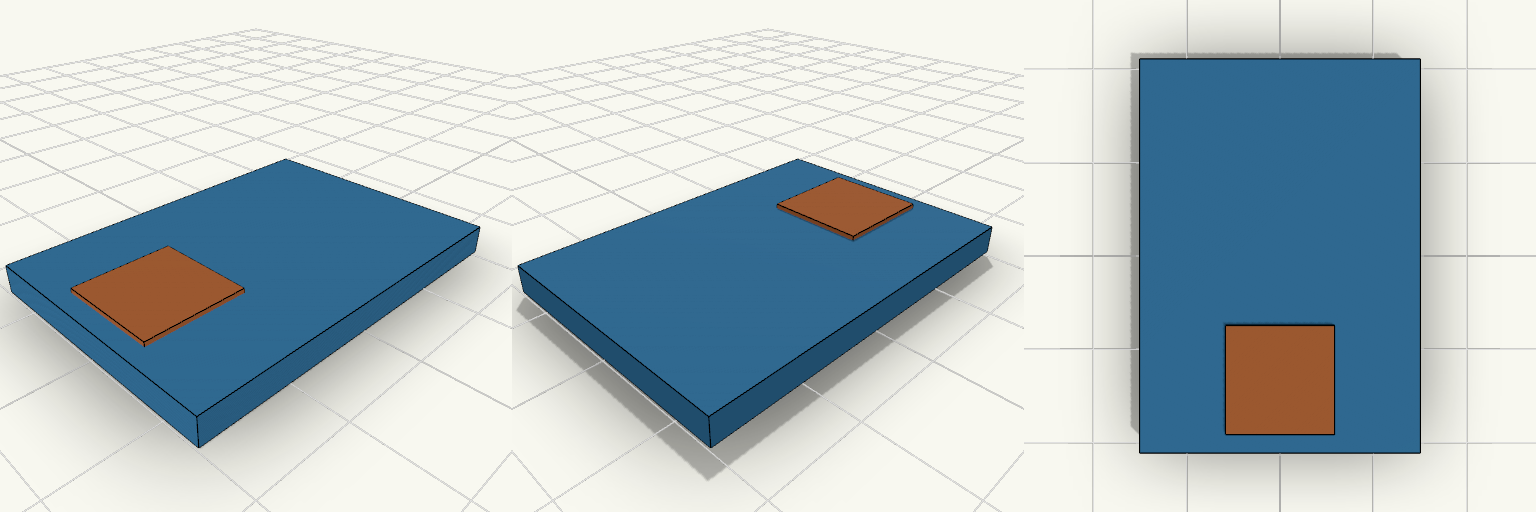
Plate With Offset Square Pad
A flat 28.5 × 40 × 3 mm plate with an 11 × 11 mm raised square pad, 0.5 mm thick, centered in X and set 2 mm from the Y- edge. Remix hooks Pad thickness (0.5 mm): a multiple of your layer height keeps the pad clean. 0.5 mm is about 2 or 3 layers. Pad offset (2 mm from the Y- edge): move it along Y to centre it or push it to the other edge. Plate length (40 mm): the pad is 11 mm, so any length above roughly 15 mm still holds it. Pairs with: a label, a sticker, or a second pad in a different colour for a multi-colour swap.
Drill Press Column Tray with Key Slot
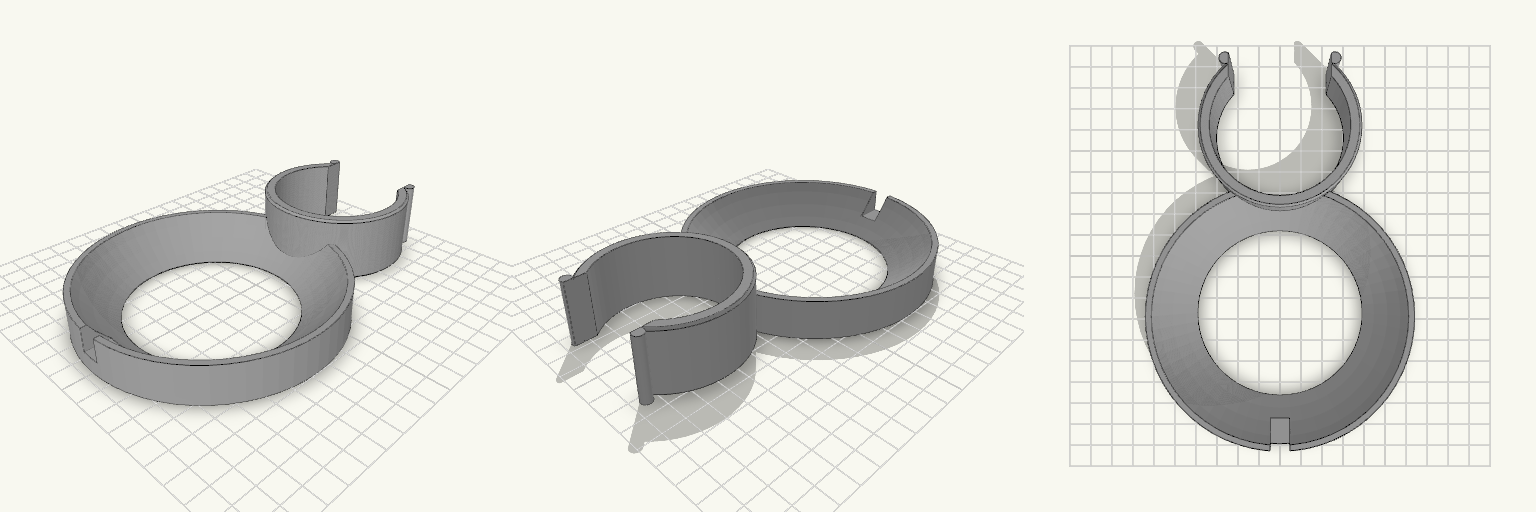
A C-shaped clip that snaps around a 60 mm drill press column, with a 120 mm round dished tray attached at the front. The tray holds drill bits, chuck keys and small parts within reach while you work. The clip opening is narrower than the column, so it snaps on and grips by spring tension. Lead-in lips on both sides of the opening guide it onto the column. A slot on the front rim of the tray holds the chuck key, so it stays off the floor. Clip: fits a 60 mm column, 30 mm tall, 5 mm wall Tray: 120 mm diameter, 18 mm tall, with a 3 mm floor and a dished cavity Key slot: on the front rim, 9 mm wide, sized for a chuck key shaft Print the clip upright with the tray on the plate. PETG or ABS gives the clip better flex and durability than PLA.
Tape Spindle and Zip Tie Bench Caddy
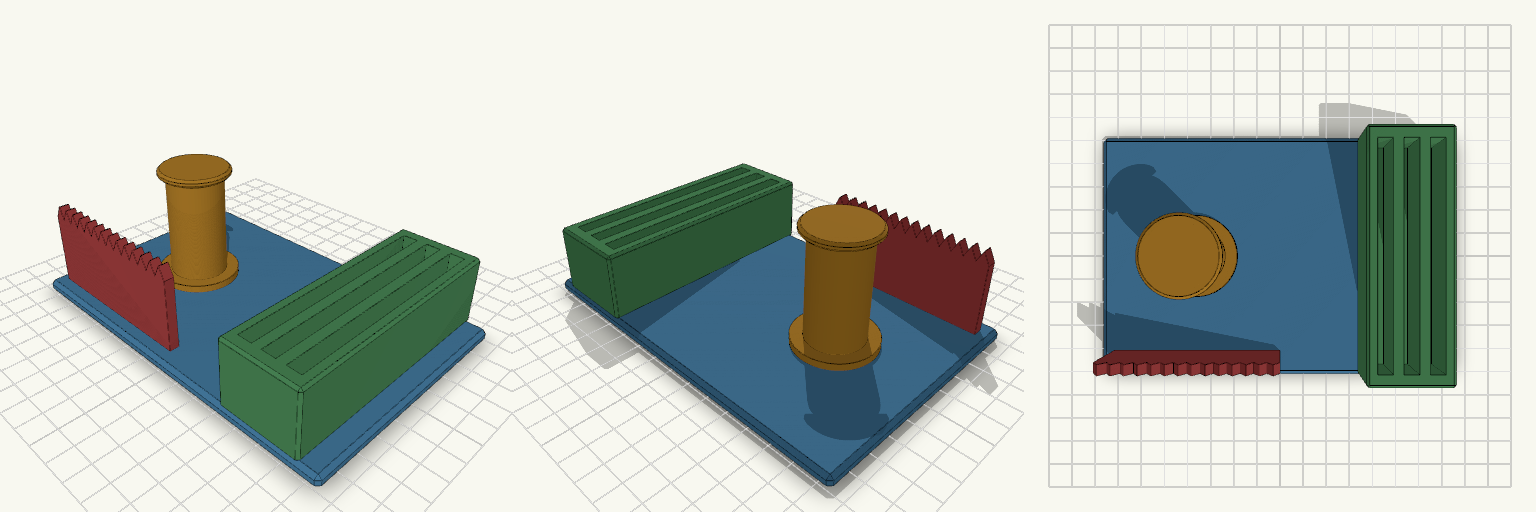
Bench caddy that keeps a tape roll and a bundle of zip ties in one fixed spot on the bench. A 24 mm spindle holds a roll with a 25 mm core. A serrated tear bar runs along the front edge so tape can be pulled across the teeth and torn. A block on the right has three slots for zip ties up to 90 mm long. Specs Base: 150 × 100 × 5 mm plate with 1.5 mm chamfered edges Spindle: 24 mm diameter, about 46 mm tall, with a 34 mm foot and a 30 mm top flange. Sized for a 25 mm core with 1 mm clearance. Tear bar: 70 mm long, 4 mm thick wall with 14 serrated teeth. It sits along the front (-Y) edge, beside the spindle. Tie trough: 34 × 100 mm block, 28 mm tall, with three 6 mm wide slots, each 90 mm long, in a row across X. Overall height: about 54 mm, measured at the top of the spindle flange. Material: PLA or PETG. Print flat on the base with no supports. Notes Fit has not been tested against a physical roll. If the roll is tight on the spindle, reduce the spindle diameter slightly. Slot width suits standard narrow zip ties. Wider ties need wider slots.
Sleeve — 0.385" OD Spacer Tube
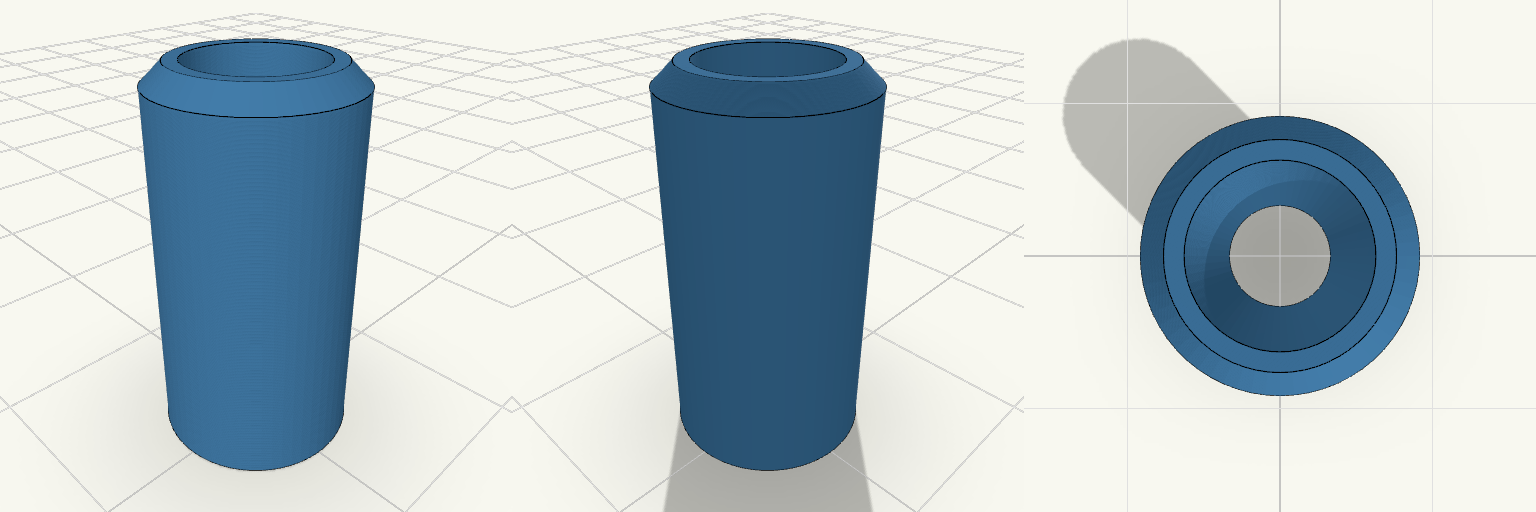
Sleeve is a plain, precise hollow cylinder sized in inches: a straight-through bore and a clean outer wall, ready to use as a spacer, bushing or standoff. Dimensions Outer diameter: 0.385" (9.78 mm) Inner diameter: 0.26" (6.60 mm) Length: 0.75" (19.05 mm) Wall thickness: about 0.0625" (1.59 mm) Print notes Print standing on end, no supports needed. Bore may print slightly tight; ream or scale up a touch if fit matters.
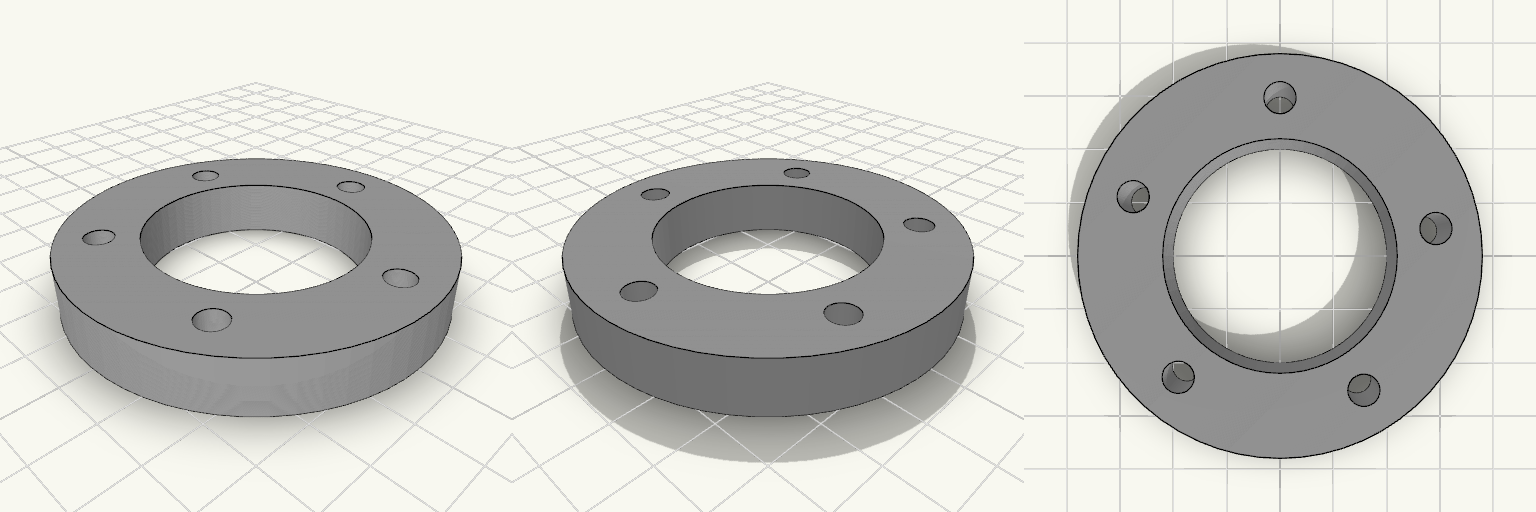
69 mm Round Spacer, 5 Holes
A round spacer 69 mm in diameter and 10 mm tall with a 40 mm center bore and five 5.5 mm through-holes on a 54 mm bolt circle. Outer diameter: 69 mm Height: 10 mm Center hole: 40 mm Bolt holes: 5 × 5.5 mm on a 54 mm circle Hole spacing: 68°, 72°, 72°, 68°, 80° (the 80° gap is between the last and first hole) Prints flat with no supports
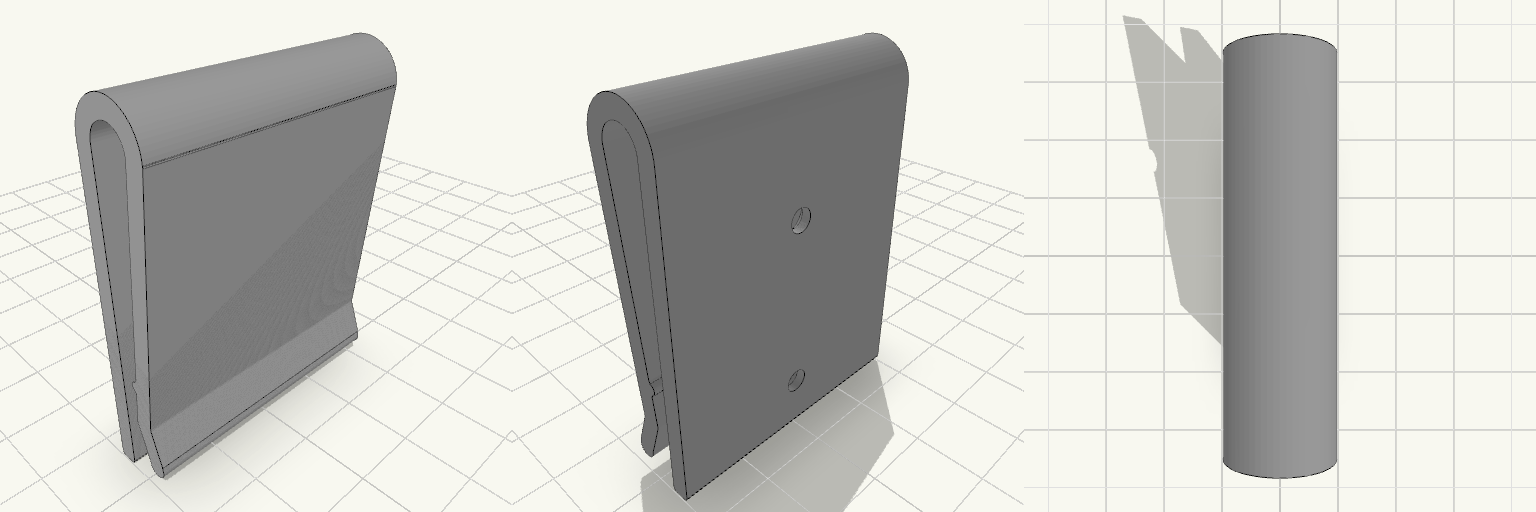
J-Shaped Pocket Edge Fabric Clip
A 40 mm wide J-clip that grips a fabric pocket edge. A flat back plate holds two countersunk M3 screw holes, and a sprung leg closes back toward it. Remix hooks Relaxed gap: 1.5 mm, set by the leg angle (about 6°). Raise it for thick cloth, lower it for more grip. Tooth: 0.8 mm round bump 12 mm from the leg tip. Make it larger, or remove it for a smooth clamp. Mouth flare: 25° over the last 6 mm. A wider flare helps with thick fabric. Bend radius: 3 mm inner, with 2.6 mm walls. Print with layers running along the width so the bend doesn't split. Holes: 25 mm apart, 20 mm up from the bottom, 3.4 mm with a 6 mm countersink. Change the spacing to match a mounting pattern. Plate is 45 mm tall and the leg is 42 mm long. It pairs well with PETG or nylon for spring.