Description
Bu parça, arka tabanı 5 mm genişliğinde ve 1 mm yüksekliğinde olan, uca doğru eğimli bir şekilde azalarak sıfırlanan bir ikizkenar üçgen kamadır. Alt kenar uzunlukları istenildiği gibi tam 3.905 mm ölçüsüne denk gelir.
- Genişlik: 5 mm arka taban
- Yükseklik: 1 mm'den uca doğru sıfırlanır
- Kenar Uzunlukları: 3.905 mm (alt kenarlar)
Images
More like this
Explore more in Workshop & Tools →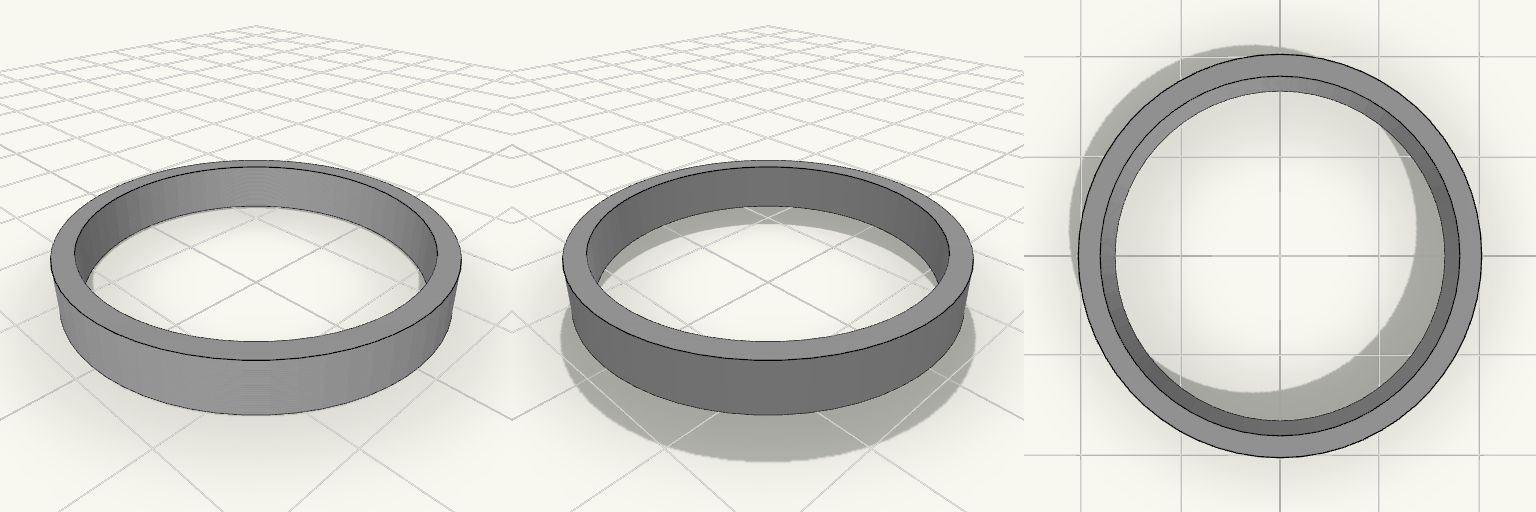
Кольцо 37/33 мм, толщина 5 мм
Простое круглое кольцо-втулка с ровными торцами. What it's for Прокладка, проставка, втулка или заготовка для переходного кольца. Печатается лёжа, без поддержек. Dimensions Наружный диаметр: 37 мм Внутренний диаметр: 33 мм Толщина стенки: 2 мм Высота (толщина кольца): 5 мм Remix ideas Добавить фаски на кромках. Увеличить внутренний диаметр на 0,2–0,4 мм для посадки с зазором. Добавить выступ или паз для фиксации.
sink drain lever, G*b*rit
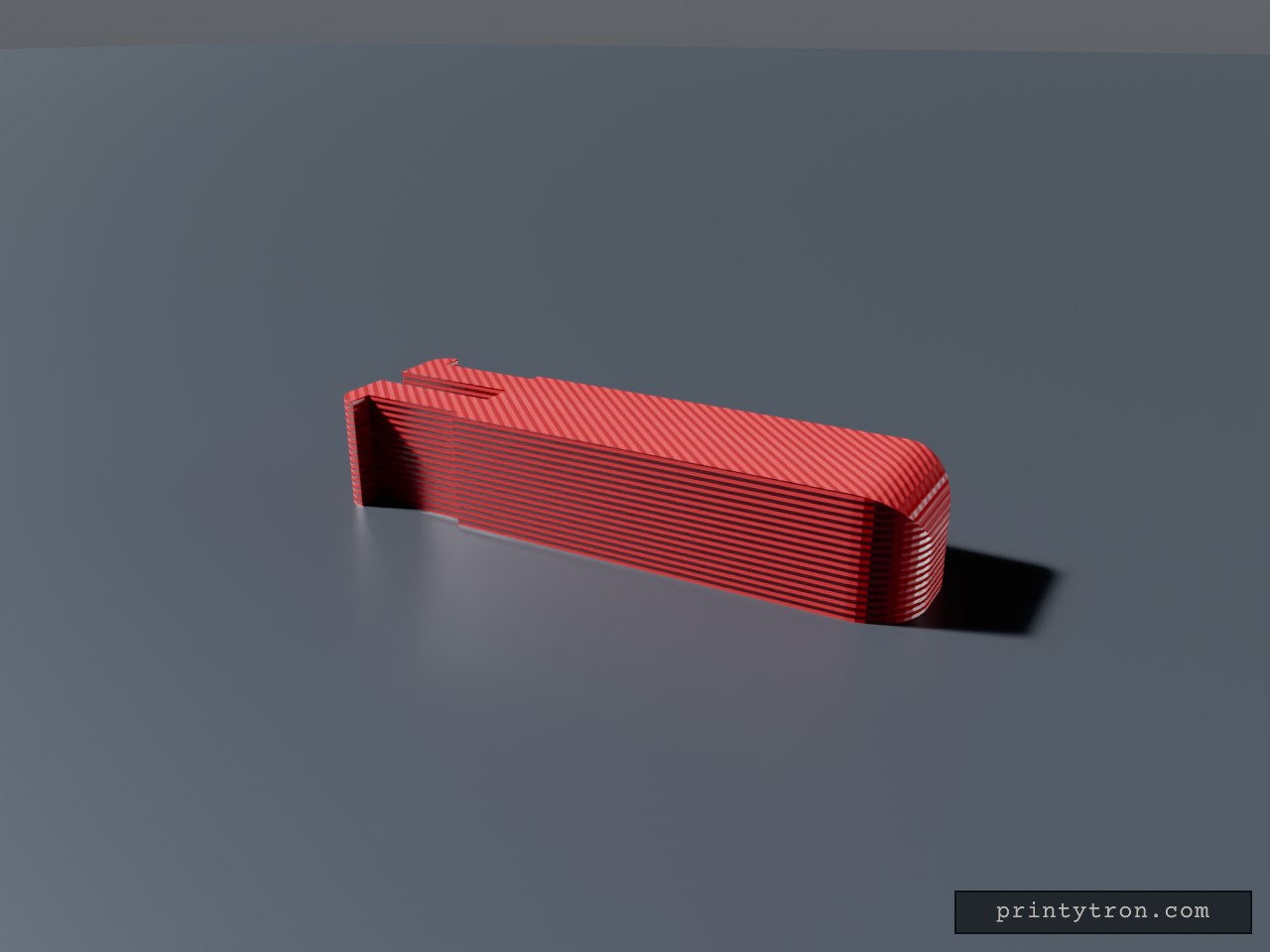
A small rectangular block, 26 mm overall, made of a 20 mm body and a 6 mm slotted end section. A narrow slot is cut into the 7.5 mm end face: 1.5 mm wide, running 6 mm into the length and through the full 5 mm height, so it reads as a thin open channel down that end. The slotted 6 mm keeps the full 7.5 mm width, while the rest of the body is narrowed to 6.5 mm, so a 1 mm shoulder sits on each side where the two sections meet. On the two flat side faces — not on the long corners — a straight rectangular step is cut 1 mm deep over the full 5 mm height. It starts 6 mm in from the slotted end and stops 1 mm short of the end face, so the last millimetre keeps its full width and a small square notch is left at the end. There is no angle anywhere in this cut. The far end from the slot is rounded: both vertical corners and the top edge there carry a 2.4 mm radius, blending into one soft rounded end — about as much as a 5 mm tall block can take before the curve meets itself halfway. The outer corners at the slotted end carry a small 0.9 mm radius; the side steps and the notch itself stay sharp, and the remaining top and bottom edges stay square. It works as a spacer, shim or register that a thin rib or plate edge drops into, with the side step giving that end a shoulder to seat against. Starting values Overall length: 26 mm — a 20 mm body plus the 6 mm slotted end section Body cross-section: 6.5 × 5 mm; the last 6 mm at the slotted end is 7.5 × 5 mm (1 mm shoulder each side) End slot: 1.5 mm wide, 6 mm deep along the length, through the full 5 mm height, centred Side steps: 1 mm deep on both flat side faces, constant depth, running full height, starting 6 mm from the end and ending 1 mm before the end face Far-end vertical corners and top edge: 2.4 mm radius, rounded Slotted-end outer corners: 0.9 mm radius; side steps and notch corners sharp Prints as one piece, no supports needed for any of the features above Remix hooks Body length is the free dimension. The 20 mm is the span between the rounded end and the start of the slotted section — stretch or shorten it to set the gap, and nothing else about the part has to change. The 6 mm slotted section is the fixed end, so all the length adjustment happens at the plain end. The width step is the fit dial. The 6.5 mm body and the 7.5 mm slotted end are two independent numbers: match the narrow body to the channel it slides into and the wider end to whatever it shoulders against. Equalising them removes the shoulder entirely and gives a plain constant-width block. Where the step falls. The 7.5 mm section currently runs the last 6 mm, tied to the slot depth; move that boundary to change how much of the part is full width. Slot width is the tightest tolerance. At 1.5 mm it takes a thin rib, sheet-metal edge or card; resize it to suit whatever it has to straddle, and remember a printed slot usually needs a little clearance over the nominal thickness. Slot depth sets the character. At 6 mm it is a deep open channel relative to the 26 mm part; shorten it to a millimetre or two and it becomes a shallow locating register instead. Side step depth. At 1 mm the relief is shallow and forgiving; go deeper for a part that shoulders harder against a pocket wall, or take it to zero for plain flat sides. The 1 mm land before the end face is what forms the notch — widen or remove it to change how the part locks against a shoulder. The far-end radius is already near its ceiling. 2.4 mm is close to the limit on a 5 mm block, so going rounder means growing the height, not the radius. Drop it to 1.5 mm for a snugger square look, or zero for a sharp end. Slotted-end radius is the tight one. 0.9 mm is limited by the short 1 mm end tab; widening that land is the way to buy room for a rounder corner there. Shape of the relief. Swapping the flat step for a ramp, or cutting the corners instead of the flat faces, turns this into a lead-in wedge or a chamfered block. Through vs. blind. The slot cuts the full height, so it is visible from both the top and bottom faces; make it blind and you get a closed-bottom channel. Obvious pairings. A matching 1.5 mm rib or plate edge for the slot to register against, or a mirrored second block so the two slots face each other and trap a thin part between them.
Tapa cuadrada con agujeros mixtos
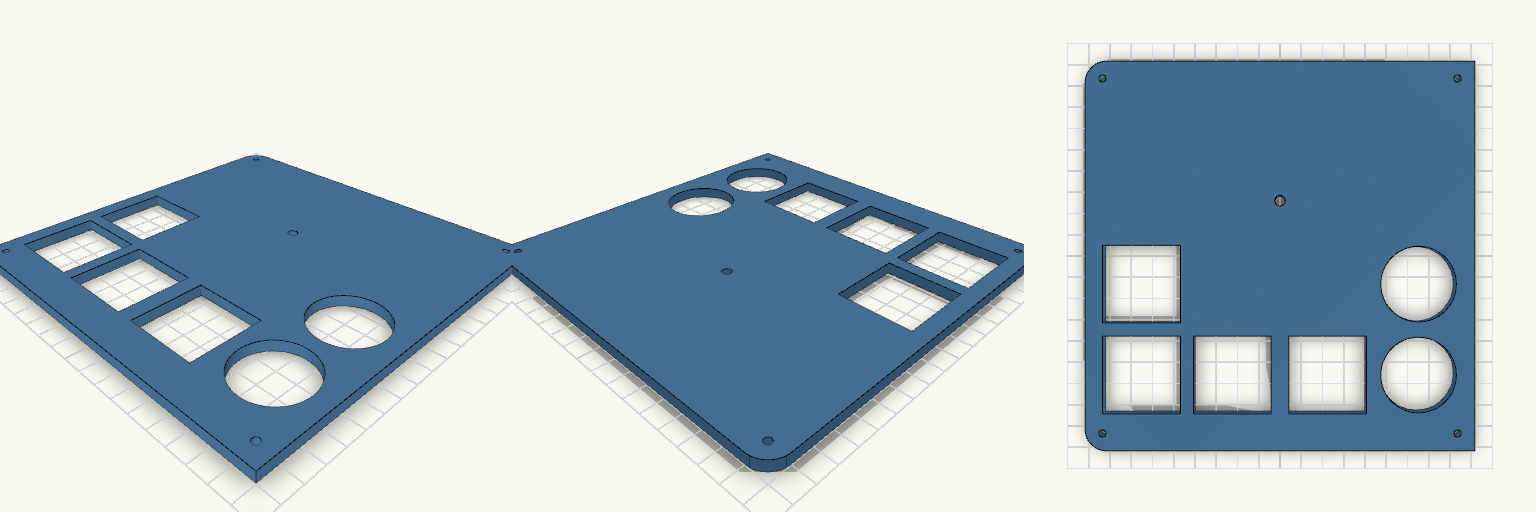
Tapa de 180×180×5 mm con dos lados redondeados a la izquierda (radio 10 mm), cuatro agujeros M3 en las esquinas y un agujero de 5 mm. Dos agujeros redondos de 35 mm a la derecha y cuatro cuadrados de 36 mm a la izquierda, en la zona inferior. Ideas para remezclar Diámetro de los redondos (35 mm): súbelo o bájalo según la pieza que deba pasar; la pared entre ellos es de 7 mm. Lado cuadrado (36 mm): ajústalo por separado; los centros están a 42 mm. Radio de las esquinas (10 mm): 5 mm para una curva más suave. Agujero de 5 mm: está a 25,5 mm sobre el centro; muévelo para un pasacables o un pulsador. Combina con: una base o caja de 180 mm usando los M3 de las esquinas (3,4 mm, a 8 mm del borde).
SpoolScope — Filament Remaining Gauge
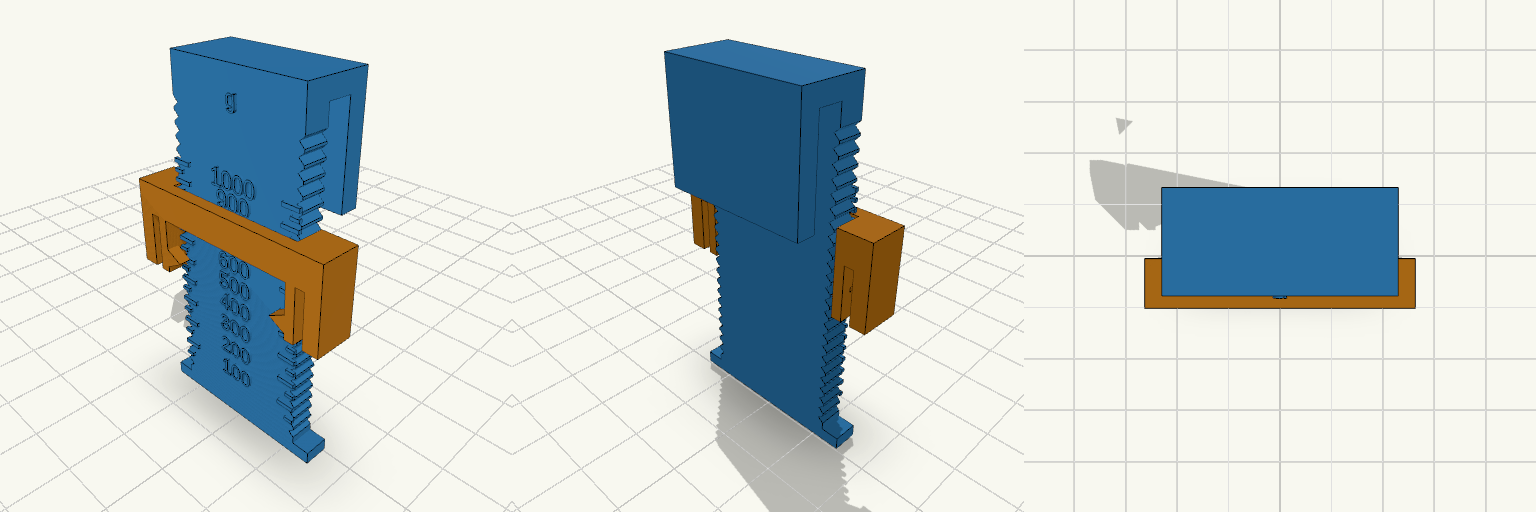
SpoolScope is a two-part gauge for estimating how much filament remains on a standard spool, made for spools that sit out of easy view in an AMS or on a shelf. The rail hooks over the flange rim; the sliding block rides on it with light detents, so you can push it down until it touches the filament, lift the gauge away and read the result. Raised ticks and numbers plus an unambiguous arrow on the block make the measurement clear without needing line-of-sight while the gauge is in place. Features Two printed parts: a rail with a rim hook, and a detented sliding block. Gram scale from 0 to 1000 g, with ticks every 50 g and numbers every 100 g. Ticks follow filament geometry rather than an even spacing: closer together near full, wider apart near empty. Arrows on the block tip directly toward the scale, and the detents hold the reading after the gauge is lifted off. Hook gap of 4 mm, sized to clear flanges from 2.8 mm to 3.6 mm thick. Dimensions Flange diameter: 200 mm. Hub outer diameter: 95 mm (from a measured Polymaker spool). Full-roll diameter: 170 mm (estimated from a 1 kg PLA roll on a 95 mm hub and a 65.6 mm spool width). Hook gap: 4 mm. Fitting and calibration Sized around Polymaker and Inland 1 kg spools; other brands are worth checking against the hub and flange figures above. The scale can be shifted by a single fixed offset if a first print reads consistently high or low, so a weight check against a known spool is worth doing before trusting the numbers. If the error differs between a full and an empty spool, the hub and full-roll values are the ones to correct. Print notes Both parts are laid out flat on the print plate. The block contacts the filament at its outer edges rather than at the centre, so a reading can sit slightly high; a weight check against a known spool is the best way to confirm the scale.
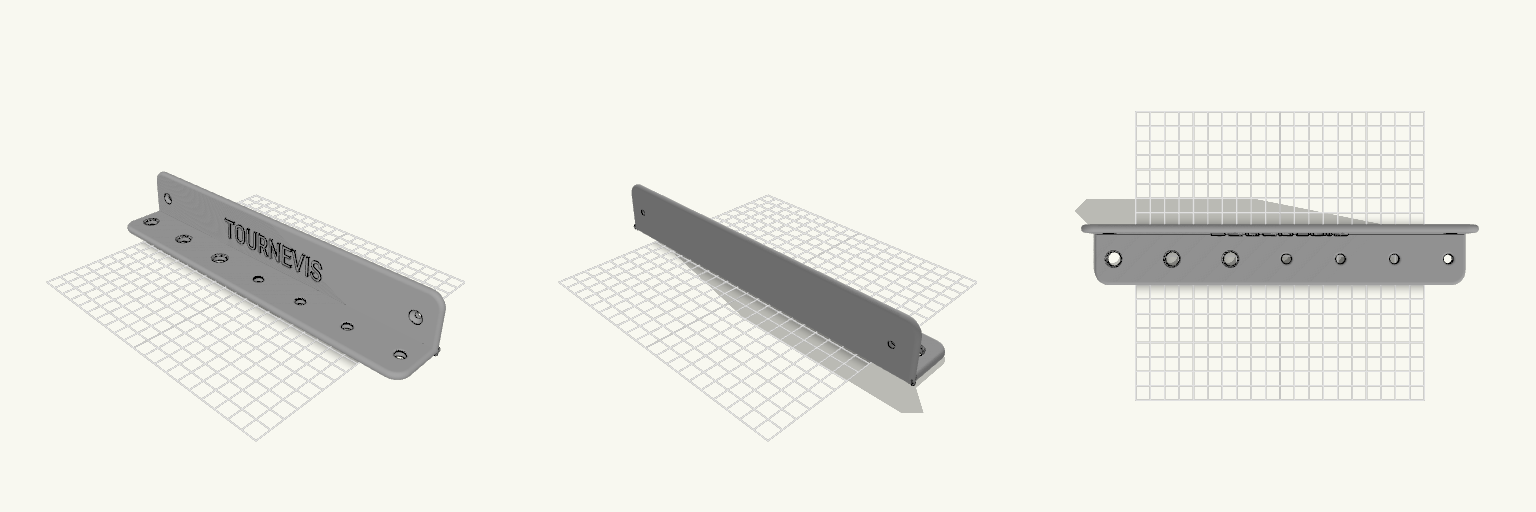
Support mural tournevis 255 × 40 × 40 mm
Support mural pour tournevis : plaque verticale de 255 × 40 mm et tablette horizontale de 255 × 40 mm, épaisseur 5 mm. Trous de la tablette, de gauche à droite : 10, 10, 10, 7, 7, 7, 7 mm, bords arrondis. Deux trous de vis fraisés dans la plaque. Texte « TOURNEVIS » en relief de 1,5 mm. Coins extérieurs arrondis à 10 mm ; les deux coins à la jonction plaque/tablette sont droits. À vérifier avant impression : la longueur de 255 mm doit tenir sur votre plateau. Ne convient pas aux tournevis dont la tige dépasse 10 mm.
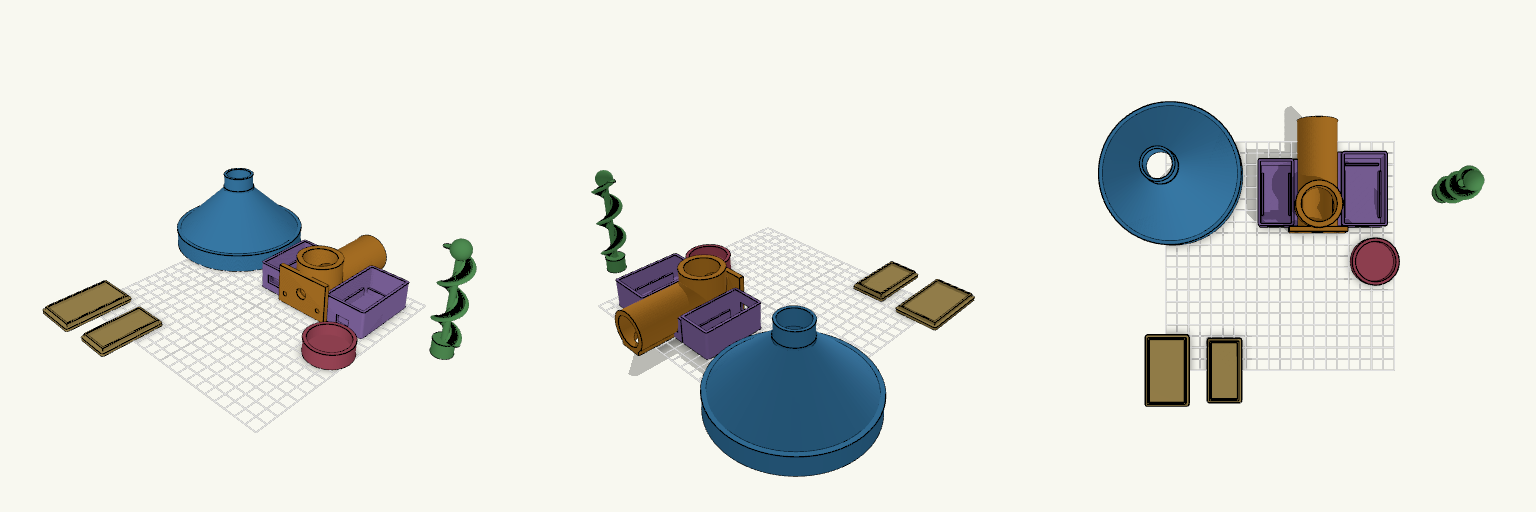
28BYJ-48 Solid One-Piece Kibble Auger
Solid one-piece helical auger for a 28BYJ-48 geared stepper, running in a 26 mm housing bore, with the funnel and electronics cases printed alongside. Fit Motor: 28BYJ-48 only (5 mm shaft with 3 mm flats). Bore: 26 mm; flight tip 24.4 mm. Kibble: sized for about 11.5 mm pieces. Check before printing Thread pitch on the 109 mm funnel is assumed at 6 mm. Measure the host opening. The auger prints in one piece, so the flight overhangs may need supports. Does not fit Motors with a different shaft profile or hole spacing. Housing bores other than 26 mm.