FlowLink — Threaded Extension Pipe
Created 1 months ago
Remixed once
Description
A fully 3D-printable, 12-inch extension pipe designed for infinite stacking. The standard slip-fit ends have been replaced with integrated 3mm-pitch metric threads, allowing multiple segments to be screwed together securely without glue.
Features
- Threaded joints: 21mm male thread with a matching 21.6mm female thread cut into the base, providing 0.6mm of clearance for smooth tightening right off the printer.
- Support-free design: The internal transitions use 45-degree tapers, meaning no internal supports are required.
- Slim profile: Maintains a 25mm outer diameter with a robust 3mm wall, tapering internally only where necessary to support the threaded sections.
Print notes
Print this standing upright. Given the tall, narrow footprint, a wide brim is absolutely mandatory to prevent bed adhesion failure when the printer reaches the top threads.
Images
More like this
Explore more in Workshop & Tools →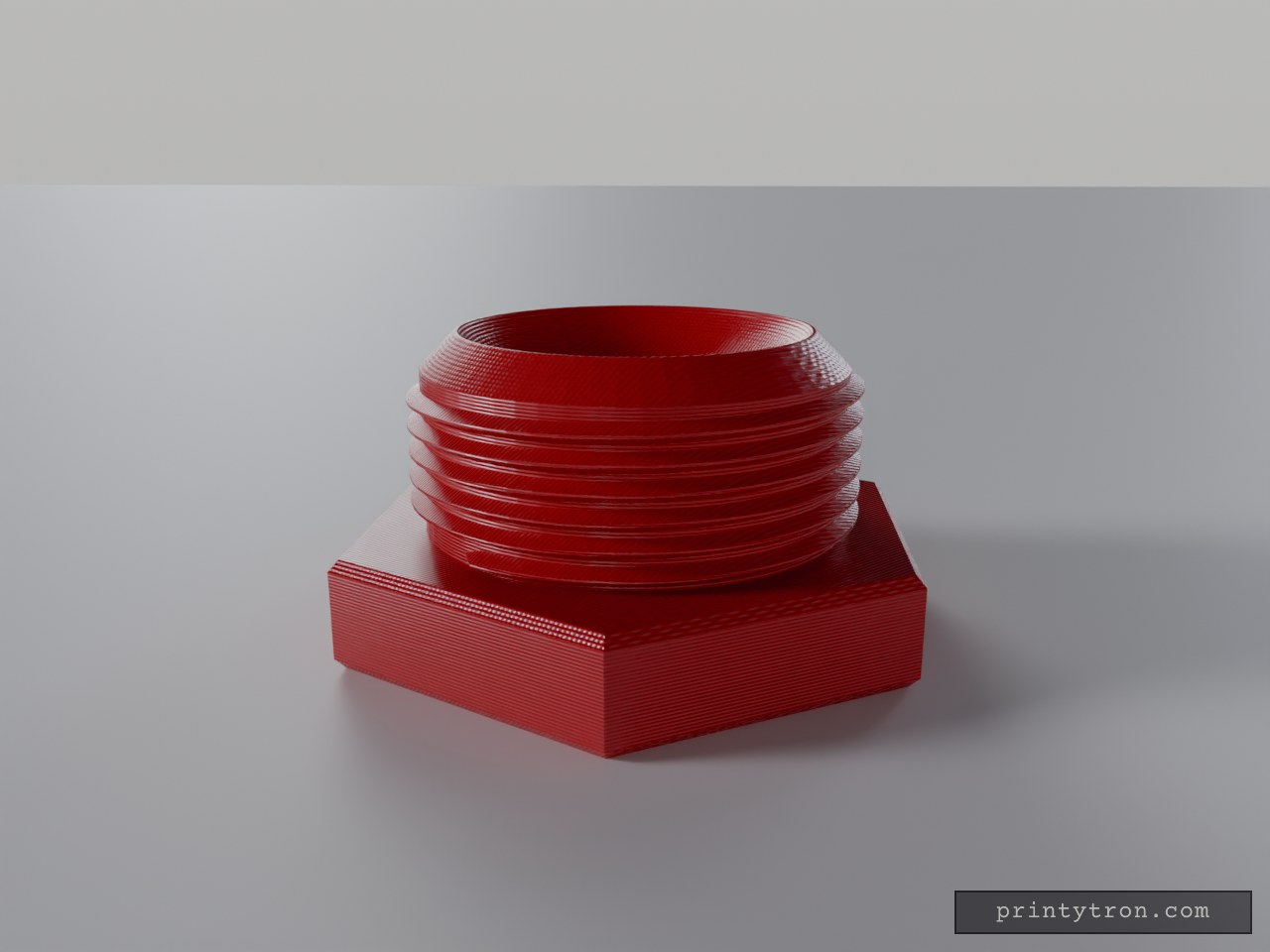
G1 1/4" BSPP Bull Nose Plug, Concave End
A male G1 1/4 BSPP threaded plug with a 50 mm hex head and a concave dish in the threaded end, made for a bull nose fitting with a female G1 1/4 port. Fit check Fits: female G1 1/4 BSPP ports (11 TPI, 2.309 mm pitch). Thread is cut at 41.5 mm against the 41.91 mm nominal for print clearance. Does not fit: NPT ports, metric ports, or male-threaded fittings (those need a female cap). Thread form: 60° flanks, not true 55° Whitworth. Fine for a plastic plug, not an exact BSP profile. Measure first: the internal thread diameter of the fitting. Dimensions Thread length 18 mm, hex head 50 mm across flats, 10 mm tall. Concave dish: about 32 mm across and 8 mm deep in the threaded end. No sealing washer face is included; use a bonded seal or thread tape.
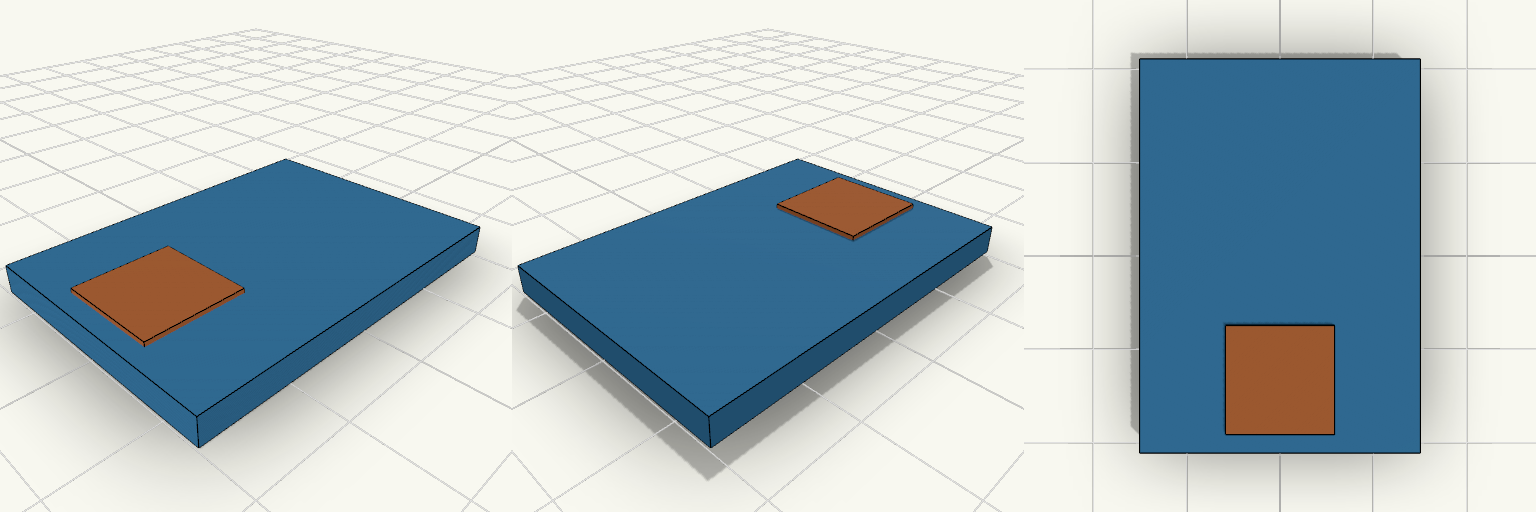
Plate With Offset Square Pad
A flat 28.5 × 40 × 3 mm plate with an 11 × 11 mm raised square pad, 0.5 mm thick, centered in X and set 2 mm from the Y- edge. Remix hooks Pad thickness (0.5 mm): a multiple of your layer height keeps the pad clean. 0.5 mm is about 2 or 3 layers. Pad offset (2 mm from the Y- edge): move it along Y to centre it or push it to the other edge. Plate length (40 mm): the pad is 11 mm, so any length above roughly 15 mm still holds it. Pairs with: a label, a sticker, or a second pad in a different colour for a multi-colour swap.
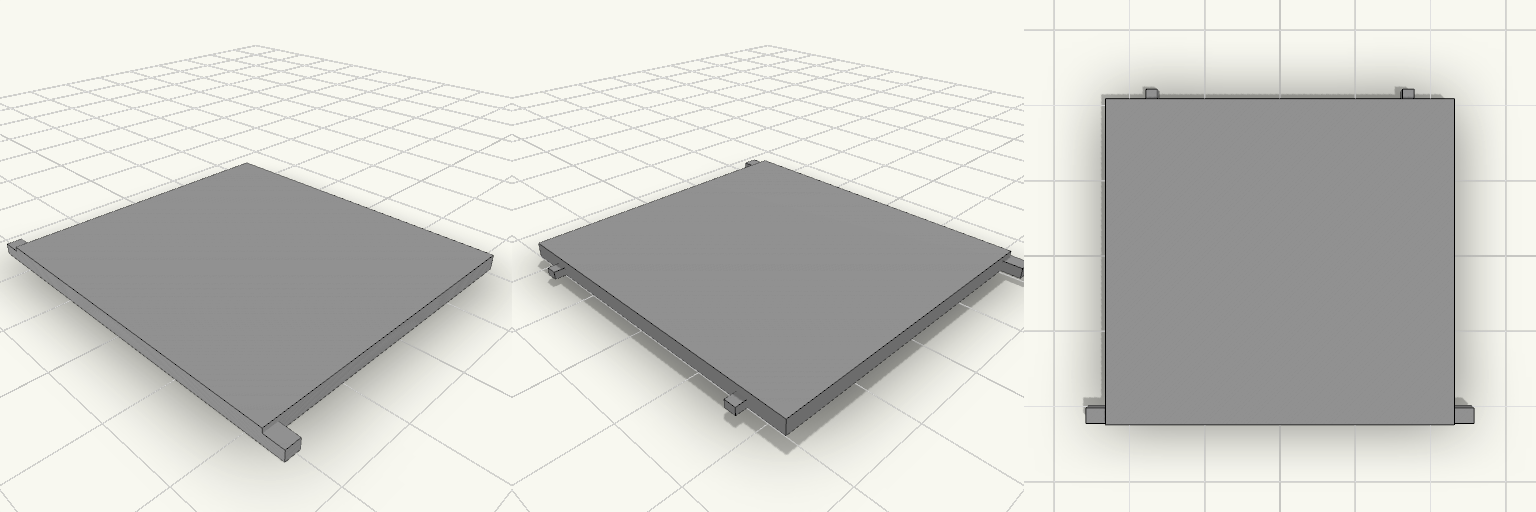
Flat Ground Plate 45x42x2 mm with Tabs
Flat 45 × 42 × 2 mm ground plate with two side tabs on the front 45 mm edge and two small blocks on the back edge. Overall width across the tabs is 50.4 mm. Plate: 45 × 42 × 2 mm, sharp edges Side tabs: 1.4 mm thick, flush with the underside, 50.4 mm overall span Back blocks: 1.5 mm wide, 1 mm thick, 1.5 mm protrusion, 5 mm from each side edge Print flat, no supports needed
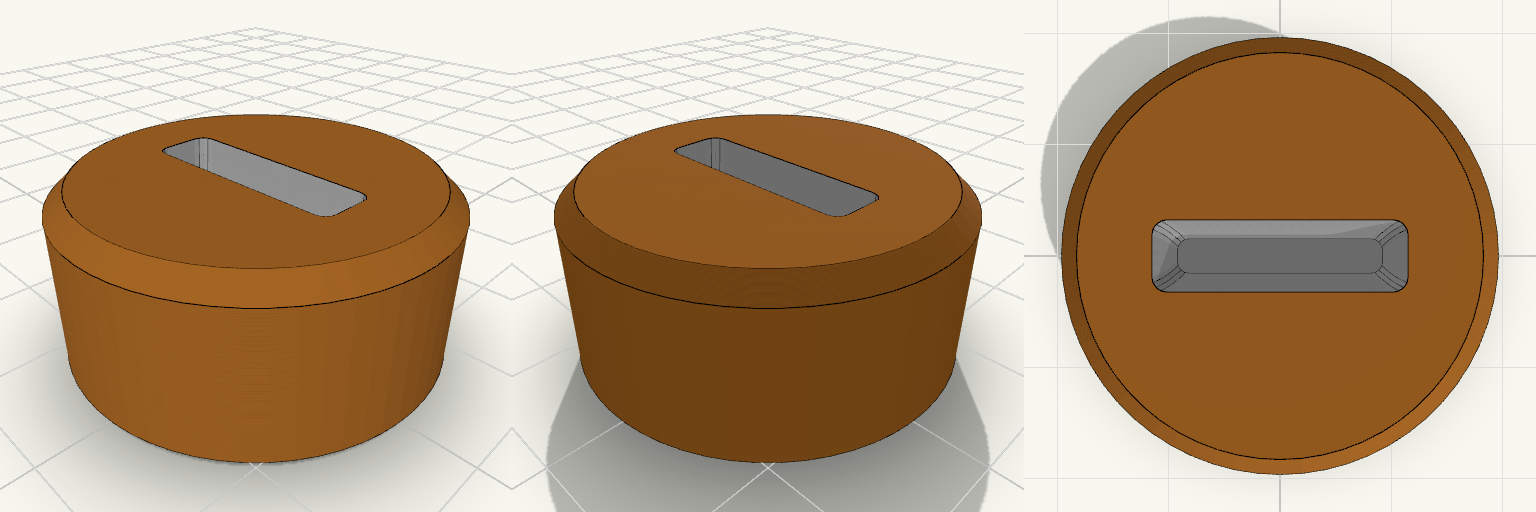
サーボソケット
A servo can't turn a valve knob without a socket that grips it, and a loose fit slips under torque. This cylindrical socket slides onto the knob from the bottom and keeps the top face flat and closed for a future servo horn. Key numbers Body: 30 mm diameter, 14 mm tall, chamfered edges Cavity depth: 10 mm, opening only on the bottom face Opening at the bottom: 2.6 mm × 16.7 mm, widening to 4.5 mm × 16.7 mm at the inner end Clearance: 0.15 mm per side, with rounded corners and slightly bowed long walls Top wall: 4 mm solid, with no screw or mounting holes Printing: open face down on the bed, no supports needed; the wall slope is about 5° from vertical Cavity size, taper, corner radius and clearance are all adjustable parameters
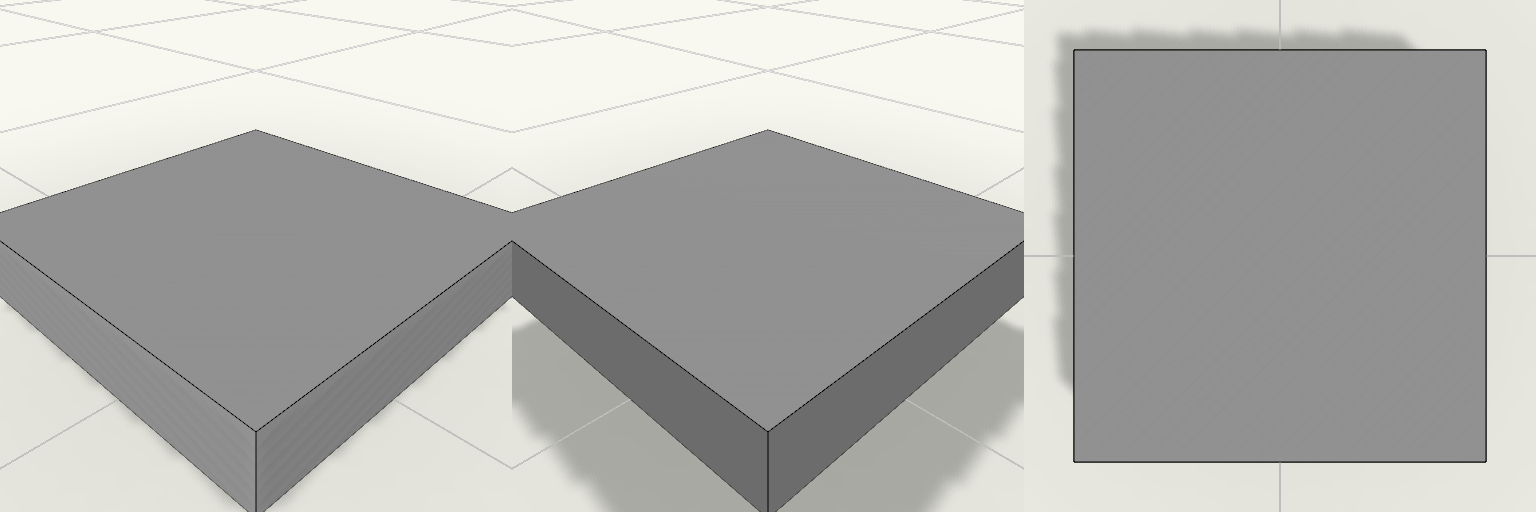
5 x 5 x 1 mm Square Block
A plain square block measuring 5 mm by 5 mm by 1 mm, flat on the bed and ready to print. Remix hooks Footprint: 5 x 5 mm is the starting value. Change it to make a tile, spacer or shim. Thickness: 1 mm is about five layers at 0.2 mm. Raise it for a sturdier piece. Edges: Add a small chamfer or rounding for a softer look. Keep it under 0.5 mm at this size. Pairs with: Use it as a test cube for tolerance checks, or as a base for a hole, text or a peg.
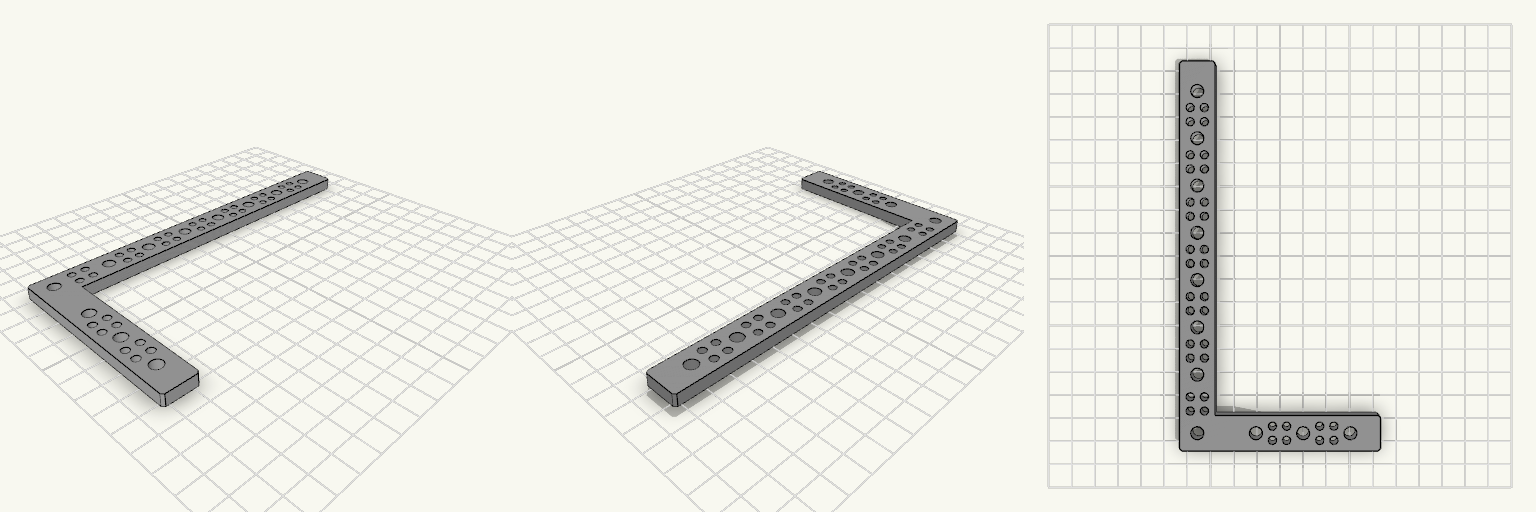
Flat L Bracket 15mm Strap
A flat L-shaped strap bracket with a 15 mm wide, 5 mm thick strap. Inside edges measure 70 mm along X and 65 mm along Y, giving an overall footprint of 85 × 80 mm. Five 5.5 mm holes suit M5 screws in 2020 extrusion slots. Remix hooks Arm lengths: the inside lengths (70 mm X, 65 mm Y) are the main parameters to change. Strap width: 15 mm now. Widening it allows holes offset from the centreline. Hole pitch: pairs are 20 mm apart, with the first hole 12.7 mm from the free end. Change the pitch for other slot spacings. Hole size: 5.5 mm clearance. Go up for counterbores or down for M4. Pairs with: 2020 extrusion, M5 T-nuts and button-head screws.