Four-Bay 2.5" SSD Rack
Made by devilmaycry
Created 3 days ago
Description
A compact stacked rack that holds four 2.5" SSDs, each sliding into its own open-front slot. Side windows and diamond-shaped rear vents keep air moving and leave room for cables.
Remix hooks
- Slot height (
sw, 10.5 mm): sized for 7 mm drives with margin; raise to ~12 for 9.5 mm drives. - Bay count (
n, 4): change it and the body height follows. - Slot width (76 mm) and depth (100 mm): tuned for 69.85 x 100.5 mm drives; adjust for other trays.
- Vent shape: swap the diamond rear vents for round ones or a slot pattern.
- Feet: the two rails (3 mm tall) can be removed, widened, or swapped for screw tabs.
- Pairs with: a SATA hub, or a second rack stacked side by side.
Images
More like this
Explore more in Desk & Tech →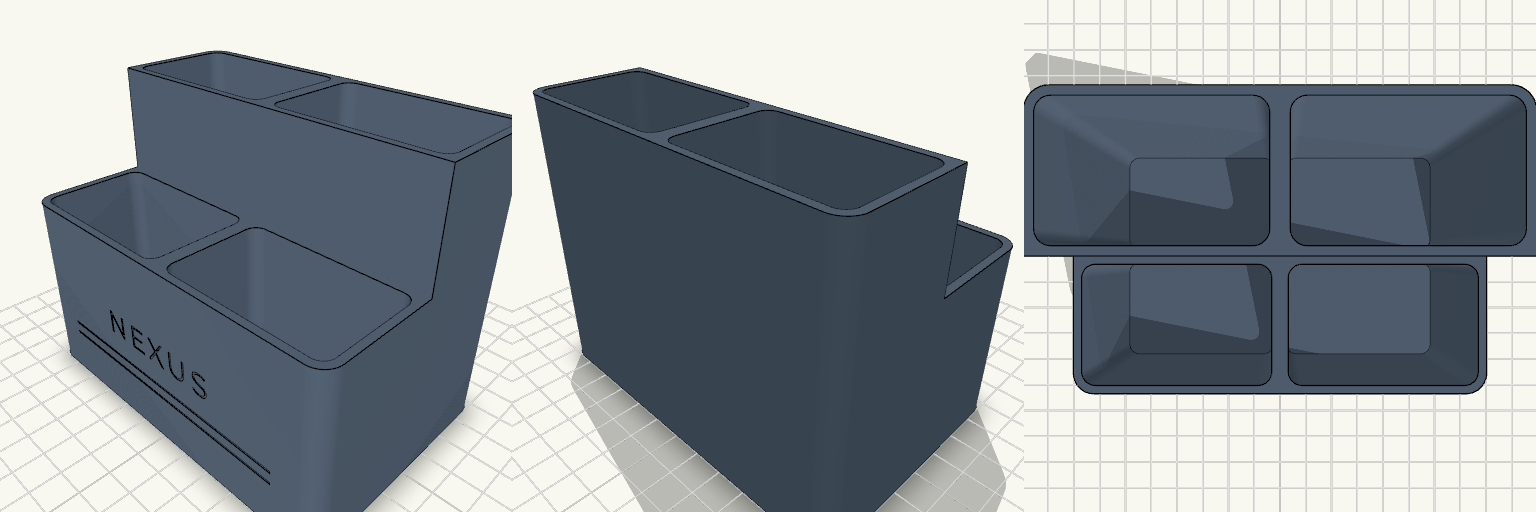
NEXUS Desk Pen Holder
What it's for A minimalist desk organizer with four open-top compartments for pens, pencils, markers and small stationery. A stepped front lowers the front pair for easy reach to small items, and a small NEXUS logo is engraved on the front face. Dimensions Footprint: 120 × 80 mm Height: 95 mm rear, 60 mm front Wall thickness: about 2.4 mm Flat base, rounded vertical corners, chamfered base edge Remix ideas Change the logo text to a name or initials. Make the front compartments deeper for scissors or rulers. Add a non-slip pad under the base.
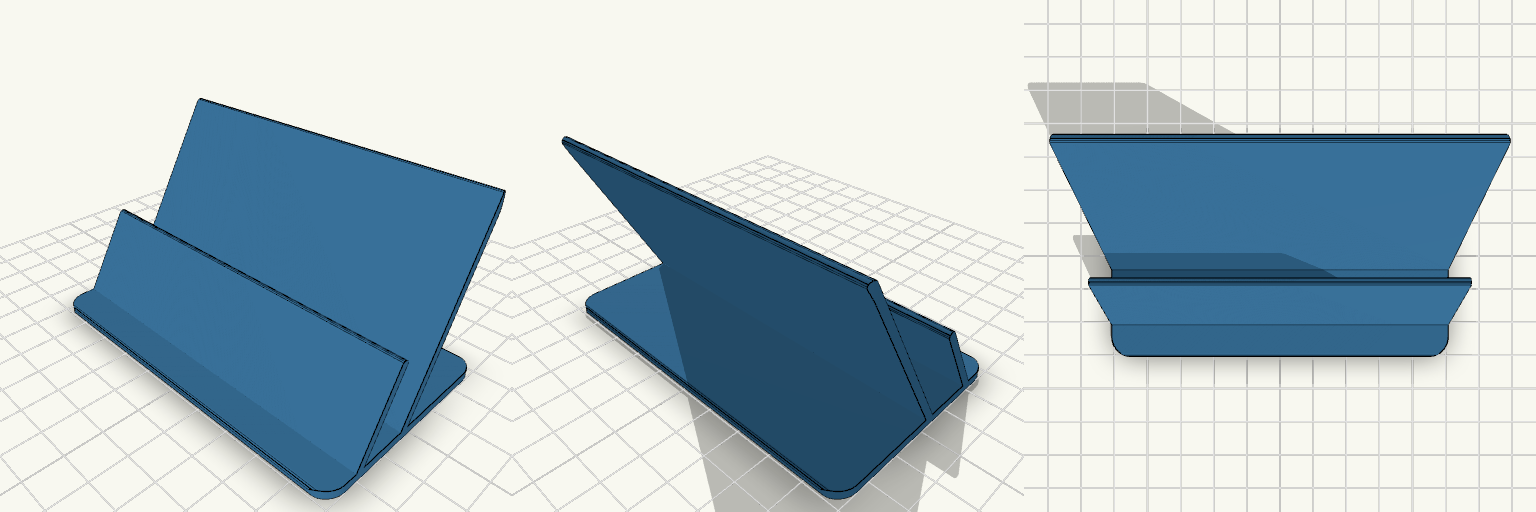
手机支架
A phone stand for a phone that keeps sliding flat or tipping over: a 60° backrest holds it upright, and a front lip stops it sliding out. Key numbers Base: 100 × 60 mm, 2.2 mm thick Backrest tilt: 60° from the table Slot: 12 mm wide, measured between backrest and front lip Walls: 2.2 mm throughout Corners: rounded in plan and along the profile edges Printing Print with the base flat on the bed. No supports needed: the backrest leans back at 60°, which stays within a typical overhang limit. Phones with thick cases may need a wider slot.
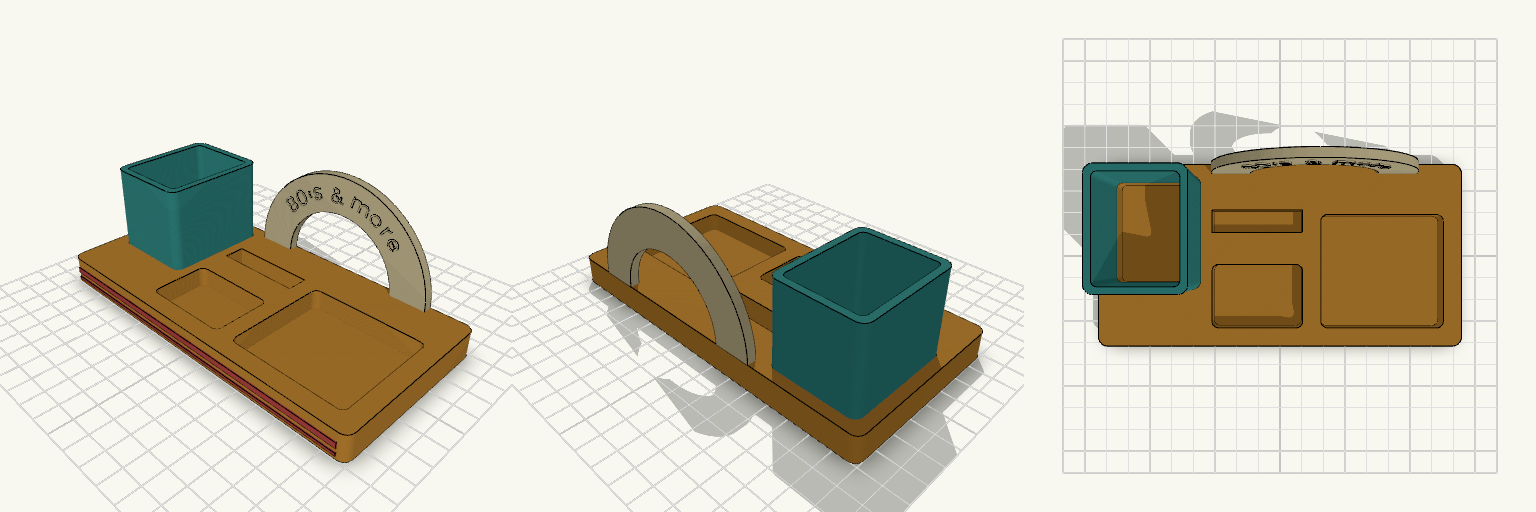
Retro Desk Organizer with Pen Tower
What it's for A retro-styled desk organizer that keeps pens, cards and small items in one place. A teal pen tower, a card or phone slot and two open trays sit on an amber base. A red racing stripe runs along the front. A cream arched backrest has a round window and embossed "80's & more" lettering following the curve. Dimensions Base tray: 160 × 80 × 12 mm Pen tower: 40 × 50 mm footprint, rising to 50 mm overall height Card / phone slot: 40 × 10 mm opening Front tray: 40 × 28 mm Large right tray: 54 × 50 mm Arched backrest: about 90 mm wide, top at 57 mm Lettering: embossed 1 mm, 7 mm tall Remix ideas Change the lettering to a name or a different slogan. Resize the trays for coins, clips or sticky notes. Recolour the stripe and backrest to match a different retro palette. Widen the card slot for a tablet.
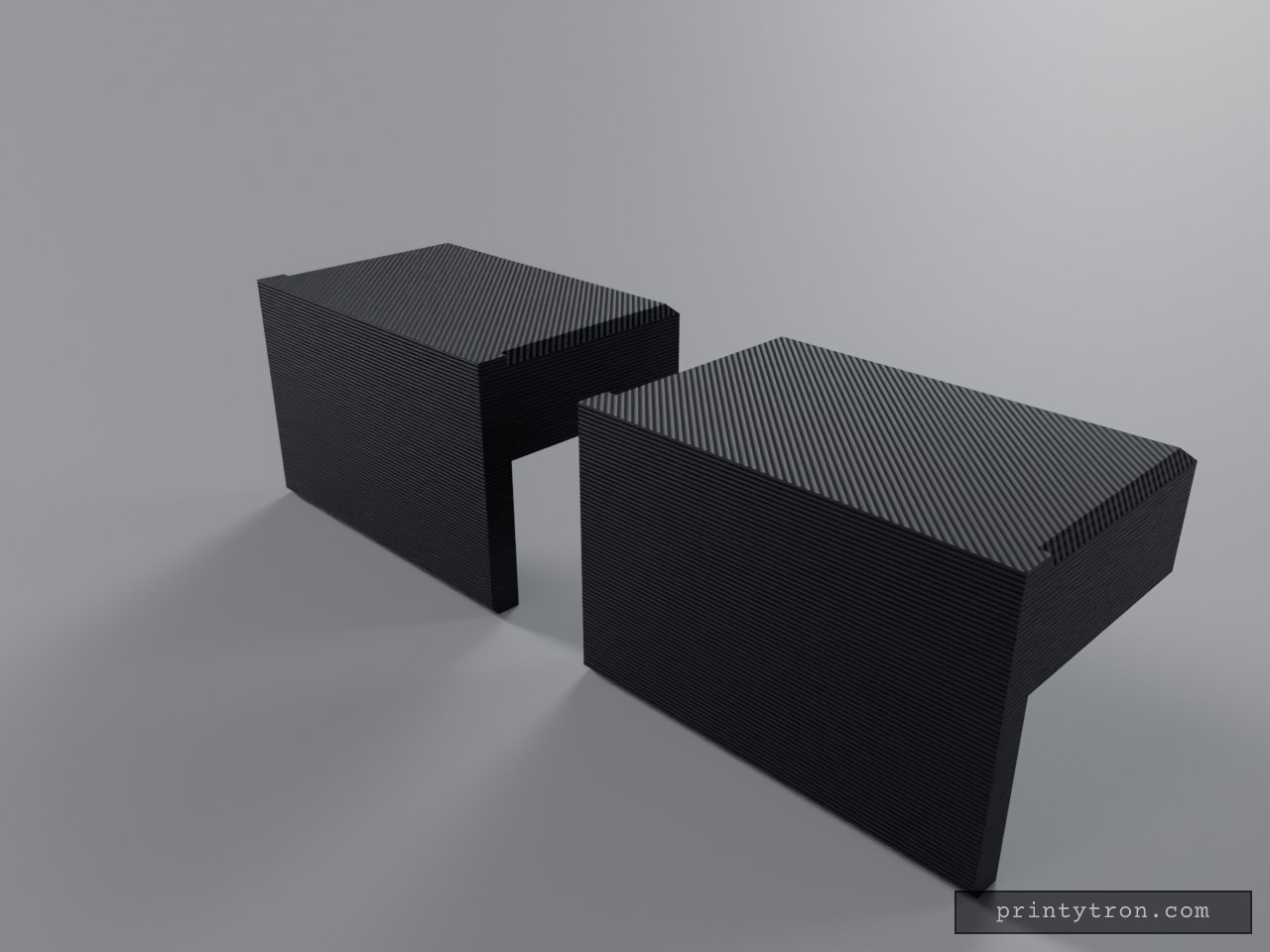
Liftoff — Light Bar Clip Risers
Liftoff is a pair of riser feet that shim the rear clip of a monitor light bar upward, so a bar that tilts down toward the user can sit level and aim at the desk instead of the eyes. Each foot is a flat 30 × 20 mm platform that lifts the clip 8 mm, with a short lip on the front edge that hooks over the top of a thick-bezel monitor and keeps the foot from sliding around. A flat top was chosen over a sloped wedge: it raises the whole clip evenly, and the lip handles the positioning. Dimensions Platform: 30 × 20 mm, 8 mm thick (clip lift) Hook lip: 2.5 mm thick, 12 mm drop below the platform Overall height per foot: 20 mm Quantity: 2 identical feet, spaced 10 mm apart in the layout Features Front lip locates the foot on the monitor's top edge Chamfered top edges on the sides and back for a cleaner clip seat Chamfered lower lip edge for easier hooking Print notes Print with the platform's flat back or side on the bed, or upright with the lip facing down, depending on the preferred strength direction The 12 mm lip drop is a starting value; adjust it to match the actual bezel thickness PETG or ABS is a good choice if the monitor top gets warm
Under Desk Switch Mount With Cover
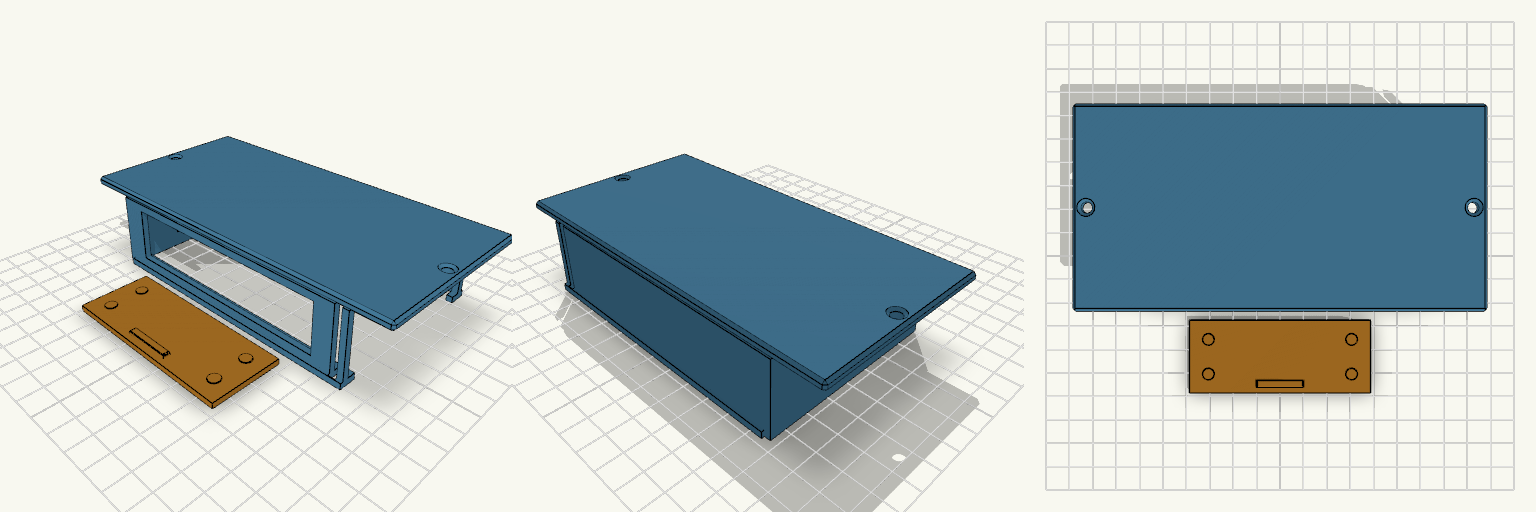
A Flex Mini 2.5G that sits loose in an under-desk bracket slides out the open end the first time someone bumps a cable. This mount screws to the desk underside and closes that end with a slide-in cover. Pocket: 110 × 72 × 28.5 mm, 5 mm bottom lips, wide port window in the front wall, cable slot in the -X end. Cover: 2.8 mm plate slides up into a 3.2 mm slot at the +X end. Four small bumps hold it by friction. Mounting: two countersunk screw ears on the top plate. Print: mount with the top plate face down; cover flat as laid out. No supports needed for the cover. Check the pocket size against your unit before printing.
SilentSOS Two-Piece Electronics Enclosure
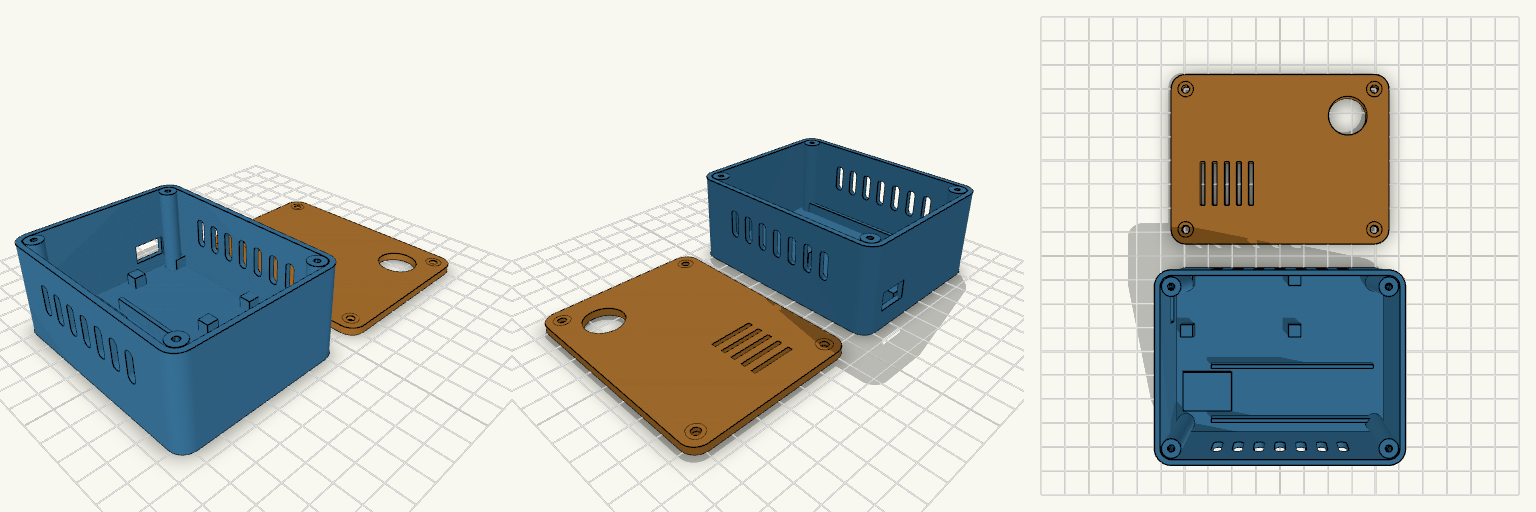
A 90 × 70 × 40 mm two-piece enclosure for an ESP8266 NodeMCU SOS alert device: a 37 mm tall base with 2 mm walls and a separate 3 mm lid, with 6 mm rounded vertical corners. The lid is printed flat and fastens with four M3 screws into corner bosses. Remix hooks Component mounting: no hole positions were guessed. The NodeMCU sits on four 5 mm locating pads at the board corners (49 × 26 mm area, nb, nbc). Once measured, add real standoffs in extraposts as [x, y] pairs and set post_pilot. Battery bay: two 1.5 mm rails 22 mm apart hold a cell of about 18 mm diameter, 65 mm long. Move or space them for other cells. DC-DC zone: a low 20 × 16 mm pad, free to move or resize. USB opening: 13 × 8 mm in the short wall, aligned to the NodeMCU position. SOS button: 16 mm hole in the lid (btnd, btnpos). Ventilation: seven slots in each long wall plus five slots in the lid. Screws: 2.6 mm pilots in the bosses, 3.4 mm countersunk lid holes. Pairs well with heat-set inserts in the bosses, or a gasket strip for a dust-resistant fit. Export base and lid as separate STLs by rendering each module alone.