Hello Vertical Laptop Dock
Created 1 months ago
Description
Laying a laptop flat on a desk eats up half your workspace, but most vertical docks look like spare aluminum blocks. This pulls the machine up out of the spill zone and uses the smooth, sweeping loops of the Pacifico script to hold it upright.
Fit & Printing
- Slot Width: 17mm (fits a 2025 13-inch MacBook Pro cleanly)
- Base Footprint: 170mm wide
- Supports: Required (tree supports recommended for the overhanging loops of the script)
Images
More like this
Explore more in Desk & Tech →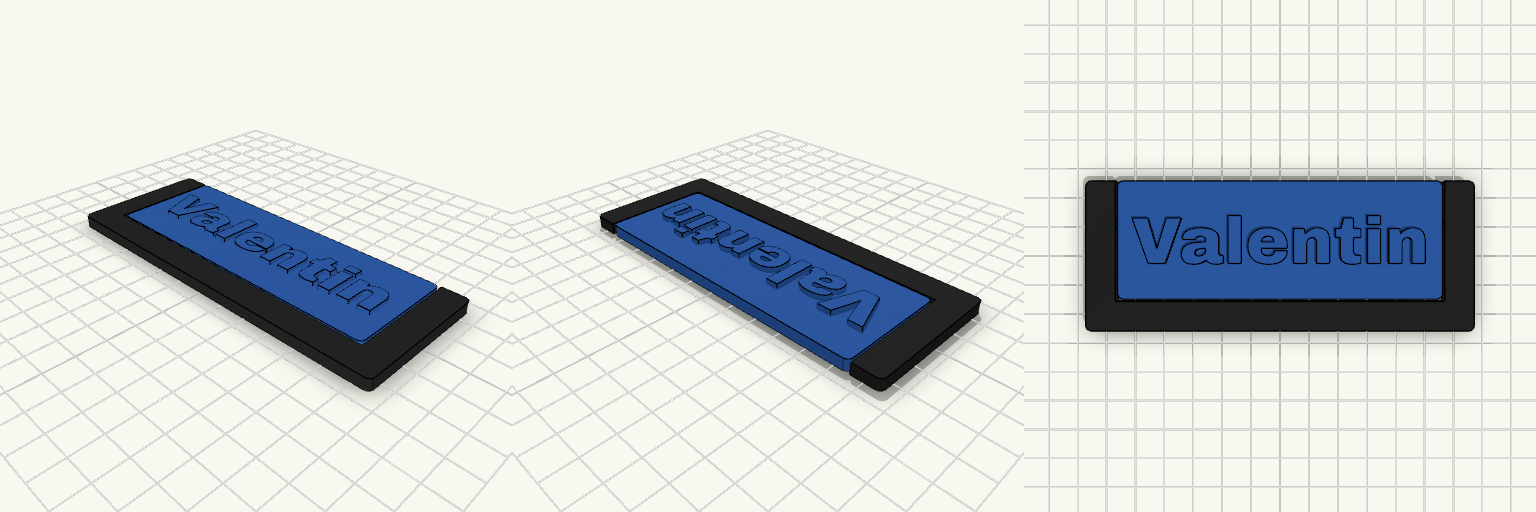
Folding Flat-Pack Name Tag
A print-in-place desk plate that prints entirely flat and features an integrated hinged kickstand. Designed for easy setup, the outer frame swings backward to form a stable tripod base. Features of this design: Print-in-place captive hinge mechanism with a 0.4mm tolerance Heavyweight 4mm main card thickness for rigidity Recessed nested geometry allowing it to collapse back into a single flat sheet Embossed typography using Archivo Black for high legibility
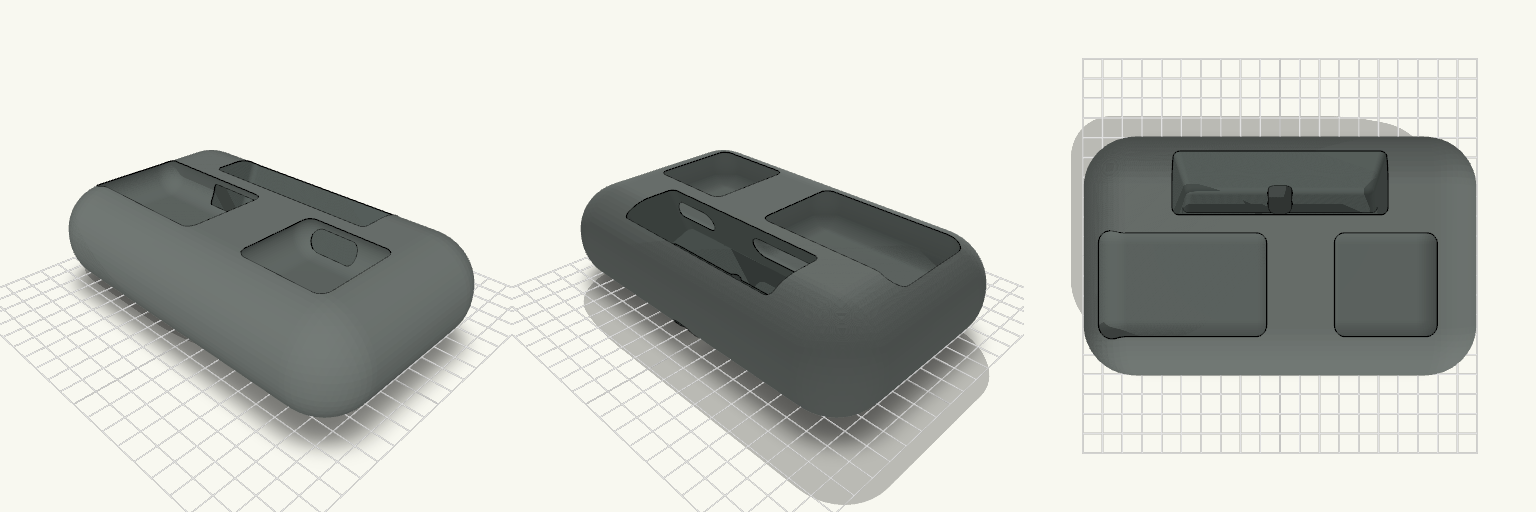
Pebble Dock — EDC Organiser
Pebble Dock brings order to your nightstand with a heavy, stable, monolithic footprint. The phone sits securely against a rigid 38mm backrest angled at 70 degrees, with an 8mm front retaining lip and an integrated hidden cable channel for neat charging. Features Rigid Backrest: A deeply recessed pocket securely supports a cased smartphone. Hidden Cable Channel: Cables feed directly from beneath the phone to the rear of the body, keeping the surface clear. Essential Trays: A front catch-all for daily carries and a side pocket for earbuds. Support-free: The solid base and rounded profile print cleanly directly on the bed.
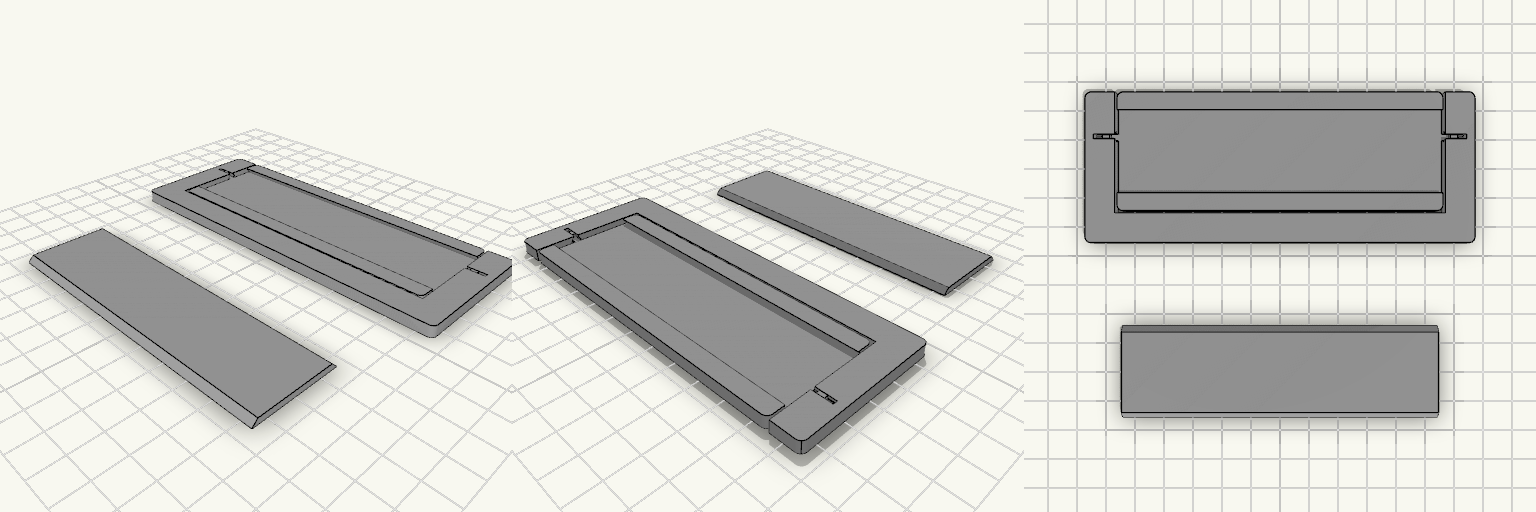
Folding Flat-Pack Name Tag c2
A print-in-place desk plate that prints entirely flat and features an integrated hinged kickstand. Designed for easy setup, the outer frame swings backward to form a stable tripod base. Features of this design: Print-in-place captive hinge mechanism with a 0.4mm tolerance Heavyweight 4mm main card thickness for rigidity Recessed nested geometry allowing it to collapse back into a single flat sheet Embossed typography using Archivo Black for high legibility
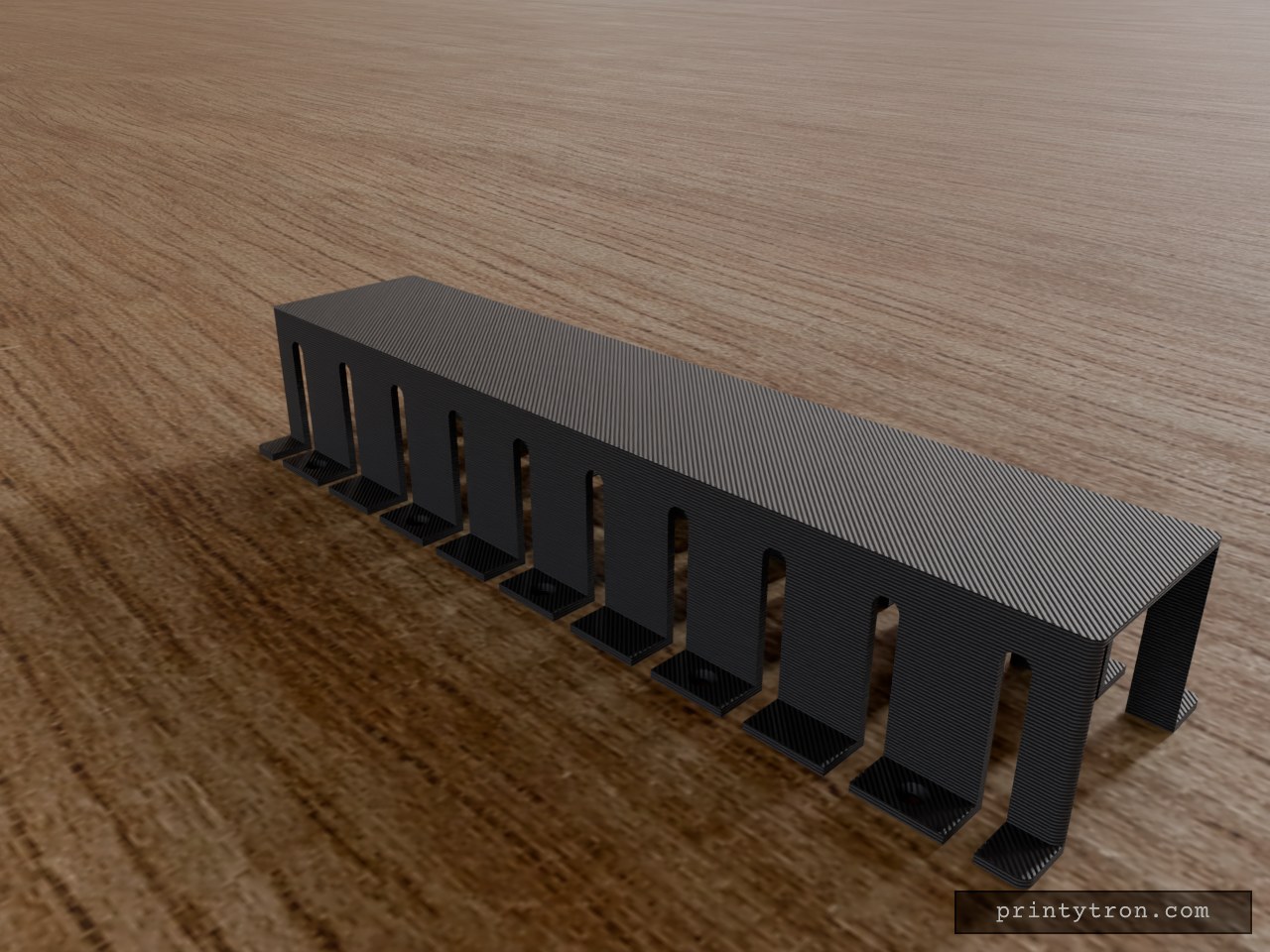
Slotted Under-Desk Cable Tray
What it's for Designed to mount directly to the underside of a desk to hold a power strip and bundle loose cables, clearing floor hazards. The open U-channel features vertical slots along both long edges, allowing cables to drop in from above and providing anchor points for hook-and-loop straps to lash down the strip. Prints flat on its back without supports. Dimensions Overall footprint: 350 x 100 x 60 mm Inner channel capacity: 350 x 64 x 57 mm Cable slots: 8 mm wide, 45 mm deep, spaced at 35 mm intervals Mounting: 10 countersunk screw holes positioned along the outer flanges Remix ideas Adjust the overall length to match specific power strips or desk spans. Widen the side slots to accommodate heavy-gauge monitor cables or display connectors. Increase the wall thickness to support heavier power supplies and transformers.
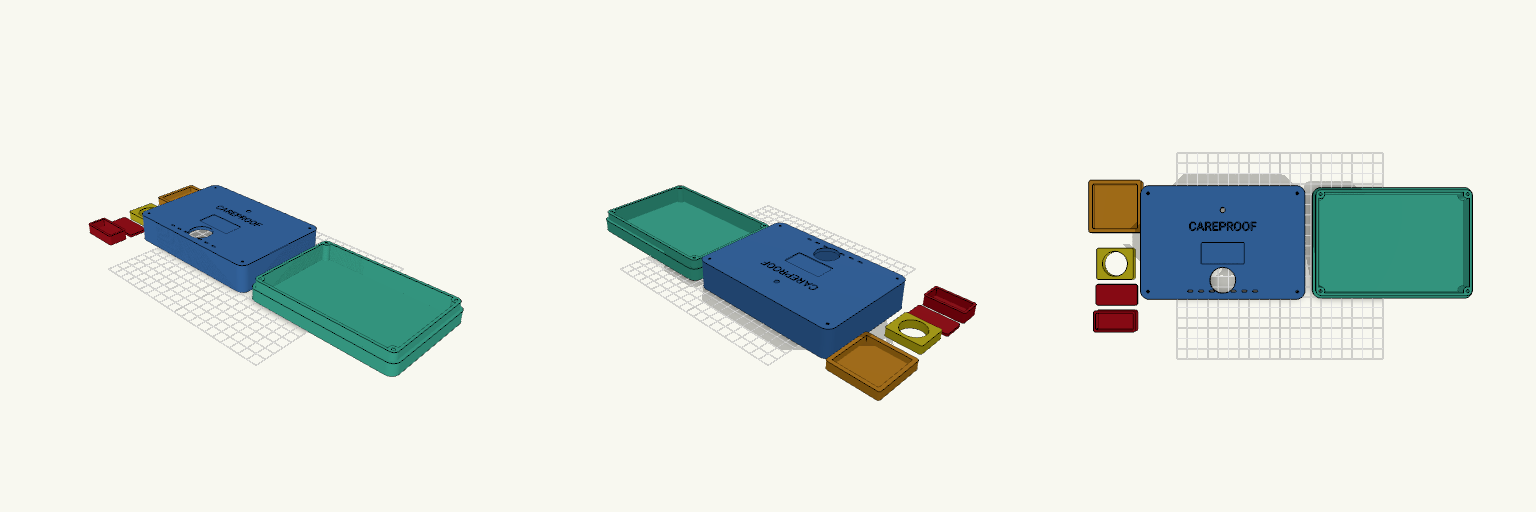
CareProof V1 Sensor Enclosure
A complete modular enclosure system designed to house the components of the CareProof V1 tracking and monitoring node. The main chassis splits into a generous front housing and an overlapping rear cover, securely fastened with M3 corner screws to provide easy access for wiring adjustments. Included Components Front Housing: 152 × 105 × 28 mm primary shell with dedicated cutouts for a status LED, vent slots, a 24 mm PIR sensor aperture, and an embossed tap zone. Rear Cover: Matching backplate with an 8 mm alignment lip and M3 screw interfaces. NFC Bracket: Removable 50 × 50 mm internal sled to hold a PN532 module directly against the front face. PIR Bracket: Basic 35 × 30 mm retention plate for the motion sensor. Door Sensor Unit: Separate two-piece 40 × 20 mm enclosure designed to hold a standard magnetic reed switch on the client's door.
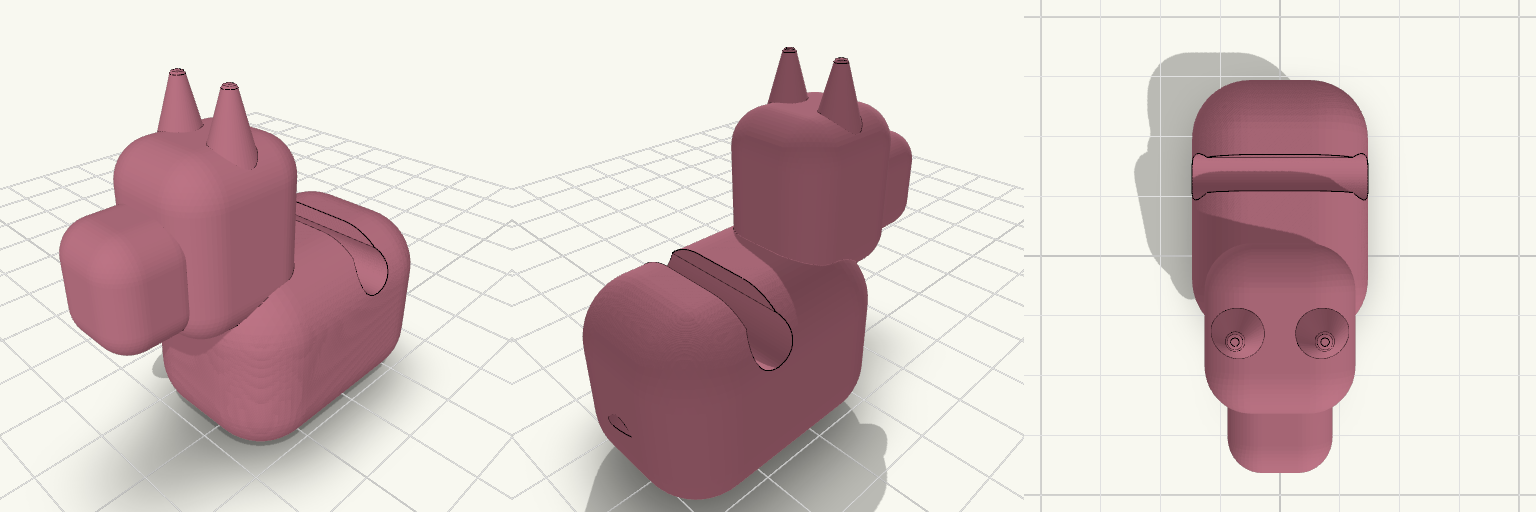
Clip Câble 6mm Poney
Support de bureau pour retenir un cordon lorsqu'il n'est pas branché, intégré dans un gabarit de poney stylisé. Spécifications de montage Câble cible : Gaine de 5,5 à 6 mm de diamètre (type USB-C tressé, cordons de charge standards). Rétention : Fente supérieure pincée à 4,5 mm pour un encliquetage en force. Fixation : Base plate de 24 x 35 mm, conçue pour recevoir un carré d'adhésif double-face. Incompatibilités : Ne convient pas aux câbles d'alimentation épais, aux cordons HDMI, ni aux fils de souris ultra-fins (qui glisseront hors de la gorge).