Minimalist Cabinet Drop Hook
Created 3 months ago
Description
An over-cabinet hook that drops straight down to provide a long vertical bar for clipping notes, paper towels, or recipes using clothespins. Prints flat on its side for maximum layer adhesion and strength.
- Fits standard 3/4" (19mm) to 20mm cabinet doors
- 110mm total vertical drop for plenty of clamping area
- Prints without supports
Photos
Technical views
More like this
Explore more in Kitchen & Bathroom →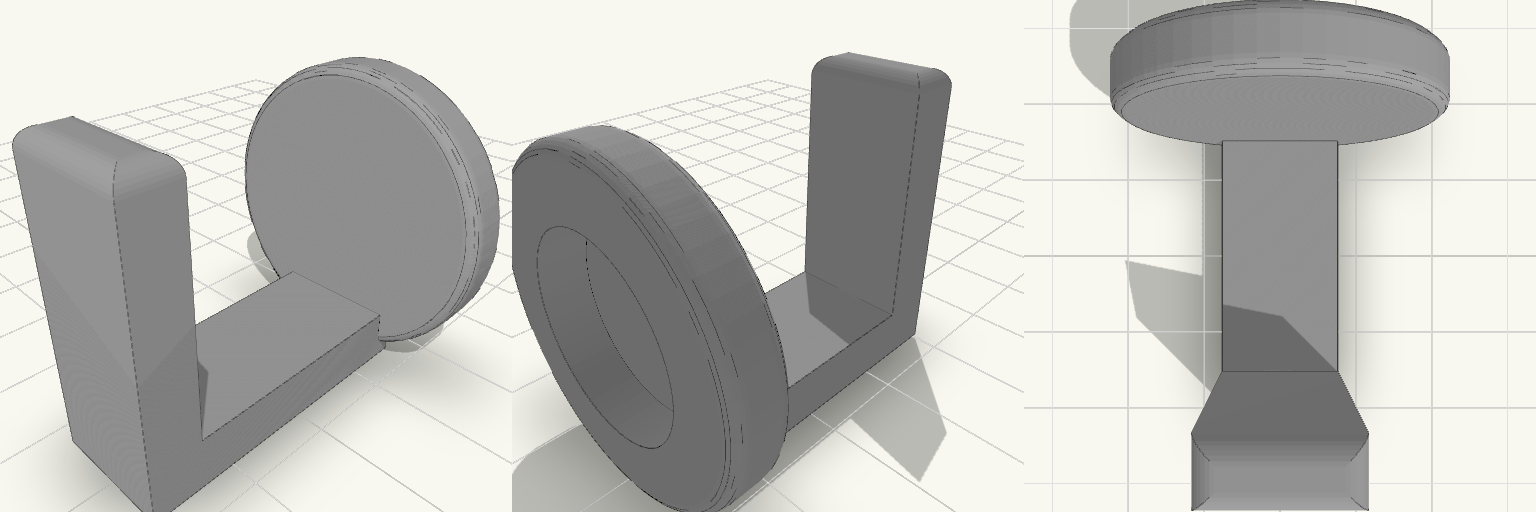
Deep J Fridge Hook with Magnet Recess
A deep J-shaped hook for hanging a tea towel on a fridge door. A round back plate holds a standard 20x5 mm neodymium disc magnet, and a tall lip at the end of the arm stops the towel sliding off when the door swings open. What it's for Hanging a tea towel on the side or front of a steel fridge door. Keeping the towel in place when the door is opened or closed, thanks to the tall lip. The magnet sits flush against the fridge door, with a 1 mm wall of plastic on the hook side. Dimensions Back plate: 34 mm diameter, 6 mm thick, with rounded edges. Magnet recess: 20.2 mm diameter, 5 mm deep, opening on the fridge side. The extra 0.2 mm gives a press fit without the magnet binding. Wall behind the magnet: 1 mm. Arm: 14 mm wide, 6 mm thick, 36 mm long. Lip: 14 mm wide, 6 mm thick, 34 mm tall. Overall footprint: 34 mm wide, 40 mm projection, 34 mm tall. Print notes Print with the arm's underside flat on the bed. No supports are needed for the arm and lip. The recess faces the back, so the plate's back face needs a clean first layer or a short bridge, depending on orientation. Secure the magnet with a drop of glue if the fit is loose. Check the magnet polarity before gluing, so it grips the fridge. Remix ideas Lengthen the arm for thicker towels or oven gloves. Shorten the lip for a lighter hook. Resize the recess for 15 mm or 25 mm magnets. Add a second hook arm for a double hook.
Brim — Flat-Bottom Rounded Bowl
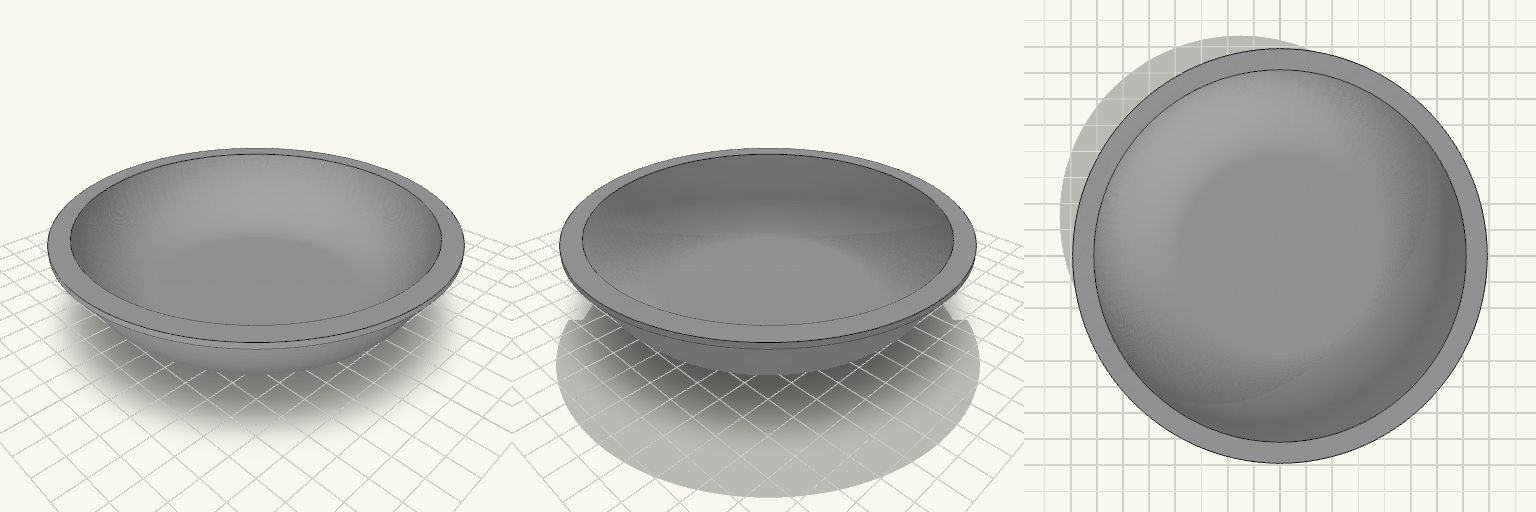
Brim is a shallow serving bowl with a flat 75 mm base that sweeps up in a smooth curve to a wide, flat rim. The flat base keeps it stable on a table and easy to print without supports on the bottom face. Dimensions Outer rim diameter: 138 mm Rim width: 5 mm, flat and horizontal Opening inside the rim: 128 mm Depth: 30 mm Flat bottom diameter: 75 mm Wall thickness: 2 mm throughout Print notes Print rim-up or base-down; base-down is the natural orientation. The steepening curve near the rim may need supports or slow cooling.
Modern Egg Cup With Shell Dish
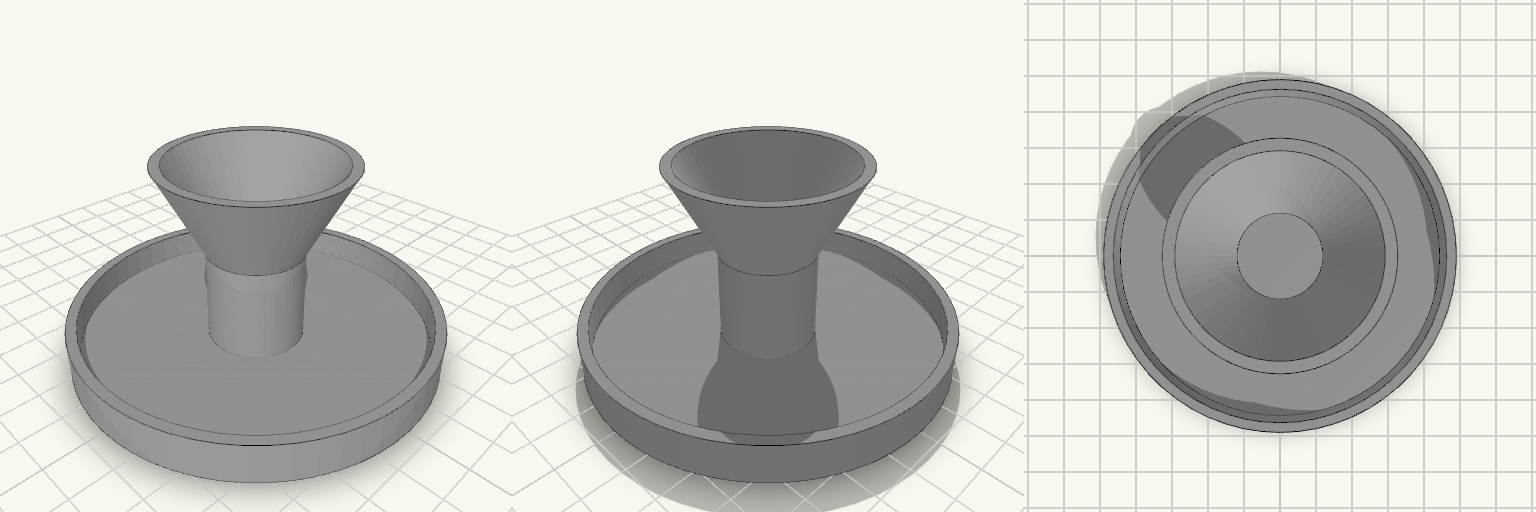
A one-piece egg cup for soft-boiled eggs. The cup has a 42 mm opening that tapers inward, so a standard chicken egg (about 45 mm at its widest) sits snugly at the rim. It stands on a short stem inside a wide 92 mm dish with a 10 mm lip, which catches the shell top when you crack it off. Remix hooks Opening diameter (42 mm): Make it 40 mm for small or bantam eggs, or 44 mm for a looser fit with large eggs. Keep it a few mm under the egg's widest point so the egg sits on the rim instead of dropping in. Cup height and taper: The cup is 48 mm tall overall, narrowing to a 20 mm seat. A shorter cup shows more of the egg. A steeper taper holds it more upright. Dish size (92 mm wide, 10 mm lip): Widen it or raise the lip to catch more shell. Shrink it for a tighter footprint. Stem (about 12 mm radius): Thicken it for more stability, or lengthen it to lift the cup higher above the dish. Pairs with A matching spoon rest, or a second cup in a different colour for a set. A flat lid or cap over the opening to turn the dish into a small storage cup. A set of four on a shared tray. Dimensions have not been test-printed. The dish floor is 3 mm thick, which is a good first value to check before changing anything else.
5-Point Star Cookie Cutter
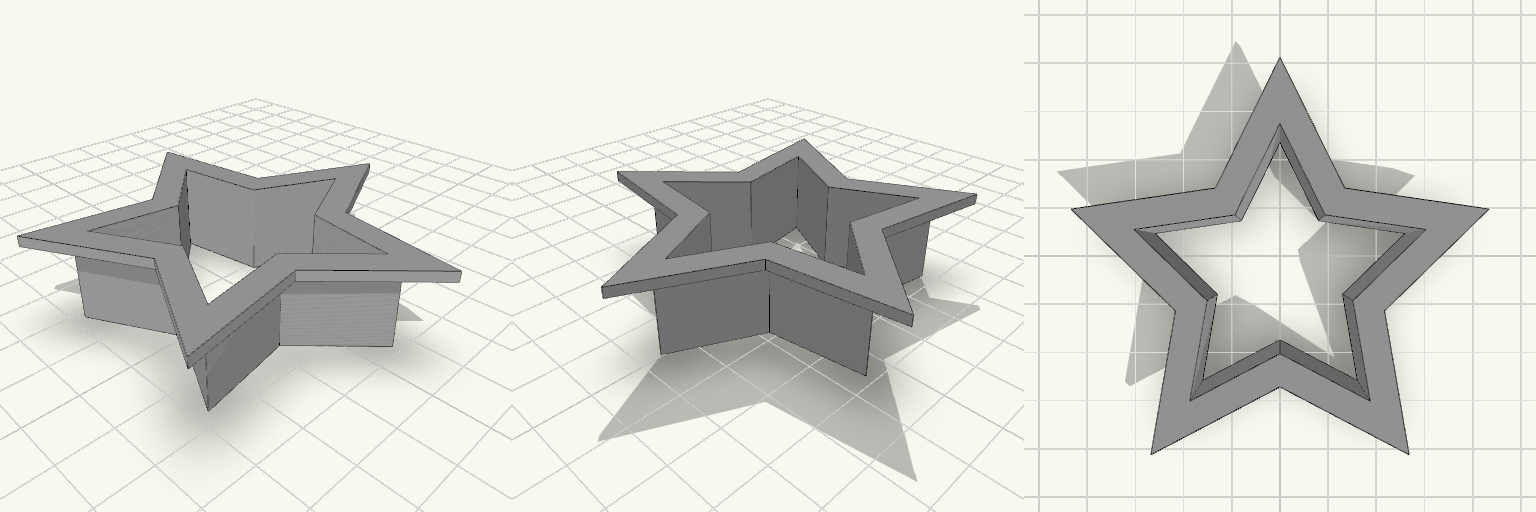
A five-point star cookie cutter, 60 mm tip to tip, with 18 mm tall walls and a wide flat flange around the top edge. The flange gives a thumb a broad surface to press on, so pushing the cutter through dough doesn't put a thin edge against your skin. Remix hooks The values below are the ones worth changing. Everything else follows from them. Star size (R, 30 mm): This is the tip radius, so 60 mm across. Change it to scale the star. At about 40 mm across or less, check that the flange doesn't crowd the inner corners. Point sharpness (ratio, 0.5): This is the inner radius divided by the outer radius. Lower values like 0.4 give spikier points. Higher values like 0.6 give a chubbier, more rounded star. Very spiky points are harder to press out of dough. Flange (flangew 4 mm, flanget 2 mm): Widen it for a more comfortable press, or thicken it for more stiffness. Rounding the flange's outer corners is an easy variant if you want it softer on the thumb. Wall (wall, 1.2 mm): This is about three nozzle widths on a 0.4 mm nozzle. Thinner cuts more cleanly but is more fragile. Thicker is sturdier but pushes dough aside more. Height (H, 18 mm): Lower it for thin cookies, or raise it for thick dough or a deeper grip. Pairs well with A set of different sizes, made by changing R and nothing else. Other shapes that reuse the same wall and flange values, such as a heart or circle, so the whole set feels the same in the hand. A matching stamp or embossing plate that fits inside the cutter opening. Printing Print it flange-up or flange-down on the bed. Flange-down needs no supports, and the thin walls grow straight up from the flange. Use food-safe filament if you want to use it on dough.
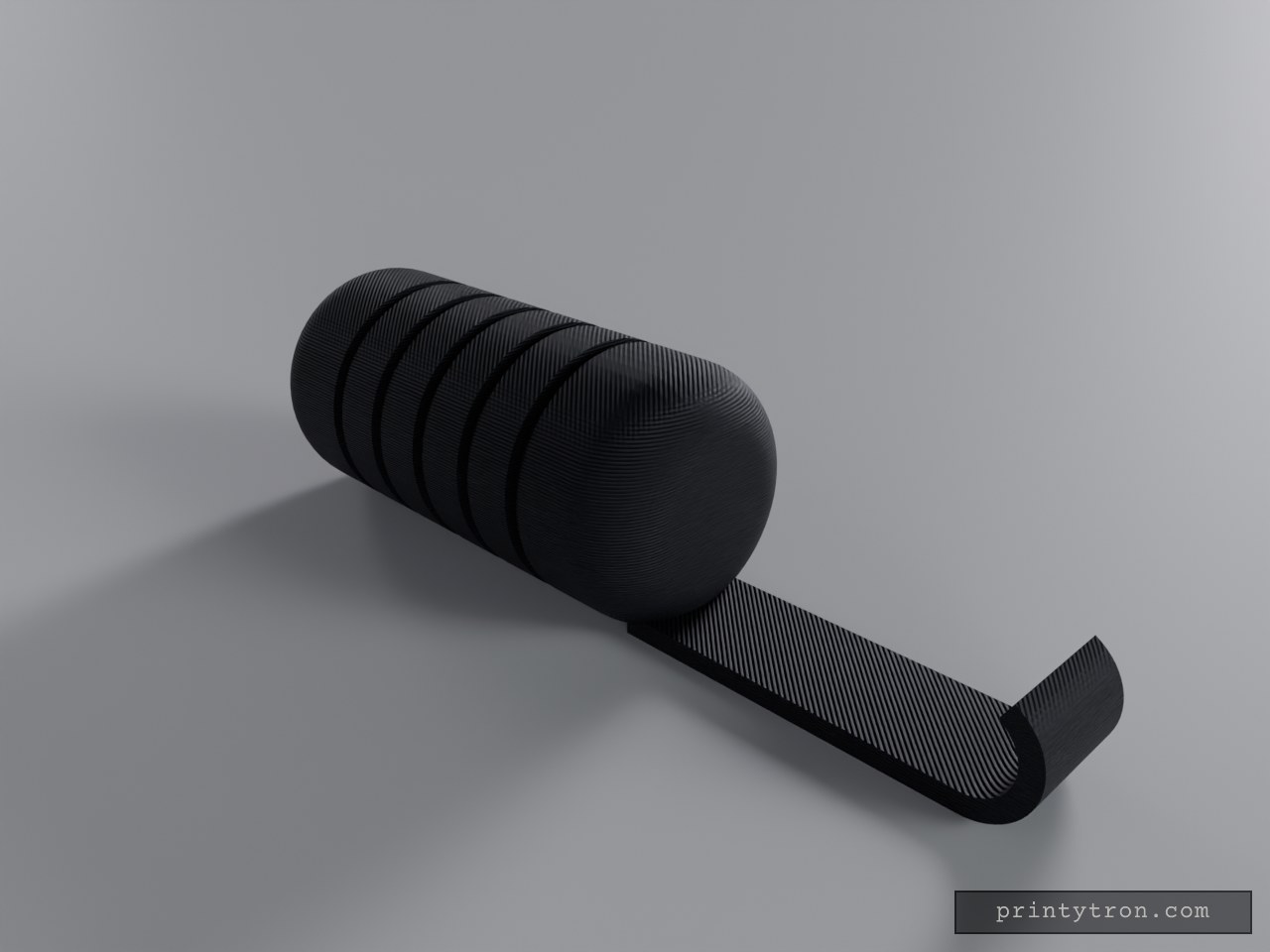
90mm Can Ring Pull Lever Tool
A hand-held lever for lifting can ring pulls without using fingernails. A thin curved hook slides under the ring, and a thick barrel handle gives the leverage to lift it. Suited to anyone with limited grip strength or short nails. Specifications Overall length: 90 mm Handle: 25 mm diameter barrel, about 55 mm long, with ring grooves for grip Hook blade: 2 mm thick, 12 mm wide, curved upward at the tip to slide under the ring Construction: single welded body, printed as one piece Orientation: print with the handle and blade lying flat on the bed. Supports may be needed under the barrel's curved underside. Material: PETG or PLA. PETG is preferred for the 2 mm blade because it flexes before it breaks. Use: ring-pull cans such as beans, soups and drinks Notes The 2 mm blade is the thinnest part. Print it with at least 3 perimeters for strength. The grip grooves are shallow, so the handle stays easy to wash.
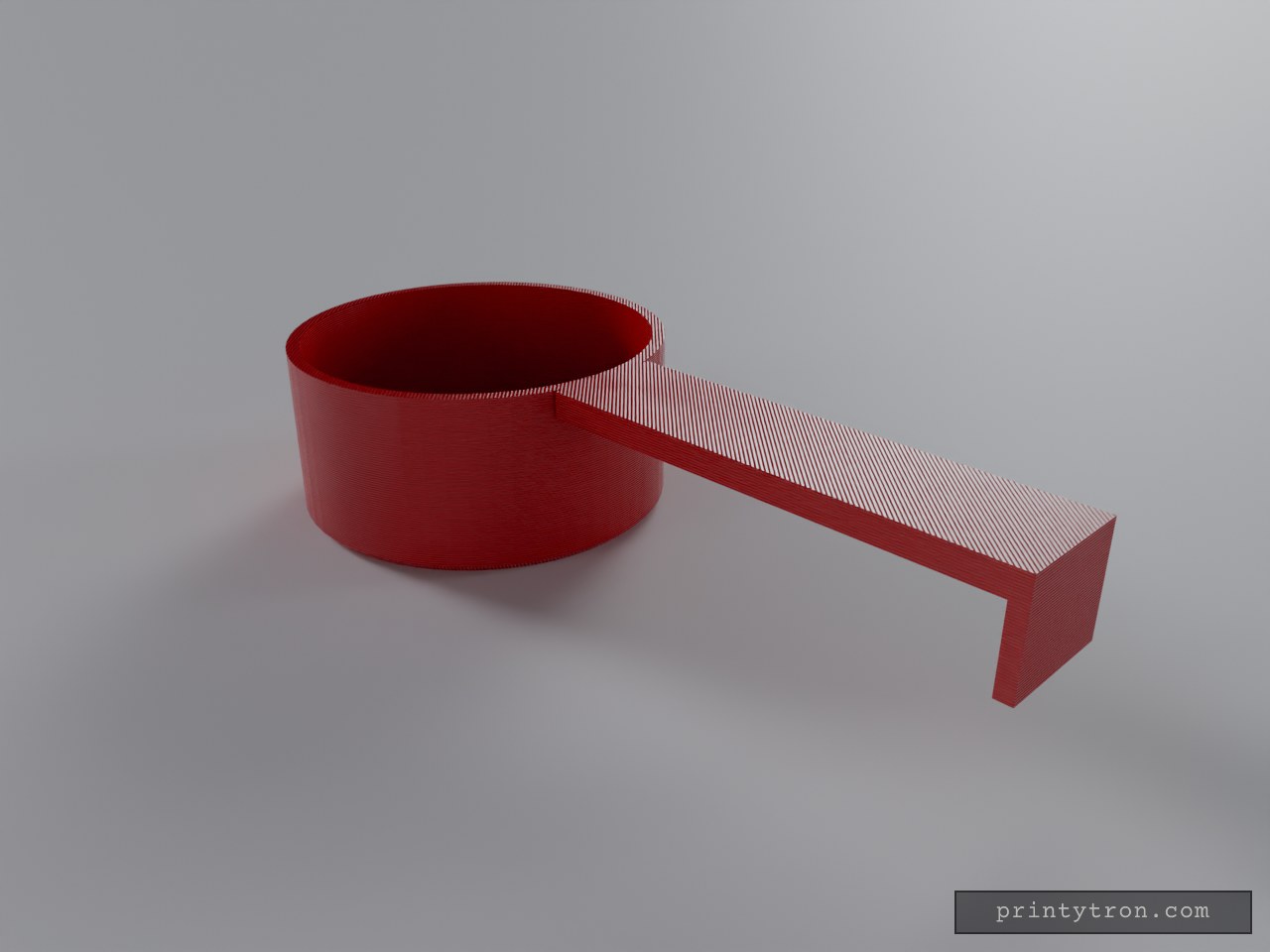
LevelUp — 60 ml Clip-On Scoop
LevelUp is a single-piece measuring scoop sized to hold exactly 60 ml when filled level, made as a replacement for a lost tub scoop. It suits coffee grounds or protein powder. The rim is sharp and flat across the whole top, and the handle sits flush with it, so a knife can sweep straight across to strike off the excess. A short downward lip at the end of the handle hooks over the edge of the tub to keep the scoop in place. Dimensions Bowl inner diameter: 55 mm Bowl inner depth: about 25.3 mm, which gives 60 ml Floor thickness: 2 mm Wall thickness: 2 mm (59 mm outer diameter) Handle: 70 mm long, 18 mm wide, 4 mm thick Clip lip: 12 mm drop, 2.5 mm thick Features Flat, level rim and handle top for accurate strike-off Chamfered bottom edge on the bowl Plain lip clip, not a full hook Print notes Print bowl-down so the rim and handle top come out flat. The clip lip was sized without measuring a specific tub. Adjust it to the thickness and height of your tub's edge. For food contact, use a food-safe filament, and expect layer lines to hold powder. Hand-wash it.