Player 1 — Controller Stand
Created today
Description
This is a sleek, print-in-place display stand tailored to the geometry of modern Xbox controllers (One and Series X|S). The angled backrest holds the controller at a comfortable 35-degree viewing angle, while a custom carved channel allows the battery housing to sit flush without wobbling.
Features
- Battery Channel: A 44mm recessed track down the spine gives the controller's battery door room to breathe, so the shell rests cleanly on the side rails.
- Trough Cradle: The smooth 8mm radiused trough safely catches the lower grips without scraping the plastic.
- Cable Routing: A 16mm horizontal pill cutout through the main body allows charging cables to pass through neatly.
- Embossed Lip: Features a clean "PLAYER 1" engraving on the front face.
Print Notes
This prints cleanly on its side (rotate 90 degrees onto one of the flat side faces) to entirely avoid supports, or upright on its base if your bridging is dialled in for the cable passthrough. No assembly required.
Images
More like this
Explore more in Desk & Tech →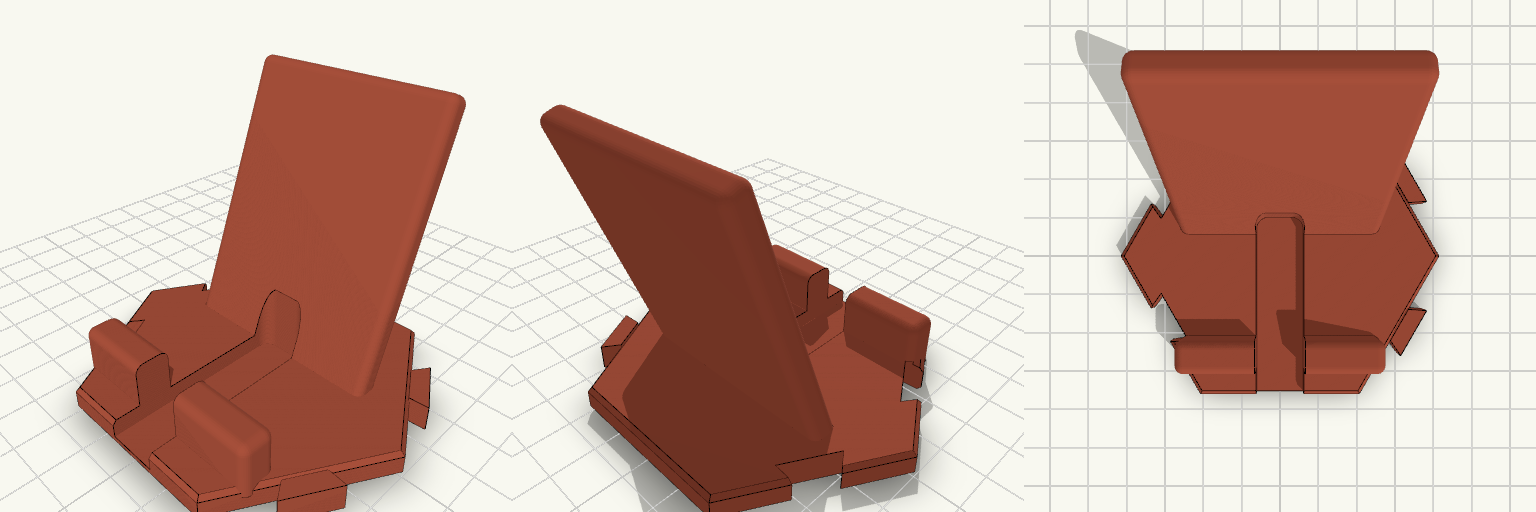
Modular Hexagonal Phone Stand
What it's for A single-piece modular phone stand designed around a regular hexagonal footprint. It features an angled 70-degree backrest for optimal viewing and a sturdy front retaining lip. A central U-groove is carved through the front lip and into the base, allowing a charging cable to pass cleanly underneath the phone while docked. The stand is designed to tile: dovetail tabs on the right side match with identical slots on the left side, allowing multiple hexagonal units to be linked together into a continuous charging array or desk organizer without any extra hardware. Dimensions Base size: 80 mm across opposite vertices, sitting 6 mm thick. Back panel: 65 mm tall, leaning back at a 20-degree angle from vertical. Front lip: 10 mm high above the resting surface, leaving a generous 23 mm gap for the device. Cable groove: 12 mm wide, recessing down to a 2 mm floor height. Print notes Designed to print entirely support-free in its default upright orientation. The 0.2 mm clearance on the dovetail joints should slide together firmly on a well-calibrated machine. Standard PLA or PETG will provide plenty of strength for the upright panels.
A-Frame Mobile Stand
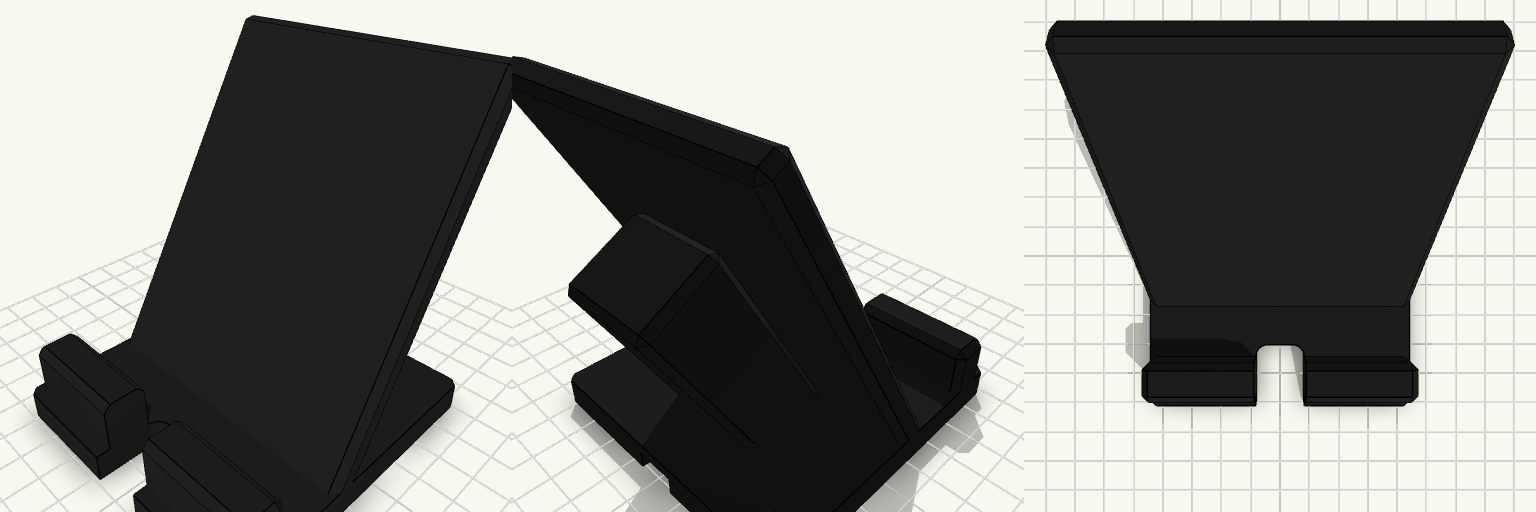
A sturdy, functional stand for phones and small tablets. Designed with a 35-degree viewing angle, it works nicely for watching media or keeping an eye on notifications while at your desk. Features a 16mm-wide cutout for routing charging cables Includes a solid rear spine to prevent flexing when tapping the screen 14mm resting gap accommodates most phones, even with a case Prints in one piece without supports
110mm Compact D20 Dice Tower
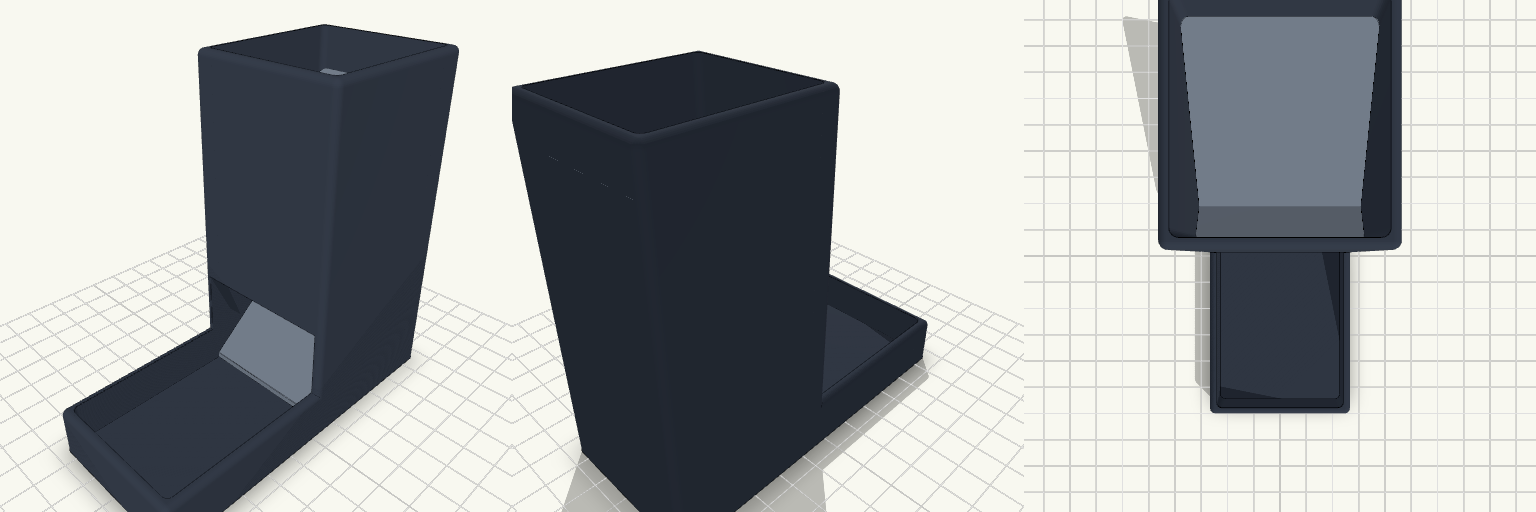
A 110 mm compact dice tower designed to randomize standard 20-sided dice. The one-piece enclosure integrates a catch tray to contain the dice after descent, while the internal structure uses three alternating baffles to ensure unpredictable rolls. Dimensions: 50 mm wide by 110 mm tall, with a 60 mm extended tray. Fitment: Engineered with clearances for standard 20 mm tabletop dice. Baffles: Three internal deflectors pitched at 40 degrees. Printability: Self-supporting internal geometry prints without support material.
Urgent Document Clip
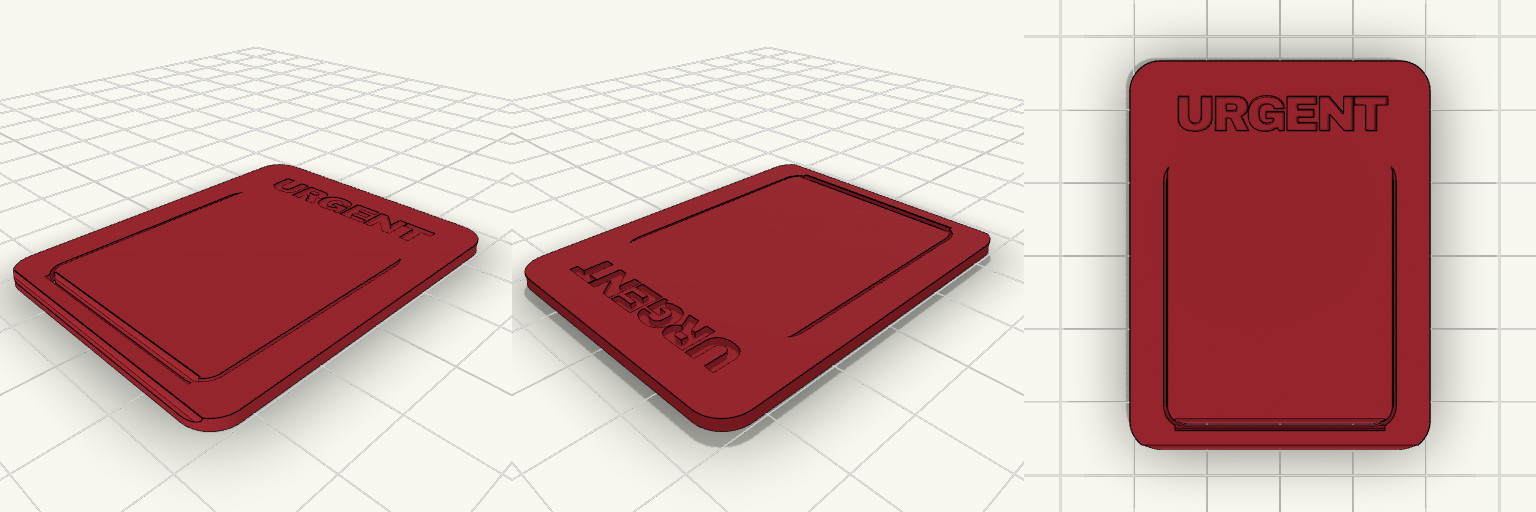
A slim, low-profile clip meant to bind a few urgent sheets. Clearance: 0.5 mm pinch gap. Size: 40 mm wide for a firm hold. Print: Prints flat, face up, no supports.
Reactor Core Echo Stand
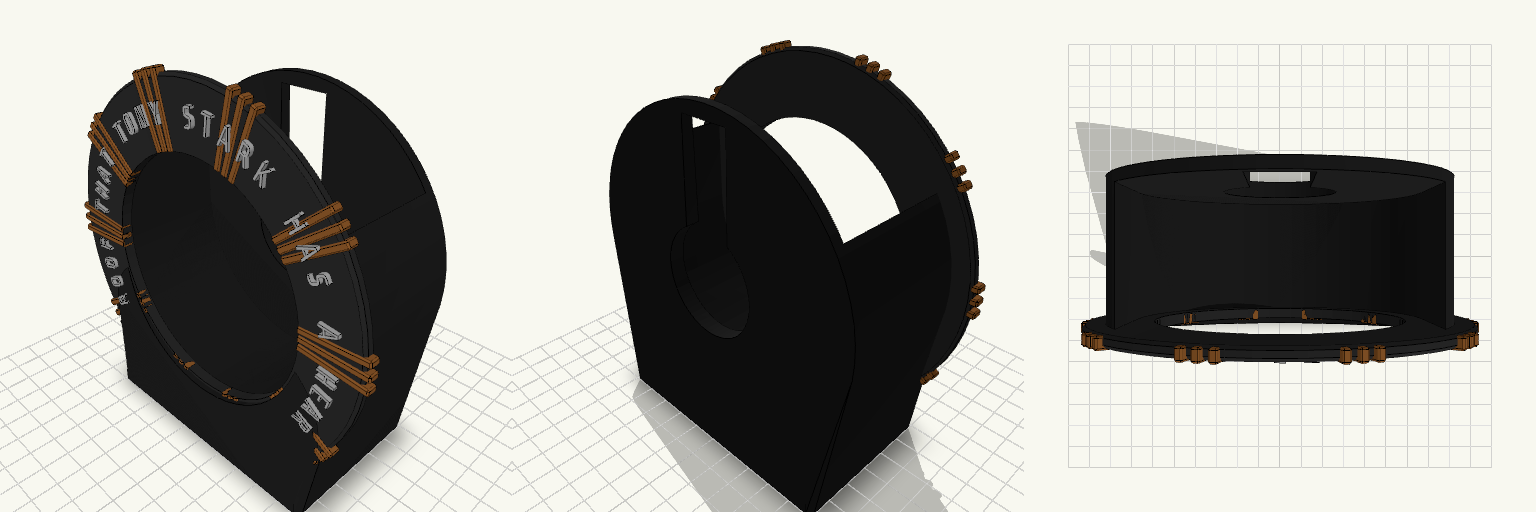
This stand pitches your 3rd Gen Echo Dot on its side to make it the glowing core of a Mark I Arc Reactor. The base features a U-shaped drop-in pocket sized perfectly for the Dot — it slides right in from the top with the cable attached, seating securely behind the front bezel. The front face frames the bottom edge of the device, turning its status light into the reactor's ring. Core Features Drop-in Dock: Fully open top channel and rear cable slot let you drop the Dot in without unplugging it. Reactor Bezel: Oversized front ring complete with ten staggered copper-style cooling coils. Embossed Text: The iconic 'PROOF THAT TONY STARK HAS A HEART' circles the top arc of the bezel. Cable Management: Rear cutout safely clears the bulky power adapter plug, and the hollowed base lets you run cables beneath.
Hexa — Modular Hex Phone Stand
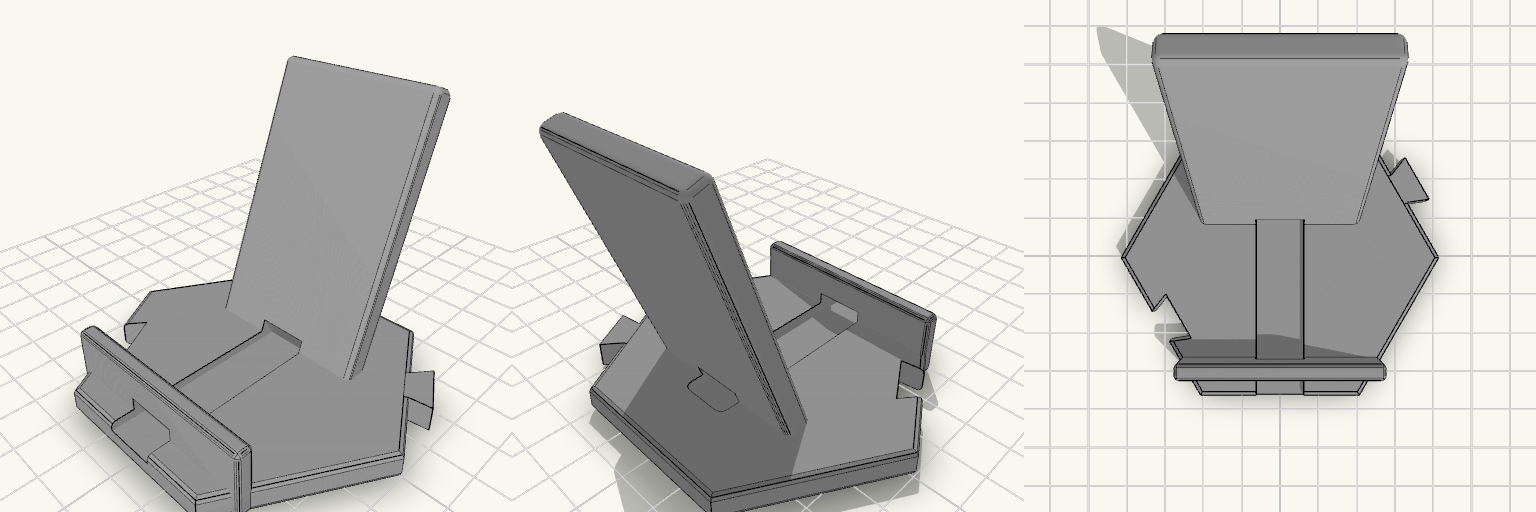
Hexa is a one-piece phone stand built on an 80 mm hexagonal base, designed so identical modules can click together side by side with no hardware. A 70° back panel supports the phone, a front lip stops it sliding, and a groove keeps the charging cable tidy. Features Hexagon 80 mm across vertices, 6 mm thick, rounded edges Back panel about 65 mm tall, leaning at 70° from the base Front lip 10 mm above the base surface Cable groove running front to back, centred Dovetail tab on one side edge, matching slot on the opposite edge (0.3 mm clearance) Print notes Print flat on the base, no supports needed PLA or PETG, 3–4 perimeters for strength