Quick Print Twisted Vase
Created 1 months ago
Description
Вазните што го блокираат печатарот по 14 часа само за да протечат при првото полнење со вода се бескорисни.
Ова е геометриска вазна со извртен профил, дизајнирана со константни ѕидови од 1.5 милиметри. Не ви требаат трикови во слајсерот или vase mode — само пуштете ја со стандардни поставки и се печати брзо бидејќи главата не прави непотребни движења.
- Дијаметар: 90 mm
- Висина: 180 mm
- Дебелина на ѕид: 1.5 mm (цврсто и водоотпорно)
- Печатење: Без никакви потпори
Images
More like this
Explore more in Decor & Display →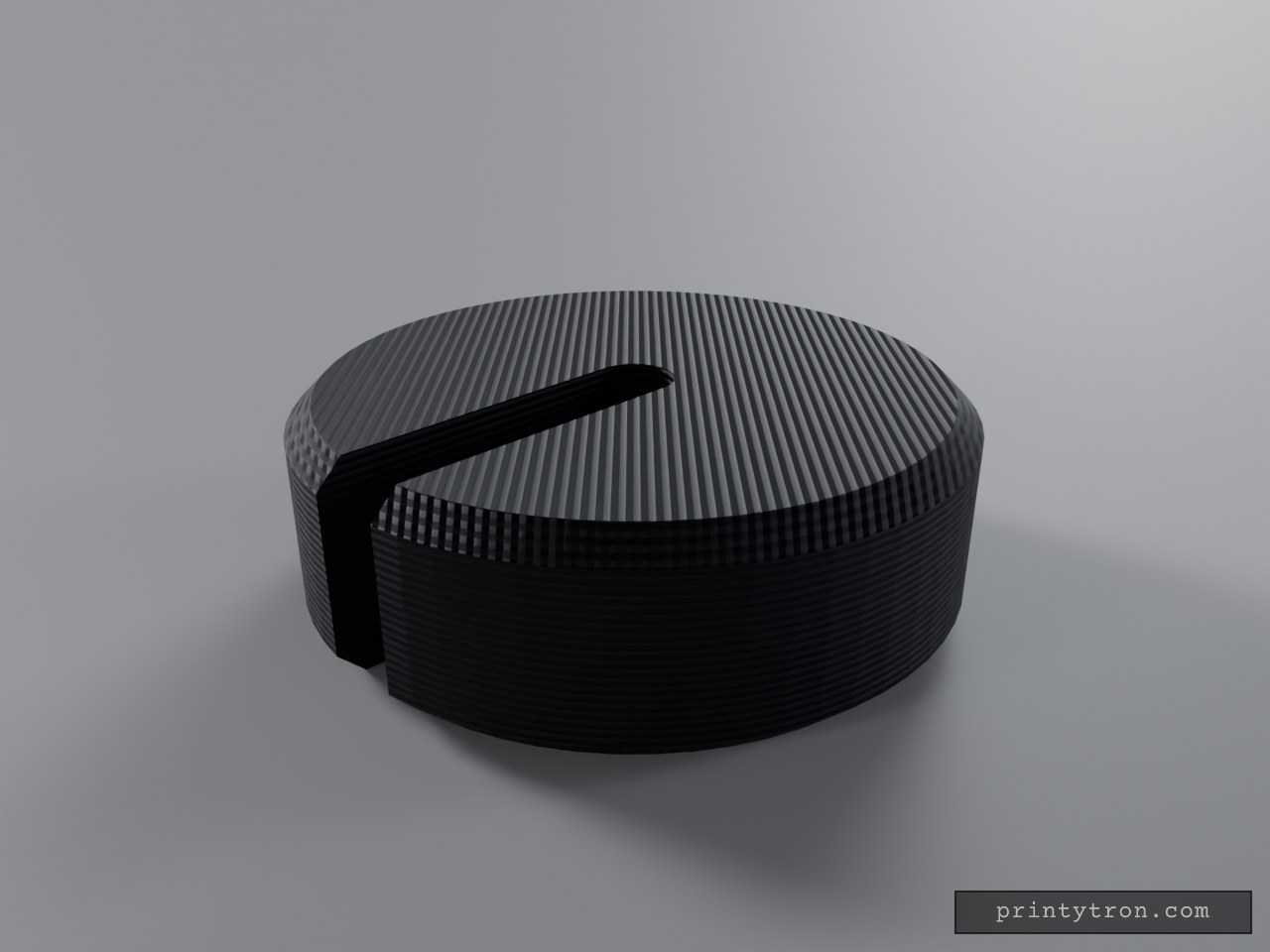
Pebbl — Aquarium Plant Weight
Pebbl is a small slotted disc that holds aquarium plant stems down in the substrate. The stem slides in through the open slot and seats in a rounded pocket at the centre, so the plant stays put without wire, glue or clips. The flat, compact profile sits low and is easy to bury under gravel or sand. Dimensions Diameter: 25 mm Thickness: 8 mm Slot width: 3 mm, running from one edge to the centre Edges: 1 mm chamfer on the top and bottom rims Slot end: rounded at the centre so a stem seats cleanly Print notes Prints flat on the build plate with no supports. PETG at high infill is a good choice for sinking weight. Plastic is light, so larger plants may need a thicker or wider disc. Use an aquarium-safe filament.
Wall-Mounted Running Medal Holder
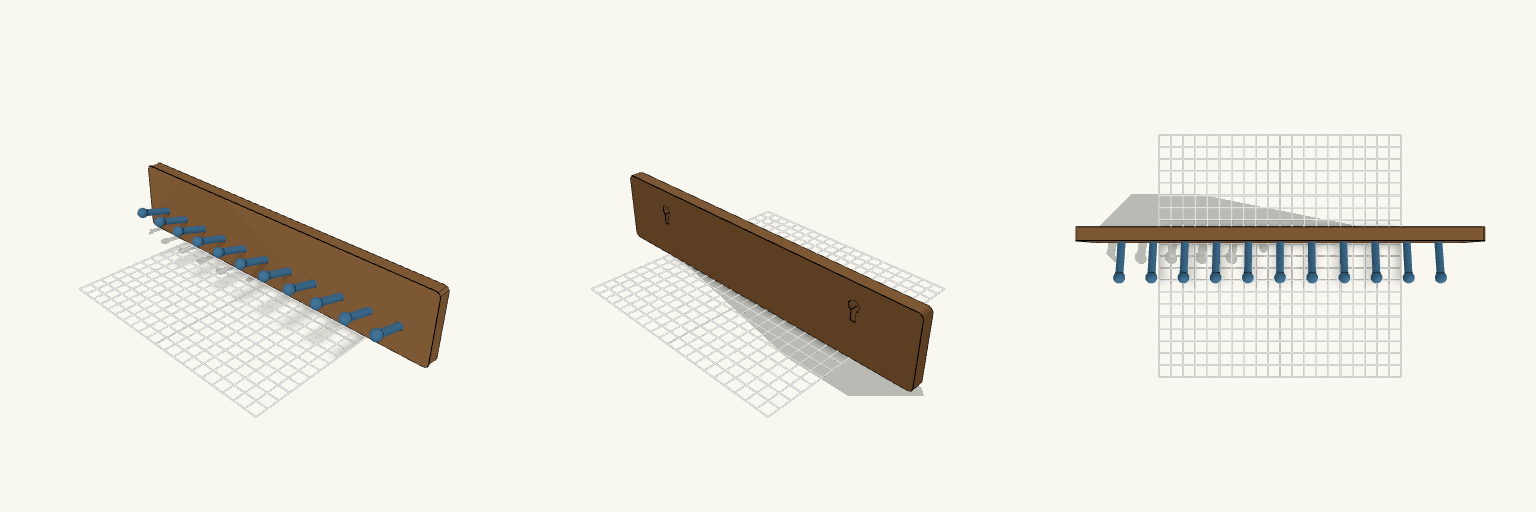
What it's for A wall-mounted rack for displaying running medals. Each ribbon slides onto one of eleven angled prongs that project from a flat backboard, so medals hang in a neat row and stay visible instead of ending up in a drawer. The prongs tilt up and finish in a ball tip, which holds the strap in place once it is looped on. The backboard is left plain above the prongs, giving the row of medals a clean edge to hang against and keeping the silhouette simple to print. The front face is completely smooth — the hanging slots are cut only into the back, so no holes or screw heads show through the display side. Dimensions Backboard: 300 mm wide × 60 mm tall × 10 mm deep Medal prongs: 11 prongs at 25 mm spacing, each reaching 30 mm out from the backboard at a 15° upward tilt, with ball tips Hanging slots: two keyhole pockets cut 6 mm into the back, 200 mm apart, leaving 4 mm of solid material at the front Prong spacing is the number worth checking against your own medals — wide straps need more room between prongs, and the spacing can be opened up if yours run thick. Roughly 10 to 15 medals fit across the 300 mm board. Print notes Prints as one piece; no assembly required. Lay the backboard flat on the plate so the prongs build up in front of it. The tilt keeps them self-supporting, so no supports are needed. Because the slots are stopped short of the front, the screw heads sit recessed in the back rather than passing through the board. Two wall screws 200 mm apart carry the holder. Remix ideas Widen the backboard to 400 or 500 mm and add prongs for a larger collection. Add a second row of prongs below the first to stagger medals in two tiers. Add a raised name plate or a finish-line banner along the plain top edge using the same prong layout. Materials Rigid filament is the better choice here; the prongs carry real weight and a soft or flexible material will let them droop.
3W Letters on Australia Silhouette Stand
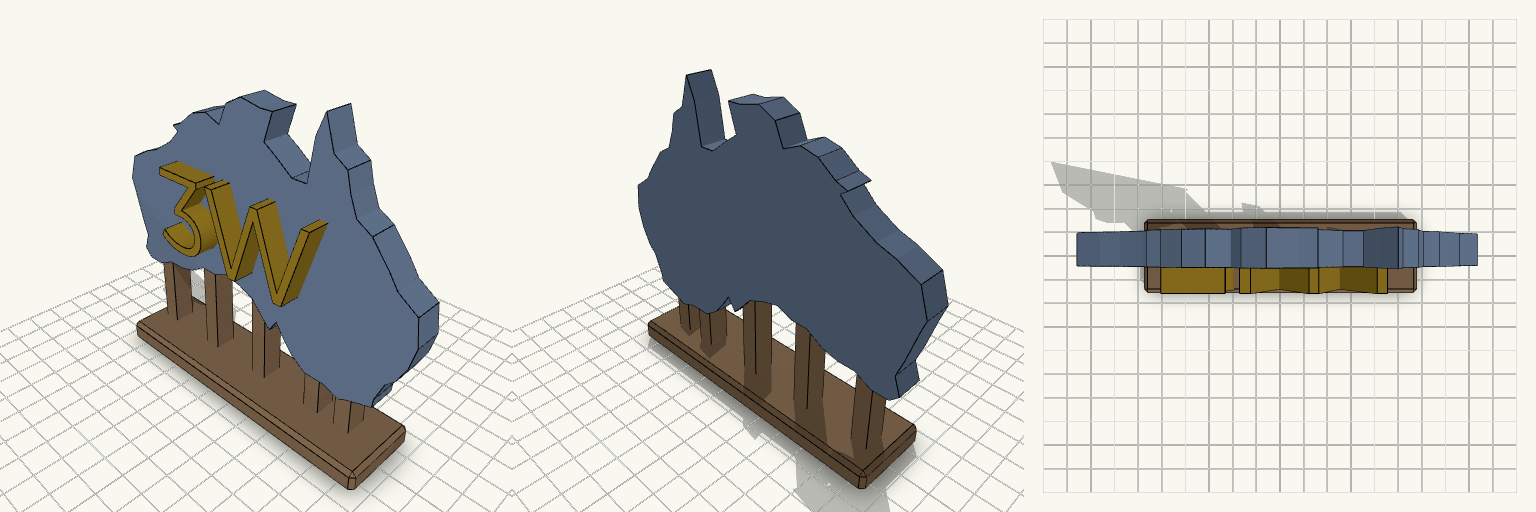
A raised "3W" monogram mounted upright on a stand cut to the silhouette of mainland Australia. Tasmania is gone: where the island used to sit, a short post now rises 18 mm from the base block and runs into the underside of the southeast corner. The map face is 10 mm thick and about 128 × 91 mm; the "3W" letters are roughly 68 × 29 mm and 8 mm deep, centred on the front face. Everything stands on a 112 × 30 mm base block, with five vertical posts — four 45 mm tall plus the 18 mm one at the southeast corner — bridging the gap from the base up into the underside of the map, so the silhouette rides above its foot instead of sitting flush on it. All five posts are now 6 mm wide and 8 mm deep, which is what stops the map feeling like it is floating on pins. Nothing is engraved — the coastline, the monogram and the open gap under the map carry the whole design. The coastline is drawn from about 60 points, so it is a simplified outline: the Gulf of Carpentaria and the southern gulfs are only roughly shaped. That is the first thing worth refining if a more faithful map is the goal. Remix hooks Coastline resolution is the main dial. The outline currently uses about 60 points. Doubling that sharpens the gulfs and the Cape York tip; halving it gives a chunkier, more graphic shape that prints faster and hides small printer artefacts. The support posts are the easiest structural change. Five posts, 6 × 8 mm in section, stand at x = -45, -20, 5 and 30 (45 mm tall) plus x = 43 (18 mm tall) across the 112 mm base. Add more for a wider map, slim them back toward 3 mm if you want a lighter frame, or angle them inward so they read as a bracket. Base size sets the stance. At 112 × 30 mm it is a plain rectangular foot; widen it for stability on a narrow shelf, narrow it for a lighter look, or reshape it into a second outline so the piece stands on a matching map fragment. Letter size is free. The "3W" group is about 68 × 29 × 8 mm, centred on the map face. Scale it up for a bolder centrepiece or down to let more of the coastline read around it. Thickness is a choice, not a constraint. 10 mm for the map and 8 mm for the letters gives a solid, weighty piece; dropping both to 4–5 mm flattens it, while going thicker turns it into a bookend-sized block. Bring the island back, or don't. A separate Tasmania is a small extra part that can be printed alongside or re-added as a second hanging element; leaving it off keeps the mainland edge clean and gives the southeast corner its post. Swap the monogram. The format is any short letter pair, initials or number-and-letter mark raised on a country or region outline, so the same layout works for other maps and other names. Starting values worth keeping in mind: 128 × 91 × 10 mm mainland map, 112 × 30 mm base block with four 45 mm posts and one 18 mm post, all 6 × 8 mm, and 68 × 29 × 8 mm letters.
Flat-Pack OO Scale Corrugated Garage
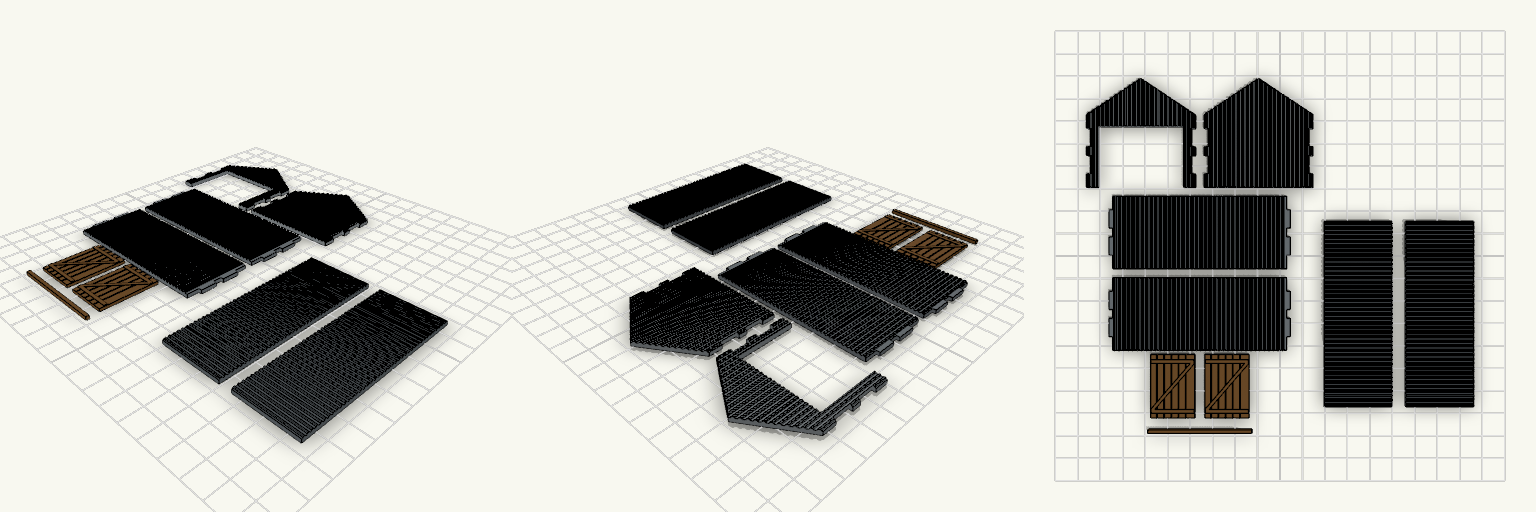
A flat-pack OO scale garage with corrugated iron panels, a gable roof and sliding timber doors. Every piece prints flat on the bed with no supports, then assembles with glue. The side walls carry tabs that pass through slots in the front and back gable ends, with 0.3 mm clearance. The two roof panels sit on the gable slopes. Two plank-and-brace doors hang from a separate rail across the front opening. Footprint: about 48 × 80 mm, ridge height about 48 mm Pieces: 2 side walls, 2 gable ends (front one has the door opening), 2 roof panels, 2 doors, 1 rail Panel thickness 1.6 mm with raised corrugation ribs Print flat, glue the joints, fix the rail above the opening
Flat Snake Assembly Kit
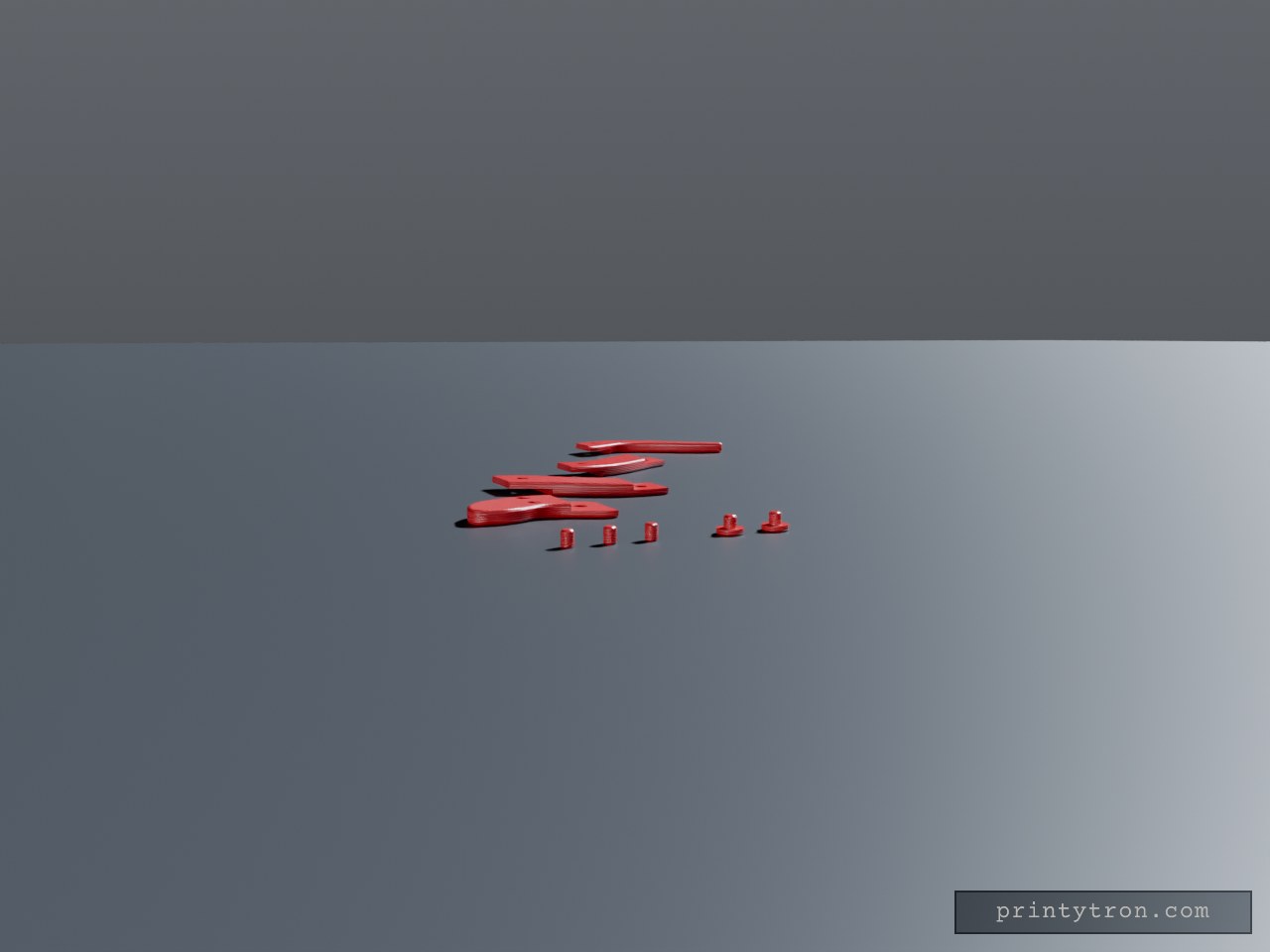
What it's for A flat, solid snake that prints as separate pieces and snaps together by hand: head, two body segments, tail, two eyes and three connector pins. Edges are rounded, there is no surface detail, and nothing needs supports. Dimensions Thickness: 4 mm Pin holes: 3.5 mm diameter Pins: 3 mm diameter, 4 mm long Joints: half-thickness lap joints, so the pin passes vertically through both overlapping ends Eyes: 6.5 mm domed discs with a 3 mm peg that fits holes in the head Remix ideas Lengthen the snake with more body segments. Change the wave amplitude for a tighter or straighter snake. Add a keyring hole in the tail.
55كعبة مجزءة
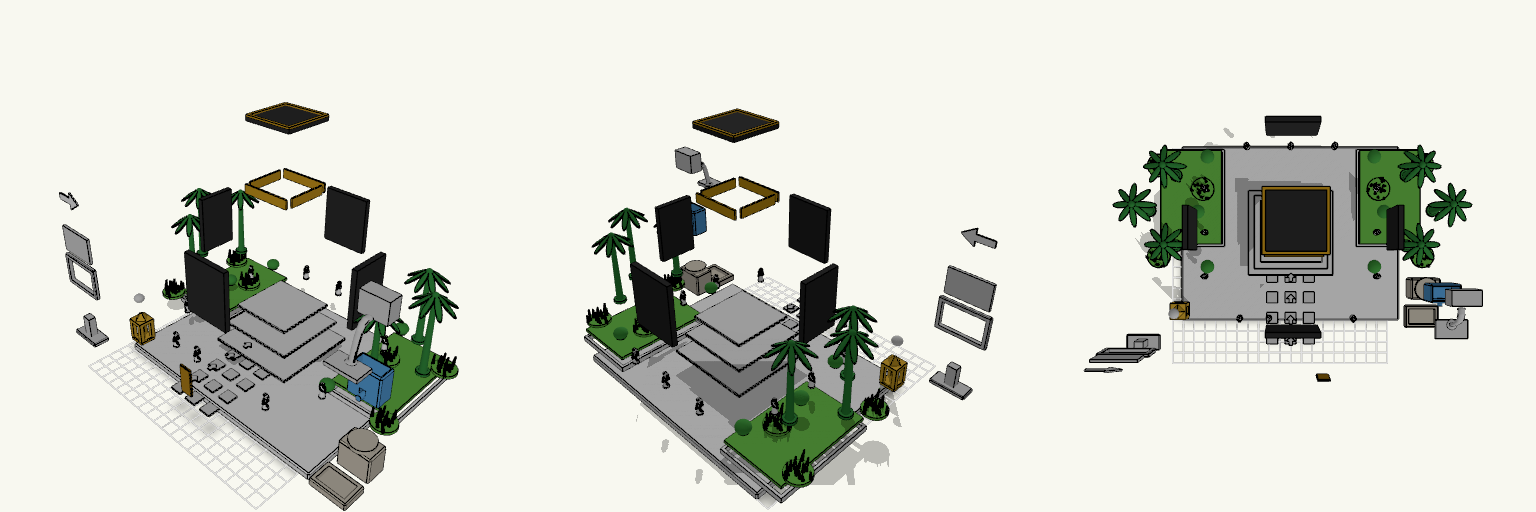
Exploded miniature of a masjid scene with every component spread apart with visible gaps. Parts: white base, platform tiers, four black Kaaba walls, roof, door, gold bands, walkway tiles, arrows, palms, bushes, grass, pilgrims, Zamzam station, Maqam Ibrahim and blue sign parts. Layout: exploded only, no assembled copy. Export: the download is one file; separating individual parts happens outside this model.