Description
Action figures with spindly joints and complex overhangs are miserable to print on an FDM machine — they snap at the ankles or turn into spaghetti under the arms. This is a heavy, blocky mech suit designed entirely out of chamfered armor plates. It trades sculpted organic details for a robust, aggressive hard-surface geometry that actually prints.
The figure stands in a strict A-pose with wide, flat feet to maximize bed adhesion.
Print Parameters
- Total Height: 157 mm
- Footprint: 48 mm wide stance
- Supports: Required under the arms and crotch (the A-pose keeps them minimal)
- Joints: Solid model (no moving parts to fuse)
Photos
Technical views
More like this
Explore more in Decor & Display →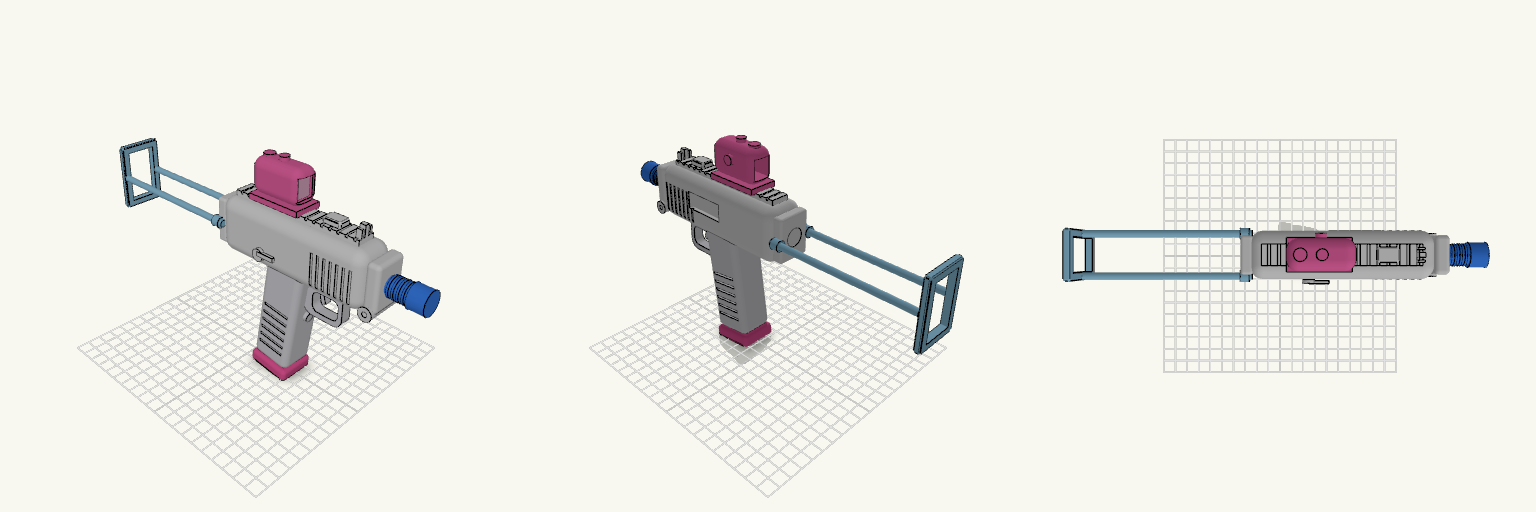
SMG-11 — Red Dot Machine Pistol Replica
SMG-11 is a life-size, non-functional display replica of the compact machine pistol from Rainbow Six Siege, built in the MAC-11 pattern. The magazine is a separate piece that slides out of a real well in the grip, and a rail-mounted red dot sight sits on top. Features Removable magazine with baseplate, feed lips, catch notch and witness holes Grip with mag well, side texturing, mag release button, trigger and trigger guard Boxy receiver with ejection port, side serrations, safety lever and front sling loop Grooved barrel with muzzle ring Top rail with cross slots, front sight with ears and cocking knob Red dot sight with housing, turrets, battery cap, lens and dot Open wire stock Print notes Overall length is about 280 mm with the stock, so it needs a large bed or splitting into sections. Print the magazine separately, baseplate down. The well has about 0.3 mm clearance per side. Wire stock rods may need supports. Display piece only; it has no working mechanism.
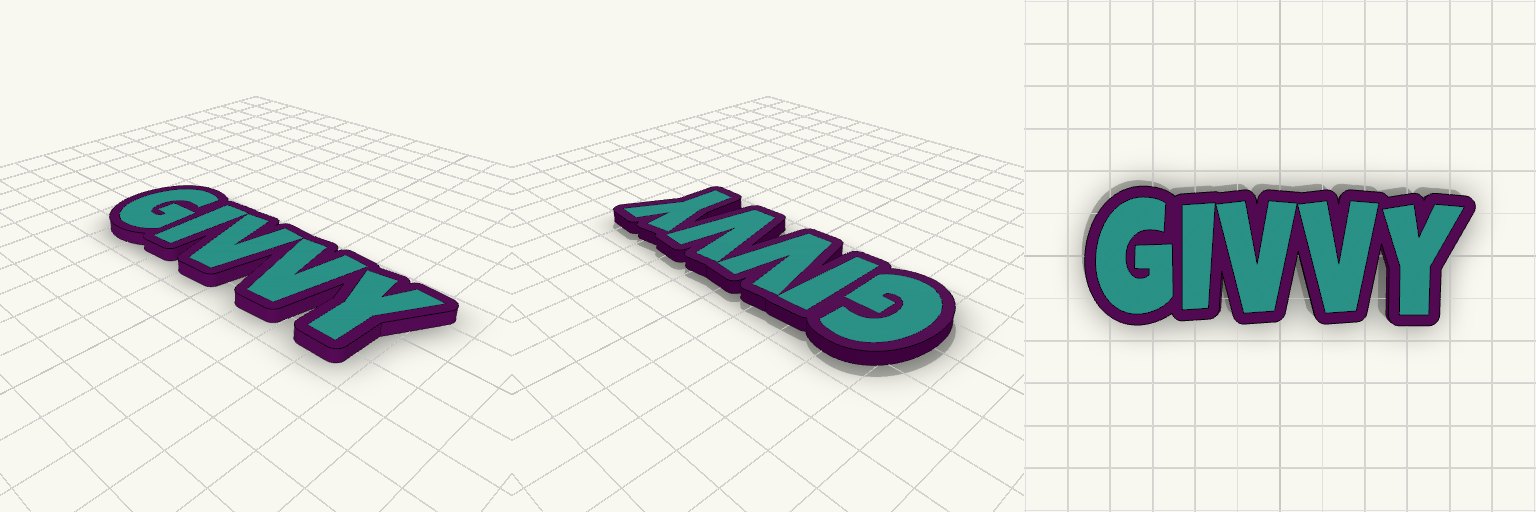
Givvy Display Logo
A thick, rounded "GIVVY" logo designed specifically for multi-color FDM printing (AMS/MMU). The text features a solid aqua centre surrounded by a continuous purple outline that merges the letters into a single, cohesive piece. Scaled perfectly for mounting onto a trading-card display stand. Dimensions: ~94 mm wide, ~31 mm high, and 3.2 mm thick. Format: Co-planar separate regions for the centre and outline, allowing easy assignment of different filaments in your slicer. Mounting: Perfectly flat back for flush gluing to display stands or frames.
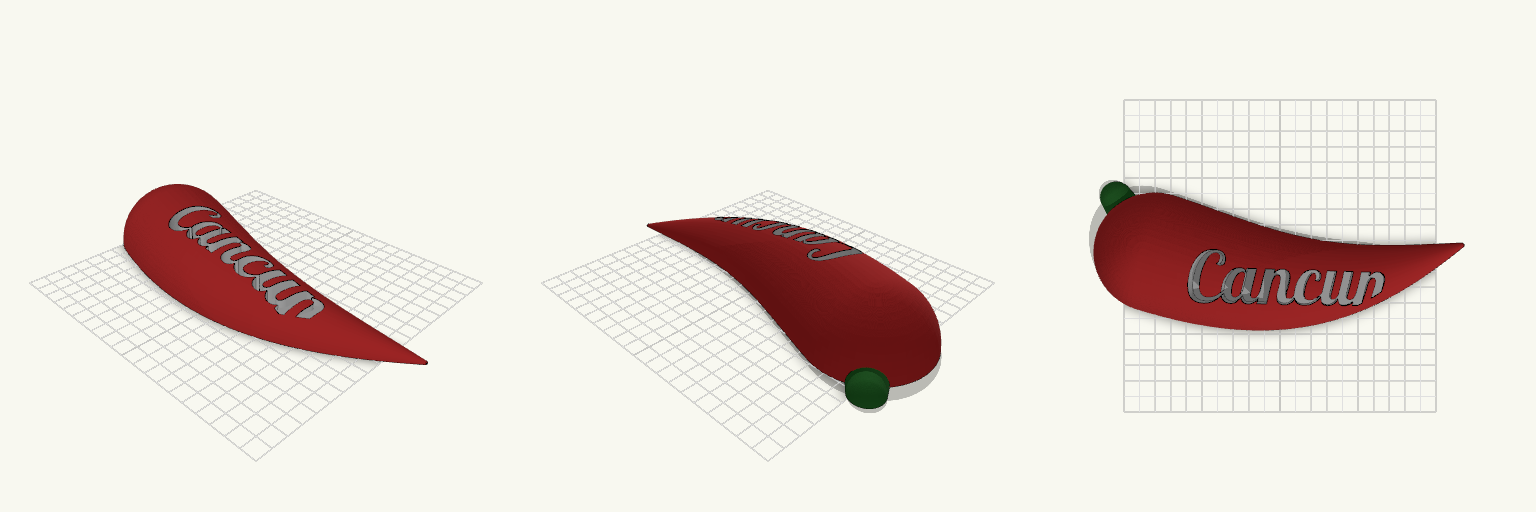
Curved Script Chili Sign
A solid-backed, flat-printing chili pepper display sign styled like a vintage embroidered restaurant logo. The lettering is wrapped along a shallow crescent arc using a flowing, connected script font, layered with a dark stepped outline to give it a physical embroidered look. Everything sits flush on the Z=0 plane for easy multi-color filament swapping on any FDM printer. Remix Hooks The Curve Radius: The text is mapped along an arc with a 200 mm radius. Dropping that to 150 mm gives a much steeper smile, while pushing it to 300 mm flattens it out. Text Spacing: The script kerning is tied to a custom letter spacing offset. Adjusting this tightens or spreads the cursive connections. Outline Depth: The dark outline is offset by 1.5 mm. Bump that up for a thicker border.
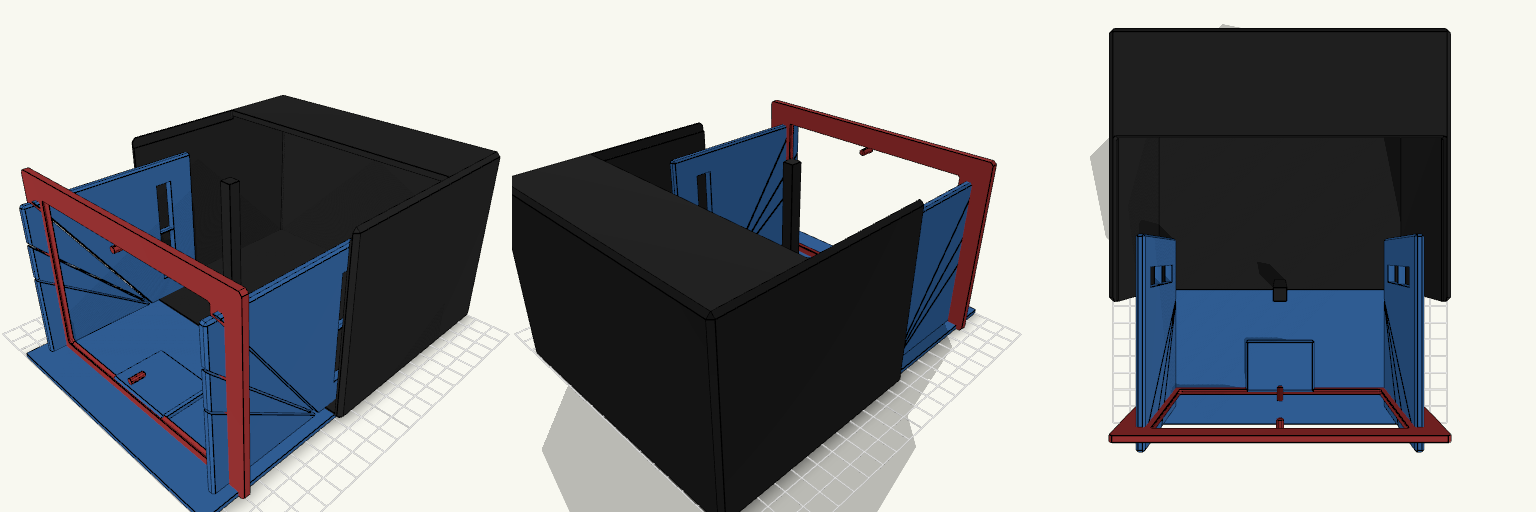
Pepper's Ghost Enclosure
A three-part optical illusion experiment utilizing the Pepper's Ghost principle. The enclosure uses ambient light and a clear sheet of recycled plastic to project a reflection of a small figure, making it appear to float inside the dark interior. Specifications Illusion mechanism: Forward-leaning plastic reflects the illuminated floor pedestal into the viewer's direct line of sight. Adjustability: Slide-in stage features 1.2mm grooves at 35, 45, and 55 degrees to tune the reflection angle depending on the viewer's height. Assembly: Snap-fit front bezel holds the stage in place. No screws or glue required. Printing: All three pieces are designed to print flat without supports. In your slicer, split the model into objects and lay the main enclosure on its back.
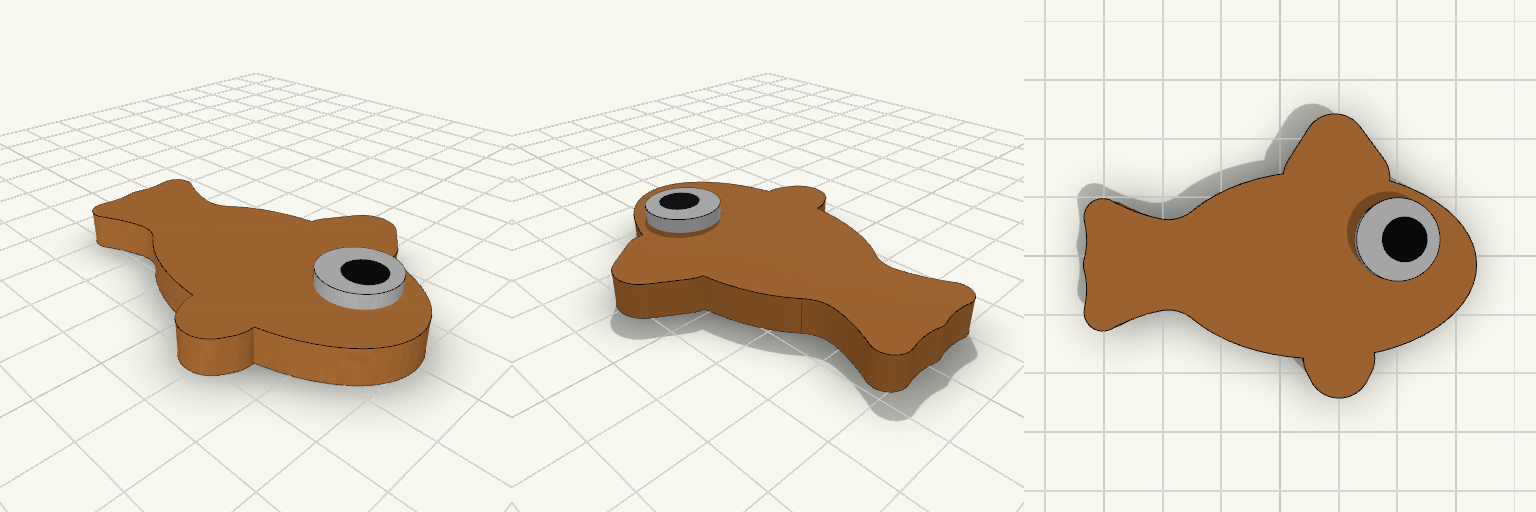
Simple Layered 2.5D Fish
A flat, layered fish: oval body, forked tail, two fins and one big eye with a black pupil. Stripped down to a few clean shapes so it prints fast and reads clearly. Remix hooks Eye size: white is 13 mm, pupil 7 mm. Push the pupil off-centre for a different expression. Body: a 50 × 30 mm oval, 6 mm thick. Change the 0.6 scale for a fatter or slimmer fish. Tail and fins: 4 mm thick, one shared colour. Reshape the polygons for a different species. Pairs with: a magnet or keyring hole on the back, or a row of them as wall decor. Colour swaps: body, fins and eye are separate layers, so a filament change at 4 mm and 6 mm handles it.
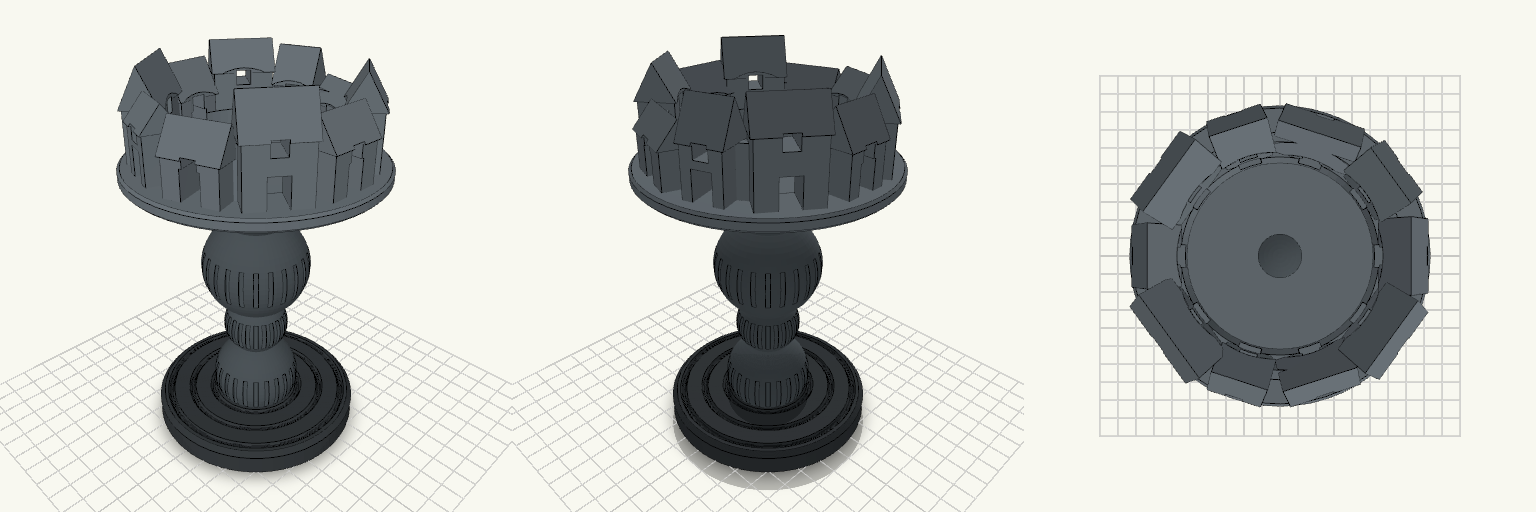
Lichtkranz Dorf auf Kugelsockel
Ein asymmetrischer Kranz aus zehn unterschiedlich großen Häuschen, die sich an der Rückwand berühren und so eine durchgehende Silhouette bilden. Türen und Fenster sind tief ins Innere durchgestanzt, sodass das Licht eines Teelichts im 65-mm-Bodenglas nach außen dringen kann. Lichtdurchlässig: Die Öffnungen gehen durch die innere Wand direkt bis ans Glas. Abwechslungsreich: Jedes zweite Haus bricht die Höhe und Breite auf. Stabiler Kern: Der Sockel aus vier gestapelten Rillenkugeln trägt die Konstruktion sicher.