Sliding Tray With Lid Handle
Created 24 days ago
Description
A 78 x 47 x 125 mm vertical tray that slides into a box, topped by a lid that doubles as a pull handle. Four compartments, lowered front lips and a grooved finger tab make loading and pulling easy.
Remix hooks
- Wall and floor: 1.2 mm walls, 1.8 mm floor. The floor absorbs the leftover height so the 56 mm lower row and 66 mm upper row fit the 125 mm total.
- Lip height: 6 mm front lips with a 22 mm round dip. Raise the lip for deeper pockets, or widen the dip for bigger fingers.
- Dividers: the vertical wall sits at 38 mm from the left, and the right side is split by a horizontal wall. Move either to resize the compartments.
- Ribs: 2 x 2 mm guide ribs on the side walls, full height. Change them to match the clearance of the box.
- Lid: 90 x 56 x 8 mm, flush at the back, with 45 degree chamfered underside edges and three 1 mm grooves on the 30 mm tab. Pairs with any box sized around the 82 mm tray.
Prints upright with no supports.
Images
More like this
Explore more in Storage & Organization →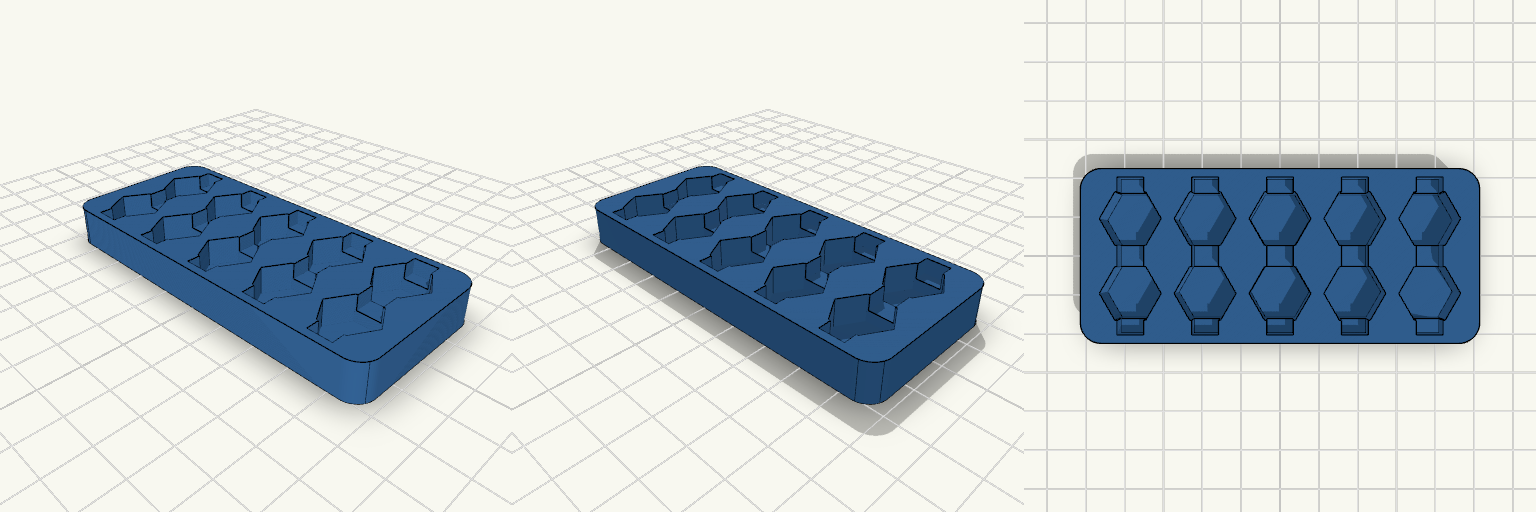
Low-Profile Extractor Set Tray
A slim, flat drop-in tray in the spirit of a toolbox foam insert, with ten hex pockets in two rows of five. Each pocket fits a thread extractor with a 12.8 mm hex base, and a finger slot across each one makes lifting them out easy. Overall size: 96 × 42 × 10 mm Pockets: 13.7 mm across flats, 7 mm deep, 3 mm solid floor Extractors stand upright, so the tall ends project above the tray Rounded vertical corners for easy fit into a case
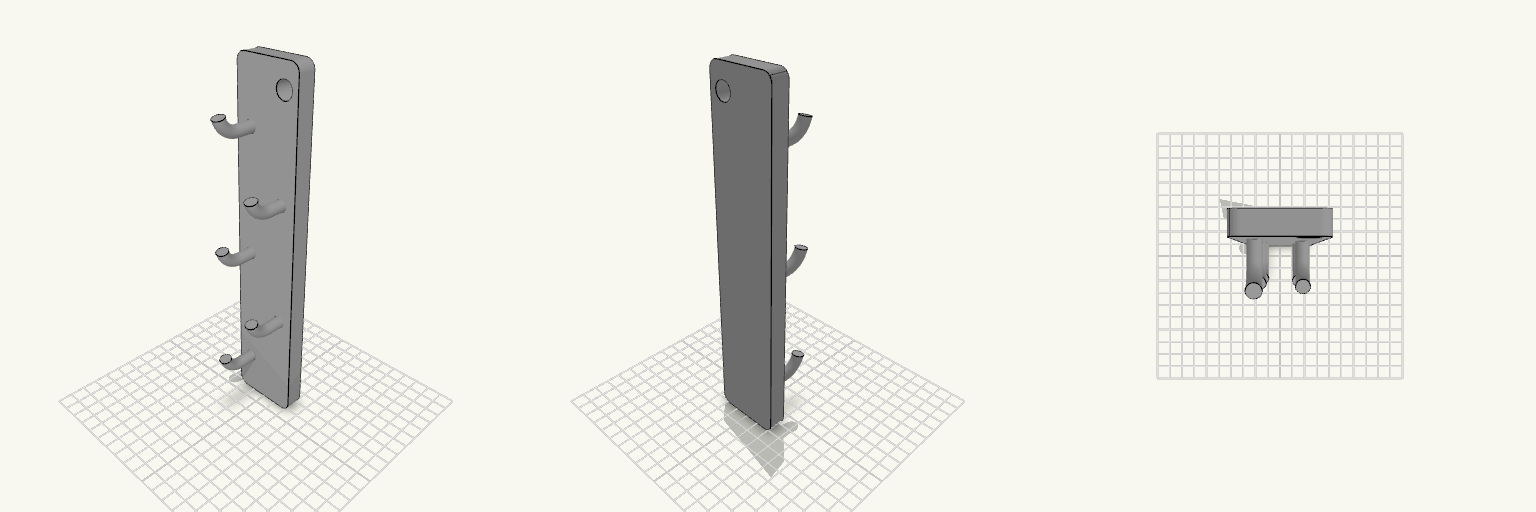
Staggered 5-Key Hook Extender
A tall back plate that hangs from a key rack and holds five keys on alternating left and right pegs, so fobs dangle without touching each other. The plate is 46.2 mm wide, 240 mm tall and 12 mm thick, with a 12 mm hang hole at the top right. Each peg is 8 mm in diameter, runs straight for 12 mm, then curves upward through 75° to keep rings seated. Remix hooks Plate thickness (12 mm): the easiest stiffness lever. Pegs are set into the plate face, so going thicker needs no other changes. Peg spacing (42 mm pitch): raise it for longer fobs, lower it to fit more pegs on a shorter plate. Bend angle (75°) and straight run (12 mm): lengthen the run for larger rings, ease the angle for a flatter peg. Hang hole (12 mm): resize to match your rack hook. Pairs with: any horizontal key rack with a post or screw head that fits the hole.
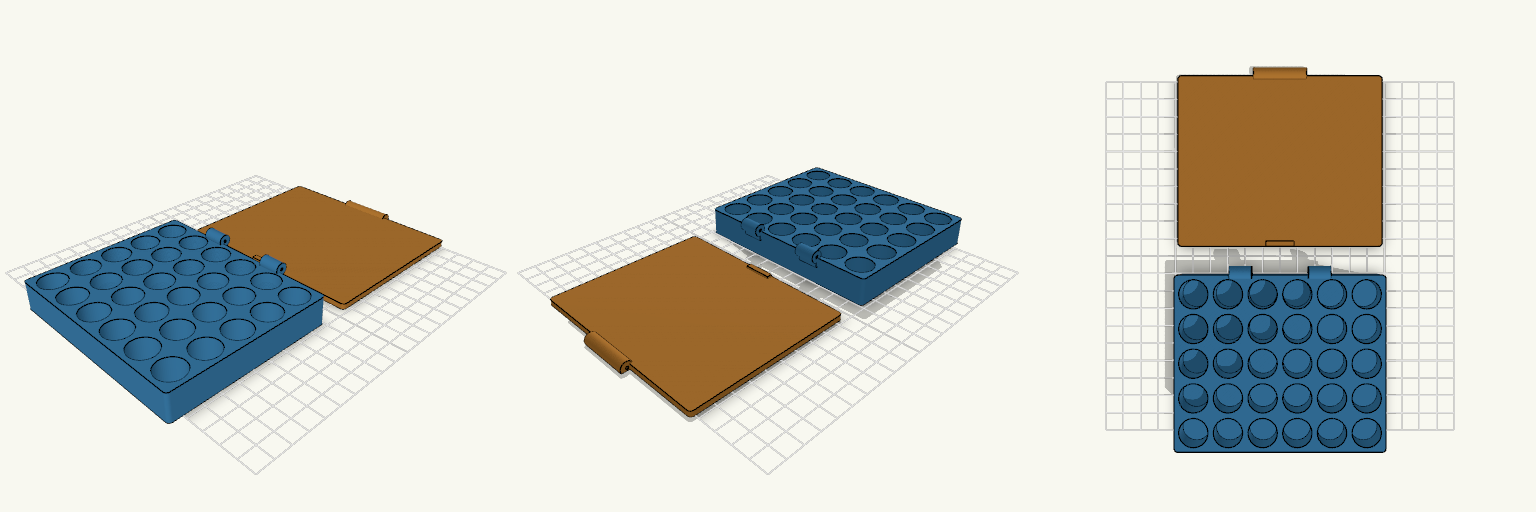
Apothecary Grid Hinged Pill Box
A pharmacy-drawer grid in miniature: thirty round wells in a 6×5 layout, topped by a lid that swings open on a real pin hinge at the back edge. The lid prints flat beside the tray and clicks into the hinge ears once a short pin is slid through. 30 slots, 16 mm wide and 14 mm deep Hinge pin hole sized for a 1.75 mm filament offcut, about 56 mm long Front finger tab on the lid for easy opening Lid and tray print without supports in separate pieces
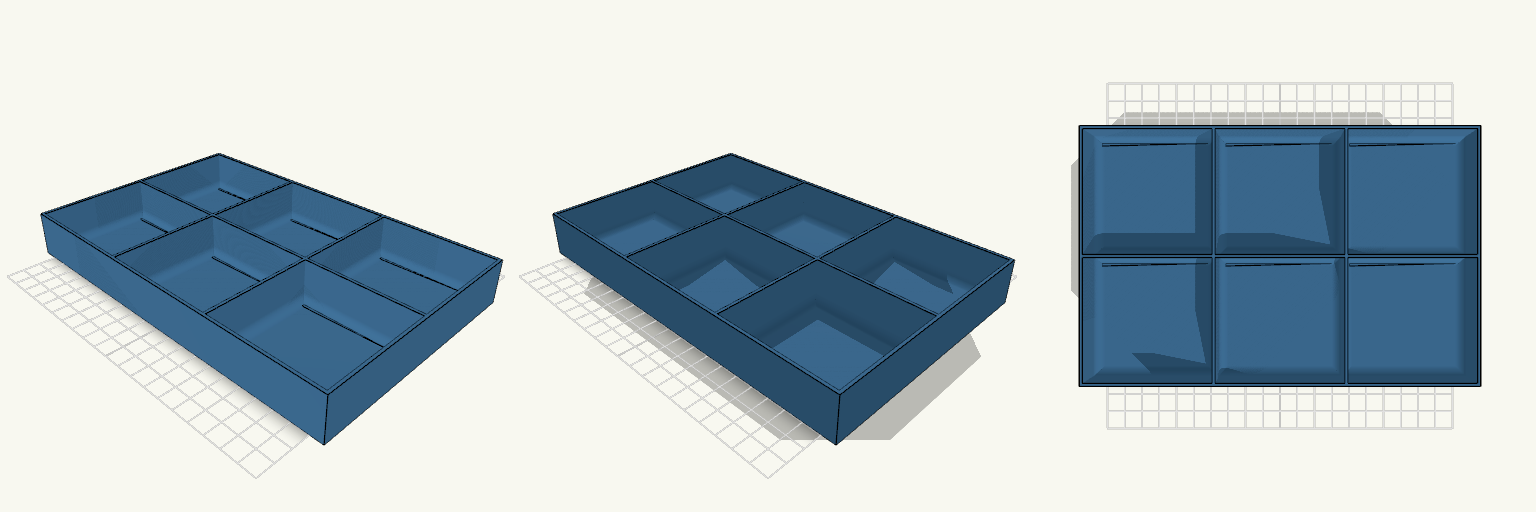
Drawer Organizer Grid for Mini Toolbox Top Drawer
Small screws, bits, and sockets slide into one pile in the shallow top drawer of a U.S. General Mini Toolbox. This 3×2 organizer grid drops into that drawer and gives each group its own bin, so you can grab one without dragging the rest along. Footprint: 215.5 × 140 × 26 mm, sized for the top drawer with clearance. Compartments: six bins, each about 69.7 × 67.6 mm. Walls and floor: 1.6 mm walls, 1.2 mm floor. Bin floors: 5 mm rounded bottom edges so small parts can be scooped out instead of trapped in square corners. Printing: one piece, no separate inserts or assembly. The grid works as a single tray: print it, drop it in, and lift the whole thing out when you need the drawer back. The rounded floors are part of the print, not loose scoops.
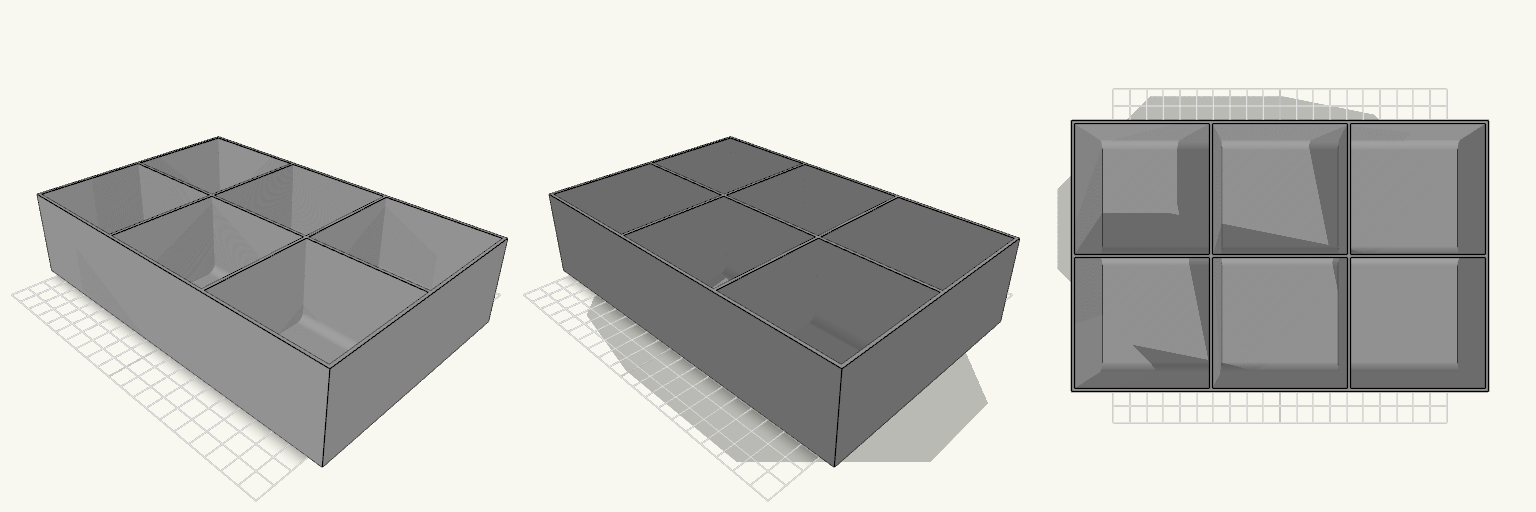
3×2 Drawer Organizer Grid for Mini Toolbox
A six-compartment drawer organizer sized to sit in the bottom drawer of a U.S. General mini toolbox. The 3×2 grid keeps small parts separated, with 1.6 mm outer and internal walls and a 1.2 mm floor. Each bin has a 5 mm concave scoop along the front and back wall, so fingers and small parts slide up the curve instead of catching on a square edge. The overall footprint is 215.5 × 140 × 51 mm. 3×2 grid, six bins 1.6 mm walls and 1.2 mm floor 5 mm finger-scoop fillets front and back in every bin Sized for the bottom drawer of a U.S. General mini toolbox
Bass Tackle Box With Hinged Lid
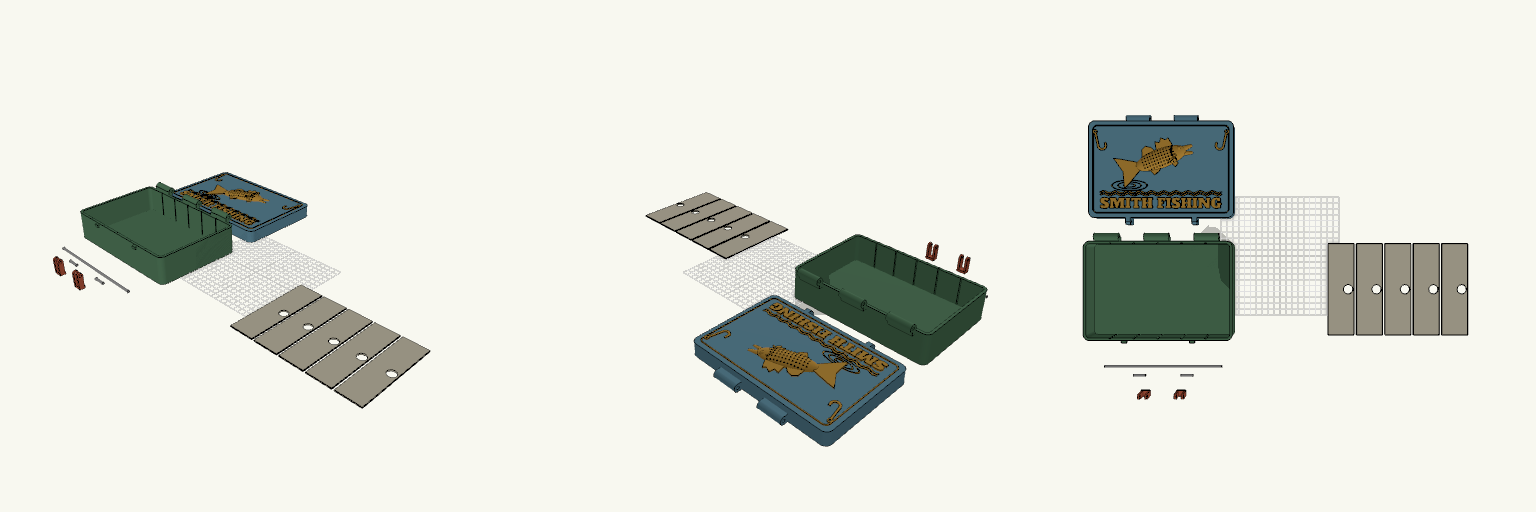
Tackle boxes that pop open in the boat, rattle hooks into the soft plastics, or lose a lid hinge get replaced. This one is a hinged bass tackle box with a locking front latch, adjustable dividers and a leaping largemouth bass on the lid, with SMITH FISHING raised underneath. Load-bearing numbers Base: 240 × 160 × 50 mm, 4 mm walls, 3 mm floor, rounded vertical corners. Lid: 240 × 160 × 22 mm, with a raised bass, ripples, waves, hooks and a border on top. Dividers: 5 removable cross dividers, 1.8 mm thick, sliding in 2.4 mm grooves at 38.5 mm spacing. Hinge: 5 interleaved knuckles across the back, joined by a 4.2 mm pin (197 mm long, printed separately). Latches: 2 front latches with 4.2 mm pivot pins. Each hooks under a ledge on the base. Printing Print every piece in the layout shown: base, lid, dividers, latches and pins are all separate. Lid: print upright. The underside of the top plate bridges across the cavity, so use supports or good bridging settings. Layer height 0.2 mm, PETG or ASA, 3+ perimeters. Hinge and latch pins can be glued or capped at the ends to keep them in.