Solid Name Sign
Made by a Guest
Created 3 months ago
Description
Paper signs peel, and thin plastic snaps when someone slams the door. Here is a solid, two-layer sign built to take a hit.
Print details
- Dimensions: Roughly 150mm across, 5mm total thickness.
- Printing: Both parts print flat. You can print them separately and glue them, or slice them together for a filament swap at 2.4mm.
Images
More like this
Explore more in Decor & Display →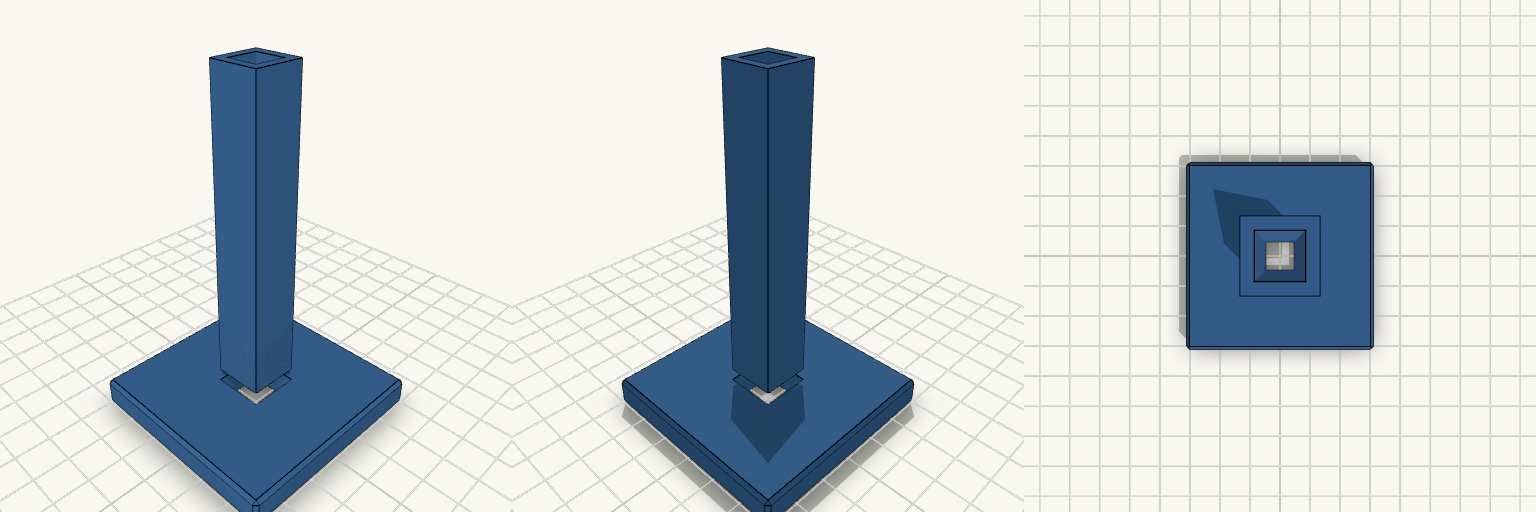
Square-Foot Tabletop Post Stand
What it's for A one-piece tabletop stand: a flat square foot with a single 14 mm square post rising from its centre. The broad 60 mm foot keeps the post stable on a desk or shelf, and the post gives you a square, straight upright to build onto, hang something from, or slot a part over. The underside carries a square sleeve socket with a wire hole through its floor, so a cable can be fed up through the post and out of the open top instead of running loose down the outside. It prints as one piece — nothing to glue or assemble. Dimensions Footprint: 60 × 60 mm, 8 mm thick, with a 1 mm chamfer around its edges. Post: 14 × 14 mm square, rising 90 mm from the centre of the foot. Overall height: 98 mm as it sits on the print plate. Underside socket: 14.5 × 14.5 mm square, 12 mm deep, centred in the foot and running 4 mm up into the post. Wire bore: 9 × 9 mm, running the full length of the post from the socket floor out through the open top, leaving about 2.5 mm of wall around it. Print notes Material: PLA on an FDM printer. Orientation: stands upright on its foot, so it prints with no supports. Walls: the post is bored out, so its walls are about 2.5 mm — a 3 mm perimeter setting will not fit them evenly; two or three perimeters gives a cleaner result. Slicing: set 20% infill in your slicer; the model itself does not carry an infill value. Remix ideas Change the post cross-section to match whatever has to slide over it, keeping roughly 0.5 mm clearance per side. Resize the socket to take a different sleeve, or cap the top of the bore to make a closed internal channel. Scale the foot wider or thinner for a heavier load or a tighter shelf space.
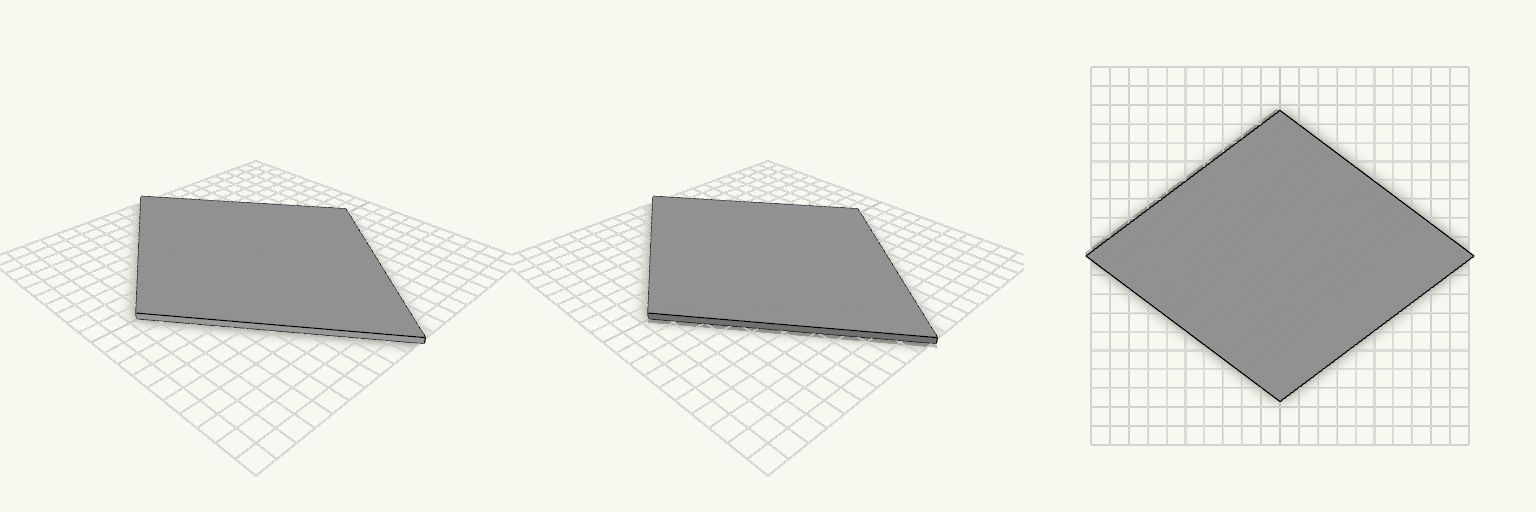
Diamond Panel 6 Inch Sides
What it's for A flat diamond-shaped panel for signs, inserts, covers or decorative work. Four equal 6 in edges, flat faces. Dimensions Side length: 6 in (152.4 mm), all four sides Long diagonal: 8 in (203.2 mm) Short diagonal: about 8.94 in (227 mm), set by the side and long-diagonal lengths Thickness: 3 mm Remix ideas Add mounting holes at the corners. Round the points for a softer look. Emboss text or a logo on one face. Cut a window to make a frame.
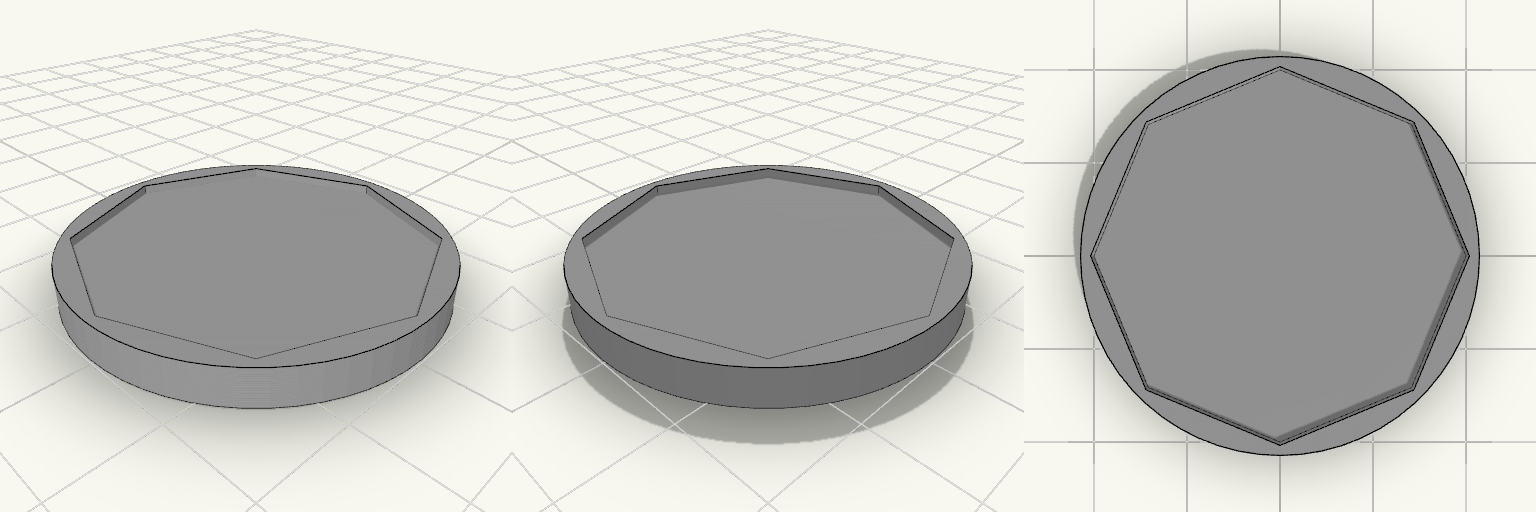
40mm Round Coin Octagon Recess
A 40 mm diameter, 4 mm thick round coin with an octagonal recess on each face. The recess is 1 mm deep, and its corners stop 1 mm short of the rim, so the edge stays a continuous ring. Diameter: 40 mm Thickness: 4 mm Recess: octagon, 19 mm corner radius, 1 mm deep, both faces Rim: unbroken, about 1 mm wide at the octagon corners Print: flat on either face, no supports needed
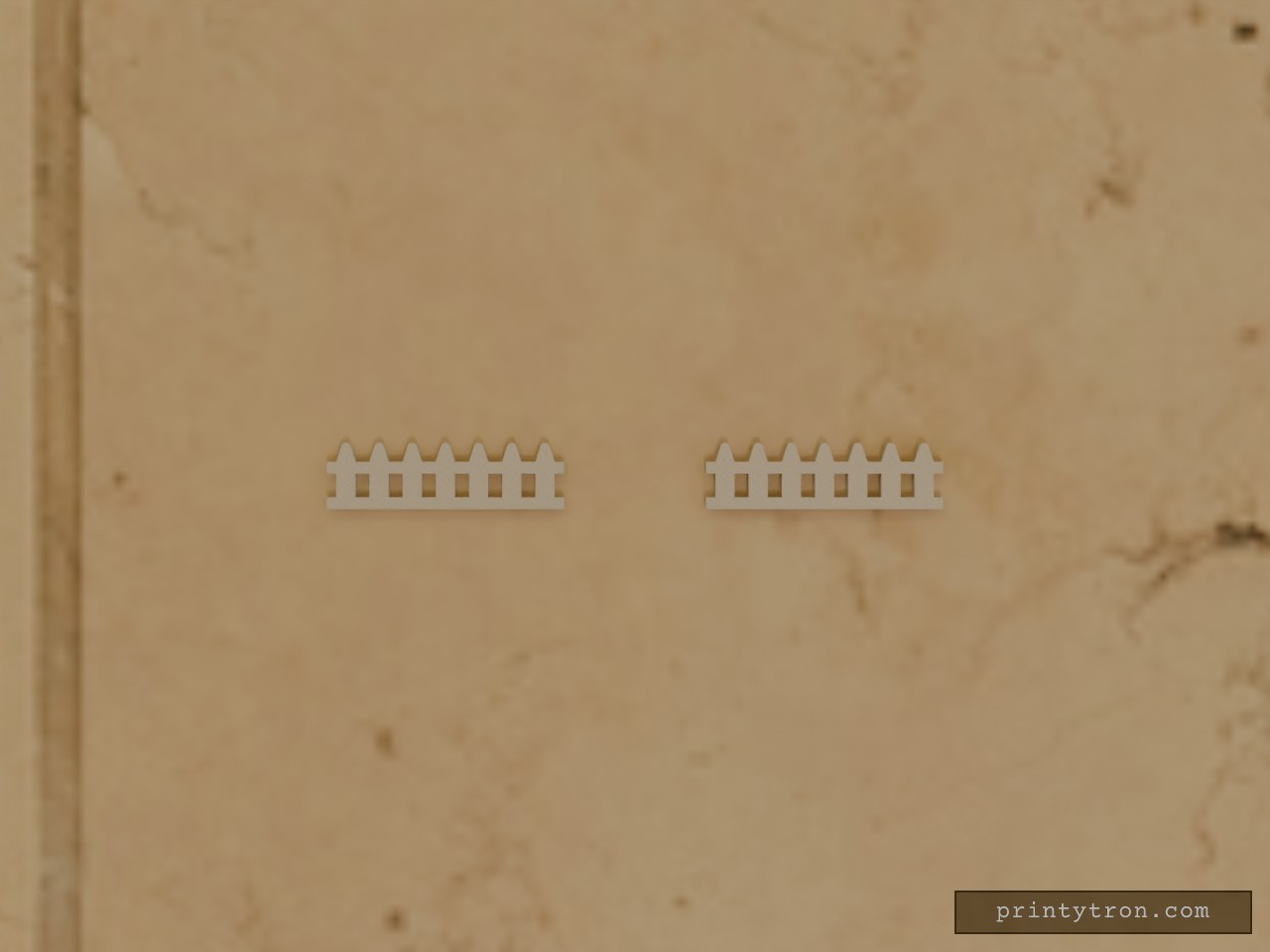
Two 100 mm Picket Fence Panels
Two mirrored flat picket fence panels for either side of a pedestrian crossing diorama. Each panel is 100 × 28 × 3 mm with seven rounded-point pickets joined by two horizontal rails. The pair spans 260 mm with a 60 mm gap for the crossing, fitting A4 landscape. Pickets: 8 mm wide, 6 mm gaps, rounded pointed tops Rails: 5 mm tall, near top and bottom, full 100 mm length Thickness: 3 mm throughout Print: flat on the bed, no supports, no holes, no text Material: PLA or PETG Footprint: 260 × 28 mm
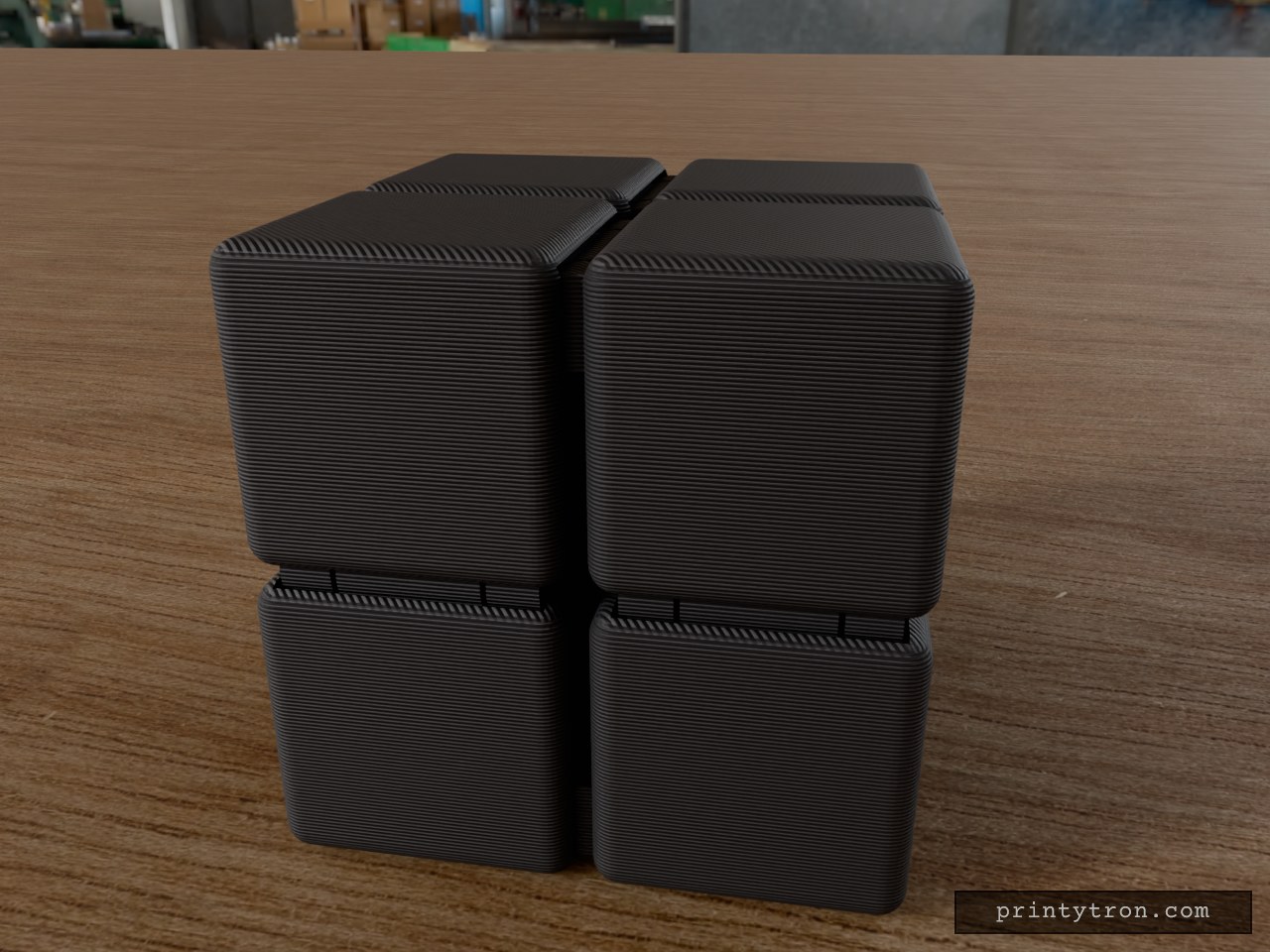
Print-in-Place Hinged Infinity Cube Fidget
Eight rounded 22 mm blocks in a 2×2×2 grid, each a different colour, joined by twelve print-in-place pin hinges instead of solid bridges — so the cube actually folds in the hand. The hinge assemblies measure 42.2 × 42.2 × 42.2 mm laid out on the plate, and each hinge runs about 0.4 mm clearance around its pin and 0.4 mm between knuckle and lugs. Print it with no supports at a 0.2 mm layer height, and expect to snap each hinge free by hand once before the first fold. It is a fidget piece first and a desk object second; it has not been test-flexed, so treat the 0.4 mm clearances as a starting value rather than a proven one. Remix hooks Hinge clearance (about 0.4 mm): the one number worth tuning first. Loosen it if your printer runs tight or you print in a stringy filament; tighten it toward 0.3 mm if the joints feel sloppy after breaking them in. Block size (22 mm): the whole cube scales with it — the 42.2 mm hinge envelope follows the block edge, so resize the blocks and let the joints follow. Corner radius (2 mm): the easiest restyle that doesn't touch the mechanism. A larger radius sits softer in the hand and reads cleaner at the seams. Gap between blocks: widen it for visible, colour-separated seams; close it up if you want the folded cube to read as one mass. Pin and knuckle section: thicker knuckles hold tighter but need more break-in force; thinner ones free up faster and wear looser. Pairs well with two-tone or colour-swapped filament by block, and with other small desk fidgets. The eight-block grid is the constraint; everything hung on it is a choice.
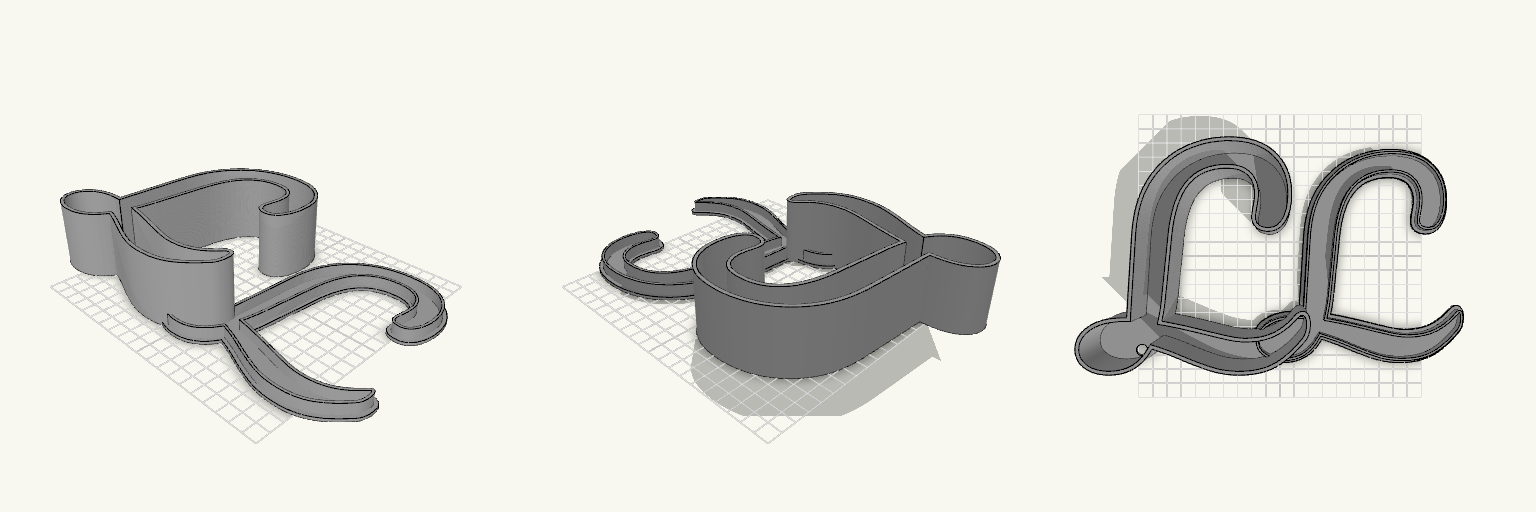
Letra L luminosa de 15 cm con tapa difusora
Letra L en fuente Pacifico, pensada como letrero luminoso: una base trasera hueca donde se pega una tira de LEDs y una tapa delantera que difumina la luz. Las dos piezas encajan entre sí y el cable sale por un orificio en la parte trasera, de modo que el conjunto queda cerrado y la luz solo se ve a través del difusor. Especificaciones Altura: 15 cm. Anchura aproximada: 25 cm, según la cola del trazo de la Pacifico. Fondo de la pieza trasera: 5 cm, con paredes de 2,4 mm para poder pegar la tira de LEDs por dentro, en los laterales. Orificio para el cable: 8 mm, situado en el fondo de la trasera, cerca de la base del trazo vertical. Tapa difusora: lámina de 2 mm con reborde de 8 mm que entra en la trasera con 0,3 mm de holgura. Impresión: dos piezas separadas, sin soportes. La trasera se imprime con el hueco hacia arriba y la tapa con la lámina plana sobre la cama. Huella en la cama: aproximadamente 258 × 150 mm con las dos piezas colocadas una al lado de la otra. Consejos de montaje Imprime la tapa en blanco natural o translúcido para que la luz se difumine de forma uniforme. Pega la tira de LEDs en las paredes interiores de la trasera, no en la cara del difusor, para evitar puntos de luz concentrados. Pasa el cable por el orificio antes de cerrar la tapa; el encaje de 0,3 mm permite abrir y cerrar la pieza sin pegamento.