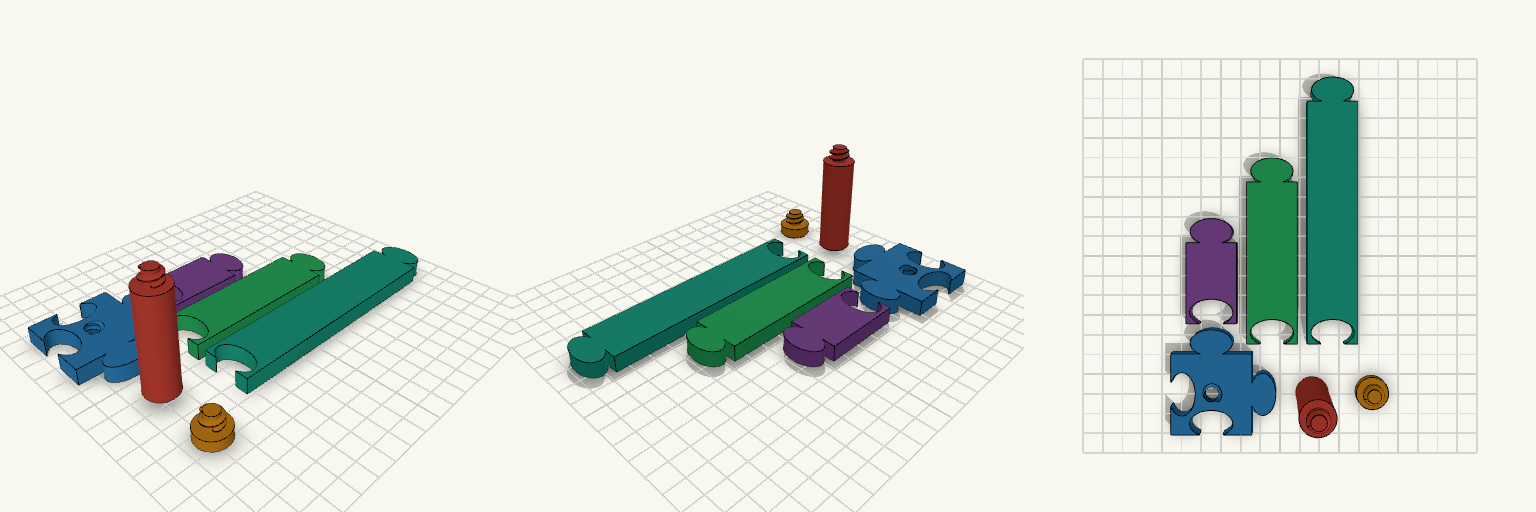
Stepped 3-Tier Spice Rack
Created 1 months ago
Description
A three-tier stepped organizer designed to keep spice jars visible at a glance, so finding the right ingredient doesn't turn into a treasure hunt. Built for standard 40mm jars in a 3x4 layout, each row steps up by 20mm and back by 50mm to ensure labels remain completely readable from a standing height. The underside is hollowed out with 3mm structural ribs to minimize filament use while maintaining load-bearing rigidity.
Remixing This Design
- Jar Clearance: The current 172mm overall width gives four 40mm jars a comfortable fit per tier. Adjust the width parameter to tighten the layout or expand it for larger bulk containers.
- Step Ratios: The 20mm rise and 50mm tread are optimized for standard supermarket spice jars. These can be easily tweaked if accommodating taller sauce bottles or fitting into shallow overhead cabinets.
- Extensions: Designed as a standalone solid block, but the flat side profiles make it easy to scale storage infinitely by printing multiple units and setting them side-by-side.
Images
More like this
Explore more in Storage & Organization →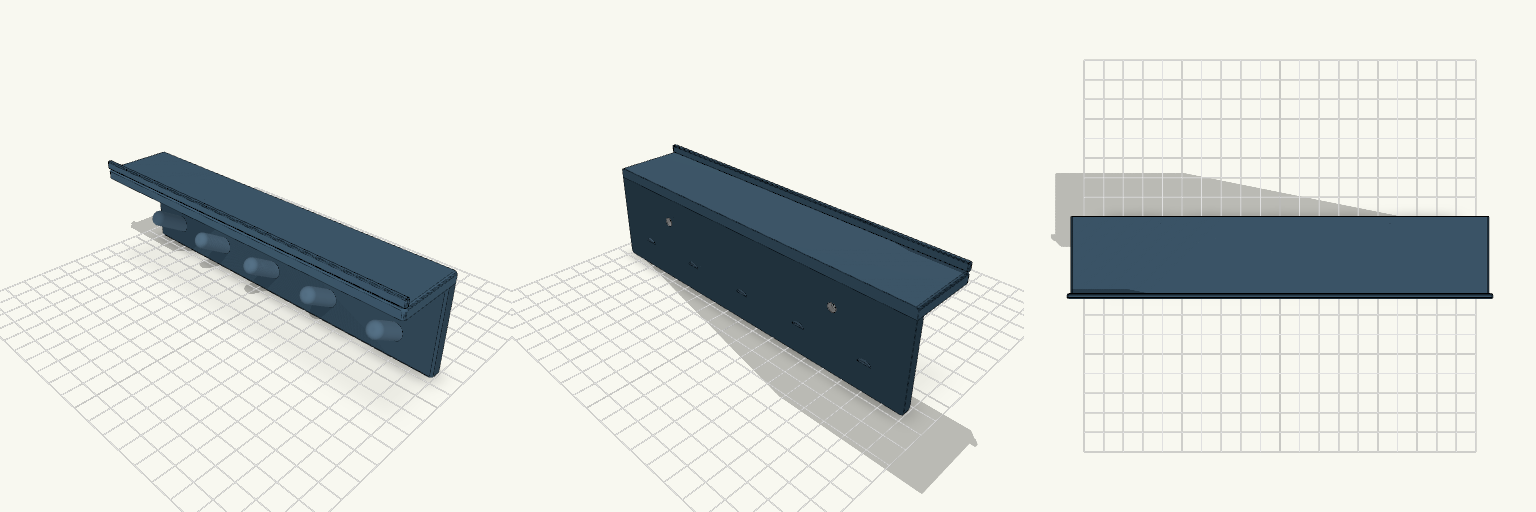
Wall-Mounted 5-Hook Key Rack
What it's for A wall-mounted entryway organizer featuring five cylindrical hooks and a top storage ledge. The hooks are pitched upward at a 30-degree angle from the vertical to securely hold keyrings without slipping, and are spaced 35 mm apart to prevent adjacent lanyards or keys from tangling. The top ledge is 35 mm deep, finished with a 2 mm retaining lip, providing a resting place for sunglasses, outgoing mail, or small everyday carry items. Dimensions Overall width: 180 mm Overall height: 54 mm Ledge depth: 35 mm (usable depth ~33 mm) Hook spacing: 35 mm center-to-center Mounting: Two countersunk screw holes spaced 105 mm apart. Remix ideas Extend the main backplate and duplicate the hook loop to accommodate more keys. Increase the Y-axis extrusion of the top ledge to hold larger items like wallets. Adjust the mounting hole spacing to match existing wall anchors.
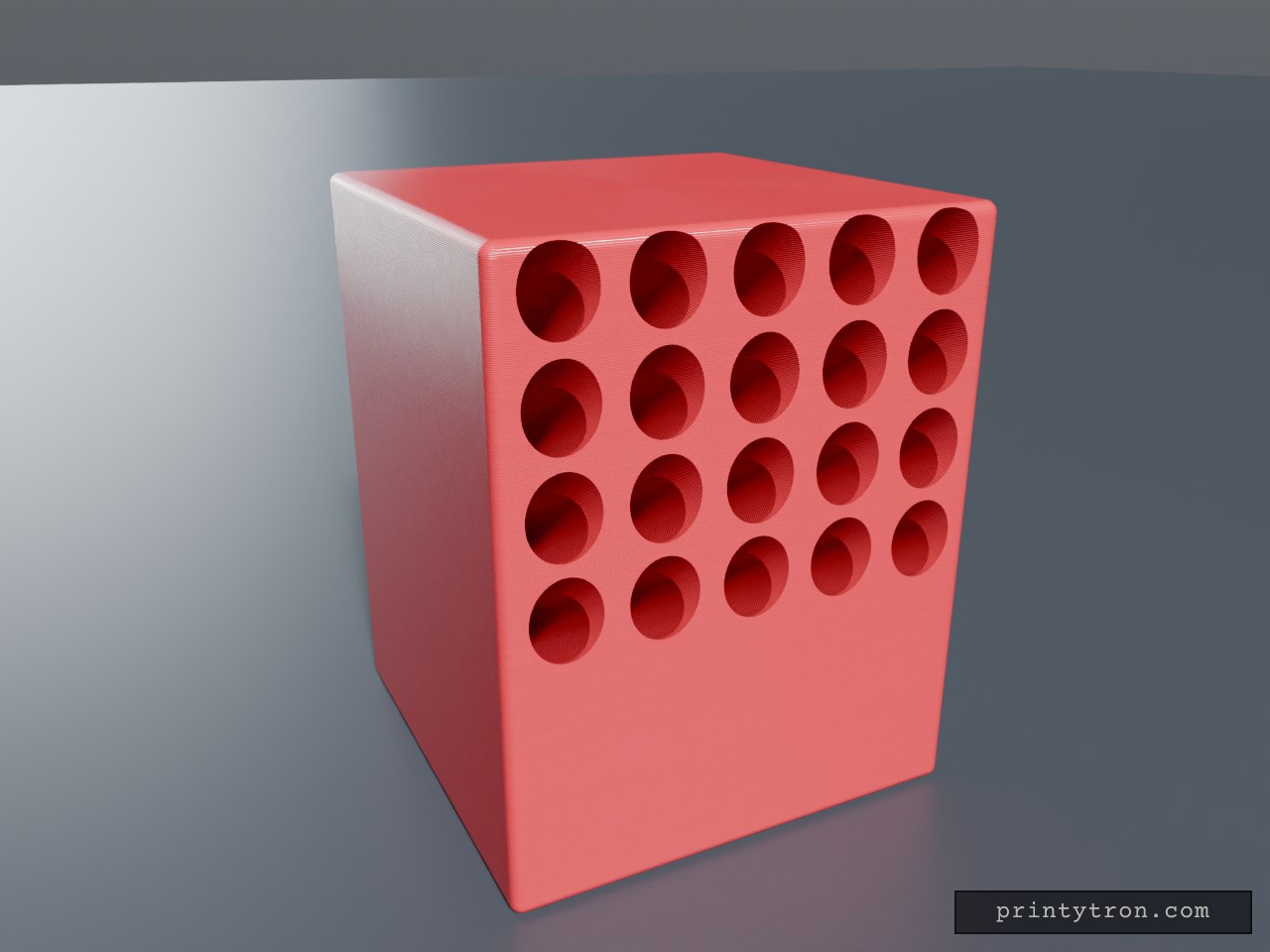
Angled Desktop Pen Organizer
A solid, monolithic 20-hole desktop organizer built to fit cleanly under low monitors or 125 mm shelves. Each blind channel angles downward at 30 degrees, keeping standard pens securely nested while displaying their ends for quick access. Capacity: 20 angled slots (12 mm bore) Footprint: 100 × 100 mm Height: 125 mm Features: Chamfered openings for easy insertion, rounded external edges
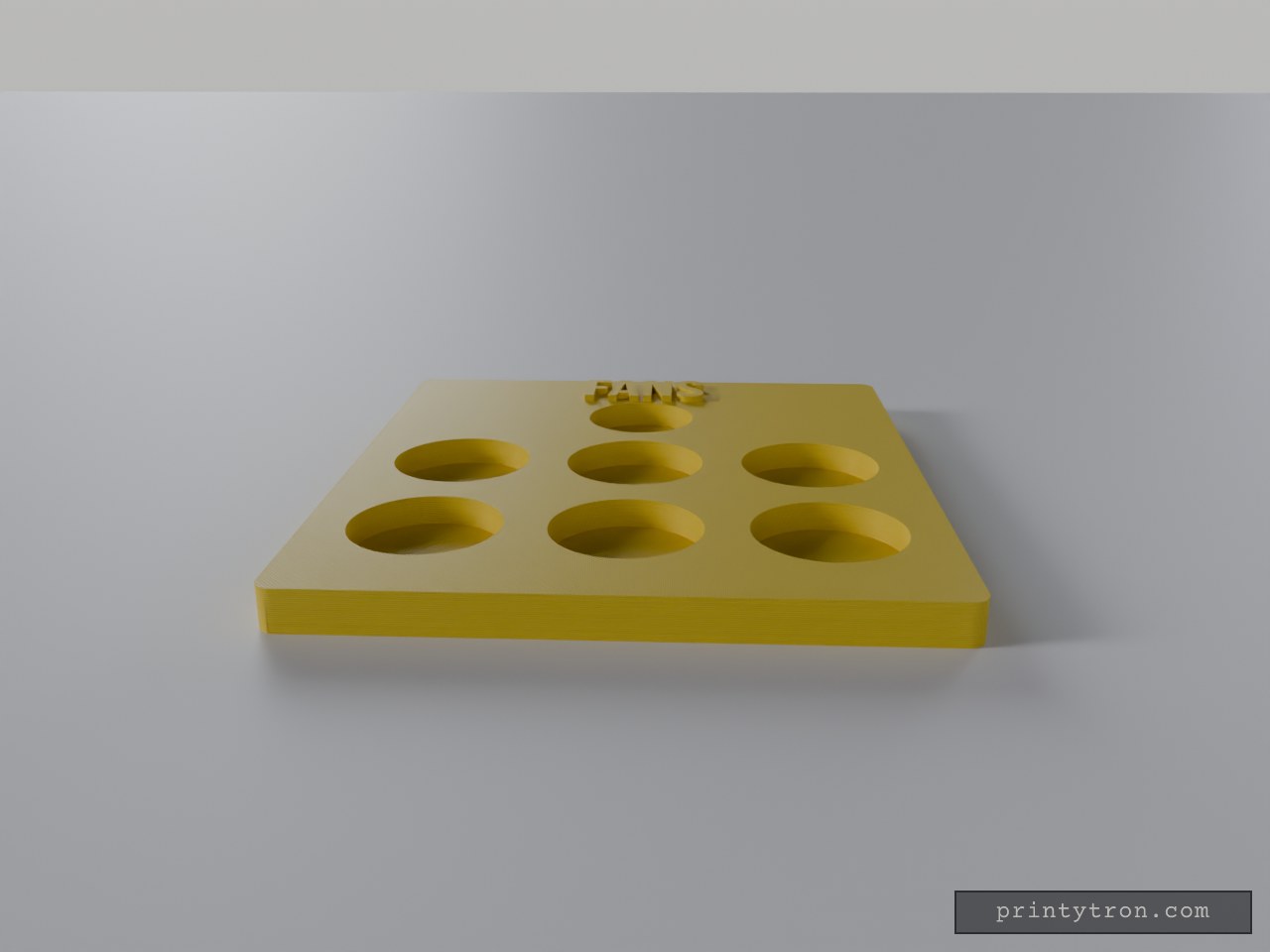
35mm Fan Storage Plaque
A flat storage plaque designed to hold three standard 30mm fans. The 35mm recessed pockets provide plenty of clearance for the fans and their wiring, while the raised lettering at the top is structured specifically for manual filament swaps on printers without multi-material systems. Base Dimensions: 145mm × 80mm × 10mm Pocket Size: 35mm diameter, 8mm deep Text Extrusion: 2mm height above the top surface Print Settings: Switch filaments at the 10mm layer height to highlight the text.
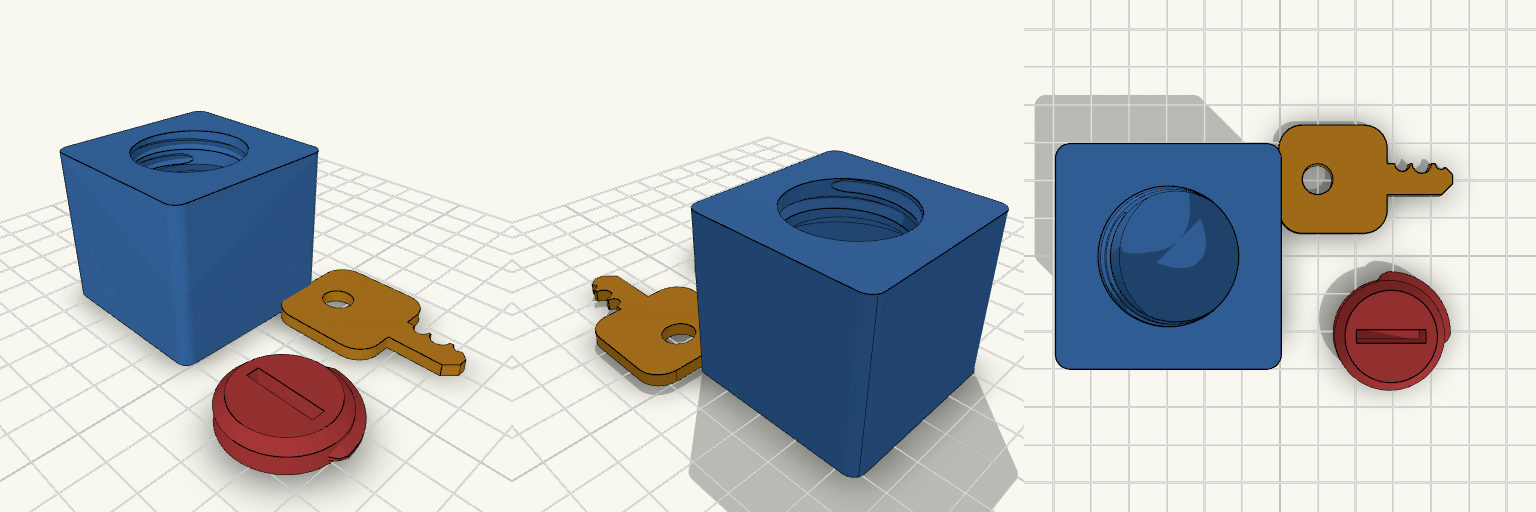
Caja Secreta con Llave Clásica
Una caja fuerte impresa en 3D que esconde su apertura a plena vista. En lugar del típico tirador, la tapa se asienta completamente a ras y requiere una llave física estilo tradicional para desenroscarla. El interior está optimizado con un techo cónico, por lo que imprime limpio sin necesidad de soportes. Características del montaje Impresión sin soportes: La cámara y la rosca se imprimen directo en la base. Llave dentada: Perfil plano tipo casa con agujero para llevarla en el llavero. Seguridad visual: La tapa a ras evita poder girarla con los dedos.
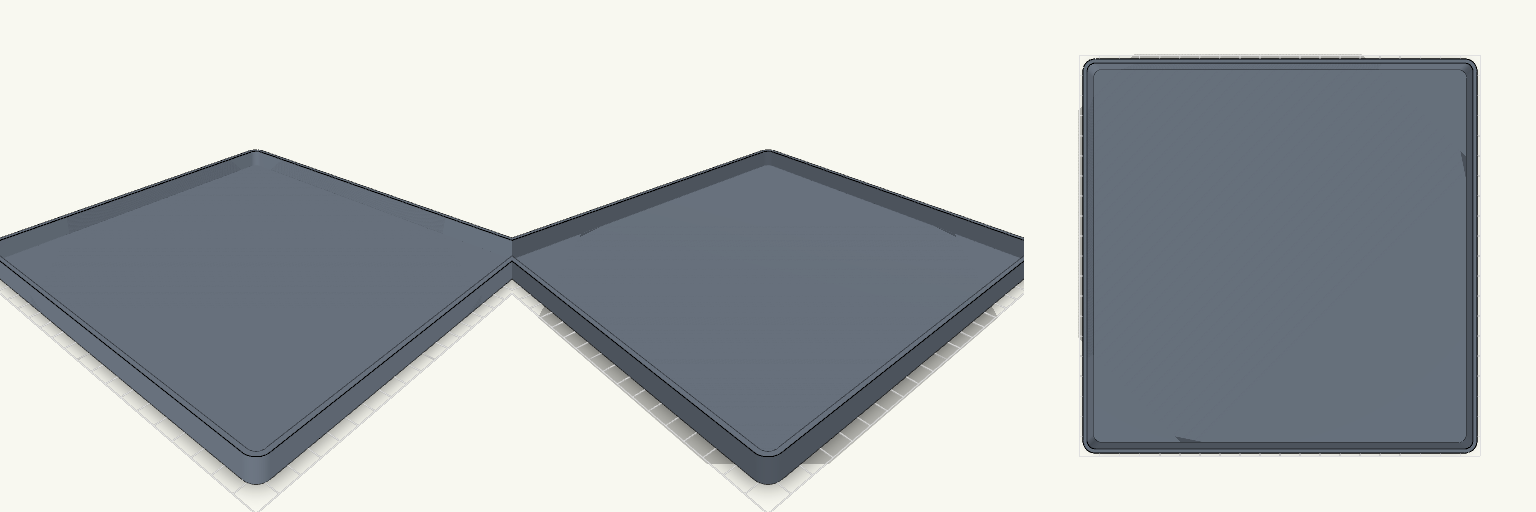
WingBox02
A compact, perfectly square desk or drawer organizer cut with three specifically tailored compartments. Built thick and sturdy, it packs all three requested dimensions into the tightest square footprint possible, leaving a thicker solid wall on one side to maintain the rigid square shape. Dimensions Overall Footprint: 184mm x 184mm (about 7.25 inches square) Height: 37mm total (35mm internal depth) Compartments: One 7" x 2" side slot, one large 4.5" x 5" bay, and one 4.5" x 2" bay.