Terrarium-Deckel mit Futterluke
Created today
Description
Vogelspinnen brauchen frische Luft, aber der Ausbruch beim Füttern muss verhindert werden. Normale Plastikboxen taugen dafür ab Werk wenig.
Dieser Ersatzdeckel löst beide Probleme: Er bringt ein flächendeckendes Raster für maximale Belüftung mit und hat eine separate Futterluke, die per Pin sicher verschlossen wird. Die Klemmlippe an den Innenseiten sorgt dafür, dass der Deckel sauber in der Box einrastet.
- Außenmaß: 196 × 158,5 mm
- Wandstärke: 2,25 mm
- Futterluke: 30 mm Durchmesser
- Druck: Flach auf dem Druckbett liegend (Top-Down) für ein optimales Finish ohne Stützstrukturen. Der Pin wird ebenfalls ohne Support gedruckt.
Images
More like this
Explore more in Automotive, RC & Hobby →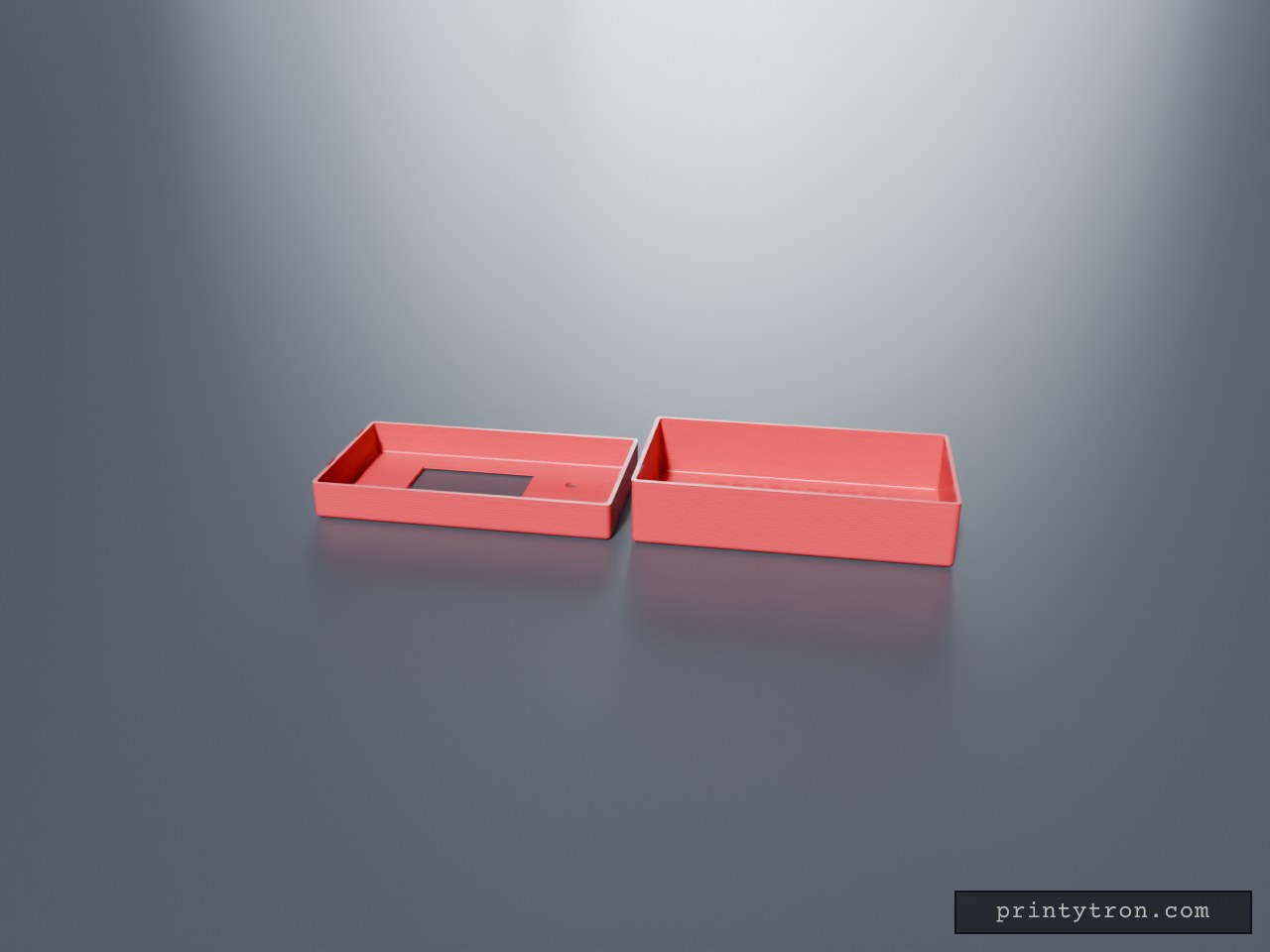
Retro TV Enclosure for No-Solder RP2040 Builds
A two-piece retro TV shell designed to house a no-solder RP2040 video player. The clamshell locks together with a built-in snap fit, offering exactly 150×80×50mm of internal space. Both halves print flat on the bed without supports. Front Bezel: Features a sloped CRT-style screen cutout with an internal ledge for a 2.8" display, twin 7mm dial holes, and integrated speaker vents. Back Shell: Includes a bottom-edge USB-C cutout and classic rear cooling vents. Snap Fit: A 4mm friction lip with interlocking bumps holds the enclosure securely together.
Space Command Console Toy
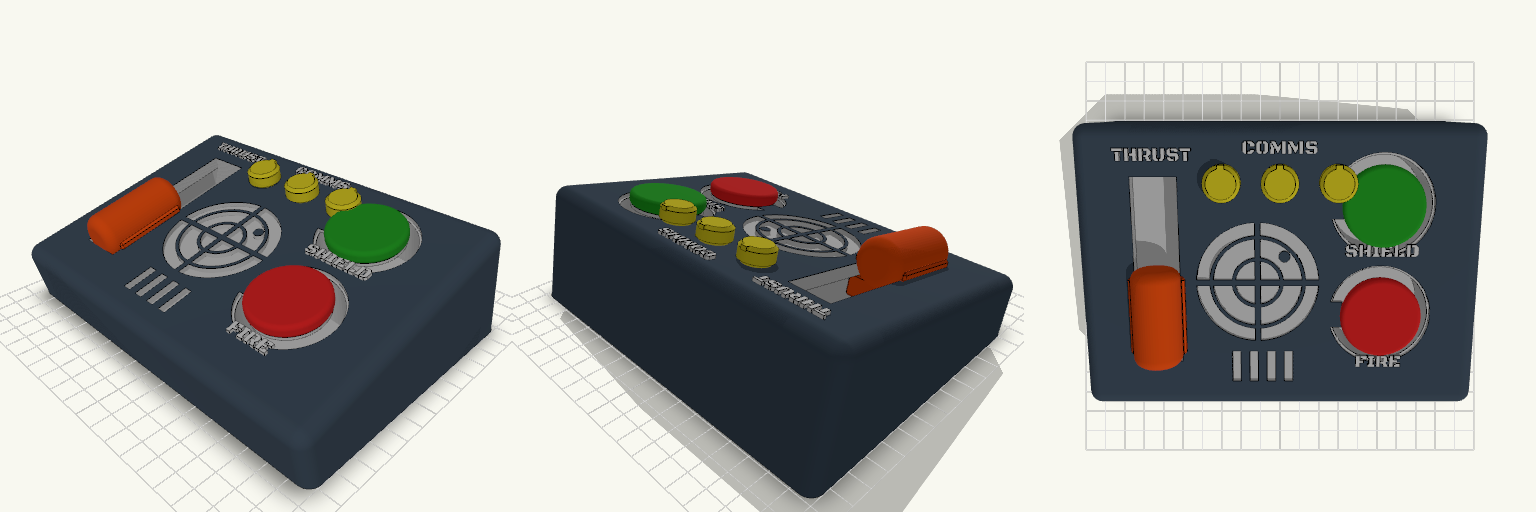
The keyboard belongs to you. The TV remote belongs to you. The oven dials are strictly off limits. But they still want to press buttons, and everything they reach for has a consequence. This console solves that. It’s a chunky, slanted control panel built to take a hammering. The throttle is a captive slider that prints fully in place—no assembly, just crack it loose and it glides. The giant red and green buttons sit on thin printed hinges, giving them enough flex to feel like a real press without needing actual springs or hardware. The dials and radar screen are solid topographic features that add tactile feedback without weak points. Printing Notes Dimensions: The base fits squarely on a 180x130mm footprint. Print-in-Place Clearance: The slider runs in an internal T-slot with a generous 0.5mm clearance on all sides, making it easy to free up on almost any FDM machine. Orientation: Designed to sit entirely flat on the build plate. The 13-degree slope of the panel is built into the geometry, so the internal bridges and tracks print parallel to the bed. Settings: Standard 0.2mm layer heights work beautifully. Three perimeters recommended to keep the compliant button hinges tough.
Line Follower Chassis (N20/Mega)
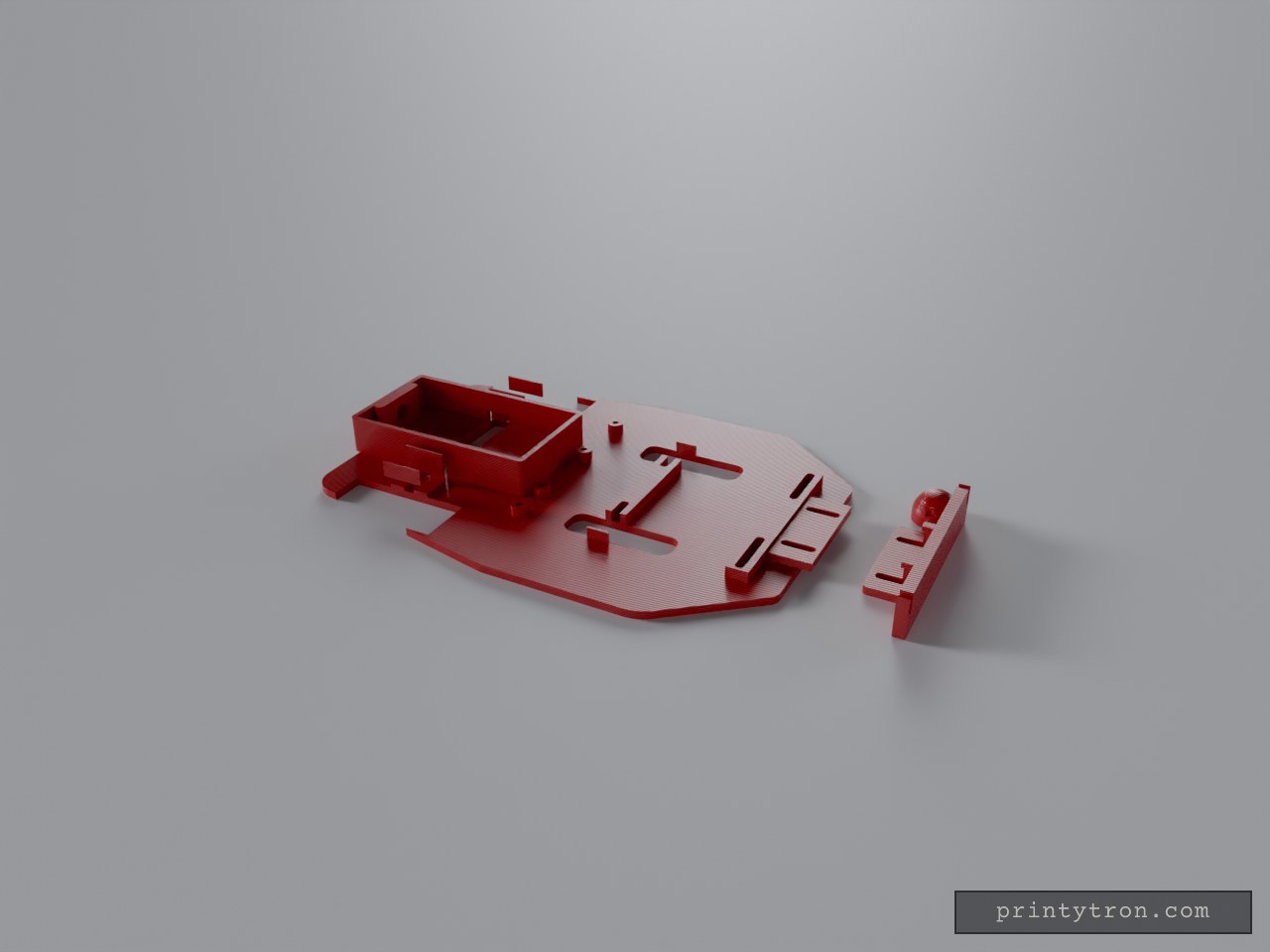
A flat-printing, modular chassis designed specifically for high-speed line following. Engineered to accommodate an Arduino Mega 2560, dual N20 motors, and a Pololu QTR-8RC reflectance sensor, with priority placed on a low center of gravity and straightforward field maintenance. What it's for This frame carries the electronics and drive system for a 2WD differential steering robot. Components drop into dedicated regions rather than requiring complex brackets, and all sensitive electronics are kept clear of the track surface. The front sensor mount separates from the main plate to allow independent height tuning of the IR array. Dimensions Overall envelope (assembled): 180 mm (L) × 130 mm (W) × 55 mm (H) Track width: ~90 mm, providing clearance for 35–38 mm diameter wheels. Electronics rails: Slotted cross-members accept an Arduino Mega or similarly sized microcontrollers. Drive mounts: Drop-in snap/strap cradles for standard 12×10 mm N20 motors. Power bay: Sized for two parallel 18650 lithium cells (44 mm inner width) with integrated Velcro pass-throughs. Assembly All major features anchor with standard M2 or M3 hardware. The front skid and sensor bracket print flat independently and bolt into designated sliding rails on the chassis nose. The motor mounts include under-plate zip-tie channels to secure the gearboxes rigidly against torque. Use standoffs for the motor driver and buck converter pads to ensure proper wiring clearance above the deck.
Apex — Comp Line-Follower Chassis
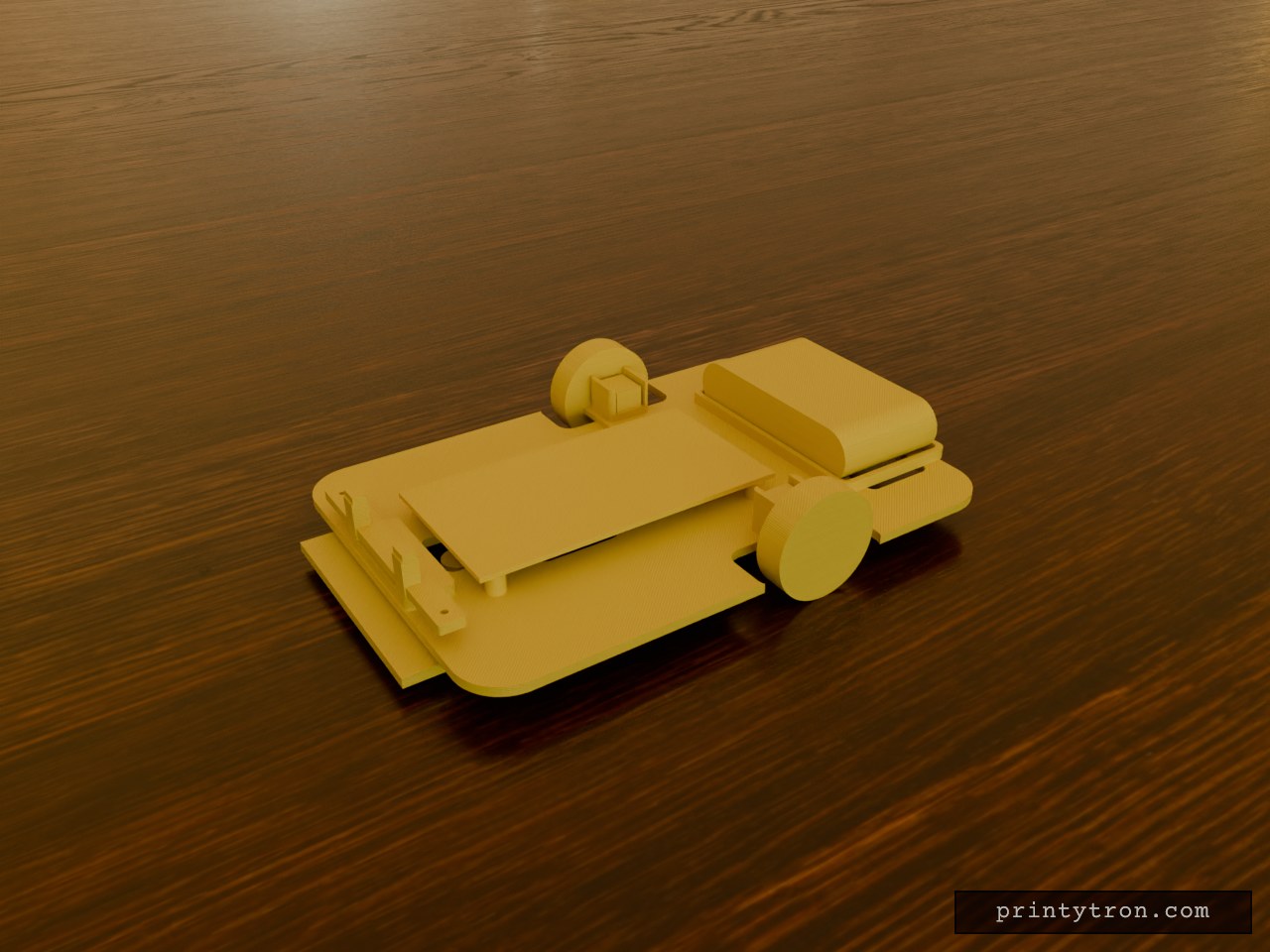
Apex — Comp Line-Follower Chassis is a high-speed, 3D-printable robotic platform designed around the Arduino Mega 2560 and Pololu QTR-8RC. Built for aggressive track layouts and rapid differential steering, this design drops the center of gravity to the floor while tightly packaging the critical electronics. The front sensor array dictates the pacing, and the custom split-bracket mounting system allows micro-adjustments in both height and lead distance to optimize line acquisition. Features Adjustable QTR Mount: Two-axis bracket for fine-tuning the 8-channel array height and lead distance. Low-CG Differential Drive: Transverse 2S battery pocket and dual N20 saddles centered on a 3mm rigid base plate. Component-Mapped: Exact clearances for the Arduino Mega 2560, TB6612FNG driver, buck converter, and 35mm racing wheels. Wire Routing: Integrated chassis cutouts and zip-tie points to keep logic and power rails out of the wheels. Print notes Print the main chassis and brackets in PETG or rigid PLA+ at a 3mm shell thickness. The chassis is natively support-free. Use M2 hardware for the sensor array and M3 for the logic boards and motor saddles.
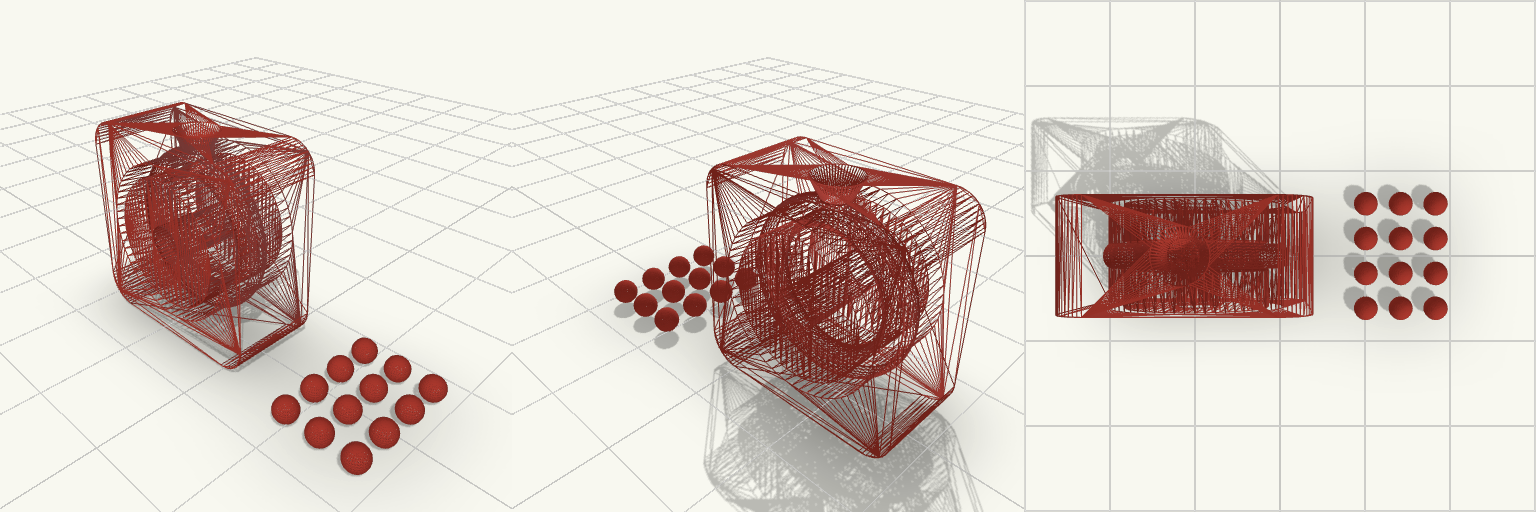
Bearings
A standalone print-in-place ball bearing inside a 22x22mm square housing. Designed originally to mount axles on a scratch-built mousetrap car chassis, the housing is completely flat on the back so you can glue or strap it exactly where you need it. Inside, the inner ring rides on twelve captured micro-spheres, keeping friction low without requiring external hardware. Tuning hooks Clearances: The internal track has a 0.4mm clearance gap. If your printer fuses them, try dropping the flow rate slightly. Axle bore: The center hole is 4mm — size it up to fit standard 1/4" or 6mm dowels if you're building heavier. Mounting: The 22x22mm block has plenty of meat around the edges if you want to drill through for M3 bolts.
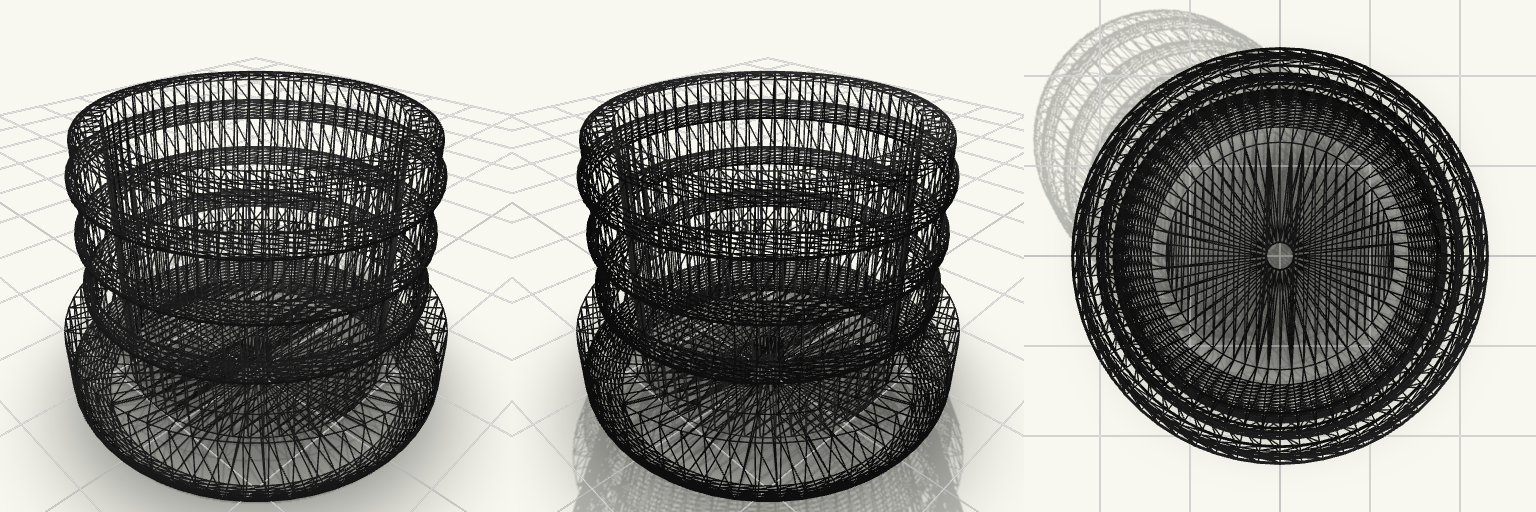
Brompton Seatpost Bumper Cap
What it's for A custom TPU end cap for the seatpost of a Brompton folding bike. It acts as a resilient plug to prevent the folded bike from rolling, and pads the ground against scratches when the post is dropped. Dimensions Fitment: Engineered with 30.2 mm ribbed sections for a secure interference fit inside a 29.6 mm seat tube. Bumper Pad: 34.5 mm diameter to cleanly cover the 33 mm seatpost rim, featuring a 3 mm solid base section to take impact. Core: Deeply hollowed center for weight reduction and necessary wall flexibility, paired with a central pressure-relief hole to ensure clean seating without trapped air popping the plug loose. Print notes Intended for flexible materials like TPU. The thin-wall hollow structure allows the ribs to compress inwards on insertion, maintaining outward spring tension to hold the cap firmly in place.