Triple Vertical Device Stand
Created 1 months ago
Description
A heavy desktop block cut to vertically store three media devices, freeing up desk space. The solid base prevents tipping under uneven loads, while chamfered slot entries guide the devices in without scraping the edges.
- Center Slot: 21mm wide, fitted for a 3/4-inch laptop.
- Right Slot: 18mm wide, fitted for a 5/8-inch Blu-ray drive.
- Left Slot: 24mm wide, fitted for a 7/8-inch external hard drive.
Images
More like this
Explore more in Desk & Tech →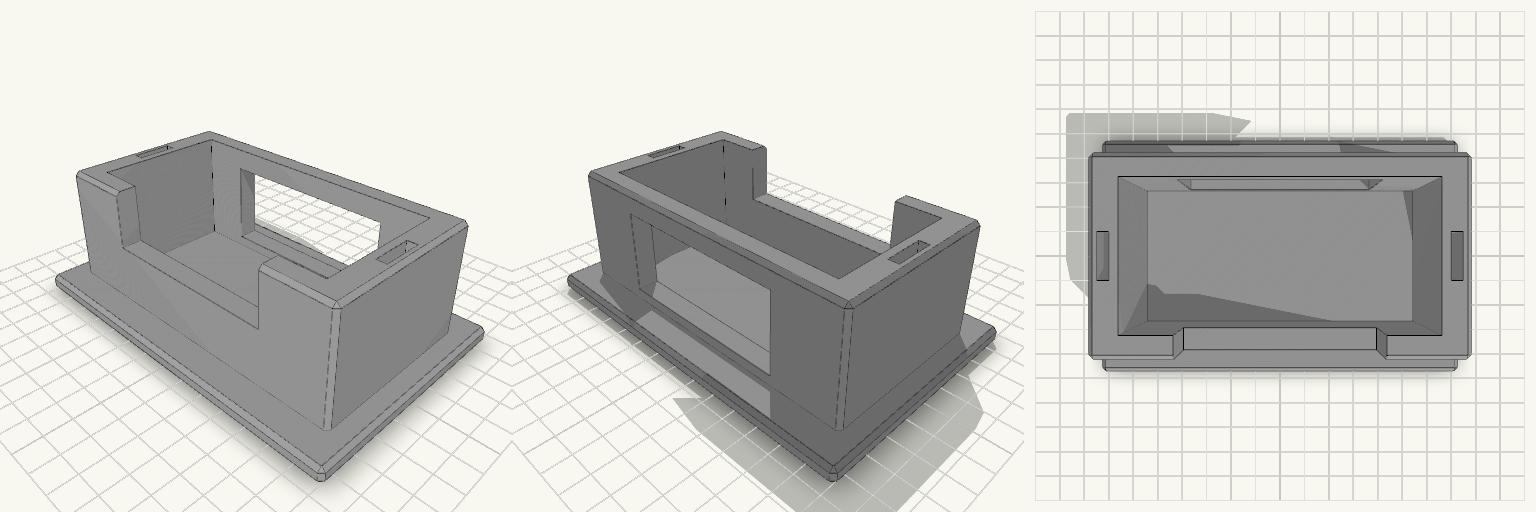
Vertical Switch Dock Stand with Strap Slots
A Switch dock lying flat eats shelf space, and a dock stood on its end tips over the first time someone pulls a cable. This stand holds the dock upright in a snug pocket on a wide flat base, and keeps two spare Joy-Con straps in slots in the side walls. What it does Holds the dock on its end so it takes up a footprint of about 142 × 92 mm instead of its full 175 mm length lying down. Front wall is cut down in the middle, so you can grip the dock to lift it out. A 70 mm opening in the back wall lets the power, HDMI and USB cables leave without bending against the stand. Two 4 × 16 mm slots, one in each side wall, hold spare Joy-Con straps. Numbers that decide fit Pocket: 106 mm wide × 52 mm deep, for a dock of roughly 104 × 49 mm. That leaves about 1 mm of play on width and 3 mm on depth. Pocket depth: 44 mm, above a 6 mm base. Overall: 142 × 92 mm base, 50 mm tall. Side walls: 10 mm thick. Front and back walls: 8 mm. Printing Print flat on the base, with no supports needed. Chamfered edges, 1.5 mm. Any common filament works. PETG or PLA is fine for the load. If your dock is a tight fit or loose, adjust the pocket width and depth to match.
Bedside Reading Glasses Stand, 18mm Bridge
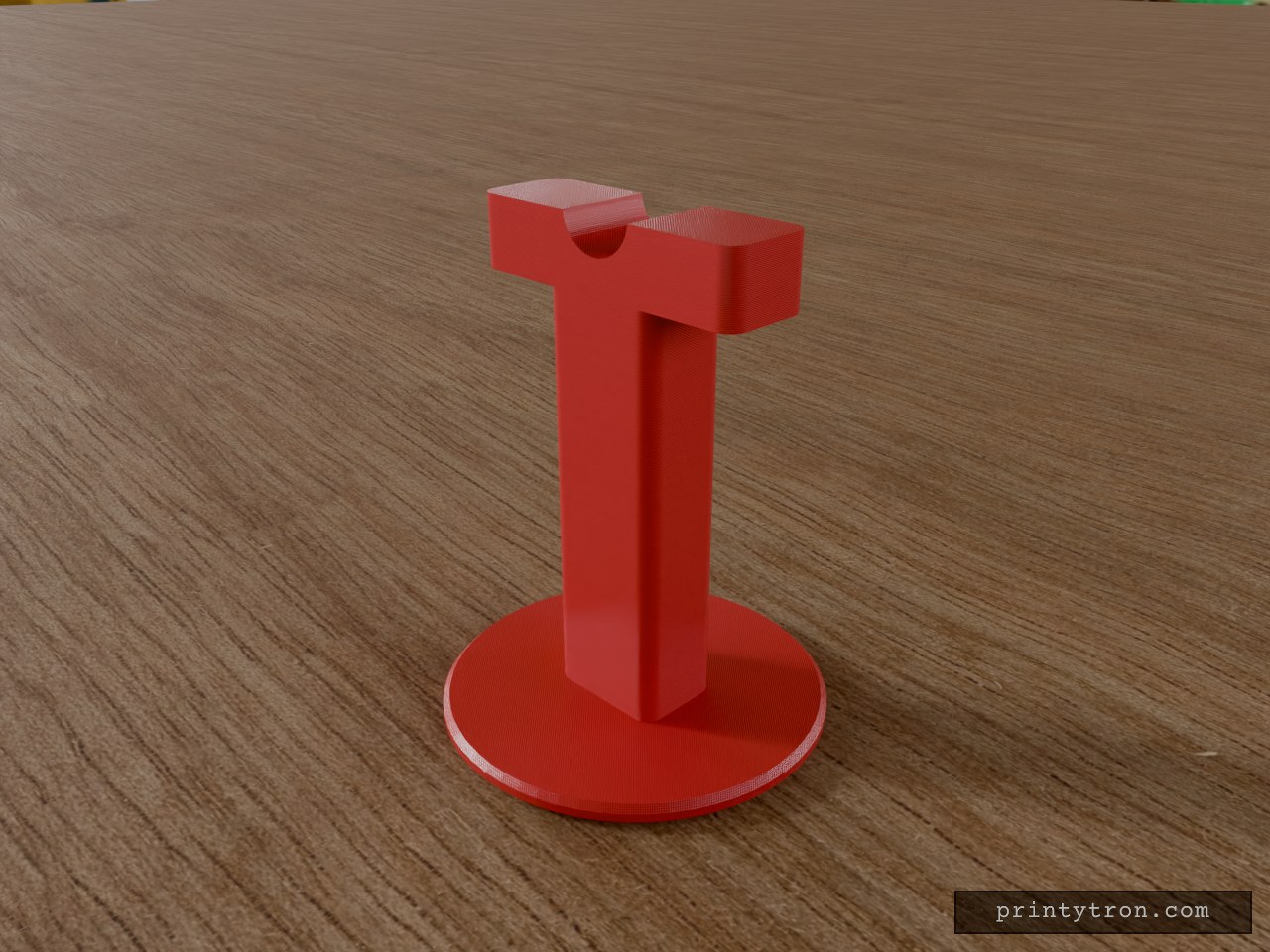
A freestanding bedside stand that holds a pair of reading glasses by the bridge, so they rest off the nightstand and out of the bedding. The top of the column is shaped into a rounded nose-bridge saddle, 18 mm wide at the rim, matching the typical lens-to-lens distance on standard reading glasses. A 90 mm round base keeps the stand upright. Specs Overall size: 90 mm diameter x 116 mm tall Base: 90 mm diameter, 5 mm thick, chamfered edge Column: 30 x 22 mm cross-section, rounded vertical corners Top block: 70 x 22 mm, 16 mm tall Saddle: round dip, 18 mm wide at the rim, 8 mm deep Single-piece body, prints base-down with no supports needed Suggested material: PLA or PETG; 3 or more perimeters for a stiff column Use Place on a nightstand and hang the glasses by the bridge across the saddle. The wide top block and 90 mm base keep the stand stable under light glasses.
Pokéball Keyboard Wall Shelf
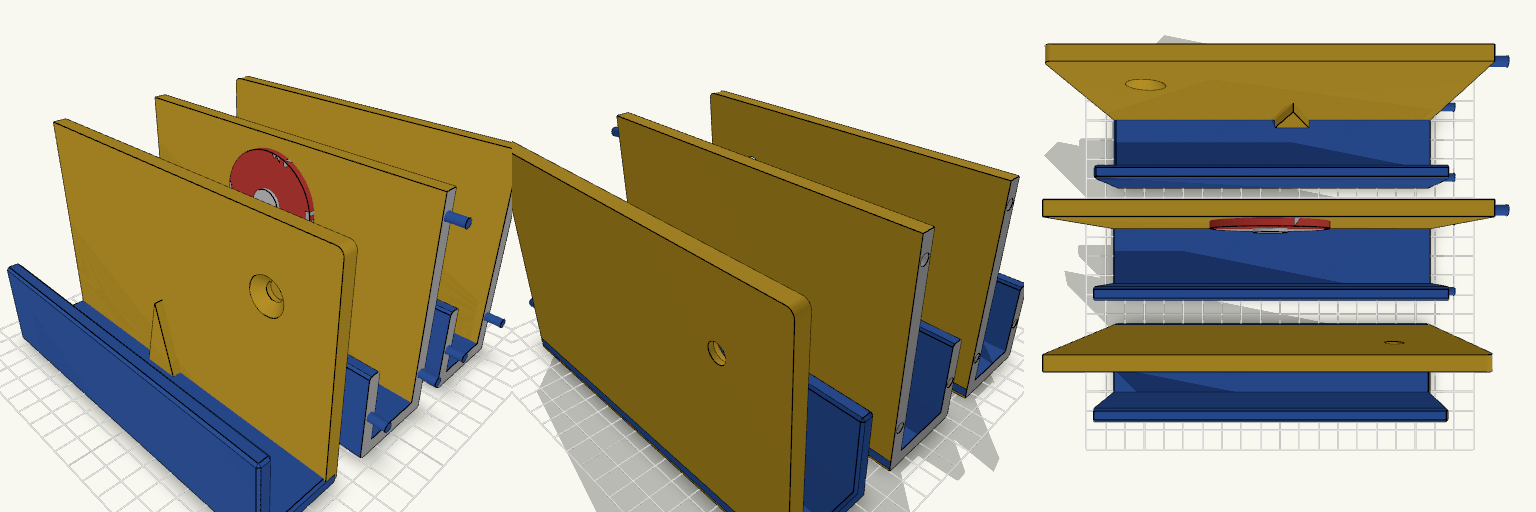
A Pokéball-badged wall shelf that cradles a full-size keyboard behind a tall front lip. Red-and-white emblem, yellow back panel, blue ledge: the Kanto starter-kit palette on a desk wall. The shelf prints as three 160 mm sections laid out together on the plate, ready to glue into one 480 mm piece. Three sections joined with 4 mm alignment pegs and sockets 40 mm front lip keeps the keyboard in place Two 8 mm countersunk screw holes at the ends for wall mounting Sections footprint about 168 x 40 mm each
cuña tablet grande vertical parte dcha
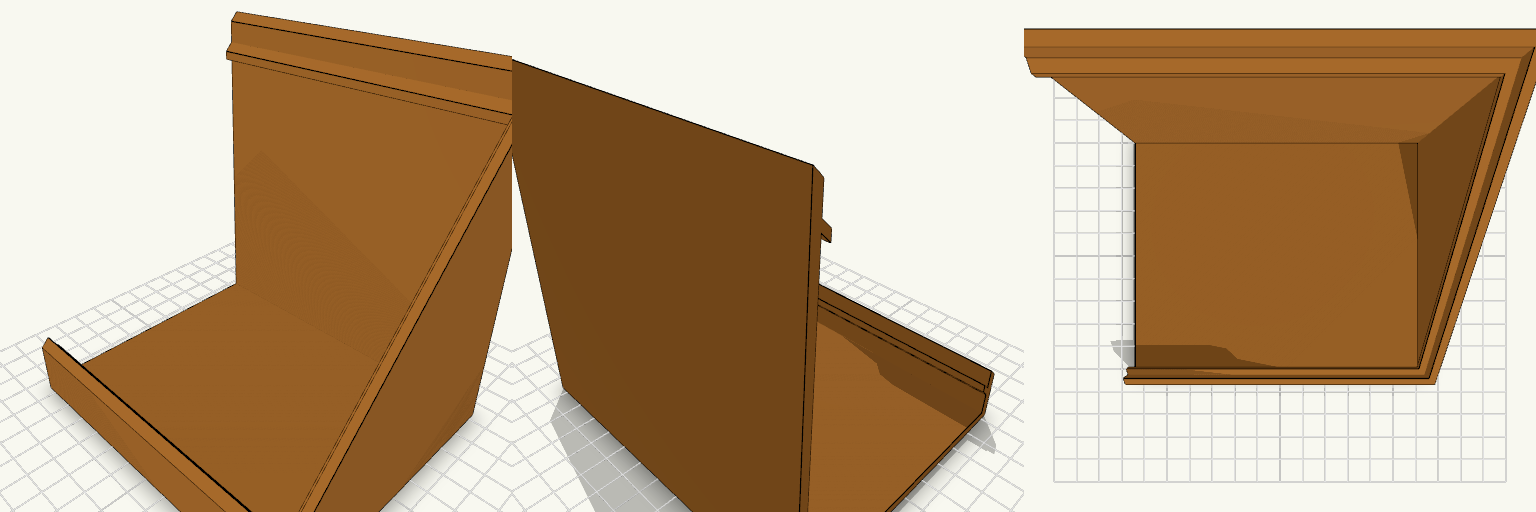
Mitad derecha de una caja en cuña hueca, abierta por arriba, con base, frente y trasera cerrados. Se imprime apoyada sobre la base y se une a la mitad izquierda por el corte central. Ancho de la pieza: unos 126,5 mm en X Fondo: 105 mm en Y Altura: 20 mm delante y 130 mm detrás Paredes y base: 3 mm Listón interior perimetral de 3 mm, 8 mm bajo el borde superior Corte plano sin encaje, para pegar
ReplixHD Gaming Desk Organizer
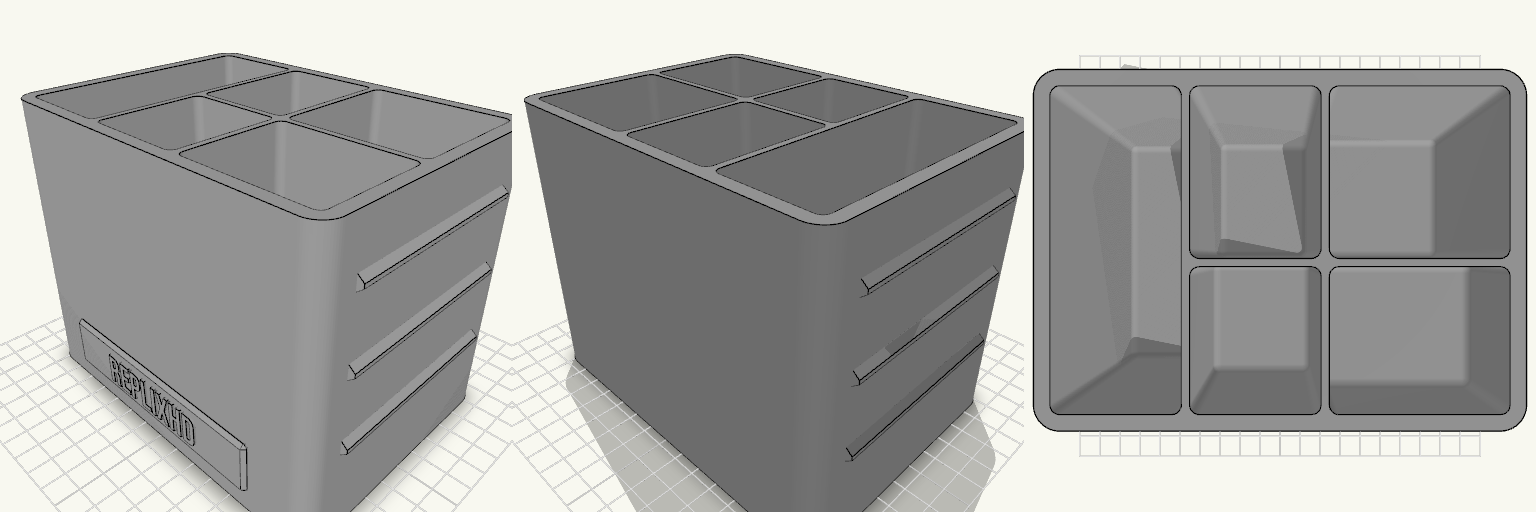
A five-pocket desk organizer for a 150 × 110 × 120 mm footprint, with "ReplixHD" embossed on a raised front plate. Fit Scissors slot: 40 × 100 mm, 105 mm deep. Pen slot: 40 × 52 mm, 100 mm deep. Pencil slot: 55 × 52 mm, 90 mm deep. Marker slot: 40 × 45 mm, 70 mm deep. Small slot for clips and erasers: 55 × 45 mm, 40 mm deep. Walls are 2.5 mm and dividers are 2.5 mm. The pockets' floors sit above the 3 mm base, which is thicker where the pockets are shallower. Check before printing Pen and pencil slots are about 40–55 mm across, so measure any oversized markers against that. Scissors need a handle under 40 mm wide. Print notes One solid body, with no supports needed. The side ridges are sloped at about 60° so they print cleanly. It does not fit anything that needs a closed lid or a drawer.
30° Tilted Stand for 118x84mm Keypad
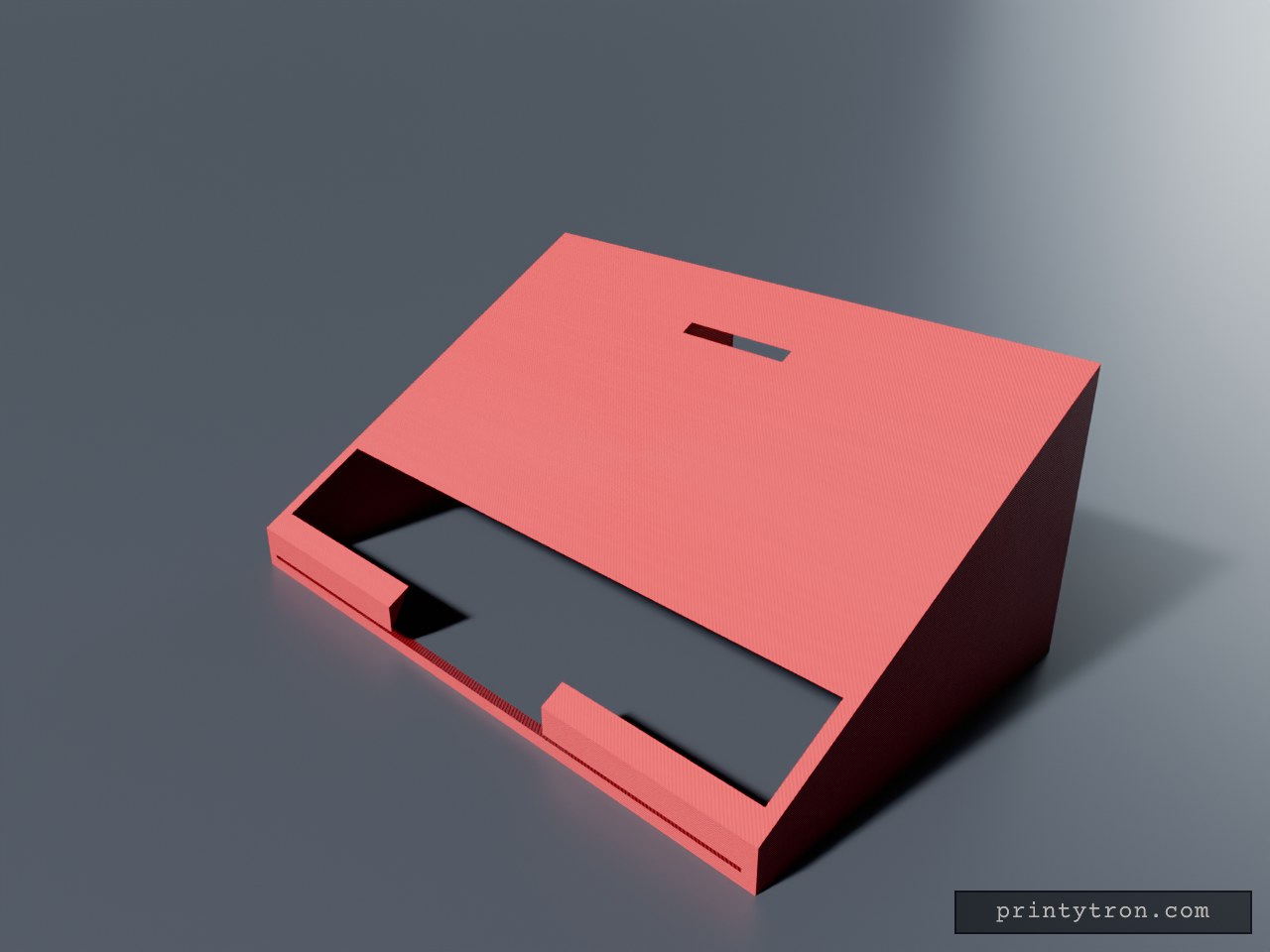
Wedge-style desk stand that holds a 118x84mm macro keypad at a 30° tilt, so the keys face the user instead of lying flat. The pad sits in a recessed pocket that grips its base on all four sides to stop it creeping during use. A finger notch at the front edge lets the pad be lifted out. A cable slot at the back edge routes the cord away from the desk surface. Specs Pad size: 118 x 84 mm Pocket clearance: 0.3 mm per side (0.6 mm total on each axis) Tilt angle: 30° Overall footprint: about 124 x 80 mm, roughly 53 mm tall at the rear Wall thickness: 2.5 mm Front notch: 40 mm wide finger cut-out for lifting the pad Cable slot: 24 mm wide, centered on the back edge Underside: flat; add rubber feet or tape for grip on smooth desks Print orientation: flat side down, no supports needed Notes Check the pocket depth and cable slot position against the actual pad before printing. If the cable exits somewhere other than the center of the back edge, the slot position needs to be moved.