Verbindungsstück l60mm,d60mm
Created today
Description
A straight, uniform hollow pipe designed for structural use or fluid routing. The bore is continuous and centered, producing a robust 2 mm wall suitable for standard FDM printing.
- Outer Diameter: 60 mm
- Inner Diameter: 56 mm
- Length: 60 mm
- Wall Thickness: 2 mm
Orient vertically on the build plate to print without supports.
Images
More like this
Explore more in Workshop & Tools →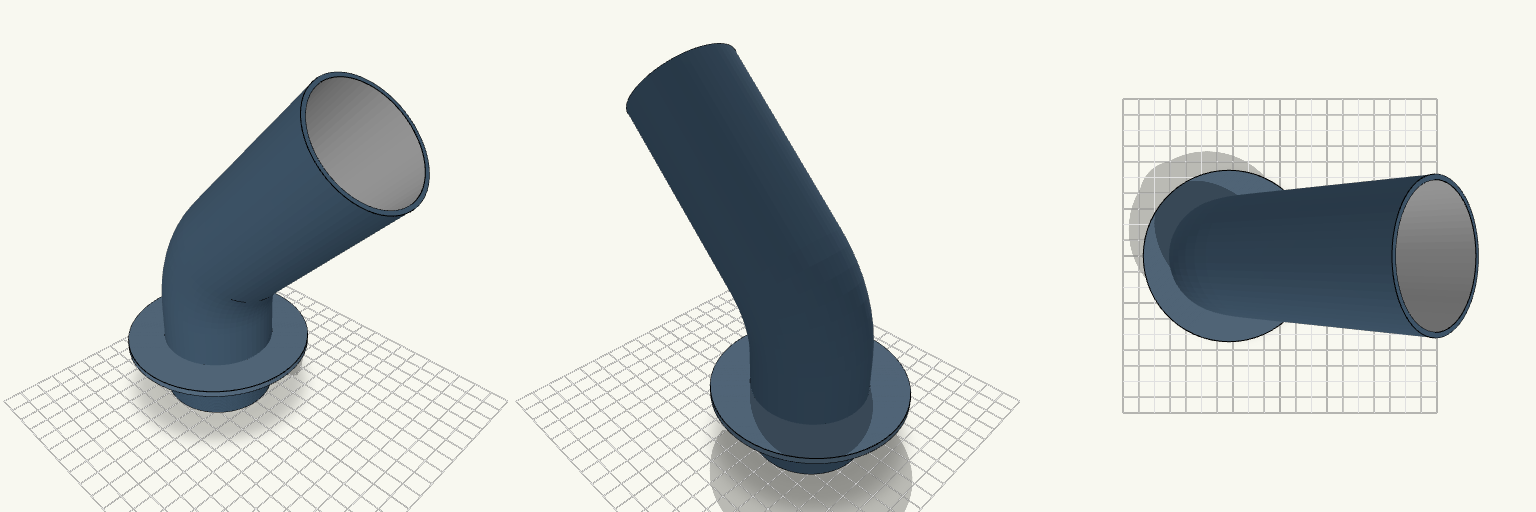
60mm OD Flanged 45° Pipe
60mm outer diameter flanged pipe with a 45-degree elbow. Features a continuous 56mm inner bore with a 2mm wall thickness. The 100mm OD flange is positioned exactly 30mm from the base and runs 3mm thick. Check your clamp or mating collar against the flange thickness and 100mm outer diameter. No mounting holes are drilled; this part is built for bonded or slip-fit assemblies where the 56mm internal passage must remain entirely unobstructed.
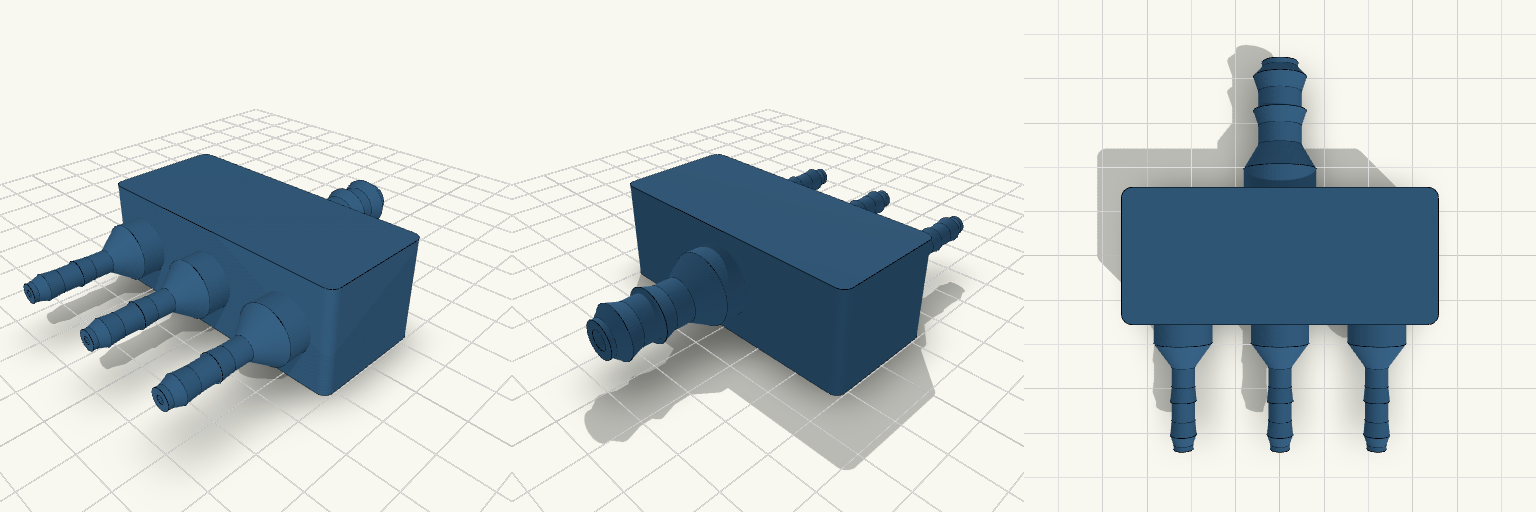
Robust 3-Way Irrigation Manifold
A heavy-duty 1-to-3 splitter manifold designed for 5 mm ID irrigation hose. It prints completely flat on its base without supports, using teardrop-shaped mounting bosses to bridge the overhangs. To meet the structural requirement of 4 solid perimeters on a 5.4 mm outer barb, the internal channel strictly inside the hose stems necks down to 2.6 mm. Inside the thick bosses and the main manifold body, the passages open up to 5 mm and 7 mm respectively to minimize flow restriction. Remix Hooks Barb Spacing & Count: Adjust the port_solid() module to add more barbs or change the spacing for stiffer tubing. Port Layout: Expand the main body length and loop the for(x = ...) call to add 4, 5, or 6 outlets. Mounting: The flat rectangular body leaves plenty of room to cut countersunk screw holes if you need to hard-mount it to a rail or planter box.
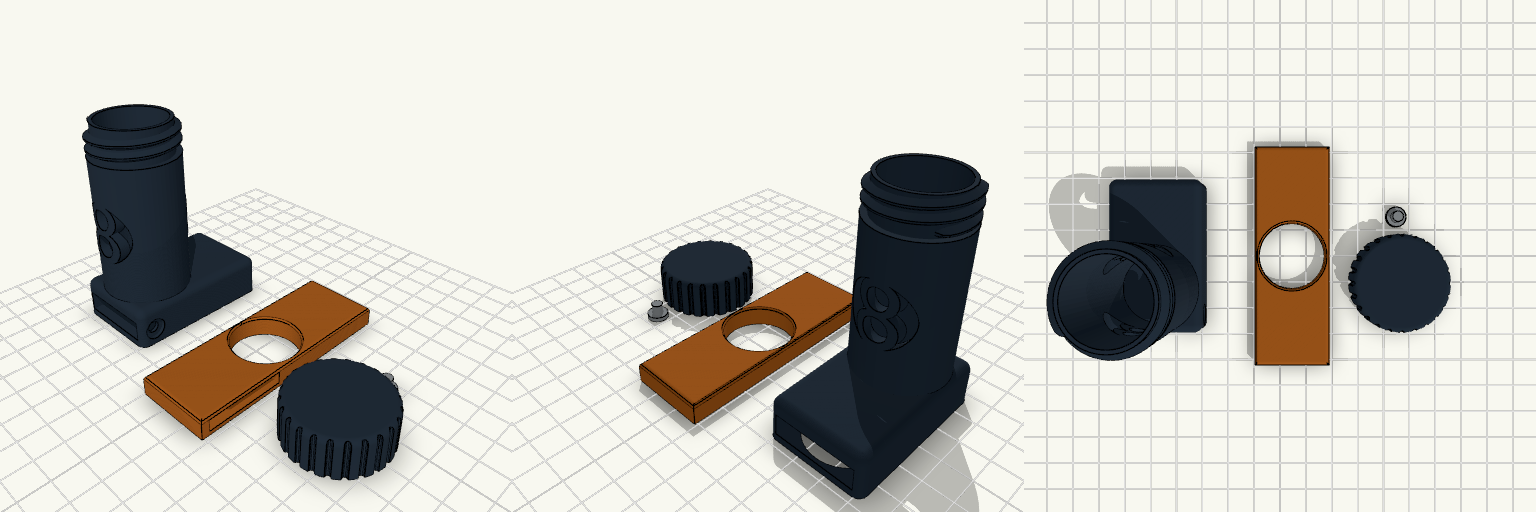
Side-Pinned Click Lock 2 40-Quarter Dispenser
What it's for A fully mechanical, gravity-fed coin magazine tailored for standard U.S. quarters. It stores a full $10 roll vertically and dispenses exactly $1 (four quarters) per cycle into the palm of the hand. The mechanism relies on a two-stage sliding escapement, now utilizing a side-mounted limit pin to ensure the coin path remains entirely unobstructed during travel. Dimensions Overall Envelope (Dispenser): 34 × 56 × 75 mm (when closed) Slider Thickness: 7.2 mm Coin Bore: 25.2 mm (optimized for 24.26 mm quarters) Clearances Slider Play: 0.4 mm vertical clearance inside the track Pin Clearance: 0.3 mm on the locking pin diameter Cap Threads: 0.6 mm diametric clearance for smooth twisting Assembly The main body, slider, cap, and limit pin print separately without supports. Insert the slider into the main body track, align the side slot with the right-hand hole on the body, and push the limit pin flush into the side countersink to capture the mechanism. Remix ideas Threaded Cap: The top of the magazine tube features a coarse 4mm-pitch thread. Alter the tube height to make a shorter 20-coin version. Coin Bore: Tweak the internal offset diameter for other currencies or custom arcade tokens. Slider Thickness: Scaling the Z-dimension alters how many coins drop per pull.
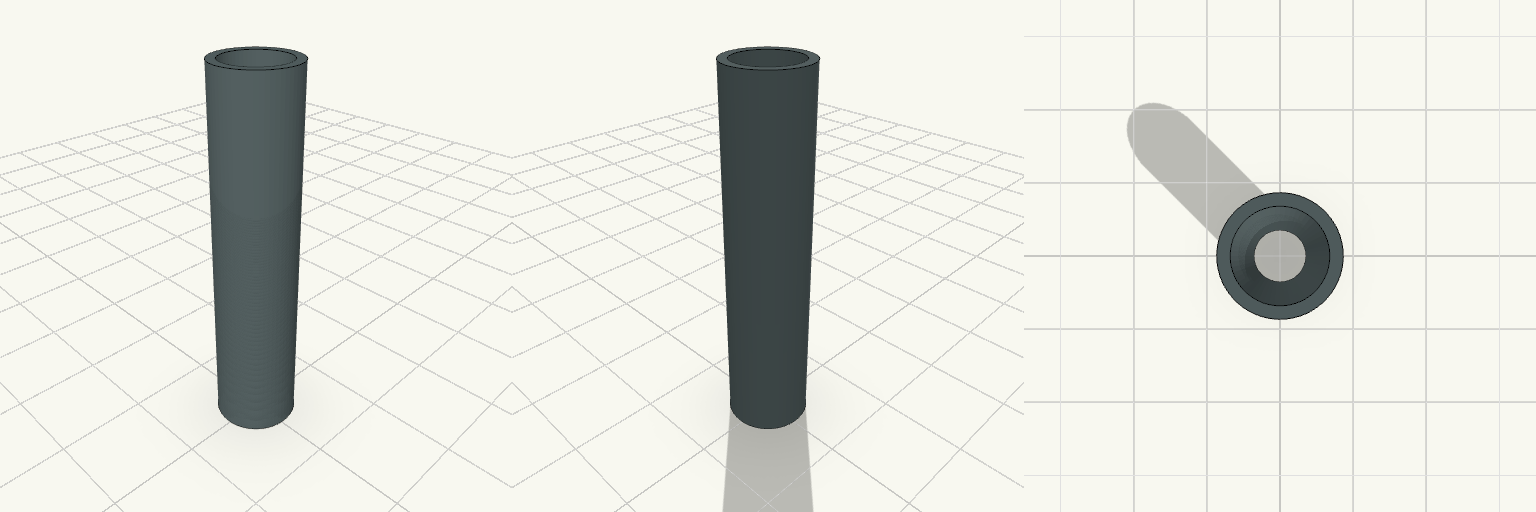
7.1mm Bore Spacer Tube
Plain sleeve with a 9mm outer diameter and a 7.1mm through-bore. Length: 40mm Wall thickness: 0.95mm Measure the shaft or bolt this is going over before you run it. 7.1mm is a specific inside dimension, and FDM shrinkage usually eats a fraction of a millimeter on inner bores. With only a 0.95mm wall, there's not much material left to drill out if it runs tight.
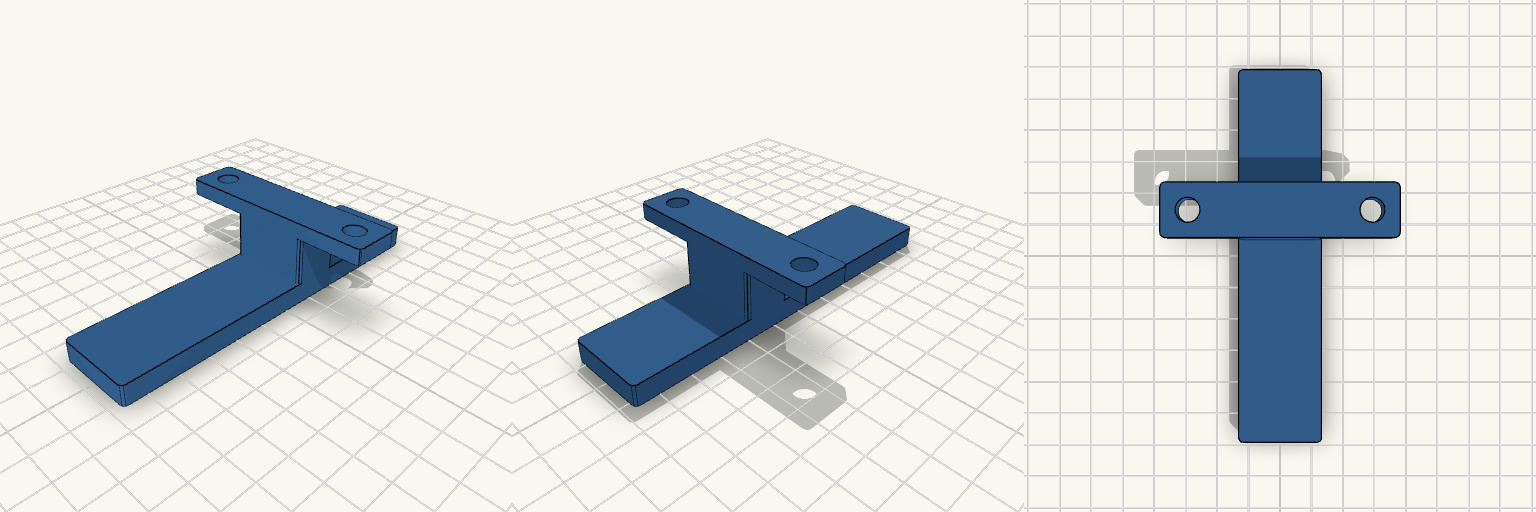
Tee-Spanner — Offset Bracket
A sturdy, precision-measured stepped T-bracket designed to join or space components on multiple planes. The solid central pillar provides a heavy-duty connection between the base plate and the cross piece. Dimensions Base Plate: 4.5" × 1" × 0.25" Cross Piece: 2.6" × 0.6" × 0.19" Overall Offset: 0.78" top-to-top (0.59" clearance between plates) Mounting Holes: 0.27" diameter, spaced 2" apart Features Stepped dual-plane geometry Print-ready filleted outer corners Heavy center union block for shear strength
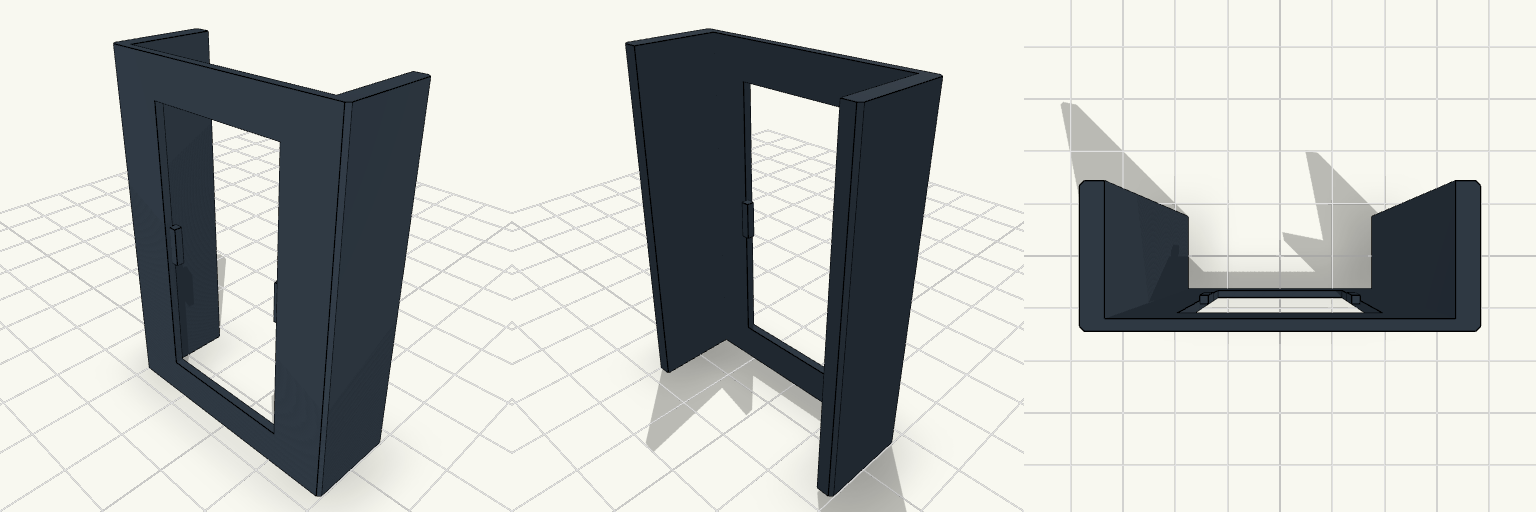
Matix Snap-Fit Test Frame
Un piccolo frammento della scatola principale, isolato e progettato per essere stampato velocemente. Serve per testare fisicamente l'inserimento e lo scatto del frutto BTicino Matix prima di impegnare ore nella stampa del pezzo completo. Orientamento fedele: Si stampa in verticale, in modo che le linee di livello (layer) e i ponti della fessura riproducano esattamente le condizioni della scatola finita. Fianchi rigidi: Il profilo a "C" impedisce alla parete di flettere quando premi l'interruttore. Risparmio: Pochi grammi di filamento per verificare le tolleranze di aggancio.