12.5mm Inline Hose Dripper
Created 1 months ago
Description
Inline irrigation dripper designed to couple standard 1/2-inch UK garden hose (12.5mm internal diameter) while bleeding off a controlled amount of water.
Fitment Specs
- Hose Standard: 1/2" ID (12.5mm) UK garden hose (Hozelock / generic compatible).
- Barb Profile: 14.5mm peak expanding from a 12.0mm base. Designed for a heavy friction fit.
- Bore: 9mm internal through-bore to maintain pressure to downstream emitters.
- Emitters: Twelve 1.5mm radial ports in the central block.
Clamp the hose directly over the barbs until it seats fully against the 16mm central shoulder. Depending on your local water pressure and the softness of the hose, standard Jubilee clips (hose clamps) are required to prevent blow-off under pressure.
Photos
Technical views
More like this
Explore more in Home & Fixtures →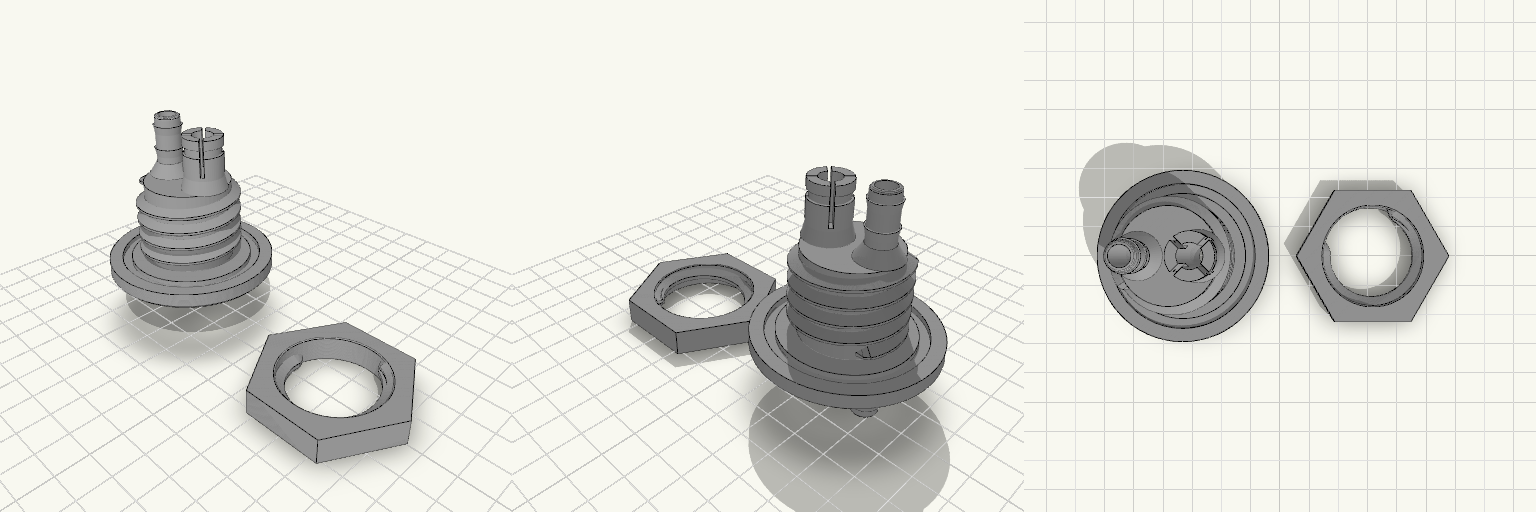
8mm Tank Bulkhead Fitting
M18 threaded bulkhead fitting engineered to pass an 8mm inner-diameter irrigation hose securely through a plastic tank lid. Interface: M18x2 thread with an independent hex locking nut. Sealing: Recessed O-ring groove on the interior flange face (2.5mm wide) to provide a watertight seal against the tank wall. Hose Barb: Double retaining barbs with a reinforced transition cone to handle clamping forces. Clearance: The hex nut is designed to slide freely over the 10.2mm barbs and internal threads are sized for clean printing in PETG. Both components are oriented to print flat on the bed without supports.
280mm Irrigation Controller Enclosure
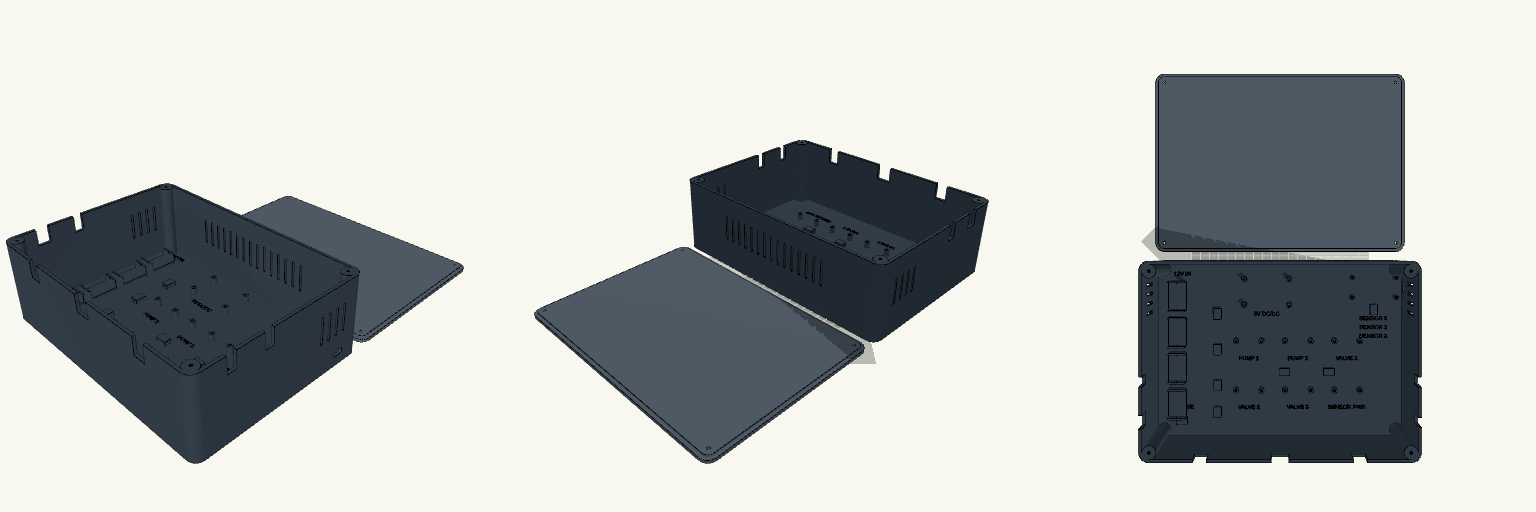
A rigid 280 × 200 × 90 mm printed enclosure designed specifically for an ESP32-based multi-zone plant irrigation controller. The layout divides the internal volume into three distinct areas: high-current power distribution on the left, six MOSFET drivers in the center, and the low-voltage microcontroller logic on the right. An extra-wide central cable channel runs between the two rows of MOSFETs, and all high-traffic access areas—like screw terminals and adjustment dials—have generous working clearances. The outer walls feature deep U-slots for cables, cut from the top edge so the main flat lid traps them cleanly in place without relying on separate cable glands. Internal Layout details Zone A (Power): Mounts for a 56×35 mm DC-DC buck converter, a friction-fit bracket stack for four WAGO 221-415 lever connectors, and a C-clip for an inline 5A barrel fuse. Zone B (Switching): Two rows of custom mounts for six 35×32 mm MOSFET boards. Each uses exactly two diagonal standoffs to leave maximum free space around the terminals. Zone C (Control): Stand-offs for an ESP32 NodeMCU, with a dedicated USB-C opening aligned in the external right-hand wall. Structure: Embossed floor labels mark all hookup zones. Cable tie bridges are scattered throughout the base for organization, and vertical ventilation slots flank the rear and sides. Uses four M3 screws driven directly into heavy internal corner bosses to seal the lid.
Reinforced 8mm Irrigation Y-Splitter
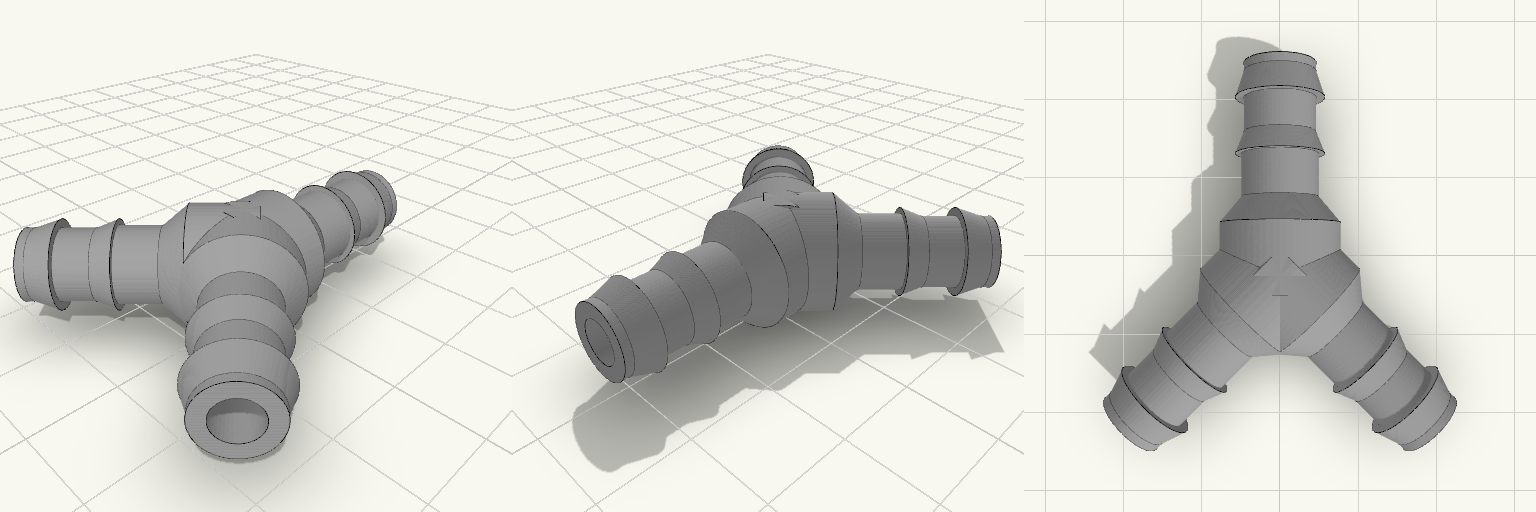
A heavily reinforced Y-shaped hose connector built specifically to merge two fluid lines into one. Designed for 8mm inner-diameter flexible tubing, it uses a solid central hub rather than thin overlapping walls, ensuring the part handles pressure without snapping at the junction. The internal geometry is sculpted to maintain flow: a 6mm channel through the main body prevents a bottleneck at the merge, smoothly necking down to 5mm inside the barbs to guarantee thick, watertight perimeters where the plastic gets thinnest. A precision flat cut on the underside allows the entire assembly to drop straight onto the build plate, completely eliminating the need for support material. Remix Hooks & Constraints Hose Fit: The double barbs peak at 8.5mm OD and drop to a 7.2mm valley, grabbing 8mm ID silicone or vinyl hose tightly. Print Settings: Built for PETG or ABS. Use 4 to 5 perimeters to ensure watertightness and maximum mechanical strength against bending forces. Scaling: Scaling up works cleanly for larger hose (e.g., 125% for 10mm ID), but scaling down is not recommended as the internal channel will restrict flow and the walls may drop below the required thickness for a watertight seal.
Smart Duplex Sconce Plate
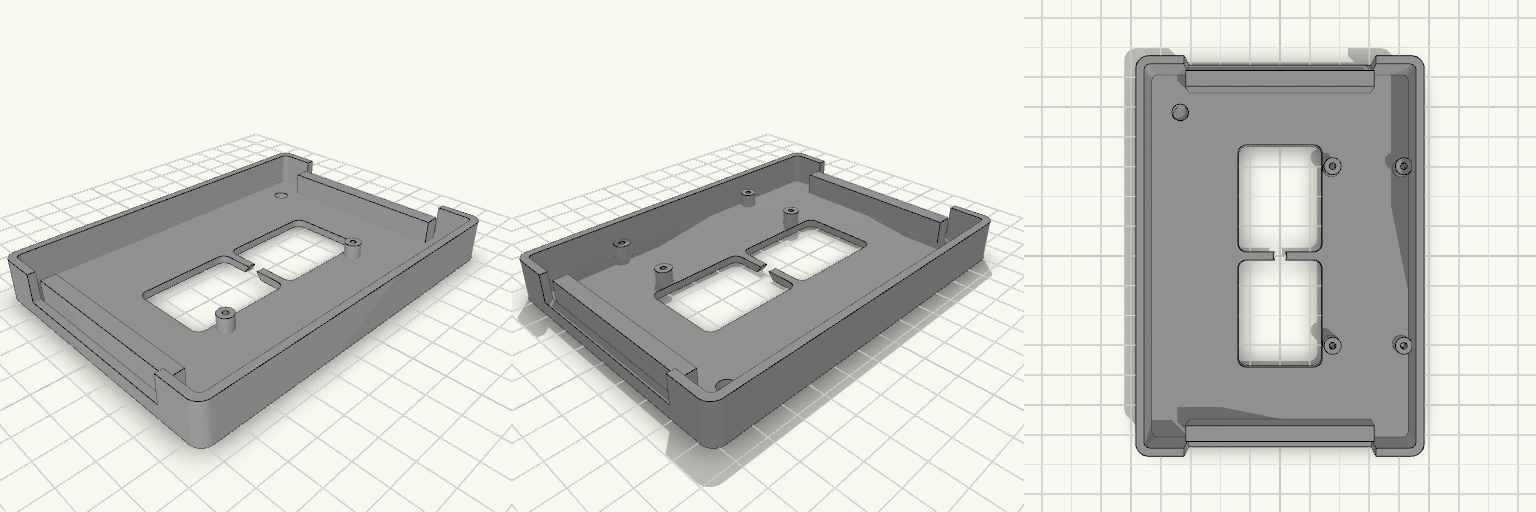
An oversized, deep-shell wall plate for a standard US duplex outlet, built to house a Raspberry Pi Zero W and up-and-down sconce lighting. Pi Zero Mount: Integrated standoffs (58x23mm spacing) for M2.5 screws, tucked beside the receptacle. Lighting Control: 5.5mm face cutout for an ambient light sensor. LED Bays: Top and bottom mounting blocks with flush cutouts for dual-directional LED strips. Clearance: 14mm overall depth clears standard hardware while providing internal routing space.
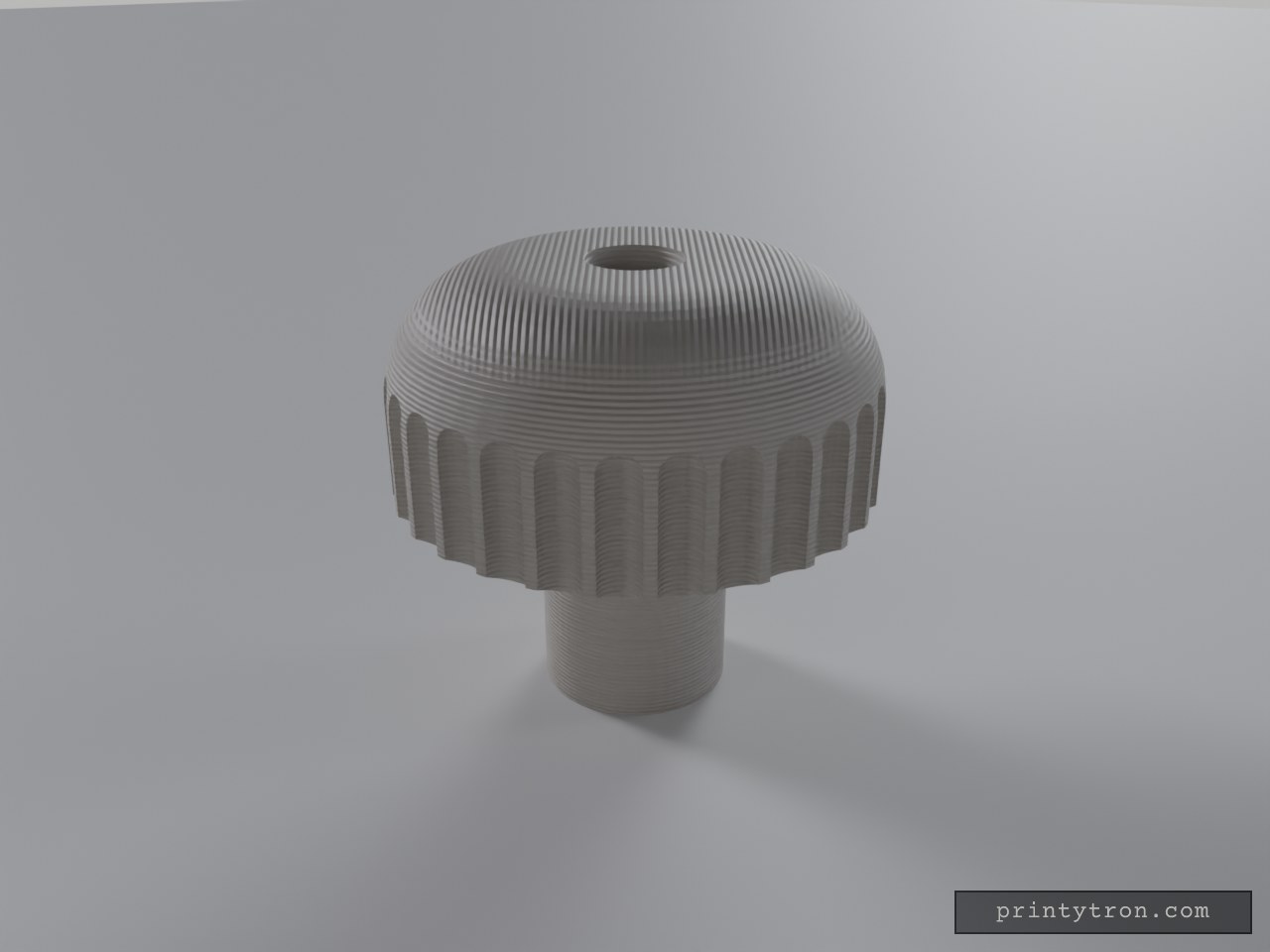
30mm Fluted Drawer Knob
A mushroom-style drawer knob with a straight-fluted grip ring. Designed for environments where hands may be wet, the flutes provide mechanical grip without the complex recesses of a diamond knurl that trap moisture. The part includes a central clearance hole for standard M4 mounting screws. Specifications Cap Dimensions: 30 mm diameter, 18 mm tall Stem Dimensions: 12 mm diameter, 10 mm length Total Standoff: 28 mm Mounting: M4 clearance through-hole (4.5 mm diameter) Grip Feature: 30 vertical flutes
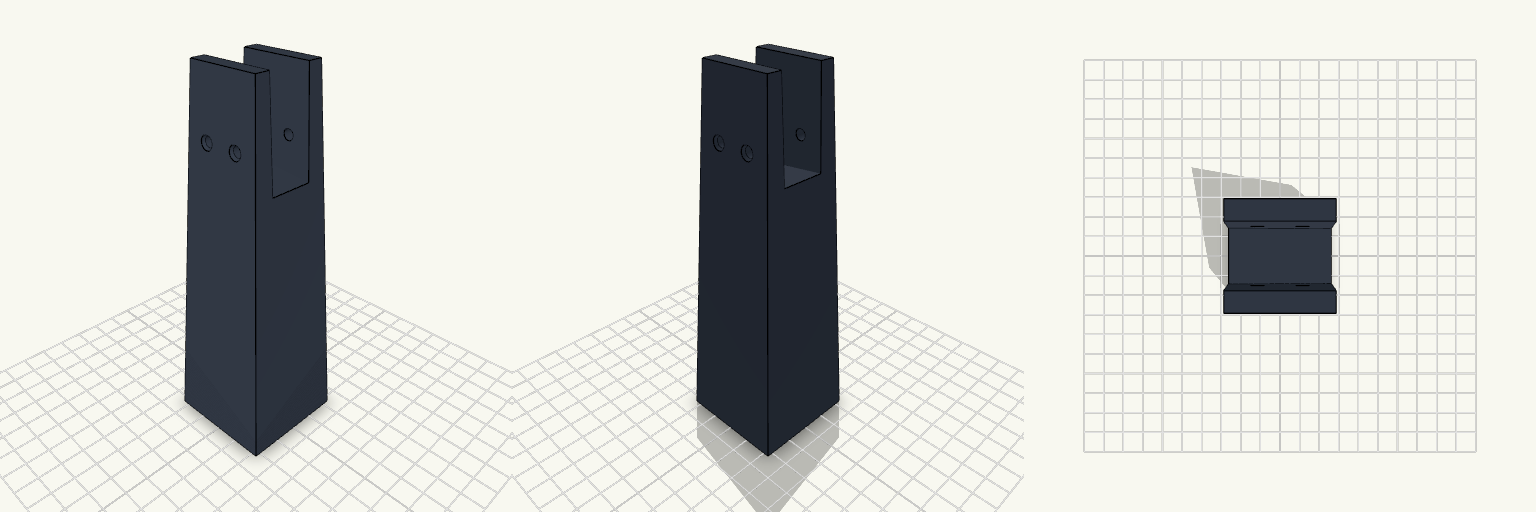
Płyta 18mm Nóżka Kątowa 150mm
Nóżka oporowa pod standardową płytę meblową 18 mm. Gniazdo ma 18,6 mm szerokości, co daje luz roboczy pozwalający wsunąć krawędź płyty bez rzeźbienia materiału, z pełnym prześwitem na wylot (brak ścianek czołowych). Dno kanału opada pod kątem, dając około 3 mm różnicy wysokości na 30-milimetrowym odcinku chwytu. Podstawa została rozszerzona do 45x45 mm – przy 150 mm całkowitej wysokości prosty słupek nie utrzymałby obciążeń bocznych. Wymiary montażowe Kanał U: 18,6 mm szerokości, 40 mm głębokości (w najpłytszym miejscu). Mocowanie: Dwa otwory przelotowe 4,5 mm z fazowaniem pod wkręty z łbem stożkowym, rozstaw 14 mm. Wysokość całkowita: 150 mm. Kąt dna: Spadek 3 mm na 30 mm długości profilu. Pasuje do gołych płyt 18 mm (wiórowa, MDF, sklejka). Nie wciśniesz w to płyty 22 mm, a z płytą 16 mm wkręty po obu stronach będą musiały ściągnąć ścianki kanału, co grozi pęknięciem wydruku. Przed drukiem upewnij się, że 3 mm spadek na dnie to właściwy kąt dla twojej zabudowy.