Flacher S-Haken mit Stift, 14,2 mm
Made by RelayBee
Created today
Description
What it's for
Flacher Türhaken, der über eine Tür greift. Ein geneigter Stift ersetzt die vordere Wand am unteren Haken.
Dimensions
- Höhe (Z): 10 mm
- Wandstärke: 1,75 mm
- Obere Öffnung: 14,2 mm
- Obere Lippe: 4 mm tief
- Stift: Ø 2,5 mm, 5,5 mm lang, 40° zur senkrechten Wand geneigt
Remix ideas
- Stift länger oder kürzer für andere Lasten
- Öffnung an andere Türstärken anpassen
- Dickere Wand für mehr Tragkraft
Images
More like this
Explore more in Home & Fixtures →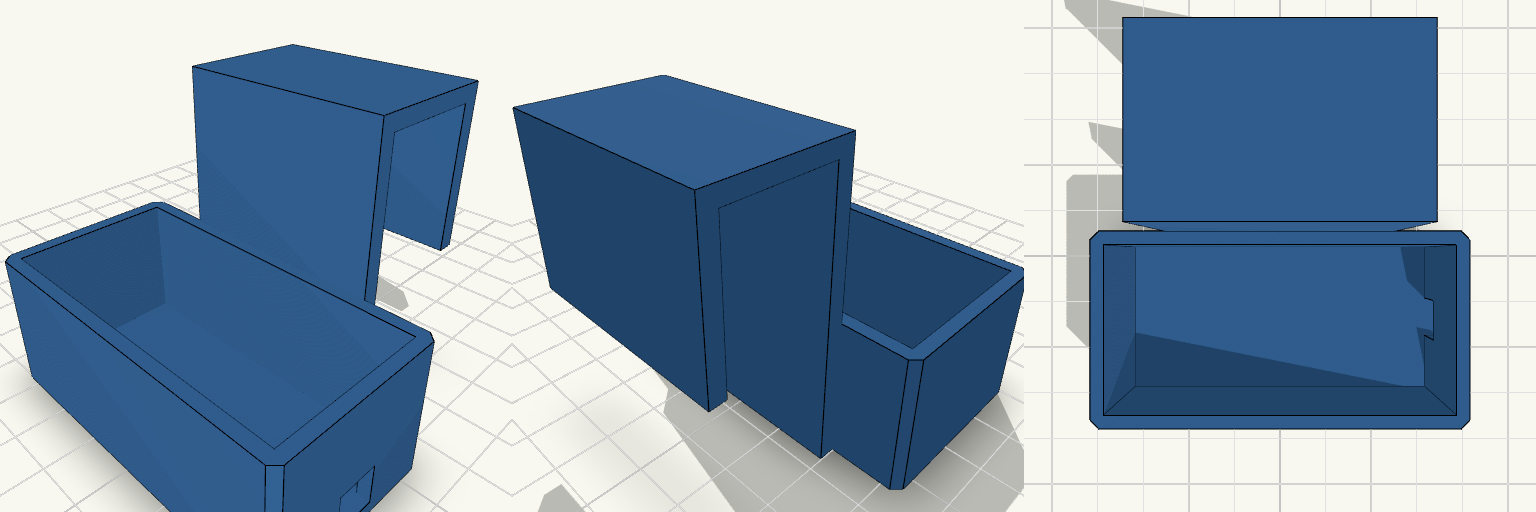
Hideaway — Türrahmen-Batteriebox
Hideaway ist eine kleine, oben offene Box mit Haken, die über einen Türrahmen gehängt wird und eine Batteriebox für Lichterketten verdeckt. Der Haken sitzt an der Rückseite, der Kabelausschnitt wandert seitlich aus der Box, damit die Vorderwand geschlossen bleibt. Maße Innenraum: 62 × 30 × 24 mm (passend für eine 3×AA-Batteriebox) Haken: für Türrahmen von ca. 20 mm Dicke, 40 mm breit Wandstärke: 2,4 mm Kabelausschnitt: 8 × 8 mm in der rechten Seitenwand, knapp über dem Boden Hinweise Ein Teil, kein Deckel – oben offen Vorderwand geschlossen, Kabelauslass seitlich Ohne Stützen druckbar, Rückseite flach auf das Druckbett
8.35 mm Fiberglass-Rod Joiner with Camera Arm
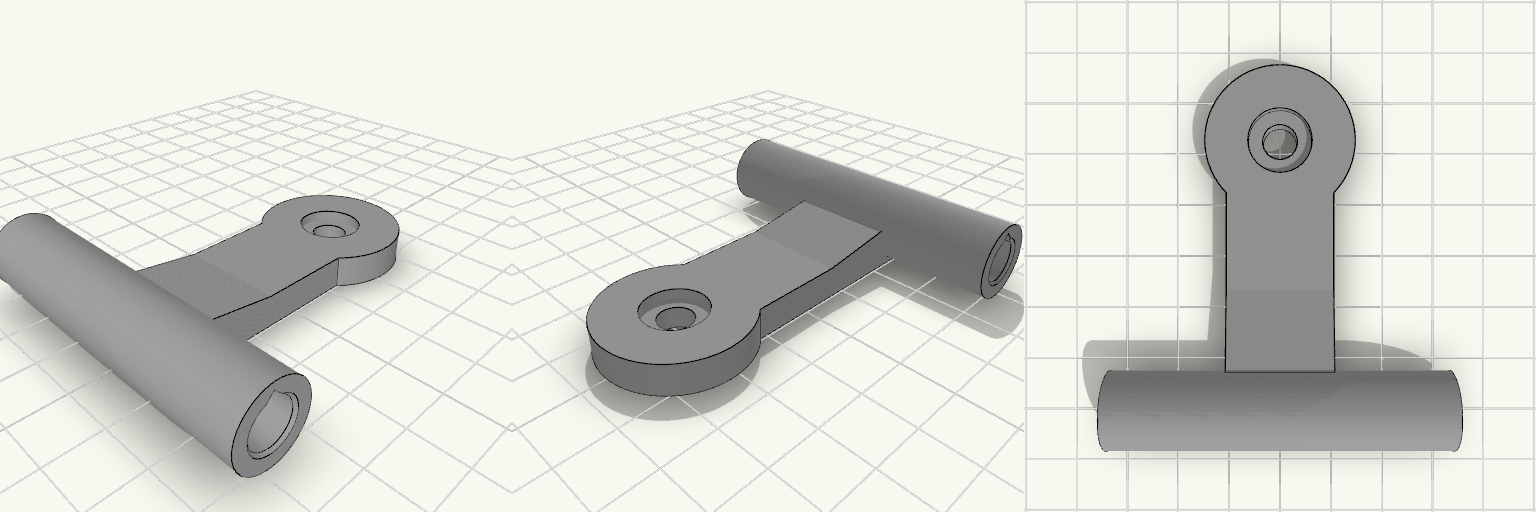
Replacement two-way joiner for the top-front-center of a fiberglass-rod printer enclosure. It splices two nominal 8.2 mm rods end-to-end and carries a flat-lying arm with a screw boss for a Sercomm RC8110 camera. Print it as one piece with the arm flat on the bed, then rotate the part about the rod axis during installation to aim the camera downward and toward the bed center. Specifications Rod sockets: 8.35 mm ID, 30 mm deep per side, 0.5 mm entry chamfers, separated by a 3 mm solid center stop; 63 mm overall sleeve length. Sleeve: approximately 14.35 mm OD with 3.0 mm wall thickness. Arm: 20 mm wide and 6 mm thick, extending 50 mm from the sleeve, with a root block and gusset blending it into the sleeve. Camera boss: 28 mm diameter and 6 mm thick, with a 6.6 mm through-hole and a 12 mm × 2 mm counterbore for a 1/4"-20 camera screw. Print footprint: 63 × 71.2 × 14.4 mm as oriented on the plate; the teardrop socket bores and flat arm are intended to print without support. Fit: press-fit for measured 8.19–8.20 mm rods; PETG wall thickness is sized to resist splitting and bending from the tensioned enclosure fabric.
Door-Top Hook STOP Sign Hanger
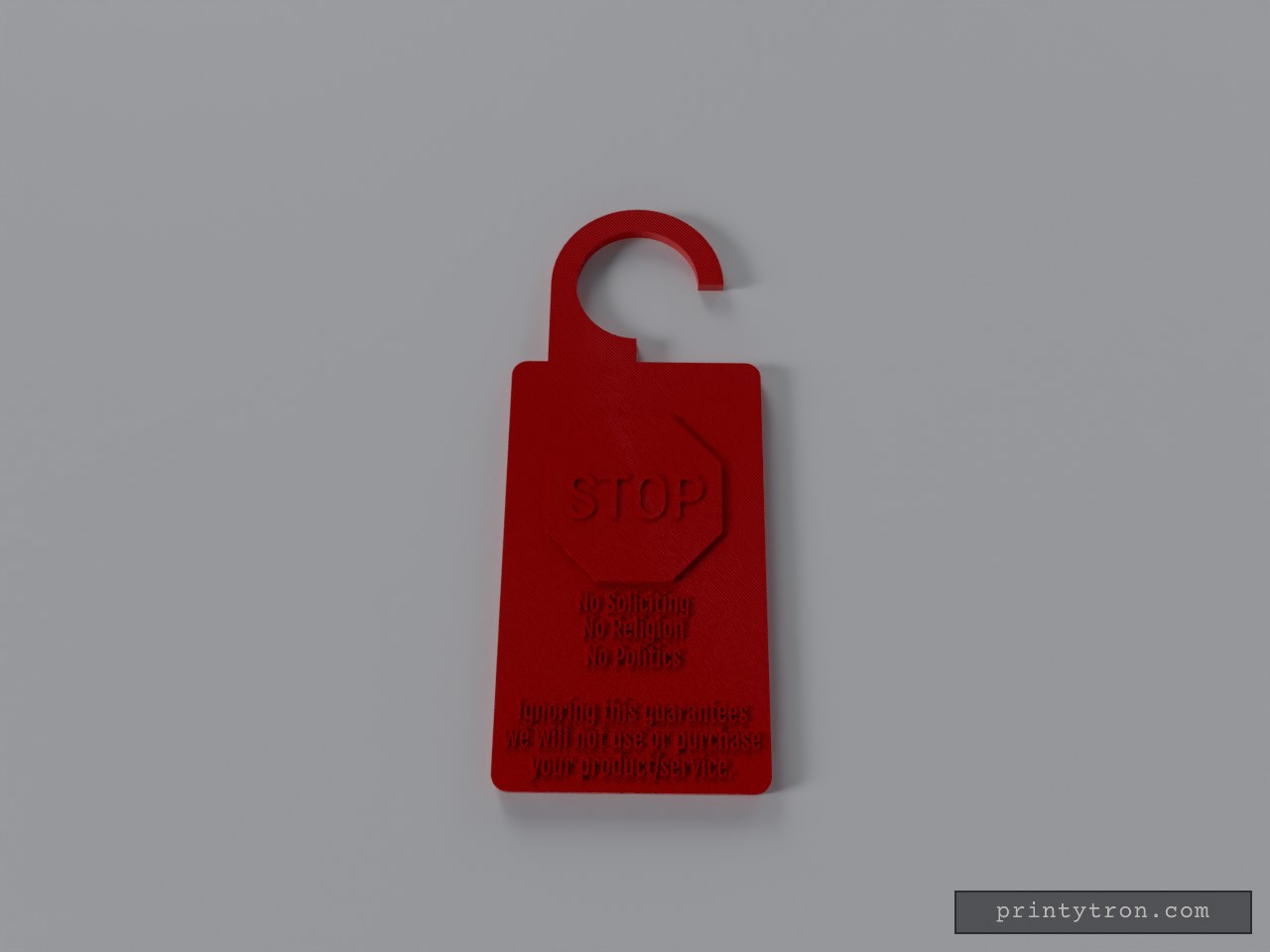
A door-top hook sign for hanging over a door top or peg: a 95 × 160 × 5 mm plate with a one-piece flat hook on its top edge. The hook is a ring with a gap on its lower right, about 68 × 69.4 mm overall and 5 mm thick, reaching roughly 68 mm above the plate. Its ring wall is about 10 mm thick; the opening is fixed and does not adjust. Below the hook is an octagonal STOP sign with white lettering, then the message in dark raised text: six lines at one 6 mm size in a bold condensed face, with a blank line after “No Politics”: No Soliciting No Religion No Politics Ignoring this guarantees we will not use or purchase your product/service. It replaces a paper or card door hanger of similar footprint — nothing to laminate and nothing to tape up. Fits A door top or peg that clears the hook’s fixed opening — measure the opening against the actual door top or peg before printing, as nothing on the part takes up slack. A print bed at least 160 × 95 mm, since the plate prints flat. A one-piece print: plate, text, STOP sign and hook print together; no separate loop, screws, nuts or fasteners. Check before printing Measure the hook opening against your door top or peg. The ring wall is about 10 mm thick and the opening is fixed. Print the plate flat so the layers run along the hook. At roughly 68 mm of reach in a 5 mm section, the hook is a long cantilever; printing it stood on edge risks snapping it. Change filament at the layers where the red, white and dark areas begin if you want clean colour separation. Line spacing is about 9.2 mm pitch. The last line of text sits about 4 mm from the plate’s lower edge, so preview the layout and margin before committing to a long print. Known limits One hook thickness only, 5 mm — there is no heavier version. No through-slot for a knob or handle, and no screw-on loop or M3 hardware. The sign does not clamp or lock to the door; it hangs from the hook and lifts off. The hook opening is fixed; it does not adjust for different door tops or pegs.
Broom Stick Hook for 25.3 mm Handles
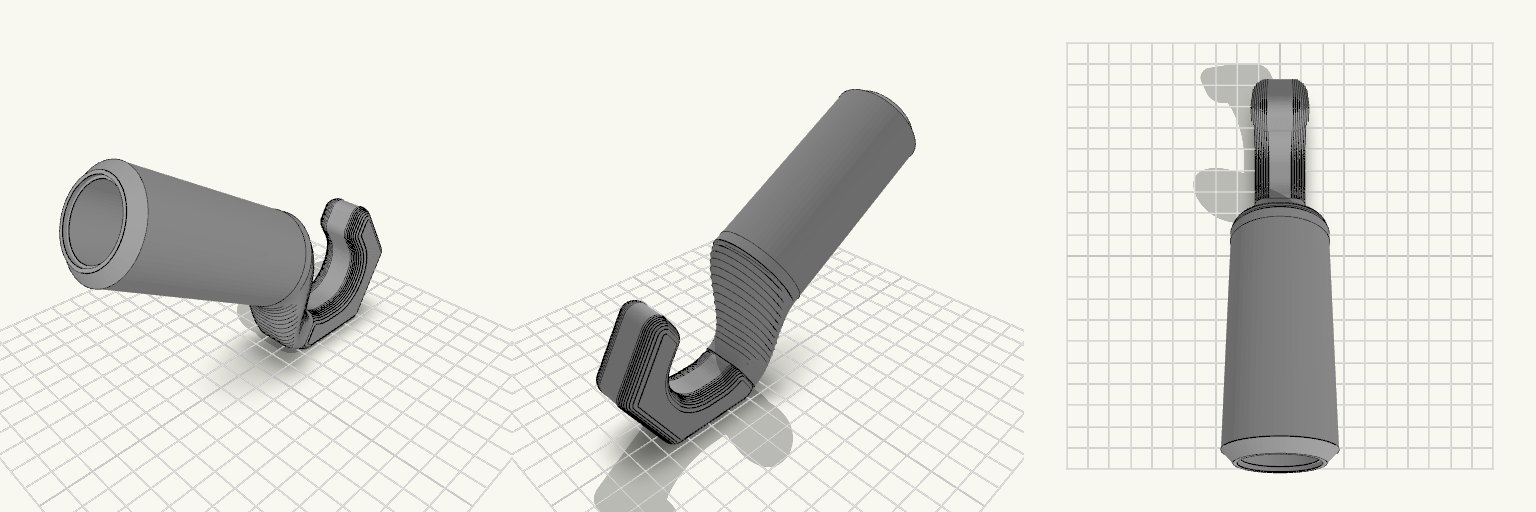
What it's for A one-piece hook for the end of a metal broom stick. The sleeve fits over a 25.3 mm handle with a tight friction fit, and the inline half-hexagon hook rises from the top of the sleeve. Its centre sits on the stick axis, so a coat rack bar hangs in line with the handle and the broom hangs straight. The inside of the hexagon is 31 mm flat to flat for a rack rail up to 27 mm, with a smooth continuous inner path. The beam is 15 mm thick and 22 mm wide, with a 6 mm radius on its long edges and rounded outside corners. Between sleeve and hook, the sleeve's round outer radius eases into the beam's rounded section over about 34 mm, starting 8 mm below the sleeve's top edge and shifting onto the beam's offset line, so there is no flat shelf or sharp edge along the transition. The inside corners carry a 14 mm radius. There is no screw hole; use friction, glue, or a wrap of tape if the fit is loose. Inline hook at the end of the stick Sleeve for a 25.3 mm metal broom handle 25.5 mm bore for a tight friction fit Half-hexagon hook centred on the stick axis 31 mm inside opening for a rack rail up to 27 mm Rounded beam and a blended, edge-free sleeve-to-hook transition No screw hole; use friction, glue, or tape if needed Dimensions Overall size as oriented for printing: 38 × 147.6 × 106 mm Broom sleeve bore: 25.5 mm for a 25.3 mm handle Hook opening: 31 mm flat to flat inside, for a rack rail up to 27 mm Hook beam: 22 mm wide, 15 mm thick, 6 mm edge radius Hook centre: about 32 mm above the sleeve, on the stick axis Print notes The part rests on the angled hexagon face next to the flat outer face — the next face round from the opening — so it sits tilted about 30° from flat and the opening leans over rather than pointing straight up. The sleeve end angles up off the plate, which keeps the overhang under it smaller than a flat-face stance would, but that underside will likely still want a little support. Flat contact face is narrow: add a brim for grip The hook arch itself should print cleanly This design has not been test-printed For a hanging metal broom, use 5 or more walls and about 40% gyroid infill Check the neck around the hook gap after printing, since it carries the hanging load Test the friction fit on the handle before use Remix ideas Resize the 25.5 mm sleeve bore for other handle diameters Change the 31 mm hook opening for a different rail size Adjust the beam width or edge rounding for a different balance of comfort and stiffness Add a grip band or clamping collar for heavier handled tools
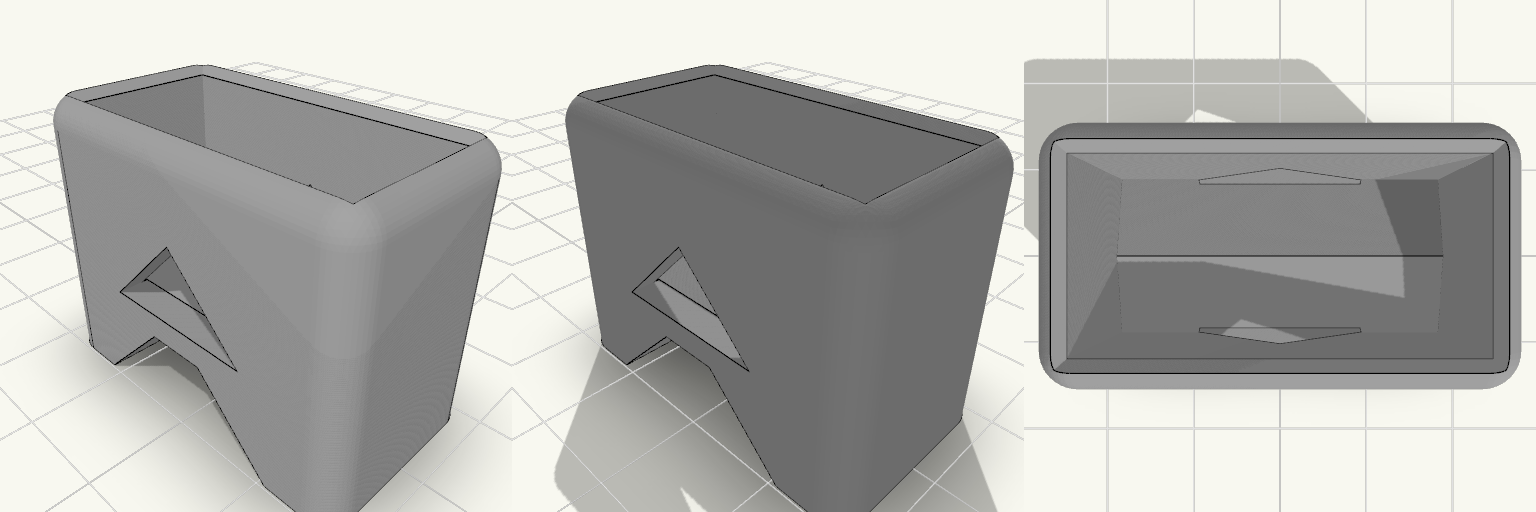
Draining Sleeve Foot for a Laundry Hamper Leg
The wood at the bottom of a hamper leg is the first thing to go: it stands in whatever puddle the bathroom floor collects, drinks it up, and goes soft until the basket slumps and rocks. This sleeve slides onto the end of one rectangular wooden leg, holds the wood about 9 mm clear of the floor, and slopes its pocket floor so splash water runs out the sides instead of sitting in there against the wood. What it does Pocket: 31 × 15 mm inside, sized exactly to the leg with no added play — that measurement already accounts for clearance. 15 mm deep at its shallowest point, the centre ridge, and deeper toward the sides where the floor falls away. Stand-off: a single arched cut runs the full depth of the underside, leaving two flat feet that hold the leg about 9 mm off the floor. Overall height is about 27 mm. Drainage: the pocket floor is a shallow ridge sloping down to both long sides, with one 16 mm slot through each long wall at the low edge. Water leaves sideways, and the slot bottoms sit 10.5 mm above the floor, so no opening rests in the wet. Each slot is pointed at the top rather than flat-roofed, which is what lets it print clean. Shape: 1.2 mm chamfer at the opening to get it started over the wood, 3 mm rounding on the vertical and top edges so it doesn't snag a mop or a bare toe. The bottom edges are left sharp so they sit flat on the bed. Printing it Print in PETG with the sleeve opening facing up and the two feet on the bed — no supports anywhere. The arch sides are 45°, so the only bridge is the flat strip about 6 mm across the roof of the arch. The finished part measures roughly 36 × 20 × 27.2 mm, walls 2.5 mm thick. A plain matte finish in white, grey or black sits well in a bathroom. A zero-clearance pocket is tight in PETG. Check the leg with calipers before printing if the wood looks swollen or tapered — if it won't slide on, the pocket wants a few tenths opening up.
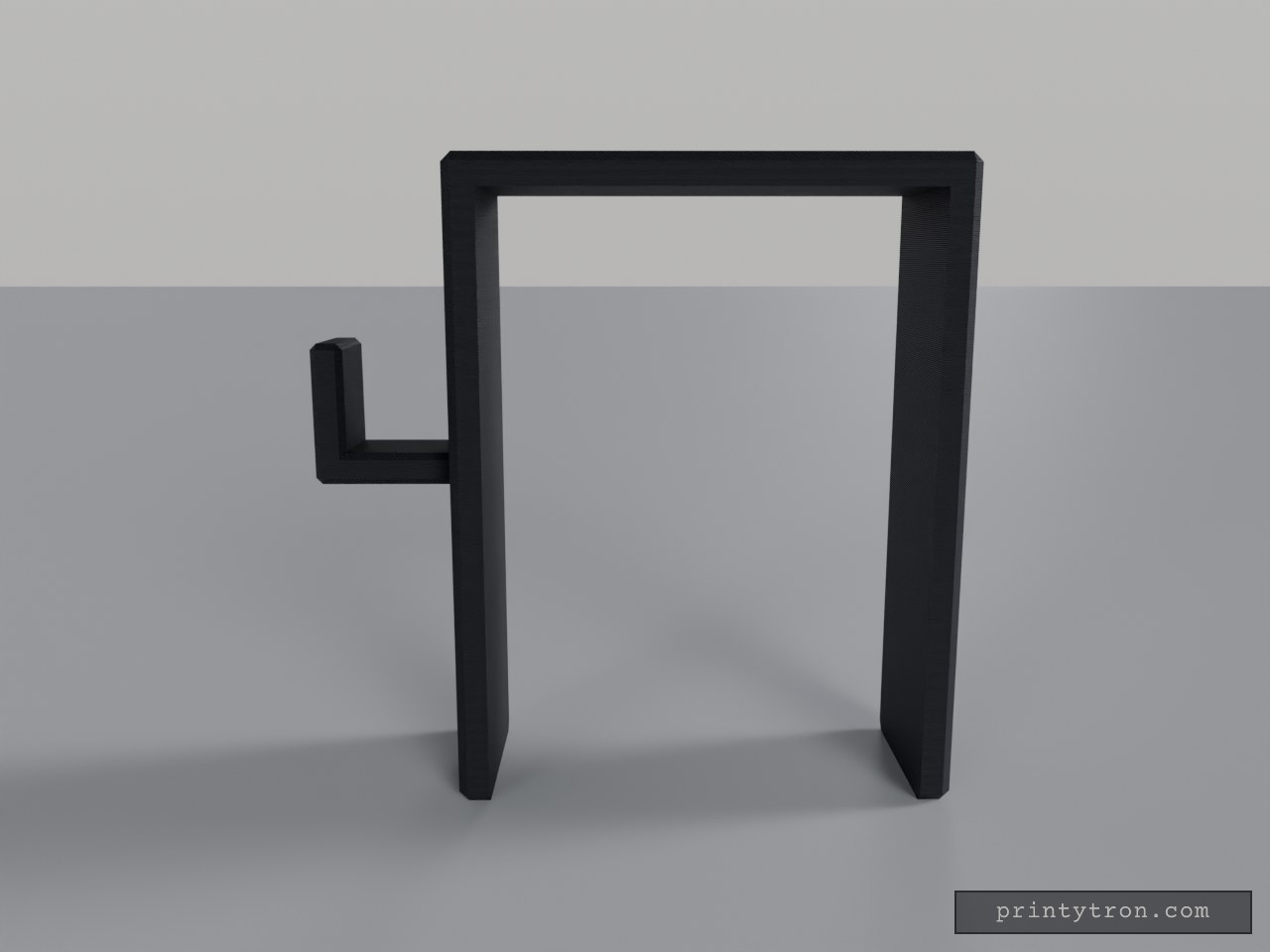
Beam Clamp Clothes Hanger with Side Hook
What it's for A saddle that drops over the top of a support beam and turns it into a place to hang clothes. The inverted U-shaped channel grips the beam from above, and a hook projects from one side with an upturned tip so hangers and garments stay put. Beam Saddle — the U-shaped body that slides down over the beam Hook — the side arm with an upward tip for hangers or coats, set at mid-height of the saddle Both areas print as a single piece; nothing needs assembling. Dimensions Saddle opening: 68 mm inner width, sized for a beam of that width Overall saddle: 78 × 30 mm footprint, 100 mm tall Channel: 95 mm deep, with 5 mm thick walls Hook: 22 × 15 × 22 mm, mounted at mid-height so its tip stays inside the 100 mm envelope The 95 mm channel is generous for a shallow beam — the saddle simply sits lower on it, and the hook rides down with it. Print notes Print the saddle opening facing up so the channel needs no supports A few extra perimeters on the hook help when it carries heavy coats Scale the opening slightly if your beam measures over 68 mm Remix ideas Lengthen the hook for bulky winter coats Shorten the legs for a shallower beam and keep the height with a taller top plate Add a second hook on the opposite side for more hanging room Add a small lip or screw hole at the bottom of the saddle to stop it shifting sideways