140mm Angled Phone Dock
Created today
Description
A rigid desktop dock designed to support modern smartphones. The structure features a 65-degree viewing angle and integrated cable management for charging while docked.
Specifications
- Base: 76mm x 100mm with routed cable channel
- Spine Height: 140mm for standard and plus-sized devices
- Cradle Slot: 18mm depth to accommodate most cases
- Construction: Single-piece fixed geometry
Images
More like this
Explore more in Desk & Tech →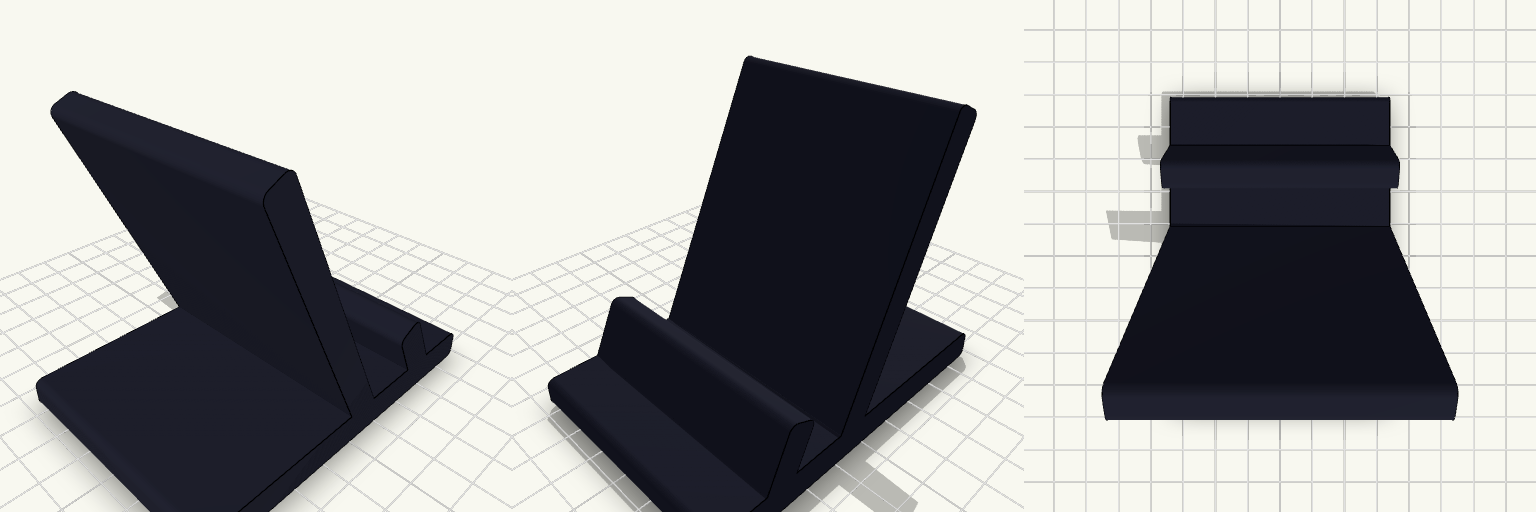
Unyielding Phone Stand
Every time you try to prop a phone up against a coffee mug or a stack of coasters, it inevitably slides flat exactly when you look away. This ends that. Three solid, intersecting slabs that hold your phone at an unyielding 65-degree viewing angle. No hinges to wear out, no tipping backwards when you tap the top of the screen. The Fit: A 14.5mm perpendicular gap comfortably swallows thick, rugged phone cases. The Footprint: The 95mm base plate throws the center of gravity far enough back to prevent tipping even with a heavy device. The Print: Lays flat on its side on the build plate. Requires exactly zero support material.
Wavy Corrugated Phone Stand
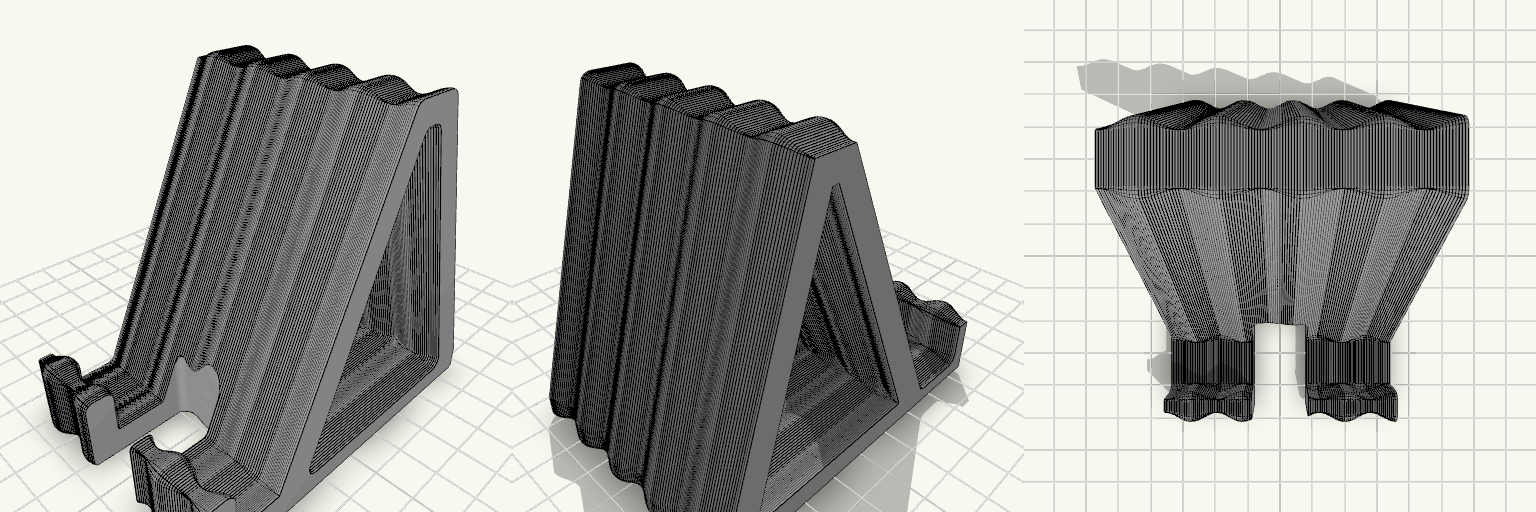
A minimalist A-frame phone stand that replaces flat surfaces with a continuous, 3D corrugated ripple. The entire structural ribbon pulses slightly in thickness across its width, giving it a tactile, architectural presence without adding complexity or relying on extra parts. Remix Hooks Amplitude & Frequency: The sin(i25)1.2 math driving the ripple is begging to be played with — dial up the 1.2 for deep fins, or tighten the 25 for a finer corduroy texture. Tilt & Gap: Out of the box, it leans at a tilt of 25 degrees with a generous 14.5mm slot (gap) to clear heavy-duty cases, but those variables are cleanly exposed for quick tweaking. Material pairings: The corrugated face catches highlights nicely, making it a great candidate for silk PLAs or highly reflective metallic filaments.
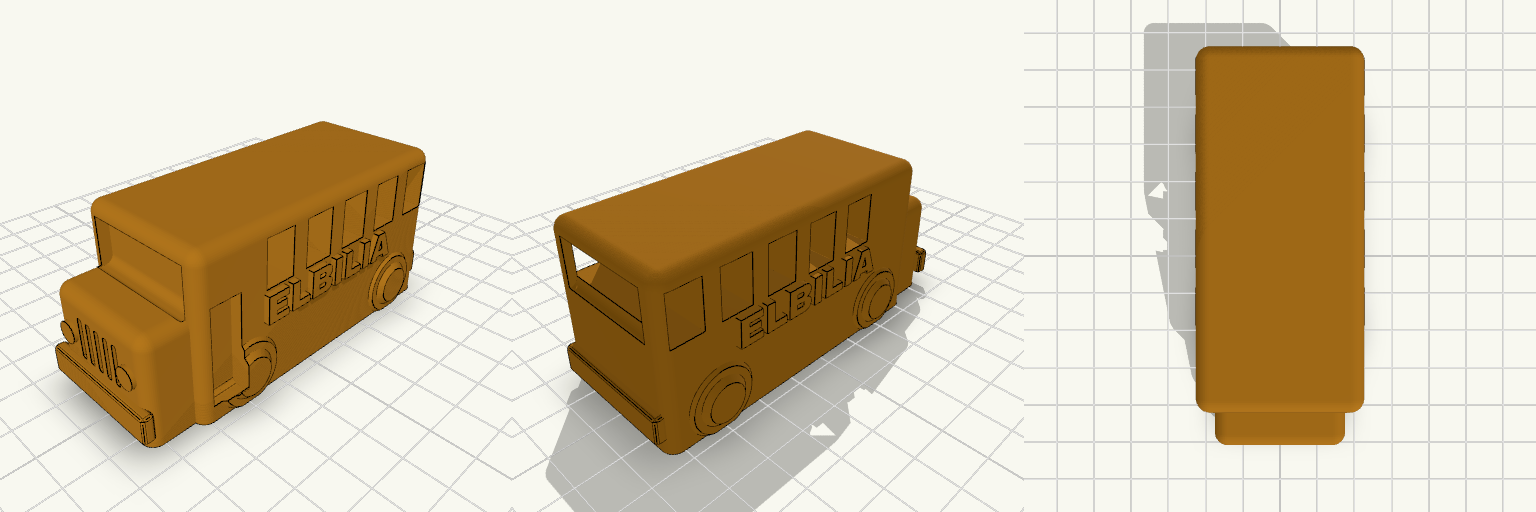
MiniBus Elbilia
A highly stable, monolithic desktop phone stand built entirely for reliable FDM printing. It features a continuous heavy-base profile that resists tipping, an integrated 65-degree resting plane, and a deep front retaining lip. Remix & Mod Hooks Resting Angle: Currently cut precisely at 65 degrees; shifting the top control points can stand the phone up straight for video calls or lay it back for touch typing. Cable Routing: Features an invisible internal bend channel. The 18x15mm pass-through slot is sized for standard USB-C heads, but can easily be widened for thick multi-cables. Base Profile: Built as a single continuous 2D extrusion. Extending the base depth (Y axis) or adding weight-reduction cutouts are trivial modifications for someone looking to save filament or stretch the footprint.
Pebble Dock — EDC Organiser
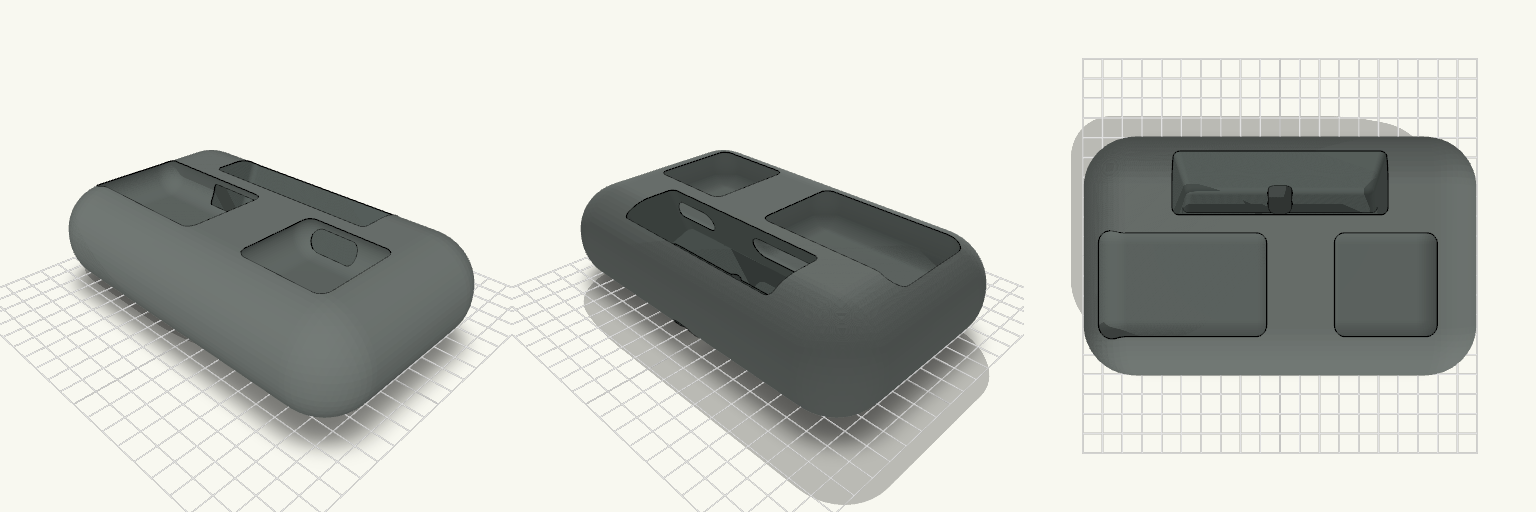
Pebble Dock brings order to your nightstand with a heavy, stable, monolithic footprint. The phone sits securely against a rigid 38mm backrest angled at 70 degrees, with an 8mm front retaining lip and an integrated hidden cable channel for neat charging. Features Rigid Backrest: A deeply recessed pocket securely supports a cased smartphone. Hidden Cable Channel: Cables feed directly from beneath the phone to the rear of the body, keeping the surface clear. Essential Trays: A front catch-all for daily carries and a side pocket for earbuds. Support-free: The solid base and rounded profile print cleanly directly on the bed.
19.5mm Desk Edge Puck Mount
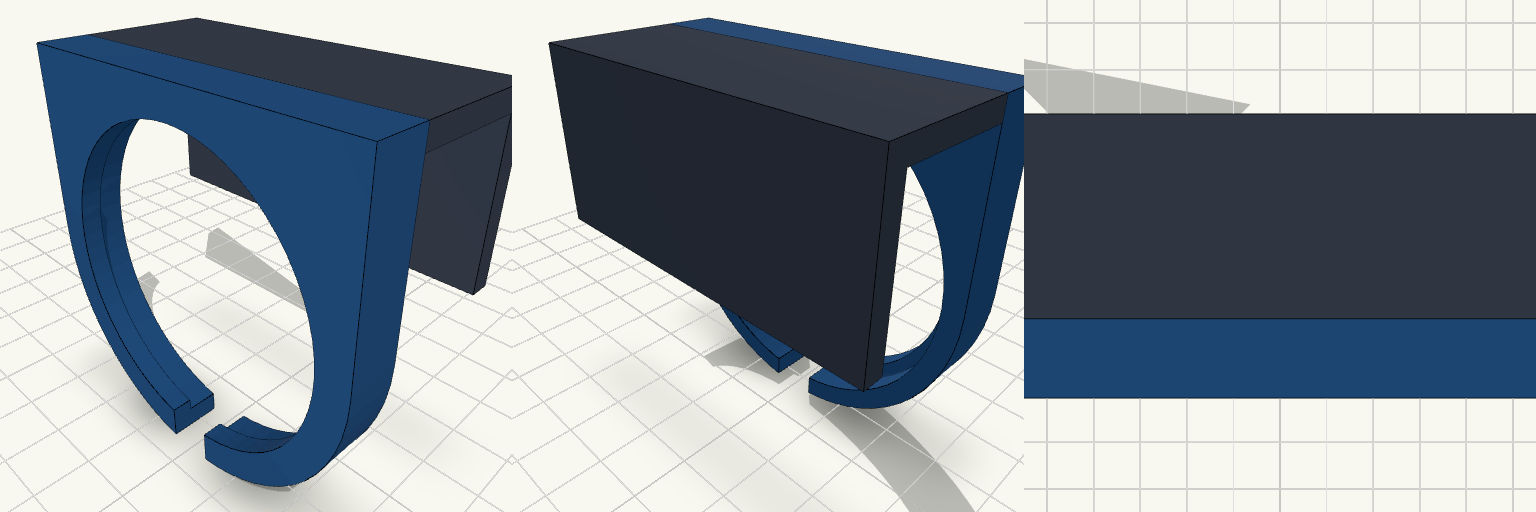
Edge-mounted charging cradle sized for the 33.5mm Google Pixel Watch magnetic puck. Designed to drop over a standard 3/4-inch (19.5mm) wood plank. Fitment: The 33.5mm bore sits at the rear of the housing. You push the puck in from the back, then slide the whole assembly over your desk edge — the wood itself traps the puck so it cannot back out. Cable Routing: An 8mm slot on the bottom allows the cable to drop cleanly out of the way. Incompatibilities: Does not fit full-sized phone Qi chargers or desks thicker than 19.5mm without adjustment. Phone hooks have been removed from this version.
Support Casque Base 120mm
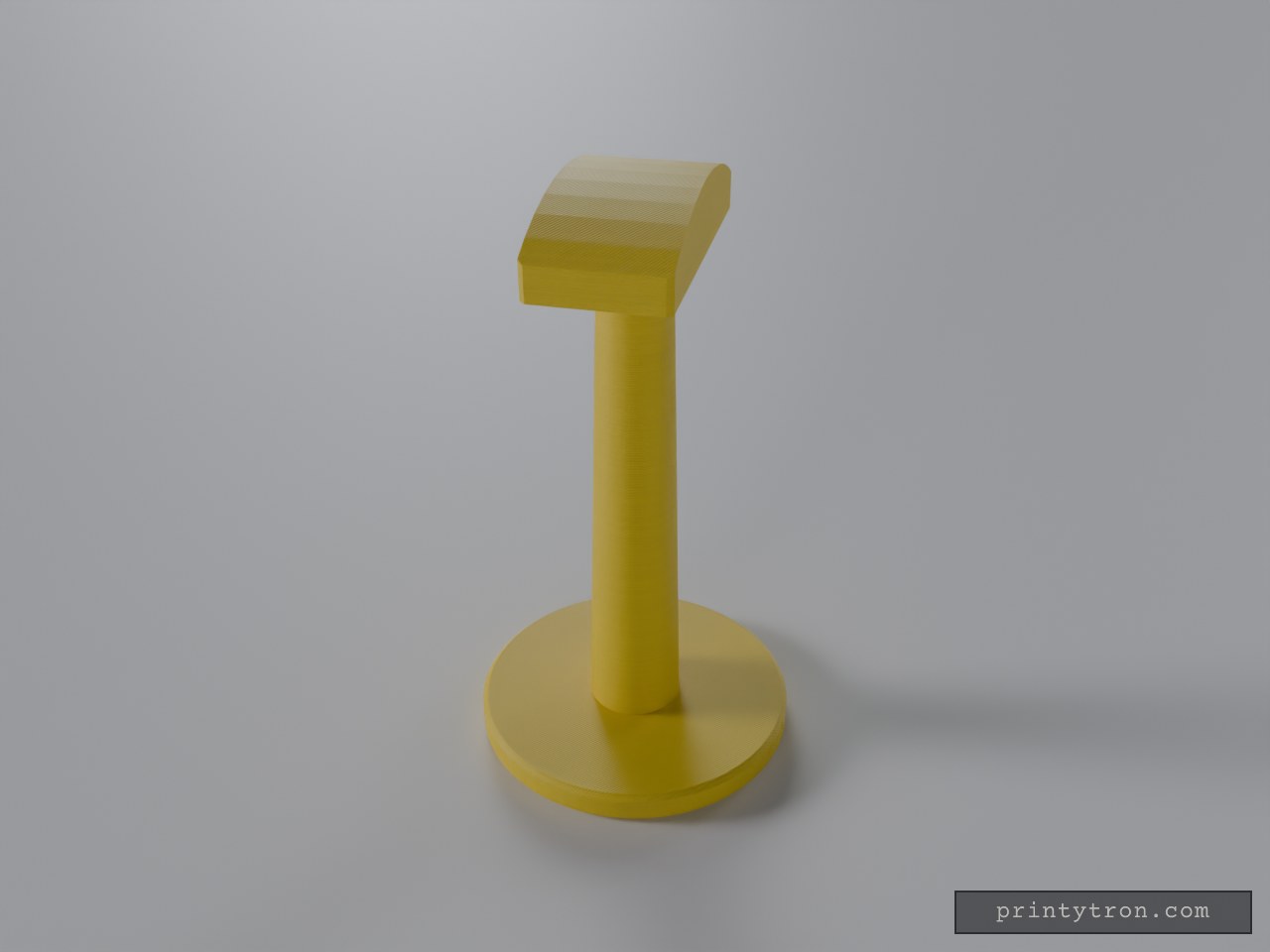
Support monobloc pour casque audio. Construit pour la stabilité sans assemblage requis. Dimensions critiques : Base : 120 mm de diamètre pour assurer l'équilibre de l'ensemble. Hauteur du pied : 180 mm (la hauteur totale atteint environ 217 mm avec le berceau). Berceau (repose-bandeau) : 45 mm de profondeur avec un profil convexe. À vérifier contre la largeur de l'arceau du casque ciblé avant impression. Imprimable en PLA d'une seule pièce, sans supports. L'orientation par défaut place la base sur le plateau.