2U Micro-ATX Split Rack Chassis
Created 1 months ago
Description
What it's for
A 2U 19-inch rack-mountable PC chassis split into two halves for printing on standard 256mm beds. Designed for a Micro-ATX motherboard, standard ATX power supply, and horizontal GPU mounting via a riser.
Dimensions
Overall assembled width is standard 17-inch spec, fitting within standard 19-inch racks. 89mm (2U) height with 250mm depth. Left half handles motherboard I/O, right half mounts the PSU and GPU.
Hardware layout
Includes exact standard mounting holes for an ATX PSU (asymmetric 4-hole pattern), 9-hole standoff grid for Micro-ATX directly into the base plate, and a front-facing horizontal GPU slot with side-mounting pilot holes for standard PCIe brackets. Rack ears include front-side stiffening ribs.
Images
More like this
Explore more in Desk & Tech →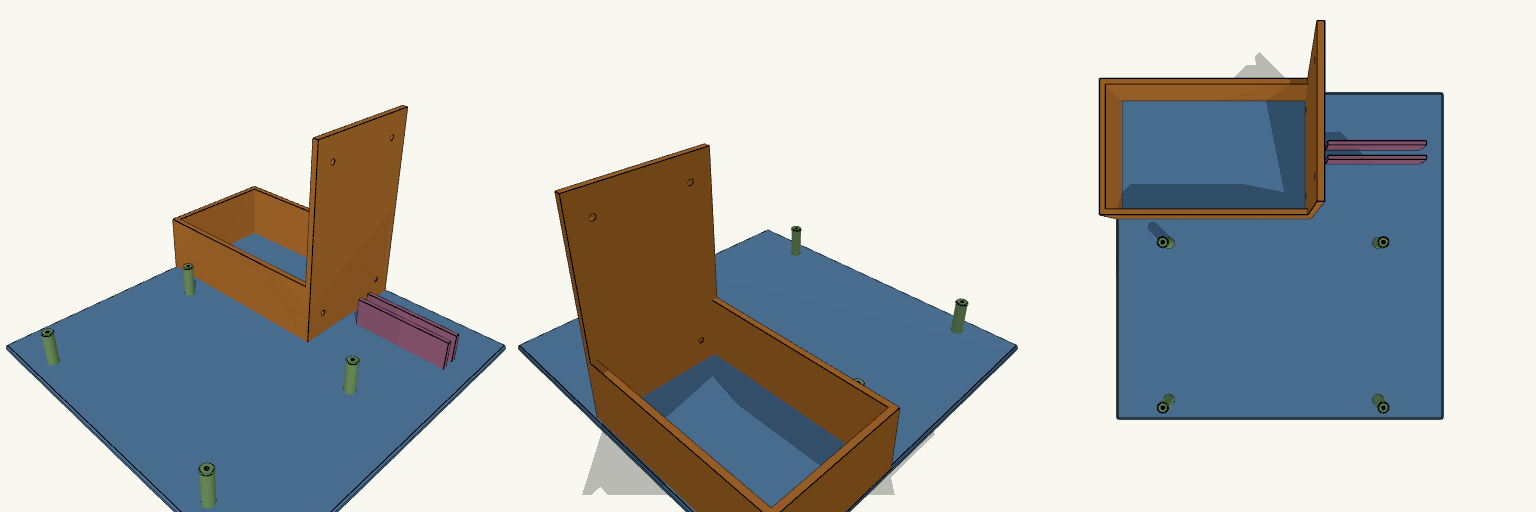
Open-Frame PC Test Bench for 250 mm Beds
An open-frame PC test bench should stop the PSU, motherboard and SSD from shifting while you build; this one does it on a single 250 × 250 mm plate that fits a 256 × 256 mm printer bed. The base is 4 mm thick, and the whole bench prints as one piece in PLA. Fit and print numbers Base plate: 250 × 250 × 4 mm; one-piece print. PSU socket: 140.4 × 86.4 mm pocket with 4 mm walls on three sides; rear bracket 150 mm tall with four ATX screw holes at 64 × 114 mm spacing, 4.2 mm diameter. Motherboard: four 25 mm-high standoffs with 2.8 mm pilot holes for M3, spaced 160 × 120 mm. This is not the standard mATX hole pattern, so check it against your board first; a full mATX board will overhang the plate. SSD: 72 mm-long slot with two 3 mm walls, 22 mm high, holds a 7 mm-thick 2.5-inch drive on its edge. The layout is a compromise for a 250 mm bed: the PSU and board both need room, so the standoff spacing is fixed at 160 × 120 mm rather than a true mATX pattern. Print it in PLA if you want the base stiff without extra parts.
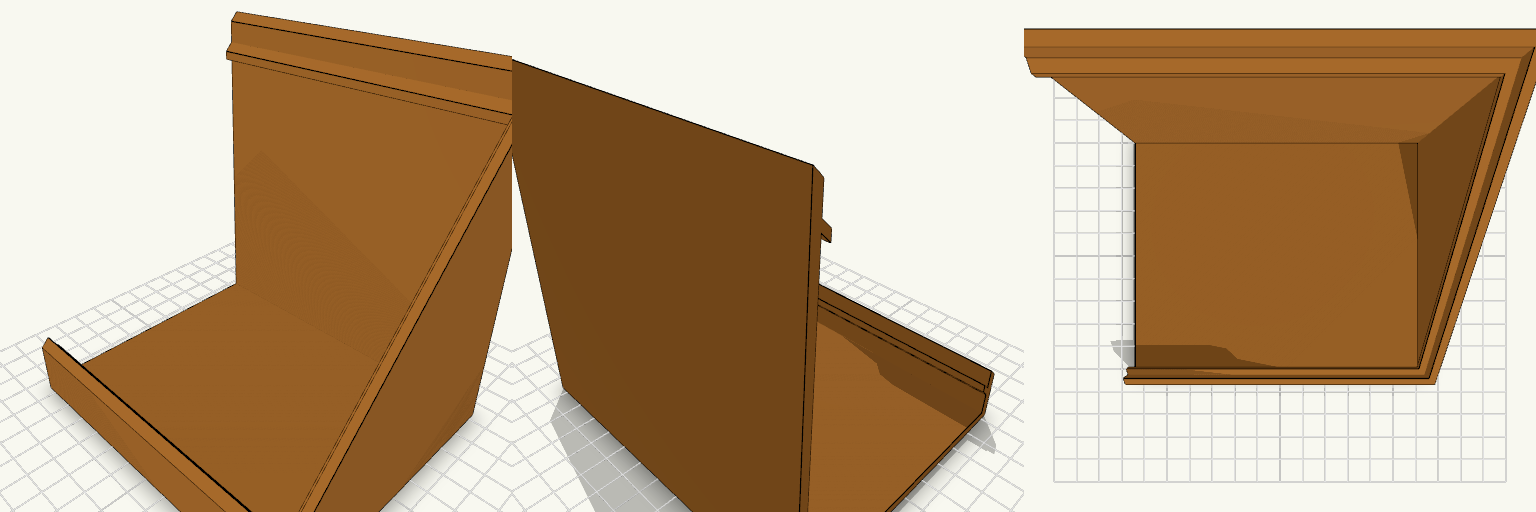
cuña tablet grande vertical parte dcha
Mitad derecha de una caja en cuña hueca, abierta por arriba, con base, frente y trasera cerrados. Se imprime apoyada sobre la base y se une a la mitad izquierda por el corte central. Ancho de la pieza: unos 126,5 mm en X Fondo: 105 mm en Y Altura: 20 mm delante y 130 mm detrás Paredes y base: 3 mm Listón interior perimetral de 3 mm, 8 mm bajo el borde superior Corte plano sin encaje, para pegar
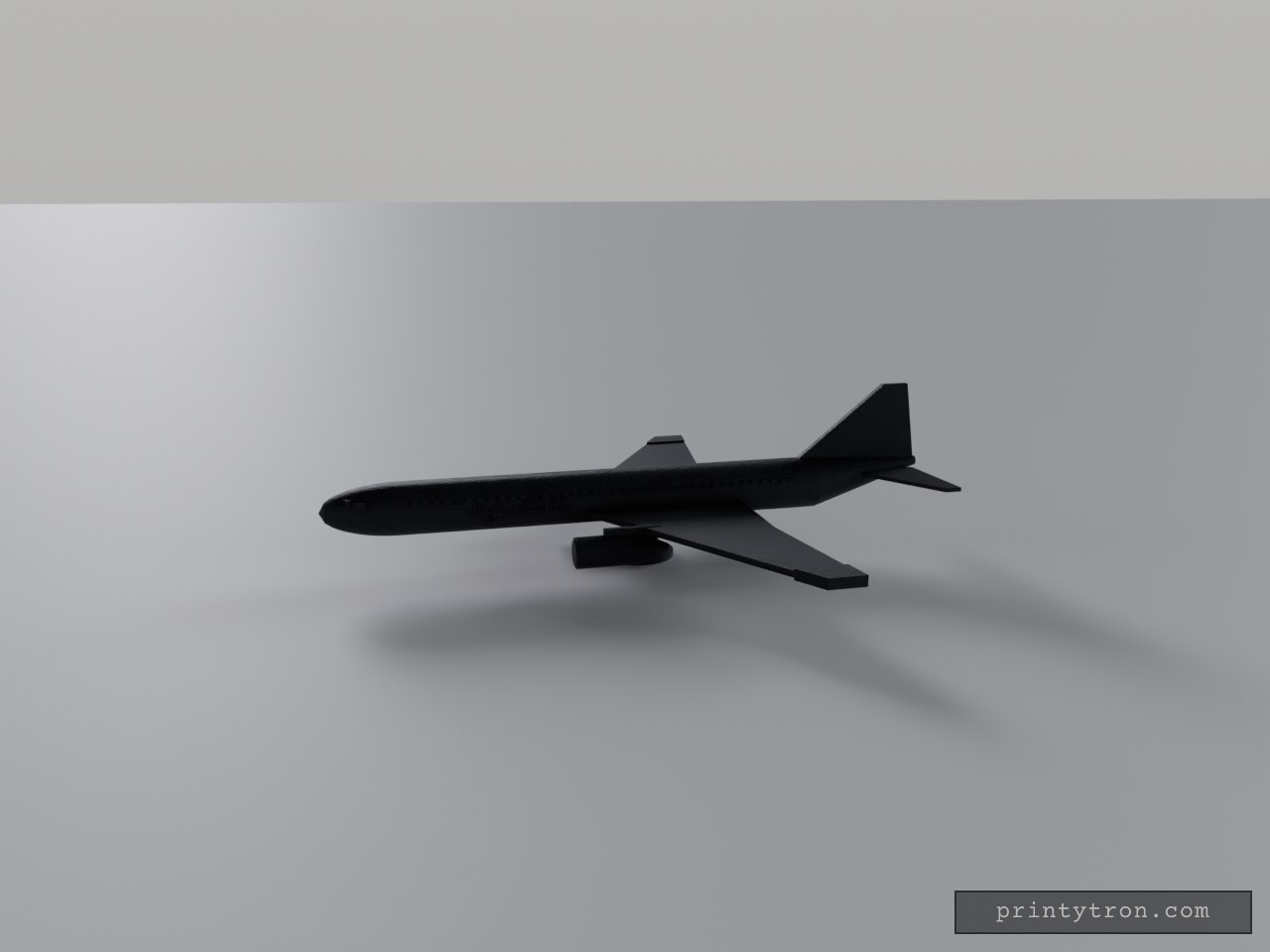
Virgin-Rot-Weiß: Boeing 777 Standmodell
Virgin-Rot auf Weiß: Der weiße Rumpf mit rotem Bauchstreifen, das rote, gepfeilte Seitenleitwerk und die roten Triebwerke an den Flügeln bringen den Virgin-Atlantic-Look auf den Tisch. Die Boeing 777 steht als Standmodell mit gewölbter Nase, hochgezogenem Heck, blauen Fensterreihen und schrägen Cockpitscheiben; auf beiden Rumpfseiten steht „virgin atlantic“ in roter Schrift. Einläufe und Ständer sind weiß gehalten. Was dran ist: Maßstab etwa 1:320 – rund 230 mm lang und 200 mm Spannweite Gepfeilte Flügel mit roten Spitzen, Triebwerke an Pylonen mit weißen Einläufen Fensterreihen und Cockpitfenster in Blau, roter Bauchstreifen und Schriftzug „virgin atlantic“ Kein Fahrwerk – ein weißer Ständer trägt das Modell Farben getrennt wählbar: Weiß für Rumpf, Flügel, Höhenleitwerk, Einläufe und Ständer; Rot für Leitwerk, Triebwerke, Spitzen, Streifen und Schrift; Blau für die Fenster
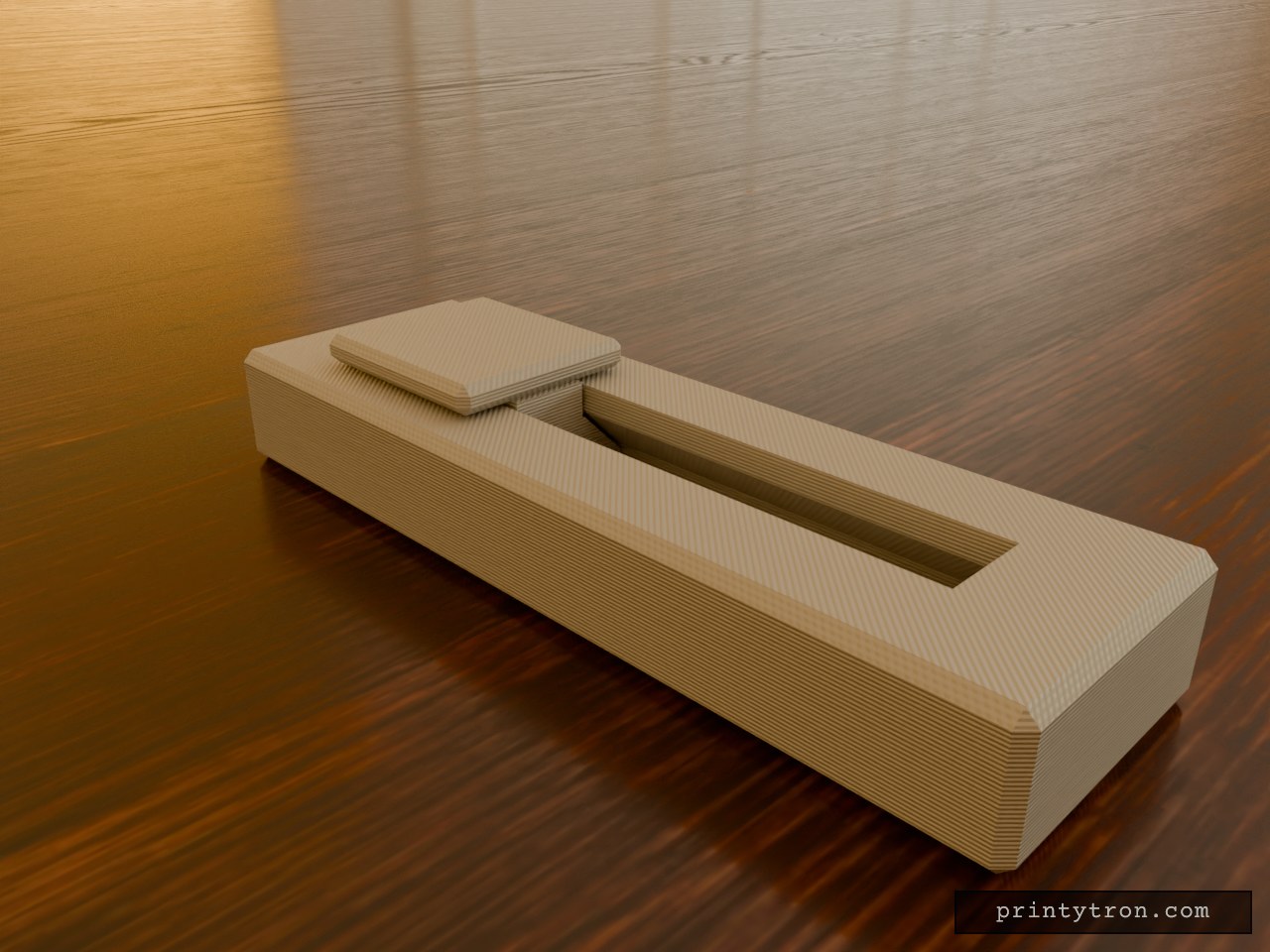
Fidget Slider Toy, Captive Print-in-Place
A fidget slider that prints already assembled, so there is no loose weight to lose and nothing to glue. The slider is captured in an enclosed dovetail track and cannot fall out. It runs 40 mm end to end and clicks at each stop instead of rolling freely. What it does Slides back and forth along a closed track in an 80 x 25 mm body. A small bump on the track floor at each end of travel drops into a dimple under the slider and gives the click. The dovetail profile holds the slider down, so it cannot lift out of the rails. Numbers that matter Body: 80 x 25 x 11 mm, with the slider top reaching 14 mm. Slider: 20 mm long, 18 mm wide cap. Travel: 40 mm. Clearance between slider and track: 0.4 mm per side. This is what lets it move after printing. Click bump: about 0.6 mm of interference against the 0.4 mm gap. Reduce the bump height if it feels too stiff. Printing Print flat, body base down, with no supports needed inside the track. Use a well-tuned printer. A 0.4 mm gap fuses easily if the flow is too high. After printing, work the slider back and forth a few times to break any thin bridging between the slider and the rails. Two colours show as separate parts in the preview, but the print is one job.
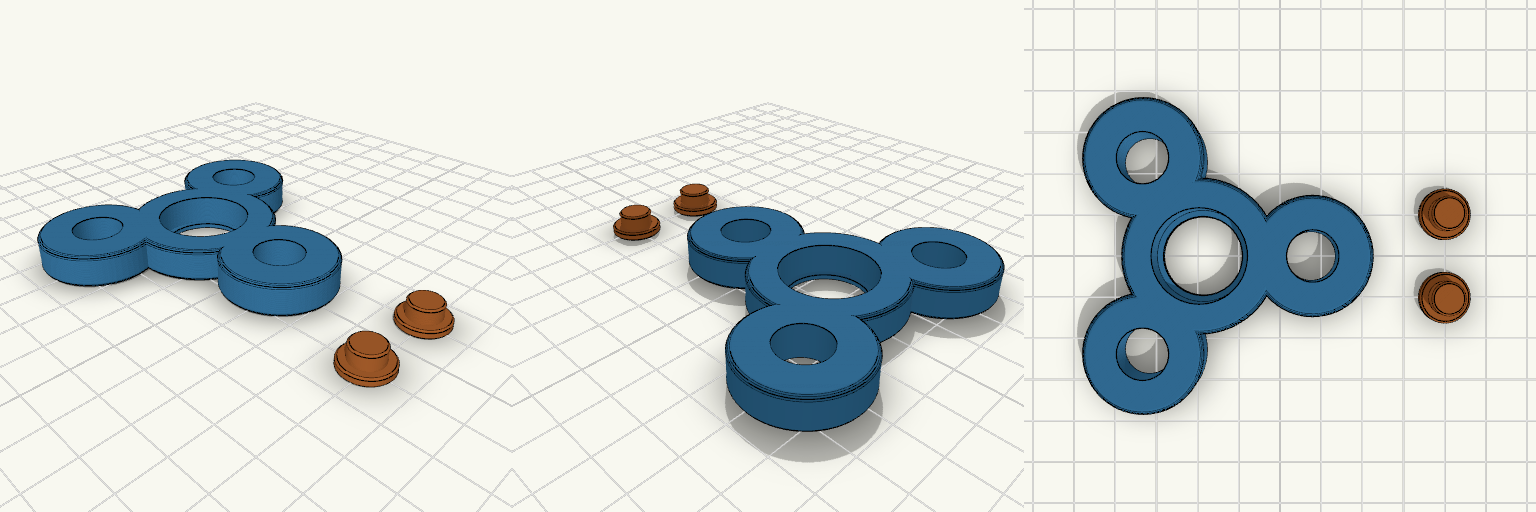
Bearing-Driven Tri-Lobe Fidget Spinner
A classic three-lobe hand spinner, the shape every desk drawer has seen, rebuilt around a real 608 skate bearing so it spins freely for a long time. The body has a bearing pocket in the centre, a lip underneath to hold it, and weight-saving holes in each lobe. Two small caps press into the bearing's inner ring from either side to make the finger pads. Notes You need: one 608 bearing (8 × 22 × 7 mm). Print: body flat; the two caps print flat-side down beside it. No supports. Assembly: press the bearing into the pocket from the top, then push one cap in from each side until they meet. Tuning: if the bearing is loose or tight in the pocket, adjust the pocket diameter slightly. Remix: the lobe holes can be enlarged to take 608 bearings as extra weights.
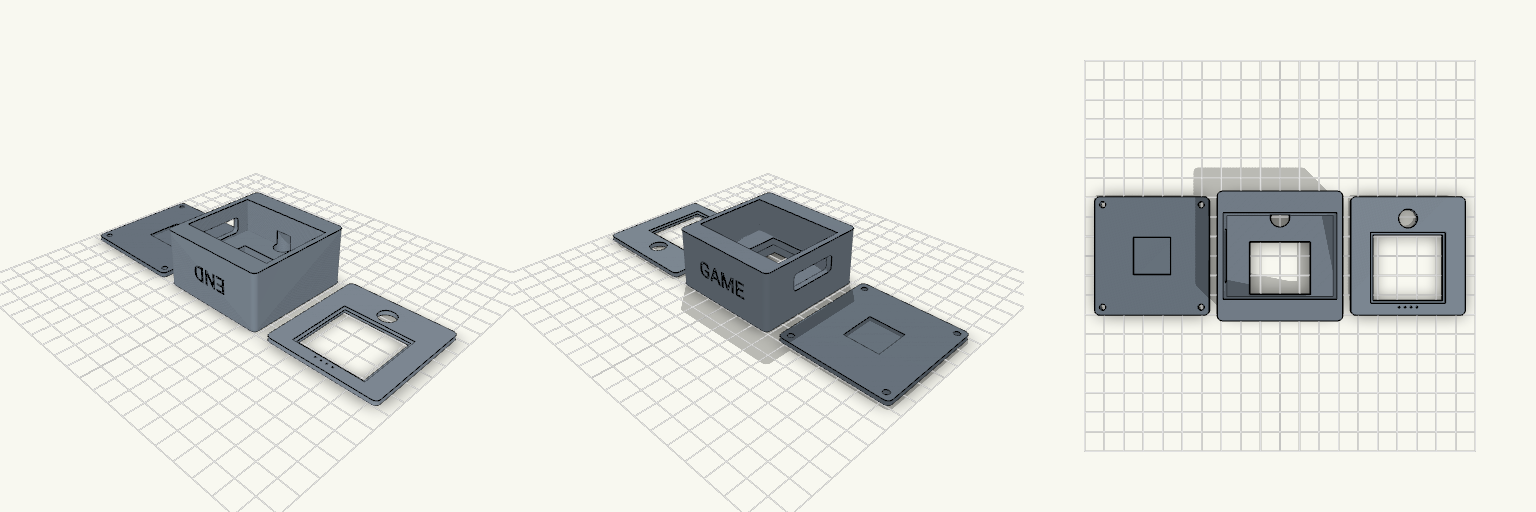
Lockdown — Dev Board Case With Camera Eye
Lockdown is a three-part enclosure for a Freenove ESP32-S3 WROOM CAM board with a 35.5 × 33.5 mm display. The front bezel turns the screen into a face, with a 9.6 mm camera eye above the window. The side wall carries one wide cable opening, so USB-C plugs and cables pass straight through the housing. Features 58 × 60 mm footprint across chassis, back cover and bezel Screen pocket with a support ledge and a flex-cable opening 9.6 mm camera bore lined up with the bezel eye Single 26 × 9 mm cable pass-through on the +X wall, raised for a high-mounted board Four M3 screws from the back Embossed-in END and GAME text on the end walls Print notes Print the three parts flat on their backs. PETG works well.