60 mm Square With Lengthwise Side Slots
Created today
Description
What it's for
A 60 mm square block with a thin slot cut into two opposite sides, useful as a test piece, a card or shim holder, or a slotted insert.
Dimensions
- Footprint: 60 × 60 mm
- Height: 10 mm
- Slots: 5 mm deep, 0.4 mm wide, running the full length of each of two opposite sides, at mid-height
Remix ideas
- Change the slot width to fit a specific sheet or card thickness.
- Add slots on the other two sides.
- Vary the block height or slot depth.
Images
More like this
Explore more in Workshop & Tools →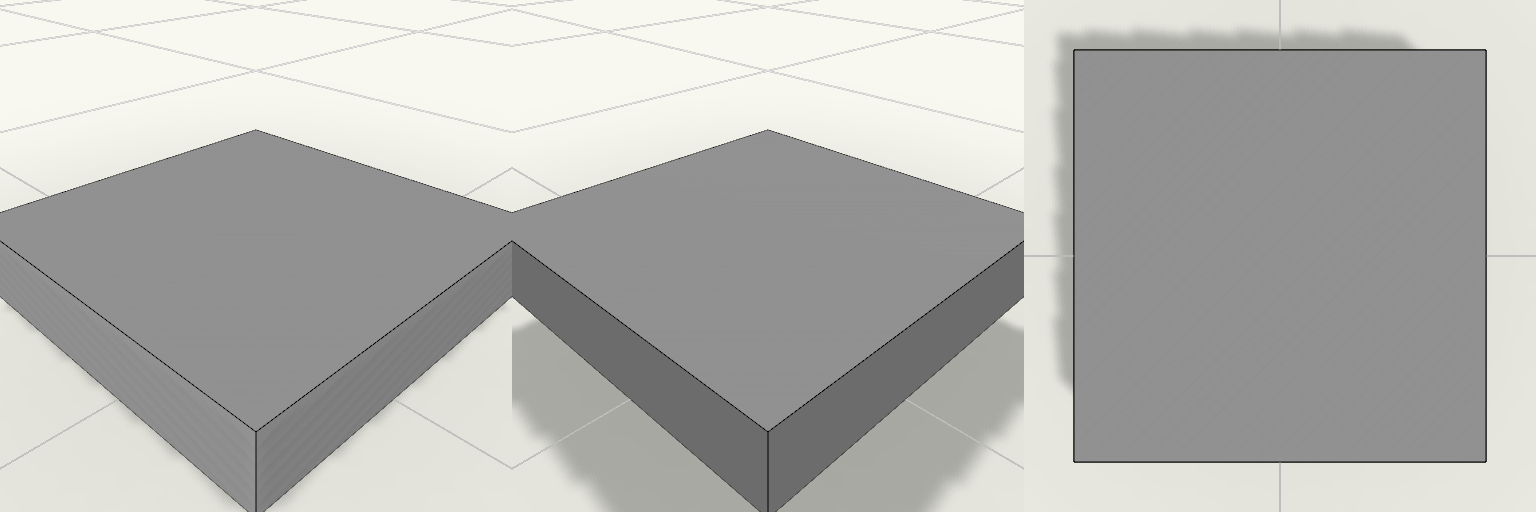
5 x 5 x 1 mm Square Block
A plain square block measuring 5 mm by 5 mm by 1 mm, flat on the bed and ready to print. Remix hooks Footprint: 5 x 5 mm is the starting value. Change it to make a tile, spacer or shim. Thickness: 1 mm is about five layers at 0.2 mm. Raise it for a sturdier piece. Edges: Add a small chamfer or rounding for a softer look. Keep it under 0.5 mm at this size. Pairs with: Use it as a test cube for tolerance checks, or as a base for a hole, text or a peg.
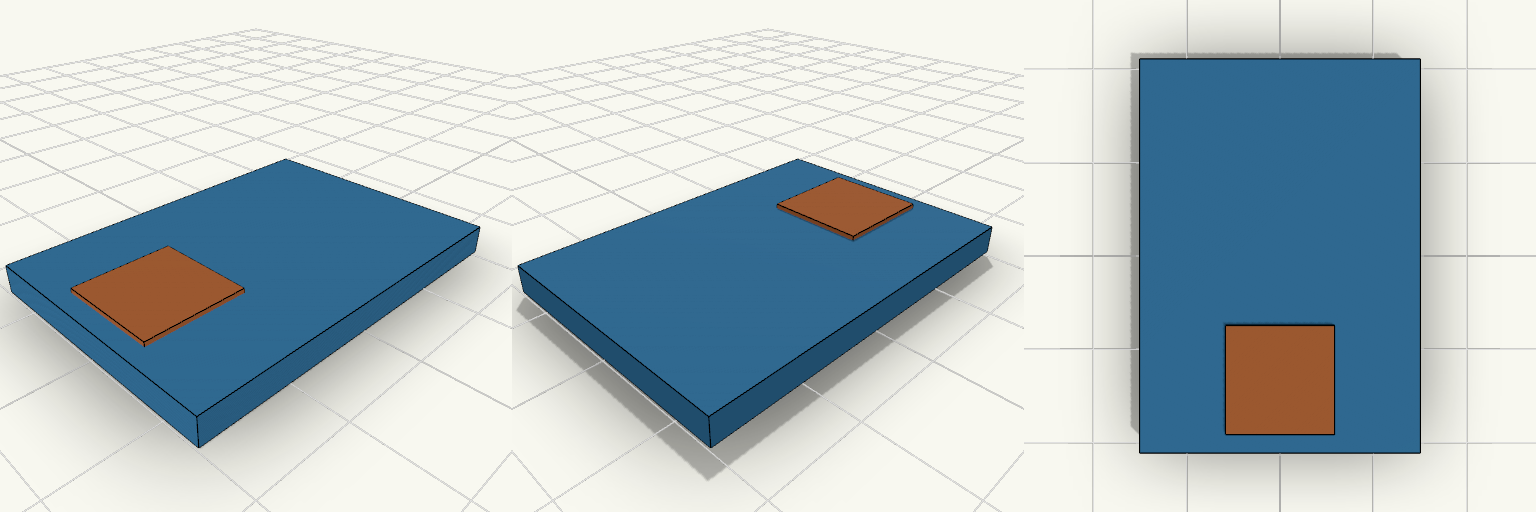
Plate With Offset Square Pad
A flat 28.5 × 40 × 3 mm plate with an 11 × 11 mm raised square pad, 0.5 mm thick, centered in X and set 2 mm from the Y- edge. Remix hooks Pad thickness (0.5 mm): a multiple of your layer height keeps the pad clean. 0.5 mm is about 2 or 3 layers. Pad offset (2 mm from the Y- edge): move it along Y to centre it or push it to the other edge. Plate length (40 mm): the pad is 11 mm, so any length above roughly 15 mm still holds it. Pairs with: a label, a sticker, or a second pad in a different colour for a multi-colour swap.
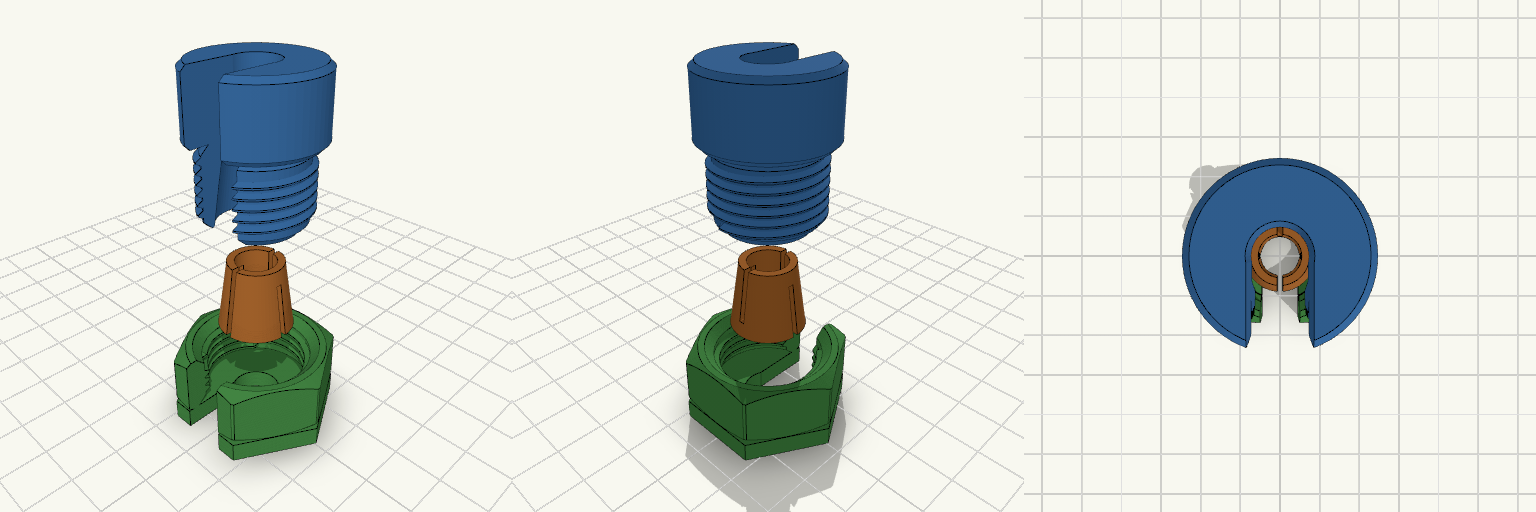
Side-Entry Split Compression Fitting for 8 mm Rod
A side-entry split compression fitting for 8 mm round rod. It clamps at any point along the rod without sliding over the end: load the rod through the 9 mm side slots in the housing and nut, then turn the nut about 180° so its slot sits over solid housing wall. It is not a hose clamp, ring clamp, C-clamp, or ordinary threaded connector; the split collet is driven into the cone and closes around the whole circumference of the rod. Fit and assembly Rod size: 8 mm; collet bore: 8.4 mm. Parts: housing, split collet, compression nut. Print as three separate pieces. Housing: 22 × 2 mm external thread, 26 mm collar, internal cone from 15.6 mm to 11.8 mm, 9.2 mm bore. Collet: one full-length slot plus staggered slots so it closes evenly. Nut: hex body with an end wall that pushes the collet into the cone; 0.2 mm thread clearance for FDM. Printing: lay the parts out flat and lift the stack so the nut rests on the plate.
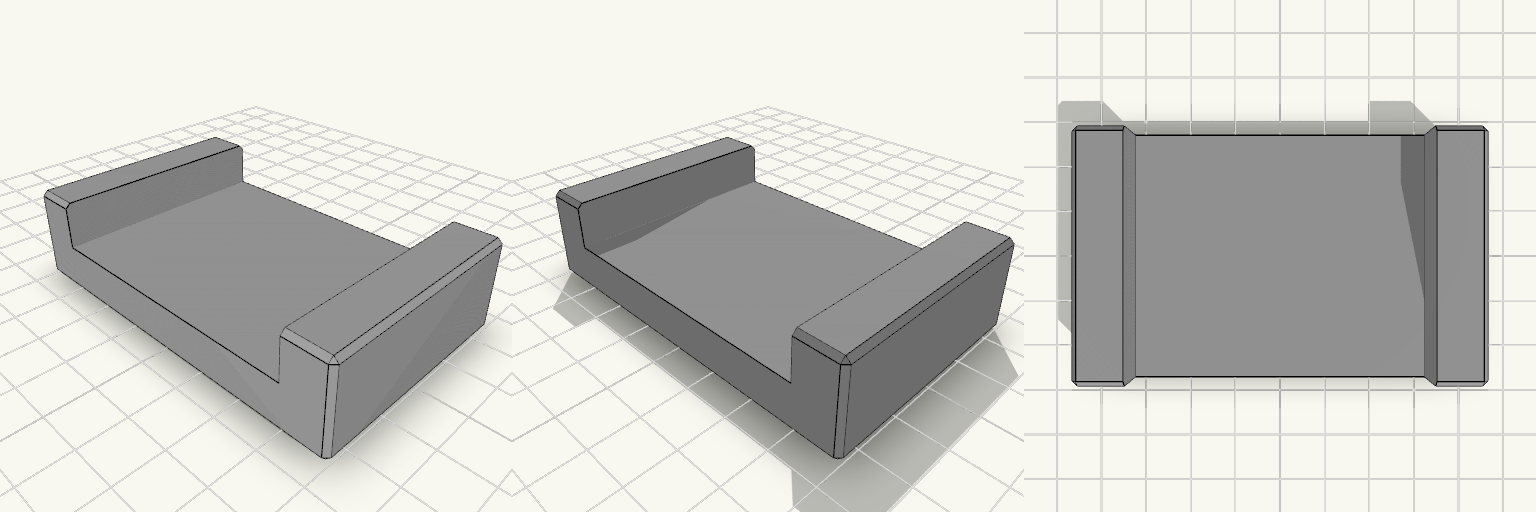
U profilis, 60 mm tarpas, 50 mm plotis
U formos detalė, kurioje daiktas nesėdi stabiliai, nes pagrindas per siauras: čia pagrindas 50 mm platus, o vidinis tarpas tarp sienelių lygiai 60 mm. Matmenys Vidinis tarpas tarp sienelių: 60 mm Sienelių ir dugno storis: 10 mm Sienelių aukštis virš dugno: 10 mm Pagrindo plotis (gylis): 50 mm Bendras dydis: 80 × 50 × 20 mm Spausdinimas: be atramų, dugnu ant stalo, 1 mm nusklembtos briaunos
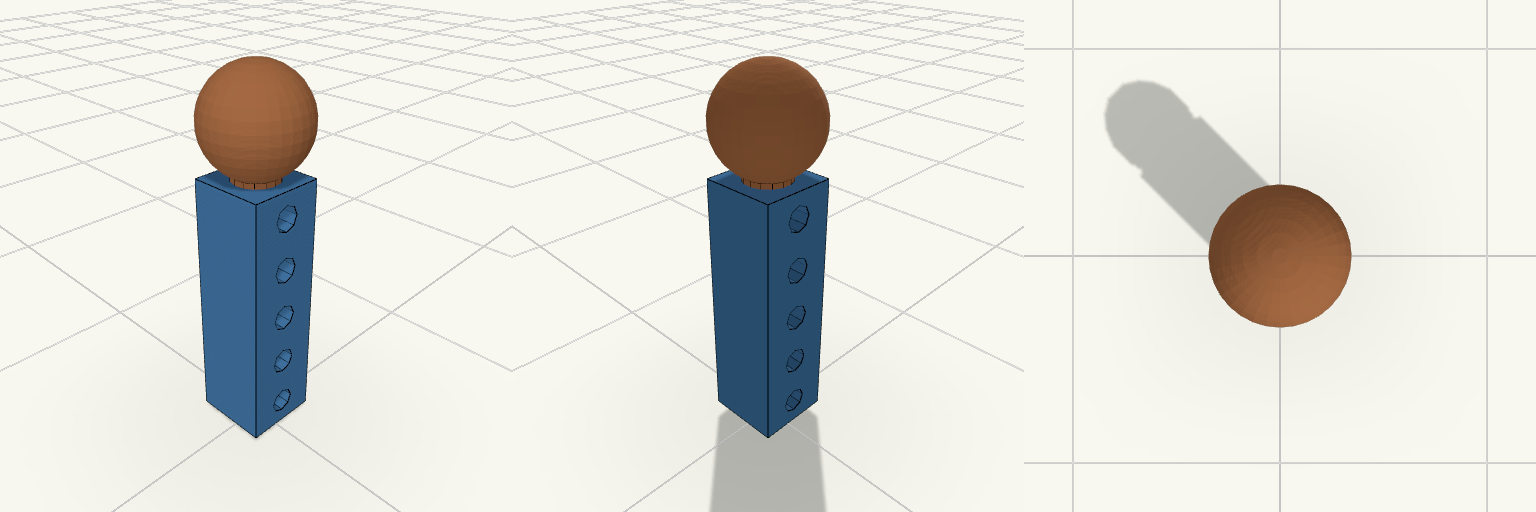
square ball hitch
A 2.9 mm square post, 10 mm tall, topped with a 1.8 mm neck and a 4 mm ball. Five 1 mm cross holes run through the post from side to side, so a pin can lock it at different heights. Remix hooks Hole spacing: 2 mm pitch, starting 1 mm from the base. Tighten it for finer height steps, or widen it for a stronger post. Hole diameter: 1 mm. Match it to the pin or wire being used. Hole direction: all holes run along X. Rotate alternate holes 90° to run along Y for a staggered pattern. Post height: 10 mm, ball and neck sit on top for roughly 14 mm overall. Pairs with: a socket or clip that grips the ball, or a sleeve with a matching pin hole.
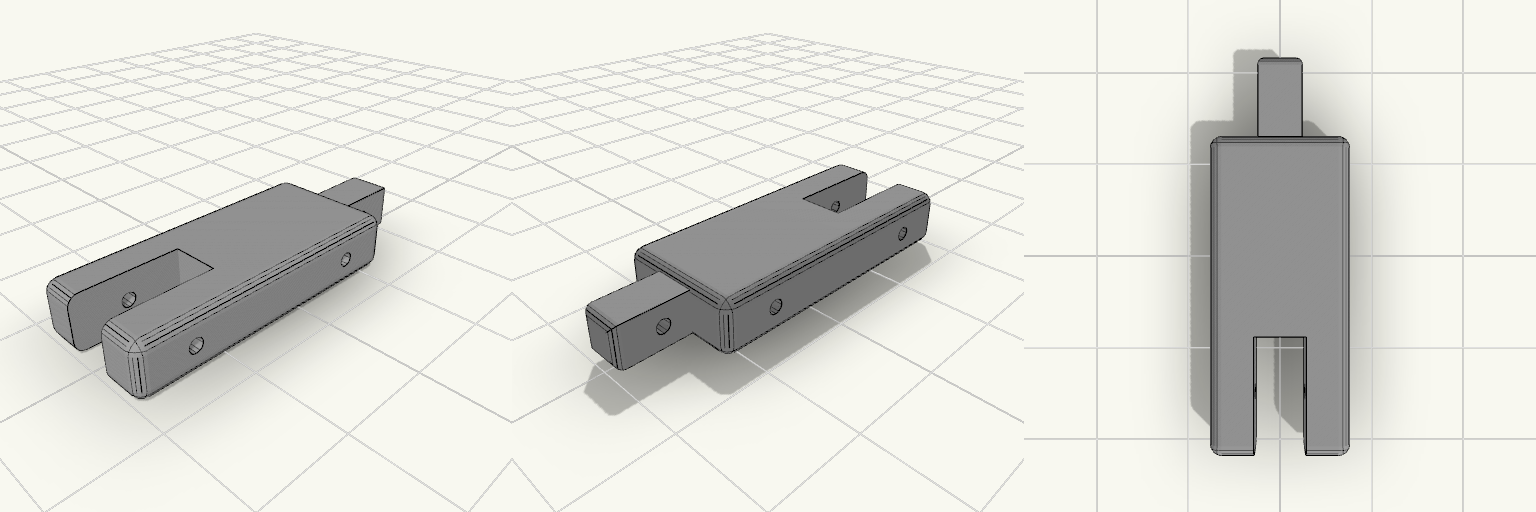
Bracelet Link Fit Gauge Block
A bracelet repair print that turns out too tight or too loose wastes hours. This fit gauge block is a 15-minute test piece that checks the fork slot and pin bores before the real part gets printed. Key numbers Block: 14 x 32 x 6 mm, origin at center, 1.2 mm edge fillets Fork slot: 5.2 mm wide, 12 mm deep, open at the -Y end, flat end wall at Y = -4 Prongs: 4.4 mm wide each Bores: Ø1.6 along X at Y = -10 (through both prongs) and Y = +10 (solid section) Tongue sample: 4.4 x 4.6 mm, 8 mm long on the +Y end, 0.9 mm end fillets, Ø1.6 bore at Y = +19 (40 mm overall) Printing Flat on the bed, PLA or PETG, 0.4 mm nozzle, 0.2 mm layers 4+ walls, 100% infill, 3 mm brim, no supports, 40 mm/s or slower Ream both bores once by hand with a 1.5 mm drill bit Checks A bracelet tongue link should enter the slot with slight friction. An original pin should slide through the -Y bore.