square ball hitch
Created today
Description
A 2.9 mm square post, 10 mm tall, topped with a 1.8 mm neck and a 4 mm ball. Five 1 mm cross holes run through the post from side to side, so a pin can lock it at different heights.
Remix hooks
- Hole spacing: 2 mm pitch, starting 1 mm from the base. Tighten it for finer height steps, or widen it for a stronger post.
- Hole diameter: 1 mm. Match it to the pin or wire being used.
- Hole direction: all holes run along X. Rotate alternate holes 90° to run along Y for a staggered pattern.
- Post height: 10 mm, ball and neck sit on top for roughly 14 mm overall.
- Pairs with: a socket or clip that grips the ball, or a sleeve with a matching pin hole.
Images
More like this
Explore more in Workshop & Tools →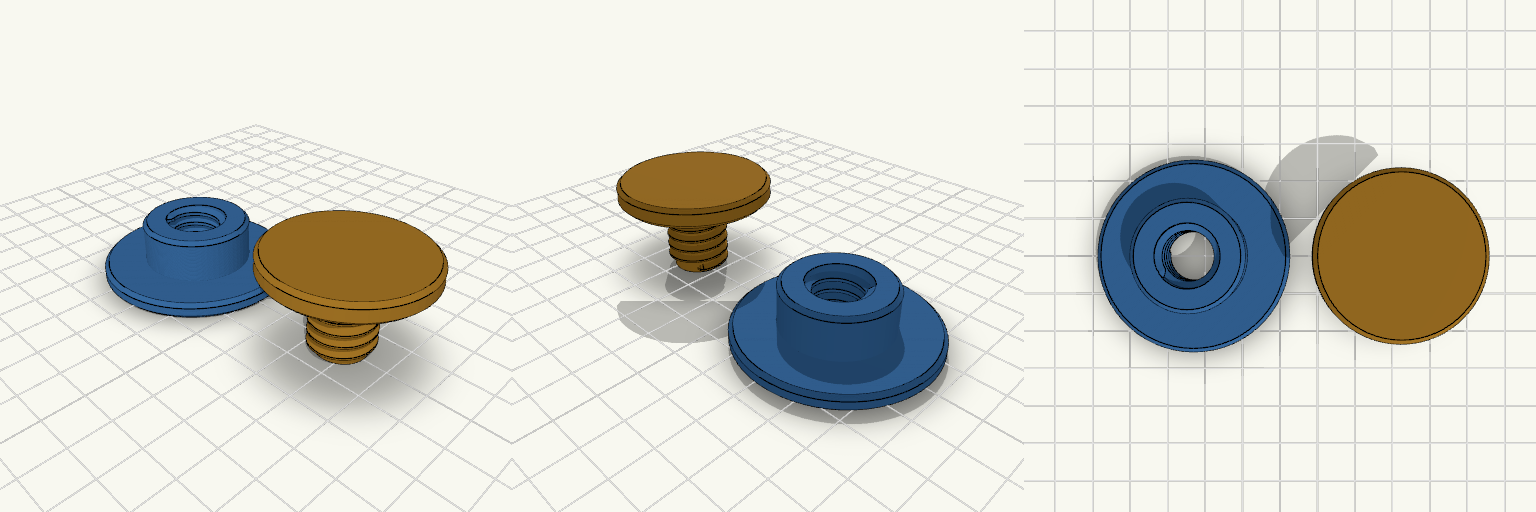
Round Adjustable GPU Support, 20–30 mm
Two-piece screw support for propping up a GPU against a flat surface. A round base with a threaded boss receives a threaded post topped by a flat round pad. Turning the post adjusts the height. Base: 50 mm round plate, 15 mm tall threaded boss Post: 16 mm diameter thread, 20 mm long, 3 mm pitch Pad: 40 mm round disc, 5 mm thick Lowest height: 20 mm (pad top, post fully down) Highest height: about 30 mm, with roughly 10 mm of thread still engaged At the lowest setting the thread end protrudes about 5 mm below the base Print the post and base separately; test the thread fit and adjust clearance if needed
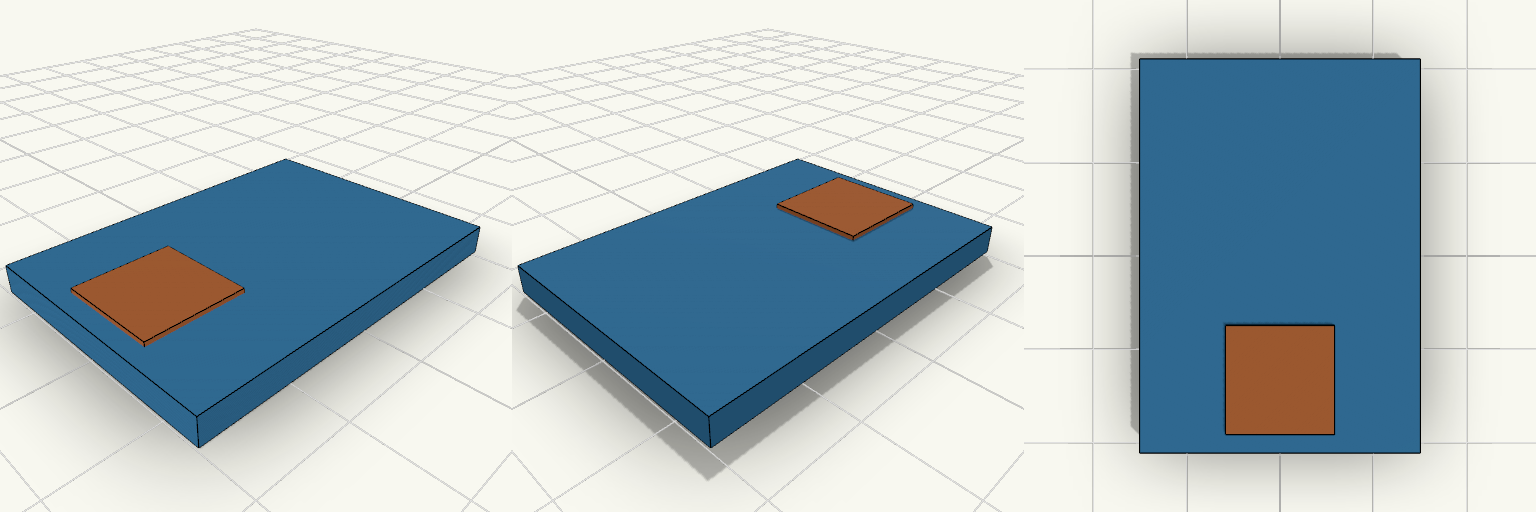
Plate With Offset Square Pad
A flat 28.5 × 40 × 3 mm plate with an 11 × 11 mm raised square pad, 0.5 mm thick, centered in X and set 2 mm from the Y- edge. Remix hooks Pad thickness (0.5 mm): a multiple of your layer height keeps the pad clean. 0.5 mm is about 2 or 3 layers. Pad offset (2 mm from the Y- edge): move it along Y to centre it or push it to the other edge. Plate length (40 mm): the pad is 11 mm, so any length above roughly 15 mm still holds it. Pairs with: a label, a sticker, or a second pad in a different colour for a multi-colour swap.
5 x 5 x 1 mm Square Block
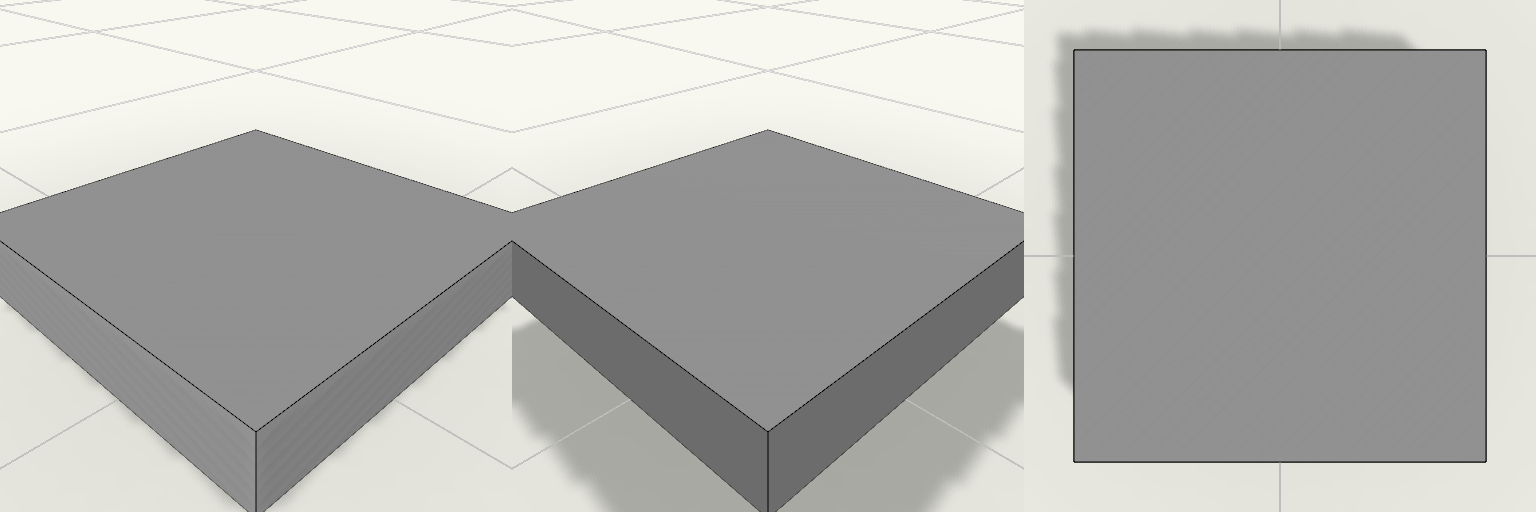
A plain square block measuring 5 mm by 5 mm by 1 mm, flat on the bed and ready to print. Remix hooks Footprint: 5 x 5 mm is the starting value. Change it to make a tile, spacer or shim. Thickness: 1 mm is about five layers at 0.2 mm. Raise it for a sturdier piece. Edges: Add a small chamfer or rounding for a softer look. Keep it under 0.5 mm at this size. Pairs with: Use it as a test cube for tolerance checks, or as a base for a hole, text or a peg.
Folding Hex Easel Vise With Strut Links
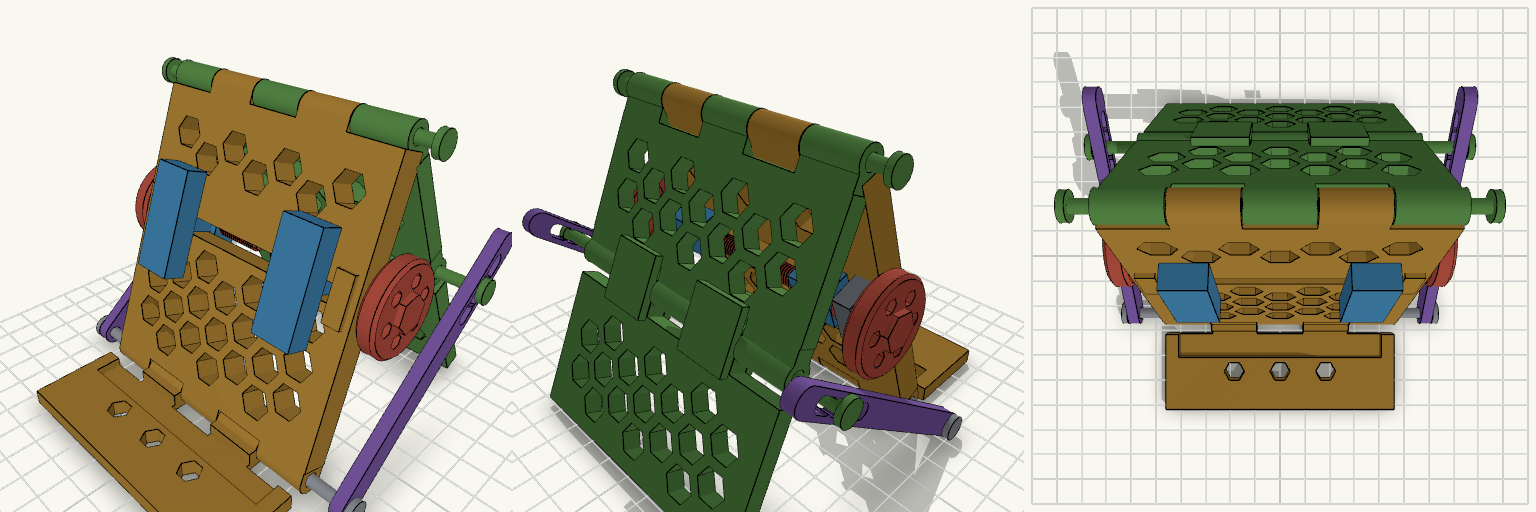
A folding bench-vise and easel stand: a honeycomb-cut backrest on a hinged base ledge, two jaws driven by threaded crank rods, and a rear support leg held by a two-stick folding strut on each side. The strut is built from two flat sticks joined at an elbow pin. Push the leg in and the elbow bends, so the two sticks fold down alongside each other and act as one. The sticks sit outside the handwheels in X, so they pass beside the cranks and not through them. Remix hooks link_k (0.52): stick length as a fraction of the base-to-knee distance. It must stay above 0.5. Higher values give a bigger elbow bow and a longer reach. platelean (20°) and legang (25°): raise them together for a steeper recline. rodz (60 mm) and jawx (27 mm): crank height and jaw start position. hd and wall in the hex cutter (11 mm and 3 mm): change them for a denser or sparser honeycomb. phonew, phonet and phone_d (80, 10.5 and 3 mm): the phone slot. leg_lock: switches the knee stop tabs on or off. Pairs with Longer or thicker stick bars (4 mm wide now) for heavier loads. 4 mm filament offcuts as hinge and elbow pins.
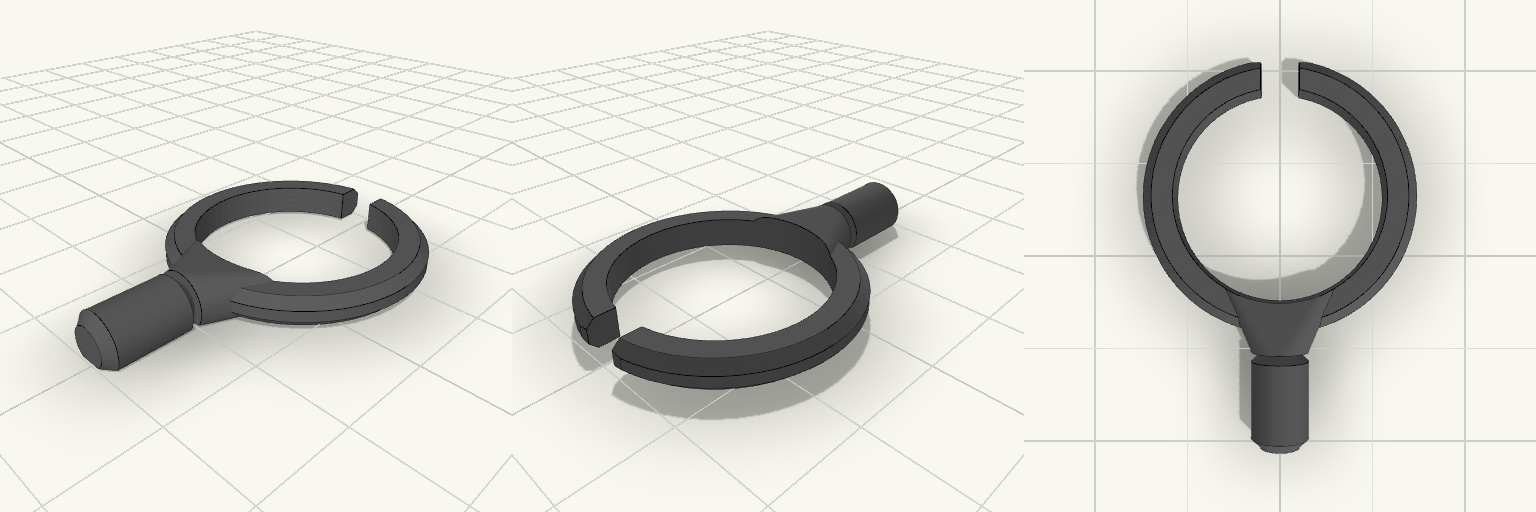
Hoof Evener Thumb Ring 1.2
A low-profile thumb ring designed to index a farrier's hoof-evener ruler. 1/8" Slim Ring: Keeps bulk out of the way while holding the thumb perfectly on zero. D-Profile Peg: The 6mm mounting peg is shaved flat on the back, allowing the entire model to print dead-flat on the bed without any supports. Flex Slit: Open front ensures it can comfortably accommodate varying thumb sizes.
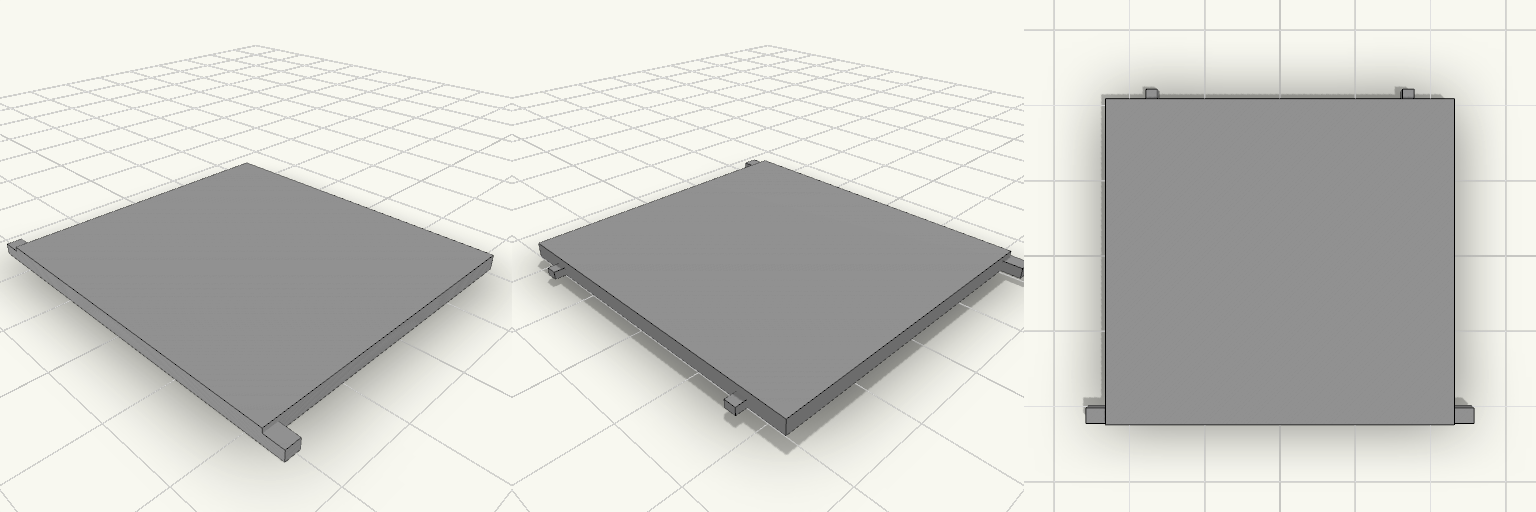
Flat Ground Plate 45x42x2 mm with Tabs
Flat 45 × 42 × 2 mm ground plate with two side tabs on the front 45 mm edge and two small blocks on the back edge. Overall width across the tabs is 50.4 mm. Plate: 45 × 42 × 2 mm, sharp edges Side tabs: 1.4 mm thick, flush with the underside, 50.4 mm overall span Back blocks: 1.5 mm wide, 1 mm thick, 1.5 mm protrusion, 5 mm from each side edge Print flat, no supports needed