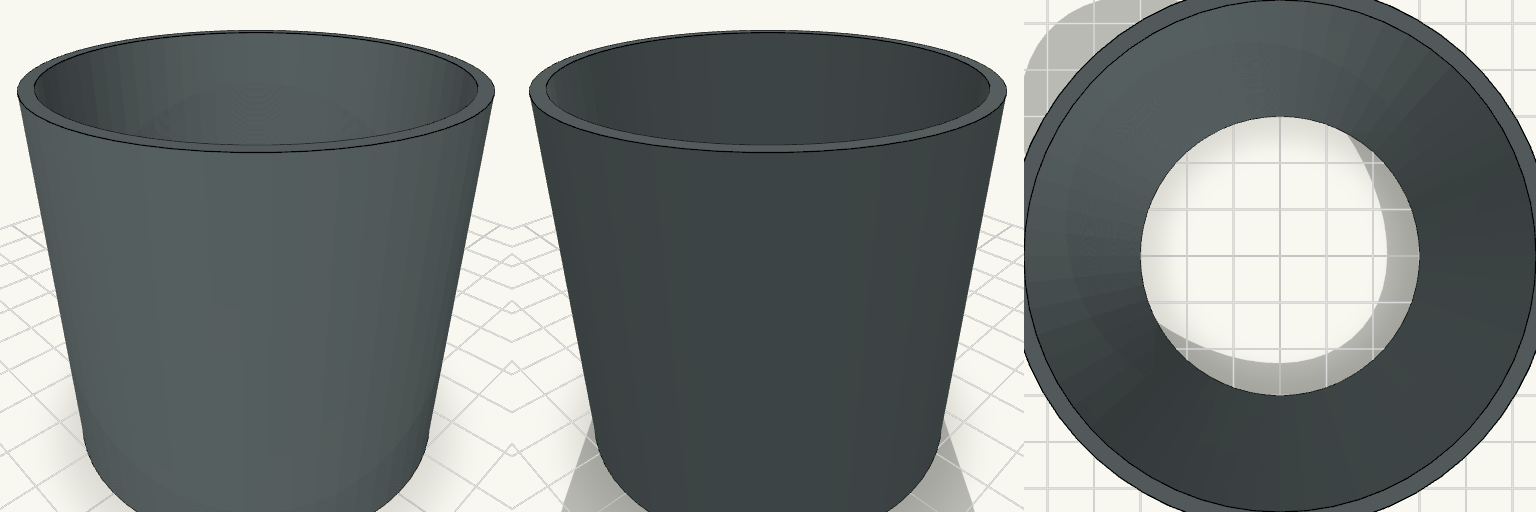
9-Inch Planter Drainage Raiser
Created today
Description
A structural insert built to elevate a 9-inch plastic nursery pot inside a decorative ceramic planter. Standing 3 inches tall, it provides a solid base while allowing standing water to drain clear of the roots.
The top deck uses a concentric ring and spoke pattern — significantly stronger and faster to lay down than a square grid. The load is carried outward to four tapered pillars set directly under the main intersections.
Remix Hooks
- Total Height: Built at 76.2 mm (3 inches), but the leg pillars can be stretched or squished to match any outer pot depth.
- Deck Thickness: Starts at 6 mm to handle a 20 lb load without bowing.
- Leg Taper: Set at 24 mm at the base narrowing to 18 mm at the top — widen the base if you need it to sit on a softer medium instead of a hard ceramic bottom.
Images
More like this
Explore more in Home & Fixtures →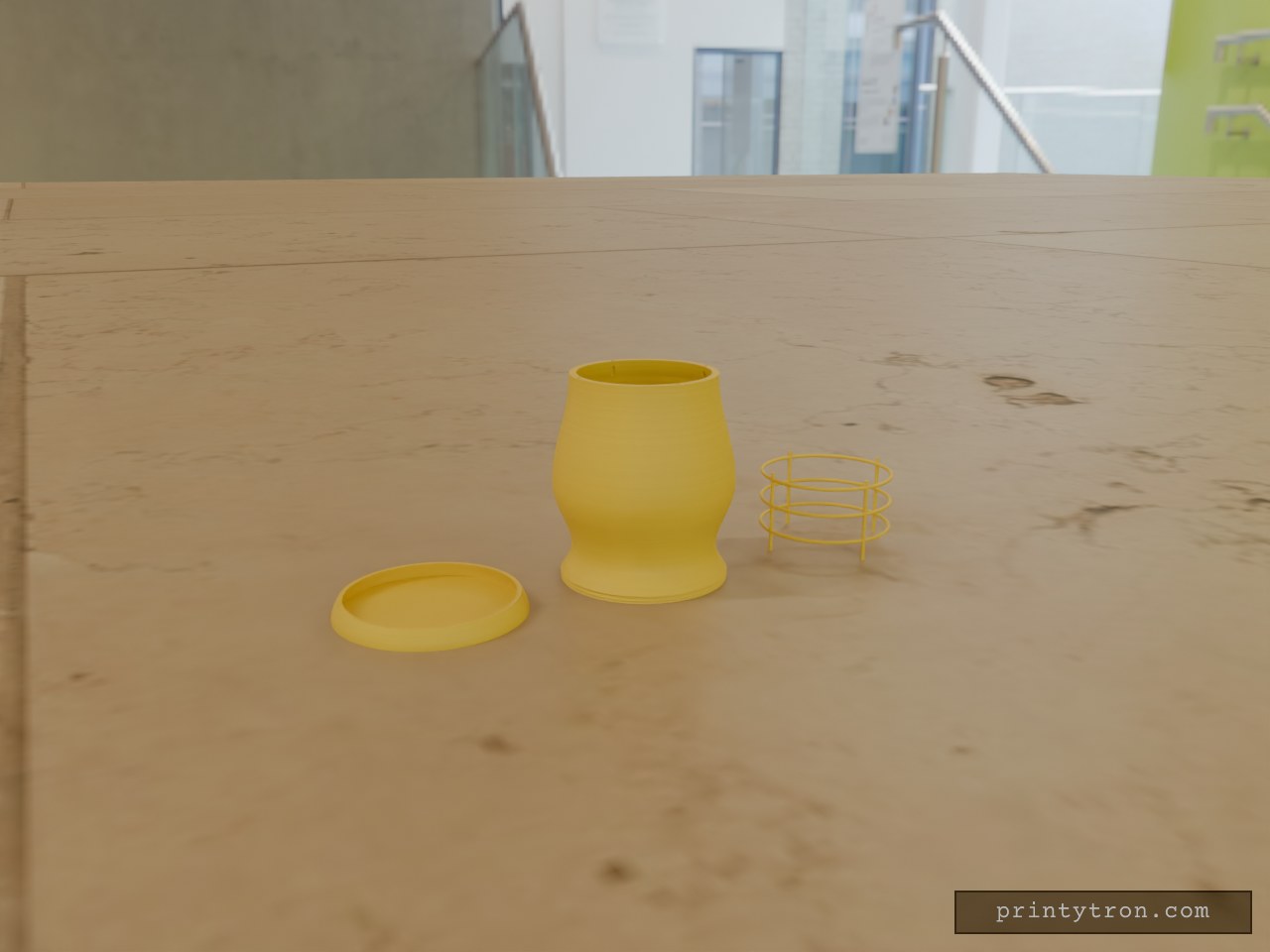
Ballasted Tomato Planter With Cage
Dwarf tomato plants inevitably turn into top-heavy messes that tip over their cheap nursery pots, and generic wire cages never quite fit the rim. This solves both. A heavy-bottomed, 12-inch tall planter shaped specifically to keep a top-heavy plant grounded. The wide 10-inch base drops into an 8-inch waist before swelling back out to give the root ball room, ending in an 8-inch mouth. The bottom inch detaches as a flush-fit drainage saucer, while the rim features deep, built-in sockets. The included custom cage drops directly into those sockets for a rigid 4-inch scaffold that won't slide sideways in the dirt. Sizing & Assembly Total Volume: ~3.2 gallons. Clearances: 0.5mm slip-fit for the saucer joint, 1mm clearance for the cage legs dropping into the rim. Layout: The pot, saucer, and cage are laid out side-by-side. The pot requires a 300x300mm class Z-axis to print at its intended 12-inch scale.
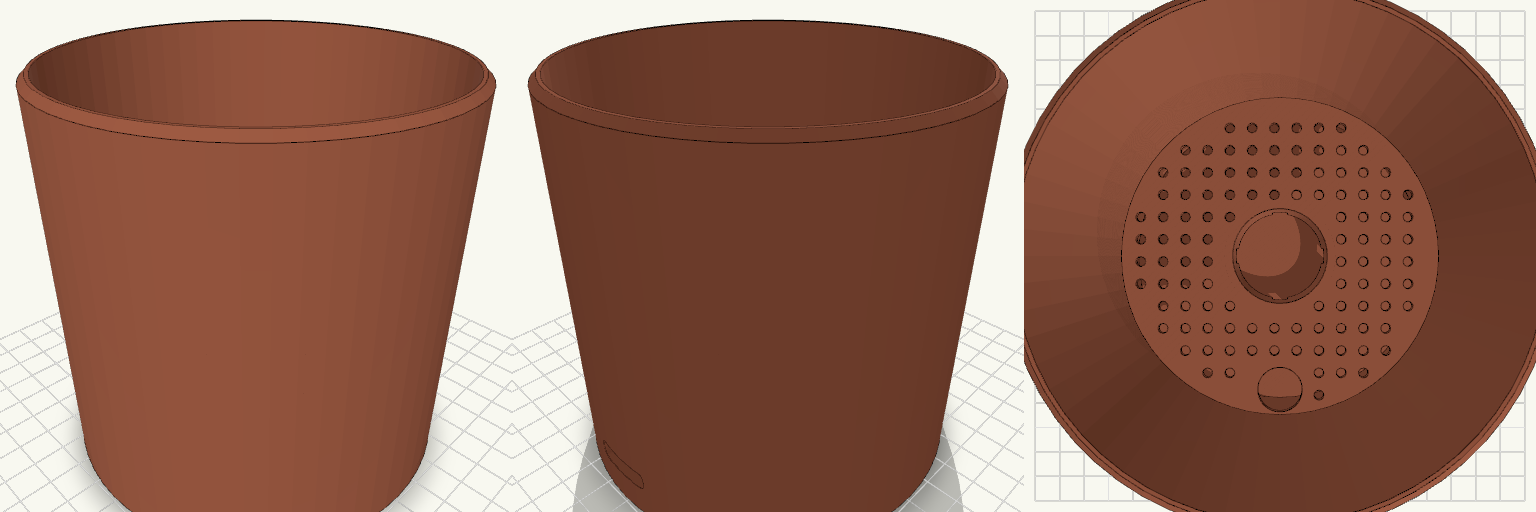
120mm Self-Watering Planter
A 120mm diameter by 120mm tall self-watering planter designed to keep moisture-sensitive plants like basil alive. The bottom 30mm acts as a dedicated water reservoir, separated from the soil by a perforated platform and a central wicking column. A built-in fill tube routes water directly to the base, while a side window at the 15mm mark provides a visual water level check and acts as a hard overflow drain to prevent drowning the roots. Starting Points for Remixing Scale and Proportions: Overall footprint is 120x120mm. Stretching the Z-axis is straightforward, but requires manually offsetting the 30mm platform and 15mm overflow window to maintain the reservoir geometry. Platform Flow: The internal drainage perforations are currently set to 3.5mm. Widen these for coarse chunky soil mixes, or tighten the grid spacing for more aggressive root aeration. Wicking Column: The central 40mm wicking cone drops to the base with 10mm side slits. Depending on the soil's capillary action, adjusting the slit height changes how quickly the topsoil hydrates. Print Pairings: Prints as one solid piece without supports. Best paired with PETG for long-term water tightness and UV resistance if placed on a windowsill.
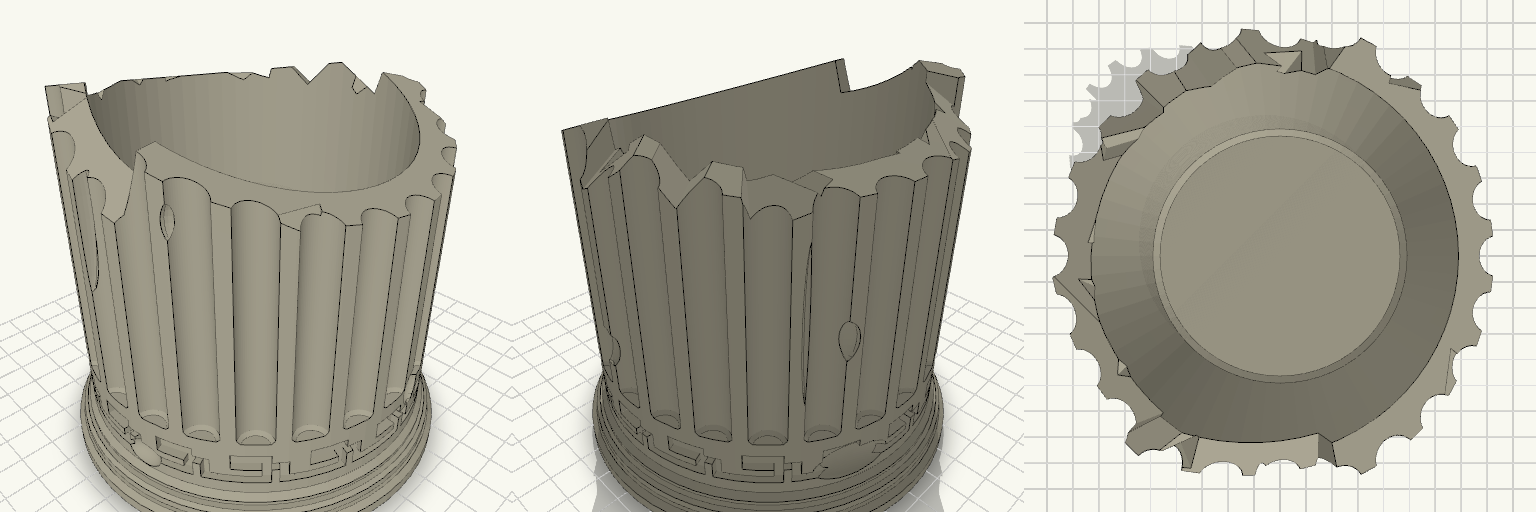
Ruined 85mm Column Planter
A functional planter designed to resemble a fragmented ancient stone column. The exterior features classical deep flutes and a stepped pedestal base, while the top rim and outer walls integrate geometric cutaways simulating heavy weathering and structural breaks. Specifications: Dimensions: 115 mm maximum base diameter, approximately 110 mm peak height. Cavity: 85 mm diameter bore with an 80 mm depth to house standard small nursery pots. Tolerances: Minimum 5 mm wall and base thickness maintained throughout all flutes and fracture geometry. Printability: Optimised for standard upright FDM printing; all destructive boolean cuts are angled to eliminate the need for supports.
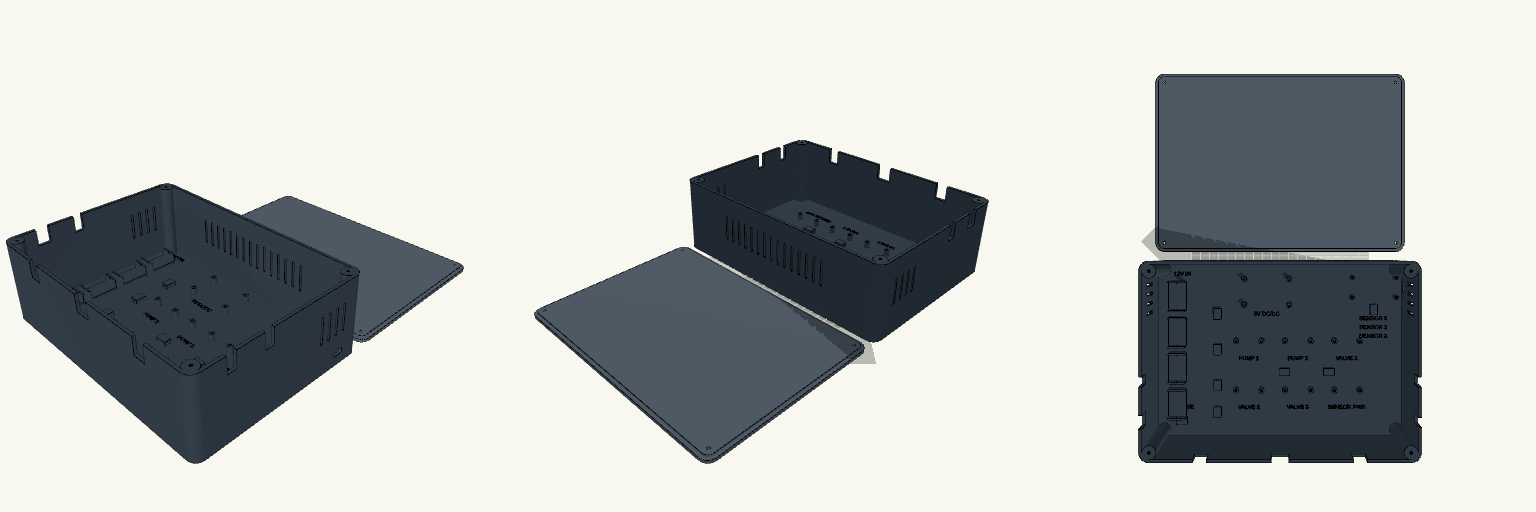
280mm Irrigation Controller Enclosure
A rigid 280 × 200 × 90 mm printed enclosure designed specifically for an ESP32-based multi-zone plant irrigation controller. The layout divides the internal volume into three distinct areas: high-current power distribution on the left, six MOSFET drivers in the center, and the low-voltage microcontroller logic on the right. An extra-wide central cable channel runs between the two rows of MOSFETs, and all high-traffic access areas—like screw terminals and adjustment dials—have generous working clearances. The outer walls feature deep U-slots for cables, cut from the top edge so the main flat lid traps them cleanly in place without relying on separate cable glands. Internal Layout details Zone A (Power): Mounts for a 56×35 mm DC-DC buck converter, a friction-fit bracket stack for four WAGO 221-415 lever connectors, and a C-clip for an inline 5A barrel fuse. Zone B (Switching): Two rows of custom mounts for six 35×32 mm MOSFET boards. Each uses exactly two diagonal standoffs to leave maximum free space around the terminals. Zone C (Control): Stand-offs for an ESP32 NodeMCU, with a dedicated USB-C opening aligned in the external right-hand wall. Structure: Embossed floor labels mark all hookup zones. Cable tie bridges are scattered throughout the base for organization, and vertical ventilation slots flank the rear and sides. Uses four M3 screws driven directly into heavy internal corner bosses to seal the lid.
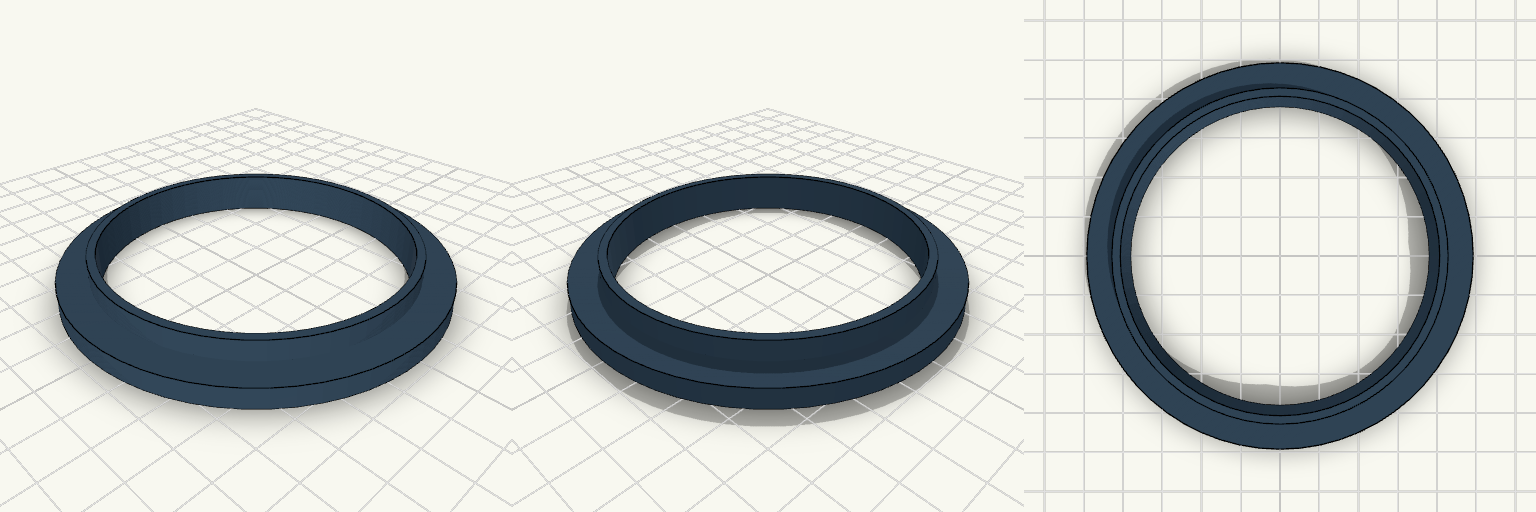
Brutalist Pipe Insert
A heavy-duty ventilation insert featuring an integrated square mesh. The single-ended flange acts as a firm stopping collar, while the dense internal grid blocks debris and insect ingress without severely choking airflow. Designed as a drop-in piece for 80 mm bulkheads or exhaust pipes. Design Notes Mesh: 3x3 mm openings with 1.5 mm solid bars Interface: 80 mm main outer diameter with a 2 mm wall Collar: 5 mm thick flange to prevent over-insertion Printability: Single solid body, optimized for FDM without supports